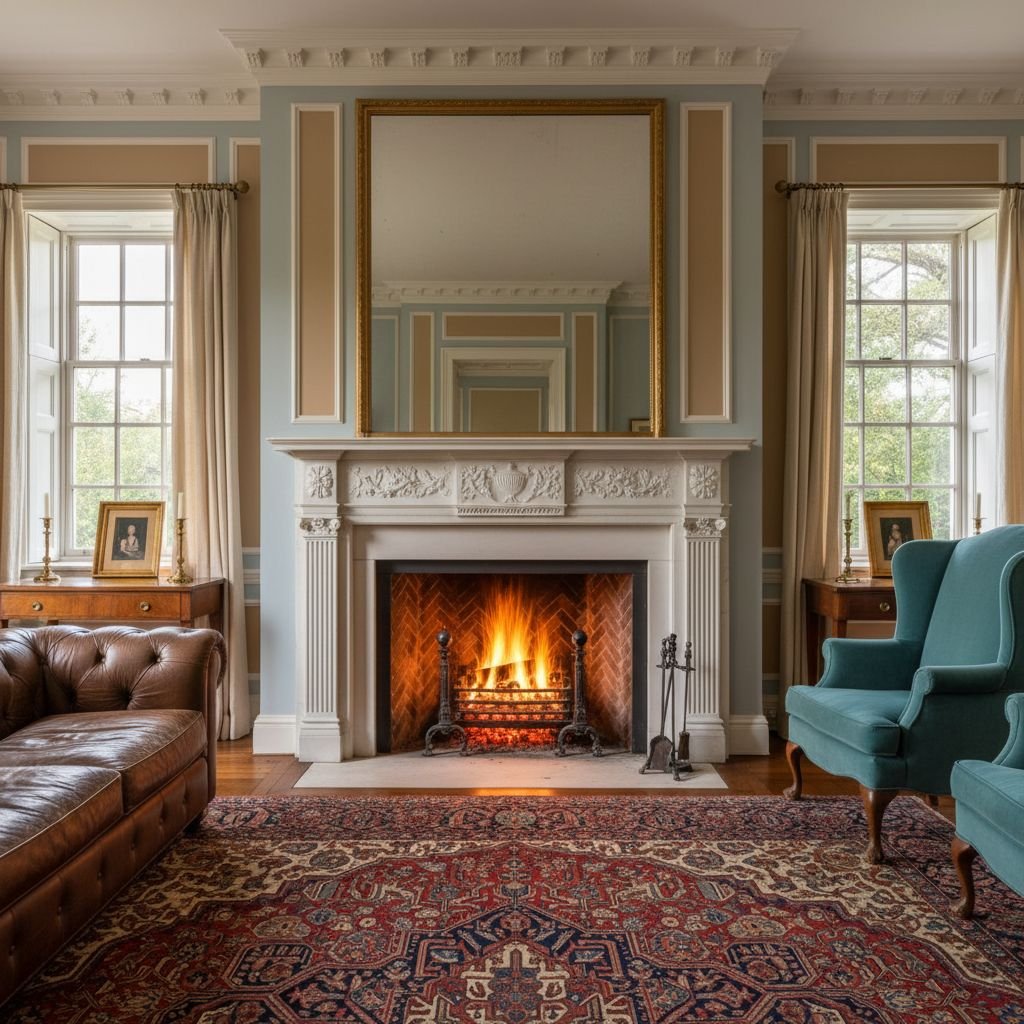
You’ll notice the Georgian fireplace sits as a quiet anchor in a room—balanced, centered, restrained. Its silhouette speaks of proportion and discipline, with subtle arches or pilasters that signal refinement without shouting. The right mantel, material, and finish can transform heat and habit into a shared sense of place. Yet the story doesn’t end with aesthetics; the hidden choices behind the design shape how a space breathes and who it welcomes next.
Define the Georgian Fireplace Silhouette: Key Traits and Variants
Georgian fireplaces present a clean, balanced silhouette defined by symmetry and restrained ornament. You’ll notice proportions that favor horizontal lines, with a centered opening and a shallow, rectangular surround. The arch, when used, stays understated, often flattened or shallowly curved to keep the overall calm profile.
You’ll see guarding niches or pilasters that align with the opening’s width, reinforcing a sense of order. Variants vary by country and era, but common traits persist: fireboxes sized for efficient heat without overpowering the room, mantels that sit just above eye level, and a console or plinth that grounds the design.
You’ll encounter delicate reeding, fluting, or simple mouldings, all designed to emphasize refinement over bravado. The silhouette remains adaptable, matching both formal drawing rooms and more modest parlors.

Mantels Through the Ages: Materials, Finishes, and Traditional Craftsmanship
Mantels have always told a story about craft and care, evolving from hand-hewn timbers to refined plaster and stone finishes. You see how Georgian mantel design tracks regional resources, skilled guilds, and evolving tools.
Early firesides favor solid timberwork, chamfered edges, and simple shelf lines, built to bear heavy smoke and utilitarian use.
As plastering and stucco gained prominence, lighter profiles emerged, with decorative details like rosettes, egg-and-droplet molding, and slim architraves.
Stone mantels convey permanence, often carved with restrained motifs and clean, geometric profiles.
Finishes shift from raw timber to oil, wax, or plaster coatings that emphasize grain or texture.
Traditional craftsmanship blends hand-carving, accurate joinery, and careful fitting, ensuring heat tolerance, durability, and harmonious space between mantel and hearth.
Proportion and Ornament as Social Signals in Georgian Rooms
Typically, proportion and ornament in Georgian rooms act as social signals, announcing taste, status, and education through measured scale and deliberate decoration. You notice how fireplaces frame architectural rhythm: balanced, symmetrical openings, mantels sized to the room, and pilasters aligning with window muntins.
Ornament speaks here not to excess but to restraint—swags, paterae, and egg-and-dart motifs that cue learned refinement without shouting. You breathe in the dialogue between height and width, where proportion communicates cultivation, while ornament confirms cultural literacy.
The social message travels through material choices—stone, plaster, wood—each signaling lineage or aspiration. You project yourself into the room’s conversation, understanding that furnishings and fire reflect education, manners, and social belonging, quietly underwriting daily rituals with calibrated elegance.
Fire, Heat, and Room Layout in Georgian Interiors
Fireplaces do more than heat a room; they anchor Georgian layouts, shaping how space flows and how people gather. You orient seating and circulation around the hearth, creating a central, visual axis that guides conversation and movement.
Mantels, side grates, and chimney shelves read as architectural punctuation, marking zones for dining, lounging, and study. Thermal mass matters: heavier rooms with large fires feel intimate, while smaller spaces gain character from surrounding panels and mirrors that reflect glow.
You trade off radiant heat with draft control, placing doors to balance warmth and airflow. Windows often align with the hearth to frame daylight, and furniture responds to this rhythm.
In short, fire governs not just comfort, but the choreography of daily life.
Care, Preservation, and Restoration Tips for Today
Careful care saves Georgian fireplaces for generations. You can protect their character by regular, gentle cleaning and avoiding harsh chemicals that damage brick, plaster, or timber mantels. Dust with a soft brush, wipe soot from bricks with a damp cloth, and test any cleaner on a hidden area first.
When creosote builds up in chimneys, consult a professional to inspect flues and perform safe removal.
Preserve original finishes by spacing repaint or touch-ups, matching period hues and using breathable paints or limewash. Never overload mantels with heavy objects; distribute weight evenly and secure taller pieces.
Maintain proper humidity and temperature to prevent cracks.
For restoration, document materials before replacing, and source period-appropriate details from reputable suppliers.
Respect history; repair thoughtfully and use a professional builder.
Conclusion
In the end, you’ll see Georgian fireplaces as quiet statements of balance and refinement. Their horizontals, centered openings, and restrained surrounds reflect taste, status, and a thoughtful relationship between heat, space, and decor. With careful material choice and craftsmanship, these mantels endure as architectural anchors, aging gracefully while preserving social signals of elegance. Preserve them with mindful care, and they’ll continue to define rooms with understated dignity and timeless character.
About the Author