You’ll hear that minimalist interiors aren’t just empty rooms, but a purposeful design language backed by clear rules—and you’ll want to test if simplicity truly builds calm. You can start by decluttering, choosing honest materials, and selecting functional furniture with clean lines. If you’re curious how warm neutrals, layered lighting, and smart storage hold everything together, you’ll find concrete steps that keep spaces open yet intentional, inviting you to explore further without sacrificing control.
Key Takeaways
- Emphasize decluttering first to reveal function and maintain open sightlines across spaces.
- Use a unified materials palette (wood, stone, metal, concrete, glass) with warm whites and few high-contrast textures.
- Favor sofas and furniture with smooth curves, integrated joints, and soft matte finishes for tactility.
- Layer ambient, task, and accent lighting with dimming to create a calm, dynamic mood.
- Apply deliberate zoning, one bold focal element per room, and strategic vintage accents for cohesion.
What Minimalist Interiors Really Mean
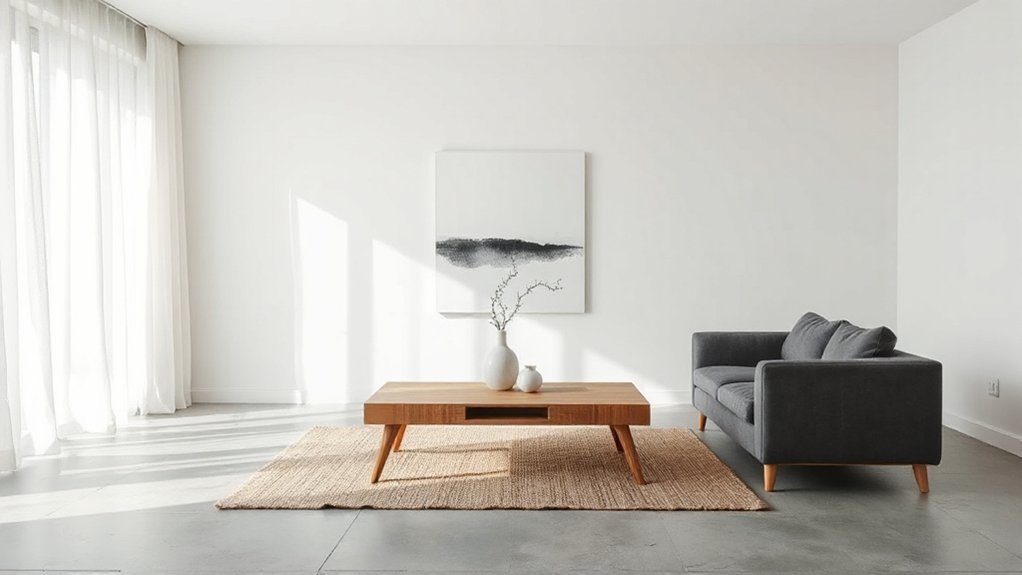
Minimalist interiors aren’t about emptiness; they’re about clarity and purpose. You organize space to reveal function, not to impress with excess. You cut clutter, select only what truly serves daily life, and let geometry guide placement.
This approach isn’t cold—it’s intentional. Bold contrasts create visual anchors, highlighting form, texture, and light without shouting. You balance openness with deliberate zoning, ensuring each element earns its keep.
Statement art becomes a focal point, not filler, chosen for resonance and scale rather than quantity. Materials are honest: wood, stone, metal, concrete, or glass, finished to emphasize tactility and durability.
You maintain restraint in color, letting a single accent color carry mood. In practice, meaning emerges from the relationship between objects, light, and negative space.
The Calm-First Approach: Decluttering Principles
Start by decluttering first, then cultivate calm as your baseline. Remove what doesn’t serve you to create intentional space that guides your decisions, not distracts them.
With a quiet mind, you’ll see what matters most and keep only what aligns with your daily life.
Declutter First, Calm Second
Decluttering first sets the stage for real calm, because a clean, organized space reduces decision fatigue and frees mental bandwidth for what matters. You’ll adopt a practical sequence: sort, reduce, designate, store, maintain. The outcome is steadier focus and faster choices.
- Prioritize essentials over excess
- Designate single homes for items
- Use neutral storage to signal calm
- Limit impulse buys with quick rule checks
- Build a quick daily reset to sustain order
Zen gardens and mindful breathing become tools, not rituals, once clutter is minimized. With fewer distractions, you notice textures, light, and quiet corners more clearly.
This approach isn’t about asceticism; it’s efficiency. You gain control, not restraint—clarity over Chaos. Maintain momentum by reviewing spaces weekly and trimming only what serves your present rhythm.
Intentional Space, Quiet Mind
By prioritizing space that supports your daily rhythm, you create a quiet mind that fuels steady decisions. You design with intent, trimming distractions and preserving function over ornament.
Begin with zones that align to tasks, timing, and energy, so you move through days with less friction. Practice mindful clutter: assign a home for everything, and remove surplus items weekly to prevent backsliding.
Use restrained color and texture to reduce visual noise, letting essential objects breathe. Contain noise flow by considering door seals, soft textiles, and layout that favors tranquil acoustics, especially in work and rest areas.
This calm-first approach yields sharper focus, faster decisions, and sustainable habits, reinforcing a minimalist aesthetic that proves practical, not punitive.
Warm Neutral Palettes That Feel Like You
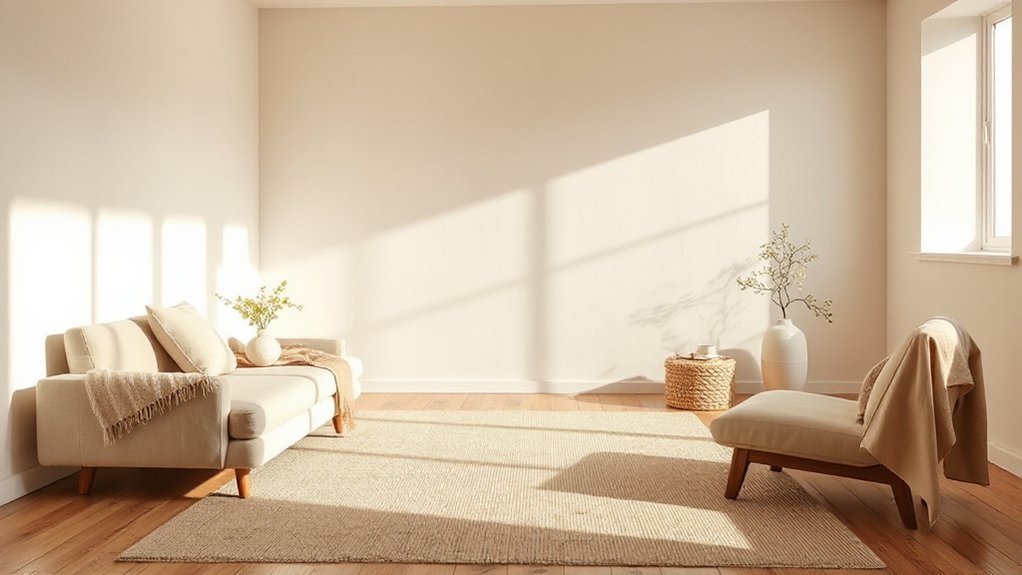
Warm neutral palettes combine ambient warmth tones with soft linen textures to create spaces that feel intimate and lived-in. You’ll notice how slightly tinted whites and beiges read as coziness rather than sterile, thanks to tactile fabrics and subtle sheen.
Start by pairing gentle warmth with restrained contrast to maintain calm, minimalist clarity.
Ambient Warmth Tones
- Use ambient warmth tones as the backbone for cozy color schemes.
- Choose medium woods and soft fabrics to add tactility.
- Introduce warm whites to brighten without glare.
- Layer gentle contrasts to maintain visual interest.
- Keep accessories minimal and meaningful for cohesion.
This approach delivers a calm, grounded atmosphere, where warmth supports function. You’ll feel at ease, yet professionally styled, with every element reinforcing a refined, minimalist ethos.
Soft Linen Textures
Choose textiles with a crisp weave for structure, then layer with looser textures to create depth without visual clutter. Prioritize natural dyes and undyed tones to preserve the understated palette, and keep seams minimal to maintain a sleek silhouette.
Use luxurious linen for upholstery, cushions, and throws to introduce subtle sheen and comfortable weight. Avoid oversized patterns; prioritize solid or microtexture finishes that read calm from a distance.
In practice, let textured fabrics define focal points while the room preserves quiet, purposeful lines.
Furniture That Is Streamlined Without Cold Edges
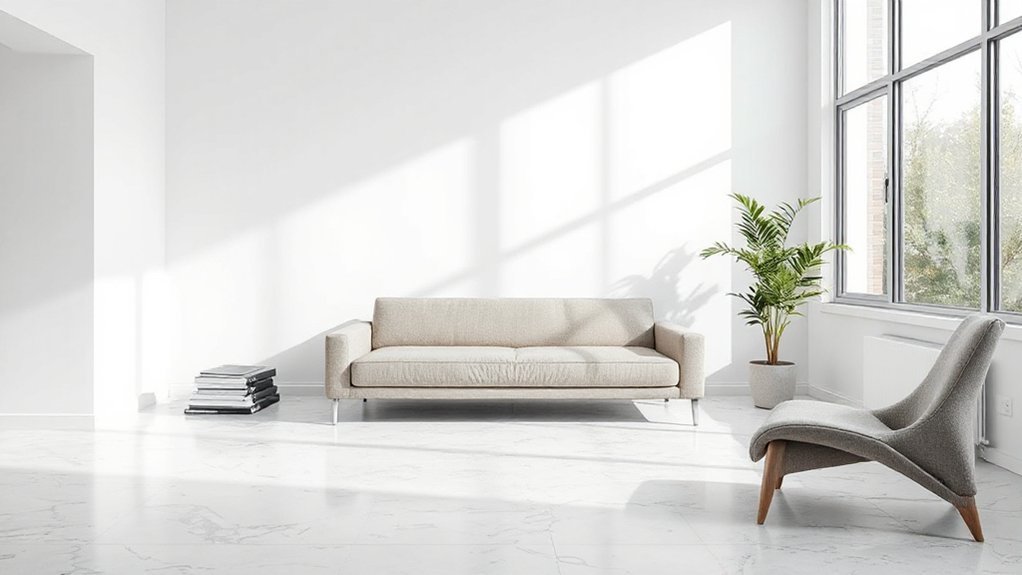
When you design furniture that’s streamlined without cold edges, you prioritize smooth shifts, soft curves, and joints that read as integrated rather than rigid.
- Use continuous silhouettes that minimize sharp corners
- Clamp curves into solid, single-material forms
- Choose matte finishes to soften the perception of form
- Integrate legs and supports as visible lines, not interruptions
- Favor hidden hardware for seamless surfaces
Streamlined furniture avoids harsh contrasts; it communicates warmth through proportion, texture, and restraint. You’ll notice that the absence of cold edges invites touch and flow, not intimidation.
Practical choices tighten the look without sacrificing function: rounded corners, gentle radii, and modest scale. This approach yields pieces that feel calm, usable, and enduring, aligning with minimalist goals.
Your space remains airy, coherent, and refined, with every item reinforcing a cohesive, humane aesthetic.
Smart Storage for Open, Airy Rooms
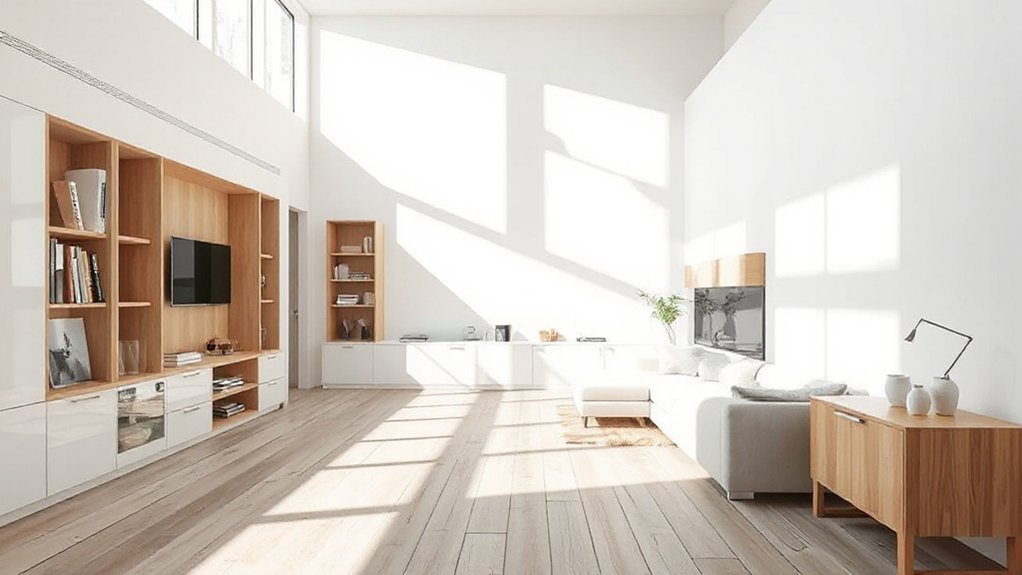
Smart storage plays a key role in keeping open, airy rooms feeling calm and uncluttered. You design with intent, prioritizing form and function over ornament. Use smart storage to vanish excess, not to crowd space.
Opt for open shelving in lieu of bulky cabinets where possible, but constrain it to one or two focused zones to avoid visual clutter. Choose modular units you can reconfigure as needs evolve; keep lines clean and hardware minimal.
Integrate storage within seating and beneath benches to preserve floor clearance. Prioritize hidden compartments for seasonal items and cords.
Elevate with slim, matte-finish materials that reflect light. Label zones for quick retrieval, and keep surfaces intentionally sparse.
Smart storage supports openness while maintaining practical organization.
Texture as Warmth in Minimalism
You use these textures to cultivate a quiet ambiance, pairing them with restrained color to keep spaces calm yet inviting. Your goal is precise, practical warmth that enhances simplicity, not competes with it.
Texture That Warms Minimalism
Texture is the key to warmth in minimalist interiors: it grounds stark spaces without breaking the clean, uncluttered lines that define the look.
You’ll harness texture as a deliberate tool, not a filler. Prioritize elements that deliver textural contrast and tactile comfort while preserving simplicity.
- Choose surfaces with varied grain and finish to create depth
- Pair matte fabrics with glossy accents for subtle tension
- Use natural fibers that invite touch without visual noise
- Introduce handcrafted details to anchor the room
- Align textiles with furniture silhouettes to maintain clean lines
Apply restraint: let each texture earn its place, and keep the palette constrained. This approach reinforces warmth without clutter, ensuring the minimalist credo remains intact.
Soft Materials, Quiet Ambiance
Soft materials shape a room’s quiet ambiance by inviting touch without shouting. You choose soft fabrics and gentle textures to temper hard lines and create contrast that remains calm.
Prioritize materials with natural or refined finishes—cottons, linens, wool blends, and suede-like surfaces—that absorb sound and reduce echoes, reinforcing a serene rhythm throughout the space.
In minimalist layouts, texture should be restrained yet deliberate; aim for one or two high-contrast textures per zone to avoid visual clutter. Guarantee seams, piles, and nap align with the room’s scale for cohesive tactility.
Balance warmth with light and color, letting soft fabrics and gentle textures do the heavy lifting in imparting coziness without sacrificing clarity or order.
Layered Lighting for Mood and Depth
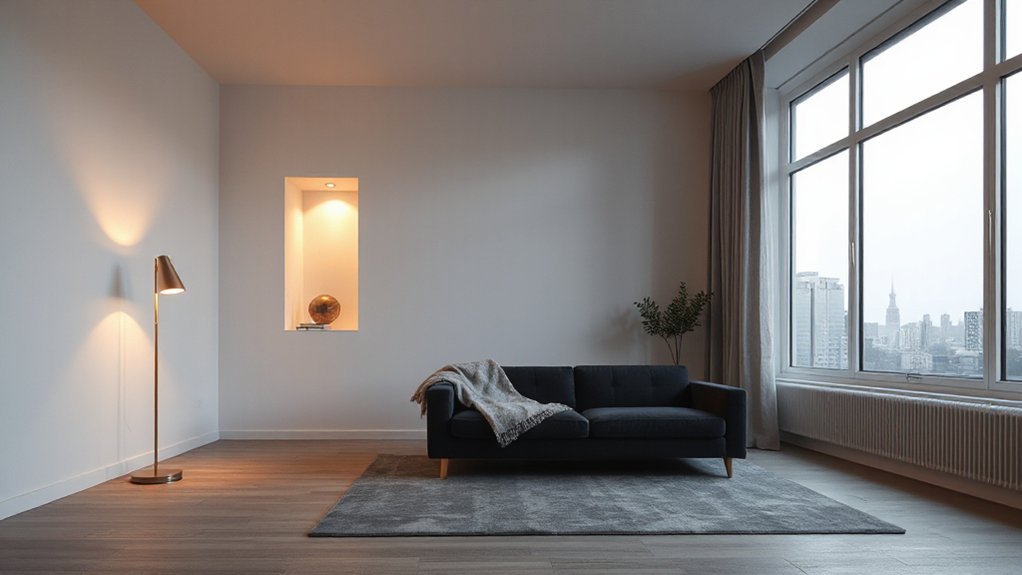
Layered lighting transforms a minimalist space from visually calm to subtly dynamic by combining ambient, task, and accent layers. You’ll shape mood and depth with purposeful luminaires, not glare, using calm, controllable outputs to preserve quiet lines.
- ambient layering sets the room’s overall tone without overpowering surfaces
- task lighting focuses on work zones with glare-minimizing fixtures
- accent lighting highlights architectural features and art
- dimming controls preserve atmosphere while adapting to time
- color temperature choices support mood enhancement and clarity
Use a single, unobtrusive fixture trio to avoid clutter; keep cables hidden.
Prioritize consistency in finish and scale, ensuring the lighting feels intentional and restrained. This approach delivers ambient layering, supports mood enhancement, and sustains minimalist calm.
Purposeful Accessories: Small Decor, Big Impact
Purposeful accessories in a minimalist space must earn their place. You choose small decor with care, confirming each piece serves function, texture, or meaning.
Avoid clutter by limiting the number of items to a few high-impact targets. Curate with intent: select statement pieces that reinforce the room’s palette, contrast, or rhythm, and remove anything that doesn’t justify its presence.
Prioritize quality over quantity, favoring materials that age well and textures that add tactility without visual noise. When you place decor, consider sightlines and scale—floating shelves, a single sculpture, or a quiet bowl can anchor a corner without shouting.
Integrate statement lighting as a functional accent, ensuring it complements, not competes with, the space. The goal: purposeful, restrained decoration that elevates everyday living.
Room-by-Room Minimalist Makeovers
- Declutter first, define function, then select core pieces
- Use a unified materials palette across rooms
- Introduce color strategically for zones
- Integrate vintage accents as deliberate highlights
- Maintain open sightlines and breathable spaces
Common Pitfalls to Avoid in Minimalist Interiors
Minimalist interiors can fail when clutter quietly creeps back in, so recognize and address the pitfalls before they derail your plan. You must resist the urge to fill every surface; intention beats abundance.
Common pitfalls include overdecorating mistakes that undermine clean lines and purposeful emptiness, and neglecting disregarding scale harmony among furniture pieces and decor. Size relationships matter: choose proportionate sofas, tables, and storage that breathe, not overwhelm.
Prioritize one bold focal element rather than competing accents, and ensure storage is integrated, not visible. Material honesty matters too—avoid fussy textures that create visual noise.
Finally, maintain a practical rhythm for daily use: easy-to-clean surfaces, purposeful lighting, and a defined closet plan. Stay disciplined, evaluate continually, and trim gradually to preserve calm, functional spaces.
Frequently Asked Questions
How Can I Mix Minimalism With Personal Heirlooms?
You can mix minimalism with personal heirlooms by prioritizing a few statement pieces and curating them thoughtfully. Start with heirloom integration as focal anchors, then balance with clean surfaces, neutral tones, and plenty of negative space.
Choose one or two heirloom items per room, display them simply, and pair them with modern, functional pieces. Keep textures varied, not cluttered.
Your personal touch should feel intentional, not ornamental, so every piece earns its place.
Is Minimalism Compatible With Pet-Friendly Homes?
Yes, it’s compatible. You can keep a clean, calm space and still welcome pets. Think of pet-proofing essentials as blunt, practical tools that fit the design.
You’ll focus on durable materials, accessible storage, and reduced clutter. Use minimalist pet accessories to container; choose washable throws and scratch-safe zones.
You’ll maintain control of textures and colors. This approach is pragmatic, precise, and authoritative: you protect floors and furniture while preserving a serene, stylish home.
How Do I Budget for a Minimalist Redesign?
You should start by setting a clear budget, then track every purchase to avoid overspending. Create a budget plan with goals, allocate funds for essentials, and reserve a contingency.
Prioritize timeless, multifunctional pieces and DIY where feasible. Look for cost-effective tips like modular furniture, paint instead of new decor, and energy-efficient updates.
Compare prices, use coupons, and unify finishes for cohesion. Stay disciplined, adjust as needed, and regularly review your budget planning to stay on track.
Can Color Help Communicate Calm in Small Spaces?
Yes, color can communicate calm in small spaces. Color psychology suggests cooler, muted tones reduce visual clutter and create perceived spaciousness.
Try calming palettes like soft blues, sage greens, or warm neutrals with matte finishes. Use consistent color across walls and surfaces, limit accent pieces, and introduce texture with textiles to avoid stark contrasts.
Your goal is steady, cohesive harmony that lowers perceived stress and makes the room feel more open and serene.
What Are Quick Fixes to Reduce Visual Clutter?
Quick fixes to reduce visual clutter include practicing decor organization and prioritizing clutter reduction.
Start with a single-surface rule: keep only three essential items visible on each counter or shelf. Use closed storage for everyday items, label baskets, and group cords.
Implement a daily 5-minute reset to return items to their homes.
Opt for neutral palettes and uniform containers to create cohesion. You’ll feel calmer and space will read larger, more intentional.
Conclusion
Minimalist interiors aren’t cold; they’re purposeful. By decluttering, choosing honest materials, and layering light, you create rooms that feel calm and intentional. A striking stat: homes with deliberate storage see a 20–40% perception of more space, even when square footage is the same. Focus on warm neutrals, streamlined furniture, and restrained decor to maintain open sightlines and zoning. You’ll gain clarity, efficiency, and enduring elegance—without sacrificing comfort or personality.
About the Author