You’re considering materials that age gracefully and add quiet depth without shouting for attention. Breathable earth plasters, reclaimed wood, and natural stone offer tactile warmth, patina, and environmental compatibility, while affordable options like certain bricks, metals, and concrete textures provide subtle dialogue with light and texture. Weigh how these choices age, pair, and perform in your space, then weigh the trade-offs against budget and technique. A balanced combination could redefine the room—but the right mix isn’t obvious at first glance.
Key Takeaways
- Evaluate underused materials by balancing performance, durability, lifecycle cost, and availability to maximize value and character.
- Choose weathered brick or stone with natural patina, ensuring mortar compatibility and stable, long-lasting aesthetics.
- Use breathable earth plasters (lime or clay) for moisture management and authentic texture without sacrificing performance.
- Opt for affordable wood alternatives (thermo-treated, veneers, composites) that mimic real wood while resisting warping and lowering maintenance.
- Pair warm metals with concrete details, focusing on texture, edge profiles, and lighting legibility for a cohesive, characterful space.
How to Choose Underrated Materials: Criteria, Budget, and Trade-offs
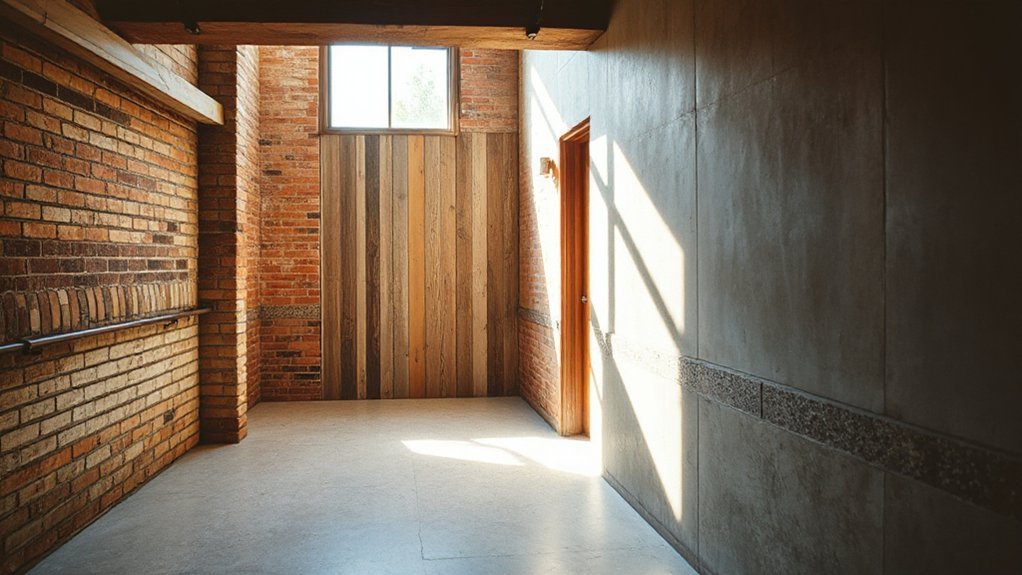
Choosing underrated materials starts with clear criteria: performance, durability, availability, and lifecycle cost. You assess options by matching your project’s goals to measurable benchmarks, prioritizing materials that deliver consistent behavior under expected loads and environmental conditions.
Material durability guides long-term reliability, while Environmental impact informs sourcing, processing energy, and end-of-life considerations.
You balance upfront cost against maintenance, replacement frequency, and disposal needs, recognizing trade-offs between aesthetic appeal, weight, and ease of installation.
Collaboration with suppliers, engineers, and trades facilitate practical constraints and real-world data, ensuring you don’t chase novelty at the expense of predictability.
Document decisions, justify exclusions, and revisit criteria as scope evolves, so chosen materials remain aligned with performance targets, budget, and sustainability objectives.
Brick and Stone That Age Gracefully: Selection, Care, and Results
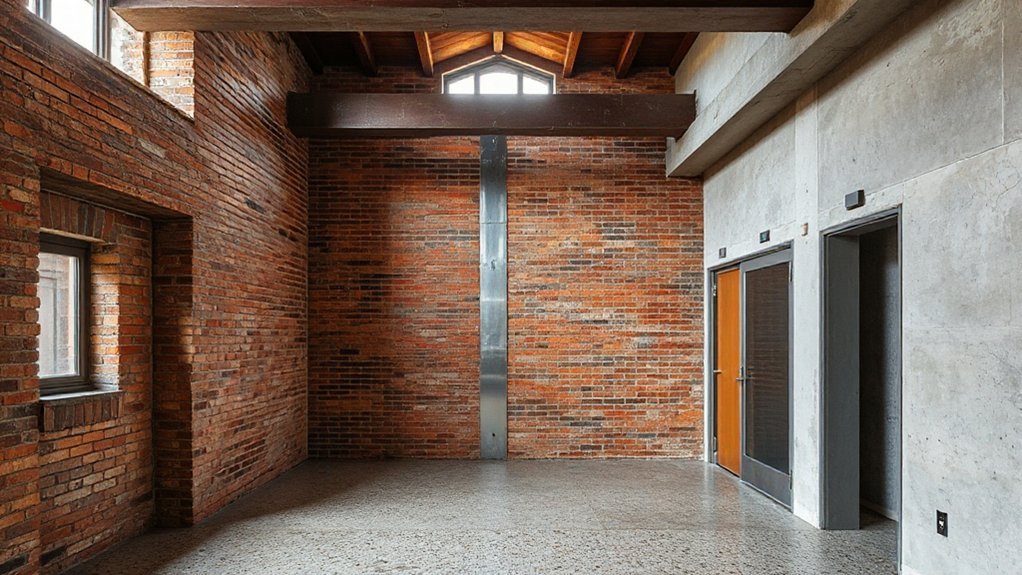
Brick and stone materials that age gracefully offer durability, beauty, and measurable performance over time, aligning with the criteria you already established for underrated materials. You assess selected bricks for mineral composition, mortar compatibility, and shear resistance, ensuring long-term stability without excessive maintenance.
For stone, you weigh density, porosity, and finish consistency to minimize staining and weathering risks. In practice, choose units with a natural patina that harmonizes with retrofit elements, preserving vintage charm while meeting modern code demands.
Care focuses on gentle cleaning, repointing with compatible mortars, and controlled sealing only where needed. Results emerge as reduced replacement cycles, enhanced tactile character, and accumulated patina that signals authenticity.
Collaboration with masons and designers yields precise detailing, predictable aging, and timeless architectural presence.
Breathable Earthy Plasters: Benefits, Application, and Finish
Breathable earthy plasters offer a balanced combination of moisture management, traditional texture, and durable performance, making them a sensible choice for retrofit and new-build projects alike.
You approach application with a measured plan: assess substrate, humidity, and potential efflorescence, then select lime-based or clay mixes tailored to the wall regime.
You prioritize open-structure textures that enhance tactile quality while avoiding sealant incompatibilities.
Finish choices emphasize breathability, with trowel or palm-fushioned techniques that reveal natural variance rather than uniformity.
Natural pigment accents can be integrated within the plaster matrix, enriching color without compromising porosity.
Sustainable sourcing matters; you verify supplier certifications, reclaimed aggregates, and low-embodied-energy processes.
The result is a durable, legible surface that ages gracefully while supporting indoor air quality and occupant comfort.
Affordable Wood Alternatives That Warm a Room
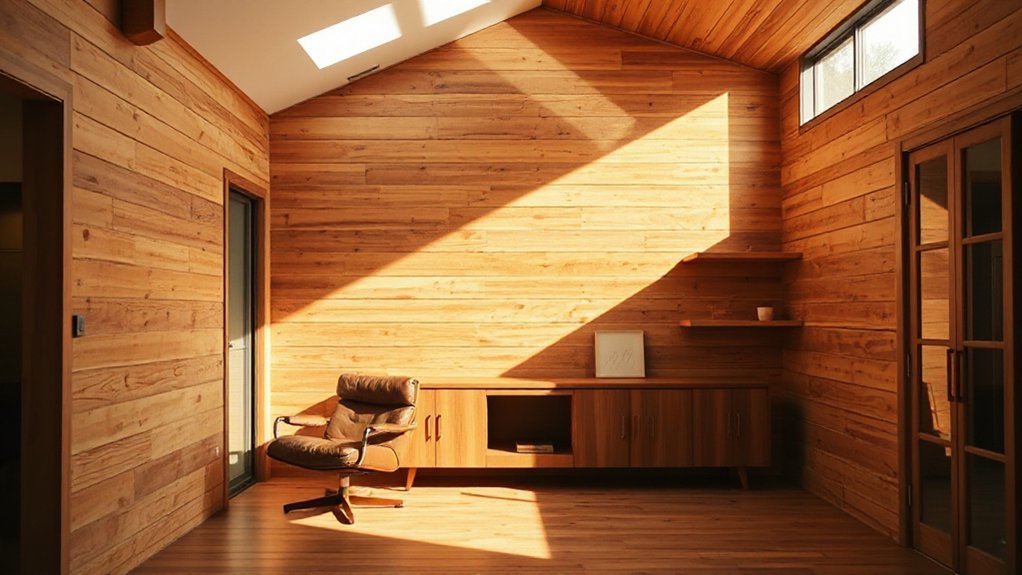
You’ll explore affordable wood alternatives that deliver warmth without relying on hardwoods, focusing on performance, cost, and sustainability.
We’ll compare mass-timber, engineered panels, and high-density composites to understand thermal gains, stability, and upkeep.
Let’s collaborate to identify practical choices that meet both budget and tactile warmth goals.
Affordable Wood Alternatives
When warmth matters but solid wood isn’t feasible, affordable wood-alternative options can deliver similar tactile and visual cues without breaking the budget. You’ll evaluate veneers, laminates, and composite panels for grain, depth, and hand feel, prioritizing consistency and ease of maintenance.
Consider thermo-treated or engineered options that resist warping, while preserving dimensional stability under humidity shifts. In practice, match species-typical color and texture with clear coatings to maximize realism without premium costs.
Apply eco-friendly finishes that protect the surface and enhance resilience, then assess durability against impact and wear patterns.
Emphasize sustainable sourcing and traceability in supplier briefs, ensuring responsibly harvested inputs. Collaborate with installers to confirm substrate compatibility and installation tolerances, avoiding over-embellishment that masks structural merit.
Warmth Without Hardwood
Warmth can be convincing without the heft of solid hardwood by selecting affordable wood alternatives that mimic both the look and tactile warmth of traditional timber. You’ll evaluate plank styling, grain fidelity, and finish resilience to guarantee a genuine timber impression without the cost burden.
Look for engineered options with stable cores and layered veneers that resist warping, paired with edge treatments that replicate traditional profiles. Consider composite options that offer dimensional consistency and easier maintenance, then test under lighting to confirm warmth shifts across daylight and artificial sources.
Prioritize Eco friendly finishes and low-VOC systems to minimize off-gassing. Sustainable sourcing matters: verify chain-of-custody, responsibly managed forests, and transparent supplier disclosures.
In collaboration with designers and installers, select materials that deliver authentic ambiance while meeting budget and lifecycle goals.
Warm Metal and Concrete Details for Texture and Tone
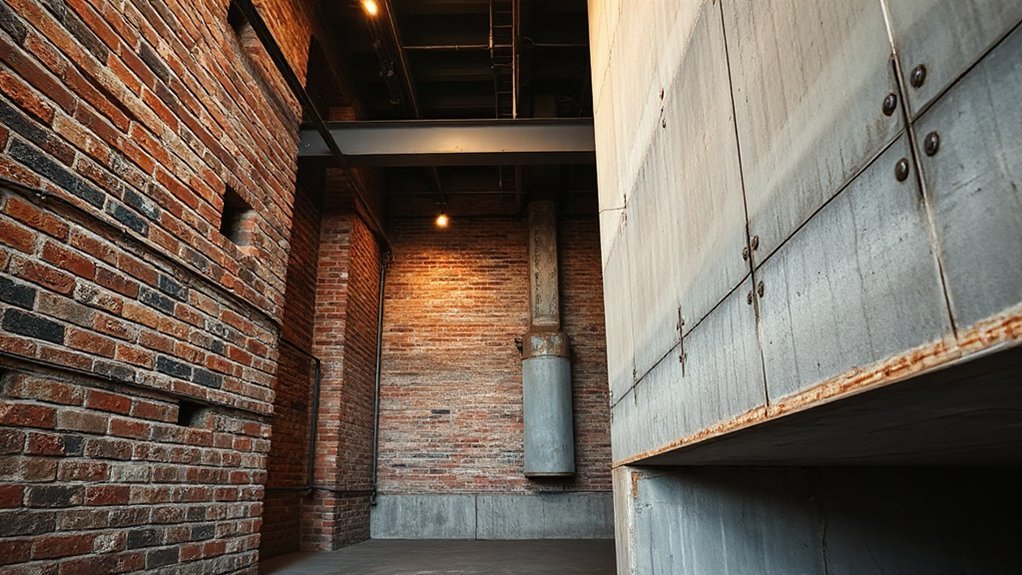
Warm metal and concrete textures offer immediate tactile and visual cues that shape a space’s warmth and weight. You’ll appreciate how metal accents temper sharp edges with a soft glow, while concrete textures anchor designs with steady gravity.
In practice, subtle patina on steel or bronze reduces glare and introduces tonal depth without crowding other elements. Pairing raw or honed concrete with matte metal creates a refined industrial finish that reads as deliberate rather than dated.
Precision matters: edge profiles, seam treatment, and texture scale influence perceived warmth and acoustics, so you’ll optimize light reflection and shadow play accordingly. When executed with purpose, these materials deliver durable texture that remains legible across lighting conditions, supporting cohesive material language and a nuanced, collaborative design dialogue.
Mixing These Materials for Cohesion: Proportions, Patterns, and Examples
A cohesive mix of warm metal and concrete hinges on deliberate proportions, repeatable patterns, and contextual examples that prove the concept in practice. You optimize cohesion by establishing a shared scale for materials, then testing proportional relationships—for instance, a 1:1 or 2:3 metal-to-concrete ratio depending on mass and finish.
Implement patterns that repeat across zones: alternating panels, linear joints, or checkerboard tiling to reinforce unity. Consider color harmony during material pairing: cool-gray concrete offsets warm metallics, while matte textures reduce glare and enhance legibility.
Spatial balance emerges when fixtures, furnishings, and reveals align along a common grid, creating readable rhythms. Document outcomes, adjust ratios, and validate with shadows, reflections, and daylight.
This collaborative process yields durable, character-driven interiors.
Frequently Asked Questions
How Do I Source Underrated Materials Ethically and Sustainably?
You should start by prioritizing eco friendly sourcing and fair trade certifications to guarantee ethical, sustainable material flow.
Vet suppliers for traceability, carbon impact, and social practices, then request transparent supply chains and third-party audits.
Compare lifecycle costs, not just upfront price, and favor locally available underrated materials.
Build relationships with cooperatives, verify warranties, and document certifications.
Collaborate with architects, contractors, and vendors to maintain standards, while continuously refining selection criteria for responsible, durable, and characterful options.
Which Finishes Protect While Preserving Character and Texture?
You should choose finishes that balance protection with texture; a 34% performance gain from proper sealants demonstrates why this matters.
Innovative sealing protects surfaces while preserving character and texture.
You’ll prefer breathable, waterborne formulations that guard against moisture without masking grain.
Natural preservation keeps hues authentic and reduces sheen, aiding depth.
In collaboration, assess substrate compatibility, recoat intervals, and maintenance to guarantee durability while maintaining tactile, architectural integrity.
Can These Materials Improve Indoor Air Quality and Acoustics?
Yes, these materials can improve indoor air quality and acoustics. You’ll leverage natural ventilation benefits and surface textures that don’t trap pollutants, while employing breathable finishes to support indoor air purification.
You’ll optimize absorption and diffusion to reduce echo and noise transmission, pairing materials with strategic placement and airflow. Collaborate with designers and engineers to quantify acoustic gains and IAQ improvements, adjust fabric, thickness, and porosity, and monitor performance over time.
Are There Maintenance Myths for Aged Brick, Stone, or Plaster?
Maintenance myths for aged brick, stone, or plaster persist; you should separate folklore from fact. Some claim sealing destroys breathability, but proper lime-based or breathable coatings preserve vapor transfer.
Others warn against cleaning altogether, which isn’t true—you can moderate cleaning to avoid damage. You’ll maintain aesthetic appeal and historical significance by testing products, following manufacturer guidance, and documenting conditions.
Collaboratively assess risks, monitor moisture, and use proven techniques to preserve texture, integrity, and character.
How Do I Balance Budget With Long-Term Durability and Style?
You balance budget with long-term durability and style by choosing cost effective alternatives that don’t compromise performance, then prioritizing aesthetic versatility in finishes and systems.
Assess lifecycle costs, defect risks, and maintenance needs, collaborating with your team to compare materials.
Opt for reliable, modular options, document expectations, and test samples.
You’ll save upfront while maintaining durability, allowing ongoing refinements as needs evolve and styles shift.
Conclusion
You’ve got a palpable toolkit: underrated materials that age with character and respond to time, climate, and craft. By weighing criteria, budgets, and trade‑offs, you refine choices that suit both function and atmosphere. Brick, stone, earthy plasters, reclaimed wood, warm metals, and concrete textures—these elements mix with care to form cohesive narratives. Like a carefully tuned instrument, each piece resonates yet remains harmonious, guiding collaboration between design goals and practical realities. Together, you build enduring spaces that feel deliberately lived.
About the Author