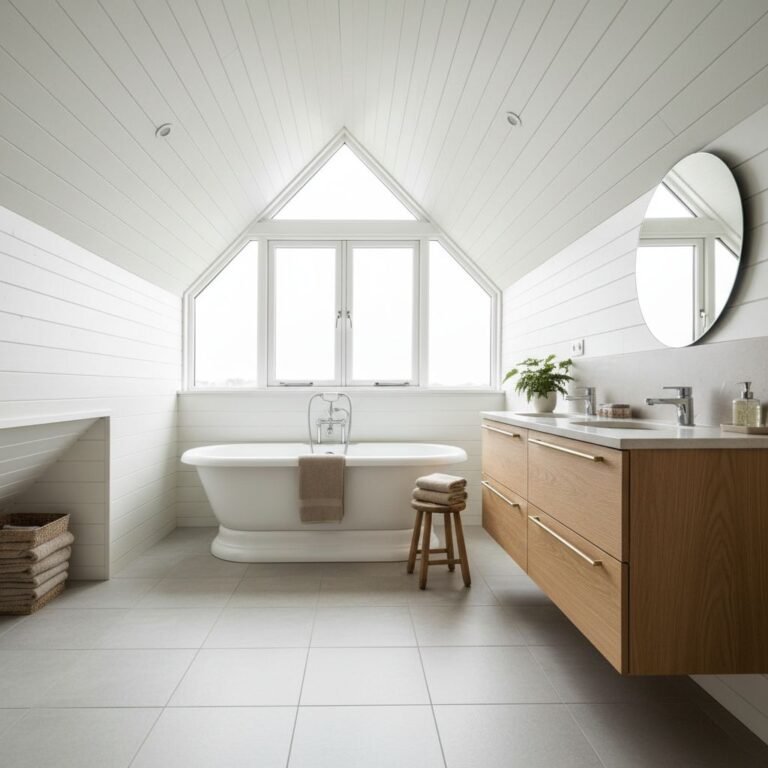
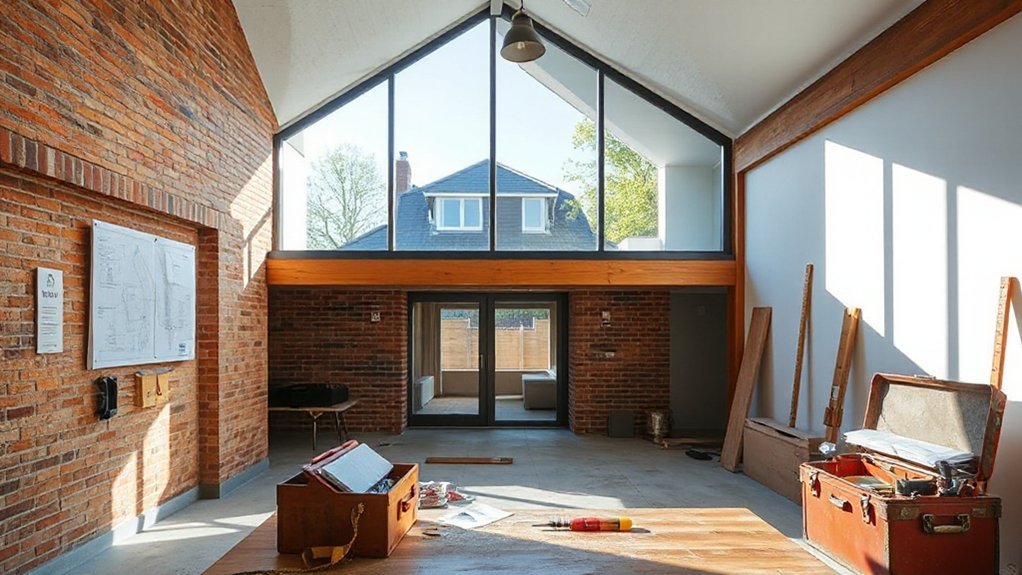
Did you know nearly half of home extensions fail to meet building control on first pass? You’ll want a practical, design-minded approach that keeps fire, structure, and energy targets in sight from the outset. As you weigh planning vs. permitted development, verify constraints locally and map out required approvals. The path you choose—planning application or building control submission—will shape timelines, costs, and compliance milestones, so you’ll want a solid plan before you commit to design details.
Key Takeaways
- Extensions and loft conversions must meet UK Building Regulations, covering parts A–L plus energy efficiency, fire safety, ventilation, and moisture control.
- Planning permission vs permitted development determines route; even PD requires design and environmental compliance.
- Local Planning Authority checks planning constraints, overlays, and neighbour considerations early in the project.
- Structural and fire safety require verified loads, fire strategy, escape plans, and compliant materials with proper documentation.
- Energy efficiency and design principles focus on continuous insulation, airtightness, daylight, circulation, and accessible egress.
Which Building Regulations Apply to Extensions and Loft Conversions
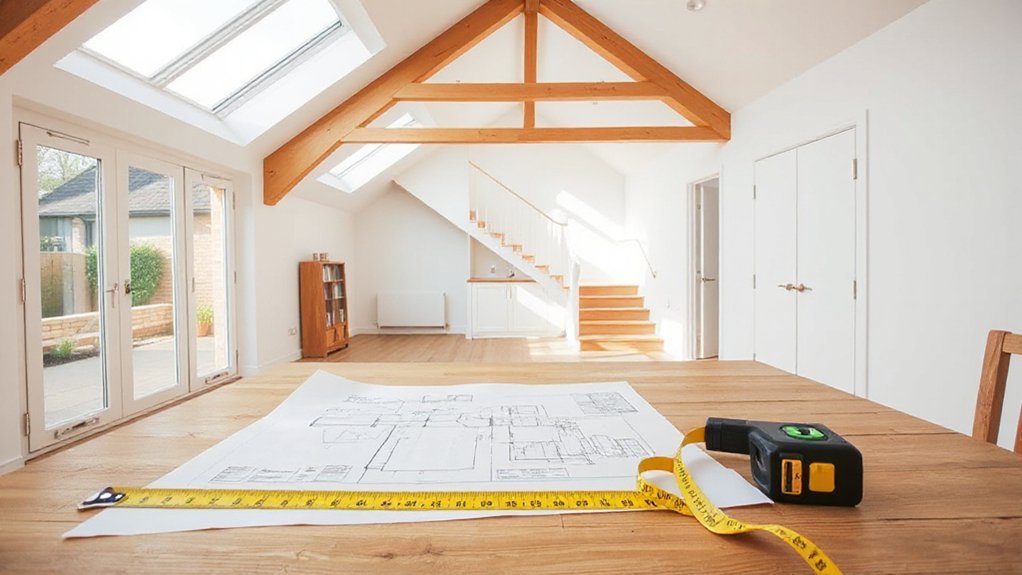
In the UK, extensions and loft conversions must comply with the Building Regulations that apply to the particular work—primarily Parts A to L, plus any applicable energy efficiency, fire safety, and ventilation standards. You’ll verify which parts cover structural integrity, moisture control, electrical safety, drainage, and acoustics for your project, then map them to your planned design.
Design aesthetics matter, but performance rules take precedence, so you align aesthetics with compliant detailing. Material selection becomes critical: choose durable, compliant substrates, fixings, and insulation that meet thermal and fire ratings.
You’ll also document compliance routes, identifying whether work requires full approval or deemed-to-satisfy routes, and guarantee airtightness and ventilation targets meet or exceed standards. Clear coordination between design, structure, and services minimizes revisions.
Planning Permission vs Permitted Development?
Do you know whether your extension or loft conversion needs planning permission or falls under Permitted Development? In practice, Permitted Development lets certain modest enlargements proceed without formal planning, but limits, conditions, and site specifics apply.
Planning permission offers full control and public scrutiny, ideal for substantial changes, listed buildings, or sensitive areas. Your choice hinges on scale, location, and potential impact on neighbors.
If your project remains within permitted limits, you’ll still need to comply with design and environmental measures; otherwise, you’ll submit a planning application and address any objections.
Historic preservation concerns can influence both routes, particularly where listed status or conservation areas apply.
Consider environmental impact assessments for larger schemes, and document compliance with neighbour consultation and safeguarding requirements to avoid delays.
How to Check Planning Constraints Locally
Your first stop is your Local Planning Authority to confirm who’s policing your site and what that means for your project. Check the authority’s zoning maps, policy notes, and any site-specific overlays to understand restrictions and allowances.
Then outline the Application Timelines and Steps, so you can anticipate forms, consultations, and decision windows without surprises.
Local Planning Authorities
You’ll want to map constraints early, including permitted development routes and nearby listed structures, to avoid rework.
Engage early with planning officers to clarify expectations, submission requirements, and any bespoke assessments required for your site.
Build a concise case around what you’re proposing, tying design intent to policy aims like sustainable design, daylight, and access.
Keep communications focused and timely.
Expect checks on Construction permits and overall compliance with Zoning restrictions as part of the pre-application dialogue, then align your plans with documented conditions before submitting.
Zoning And Restrictions
Zoning and planning constraints shape what you can build, so you’ll want a clear map of local rules before drafting designs. You’ll check with your planning portal or local planning authority to identify zone designations, permitted development rights, and any site-specific overlays.
Look for constraints such as setback requirements, height limits, and floor-area caps that affect extensions or lofts. You’ll also verify if your project triggers planning permission or falls under permitted development, and whether pre-application advice is worth seeking.
Consider Zoning restrictions that may limit shape, footprint, or materials. Heritage considerations can influence facade treatments, alignment with historic streetscapes, or conservation area guidelines.
Document uncertainties early to prevent late redesigns and ensure compliance from concept to submission.
Application Timelines And Steps
To check planning constraints locally, start by mapping the key application timelines and required steps with your planning authority or portal. You’ll align submission, validation, and decision windows with practical milestones, ensuring you reserve review periods for design iterations, consultations, and potential amendments.
Stay aware of local nuance—buffer times, advertised changes, and targeted decision dates shape your schedule. Consider how design aesthetics and material selection influence visibility, neighbour feedback, and compliance checks, streamlining approvals through early engagement.
- Identify submission windows, pre-application advice, and expected determination dates with your authority.
- Plan iterative design reviews, consultation rounds, and amendments to stay within timelines.
- Confirm required documentation for design details, materials, and sustainability metrics before final submission.
What Building Control Checks and Structural Safety Involve
You’ll work with Building Control to confirm roles and responsibilities, from initial plan checks to on-site inspections.
Structural integrity checks focus on loads, connections, and resistance to weather, with documented evidence of compliance.
You’ll gather and present the necessary compliance documentation to demonstrate safety and design intent.
Building Control Roles
Building Control handles the checks that keep extensions and loft conversions safe, compliant, and buildable, from plan acceptance to site inspections. You’ll find roles split between plan assessment, on-site verification, and final approvals, all grounded in regulatory expectations.
You must align Building materials and construction methods with approved drawings, slip-free junctions, and fire safety provisions, while ensuring accessibility and ventilation meet standards. Inspectors focus on load paths, fire compartments, and moisture control, confirming that practical design choices meet safety margins without delaying construction.
You’ll benefit from early dialogue to avoid retrofits, and you’ll gain a clear audit trail for accountability and future renovations. Rely on documented decisions to defend choices if concerns arise during build, certification, or sale.
- Plan assessment and design conformance
- On-site presence and progress verification
- Final approvals and compliance reporting
Structural Integrity Checks
You’ll review foundation stability, ensuring sub-base preparation, bearing capacity, and settlement risks are addressed before concrete pours. Structural calculations verify load distribution paths through walls, beams, and floors, so joints and fixings resist uplift, deflection, and vibration.
During inspections, you present as-built details, material certificates, and load tests where required, confirming elements meet design intent. Regulators expect clear documentation of retained loads, wind and seismic considerations, and redundancy in critical members.
You focus on detailing connections, brackets, and interfaces to prevent movement, ensuring long-term performance within permitted development parameters.
Compliance Documentation Requirements
How do Building Control checks translate into concrete compliance once you’re planning an extension or loft conversion? You’ll assemble documentation that proves structural safety, fire resilience, and accessibility meet current UK regs. Expect drawings, calculations, and product certificates reviewed against approved plans, with iterative sign-offs as needed.
Historical precedents guide acceptability, while Cultural considerations shape layouts and egress choices, ensuring alignments with local expectations. You’ll need a coherent package showing load paths, party-wall implications, and material durability, plus risk assessments for fire spread and means of escape.
- Compile spanning calculations and connection details that demonstrate structural robustness.
- Attach fire strategy, insulation performance, and compliance with ventilation and safety standards.
- Include surveys, conformity statements, and amendments reflecting regulatory updates.
Fire Safety Requirements for Extensions and Lofts
Fire safety is a core consideration when extending or converting lofts, and you must design for early detection, safe evacuation, and compartmentalisation. You specify fire detection positioned to maximise early notice and reliable alarm triggering, linked to a responsive evacuation plan.
You’ll implement compartmentalisation through fire-resisting elements that slow the spread, giving occupants time to reach safety. Guarantee escape routes are clearly indicated, unobstructed, and accessible to all occupants, with appropriate lighting and signage.
Consider material choices and finishes with low smoke development and fire-rated protection for structural elements, doors, and routes. Integrated signage, alarms, and, where required, emergency lighting support compliant contingencies.
Regular maintenance and periodic testing of detection, containment, and escape provisions keep your extension or loft compliant and safe.
How to Meet Energy Efficiency Standards
You’ll need to meet the energy performance targets and apply robust insulation and ventilation standards from the start.
Plan for airtight construction, appropriate thermal bridging details, and controlled ventilation to balance comfort with compliance.
This sets a clear path for design choices that align with regulation while preserving build quality and energy efficiency.
Energy Performance Targets
- Define baseline metrics and interim milestones to demonstrate continual improvement.
- Coordinate design decisions with compliant fabric, services, and systems to meet thresholds.
- Compile evidence, including audits and calculations, for submission and future monitoring.
Insulation And Ventilation Standards
Insulation and ventilation are the practical fulcrums for meeting energy efficiency standards in UK extensions and loft conversions. You’ll design with continuous insulation, minimizing thermal bridging at joints, corners, and penetrations to reduce heat loss.
Specify generous U-values for walls, roofs, and floors, pairing with airtightness strategies to prevent uncontrolled drafts. Use appropriate moisture barriers to prevent condensation risks that threaten timber and insulation performance.
Ventilation should balance energy savings with indoor air quality, favoring controllable mechanical systems or passive strategies that maintain favourable air changes without compromising thermal integrity.
Align construction details with regulations on thermal performance, ensuring compatibility between insulation, air barriers, and ventilation routes. Document test results and install checks to verify compliance and post-build performance.
Design Tips That Stay Compliant: Space, Light, and Access
When planning extensions or loft conversions, you should prioritize space, light, and access to stay compliant with building regs and practical usability. You’ll design for efficiency, ensuring rooms feel larger, daylight is maximized, and egress is straightforward.
Plan layouts that accommodate interior decor and furniture placement without crowding key paths. Keep openings, corridors, and stair widths compliant, and choose glazing and insulation that meet regs while brightening interiors.
- Maximize natural light while preserving thermal performance, using appropriate glazing ratios and orientation.
- Allocate clear circulation zones; avoid obstacles that hinder egress or furniture flow.
- Integrate interior decor with practical fixtures, ensuring furniture placement supports function and compliance alike.
How to Engage Architects, Engineers, and Building Control
To engage architects, engineers, and building control effectively, start with a clear brief that defines scope, budget, and performance targets for your extension or loft conversion. You’ll establish decision criteria, timelines, and responsible parties so reviews stay focused and efficient.
Hire a design team that communicates in plain terms, documents assumptions, and confirms compliance milestones early. Share your interior decor intentions and material selection preferences so specialists align aesthetics with suitability and regulation.
Engage engineers for structure, services, and energy performance up front, enabling accurate load assessments and feasible layouts.
Build control becomes a collaboration: welcome pre-application checks, plan for contingencies, and keep records updated. Maintain concise progress reports, approvals, and change logs to avoid costly hiccups later in the process.
Choosing the Path: Planning Application or Building Control Submission

Choosing the path between a planning application and a Building Control submission depends on what you’re extending and how it fits your site constraints. You’ll weigh design ambition against regulatory thresholds, local sensitivities, and practical timelines.
A planning application suits substantial changes, visible impact, or constraints tied to Historic preservation and community amenity, while Building Control focuses on built-in safety, structure, and energy performance.
Consider approvals needed before work begins, not after, to avoid delays.
- Assess site constraints and historic context to decide if planning is essential or optional.
- Map safety, energy, and accessibility targets to Building Control requirements and feasible design choices.
- Evaluate environmental impact and align with approvals path to minimize revisits and objections.
Common Pitfalls to Avoid and Objections Handling
Common pitfalls can derail a project before it starts, so spot them early and set your objections strategy up front. You’ll want to preempt common sticking points: overly ambitious scope, conflicting stakeholder inputs, and missing compliance checks.
Track how design aesthetics align with local constraints, planning policies, and party-wall considerations, so you don’t chase revisions after submission. When objections arise, respond promptly with reference to statutory requirements, drawing clear connections between your plans and approved standards.
Keep a concise log of correspondence, decisions, and evidence to support changes without delay. Emphasize Material selection that meets energy, safety, and longevity criteria, avoiding later retrofit pressures.
Build consensus by presenting practical compromises, evidence-backed justifications, and transparent timelines to maintain momentum.
Budgeting, Timelines, and Approvals: Practical Management
Effective budgeting, realistic timelines, and solid approvals are the backbone of a smooth extension or loft conversion. You’ll align costs with regulatory requirements, so your project stays on track and compliant from day one.
Budget planning becomes a continuous discipline: forecast contingencies, factor survey and planning fees, and reserve for unexpected site conditions.
Timelines demand sequencing, approvals, and phasing that minimize delays and disruption.
Approvals hinge on clear documentation, trusted processes, and proactive dialogue with your building control officer.
Stay design-minded by integrating workable margins for client changes without blowing your budget.
1) Budget planning: establish a baseline, monitor variances, and adjust for permit fees and surveys.
2) Contractor selection: evaluate credentials, track record, and post-approval support.
3) Risk management: document decisions, capture approvals, and maintain a single source of truth.
Post-Completion Certificates, Approvals, and Documentation
As you move from planning and approvals into completion, you’ll tie up all the loose ends with post-completion certificates, approvals, and documentation. You’ll assemble final inspection reports, occupancy determinations, and compliance declarations to prove the project meets requirements.
Expect timely issuance of construction warranties and any manufacturer guarantees tied to installed elements. Verify contractor certifications and the scope of works against the approved plans, noting deviations and resolutions.
Gather as-built drawings, fire and structural risk assessments, and energy performance certificates to confirm performance targets. Retain warranties, maintenance manuals, and service agreements for future upkeep.
Ascertain warranties cover hidden defects and provide clear transfer conditions. Maintain a concise log of correspondence with building control, planners, and inspectors for audit readiness.
Frequently Asked Questions
What Are Common Exemptions for Alterations Under Domestic Properties?
You’ll find common exemptions for alterations on domestic properties include modest extensions, certain loft conversions, and internal changes that don’t affect structure or drainage.
You’ll still consider Building permit requirements and Planning permission exemptions, especially for single-storey builds under permitted development.
You’ll avoid exterior changes that exceed volume limits or cause overhangs.
You’ll document compliance, confirm neighbour consultations if needed, and guarantee fire safety and energy standards are met to minimize delays and avoid penalties.
How Does Future Sale Affect Extension Compliance Requirements?
Future sale can dramatically shift your compliance implications—if you don’t plan, your extension could stall the deal.
You’ll need to guarantee plans, regulations, and inspections match current standards before listing. Obtain required certificates, confirm party-wall and fire safety compliance, and log energy efficiency improvements.
If you’re selling soon, prioritize building-control sign-off, documented deviations, and EPC upgrades.
This proactive approach minimizes delays, protects value, and keeps buyers confident in your project’s regulatory footing.
Can Loft Conversions Require Party Wall Agreements Differently?
Yes, loft conversions can trigger party wall issues differently depending on scope. You’ll likely need a party wall agreement if you’re building up to or beyond adjoining boundaries, or impacting shared structures.
Boundary agreements clarify limits and rights before work starts. You should engage a surveyor early, document edge conditions, and secure written consent with your neighbor to avoid disputes.
Keeping design intentions compliant and your project timeline intact is important.
Do Communal Buildings Have Shared Building Control Processes?
Yes, communal buildings follow shared building-control processes, shared compliance, and communal regulations. You’ll coordinate with the managing body, align plans with local authority requirements, and confirm fire, access, and structural standards.
You’ll submit shared assessments, share drawings, and synchronize inspections. You’ll navigate approvals together, track timelines, and document changes.
You’ll maintain design-minded practicality, regulatory savvy, and precision, ensuring every party understands responsibilities. You’ll finish with compliant, well-documented, and cohesive outcomes across the communal framework.
Are There Grants or Subsidies for Compliant Extensions?
Yes, you can access grants or subsidies for compliant extensions, depending on eligibility and regional schemes. Grant eligibility hinges on homeowner status, project type, and sustainability goals.
While subsidy criteria focus on energy efficiency, cost-sharing, and workmanship standards. You should pursue local authority or housing association programs, plus retrofit or green grant options.
Track deadlines, required documentation, and compliance with Building Regulations. If approved, subsidies align design goals with regulatory clarity, easing permit risk and financing.
Conclusion
In short, you’ll navigate extensions and loft conversions by pairing planning insight with strict building control. Stay proactive: engage early, document decisions, and align structure, services, and safety with Parts A–L. One eye-catching stat: around 40% of home extensions fail planning at the first submission, often due to misaligned scope or missing details. Keep design-minded pragmatism, precise budgeting, and clear approvals at the forefront to avoid delays and secure compliant, high-performance spaces.
About the Author