
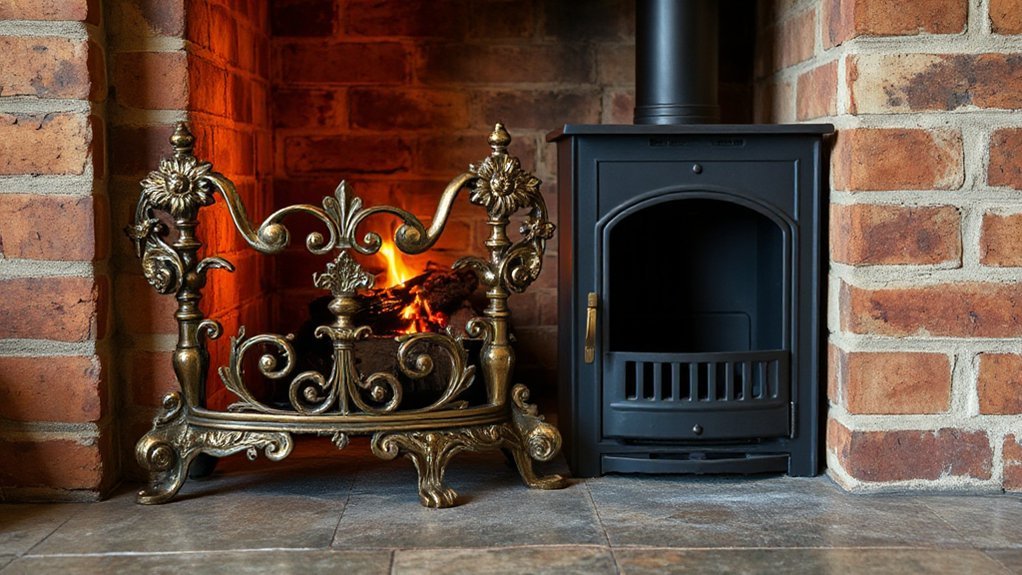
You’re looking at a Victorian fireplace basket and weighing a shift from wood to multi-fuel. It’s a practical move that preserves period charm while expanding heat options, but it demands careful kit selection, proper fit with your hearth, and correct venting. Get the basics right first, then consider authentic details that keep the look intact. The path you choose will shape performance and safeguards—and that point isn’t distant.
Key Takeaways
- Choose a period-accurate multi-fuel conversion kit that matches the fireplace’s dimensions, finishes, and historical aesthetics.
- Ensure authentic brick lining, soot patinas, and metal patinas to maintain Victorian appearance while enabling coal and wood use.
- Verify venting, clearances, and a compatible flue system; install rated liners, tight damper, and ash pan for safe multi-fuel operation.
- Prioritize safety: check damper seals, gaskets, and chimney integrity; use proper screens and ash handling for coal and wood.
- Plan staged testing with dry fuel, wood, and coal; monitor draft, heat, and grate temperature; document maintenance for preservation.
Why Victorian Baskets Invite a Multi‑Fuel Upgrade
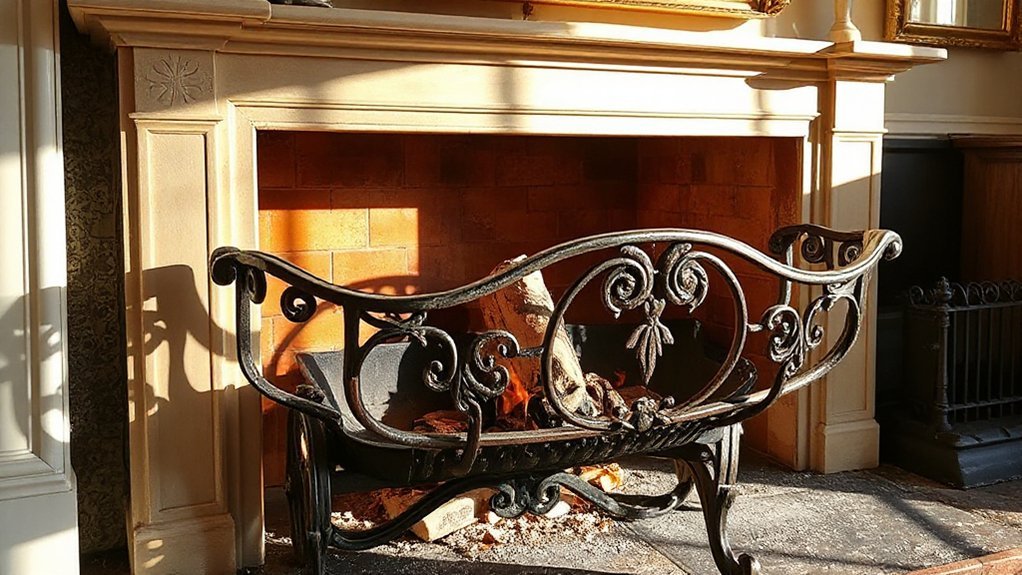
Multi‑fuel upgrades preserve Victorian aesthetics while enabling cleaner burn profiles and improved heat delivery, making the fireplace more usable year‑round. You’ll want a robust grate, a properly sized throat, and compatible flue options to handle gas, pellets, and briquettes alongside traditional logs.
Maintaining historical accuracy remains essential; choose components that reflect period proportions, textures, and finish. With careful selection, you gain reliability, reduced emissions, and consistent warmth, all while honoring the craft of the era.
This approach respects both function and historical accuracy.
Do You Need Multi‑Fuel? Benefits, Fuels, and Limits
If you’re weighing a multi‑fuel upgrade, the question isn’t whether you can use more than coal and wood, but whether you actually need to. You’ll weigh practicality against historical accuracy and aesthetic preservation.
Multi‑fuel offers extended burn times, cleaner control, and winter reliability, yet it can complicate venting, ash disposal, and in‑firebox wear. Not all fuels behave the same: some require grate adjustments, others demand different air supply settings.
Consider local fuel availability, cost stability, and soot buildup on the mantel’s visual line. A well‑chosen mix should respect the basket’s proportions and avoid overpowering the flame’s Victorian silhouette.
If your goal is consistent heating with minimal disruption to the room’s look, multi‑fuel can be justified; if you prize period precision, reassess only after testing.
How to Choose a Period‑Accurate Conversion Kit
To choose a period-accurate conversion kit, start by matching material and finish to your fireplace basket for a seamless look.
Confirm the kit fits the fireplace vintage you own, checking dimensions, mounting points, and compatibility with your hearth setup.
Verify certification and safety standards to confirm the kit meets current regulations and performance expectations.
Material and Finish Match
When choosing a period-accurate conversion kit, prioritize material and finish that closely match your fireplace’s era and existing surround. You want seamless integration that preserves Fireplace aesthetics and reinforces historical accuracy without distracting contrasts.
- Match metals and patina to your mantle, grate, and surround.
- Favor finishes that mirror original tones, textures, and gloss levels.
- Verify tolerance of heat exposure, ensuring durability aligns with period expectations.
Select components with authentic casting marks, rivets, or decorative motifs typical of your era, avoiding modern chrome or overly twee detailing.
Confirm that the kit’s heat shield, collar, and throat pieces blend with surrounding masonry. This alignment reduces visual disruption and preserves the room’s historical rhythm.
Precision here ensures the conversion reads as native, not retrofitted, sustaining credibility in your Victorian scheme.
Fit to Fireplace Vintage
A proper fit means selecting a period-accurate conversion kit that visually and functionally integrates with your specific Victorian fireplace. You’ll assess silhouette, detailing, and finish to preserve authentic proportions, mantle line, and hearth depth, avoiding mismatched modern silhouettes.
Prioritize kits designed for period radiants that mimic brick lining, soot discoloration, and metal patinas found in historic units. Check available insert sizes, firebox dimensions, and chimney compatibility to maintain proportional heft and airflow.
Compare metalwork patterns, rivets, and decorative motifs to your fireplace era, ensuring consistent Victorian aesthetics across components. Prioritize historical accuracy over trend; opt for authentic grates, doors, and surrounds rather than generic designs.
The result should read cohesive, deliberate, and true to the era, both visually and functionally.
Certification and Safety Standards
- Confirm listing approvals and manufacturer support
- Inspect material quality, gaskets, and fasteners for long-term reliability
- Review installation instructions for clean, code-compliant integration
Safety Basics: Venting, Chimney, and Clearances
You’ll start by confirming venting requirements, ensuring clear, unobstructed paths and appropriate vent materials for your chosen conversion.
Then, reference the chimney clearances guide to maintain safe distances from combustibles and verify compatible clearance measurements for your setup.
Finally, align multi-fuel safety practices with your installation plan, outlining how different fuels affect venting, chimney integrity, and overall operating safety.
Venting Requirements Basics
Venting requirements for a Victorian fireplace basket are non-negotiable safety criteria, and understanding them helps prevent fire hazards and carbon monoxide intrusion. You’ll need clear pathways for exhaust, appropriate clearances, and compatible venting materials to maintain performance without compromising aesthetics or safety.
1) Install a properly rated flue liner or chimney insert that suits multi-fuel use, ensuring airtight seals and correct slope for drainage.
2) Verify draft with a professional assessment, and adjust with properly sized hearth connectors to prevent backdraft.
3) Schedule regular inspections for wear, creosote buildup, and vent integrity to sustain Fireplace aesthetics and Historical accuracy while maintaining safe operation.
Chimney Clearances Guide
Chimney clearances are non-negotiable safety parameters that protect you from fire risk and corrosive fumes. You must observe manufacturer specs, local codes, and the building’s structure when sizing flue liners, hearth extensions, and radiant barriers.
Maintain minimum distances between combustibles and all chimney components, including joints, insulation, and exterior cladding.
Venting path integrity matters; guarantee smooth transitions, proper supports, and unobstructed horizontal runs to prevent condensation and buildup.
Historical accuracy informs authentic restoration while meeting modern safety standards, so you align old workmanship with current clearance charts.
Aesthetic considerations matter, yet they never override safety; concealment shouldn’t reduce clearance margins or compromise access for inspection.
Document clearances, and recheck after alterations, repairs, or seasonal climate shifts to sustain dependable performance.
Multi-Fuel Safety Practices
Safely managing multiple fuels starts with disciplined venting, robust chimney performance, and strict clearance adherence. You’ll maintain proper venting clearances, monitor backdraft risks, and verify that all appliances meet manufacturer specs before switching fuels.
Poor venting can create condensate, creosote buildup, and uneven heat output, undermining fireplace aesthetics and performance. Regular chimney inspections, cleanings, and moisture control prevent dangerous obstructions and fuel spillage.
When using multi-fuel, deploy appropriate screens, spark arrestors, and ash management to minimize hazards and maximize heat output. Keep firebox openings sized for each fuel type, and document changes for safer operation.
Align clearances with local codes, and never compromise structural integrity for convenience. Consistency protects you, your home, and the ambiance you want from every flame.
- Venting discipline and clearance checks
- Chimney integrity and obstruction prevention
- Fuel-specific usage, screens, and ash management
Step‑by‑Step Wood‑to‑Multi‑Fuel Conversion
If you’re converting a wood-burning fireplace basket to multi-fuel use, start by evaluating the existing lining, grate, and damper to determine compatibility and any necessary upgrades. You’ll verify brickwork integrity, check for cracks, and assess airflow paths before altering components.
Next, select a suitable multi-fuel grate and an appropriate firebrick lining, ensuring the insert accommodates coal and seasoned wood. Fit a rated flue collar, install a tight-sealing damper, and add a cleanable ash pan if possible.
Reface the surround only where needed to preserve Victorian aesthetics and historical accuracy, avoiding over-modernization. Install secure door seals, a spark arrestor, and proper gasketing.
Test with dry fuel, log logs, and coal in stages, monitoring draft, heat output, and grate temperature for safe, efficient operation. Document changes for future maintenance reference.
Aftercare: Maintenance to Protect Beauty and Efficiency
Regular maintenance keeps your Victorian fireplace basket looking authentic and running efficiently. To protect beauty and efficiency after your wood-to-multi-fuel conversion, adopt a disciplined routine focused on Cleaning schedule and aesthetic preservation.
You’ll inspect the basket body and grate for heat stress, and clean deposits promptly to prevent staining or corrosion. Use a soft brush and non-abrasive cleaner on metal surfaces, avoiding harsh chemicals that could dull patina.
Maintain draft control and chimney seals, checking gaskets for wear and ensuring proper airflow. Document maintenance tasks to track wear and plan timely refreshes.
- Establish a weekly Cleaning schedule with plain-language steps and safe disposal notes.
- Schedule seasonal inspections of metal, joints, and grate supports for signs of fatigue.
- Record outcomes and any refinishing needs to sustain aesthetic preservation.
Troubleshooting and When to Call a Professional
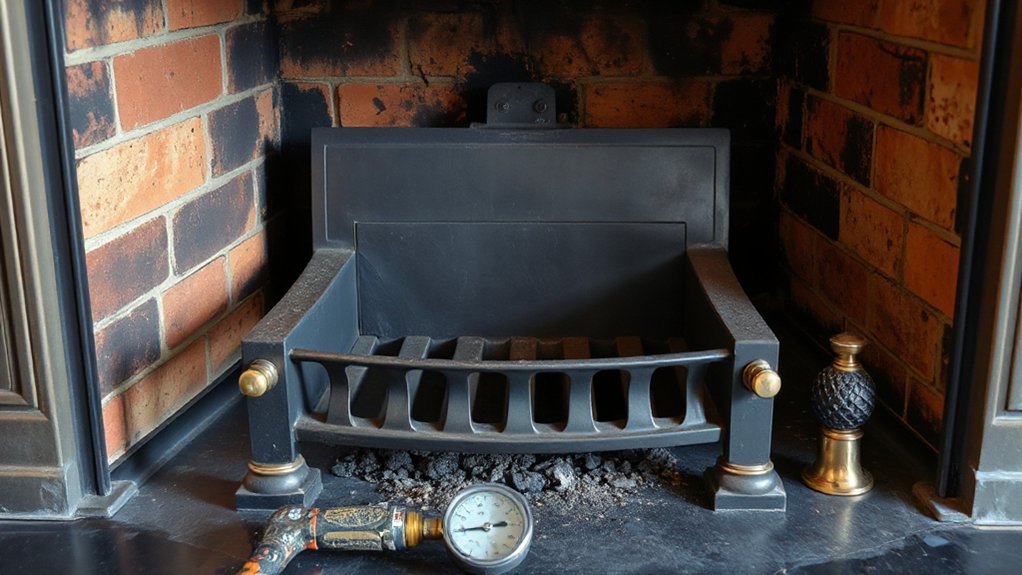
When things don’t look right after a wood-to-multi-fuel conversion or during routine use, you need a clear plan for troubleshooting and knowing when to call a professional.
First, confirm installation details match manufacturer specs and local codes, noting Historical accuracy in materials and setup.
If you observe smoke leakage, poor draft, or unusual odors, stop using the unit and inspect seals, gaskets, and chimney connections for deterioration.
Check for overheating, cracked bricks, or warping that compromise Material durability.
Verify grate and ash pan seating, and ensure air controls move freely without binding.
Document dates of service and fault patterns.
If issues persist after basic checks, schedule a professional assessment promptly to prevent unsafe failures and preserve performance, efficiency, and compliance.
Frequently Asked Questions
Can a Victorian Basket Handle Gas-Only Conversions?
Yes, you can’t rely on a Victorian basket for gas-only conversions. A gas-compatible setup requires appropriate burner, venting, and a purpose-built insert.
A Victorian basket, by itself, isn’t designed for gas, so it won’t confidently deliver safe operation. You’d need a certified insert and compatible gas appliance, plus proper installation.
If you pursue it, check gas compatibility, chimney integrity, and clearances. Always consult a professional to confirm safe, compliant installation for a Victorian basket.
How Long Does a Typical Wood-To-Multi-Fuel Conversion Take?
A typical wood-to-multi-fuel conversion takes about one to two weeks, depending on access, material availability, and permit needs.
You’ll need a chimney inspection first to guarantee flue integrity, followed by any masonry repairs or liner work.
You should also confirm ventilation requirements and proper clearances for multi-fuel operation.
Expect drafting tests, adjustments, and sealant cures.
Plan for potential delays if you’re coordinating with a contractor or if your fireplace requires extensive repainting or brickwork.
What Hidden Costs May Arise During Conversion?
Did you know that hidden fees can add up to 15% of project costs? Hidden costs you might face include redundant parts, labor overruns, and extra safety compliance items.
You should conduct a thorough cost assessment upfront and document potential contingencies.
Beware safety considerations like outdated flue liners, gas line modifications, and insulation gaps.
Will the Aesthetic Change Affect Home Insurance?
Yes, the aesthetic change can affect your insurance, so you should check with your provider.
Fireplace safety remains paramount, and upgrades must meet current standards. Insurance implications may include higher premiums or required safety devices, inspections, and documentation of the conversion.
You’ll want written approval and clear evidence of compliance. If you meet safety criteria, notify your insurer promptly to avoid claim disputes later.
Stay proactive about approvals, safety, and coverage as you proceed.
Are There Legal Restrictions on Fireplace Retrofitting?
There are legal restrictions on fireplace retrofitting. You must comply with fire safety and building codes, and obtain permits where required. Local authorities may mandate professional installation, proper clearance, and certified appliances.
You could face fines or required upfits if you skip inspections. You’re responsible for ensuring venting, flue integrity, and carbon monoxide protection meet current standards.
Stay proactive: consult your building department and a licensed technician before starting any retrofit.
Conclusion
You’ve mapped a clear path from wood to multi‑fuel without sacrificing your Victorian basket’s character. By choosing period‑accurate kits, confirming ventilation and clearances, and committing to regular maintenance, you preserve beauty and boost performance. Stay vigilant with yearly inspections and proactive servicing. Remember: measure twice, cut once—and every burnt log should honor the craft. With careful stewardship, your hearth stays warm, safe, and timeless.
About the Author