

If you’re aiming to buy under £200k in the UK, start with regional pockets offering genuine value: affordable entry points, improving transport links, and planned development. Prioritize towns with rising service sectors, renovation potential, and manageable maintenance budgets. Use a strict upfront cost checklist—stamp duty, solicitor, surveys—and a realistic contingency. Model ongoing costs, cash flow, and service charges, then stress-test mortgage scenarios. Focus on buy-and-hold potential with clear ground rents and lease terms; more detail ahead will tighten your plan.
Start Here: Your First-Time Budget Plan Under £200k
If you’re buying your first UK property under £200k, start with a tight budget plan that covers all mandatory costs and leaves a buffer for surprises. You’ll itemize upfront expenses: purchase price, stamp duty where applicable, solicitor fees, lender arrangement fees, and valuation costs.
Add ongoing liabilities: monthly mortgage repayments, insurance, council tax, utility estimates, maintenance reserves, and ground rent if relevant.
Build in a contingency of 5–10% for unanticipated costs and repairs, especially in older stock.
Compare affordability across locations by computing price per square foot and projected service charges.
Track cash flow quarterly to detect deviations early.
Prioritize affordable neighborhoods with solid rental demand and accessible commuting links.
Identify investment opportunities where you can leverage transferable skills or plans for future value increases.
Maintain meticulous records for every line item.
Regions Where £200k Delivers Real Value in the UK
Region-focused value matters when you compare where £200k buys you more square footage, amenities, and transport links.
We’ll highlight budget-friendly hotspots and the regional value mix, so you can map price bands to practical outcomes.
Expect concise data-driven cues on location, market trend, and investment potential to guide your next steps.
Regional Value Highlights
Northern regions offer the strongest £200k value today, delivering affordable entry points without sacrificing long-term growth potential. You’ll find regional spreads that emphasize practical transport links, cost parity with nearby cities, and stable rental demand.
This section highlights where value persists beyond price tags, focusing on scalable growth, tenant appeal, and asset longevity. Key factors include infrastructure investment, planned development, and proximity to amenities that sustain property desirability.
You’ll notice how historical estates and new-build pockets coexist, providing diversified profiles for risk-tolerant buyers. The emphasis is on measurable outcomes: yield potential, maintenance costs, and market resilience.
Luxury amenities are juxtaposed with solid fundamentals to illustrate why these regions endure.
- Strong linkages to regional employment centers
- Mixed housing stock with evolving rebuilds
- Proximity to transport corridors and amenities
- Historical estates alongside modern developments
- Clear, data-driven performance indicators
Budget-Friendly Hotspots
Prioritize towns with improving transport links, growing service sectors, and affordable semi-detached stock, as these conditions sustain long-term capital appreciation.
Budget-conscious buyers should evaluate property condition early, as more affordable homes may require targeted renovations rather than full rebuilds. Where applicable, consider luxury upgrades that align with local demand cycles, ensuring that upgrades enhance resale appeal without inflating carrying costs.
Attend property auctions only with clear due diligence, total investment caps, and professional surveys to avoid overpaying.
Map out typical maintenance budgets and local supplier access to prevent hidden contingencies from eroding margins.
City Prospects Under £200k: Up-and-Coming Hubs
While £200k can limit options in some established cities, several up‑and‑coming hubs offer scalable prospects, lower entry costs, and ongoing regeneration that can translate into value growth for first‑time buyers. You’ll find pockets where demand is rising, infrastructure projects are underway, and new employment opportunities expand housing velocity.
Focus on mixed‑use developments, where Luxury apartments coexist with affordable Commercial properties to diversify risk and rental yield. Transport links are improving, shortening commute times and boosting desirability.
Consider leasehold options with sensible ground rents and clear service charge frameworks to avoid hidden costs. Due diligence on planning permission and developer track records reduces risk and shields your investment.
- Regeneration momentum and transport upgrades
- Mixed‑use projects with luxury apartments
- Affordable Commercial properties near local amenities
- Transparent leasehold terms and costs
- Developer track records and planning certainty
Rural Pockets Rising in Value Under £200k
Rural pockets under £200k are showing value upticks driven by improving transport links, affordability, and renewed local investment. You’ll notice incremental price resilience where travel times shrink and daily commutes become feasible, widening buyer pools from commuting professionals to retirees seeking lower living costs.
If you’re evaluating hold periods, you’ll track liquidity through weekly market data, noting modest, steady appreciation rather than sudden spikes. Local councils often back infrastructure, boosting basic services, schools, and safety.
Luxury amenities in these areas tend to cluster around upgraded village centers, hotel-restored properties, and specialty shops, delivering incremental resale value for disciplined buyers.
International markets influence demand cycles, with interest from overseas buyers occasionally supporting price floors during tapering cycles.
Remain disciplined, verify zoning, and compare value against regional transport upgrades and amenity upgrades.
Property Types Under £200k: Flats, Terraced, and More
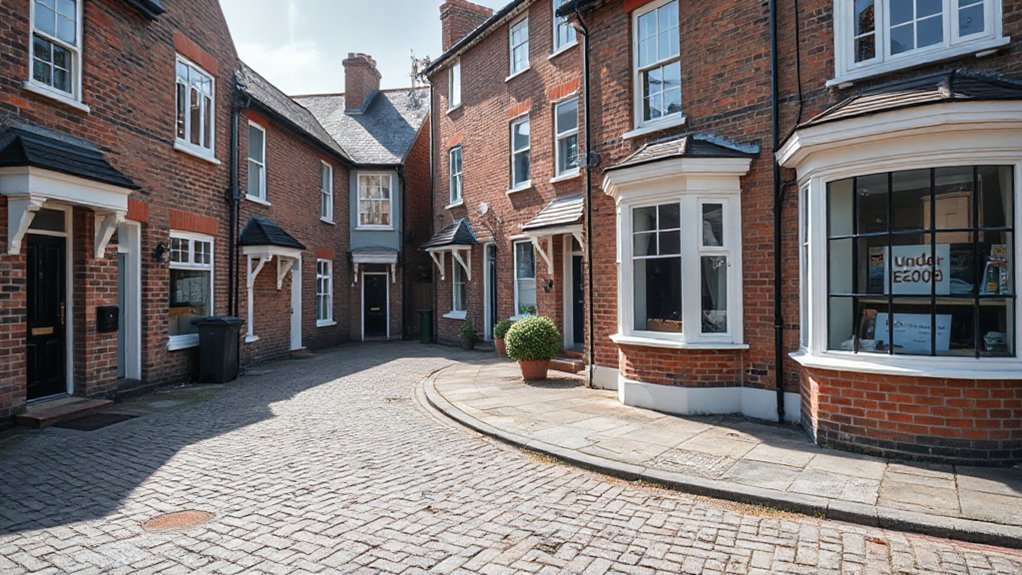
With prices under £200k, flats, terraced houses, and other compact formats offer the most accessible entry points, especially in areas benefiting from improved transport links and local investment. You’ll assess floor plans, build quality, and potential returns by type, noting which formats suit your goals.
Flats provide lower maintenance but may incur service charges; terraced properties offer space growth with careful front-to-back planning; semi-detached options balance cost and privacy. Consider conversion viability for commercial uses or mixed occupation where local zoning permits.
Luxury apartments are occasionally available at this price point in micromarket pockets, signaling premium appeal, while keeping expectations realistic. Prioritize structural integrity, leasehold terms, and future resale value when evaluating options, including potential demand from rental tenants and owner-occupier buyers.
- Flat vs. terraced trade-offs and ongoing costs
- Lease terms, service charges, and ground rent
- Conversion potential for commercial properties within residential zones
- Structural condition indicators to avoid costly fixes
- Micro-market insights for luxury apartments at low price points
Grants and Aids for First-Time Buyers Under £200k
You’ll review Grants For First-Time Buyers, including how eligibility works and what funds can be accessed under £200k. We’ll cover Under-£200k Help Schemes and Local Authority Aid Programs.
These sections will outline application steps, caps, and required documentation. This serves as a practical starting point to compare options, avoid common pitfalls, and plan funding alongside purchase strategies.
Grants For First-Time Buyers
- Eligibility windows and deadlines
- Regional scheme variations
- Documentation checklists
- Interaction with other funding
- Impact on property type choices (luxury investments, commercial properties)
Under-£200k Help Schemes
These schemes typically offer partial grants, matched savings, or discounted mortgage rates, enabling more favorable loan-to-value ratios. You should assess funding timelines, application windows, and documentation needs, ensuring you meet both national and regional stipulations.
Practical impact includes lowered initial equity and improved cash flow during the early ownership phase, allowing you to reserve capital for surveys, legal fees, and potential renovations.
Remember to evaluate Luxury amenities and standard property quality, ensuring the scheme aligns with your Investment opportunities and long-term budgeting.
Local Authority Aid Programs
- Eligibility criteria by region and income limits
- Grant caps, repayment terms, and clawback rules
- Application timelines and submission checklists
- Co-funding and partner schemes with councils
- Monitoring and reporting requirements to sustain aid
Mortgage Basics for First-Time Buyers Under £200k
Securing a mortgage under £200,000 starts with understanding your affordability, credit profile, and the total cost of borrowing beyond the headline rate. You’ll assess debt-to-income ratios, monthly repayment ceilings, and potential lender fees, then translate these into a formal budget.
Compare fixed versus variable rates, noting how term length alters total interest and early repayment penalties. Verify credit history, recorded defaults, and recent inquiries, since these drive approval likelihood and rate tier.
Prepare documents: bank statements, payslips, and a robust affordability calculation. Consider how investment strategies influence leverage and risk, especially with trending rates.
When evaluating options, perform a precise property valuation to anchor loan-to-value targets, ensuring the loan remains within prudent headroom for future market shifts. This disciplined approach supports sustainable borrowing and informed decision-making.
Hidden Costs Beyond the Price: Fees, Taxes, and Maintenance
Hidden costs can blunt the initial price advantage, so you’ll want a clear plan for fees you’ll pay upfront and over time.
We’ll cover common hidden fees, stamp duty considerations, and how ongoing maintenance can affect your total cost of ownership.
This section starts by outlining what to budget for and how to evaluate ongoing upkeep against your home’s value and condition.
Hidden Fees To Watch
Buying price isn’t the full story: there are often fees, taxes, and ongoing costs that can quietly escalate your budget beyond the sticker price.
In this section, you’ll identify Hidden fees that accompany purchase and ownership, focus on practical calculations, and flag common Buyer pitfalls before you commit.
Expect detail on how costs accumulate, where to locate them, and how to factor them into your affordability model. You’ll assess solicitor charges, survey and conveyancing variations, and service charges that apply after completion.
Budget for renewal costs, insurance, and maintenance reserves to avoid surprise strains. The goal is to keep total ownership costs transparent and controllable.
- Legal and conveyancing fees: upfront estimates and potential fluctuations
- Survey and valuation costs: scope, type, and value impact
- Stamp duty banding: timing and exemption checks (avoid errors)
- Ground rent and service charges: predictable vs. variable
- Maintenance reserves: contingency planning and annual budgeting
Stamp Duty Considerations
Stamp duty can quietly alter the overall cost of a UK property purchase, so you should map it early and track changes as your price and eligibility shift.
In practical terms, you’ll want to confirm whether you qualify for first-time buyer relief or any band-specific exemptions, and note the rate thresholds that apply to standard residential purchases.
For under £200k, you may fall into lower bands, reducing upfront outlay, but watch for changes if the price rises or if you own other property.
Consider how stamp duty affects cash flow in a Property investment plan, since initial savings influence your leverage.
If you intend rental income, model how reliefs and potential surcharges alter overall profitability, ensuring calculations account for future market shifts and policy updates.
Ongoing Maintenance Costs
- garden upkeep
- essential systems maintenance
- preventative repairs
- utility expenses optimization
- reserve fund planning
How to Spot a Good Deal Under £200k
To spot a good deal under £200k, start with a clear price benchmark and assess each listing against it. You’ll compare price per square metre, condition grade, and recent comparable sales in the same postcode.
Check structural integrity, damp risk, and energy performance certificates, noting any red flags that signal hidden costs.
Verify lettability if you plan to rent, including current tenancy status and potential yield.
Evaluate location fundamentals: transport links, local amenities, and future development plans that impact value.
Look for listings where renovation needs align with achievable budgeted caps, not speculative upgrades.
Consider Luxury amenities and build quality as premium differentiators, but prioritize value growth over cosmetic upgrades.
Assess Investment opportunities by forecasting vacancy risk, rent bands, and maintenance cycles.
Document findings for objective comparison.
Negotiation and Purchase Strategy for First-Time Buyers
Negotiating as a first-time buyer starts with a clear, data-driven plan. You’ll align offer pricing with current market fluctuations and documented property valuation, reducing overpayment risk and setting guardrails for negotiation thresholds.
Establish a target price based on comps, recent sale timelines, and condition-adjusted estimates, then test offers with sufficiency but minimal exposure.
Prepare justified concessions (fixtures, timelines, contingencies) that preserve value while signaling commitment. Use a professional, concise rationale for each allowance, backed by daylighted data.
Confirm lender-approved affordability to maintain credibility with sellers.
Maintain ongoing communication to manage expectations and avoid price drift.
Plan for contingencies, including appraisal variance and repair costs, to lock in terms you can sustain through closing.
- Define data-driven target price
- Build comps-based justification
- Set clear concessions
- Align financing affordability
- Plan for contingencies
The Buying Process for Sub-£200k Homes in Practice

With a clear plan from the negotiation phase, you now apply that framework to actual property buying under £200k. You start with a formal property valuation check, verifying reported figures against market data, recent comps, and condition-driven adjustments.
Next, you confirm legal requirements, ensuring statutory checks, title deeds, and local planning constraints are satisfied before offer acceptance. Engage a conveyancer early to map timelines, identify potential chain delays, and flag restrictive covenants or shared ownership nuances.
When drafting an offer, attach conditionality around survey results and lender criteria to protect your position. Upon offer approval, you secure a mortgage in principle, then progress to formal valuation by your lender, ensuring any discrepancies are resolved before exchange.
Finally, complete surveys, confirm insured completion, and align funds transfer with completion deadlines.
Smart Steps to Cut Long-Term Costs
Smart cost management starts with a precise budget baseline and disciplined tracking; you’ll identify where every pound goes and spot inefficiencies before they compound. You’ll implement predictable, data-driven controls to reduce long-term outlay without sacrificing quality. Focus on durable, value-driven decisions that resist creeping costs and maintenance surprises.
- Prioritize home security upgrades with layered, cost-effective solutions that deter risk without premium fees
- Choose multipurpose furniture and modular interiors to minimize redecorating expenses
- Use energy rebates and smart thermostats to curb utilities over time
- Standardize finishes and materials to simplify replacements and repairs
- Schedule preventive maintenance to avoid costly emergency fixes, documenting every service
Home security and interior design converge on practical, scalable savings that protect equity.
Next Steps: Fit Your Budget to Reality and Start Now
To start, align your budget with reality by porting your plan into a concrete, month-by-month spending map that reflects actual property costs under £200k.
Next, identify realistic mortgage options by comparing interest rates, fees, and repayment terms from at least three providers, then stress-test scenarios with a 1–2% rate rise.
In parallel, create a property inspections checklist to preempt major defects and avoid surprise costs; assign a yes/no threshold for structural, electrical, and plumbing concerns.
Allocate a contingency of 5–10% for closing, legal, and survey expenses.
Prioritize cash flow planning, ensuring monthly housing costs remain within your affordability band.
Finally, lock in a shortlisting process, set decision milestones, and initiate early conversations with lenders to secure a conditional agreement.
Start now to minimize delays and maximize bargaining power.
Frequently Asked Questions
Is There a Guaranteed Checklist for Sub-£200k Properties?
There isn’t a guaranteed checklist, but you can use a practical framework: assess Property valuation, confirm legal checks, compare Market trends, verify energy performance, inspect condition, budget for fees, and document contingencies before making an offer.
How Do I Compare Council Tax Bands Quickly?
You can quickly compare council tax bands by checking each property’s band on your council’s site and cross-referencing with recent Property valuation notes; monitor Market trends and adjust estimates accordingly, using precise band data and comparable scores.
What Are the Main Hidden Costs After Purchase?
Hidden costs after purchase include mortgage options and property insurance impacts; you’ll face surveying, conveyancing, maintenance reserves, and stamp duty adjustments. You should compare mortgage options carefully, and budget for property insurance premiums and potential premium rises.
Are Leasehold Issues Common Under £200k?
Leasehold issues are common under £200k, but not insurmountable. You’ll face lease length, ground rent, and service charges; compare Freehold advantages, negotiate extensions, and scrutinize covenants to avoid hidden costs and onerous obligations.
How Can I Assess Property Condition Remotely?
You can assess property condition remotely by joining virtual tours and requesting online inspections, then verify structure, utilities, and damp via detailed photos, notes, and video diagnostics, asking for access to recent surveys, EPC, and building records for accuracy.
Conclusion
You’ve mapped a practical path to sub-£200k homes, so lock in a clear budget, then chase value-focused areas, not flashy hype. Compare mortgage costs, stamp duty implications, and ongoing maintenance with a keen eye for landlord-tenant rules if you’re considering shared ownership or buy-to-let routes. Your plan is a compass, pointing you true north through markets, lenders, and surveys—navigate with diligence, and you’ll avoid costly detours and find your steady footing in the property maze.
About the Author