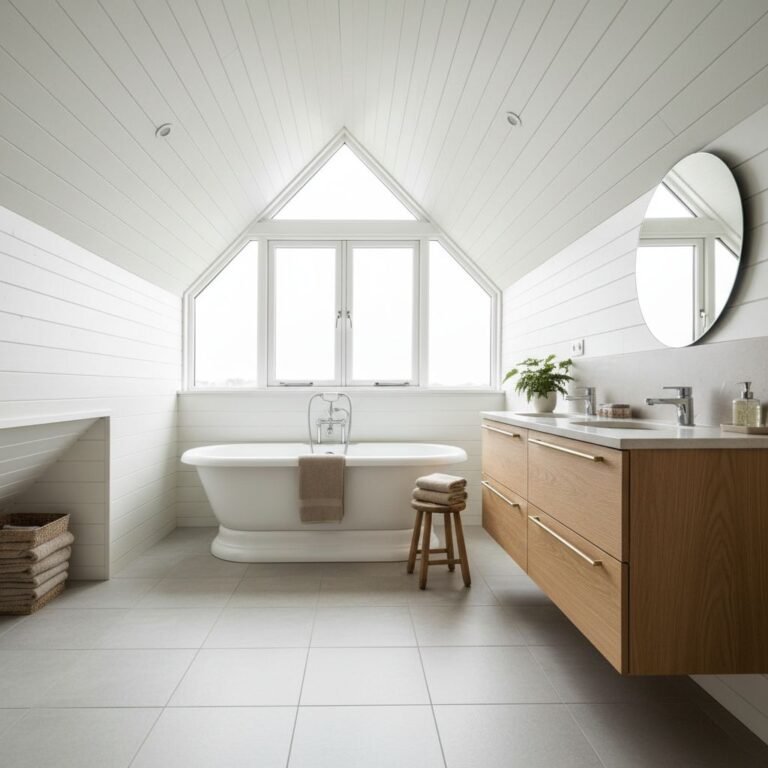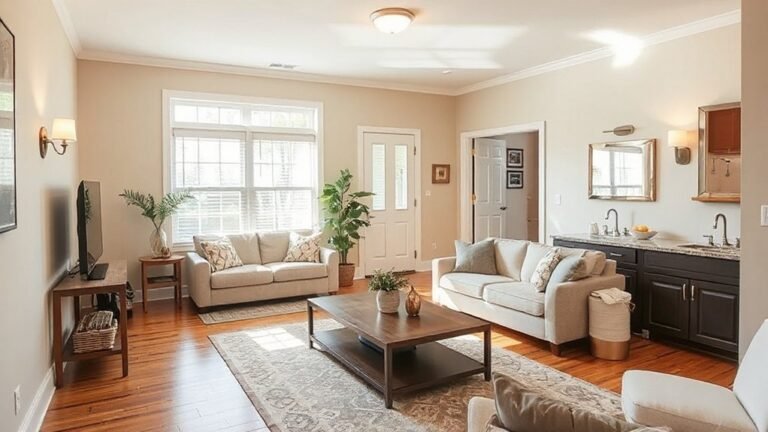
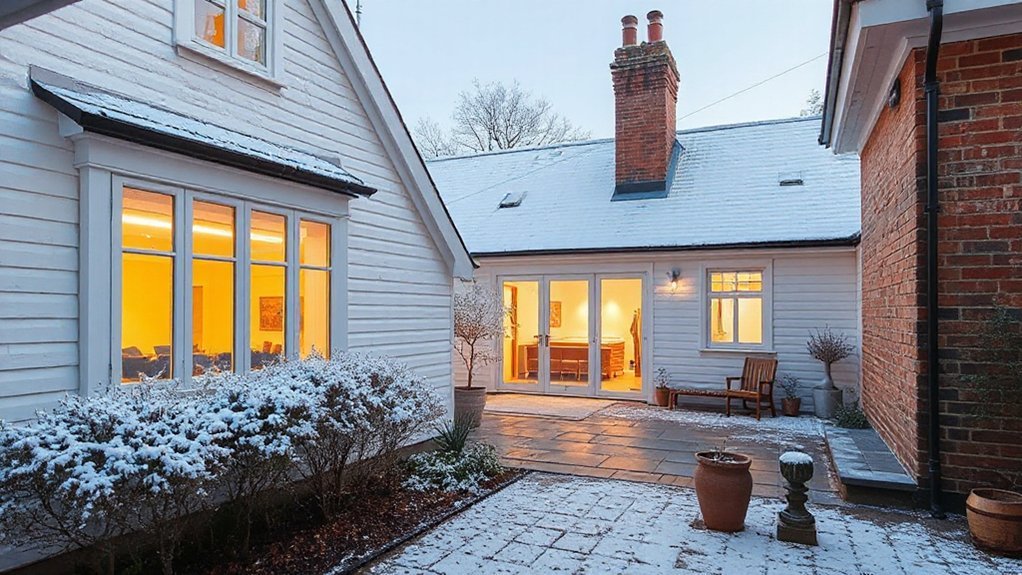
Winter renovations that add comfort and value start with airtight sealing and practical insulation, focusing on gaps, thermal bridges, and accessible cavities. Upgrade UK‑rated windows and doors for lower U‑values, then implement intelligent heating controls and zoning to cut costs. Elevate thermal comfort with strategic flooring and insulating rugs, plus kitchen and cloakroom upgrades for efficiency. Tackle external winter care to protect curb appeal, and pursue quick, high‑impact fixes now, with long‑term budgeting guiding progress—details await.
Understand UK Winter Renovation Priorities for Warmth and Value
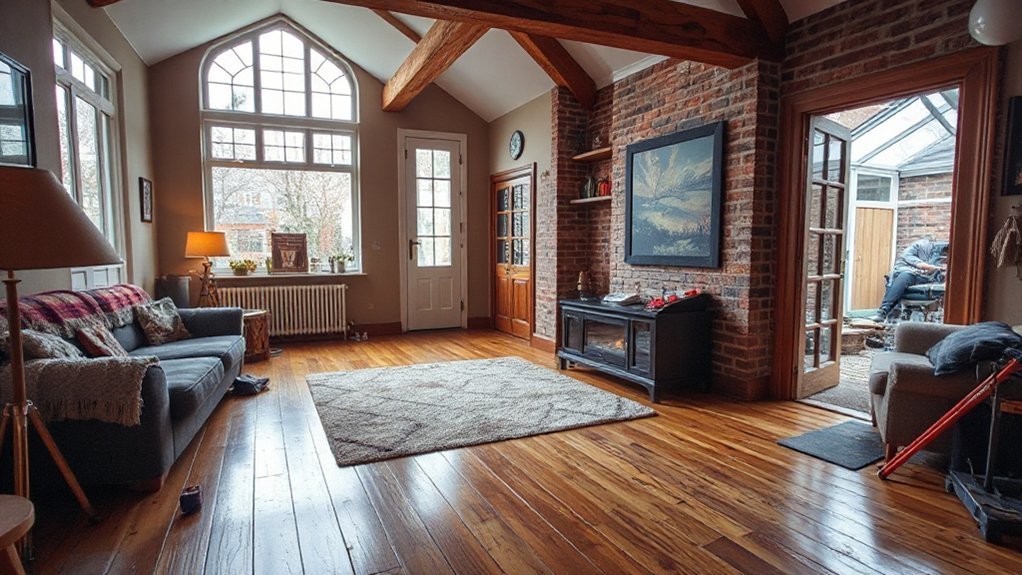
Winter is the time when UK households prioritise efficiency and comfort, making insulation, heating, and draught-proofing the core focuses. You evaluate how each retrofit affects annual energy use, reliability, and value retention, adopting a data‑driven stance.
Priorities center on heat retention, system responsiveness, and occupant comfort, with a measurable emphasis on return on investment and lifecycle costs. You map priorities to design decisions, balancing upfront capital against long‑term savings and resilience.
Consider indoor plants and seasonal decor as ambient strategies that influence perceived warmth without compromising performance; choose arrangements that minimize heat loss through busy pathways and reduce humidity fluctuations.
In this framework, you quantify performance targets, set milestones, and align procurement with supplier reliability, ensuring you meet both comfort and value objectives efficiently.
Seal Gaps and Insulate on a Budget
Careful sealing and targeted insulation can deliver immediate warmth gains without a large outlay. You’ll focus on gaps and thermal bridges to maximise value and comfort, while keeping interior decor cohesive with practical execution.
By planning with a budget mindset, you preserve space for garden landscaping accents that won’t compromise energy performance.
- Identify drafts around doors, windows, and attic hatches, then seal with appropriate tapes, foams, or weatherstrips.
- Add reflective or dense-pack insulation in accessible cavities to reduce heat loss without removing finishes.
- Use door sweeps and upgraded seals on external entry points to curb convection currents.
- Combine compact DIY fixes with a simple thermal retrofit schedule, tracking costs and temperature gains for ongoing optimization.
Upgrade Uk-Rated Windows and Doors for Efficiency
Upgrading UK-rated windows and doors is a strategic move for driving energy efficiency and long-term cost savings. You’ll improve thermal performance by selecting profiles with multi-point locking, low U-values, and high-performance glazing.
Consider a frame material that balances historic preservation with modern standards; timber-alternative options can mimic traditional aesthetics while delivering durability and reduced maintenance.
Guarantee compliance with UK-rated standards and A-rated or better energy efficiency, as these ratings directly influence heat loss and comfort.
Pay attention to weather resistance, air leakage, and solar gain management to avoid overheating in milder winters.
Prioritize material durability to minimize replacement cycles, and choose detailing that respects heritage features where applicable.
Select high-quality seals and hardware to sustain performance over decades. Historic preservation remains integral to design intent.
Improve Heating Control and Zoning for Comfort and Cost
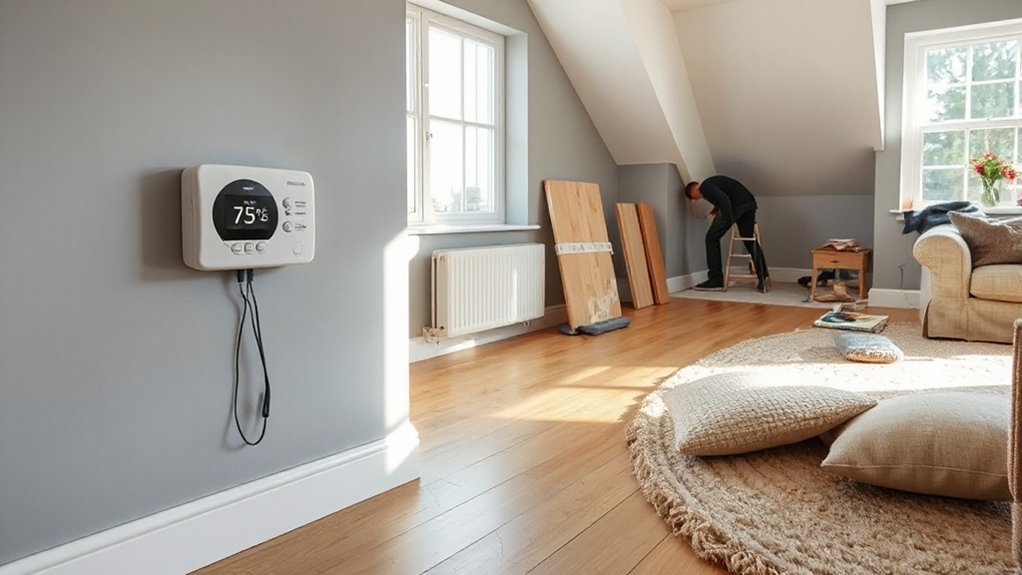
A smart thermostat lets you schedule heating with precision, aligning comfort with your daily routines while trimming energy use.
Zoned heating concentrates warmth where it’s needed, improving efficiency and reducing waste across living spaces.
Start by mapping room priorities and setting clear schedule windows to maximize cost savings and thermal comfort.
Smart Thermostat Scheduling
- Implement occupancy-based schedules for each zone
- Monitor energy use with real-time dashboards
- Calibrate sensors and update firmware periodically
- Use overrides for peak demand periods
Zoned Heating Benefits
Zoned heating improves both comfort and cost efficiency by dividing a home into independently controlled areas, so you heat only where and when it’s needed. Implementing temperature zones enables you to assign different heat levels to living spaces, bedrooms, and common areas, reducing unnecessary energy use.
With dedicated zones, you can tailor schedules to occupancy, conserving heat in unoccupied rooms without compromising overall comfort. A well-planned zoning strategy lowers thermostat drift, minimizes hot-cold spots, and supports rapid response to exterior conditions.
Combine zoning with robust insulation and sealing to maximise return on investment. After installation, monitor performance and adjust flow, lockout temperatures, and setback windows to sustain efficiency.
In practice, zoned heating delivers consistent comfort, predictable utility costs, and enhanced property value through precise climate management.
Boost Thermal Comfort With Flooring and Rugs
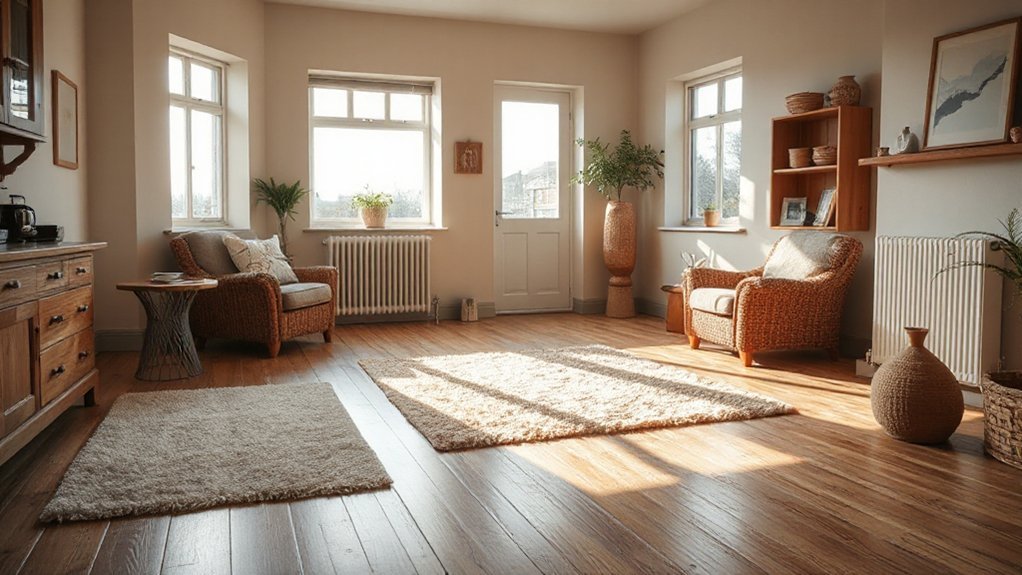
Consider how flooring and rugs can dramatically improve thermal comfort in UK homes. You’ll optimize warmth by selecting materials with appropriate thermal mass and low thermal resistance, aligning with your insulation strategy. Use flooring options that minimize heat loss while maximizing surface comfort, and coordinate rug placement to create inviting zones without gaps.
A strategic combination reduces drafts and stabilizes indoor temperatures, supporting efficient heating. Prioritize dense, low-porosity flooring for underfoot warmth where possible, and layer with rugs to fine‑tune comfort in living zones and bedrooms. Maintain a balance between ease of maintenance and heat retention.
Flooring options, rug placement, and careful zoning empower you to achieve consistent comfort with minimal energy expenditure.
- Choose dense, warm flooring materials
- Place insulating rugs in high-traffic areas
- Layer rugs to control humidity and cold spots
- Align rugs with seating and activity zones
Sunspace and Glazing Tweaks to Maximise Daylight and Heat
Sunspaces and glazing tweaks can considerably boost daylight plus heat retention when thoughtfully planned and implemented. You evaluate sunspace design as a strategic component of the envelope, prioritising orientation, glazing type, and thermal breaks to optimise indoor lighting without provoking overheating.
Consider fixed versus operable panes to balance ventilation with insulation, and specify high-performance low-emissivity coatings to reduce radiant losses. Use insulated frames and airtight seals to minimise drafts while preserving function.
Align glazing ratios with room use—larger vistas for living zones, modest glazing for circulation—without compromising U-values. Integrate shading strategies, such as overhangs or adjustable lamellas, to control solar gain seasonally.
You document performance targets, focusing on daylight distribution, heat retention, and occupant comfort, ensuring Sunspace design supports energy efficiency and wellbeing.
Manage Moisture and Air Quality in Winter Homes
To maintain healthy indoor conditions during winter, you must manage moisture carefully and control air quality as a core design and operational priority. You’ll balance ventilation, condensation control, and filtration to preserve comfort and structural health, while minimizing energy loss.
Targeted strategies focus on reliable moisture management and effective air filtration to sustain indoor humidity at ideal levels and prevent mould growth.
- Monitor indoor humidity with calibrated sensors and setpoints aligned to occupancy and activities.
- Implement balanced ventilation with heat-recovery or demand-controlled airflow to maintain air quality without wasting heat.
- Use high-efficiency air filtration to reduce pollutants and particulates entering living spaces.
- Seal envelope leaks strategically while maintaining necessary air exchange for responsible moisture control.
Insulate Under Floors and Lofts for Standout Warmth
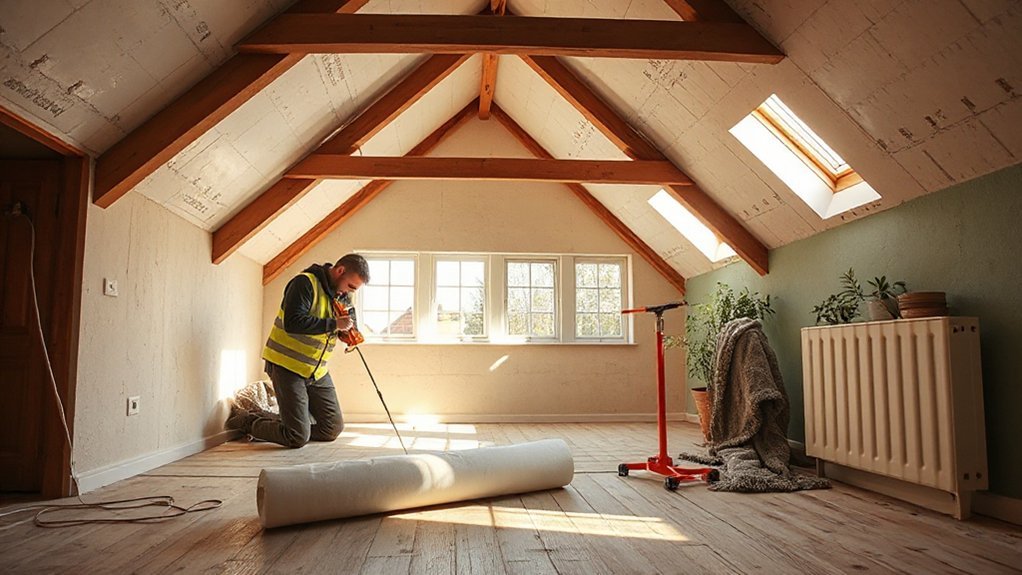
Insulating under floors and lofts is essential for eliminating thermal bridges and delivering standout warmth throughout a UK winter. You should assess existing joist spacings, ventilation paths, and moisture risks to determine ideal insulation depth and material.
Underfloor heating synergy emerges when you specify rigid boards or mineral wool that compresses minimally, preserves thermal resistance, and maintains load-bearing capacity.
In lofts, prioritise high-spec loft insulation with a thick, continuous layer to curb convective loops and heat loss through rafters. Seal gaps around eaves and access hatches to prevent drafts.
Choose breathable, moisture-tolerant finishes where relevant, and ensure compliance with building regulations.
When executed strategically, these measures reduce heating demand, stabilise indoor temperatures, and extend the life of HVAC systems.
DIY Winter Maintenance That Saves Energy and Money
Keep winter energy costs down by adopting targeted DIY maintenance that prevents heat loss and boosts system efficiency. You’ll maximize comfort while lowering bills through disciplined, practical steps that minimize waste and support longer equipment life.
Precision in execution matters, so focus on measurable gains from routine checks, seal integrity, and airflow optimization. Energy efficient lighting and renewable energy considerations can complement your core strategy without complicating maintenance cycles.
Your approach should be proactive, data-driven, and time-efficient, ensuring improvements persist through peak cold spells.
- Inspect and seal windows, doors, and vents to eliminate drafts and reduce heat leakage.
- Calibrate thermostats and service boilers or heat pumps for peak efficiency.
- Replace or clean air filters monthly to sustain airflow and system performance.
- Use energy efficient lighting throughout, prioritizing low-energy LEDs and scheduled usage.
Smart Heating Controls to Cut Bills This Season
Smart heating controls empower you to optimize comfort while trimming energy spend. By adopting smart thermostats, you open savings through precise scheduling, adaptive temperature граms, and remote monitoring.
While zoning allocates heat where you need it most. Weather-responsive settings further refine demand, aligning heating with occupancy and outdoor conditions to maximize efficiency.
Smart Thermostat Savings
Smart thermostats deliver precise temperature control and real-time energy feedback, enabling homeowners to optimize heating patterns without sacrificing comfort. You’ll reduce waste while maintaining comfort, leveraging data to adapt to occupancy and weather shifts. This approach directly supports cost containment amid volatile Energy tariffs and enhances smart home integration across devices.
- Optimize heating schedules based on real-time occupancy data and forecasted price signals to minimize peak usage.
- Use the thermostat’s learning capabilities to align setpoints with sustainable energy pricing and seasonal shifts.
- Integrate with energy monitors to track incremental savings and validate a ROI-driven strategy.
- Set adaptive heat setbacks to sustain comfort during brief absences, avoiding unnecessary reheating costs.
Zoning For Comfort
Start with a robust zoning plan: map hot and cold areas, then configure thermostats, actuators, and valves to respond to real-time conditions. This approach minimizes energy waste, enhances comfort, and supports longer-term savings.
In practice, pair zoning with smart schedules that reflect daily routines, scaling back heat during unoccupied periods without compromising interior decor or mood.
Consider how garden landscaping can complement efficient heating by reducing heat loss near exterior doors and windows.
The result is a refined, strategic system that protects your living spaces while preserving aesthetic clarity and functional warmth.
Weather-Responsive Settings
- Calibrate schedules to align with sunrise/sunset and garden activity windows.
- Link occupancy sensors with optimized boiler and radiator outputs to minimize standby losses.
- Use weather data to pre-heat or pre-cool zones before peak use.
- Regular audits of heat loss pathways and controller response for continuous improvement.
Kitchen Upgrades That Add Warmth and Value
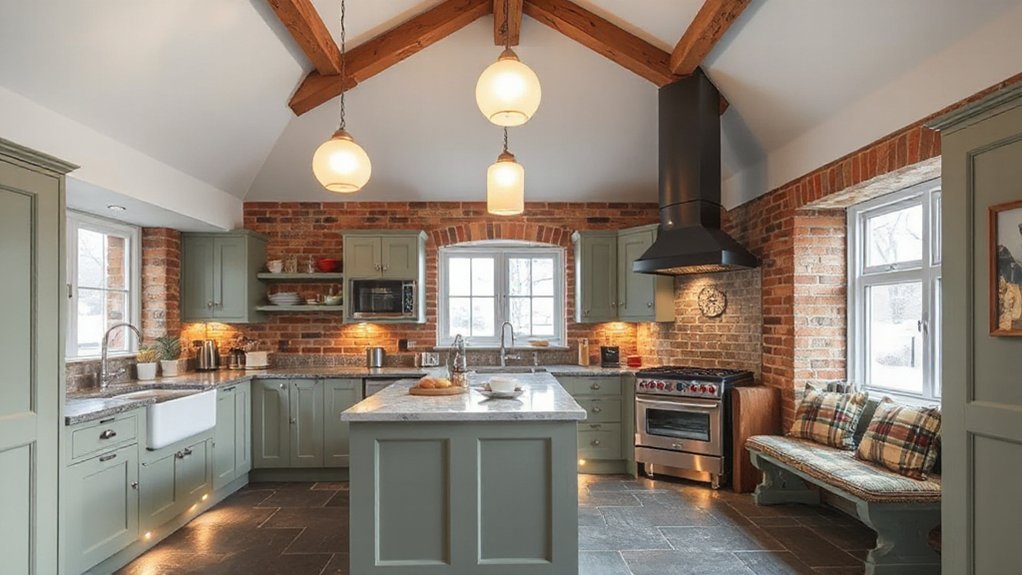
Updating the kitchen is one of the most effective ways to boost warmth and value in a UK home, combining practical comfort with measurable ROI. You’ll prioritise thermal efficiency and functional layouts that reduce heat loss while maintaining performance.
Focus on kitchen ventilation to manage humidity and improve air quality, ensuring compliant extraction rates without excessive noise. Pair this with appliance energy efficiency, selecting A-rated or better models and intelligent standby controls to lower running costs.
Upgrade to insulated cabinetry and profiles that minimize drafts around doors and countertops, preserving warmth during winter activities. Storage optimisation and task lighting should align with work zones to boost usability and perceived value.
Your strategy combines comfort, durability, and cost-conscious decision-making for lasting impact.
Living Room Upgrades for Cosiness on a Budget
A tight budget doesn’t have to compromise coziness: focus on targeted, high-impact upgrades that boost comfort and perceived value in the living room. You’ll maximize impact with strategic choices that balance cost and performance, delivering durable comfort signals to occupants and visitors.
- Install focused lighting and dimmers to sculpt ambiance without major disruption.
- Prioritize fireplace decor integration: a compact surround and tasteful mantel to anchor the space.
- Upgrade cozy textiles: layered throws, tactile cushions, and durable rugs that insulate and dampen noise.
- Improve thermal seals and insulative curtains to reduce heat loss while preserving aesthetic cohesion.
This approach yields measurable comfort gains and distinctive style, keeping the room functional, cohesive, and cost-efficient.
Bath and Cloakroom Refreshes With Value Impact
Renovating baths and cloakrooms yields tangible value by combining durable fixtures with efficient layout tweaks that boost daily usability and perceived quality. You approach this refresh with a strategic eye, prioritising water efficiency, reliable valves, and robust finishes that withstand UK humidity.
Focus on bathroom aesthetics to create a cohesive look: consistent tile grouting, matte profiles, and restrained metalwork elevate perceived quality without dramatic overhauls. In cloakroom design, maximise splash zones and storage while preserving clear circulation, choosing compact loo-and-sink sets and wall-hung options that simplify cleaning.
Consider underfloor heating compatibility and smart controls for warmth and timing. Select durable, easy-clean surfaces and guarantee compliant ventilation.
These targeted upgrades deliver durable value, reduced lifecycle costs, and a refreshed, modern feel that resonates with buyers.
External Winter Care to Protect Curb Appeal
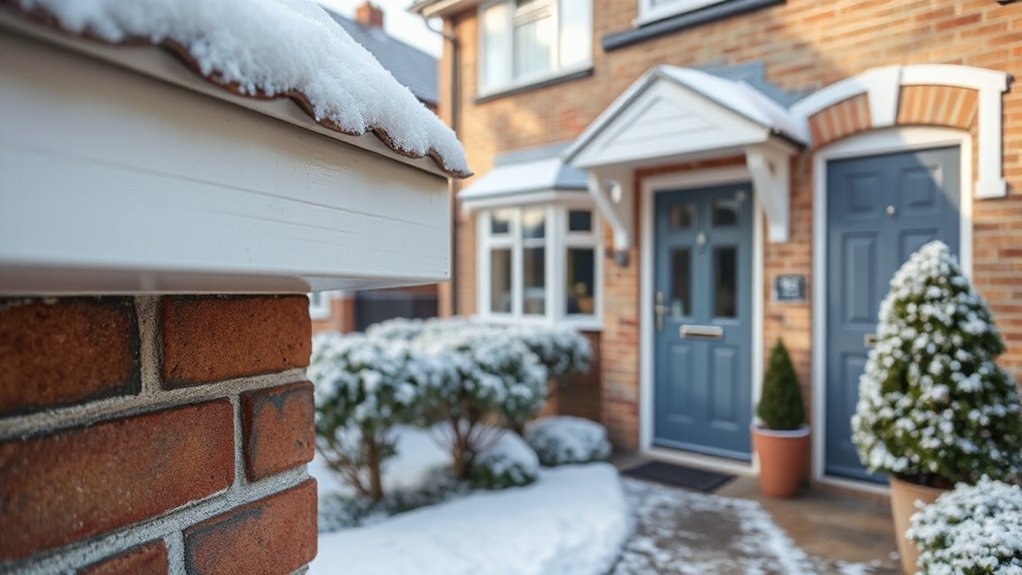
To protect your curb appeal this winter, you’ll implement salt, ice, and grit strategically to balance safety with surface protection.
We’ll outline efficient pathway clearing techniques that minimize damage to materials while ensuring solid traction for foot traffic.
Finally, we’ll emphasize exterior lighting safety to illuminate steps and entryways, reducing risk and preserving visual appeal.
Salt, Ice, and Grit
- Salt storage: keep sealed, dry, and elevated to prevent clumping and corrosion.
- Application strategy: apply after precipitation ends, reapply only as conditions require.
- Material mix: prefer calcium chloride or branded equivalents that melt efficiently at low temps with reduced surface damage.
- Monitoring: track weather forecasts and surface temperatures to optimize use and reduce over-application.
Pathway Clearing Techniques
Pathway clearing is a critical seasonal task that protects curb appeal by ensuring safe, accessible exterior routes. You implement a systematic approach to maintain clear pedestrian and vehicular access without compromising materials or aesthetics.
Begin with a surface assessment to identify high-traffic zones, drainage issues, and vulnerable edging. Use protective equipment to prevent damage to paving joints and finish.
Prioritise snow removal during forecasts with timely pre-treatment where approved, then execute staged clearing to avoid rock salt overuse.
Optimize snowfall strategies by combining shovelling techniques with mechanical methods for efficiency. Apply consistent clearance widths and edge retention to deter regrowth of compacted debris.
Maintain seasonal records to refine timing, quantities, and contractor coordination, enhancing property value while reducing slip risk and weather-related liability.
Exterior Lighting Safety
- Assess outdoor security: identify vulnerable entry points and install motion-activated, weather-rated fixtures that cover approach routes and entrances.
- Plan pathway lighting: select low-glare, energy-efficient options to illuminate stairs, handrails, and passageways without overwhelming the façade.
- Integrate lighting controls: use timers or smart systems to align with sunset, curbing energy waste while maintaining consistent presence.
- Quarterly maintenance: clean lenses, test sensors, and replace corroded fittings to sustain reliable outdoor security and pathway lighting year-round.
Quick, High-Impact Winter Renovations You Can Do Now
If you’re targeting immediate impact this winter, start with high-return upgrades that don’t require a full renovation. Focus on energy and comfort pivots that deliver quick payback and measurable reliability.
Prioritize sealing drafts, upgrading seals on doors and windows, and trimming thermal bridges around loft hatches and pipework to curb heat loss.
Install programmable thermostats and zone controls to optimize occupancy patterns without overhauling the system.
Quick wins also include improving home security with robust outdoor lighting, motion sensors, and door-sensor integration that deter intrusion while preserving aesthetic integrity.
Pair these with garden landscaping tweaks near entryways—clear paths, improved drainage, and low-maintenance perennial borders—to enhance curb appeal and usability.
Maintain clear metrics: comfort hours, energy spend, and incident-free days for a precise value read.
Plan for Long-Term Value: Budgeting and Tracking Progress
To build long-term value, establish a clear budget framework and a disciplined tracking system that ties planned renovations to measurable outcomes. You’ll allocate costs by category, set milestone targets, and align each project with anticipated value gains, occupancy comfort, and energy savings.
Your approach blends rigorous budgeting with transparent progress tracking to avoid scope creep and overspend, while preserving flexibility for market shifts. This method yields actionable insights, enabling timely course corrections and improved decision-making across budgets and timelines.
- Define budget planning horizons and contingency buffers based on project risk and expected ROI.
- Implement a centralized tracking dashboard capturing costs, timelines, and quality milestones.
- Set KPI-driven exit criteria for each renovation phase to validate continued investment.
- Review variances monthly, reallocate resources, and document lessons learned.
Frequently Asked Questions
How Can I Waterproof Exterior Walls Before Winter?
You can waterproof exterior walls by applying a breathable, flexible exterior sealant and using proper wall waterproofing techniques, including surface preparation, priming, and reapplication after rainfall. Exterior wall sealing protects substrates and reduces moisture ingress before winter.
What Grants Are Available for Energy Upgrades?
Ever wonder, what grants are available for energy upgrades? You’ll access renewable energy subsidies and government incentives, opening funding for efficient systems. You pursue strategic plans, evaluate eligibility, and maximize return while complying with technical requirements and timelines.
Which Insulation Works Best for Pre-1930 Homes?
You should prioritize exterior or interior historic preservation-guided solutions, as interior insulation often compromises fabric in pre-1930 homes. Choose breathable, mineral wool or cellulose products, ensuring thermal mass is respected and moisture risks minimized for long-term structural integrity.
How Do I Prevent Condensation on Winter Mornings?
Condensation can be suppressed by raising ventilation and lowering indoor humidity. Use vapor barriers on cold surfaces and seal drafts, then run balanced ventilation. You’ll reduce moisture buildup, keep windows clear, and protect your comfort with strategic airflow.
What Is the ROI on Attic Ventilation Upgrades?
Attic ventilation upgrades typically yield a solid ROI by reducing heat loss and condense risks; expect payback over years. You’ll improve attic insulation, boost ventilation efficiency, and lower energy bills, while preserving structural integrity and comfort throughout cold seasons.
Conclusion
Prioritize warmth, prioritize efficiency, prioritize value. You’ll seal gaps, insulate on a budget, upgrade windows and doors, and sharpen heating controls. You’ll boost comfort with flooring, rugs, and smart zoning, while revitalizing baths and cloakrooms for impact. You’ll protect curb appeal with external care and execute quick, high-impact renovations now. You’ll plan for long‑term value, budgeting, and tracking progress, and you’ll measure outcomes, adapt strategies, and sustain gains with disciplined monitoring and purposeful investment.
About the Author