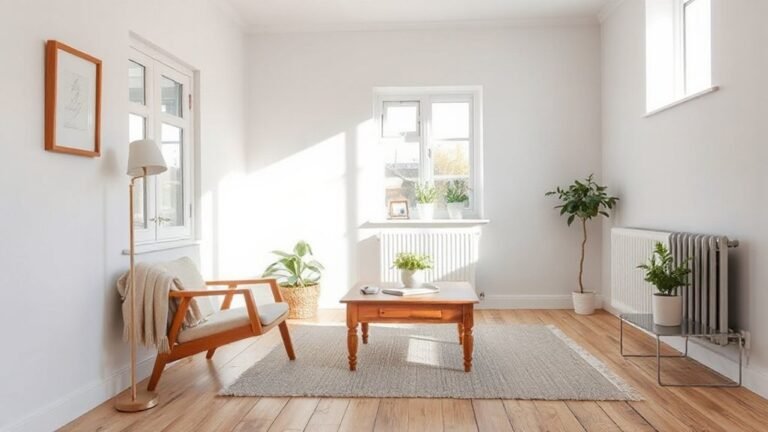
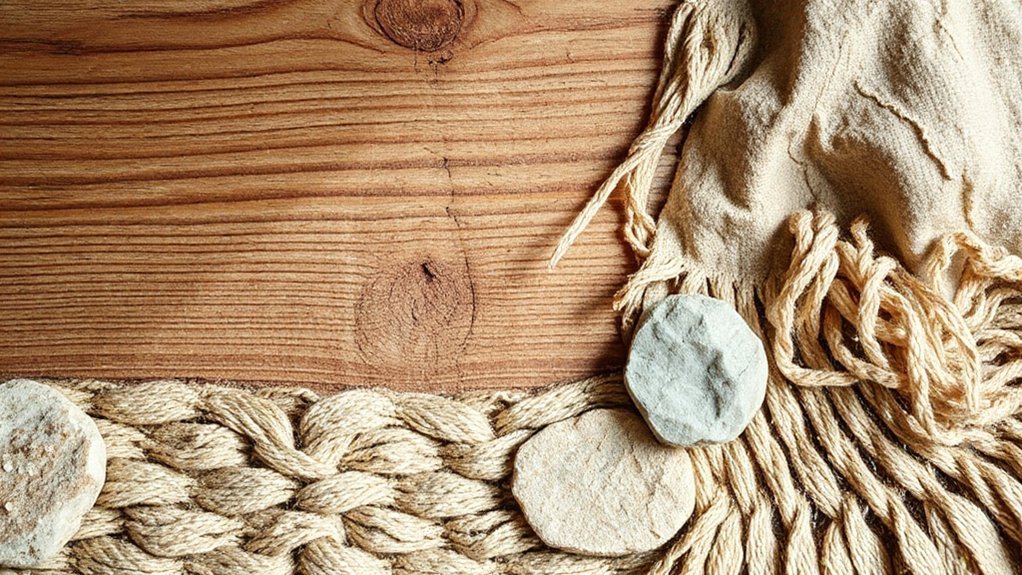
Did you know that rooms with natural textures can feel up to 20% calmer than all-texture spaces? You set the tone by layering wood, stone, linen, and woven fabrics to add tactile depth without overpowering form. The right combination creates warmth and resilience, guiding light and movement, while remaining cohesive. There’s a method to balance contrast and cohesion—one that *reveals* a timeless, inviting interior. Ready to explore how texture transforms plain spaces into purposeful retreats?
Key Takeaways
- Incorporate tactile materials like plush fabrics, wood with rich grain, and natural stone to add warmth, depth, and perceptual richness to plain spaces.
- Use layered lighting and shadows to reveal surface textures, enhancing contour, nuance, and material storytelling.
- Layer textures strategically (soft textiles, cork, jute, linen) to anchor walls and define zones without clutter.
- Choose eco-friendly, naturally aging materials to age gracefully, maintaining authenticity and long-term freshness.
- Maintain surfaces with gentle, material-appropriate care to preserve texture, color, and structural integrity over time.
Why Natural Textures Transform Interiors
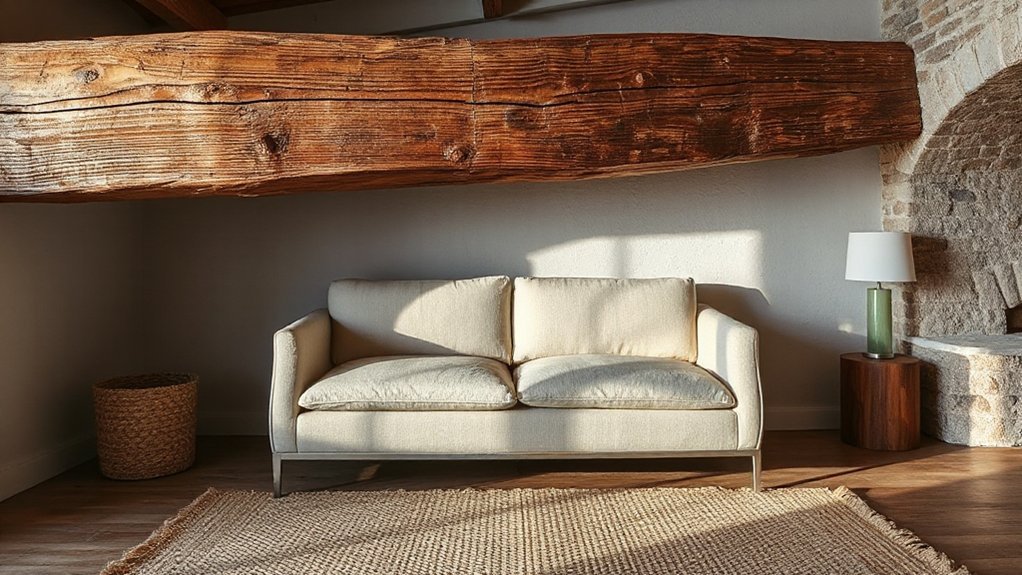
Natural textures anchor interiors in a way that synthetic surfaces cannot, bringing tactile depth, warmth, and a sense of place. You leverage material honesty to shape perception and function, aligning form with environmental realities.
Natural textures act as sensory anchors, guiding how you move, touch, and inhabit space, while reducing perceptual noise from artificial surfaces. You’ll notice improved indoor air quality when material choices minimize off-gassing and maximize diffusion of moisture and pollutants through breathable substrates.
Start With Soft Surfaces: Fabrics That Warm Walls
You feel how soft surfaces anchor walls and set a warm tone, guiding your eye toward cozy textiles that soften every line.
By layering textures—plush fabrics, tactile weaves, and rich upholstery—you create a rich ambience that balances light and shadow across the room.
This approach uses warm walls and thoughtful fabrics to craft a precise, inviting atmosphere that stays technical and visionary.
Soft Surfaces, Warm Walls
Soft surfaces play a critical role in shaping interior warmth by absorbing and diffusing sound, enhancing tactile comfort, and buffering the gaze from harsh walls. You leverage fabric choices to mold perception, not merely conceal surfaces. Start with proportion, scale, and fiber performance to control echo and dampness.
Silk drapes introduce a refined sheen and linear fall that visually lengthens spaces while modulating light without bulk. Velvet cushions provide concentrated warmth, density, and acoustic mass under frequent interaction, guiding floor-to-wall energy transfer toward human-scale perception.
Pair these with aligned RGB-neutral lighting to maintain clarity of edges and materials. Use breathable weaves alongside dense upholstery to balance humidity and temperature, ensuring wall warmth remains perceived rather than imposed.
This approach preserves legibility, tactility, and a future-ready, restrained ambiance.
Cozy Textiles, Rich Ambience
Organic patterns guide the visual cadence, offering understated motion that harmonizes with architectural lines. Tactile finishes emerge as a core differentiator: brushed cotton, napped wool, and felted blends create depth, shade, and sound dampening in equal measure.
Weigh weave structure against light reflection to modulate room tone, ensuring comfort without visual heaviness. Prioritize seams, edges, and pile height to sustain consistency across zones.
Implement controlled layering—curtains, throws, and upholstery—so textures interact, elevating ambience while preserving clarity of line and function.
Wood Finishes and Texture: Building Visual Weight
In woodworking, finishes and texture create visual weight that grounds a space and determines how light moves across surfaces. You assess finish as a performance layer: its depth, sheen, and grain interaction define perceived mass.
Wood grain guides directional rhythm, shaping how rooms read at a glance and during changing daylight. A natural sheen can amplify contour without gloss glare, preserving tactile fidelity while enhancing shadow play. Consider reclaimed wood, that adds character too.
You select adhesion, leveling, and curing regimes to avoid micro-contrast that unsettles equilibrium. Texture emerges through grain-contrast, pore fill, and subtle sanding grades, producing tactile gravitas underfoot and on walls.
Finishes should harmonize with furniture weight, architectural volume, and window light, yielding a cohesive, anchored environment where material truth informs color, form, and function.
Stone, Linen, and Earthen Palettes for Texture
Building on how finishes sculpt visual weight, you’ll harness stone, linen, and earthen tones to modulate tactility without overpowering light. You select stone for grounded texture with mineral depth, linen for soft ripples, and earthen hues to anchor spaces.
Use eco-friendly materials that age gracefully, resisting glare while inviting touch. Prioritize surfaces that reveal natural grain, pore, and tactile irregularities, preserving honest material truth.
Sustainable sourcing guides your choices: quarried slabs with minimal transport, linen from mills employing low-water processes, clays and pigments with low emissions.
In practice, combine matte stone planes with woven linen textiles and clay-based coatings to achieve a coherent, breathable palette. The result reads as calm, technical sophistication—rich in texture yet restrained in glare, achieving lasting interior resilience.
Texture Pairings That Create Cohesion: Contrast and Balance
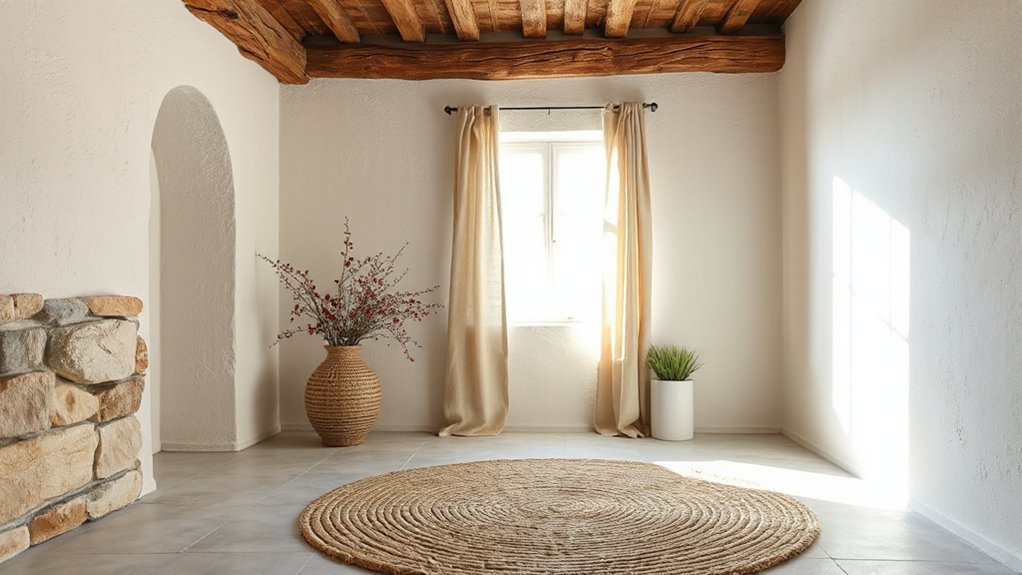
Texture pairings create cohesion by balancing contrast and harmony across materials. You cultivate visual harmony by aligning textures that naturally differ in weight, scale, and reflectivity, guiding the eye through deliberate shifts rather than random mix.
Begin with a dominant tactile narrative—a rugged stone, a smooth linen, or a matte earthen finish—and introduce a counterpoint that respects that hierarchy. Contrast isn’t chaos; it’s intentional tension that readies the room for repose.
Balance derives from proportional repetition: recurring grain, subtle sheen, or shared temperature across surfaces. You’ll achieve visual equilibrium when each texture echoes another’s rhythm, so progression feels seamless rather than abrupt.
The result: a cohesive, tactile environment where contrast and harmony reinforce purpose, not distraction.
Lighting Texture: Reveal Details With Light
Light reveals texture by guiding your eye across surface variations. Shadows define details, turning subtle irregularities into legible form.
Layered glow effects modulate intensity to emphasize depth and nuance.
Light Brings Texture
When light strikes a surface at a deliberate angle, details emerge with remarkable clarity. You harness directionality to reveal grain, fiber, and microtextures that lie beneath a flat facade. The technique foregrounds textural contrasts, guiding the eye along ridges and valleys that define material character.
You evaluate angle, intensity, and color temperature to optimize contrast without glare, ensuring legibility of subtle patterns. By selectively highlighting high-relief elements, you create a tactile map your audience can perceive visually and emotionally.
Natural patterns emerge as light sketches, not shadows, offering a language for material storytelling. You align luminance with scale, so each texture reads consistently across spaces, enhancing cohesion.
The result is a refined, legible texture narrative that interior surfaces convey with precision.
Shadows Define Details
Shadows reveal details with sharper intent, turning subtle variations into legible cues that guide perception. You observe how light sculpts surfaces, converting flat textures into readable forms through deliberate shadowing.
In this mode, shadow play becomes a diagnostic tool: families of lines, pores, and grain distinctions emerge where brightness alone would blur nuance. You adjust angle, distance, and intensity to emphasize texture contrast, hunting for the tipping points where depth and relief register.
This technique doesn’t merely decorate; it encodes tactility into space, guiding movement and focus. Precision lighting reveals edges without harsh masking, preserving material honesty.
The result is a calm, technical clarity that supports furniture, fabric, and finishes, while maintaining a restrained, high-definition atmosphere.
Layered Glow Effects
You deploy dimmed backlighting behind reliefs, then introduce mid-layer accents that follow contours, finally applying a cool-to-warm gradient to differentiate surface layers. The result is measurable clarity, a tangible sense of tactility, and a cohesive, immersive interior.
Budget-Friendly Textures: Add Interest Without Clutter
Texture is a powerful, budget-friendly tool that adds depth without clutter. You leverage affordable textures to elevate spaces without overwhelming them. Embrace restraint, yet let tactile surfaces define zones through contrast and light.
1) Use woven textiles, jute rugs, and cork accents to create warmth without visual noise.
2) Layer matte finishes with a single, bold Color accents to anchor minimalist decor.
3) Integrate natural materials in small doses—bamboo blinds, slate boards, or clay pots—to add texture hierarchy.
These choices build a precise palette where Minimalist decor thrives, and texture acts as the unifying thread. You don’t chase abundance; you curate tactility.
The result is a calm, layered environment that feels intentional, modern, and resilient, with texture doing the heavy lifting in place of clutter.
Texture Care and Longevity: Keeping Natural Surfaces Fresh
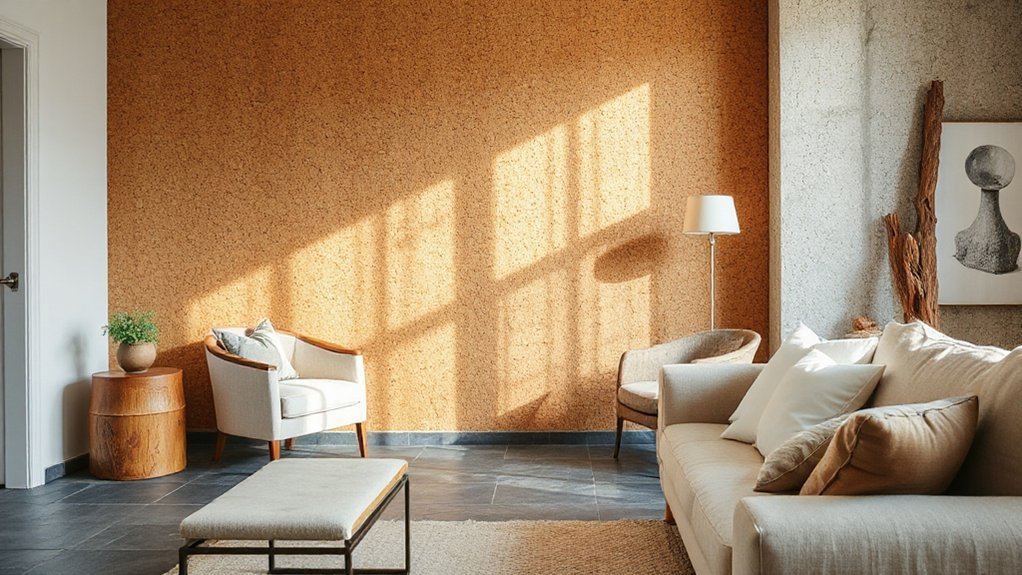
Natural textures deserve long life; with careful upkeep, their warmth stays honest and tactile. You’ll protect authenticity by aligning routine maintenance with material biology, not myths.
Start with surface maintenance: schedule periodic cleanings, debatable cleansers, and moisture control to prevent warping, staining, or delamination. Use gentle, material-appropriate methods—brush, vacuum, or soft cloth, avoiding harsh abrasives.
When you spot micro-scratches or finish wear, address them promptly to halt progression.
For fabrics and fibers, guard against UV exposure and humidity swings; rotate furniture and diffuse light where possible.
Natural remedies can supplement industrial products—baked soda for mild scuffs, vinegar for mineral deposits, or oil-based treatments for wood, applied sparingly.
Document care cycles, monitor performance, and tailor routines to each surface for lasting freshness and fidelity.
Frequently Asked Questions
How Do Natural Textures Affect Acoustics in Rooms?
Natural textures affect acoustics by absorbing sound energy, reducing reverberation, and improving clarity. You’ll notice less echo and smoother speech, especially in mid to high frequencies.
Sound absorption increases with porous, uneven surfaces, while tighter, reflective materials raise reverberant tails.
You achieve balance through strategic placement and material choice, preserving Visual harmony. Informed selections create precise acoustic environments where comfort and function converge, enabling clearer communication, controlled ambience, and scalable room performance.
Can Textures Influence Perceived Room Temperature or Comfort?
Yes, textures can influence perceived room temperature and comfort. You’ll notice cooler or warmer sensations through color psychology and texture layering, shaping your thermal cues even before actual temperature changes.
Which Textures Require the Least Maintenance Over Time?
Durability considerations favor materials like solid surfaces and engineered quartz, which require minimal upkeep. You’ll find that durability considerations translate into long-lasting textures that resist scratches and staining.
For least maintenance, opt for textures with low cleaning requirements, such as sealed stone, high-grade laminates, or treated metals. You’ll minimize care time when you choose non-porous, easy-wipe surfaces.
Cleaning requirements stay simple: a quick wipe, no harsh abrasives.
Do Natural Textures Affect Indoor Air Quality?
Yes, natural textures can influence indoor air quality. You’ll find that natural texture durability varies, but many eco friendly textures minimize Volatile Organic Compounds and dust trapping.
If you choose materials with low emissions and proper finishes, you reduce airborne particulates and improve comfort. You’ll want breathable options and sealed surfaces to balance moisture.
How Do Textures Impact Resale Value of a Home?
Texture choices can boost resale value because buyers notice durability and stylistic flexibility. One interesting stat: homes with cohesive textures report up to a 7–10% faster sale.
You weigh texture durability and aesthetic versatility, selecting materials that age gracefully and coordinate across rooms. You’ll maximize perceived quality by avoiding trendy, fragile finishes.
With durable, versatile textures, you present a technically sound, visually cohesive space that appeals to a broad market and sustains value through time.
Conclusion
Natural textures don’t just decorate; they define daily experience. By layering wood, stone, linen, and woven surfaces, you invite warmth, depth, and resilience into every room. A striking stat: rooms with varied textures can boost perceived warmth by up to 20% and reduce perceived glare, enhancing comfort. You’ll feel calmer, more focused, and visually grounded as natural materials age gracefully. Embrace precise choices, purposeful contrasts, and thoughtful lighting to craft timeless, tactile interiors that endure.
About the Author