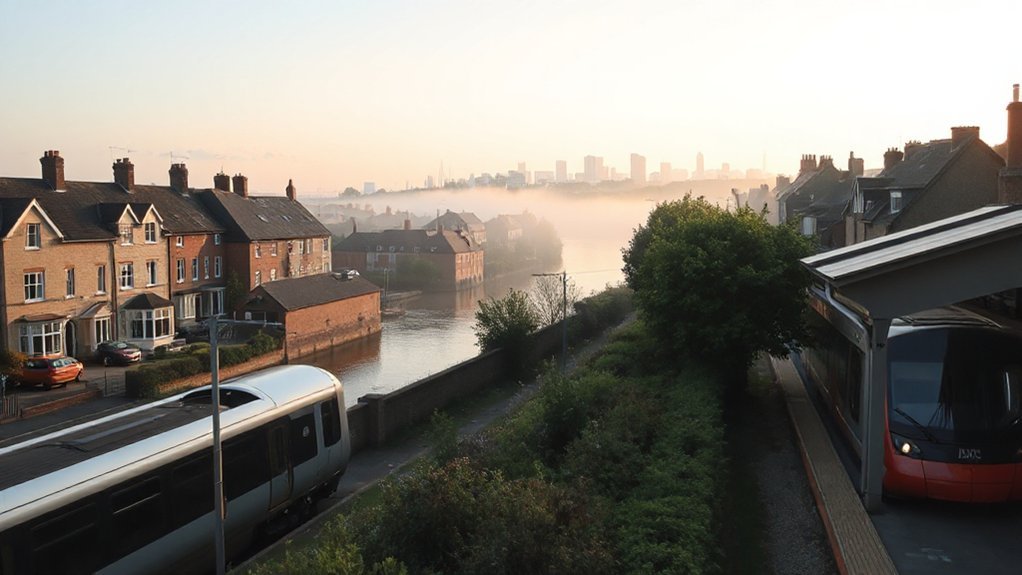
If you want fast, reliable London commutes, focus on Essex towns with strong rail links, walkable town centers, and smart planning. Look for direct or near-direct routes, consistent timings, and reliable rolling stock, plus park-and-ride options to reduce city-bound congestion. Prioritize housing near stations, with balanced density, green buffers, and flood-smart design. Choose communities with solid schools, shops, and healthcare, plus affordable entry costs relative to service quality. Curious for specific hubs and routes that fit your schedule?
H2 1. Criteria for Essex Commuter Towns: Rail, Road, and Quality of Life
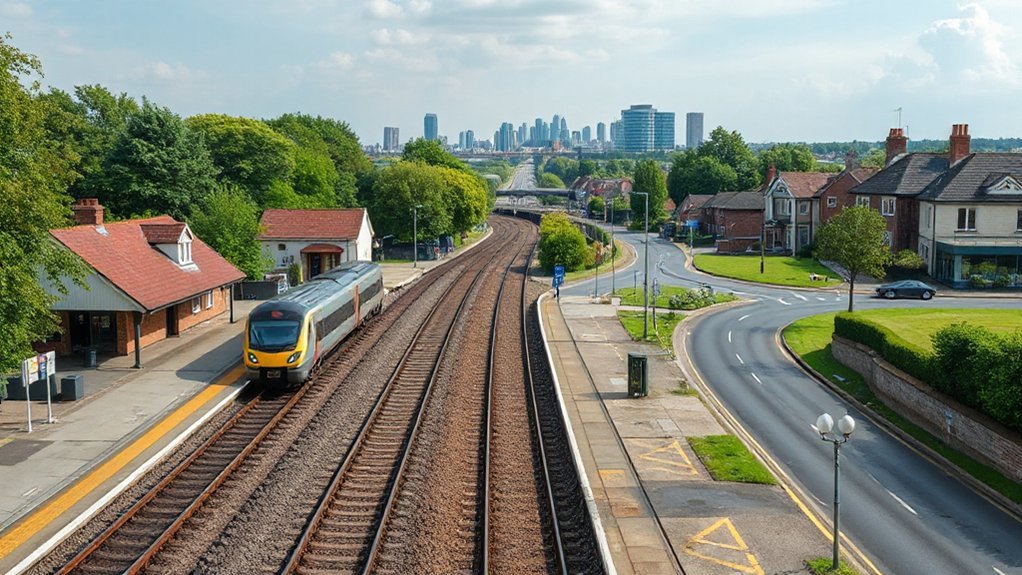
When evaluating Essex commuter towns, you should weigh rail access, road connections, and overall quality of life as a cohesive package.
You assess rail corridors for frequency, reliability, and proximity to residential cores, and you map road networks for congestion risk, orbital routes, and park-and-ride feasibility.
You quantify travel time consistency, maintenance schedules, and service redundancies, then synthesize them into a single mobility score.
You balance housing density with open space, ensuring aesthetic cohesion and practical footfall.
You integrate community engagement metrics—neighbors’ participation in planning, feedback loops, and transparency—into the decision model.
You prioritize environmental sustainability, prioritizing low-emission options, energy-efficient stations, and flood resilience.
This feasibility mindset yields actionable, measurable town profiles suited to London work commutes.
H2 2. Fast London Rail Corridors From Essex Towns
Fast rail corridors from Essex towns into London hinge on direct, time-competitive services, tight scheduling, and reliable rolling stock. You evaluate peak and off-peak frequencies, ensuring minimal transfer risk and predictable dwell times at key hubs.
Corridor design favors cross-city throughput, with clear timetables, consistent rolling stock performance, and robust contingency plans for service disruption. You weigh line resilience, station modernization, and fee structures that influence travel behavior without sacrificing cadence.
Aesthetic considerations matter: architectural clarity in station enclosures, legible wayfinding, and proportional platform widths support efficiency. You also gauge ancillary assets, like local cuisine provenance and the preservation of historical architecture along routes, ensuring commuter value remains linked to place identity while maintaining feasibility for expansion or service revisions.
H2 3. Most Affordable Commuter Towns With Direct Links
Many Essex towns offer direct rail links to London at approachable price points, combining affordable entry costs with reliable, time-competitive services. You’ll find clear value in towns that balance ticket cost with solid frequency, predictable journey times, and proven reliability.
- Efficient commutes past the commuter crunch, with affordable season options and predictable crowd levels
- Proximity to Historical landmarks that enrich daily life without premium prices
- Access to local festivals that energize community calendars and foster neighborhood pride
- Practical housing stock that sustains long-term affordability while maintaining transit convenience
This approach prioritizes cost-conscious feasibility, ensuring you can plan around steady schedules, visible infrastructure investments, and an aesthetic emphasis on well-maintained town centers.
H2 4. Suburban Vibe vs. Rural Peace: Lifestyle by Town

You’ll weigh suburban calm against rural charm to gauge how each town’s rhythm fits your daily commute. Transit time tradeoffs and local amenities balance shape whether you favor speed, space, or service options.
This discussion foregrounds practicality: assess feasibility, cost, and lifestyle fit as you compare towns.
Suburban Calm, Rural Charm
Suburban calm and rural charm sit on opposite ends of the Essex spectrum, yet they share a common thread: a measured pace that suits daily commuting to London. You balance urban development with landscape preservation, choosing towns that optimize rail and road access while maintaining green buffers.
In practice, this means precise zoning, walkable town cores, and sustainable design that respects heritage. You’ll value quiet streets, scaled commercial districts, and efficient services that support work-from-home flexibility when needed. The goal is consistency between daily routine and long-term value, not flash.
Below are considerations that evoke disciplined, emotional resonance without sacrificing feasibility.
- Spatial efficiency that preserves open spaces and views
- Low-noise corridors integrated with hedgerows and forests
- Green retrofit incentives for older housing stock
- Transit-ready layouts you can trust for decades
Transit Time Tradeoffs
Transit time is the decisive metric when weighing Suburban Vibe against Rural Peace, because commute duration directly shapes daily routines and long-term feasibility. You compare options by evaluating door-to-door minutes, reliability, and transfer steps, not just distance.
In practice, shorter transit times reduce morning fatigue, enable earlier starts, and sustain productivity in London-bound jobs. However, faster routes may incur higher commuting costs through premium services or parking expenses, offsetting time gains if not balanced by downstream benefits.
You should quantify traffic congestion patterns at typical departure windows, as persistent congestion erodes time savings and increases stress. Feasibility follows: if a faster line is unreliable during peak hours, the perceived advantage collapses.
Choose a configuration that minimizes total time and stress, aligning with budget and lifestyle priorities.
Local Amenities Balance
When weighing Suburban Vibe against Rural Peace, local amenities become the practical lens through which lifestyle choices are tested. You evaluate everyday access, quality of shops, and proximity to healthcare, schools, and transport hubs to determine feasibility.
Local culture and community events shape social sustainability, while civic services gauge long-term reliability. The balance favors places with efficient morning routines, predictable supply chains, and robust leisure options that don’t disrupt work commutes.
You’ll notice zoning that supports walkable cores without sacrificing quiet pockets, ensuring a calibrated blend of convenience and serenity. Feasibility hinges on consistent service levels, resilient infrastructure, and clear development plans that maintain aesthetic appeal while protecting resident welfare.
- Accessible town centers with varied dining and retail
- Frequent, well-organized community events
- Strong local culture reflected in heritage and arts
- Reliable services supporting day-to-day life
H2 5. Hidden Gems: Lesser-Known Essex Towns With Big Commutes
Hidden gems aren’t just about charm; they’re about delivering surprising commute efficiency. You’ll evaluate lesser-known Essex towns by objective metrics: rail options, timetable reliability, and transfer simplicity to central London hubs.
Focus on real-world feasibility: average door-to-door travel times, peak-hour consistency, and minimal last-mile friction. Prioritize towns with direct or near-direct routes, reusable smart-ticketing, and predictable delays under 10 minutes.
While charm remains, measure sustainability: housing costs relative to service quality, potential for modular growth, and infrastructure resilience. In these communities, Historical landmarks signal walkable centers, inviting daily routines without sacrificing connectivity.
Local festivals reflect social tempo and off-peak traction, smoothing midweek activity. The strongest hidden gems balance aesthetic appeal, practical commuting edges, and scalable lodging options for long-term, London-centric living.
H2 6. Practical Planning Tips: Housing, Schools, and Daily Routines
Efficient planning starts with clear housing, reliable schools, and streamlined daily routines that align with London commutes. You optimize options by mapping travel times, school catchments, and housing costs to form a feasible daily cadence.
Prioritize Affordable housing within reachable zones to balance budget with transit reliability, and assess property updates that reduce long-term upkeep. Build a schedule around peak-line windows, ensuring drop-offs, work-starts, and return trips harmonize with your local community’s rhythm.
Documentation, deadlines, and contingency plans keep you prepared for delays, outages, or changes in routine. Your decisions reflect a feasibility mindset, presenting aesthetic clarity in space, time, and cost.
- Align housing with transit quality to protect time and value
- Prioritize schools with strong outcomes and flexible enrollment
- Create a predictable daily routine that minimizes friction
- Foster a sense of local community through shared spaces and events
Frequently Asked Questions
Do These Towns Have Reliable Weekend Commute Options to London?
Weekend travel options exist, though reliability varies; you’ll find reliable public transport on major routes, with frequent weekend services to London in towns with upgraded rail links. Evaluate timetables, maintenance intervals, and service frequencies for precise feasibility.
Which Essex Towns Offer the Best Value for Money Today?
You’ll find the best value in Essex towns with affordable housing developments, strong local amenities and lifestyle, and solid feasibility for ongoing investment, meaning you can balance upfront costs and long-term gains while enjoying commuter practicality.
How Long Are Typical Door-To-Door Commutes From Each Town?
Door-to-door commutes vary by town, but you’ll typically average 40–70 minutes, with rail upgrades nudging times downward. Expect buses and walking to blend; Public transport upgrades and Local amenities development shape precise, feasible, aesthetically mindful travel plans.
Are There Affordable Housing Schemes for First-Time Buyers Nearby?
Yes, there are affordable housing schemes nearby, including first time buyer incentives you can access. You’ll find schemes with income caps, shared ownership, and discounted market sales, designed for feasibility and aesthetic alignment with commuter towns near London.
Which Towns Have the Strongest NHS and School Catchment Links?
Like a well-oiled machine, you’ll find towns with strongest NHS and school catchment links. You’ll evaluate Historical housing development and Local community amenities, focusing on technical precision, aesthetic clarity, feasibility, and clear, actionable commute-backed data.
Conclusion
You’ve mapped clear rails between place and purpose, balancing speed, value, and vibe. In practical terms, Essex towns offer scalable commutes to London with reliable rail links, affordable housing, and schools that fit family routines. Think of it as a lattice: every town adds a stable node for your daily flow. The key is targeted research, realistic timelines, and flexible housing plans—like threading a needle through time and transit to optimize your weekly rhythm.
About the Author