For a coastal UK home, prioritize weatherproof cladding and salt‑resistant paints to endure spray and humidity, choosing aluminum, fiber cement, or composites with durable, low‑maintenance finishes. Fit corrosion‑resistant hardware and storm‑rated doors, plus laminated or multi‑gas glazing to combat wind-driven rain. Use breathable sealants, timely recoats, and annual washing. Design with wind barriers and low‑mlip landscaping, and combine ridge-to-soffit coatings with coastal lighting for curb appeal. Curious how these steps come together for lasting comfort?
Coastal Climate Demands for Exterior Renovations
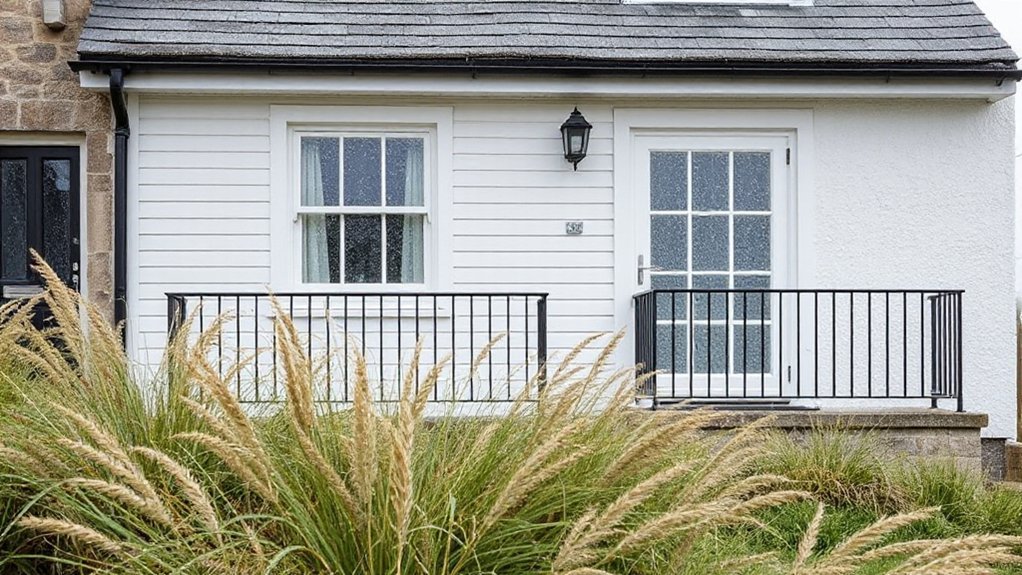
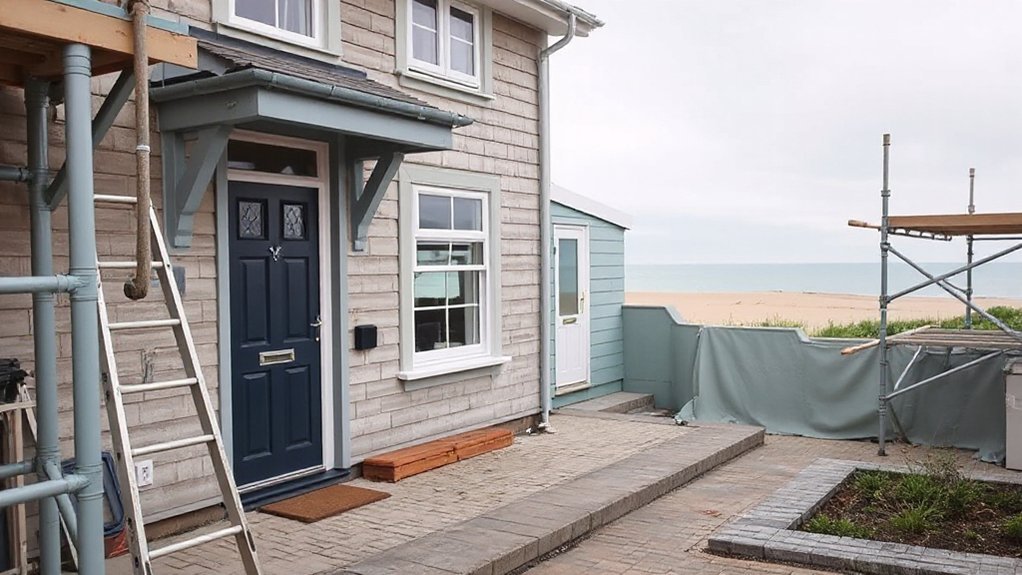
Coastal climates demand more than looks; they require耐able, low-maintenance exteriors that stand up to salt spray, wind, and damp. You’ll prioritize materials that resist corrosion, damp, and mold, while keeping maintenance simple.
Start with corrosion-resistant fasteners, rot-resistant framing, and coatings that endure temperature swings. You’ll plan for good drainage and ventilation to prevent moisture buildup behind walls.
Address coastal aesthetics with Harbor views and seaside gardens in mind, choosing colors and textures that reflect the shoreline without inviting weathering. Prioritize sealants, flashing, and gutters that channel salt-laden spray away from joints.
You’ll coordinate with simple, durable claddings and trims that won’t require frequent upkeep, ensuring your home remains attractive amid salt air and wind-fed exposure.
Weatherproof Cladding That Stands Up to Salt Spray
You’ll want weatherproof cladding that resists salt spray without sacrificing style or longevity.
Prioritize materials with proven salt‑air performance, low maintenance, and clear warranties.
Consider how each option handles salt spray resistance, durability for coastal winds, and simple upkeep on a UK coast.
Salt Spray Resistance
Salt spray can corrode softer materials and dull finishes quickly, so choosing weatherproof cladding is essential for coastal UK homes. You’ll want panels engineered for salt spray resistance, with coatings that deter salt accumulation and resist peeling. Look for low-maintenance finishes that stay vibrant even after harsh winter winds.
Aluminum, fiber cement, and composite options often deliver reliable salt corrosion resistance when properly treated, installed, and sealed. Verify that joints are watertight and that fixings are corrosion-resistant stainless steel or aluminum to prevent hidden corrosion paths.
Regular rinses help remove salt buildup, preserving color and texture. Prioritize products with third-party spray resistance testing and documented performance in marine environments, ensuring long-term aesthetics and structural integrity against salt spray.
Durable Coastal Materials
When you’re selecting weatherproof cladding for coastal UK homes, durability against salt spray becomes the guiding metric. Choose materials that resist corrosion, maintain color, and require minimal maintenance in damp, windy microclimates. Fiber cement and certain high-quality vinyl or metal composites offer robust performance.
While properly finished timber can work, it requires regular treatment and sealing before exposure peaks. Look for coatings with proven salt-spray tests and UV stability, plus warranties that reflect coastal usage.
Consider how each option ages; a quiet, matte finish often hides chalking and wear better than glossy surfaces. Plan installation details to avoid water traps and ensure proper drainage.
Marine biodiversity and coastal erosion awareness should shape color and texture choices to harmonize with the shoreline environment.
Maintenance For Coasts
Maintaining coastal weatherproof cladding means treating salt spray as the constant adversary, not an afterthought. You’ll choose materials that resist corrosion and blistering, with protective coatings rated for salt-laden air.
Regular inspections are your best defense: look for loosening fasteners, edge wear, and micro-cracks that invite moisture. Clean surfaces with a mild detergent, then rinse to remove salt deposits before they etch or stain.
Recoat every five to seven years, or sooner in harsher seas winds, and match finishes to the home’s palette for a cohesive look.
Integrate coastal flora strategically near walls to help microclimates, but avoid planting directly against cladding to prevent moisture buildup.
For Beachfront privacy, select screen panels or trellises that tolerate salt spray while maintaining sightlines and airflow.
Corrosion-Resistant Fittings and Hardware Essentials
Corrosion-resistant fittings and hardware are non-negotiable for coastal UK homes, where salt spray, damp air, and shifting weather attack metal fasteners and fixtures. You’ll want marine grade hardware installed where exposure is highest, from door hinges to railing bolts, to resist rust and salt damage.
Choose corrosion resistant fittings in stainless steel, brushed zinc, or coated bronze, matching your exterior finish for a cohesive look. Prioritize fasteners with higher corrosion resistance ratings and avoid standard steel in salt-prone zones.
Seal joints properly and use compatible, non-galvanic materials to prevent galvanic corrosion. Regular inspection and tightness checks keep systems secure; replace any signs of wear promptly.
This approach preserves aesthetics, longevity, and performance without compromising style.
Choosing Windows for Sea-Breeze Homes
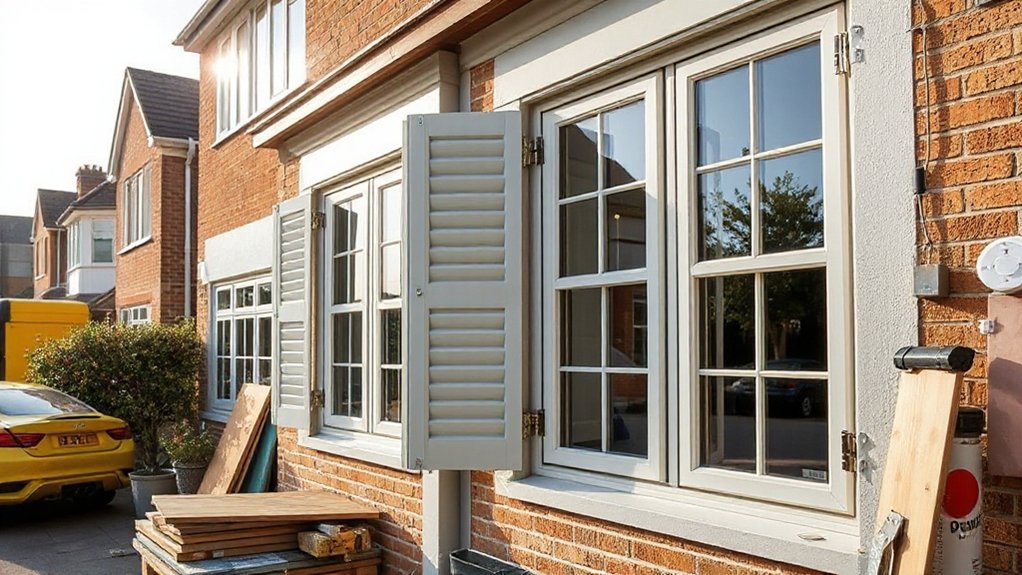
Consider window styles that maximize ventilation while minimizing exposure to wind-driven rain, such as casement vents and narrow-profile sliders.
Prioritize glass specifications that balance clarity with strength; laminated or multi-layer glazing reduces wind pressure impact and glare from coastal sun.
Guarantee seals and drainage are robust to prevent leaks after storms.
Modern double- or triple-glazing improves insulation and reduces condensation risks.
Select UV-stable finishes and easy-maintenance hardware for longevity, and match hardware finishes to the home’s exterior palette for cohesive curb appeal.
Roof Upgrades to Withstand Wind and Rain
With coastal winds and frequent rain, you’ll want wind-resistant roofing materials that hold up over time.
Make certain your fastenings are secure and rain-driven, so panels stay put even in storms.
Start by choosing sturdy sheathing and sealants that protect every seam and edge.
Wind-Resistant Roofing Materials
When you’re upgrading for coastal UK conditions, choose roof systems that resist high winds and driving rain, not merely look good. Wind-resilient materials matter as storms lash the coast.
Opt for fastener patterns and attachment methods designed for uplift resistance, plus rigid sheathing to reduce movement.
Favor roof coverings with tested performance in high-wind zones, and align with local building codes for wind zones.
Sustainable shingles can deliver both durability and eco-conscious credentials, while maintaining curb appeal.
Consider Solar roofing options that integrate efficiency without compromising strength.
Choose sealed, corrosion-resistant components to handle salt air.
Guarantee proper underlayment and ventilation to prevent moisture buildup and ice damming.
With precise installation, you’ll secure long-term reliability against relentless coastal weather.
Secure, Rain-Driven Fastening
Secure fastening is the backbone of a storm-ready roof: you need rain-driven connections that resist both uplift and leakage. In coastal UK areas, choose structural screws and corrosion-resistant fixings that stay tight after salt-spray exposure. Pair metal fasteners with compatible washers to distribute load and reduce pinched seams.
Use corrosion-resistant coatings and non-galvanized steel where appropriate, but prioritize rust prevention with rust-resistant alloys or protective finishes. Guarantee battens and underlays with staggered, continuous runs, avoiding exposed joints that funnel water.
For wind stabilization, anchor connections to framing rather than sheathing alone, and reinforce ridge lines and eaves with reinforced clips. Ascertain sealants flex with movement, and test rainfall performance after installation to confirm leak-proof results.
Salt-Resistant Paint That Stays Bright
Salt can be harsh on coastal homes, but salt-resistant paint helps keep colors bright for years. You’ll choose coatings designed to resist salt spray, algae growth, and UV fade, so your facade looks fresh through seasons. Look for paints with sealed pigments and water-repellent binders that slow salt penetration and minimize chalking.
Matte or satin finishes can hide minor imperfections while staying easy to clean. For maintenance, recoat every 5–7 years and wash annually with a soft brush to remove marine algae spores. Your goal is long-term vibrancy with minimal effort.
- Choose salt-resistant formulations with anti-corrosive and UV-stable properties
- Verify low maintenance by testing on a small area first
- Prioritize breathable, mildew-inhibiting surfaces to deter salt-related staining
Coastal Decking: Materials Built for Harsh Seas
Coastal decking has to withstand salt spray, wind, and wet conditions, so choose materials engineered for durability and low maintenance. You’ll want boards that resist corrosion, warping, and fading, with hidden fasteners for a clean look. Composite or capped wood alternatives offer longevity with minimal upkeep, while pressure-treated pine can work if you seal and reseal regularly.
Consider non-slip textures for safety during damp coastal mornings. Choose colors that echo Seaside scenery yet hide watermarks and grime, and plan for ventilation beneath to prevent mould.
Integration matters: railings should resist salt air, and lighting should be subtle, reducing glare on boats and water. Don’t overlook coastal flora around the deck; plan planting to soften lines and frame views without obstructing access.
Drainage Essentials for Coastal Lots
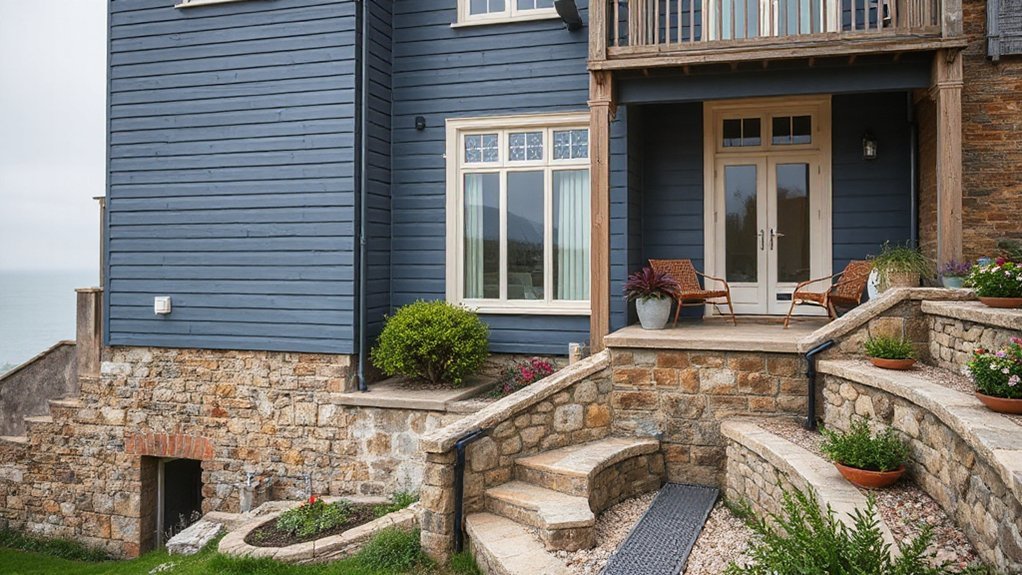
To protect your coastal home, start with a solid drainage system design that handles heavy rains and salt exposure. Focus on directing water away from foundations with proper grading, perforated pipes, and robust coatings tailored to coastal soil.
For Coastal Soil Drainage, assess soil type and drainage capacity early. Choosing permeable surfaces and appropriate infiltration methods can help keep your yard and walls dry.
Drainage System Design
Drainage design for coastal lots must account for higher groundwater levels, storm surge risk, and shifting precipitation patterns. Start by mapping soil types, water table depth, and typical tidal effects so systems can be sized correctly.
You’ll tailor solutions to manage water runoff, prevent flooding, and protect foundations while staying compliant with local codes. Focus on robust surface and sub-surface strategies that balance efficiency with aesthetics.
- Optimize graded terraces and swales to direct water runoff away from structures
- Use permeable pavers and sub-surface drains to maintain drainage without erosion
- Install tide-aware sump pumps and backup power for continuity during storms
Prioritize redundancy, easy maintenance access, and durable materials that resist salt spray and damp environments. This keeps your coastal home safe and stylish.
Coastal Soil Drainage
Managing coastal soil drainage starts with a clear plan: map soil types, groundwater depth, and tidal influences to size systems correctly and keep foundations dry.
You’ll prioritize soil stabilization by improving structure where salt and wind erode surfaces.
Choose drainage solutions that handle high water tables and frequent saturation without clogging from fine sands.
Install perforated pipes with gravel backfill, and grade surfaces to direct runoff away from walls.
Consider bio-swales, French drains, or trench drains where pooling recurs, ensuring access for maintenance.
Use corrosion-resistant materials in exposed coastal zones.
Monitor groundwater trends yearly and adjust spacing and pipe diameters as tides shift.
Keep vegetation lean where necessary to prevent root intrusion, but use drought-tolerant, salt-tolerant grasses to aid stability.
Regular inspections secure long-term resilience.
Insulation and Ventilation for Humid Coastal Air

Ever wondered how to keep a coastal home warm without wasting energy? You’ll optimize insulation and ventilation to handle humid air and salt exposure.
Choose breathable, moisture-tolerant materials, like mineral wool or closed-cell foam with vapor retarders, and seal gaps tightly without overblocking airflow.
Install humidity-sensing extract fans and mechanical ventilation with heat recovery to balance fresh air and efficiency.
Prioritize passive strategies: thermal bridges, window seals, and reflective shading to reduce heat gain.
- Use moisture-tolerant insulation with proper vapour barriers
- Fit HRV or ERV systems for balanced ventilation
- Seal and insulate gaps around doors, windows, and penetrations
Consider how coastal erosion and marine biodiversity influence material choices and long-term maintenance.
Storm-Ready Exterior Doors and Entrances
When you choose storm-resistant door materials, you’ll prioritize strength, weather seals, and corrosion resistance for coastal winds.
We’ll review coastal wind load standards to guarantee your entrances meet safety requirements without overbuilding.
Let’s cover practical weatherproofing tips for doors and frames so your entry stays secure and dry in every season.
Storm-Resistant Door Materials
Storm-ready doors protect your home from coastal winds and driving rain, so choose materials that combine strength with weather resistance. When selecting storm resistant doors, prioritize frames, cores, and seals that withstand salt spray and gusting weather without warping.
Look for reinforced hardware, impact-resistant glass, and vinyl or fibreglass skins that resist cracking and bending. For coastal security, opt for corrosion-resistant hardware and multi-point locking systems that stay reliable year after year.
- Reinforced cores and weather-stripping for a tight, durable seal
- Fibreglass or steel skins with corrosion resistance
- Multi-point locking paired with impact-resistant glass
Choose materials that balance toughness, appearance, and minimal maintenance, so your entry remains welcoming yet steadfast against wet, windy days.
Coastal Wind Load Standards
Align hardware with corrosion protection and marine-grade finishes, then verify anchorage to solid, continuous framing. Consider reinforced transoms, multipoint locking, and seal systems that maintain airtight performance while resisting uplift.
Plan for robust threshold detailing and drainage to prevent water intrusion during gusts. Document tested performance data and installation clearances, so warranties stay intact.
Coastal erosion and marine biodiversity influence site-specific decisions, guiding material choices toward durable, low-maintenance options that minimize environmental impact while maintaining storm readiness.
Entrance Weatherproofing Tips
Doors and entrances take the brunt of coastal weather, so focus on sealing and hardware that keep out wind, water, and salt. You’ll want storm-rated doors, airtight thresholds, and weatherstripping that’s thick enough to resist salt spray, while hinges and latches stay corrosion-free.
Prioritize door sweeps and drip rails to shed moisture, and pair them with reinforced frames to prevent drafts. Lighting and hardware should be water-resistant, with concealed fasteners to reduce salt buildup.
For safety and style, integrate practical features like entrance lighting and doorbell security that withstand damp days without sacrificing curb appeal.
- Use storm-rated doors with robust seals and a corrosion-resistant finish
- Install backer-plates and rust-proof hardware for longevity
- Choose weatherproof lighting and a tamper-proof doorbell system
Balcony and Terrace Finishes That Endure Brine
Choosing balcony and terrace finishes that resist brine starts with materials that shrug off salt, humidity, and coastal winds. You’ll want corrosion-resistant metals, ceramic or porcelain tiles, and dense hardwoods treated for outdoor use. Consider powder-coated aluminum railings and fiber cement boards to minimize maintenance and weathering.
Avoid porous options that trap salt and moisture, which can crack or warp over time. For surfaces, pick non-slip textures and UV-stable finishes to keep colors vibrant.
For greenery, select balcony plants that tolerate salt spray and windy sites, and position planters with drainage to prevent standing brine.
Your terrace furniture should be rust-resistant, UV-protected, and easily relocated during high winds. Pair with weatherproof cushions and quick-dry fabrics for everyday practicality and lasting style.
Balcony plants, Terrace furniture.
Maintenance Routines to Save Time and Money
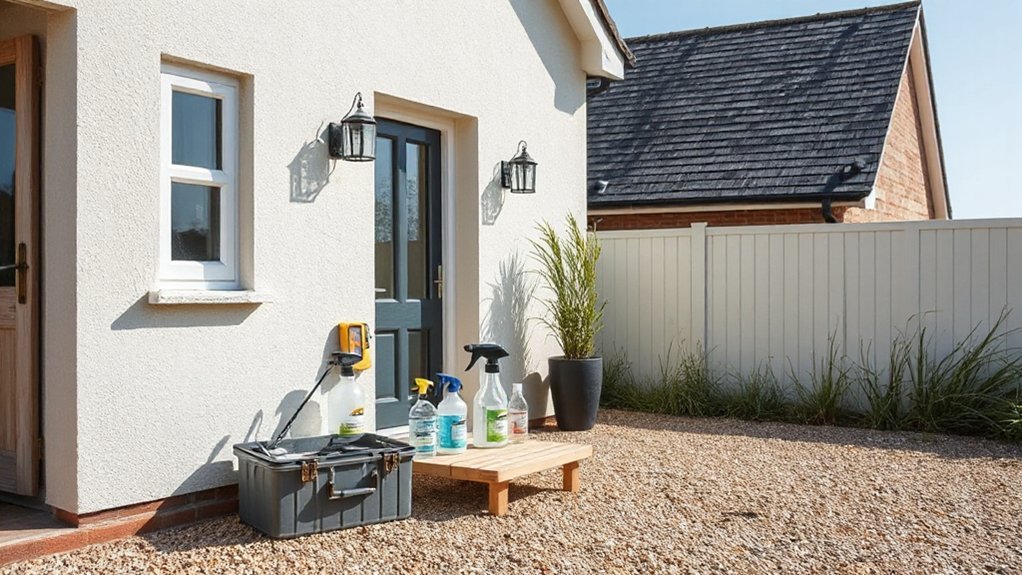
Start with a simple weatherproofing routine that you perform quarterly to head off costly repairs before they start.
Keep a durable coatings schedule, matching products to each surface and climate, so maintenance tasks shrug off salt spray and wind-driven moisture.
Build in preventative maintenance streaks—short, regular checks and quick fixes—that save you time, money, and stress over the long haul.
Weatherproofing Routine Checks
Regular weatherproofing checks save you time and money by catching drafts, leaks, and wear before they become costly repairs. You’ll empower your coastal home by surveying seals, joints, and flashings after storms, validating that damp isn’t creeping in, and ensuring ventilation remains balanced.
Focus on exterior gaps, door and window frames, and roofline connections, because weather vulnerability thrives where materials meet the elements. This routine also supports climate adaptation, helping you adjust insulation and drainage to shifting conditions without overhauling the structure.
Stay systematic, not obsessive; note discrepancies and address them promptly to preserve value.
- Inspect seals and flashings around doors, windows, and vents
- Check guttering, downpipes, and roof edges for blockages or leaks
- Test exterior outlets, cables, and damp-proof course integrity
Durable Coatings Schedule
Durable coatings aren’t just about looking good—they’re about lasting through salt spray, wind-driven rain, and shifting temperatures. To keep them performing, adopt a simple schedule you can stick to.
Start with paint preparation: clean surfaces, remove old flaking paint, and repair gaps before you prime. Use high-quality primers compatible with your topcoat, and choose products rated for coastal exposure.
Plan two coats for most exterior walls, plus a topcoat designed for UV and moisture resistance. Inspect annually and recoat when you notice fading or slight blistering, not wait until it worsens.
Weather windows matter—avoid painting in high humidity or freezing temperatures. Document products and dates to simplify future maintenance and improve coating longevity for hassle-free upkeep.
Preventative Maintenance Streaks
- Schedule weekly quick wins that protect exterior gaps, seals, and drainage
- Pair outdoor inspections with indoor checks on insulation performance and air leaks
- Track results and adjust timing to seasons and plant growth
A disciplined streak saves time, money, and mood, month after month.
Budget-Friendly Upgrades With Big Impact
If you’re aiming for noticeable upgrades without breaking the bank, start with targeted, high-impact tweaks that enhance curb appeal and durability. Prioritize durable finishes in coastal colors that resist salt spray, like quartz or ceramic tiles for entrances and low-maintenance cladding.
Update lighting with energy-efficient LEDs, focusing on warm, welcoming tones that improve safety at night.
Replace worn gutters and sealant, ensuring waterproofing against coastal weather while preserving aesthetics.
Use weather-rated paint on woodwork and metal accents, reducing maintenance cycles and extending life.
Consider low-cost landscaping that reinforces coastal resilience, such as native grasses and ground cover to stabilize soil.
Acknowledge Marine biodiversity in plant choices, and design buffers against Coastal erosion to protect the home’s silhouette.
Eco-Friendly Solutions for Coastal Living
Eco-friendly coastal living means choosing materials and systems that minimize environmental impact while withstanding salty air and wind. You’ll opt for durable, low-maintenance options that perform in damp coastal climates without frequent replacements.
- Eco friendly insulation: use mineral wool or cellulose with Weather-resistant barriers to reduce heat loss and guard against moisture.
- Sustainable roofing: consider metal or recycled-content shingles designed for salt exposure and high wind loads.
- Seaside-ready finishes: breathable paints and sealants that resist salt spray and mildew while conserving energy.
Color Palettes That Resist Fading From Sun and Sea
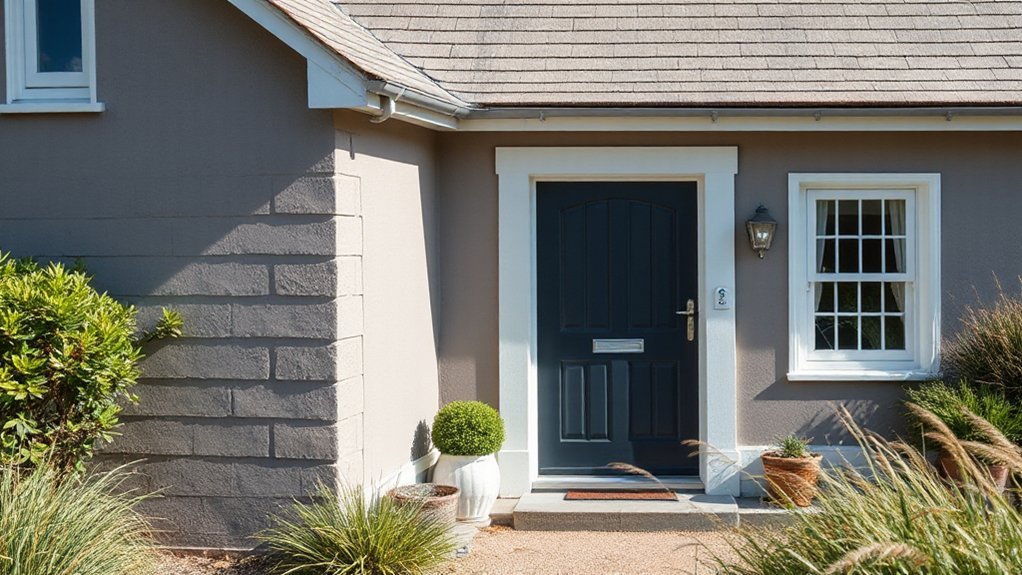
When choosing color palettes for coastal UK homes, you’ll want hues that stay true despite sun and salt spray, paired with finishes that resist fading and mildew. Choose high-quality exterior paints or weatherproof coatings labeled for UV resistance and moisture tolerance, then apply primer to improve adhesion.
Favor muted blues, sea-gray neutrals, and earthy sand tones that harmonize with seaside views while concealing salt spray marks. Implement sun protection with UV-stable pigments and long-wear topcoats; avoid trendy fleeting shades that creep toward yellowing.
For longer life, select breathable finishes that prevent mildew and peeling, and recoat every five to seven years. Test color samples on exposed panels, observe fading progression, and document results to guide practical, consistent upkeep in real coastal conditions.
Fading prevention hinges on durability, correct prep, and disciplined maintenance.
Outdoor Lighting for Briny Air and Easy Living
Outdoor lighting in coastal UK settings should combine rugged durability with effortless ease of living; by choosing seals, finishes, and placement that resist salt spray, you’ll enjoy reliable illumination without constant maintenance.
Visually, select coastal-grade fixtures that blend with garden sculptures and outdoor furniture, avoiding chrome that pits. Use warm LEDs, shielded from spray, to reduce glare while outlining paths and seating zones. Position low-profile wall lights at entry points and soffits for safety, and cascade soft ground lighting along steps for mood and visibility.
Opt for corrosion-resistant materials like powder-coated aluminum or stainless steel with protective coatings. Install timers or smart dimmers to minimize energy use, and keep spare bulbs handy in a dry, accessible outdoor box.
- Sealed, salt-proof fixtures
- Subtle pathway accents
- Integrated seating lighting
Sealants and Caulking That Stand Up to Damp
Before you apply, clean joints thoroughly, remove old material, and dry completely to guarantee a strong bond. Apply masking tape for clean lines, and lay an even bead, tooling promptly to smooth, compress, and seal.
For sealing gaps around windows, doors, and plinths, use backer rod to control foam depth and foam expansion. Consider Sealant longevity by opting for products with marine-grade ratings and compatible primers where required.
Master Caulking techniques to prevent sagging or tearing on vertical seams. Reinspect after a washdown and reapply as needed to maintain a water-tight exterior.
Garden Design: Wind Barriers and Low-Mlip Landscaping
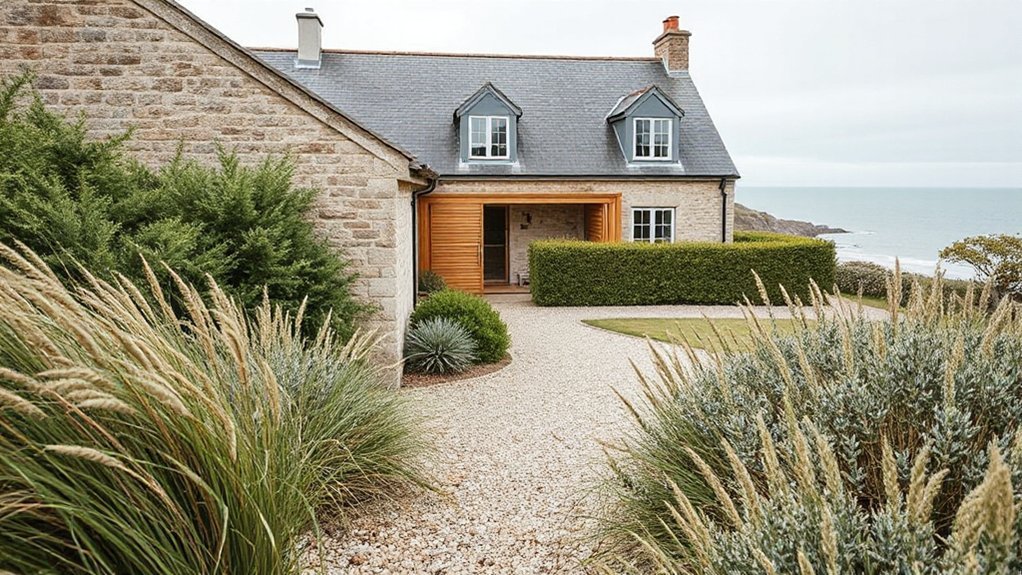
How can you shield a coastal garden from strong winds without sacrificing style or accessibility? You’ll layer wind barriers and low-mlip plantings that work with movement, not against it, creating a sheltered microclimate for Seaside flora.
Use sculptural hedges, wind-friendly screens, and staggered borders to reduce gusts while preserving sightlines. Opt for compact perennials and hardy grasses that sway gracefully, adding coastal art through textured forms and color echoes.
- Strategic screens and windbreaks that soften exposure
- Low-mlip beds with drought-tolerant, salt-tolerant plants
- Repeating shapes and textures to guide movement and invite exploration
This approach keeps maintenance sensible and visual appeal high, delivering a durable, elegant coastal garden.
Painter’s Guide: Preparing Surfaces for Coastal Weather
Coastal weather demands surfaces that endure salt, wind, and humidity, so you start with a thorough prep that sticks. You inspect for rust, peeling paint, and exposure damage, then remove loose material with a scraper and wire brush. Wash surfaces with a stiff brush and mild detergent to eliminate salt film, rinse, and let them dry completely.
Address gaps and cracks with appropriate filler, sand smooth, and wipe away dust before coating. Surface preparation sets the stage for lasting adhesion, so you don’t skip this.
Apply a compatible primer in a thin, even coat, ensuring full coverage at corners and joints. When the primer dries, test for bleed-through and touch up as needed.
Finish with a topcoat suitable for coastal conditions, maintaining a consistent sheen and color.
Planning Permits and Compliance for Coastal Renovations
Managing planning permits and local compliance isn’t optional in coastal areas—it’s essential. You’ll navigate approvals early, aligning coastal constraints with your renovation goals. Verify permitted works, underwater protections, and any listed status tied to Historical architecture, so your project stays compliant and preserves character.
You’ll also track setbacks, drainage, and floodplain considerations to avoid costly delays. Keep interior design trends in mind for future-proofing while you safeguard exterior integrity.
- Secure approvals before breaking ground, noting any listed status and coastal restrictions
- Align building permissions with flood mitigation, drainage, and materials suitable for salt air
- Document changes for future maintenance, referencing historical architecture and design lineage
Frequently Asked Questions
How Can I Budget for Coastal Renovation Projects Effectively?
Yes—start with precise cost estimation, then steady budget planning. You map out every line item, add 10–20% for coastal surprises, and secure contingency funds. You track variances, adjust scope, and renegotiate contracts to stay on target.
Which Local Regulations Affect Coastal Exterior Work?
Most coastal regs hinge on planning permissions and environmental protections; 60% of homeowners overlook erosion risk. You must consider coastal erosion and marine pollution policies, securing permissions, and designing materials that minimize runoff while meeting local authority conditions.
What Maintenance Frequency Is Ideal for Briny Environments?
You should inspect and maintain every 12 months, adjusting frequency by exposure. In briny environments, focus on salt corrosion and moisture control; rinse salt buildup, reseal joints, and apply corrosion-resistant coatings to extend life and aesthetics.
Are There Eco-Friendly Coastal Renovation Certifications to Pursue?
Eco-friendly, eco certifications exist, and you pursue practical sustainability standards. Yes—you can chase coastal-friendly credentials; you’ll satisfy standards, secure recognition, and simplify compliance, while you champion sustainable choices, showcasing sturdy, stylish homes with credible, measurable eco certifications and Sustainability standards.
How Do I Assess Wind Load for Exterior Upgrades?
You assess wind load by performing a structural analysis, calculating wind pressure, and verifying fastener capacities. Focus on wind resistance, historical gusts, and local codes to guarantee upgrades withstand coastal stresses and seasonal storms confidently.
Conclusion
Coastal homes demand savvy, practical updates you can trust. Prioritize salt‑spray–proof materials, corrosion‑resistant fittings, and weather‑sealed windows to keep beauty and value intact. Plan sturdy roofs, durable sealants, and wind‑friendly garden layouts that reduce maintenance. Remember permits early and document every step so your project sails smoothly. Stay proactive: maintenance is a habit, not a single fix. Like a well‑tuned instrument, your home should respond to every coastal note with quiet confidence.
About the Author