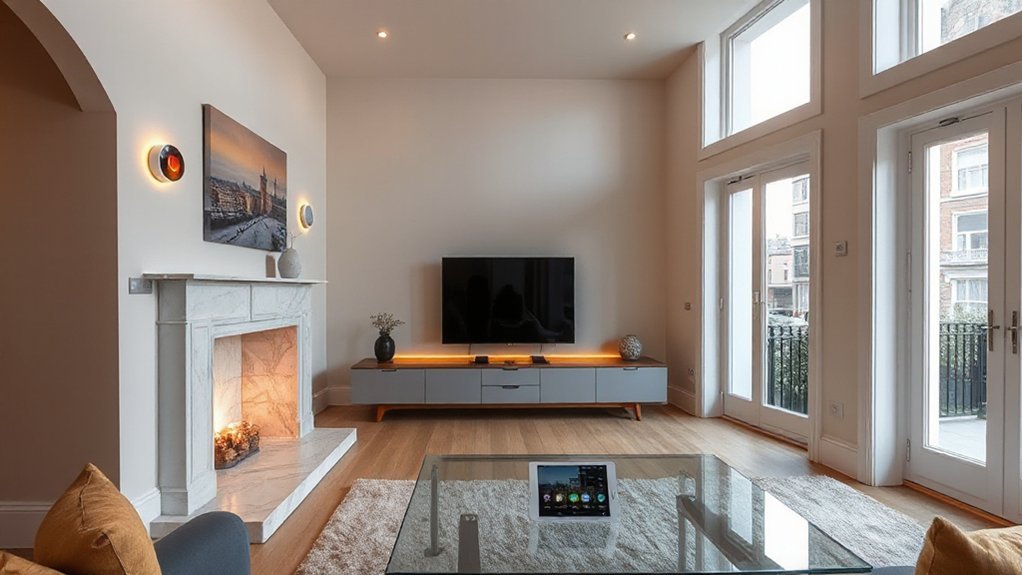
Smart-home features are moving from luxury to standard in UK properties. You’ll see immediate energy savings via smart meters, thermostats, and sensors that optimize usage and cut waste. Expect reliable automations for lighting, climate, and security, with transparent dashboards and local controls that respect privacy. Interoperable, future‑proof platforms keep upgrades smooth while protecting data. Scalable solutions fit flats or houses, from DIY installs to pro setups. Curious what specific features and costs trend next? Continue to explore for practical insights.
Why UK Homes Are Going Smart Now: 3 Real Benefits
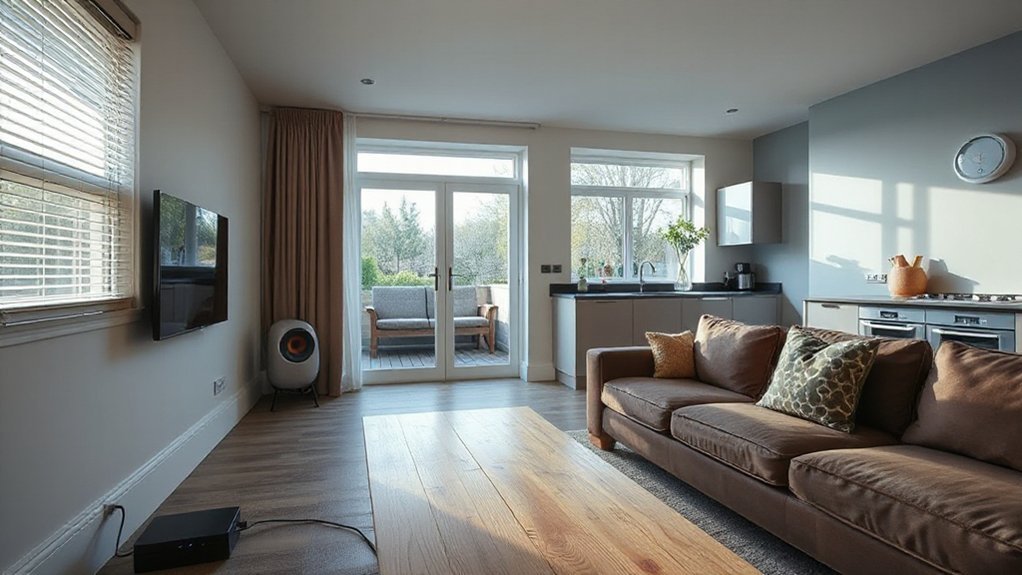
Smart home tech is gaining traction in UK housing because it delivers tangible value from day one. You’ll notice three real benefits that justify the shift.
First, you gain measurable energy efficiency: smart meters, thermostats, and sensors optimize usage, reducing waste and cutting bills without sacrificing comfort.
Second, convenience and control compound across spaces, letting you program scenes and automations that respond to occupancy and time, enhancing daily routines with precision.
Third, resilience and future-proofing emerge as data-driven maintenance and remote updates keep systems secure and adaptable to evolving standards.
Centralized management simplifies monitoring, while transparency around Smart home privacy reassures you that data stays local where possible.
Taken together, these factors make smart upgrades a practical, value-forward decision for UK homes.
Which Smart-Home Features UK Buyers Want Most
You’re evaluating what drives demand and which features top UK buyers, so you’ll see energy efficiency, seamless controls, and reliability leading the list.
Priorities hinge on practical benefits—cost savings, security, and effortless integration with existing systems—shaping what buyers seek most.
This frame sets the discussion on how smart-home features align with real-world usage and value.
Smart-Home Demand Drivers
Smart-home demand in the UK hinges on features that save time, cut costs, and boost security, with buyers prioritizing integrated lighting, heating controls, and energy monitoring. You’ll value interoperability, reliability, and straightforward setup, because seamless operation reduces friction in daily routines.
The strongest drivers are operational efficiency, data-driven insights, and scalable ecosystems that grow with your Digital Living needs. You seek robust control via dashboards and voice or app interfaces, plus clear, verifiable energy metrics that justify investment.
Security is a non-negotiable benchmark, including device hardening, encrypted communication, and update cadence. While aesthetics matter, practical performance governs purchasing decisions: predictable performance, minimal maintenance, and clear return on investment.
Smart Home ecosystems should feel cohesive, future-proof, and responsive to evolving technologies.
Popular Features Priorities
Proceeding with the most valued capabilities, UK buyers prioritize features that deliver tangible savings, reliable control, and clear performance signals.
You’ll notice a sharp tilt toward practical integration: reliable home automation routines that synchronize lighting, climate, and security without friction.
Energy efficiency emerges as a core criterion, guiding choices toward systems with transparent consumption reporting and predictable payback.
In kitchens and living spaces, multi-room audio and ambient lighting are valued for both usability and aesthetics, yet they must prove they don’t complicate maintenance or upgrades.
Preference lands on scalable platforms with open standards, robust interoperability, and straightforward app interfaces.
Buyers seek devices that lead to measurable cost reductions, while preserving comfort and design coherence across the home.
Simplicity, reliability, and measurable impact define the priority set.
Save Energy With Smart Thermostats and AI Heating
Smart thermostats and AI-driven heating systems trim energy use by learning your routines and adapting when and how heat is delivered. You gain precise control over comfort zones through programmable schedules, adaptive night reductions, and occupancy sensing that minimizes hot-water and space-heating runs.
The result is a responsive, low-heat baseline that ramps up only when needed, preserving energy without sacrificing comfort. AI heating analyzes weather forecasts, indoor temperatures, and usage patterns to optimize boiler duty cycles and circulation, reducing peak demand and wasted cycles.
This enhances energy efficiency across the home, lowers utility bills, and contributes to grid resilience. Implementation favors zoning, robust connectivity, and clear override options for manual comfort.
Smart Lighting: Mood, Control, and Bills
Lighting systems can dramatically shape mood, control, and cost, with smart LEDs and controllable luminaires offering precise, energy-conscious management. You’ll experience smarter illumination through scenes, schedules, and adaptive timing that align with activity and daylight.
In practice, smart lighting supports mood control via tunable white and color accents, enabling task-focused or ambient atmospheres without manual fiddling. You’ll also gain granular energy data and automation options that reduce waste, especially when paired with occupancy sensing and daylight harvesting.
Integration with hubs and voice assistants keeps controls intuitive, yet still technically robust. Expect durable drivers, calibrated color rendering, and secure networking as standard.
- Mood control with tunable white and color accents
- Scheduled and scene-based automation for efficiency
- Energy analytics linked to usage patterns
UK Connected Security Systems for Peace of Mind
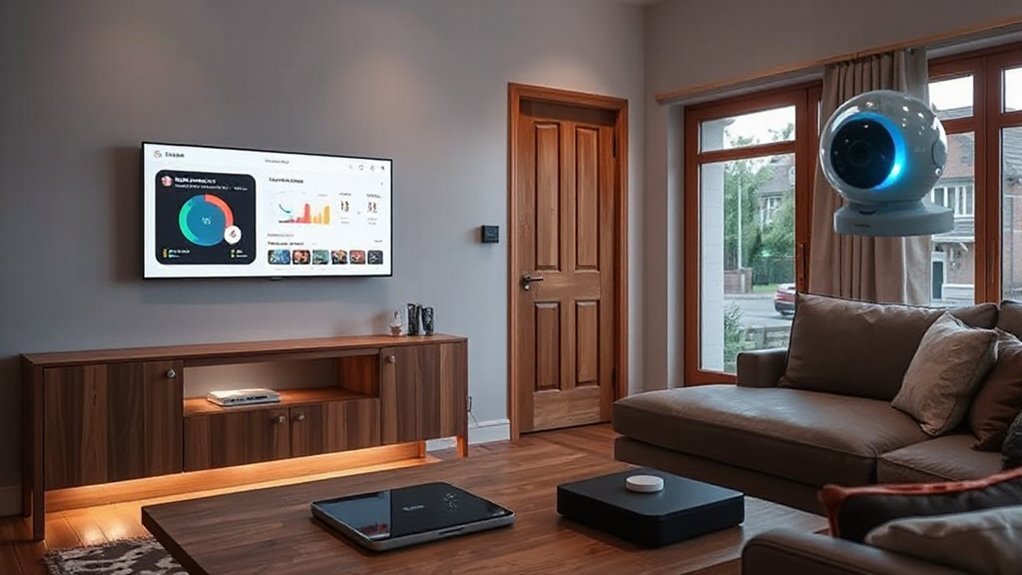
UK-connected security systems deliver peace of mind by combining intrusion detection, video analytics, and remote monitoring into a cohesive, user-centric platform. You access real-time alerts, centralized event logs, and risk-scoring to evaluate threats quickly.
The system ties door and window sensors, motion detectors, and cameras into a single dashboard, minimizing setup complexity while maximizing reliability. With encrypted communication and multi-layer authentication, you safeguard data across devices and cloud storage, ensuring privacy alongside protection.
AI-driven video analytics filter false positives, enabling precise responses without nuisance alarms. You opt for scalable modules—sensors, cameras, and monitoring plans—that suit evolving property layouts.
Fundamentally, connected security delivers proactive defense, rapid remediation, and enduring peace of mind for modern UK homes.
Voice Assistants: Your Home Command Hub
Voice assistants act as the central hub for control, so you’ll want broad reach across rooms and devices to guarantee reliable command execution.
Routine automation is increasingly common, with scenes and schedules that streamline daily tasks and save energy.
We’ll explore how reach and automation trends shape practical, cohesive UK smart-home setups.
Voice Assistant Reach
What’s the practical reach of voice assistants in a typical UK home, and how reliably can they act as the central hub for your devices? You’ll assess coverage, latency, and compatibility to determine true voice reach.
In practice, a single, well-placed device often controls dozens of peripherals, but throughput depends on Wi‑Fi quality, mesh reliability, and vendor ecosystems for assistant integration. Expect stable lighting, audio, and climate commands within rooms, with occasional drops in dense walls or interference-prone spaces.
Practical reach improves when you optimize routing, update firmware, and standardize core protocols. Voice reach hinges on hardware placement and software support, not merely brand.
- Coverage hotspots and dead zones
- Device compatibility and latency
- Network stability and firmware cadence
Routine Automation Trends
In practice, this means tighter integration across platforms, reduced latency, and clearer feedback loops so you know when a scene activates or a device pauses. You’ll prioritize essential tasks: comfort, energy efficiency, and safety, while preserving aesthetic intent through calibrated lighting scenes and sound levels.
Smart gardening can be automated for schedule-based irrigation and status alerts, and Home entertainment becomes synchronized across rooms for immersive experiences. This approach emphasizes reliability, scalability, and tangible value for everyday UK homes.
Budget-Friendly Smart Plugs and Hubs
- Broad compatibility across popular ecosystems
- Energy insights to optimize consumption
- Simple, reliable routines and remote access
Choose affordable plugs for individual control and a hub to centralize automations. Prioritize devices with local processing for responsiveness and clear firmware updates for security. This approach delivers practical, cost-effective smart-home traction without overreach.
Smart plugs, smart hubs.
DIY vs. Pro Installations in the UK
Home installations can seem straightforward, but UK homes vary in wiring, standards, and access to space, so you’ll want to weigh DIY efforts against professional help. In practice, DIY offers rapid updates, lower upfront costs, and a hands-on feel for customization.
Yet DIY challenges emerge from inconsistent circuits, legacy fuse boxes, and room constraints that limit device placement.
Pro installations bring certified wiring, future-proof layouts, and compliance with Part P and building regs, reducing risk of faults and insurance flags.
When deciding, assess complexity, load calculations, and debugging needs, not just initial price.
Prioritize installation safety: plan cable routing, secure mounting, and proper grounding.
If uncertain about certifications, permits, or integration with mains systems, consult a licensed technician to safeguard performance and long-term reliability.
Choosing Your Home Automation Ecosystem
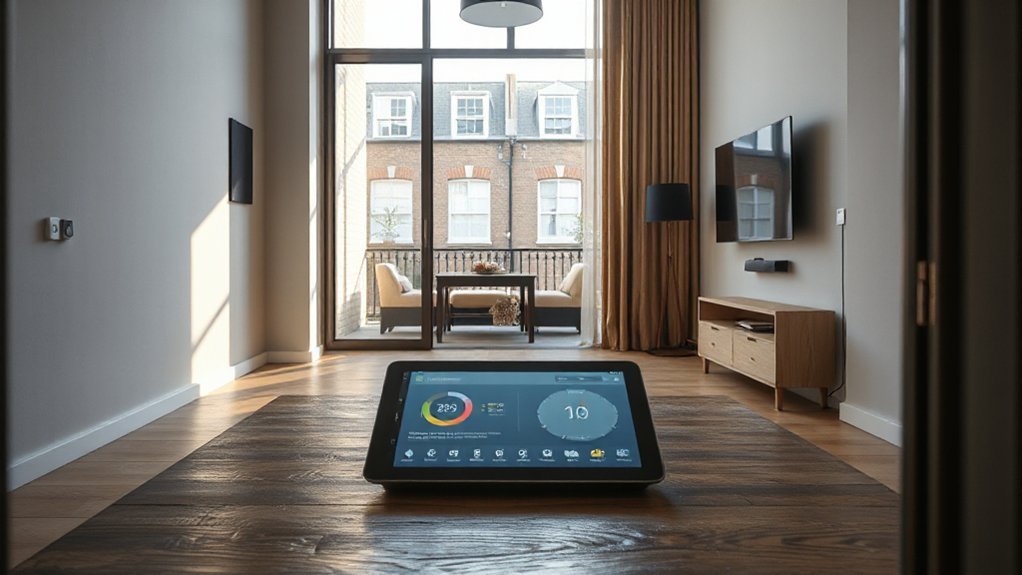
Start by clarifying your goals and constraints: compatibility across devices, platform stability, privacy implications, and long-term support.
When choosing your home automation ecosystem, you balance openness with reliability, aiming for cohesive control and consistent updates. You’ll prioritize secure integrations, local control options, and energy-aware automations that boost efficiency without sacrificing convenience.
Consider ecosystem maturity, developer support, and cross-brand interoperability to guard against obsolescence. For home security and energy efficiency, pick hubs and assistants that offer robust encryption, routine updates, and clear data policies.
- Interoperability across major brands without sway
- Privacy-forward defaults with verifiable updates
- Energy-aware scenes that scale with your property
Your choice defines future-proofing, control latency, and data exposure.
Smart Meters and Real-Time Energy Monitoring
Real-time energy monitoring lets you see consumption as it happens, so you can spot spikes and tailor usage instantly.
Smart meters simplify data collection and enable near-instant feedback on how your appliances affect your bill.
This discussion will compare adoption trends and practical implications for UK properties, focusing on real-time insights and cost awareness.
Real-Time Energy Monitoring
Smart meters enable real-time energy monitoring by sending hourly or minute-by-minute usage data to your utility and a dedicated in-home display. You’ll see how each appliance draws power, enabling sharper control over consumption and outcomes.
The system translates raw measurements into actionable insights, highlighting peaks, trends, and potential savings. With real time data, you can verify energy efficiency improvements as they happen, adjust routines, and time high-load tasks for lower rates.
This approach supports informed decisions, reduces waste, and enhances overall home performance.
- Visualizes usage patterns to simplify decision-making
- Enables peak-shaving and rate-aware scheduling
- Fosters ongoing energy efficiency improvements
Smart Meters Adoption
Ever wondered how widespread adoption of smart meters accelerates real-time energy monitoring? You’ll see adoption patterns shape how quickly data flows from household devices to apps and utilities.
A smart meter acts as the custody point for incoming consumption, bandwidth, and tariff signals, enabling near-instant visibility and precise billing. With higher penetration, energy monitoring becomes granular, revealing usage valleys and peaks you can address with targeted behavior changes or automation.
The practical upshot: better demand response, fewer manual reads, and clearer cost signals. Yet integration matters—standards, security, and interoperability determine reliability.
For property owners, prioritizing certified devices, clear data schemas, and user-friendly dashboards yields sustainable efficiency gains without sacrificing privacy.
In short, smart meters release continuous, actionable insight for smarter energy decisions.
Remotely Manage Your UK Home
With a connected setup, you can control lighting, climate, security, and appliances from anywhere in the UK. Remotely managing your home combines robust connectivity with intuitive dashboards, ensuring reliable status at a glance and precise control when you’re on the move.
You’ll monitor energy use, adjust schedules, and push firmware updates without being on-site, streamlining maintenance and comfort. Focused on efficiency, the system supports Home renovation planning and gardening automation, letting you predefine zones, scenes, and automation rules that align with your lifestyle.
Aesthetics meet pragmatism in feedback visuals, alerts, and failsafe modes, so you stay informed without distraction.
- Seamless remote control for everyday tasks
- Proactive energy and system health insights
- Customizable scenes for living spaces and gardens
How Smart Homes Boost Resale Value
Smart-home features command higher market appeal by signaling modern infrastructure and reliable performance to potential buyers.
You’ll see clearer value from efficiency and cost savings, since automated systems reduce energy use and maintenance needs over time.
This blend of desirability and practicality sets a strong resale baseline, guiding buyers toward measurable, long-term dividends.
Higher Market Appeal
- Demonstrates streamlined energy management and security integrations
- Reflects forward-compatible infrastructure and predictable maintenance
- Illustrates thoughtful, scalable design that protects privacy
Smart home ethics, privacy concerns. Careful disclosure of data flows and consent mechanisms strengthens trust and preserves value.
Efficiency And Cost Savings
Curious how much value a built-in efficiency edge adds to a UK home? You’ll notice that smart-enabled systems reduce operating costs and attract buyers who prioritise measurable performance.
A connected suite—thermostats, lighting, and shading—optimises energy use, lowering annual bills and enhancing comfort without compromising aesthetics or convenience. This translates into a tangible resale premium when you can demonstrate energy efficiency metrics and a documented Smart investment.
Buyers view integrated controls as lower risk and faster move-in readiness, especially in UK property markets with rising energy costs. Emphasis on smart energy management, predictable savings, and long-term maintenance reduces uncertainty.
In short, efficiency and reliability become performance signals that support market value and appeal.
Water Management: Leak Detection and Control
Effective water management relies on proactive leak detection and swift shutoff to protect property and conserve resources. You’ll integrate sensor networks and automated valves to monitor line integrity, detect anomalies, and trigger immediate water control actions.
Real-time data, brief alerts, and remote control reduce damage risk while preserving fixtures and fabrics.
- Leak detection sensors on supply lines and appliances for early warning
- Automated shutoff valves that activate during detected bursts or pressure drops
- Centralized dashboards to review trends, test alarms, and calibrate thresholds
This approach blends reliability with efficiency, prioritizing rapid response and minimal disruption. You gain measurable savings, peace of mind, and a scalable framework for future water-management enhancements.
Smart Blinds for Climate Comfort

Smart blinds offer tangible benefits for climate control by adjusting daylight and heat load with minimal user input. They quietly enhance comfort and energy efficiency, syncing with routines to maintain steady indoor conditions.
Smart Blinds Benefits
Smart blinds offer precise control over light and heat, automatically adjusting to your schedule and the sun’s position to improve climate comfort in UK homes. You’ll experience smarter energy use, reduced glare, and consistent indoor temperatures without manual tweaks.
- Enhanced solar gain management through targeted window shading
- Improved daylighting without compromising views or aesthetics
- Quick integration with scenes and routines for morning, work, or relaxation
In practical terms, smart blinds translate external conditions into actionable interior comfort, balancing heat and daylight. The technology supports predictable cooling in summer and warmth retention in winter, while preserving room ambiance.
Maintenance remains straightforward, with sensor checks and firmware updates ensuring continued performance. You gain scalable control across rooms, enabling synchronized shading that aligns with your architectural design and lifestyle preferences.
Climate Control Quietly
Climate control stays quiet while your schedule runs on. Smart blinds modulate light and thermal gain with precision, reducing HVAC load without intrusive noise. You’ll notice silent ventilation and ambient airflow guiding comfort, even in mixed-use rooms.
The system analyzes sun position, interior activity, and exterior conditions, then activates fabric tilt, double-glazing-inspired shading, and conductive louvers to stabilize temperatures.
Setup is straightforward: link blinds to a climate hub, define comfort bands, and let defaults optimize efficiency. Material choices minimize heat transfer while preserving view and daylight.
In practice, you gain consistent comfort without drafts or disruptions. Maintenance remains simple, with sensor calibration and occasional battery checks.
UK Privacy and Security in Smart Homes
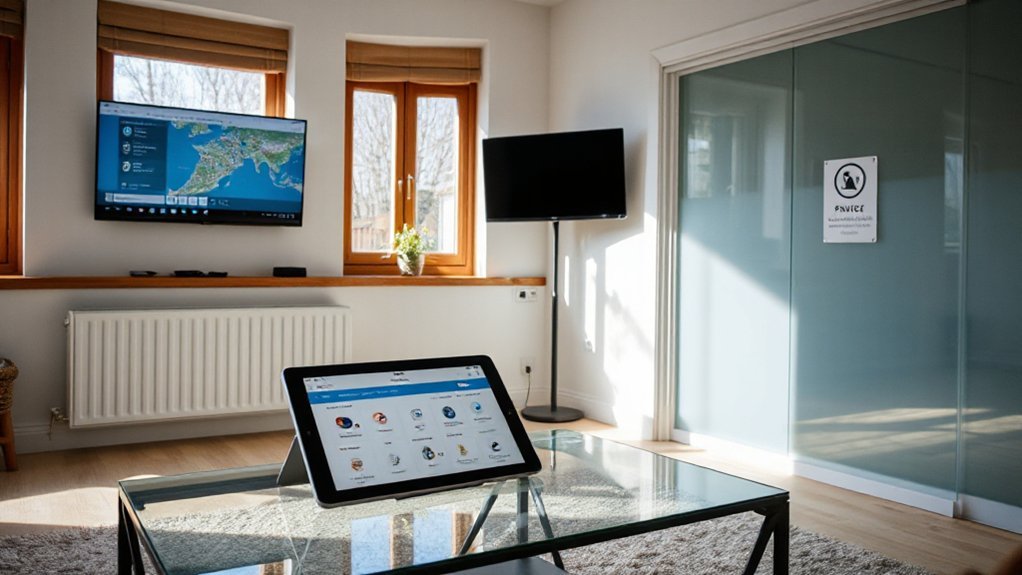
- Data privacy best practices, including data minimization and clear purpose limitations
- Security protocols: encryption, multi-factor authentication, and secure over-the-air updates
- Continuous monitoring, incident response planning, and third-party risk management
Funding Your Smart-Home Upgrades
Securing smart-home upgrades requires a clear plan that aligns costs with expected returns, risk tolerance, and available financing options. You evaluate upfront expenditure against long-term energy savings, increasing property value, and enhanced security.
Funding options range from personal savings to formal loans, including product-specific EMI plans and home-improvement credits. Compare interest rates, payback periods, and any required collateral, then choose a structure that preserves liquidity for other projects.
Leverage energy-efficiency grants or utility rebates where eligible, and consider tax-advantaged accounts if available in your region. Financial incentives can sharpen the business case, improving ROI and approval odds with lenders.
Document projected performance metrics, staged implementation milestones, and maintenance costs to assure funding aligns with your strategic timeline.
Scalable Smart-Home Solutions for Flats and Suburbs
- Compact hubs, scalable infrastructure, modular design
- Interoperable devices and standards-based controllers
- Gradual upgrades with clear roadmaps and fault isolation
Future-Proofing UK Smart Homes: Trends to Watch
Future-proofing UK smart homes means anticipating regulatory shifts, evolving standards, and emerging technologies so integration remains seamless and secure. You’ll prioritize interoperable platforms, open APIs, and firmware overhauls that minimize disruption.
Expect stricter data governance, privacy-by-design, and supply-chain transparency shaping device selection. Edge computing gains traction, reducing latency for real-time safety and energy management.
You’ll design around modular hardware so upgrades occur without complete rewrites. Standardized security, routine penetration testing, and certified crash-proof backups become baseline expectations.
For aesthetics and practicality, you’ll couple robust home automation with discreet sensors and resilient connectivity, ensuring reliable performance under varying power conditions.
Consider a Smart garden strategy to manage irrigation and climate via centralized controls. These trends support scalable, durable, and future-ready homes.
Frequently Asked Questions
What Are Hidden Costs of UK Smart-Home Upgrades?
Hidden costs include hidden expenses and ongoing maintenance costs you’ll encounter after upgrades, often unnoticed upfront. You’ll face compatibility issues, plan for firmware updates, and budget for replacement parts, sensors, and professional monitoring to sustain performance and aesthetics.
How to Ensure Compatibility Across Devices and Ecosystems?
To guarantee compatibility, you design for device interoperability and ecosystem integration, then test rigorously across platforms. You’ll standardize protocols, confirm updates, and choose hubs that support common APIs, avoiding vendor lock-in and fragile, brittle integrations.
Do Landlords Allow Smart-Home Installations in Renter Homes?
Yes, landlords may allow smart-home installations, but you need to check Rental regulations and obtain installation permissions first. You’ll negotiate terms, guarantee non-destructive setup, and document permissions to avoid disputes and protect both parties’ interests.
Which Data Privacy Protections Matter Most in the UK?
Privacy protections matter most in the UK: prioritize data encryption and clear Privacy policies. You’ll safeguard sensitive details, ensuring secure storage, controlled access, and transparent disclosures, while complying with GDPR. You stay compliant, confident, and consistently privacy-conscious.
How Quickly Can Smart Upgrades Start Saving Money?
Smart upgrades start saving money within weeks as energy efficiency improves and you see reduced utility bills. You’ll track cost recovery, quantify payback periods, and optimize settings, ensuring ongoing savings while maintaining comfort and system reliability.
Conclusion
Smart homes are quietly reshaping UK living, blending efficiency with comfort. You’ll see energy savings, personalized lighting, and reliable security without the hassle. Upgrades feel scalable, future-proof, and financially sensible—even when budgeting is tight. Embrace these upgrades as prudent tweaks rather than radical changes, and you’ll enjoy smoother routines, better resilience, and a touch of tech-enabled ease that fits your space and lifestyle. In short: smarter, simpler, worth considering.
About the Author