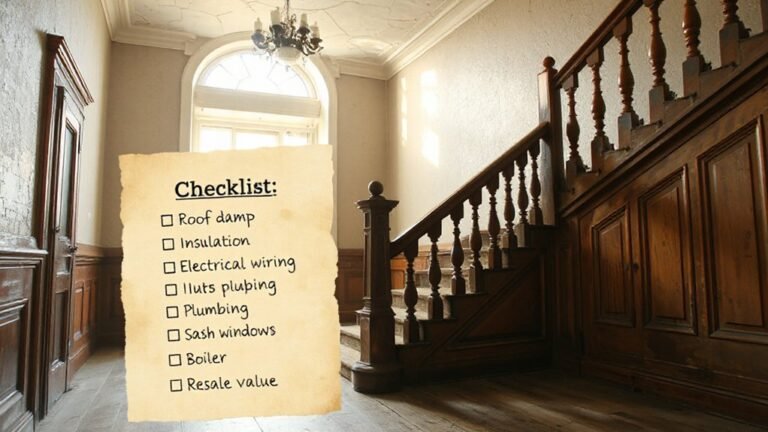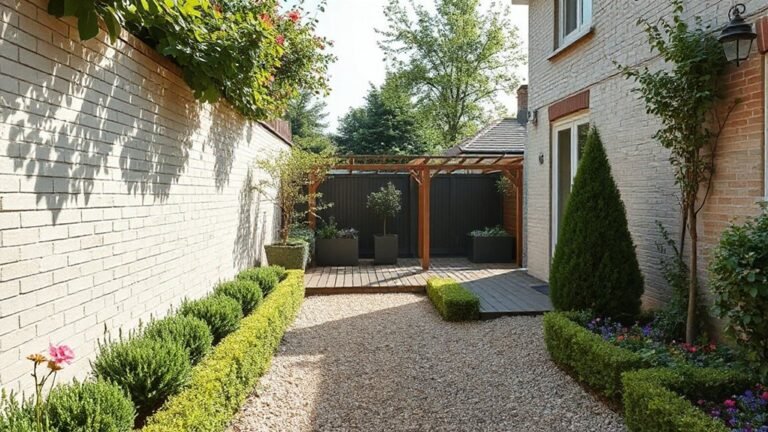
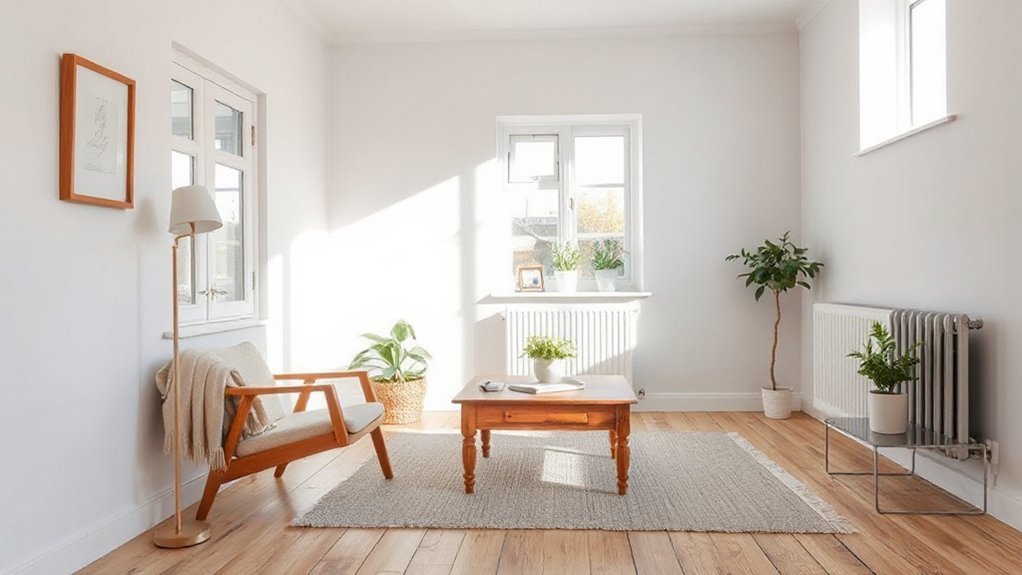
Set a realistic UK budget that includes purchase price, permits, stamp duty, surveys, and legal costs, plus contingency funds for unexpected costs. Prioritize essential renovations before discretionary upgrades, and model precise projections for mortgage, insurance, and maintenance. Tackle paint and prep with thorough surface repair, sealing, and compatible primers, using light neutrals to enlarge spaces and durable finishes in kitchens and baths. Choose versatile, easy-care textiles and space-saving, multifunctional furniture. If you want practical, money-smart tips, keep reading to learn more.
Set a Realistic Budget for UK First-Time Buyers
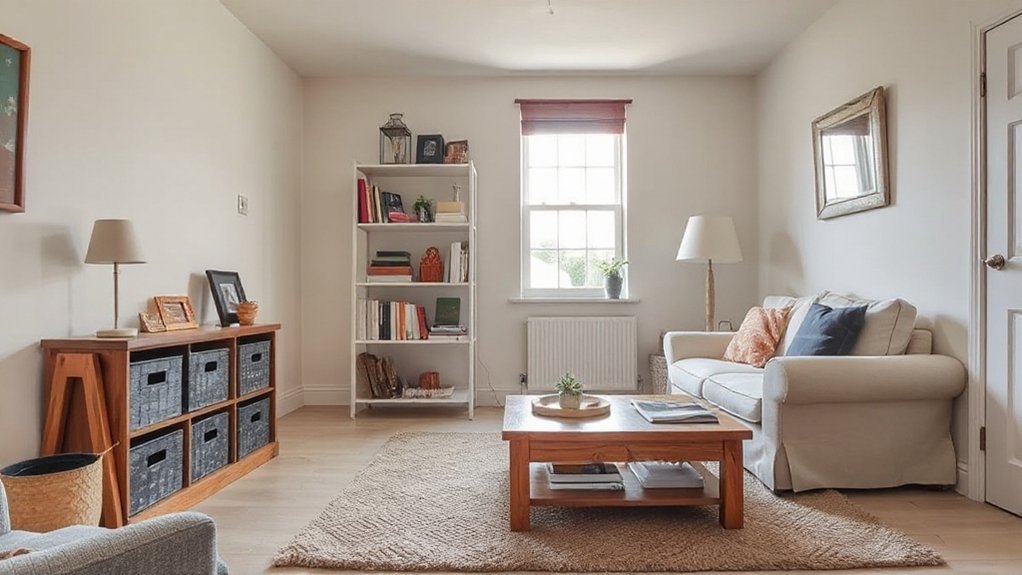
You should set a realistic budget before you start shopping, factoring in purchase price, permit costs, and essential renovations. You’ll establish a baseline by listing fixed expenses, such as stamp duty, survey fees, and legal costs, alongside contingency funds.
Conduct precise financial planning by projecting monthly outlays, including mortgage payments, insurance, and maintenance reserves. Apply disciplined savings strategies to build a cushion before committing to purchases or renovations.
Prioritize necessary updates over discretionary upgrades, allocating funds to critical items first, then to value-added improvements.
Use a bottoms-up approach: itemize required work, obtain quotes, and convert estimates into a formal budget sheet. Document assumptions, review quarterly, and adjust for interest rate changes or revised timelines to sustain fiscal control.
Paint Strategies That Transform UK Rooms on a Shoestring
Start with a clean surface and proper prep, as flaws show most in low-cost schemes.
We’ll apply precise techniques for primer, edging, and even coat layers to maximize coverage and color accuracy.
Then we’ll outline color trickery tactics and practical prep steps to keep projects efficient and budget-friendly.
Prep Before Paint
Before you roll on paint, set the stage with thorough prep: repair imperfections, clean surfaces, and prime关键areas to guarantee lasting coverage and true colour. Systematic prep minimizes peeling and uneven sheen, and it enhances adherence of subsequent coatings.
Start with a visual inspection to identify cracks, nail pops, or damp spots; repair with appropriate filler and sealant, then sand smooth for a uniform feather edge. Degrease and dust all surfaces, removing oils and dirt that hinder adhesion.
Choose a compatible primer for patched zones and bare substrates to balance porosity. Protect trim, fixtures, and flooring options with tape and drop cloths, then cure dust-free before finishing.
When you introduce wallpaper patterns later, ensure walls are perfectly flat; this foundation supports crisp edges and long-lasting colour.
Color Trickery Tactics
Color can transform a space without major renovations, so use strategic paint choices and techniques to alter mood, perceived size, and focal points on a tight budget. You’ll leverage color psychology and paint finishes to optimize value and impact.
- Use light neutrals on walls to enlarge rooms; pair with brighter accents for depth.
- Apply semi-gloss or satin finishes in kitchens and baths to boost durability and reflectivity.
- Create a focal wall with a deeper hue, balancing it with softer surrounding tones.
- Employ ceiling whiteness and strategic trim to sharpen edges and add perceived height.
Reference Color psychology for mood outcomes and select paints with durable, low-VOC formulas.
Budget-Friendly Textiles That Dramatically Change a Room (Curtains, Rugs, Cushions)
Textiles can redefine space without a full renovation, so choose budget-friendly fabrics that balance durability with colour and texture for curtains, rugs, and cushions.
Opt for versatile, easy-care materials and consider scale to guarantee cohesive impact across rooms.
Prioritize cost-effective patterns and neutrals that mix and layer efficiently, maximizing perceived value.
Textiles Transform Rooms
Textiles can dramatically alter a room’s tone with minimal effort or cost; curtains, rugs, and cushions are the quickest path to a refreshed aesthetic. You’ll leverage three essentials: pattern, texture, and scale, to drive cohesion while staying budget-smart. Focused textile choices shape light, acoustics, and perceived space, balancing durability with style.
- Textile patterns: opt for repeat motifs that echo architectural lines, avoiding busy clashes.
- Fabric durability: select mid-weight blends with stain resistance for everyday use.
- Color coordination: align with walls and furniture to create unity without overhauling.
- Layering: combine curtains, a rug, and cushions in complementary tones for depth.
This approach yields tangible impact on room perception while preserving practicality and cost control.
Budget-Friendly Fabric Choices
Curtains, rugs, and cushions offer high impact at low cost, making them the quickest route to a refreshed room without a full overhaul. When selecting fabric, prioritize durability and maintenance practicality to maximize longevity. Favor dense weaves, end-on fibers, and natural blends that resist pilling and fading under UV exposure common in UK homes.
Consider fabric durability metrics such as abrasion resistance and seam strength to ensure products withstand daily use. For curtains, choose linings that reduce light penetration and heat loss while preserving fabric integrity.
Rugs should feature non-slip backing and easy-clean surfaces, with pile constructions aligned to foot traffic. Textile sustainability matters: opt for low-VOC dyes, recycled content, and responsible mills.
Balance aesthetics with performance, ensuring replacements aren’t frequent, costly, or wasteful.
Simple DIY Fixes You Can Do Without a Tradesperson
If you’re comfortable tackling small updates yourself, you can cut costs and keep projects on schedule by handling simple fixes that don’t require tradespeople. You’ll gain confidence with quick, safe tasks that preserve room quality and finish.
1) Replace light bulbs with energy-efficient LEDs to improve ambience and reduce bills.
2) Recaulk bathtubs and sinks to prevent leaks and damp, restoring seals without major expense.
3) Tighten loose hardware on doors, cabinets, and mirrors for improved function and noise reduction.
4) Refresh walls by spot-cleaning, touch-up painting, or swapping wall art to elevate style without full redecoration.
Consider upgrading existing lighting fixtures for better efficiency and effect, ensuring compatibility with fittings. Keep safety in mind and disconnect power before any wiring work.
Smart Shopping for Budget-Friendly UK Furniture and Decor
Check construction details: solid frames, reinforced joints, and durable finishes; skim resin composites unless you require long lifespans.
Prioritise multifunctional or compact designs for limited footprints, and measure doorways and alcoves before purchase.
Seek timeless finishes and styles to extend relevance, avoiding fast-fashion trends that necessitate early replacements.
When possible, combine new buys with vintage accents to add character without inflating costs.
For lighting, choose statement lighting sparingly to anchor rooms while conserving power; match bulbs to the fixture’s rating.
Compare warranties, delivery conditions, and return policies to minimise post-purchase risk.
Clever Layout and Storage Ideas for Small UK Homes
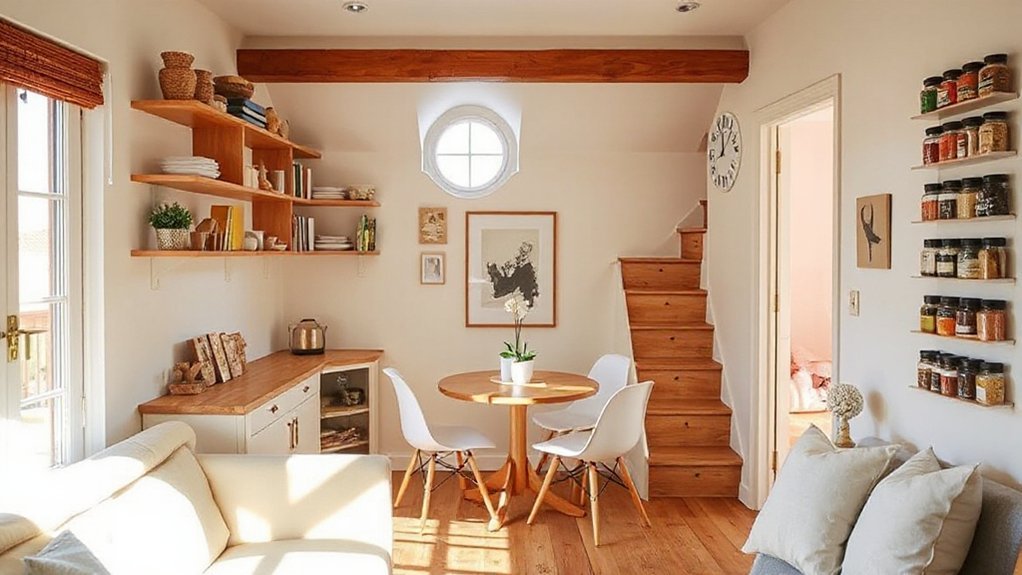
Maximise every square metre with practical, scalable layouts that adapt to changing needs in small UK homes. You’ll optimize space with clear zoning, compact circulation, and modular thinking, ensuring every detail serves multiple purposes.
Open plan layouts create fluidity while delineating zones via furniture, lighting, and textures, not walls. Multi functional furniture reduces clutter and expands capacity for flexible living, working, and storage.
Embrace vertical storage, built-in benches, and hidden compartments to keep surfaces clear and accessible. Plan egress and accessibility with tight radii and easy-to-reach storage to minimize trips.
Now, apply these essentials:
- Prioritize open plan layouts with strategic furniture placement.
- Integrate multi functional furniture for 2+ uses.
- Use built-in storage along walls and under seating.
- Zone spaces with lighting, rugs, and color cues.
Personalize Your Space on a Budget: Colour, Texture, and Accessories
Personalizing your space on a budget hinges on deliberate choices in colour, texture, and accessories that amplify perception of space without costly changes. You can calibrate wall colour with neutral bases and subtle accent tones to enlarge rooms; choose matte finishes to reduce glare and create cohesion.
Texture adds depth: consider tactile fabrics, woven rugs, and smooth laminate to balance surfaces without big outlays.
Accessories should be strategic: select a few high-impact pieces, such as wall art, mirrors, or sculptural objects, to frame focal points.
Incorporate vertical greenery with indoor plants to soften edges and improve perceived airiness; place plants near light sources for importance.
Maintain consistency across rooms to avoid visual clutter, ensuring each addition reinforces your overall palette and scale.
Renters-Friendly Updates to Protect Your Deposit
Are you protecting your deposit without sacrificing style? Here’s how to do it with renter-friendly updates that withstand wear while staying compliant.
1) Use decorative wall decals and removable wallpaper to refresh walls without adhesive damage, preserving the landlord’s paint finish and ensuring easy removal.
2) Choose washable finishes and removable treatments for high-traffic zones, limiting scuffs and stains that could jeopardize your deposit.
3) Install temporary, non-penetrating fixtures (removable hooks, tension rods) to avoid drill marks or hole repair costs at check-out.
4) Document condition before move-in and after, with dated photos and notes, to support any dispute resolution and deposit refunds.
Apply these techniques to maintain aesthetics and minimize risk, pairing style with tenancy safeguards.
Frequently Asked Questions
How Can I Estimate Total Project Costs Before Buying Materials?
Estimate total project costs before buying materials by listing material costs, then apply budgeting strategies: add 10–20% for contingencies, confirm unit prices now, factor delivery, waste, and workmanship, and regularly revise as plans finalize.
Are There Affordable Suppliers With Uk-Wide Delivery Options?
Yes—look for affordable suppliers offering UK-wide delivery, and compare delivery fees, minimum orders, and lead times. You’ll want clear specs, documented warranties, and reliable stock levels to guarantee consistent availability across regions. Consider supplier reputation and support access.
What’s the Best Balance Between DIY and Professional Help for Beginners?
Starting now, the best balance is to mix DIY with professional consultation for safety and efficiency. For example, you handle painting, and a pro checks wiring; guarantee DIY safety, and schedule professional consultation for structural or electrical tasks.
How Can I Temporarily Update Rooms Without Altering Walls or Floors?
Temporary decor can update spaces temporarily without wall or floor changes. Use non permanent fixtures, removable wallpaper, tension rods, and modular furniture. You’ll reconfigure easily, minimize disruption, and evaluate impact before committing to longer-term, budget-conscious design choices.
Which Local Regulations Affect Low-Cost Home Improvements in the UK?
Building permits and planning restrictions shape your project. You must check local authority guidelines before changes, ensuring compliance and avoiding penalties. You’ll secure permits, respect zoning, and avoid protracted delays while pursuing practical, permissible improvements.
Conclusion
You’ve got the framework to transform your first UK home on a budget. Stick to a clear plan, measure twice, buy once, and upgrade with timeless textiles and smart lighting. Prioritise durable basics, then layer personality through color and accessories. Use efficient storage to maximize space, and keep rental-friendly tweaks to protect your deposit. By applying these practical, repeatable steps, you’ll create a polished, lived-in vibe you’ll love—that’s the beauty of budget-smart interior design. Irony keeps it relatable, not cynical.
About the Author