
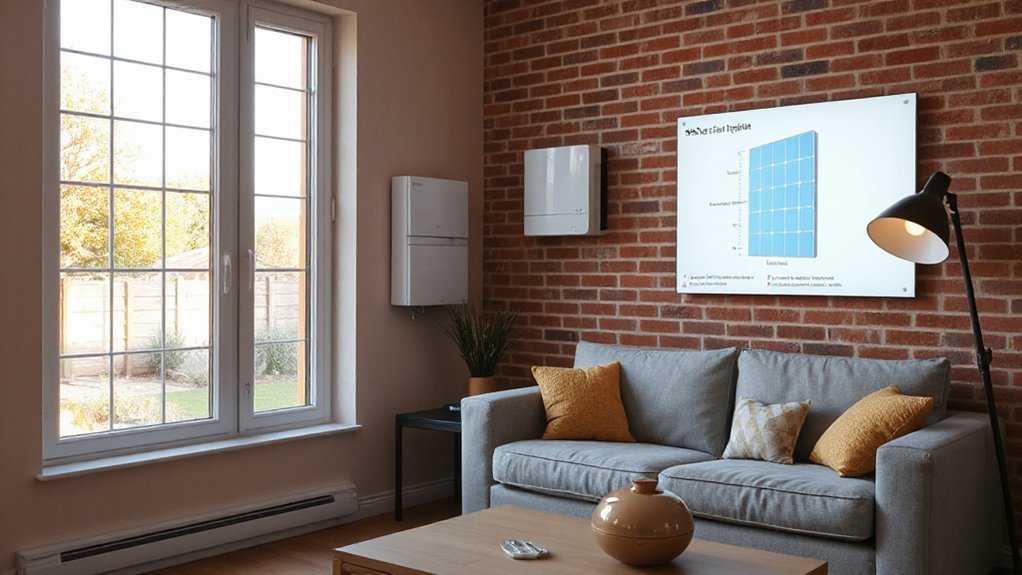
This year, UK homeowners are prioritising airtight envelopes, loft and cavity wall insulation, and high‑performance windows to cut bills and boost comfort. Start with a tight building envelope and moisture‑table insulation, then add draught‑proofing behind sockets and fixtures. Upgrade to triple‑glazed, low‑U‑value windows with robust seals, and plan for smart controls and zone heating. Expect incentives and cost savings to shape the timeline; more details below will help you optimise your plan.
Plan Your Energy Upgrades: A Practical Decision Framework
Plan your upgrades with a clear, decision-focused framework. You approach upgrades as a sequence of design decisions, each evaluated against cost, performance, and disruption.
Define objectives early: comfort, heating efficiency, grid impact, and value retention.
Map options to criteria: insulation, heat pumps, solar readiness, and controls.
Use a decision matrix to score likelihoods of success and payback, then sequence actions by impact and ease.
Consider Renewable incentives to improve payback, and confirm constraints from planning or building regs.
Account for maintenance cycles and indoor air quality, not just energy use.
Align with Urban planning signals—local schemes, district energy potential, and shared infrastructure where relevant.
Document rationale, revisit thresholds annually, and reserve budget for iterative tuning as markets and technology evolve.
Core Upgrades This Year at a Glance
Prioritize insulation improvements first to tighten your envelope and curb heat loss. Then couple that with smart thermostat adoption to optimize year-round efficiency.
Next, plan windows and doors upgrades that balance performance and costs, aligning with your occupancy patterns and daylight strategy.
This year’s core upgrades—insulation, smart controls, and high-performance openings—form a cohesive baseline for measurable energy savings.
Insulation Improvements Priority
Insulation upgrades should top your list this year, delivering immediate gains in heat retention and comfort while reducing energy bills. You’ll focus on high-performance materials and proven techniques to minimize heat loss at key transmission points.
Prioritise continuous cavity and loft insulation with density-appropriate materials to curb thermal bridging. Then address walls via solid-wall or 3D internal insulation where feasible.
Choose moisture-tolerant insulation materials in vulnerable areas to prevent degradation and mold risk. Target airtightness alongside insulation improvements to maximise energy conservation outcomes.
Consider reflective or draught-proofing measures behind sockets and fixtures to tighten the building envelope without invasive revamps.
Plan phased installs aligned with budget cycles, ensuring compliance with UK building codes and sustainability certifications. Maintain clear records for potential further retrofits and performance verification.
Smart Thermostat Adoption
Smart thermostats are a cornerstone of a responsive, energy-efficient home. You’ll gain precise control, quicker comfort, and measurable savings through proactive scheduling and real-time feedback. As you deploy, focus on data clarity, interoperability, and scalable energy strategies.
- Energy monitoring becomes your baseline: track consumption by zone, device, and time, enabling actionable adjustments.
- Renewable integration is streamlined: align heating, cooling, and storage with solar or wind inputs, maximizing on-site use and reducing grid demand.
- System intelligence evolves: machine learning adapts to occupancy, routines, and weather, delivering seamless comfort with minimal input.
This approach keeps retrofit risk low, supports future upgrades, and emphasizes design-forward, utility-driven decisions.
Windows and Doors Upgrades
Modernize your envelope with high-performance windows and doors to lock in savings from smart thermostat-driven efficiency. You’ll prioritize airtight seals, low-U-value glazing, and thermal breaks to minimise heat loss.
For window design, choose triple-glazing where warranted, and frame materials that balance durability with insulation—think composite or engineered timber rather than basic vinyl in exposed UK conditions.
Consider unit sizes and orientations to maximise passive gains without overheating, and opt for low-emissivity coatings to reduce solar gain in summer.
When selecting door materials, guarantee robust thresholds, integrated weather stripping, and weather-rated performance. Prioritize automated or smart-access options that preserve airtight integrity.
Assess maintenance needs and lifecycle costs to sustain performance over time, aligning with fabric-first principles and retrofit feasibility.
Prioritise Upgrades for Your Home
Start by prioritising upgrades that boost overall efficiency, so your insulation, glazing, and heating systems get the strongest return.
Focus on efficiency upgrades first, aligning them with long-term energy savings and performance gains.
Plan smart renovations by sequencing work to minimize disruption, maximize value, and support cohesive design-forward results.
Prioritise Home Upgrades
Prioritising upgrades starts with a clear, data-driven plan: identify the biggest energy drains in your home, set measurable targets, and sequence improvements for fastest payback and maximum impact.
To act decisively, execute these steps:
1) Audit heat and power loads, then map interventions to cost and carbon savings.
2) Schedule low-friction wins first (seal gaps, draft-proofing, efficient lighting) before major investments.
3) Align upgrades with lifestyle outputs, such as garden landscaping and kitchen remodels, to maximise value and usability.
Impact-focused targets help you track progress, justify spend, and avoid scope creep. Prioritise projects that *release* multiple benefits (comfort, value, resilience) and maintain a rolling 12-month roadmap, updating as data evolves.
Focus On Efficiency Upgrades
Begin with building envelope enhancements that reduce heat loss in the coldest periods, then deploy high‑efficiency systems that demonstrate clear reductions in energy use. When selecting technologies, prefer those that integrate with existing layouts and support scalable performance improvements, ensuring measurable outcomes at each stage.
Consider renewable sources where they fit your load profile and budget, but verify compatibilities with your home’s fabric and controls. Always reference Building regulations to confirm compliance, inspection readiness, and performance documentation, maintaining rigorous standards without compromising usability or comfort.
Plan Smart Renovations
Smart renovations begin with a data-driven blueprint: map your loads, reveal heat losses, and chart a phased path that pairs quick wins with lasting design goals. You’ll plan for efficiency by aligning spaces, systems, and finishes, ensuring each upgrade compounds savings.
- Prioritise high-impact changes first, like insulation upgrades and DHW efficiency, to establish a solid baseline.
- Schedule renovations to minimise disruption, sequencing trades and coordinating delivery of materials for minimal downtime.
- Integrate outdoor gardening and kitchen appliances into a cohesive plan, ensuring energy-smart choices across indoor-outdoor use and load profiles.
This plan keeps you design-forward: concise scopes, measurable targets, and clear milestones. You’ll reduce embodied energy, improve comfort, and future-proof your home with adaptable, scalable upgrades.
Loft and Cavity Wall Insulation: Quick Bill Relief
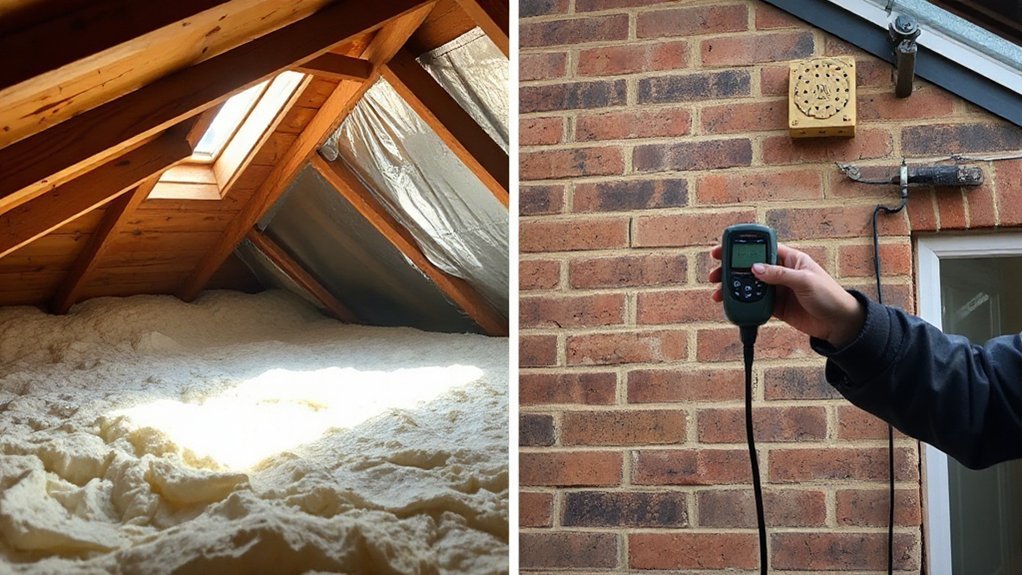
Could loft and cavity wall insulation cut your energy bills quickly? Yes, when you prioritise high-performance materials and correct installation.
Loft insulation minimizes heat escape through the roof; cavity wall insulation reduces conductive losses through external walls. Choose suitable thickness and material with low thermal conductivity to maximise R-values without overfilling spaces.
Confirm gaps around electrical penetrations and fixtures are sealed to prevent thermal bridging. Pair insulation with proper ventilation planning to avoid condensation risks—consider roof ventilation strategies that maintain airflow without undermining insulation performance.
In addition, minimise heat gain losses by commissioning window tinting where appropriate, complemented by shaded or fritted glazing for glare control.
Implement a standardized installation protocol to sustain long-term energy savings and building envelope integrity.
When to Choose an Air-Source Heat Pump
You’ll weigh system sizing, ensuring a heat pump meets peak and off-peak needs without oversizing.
Climate and efficiency guide performance expectations, so you’ll match COP targets to your typical temperatures and building envelope.
Installation and cost factors shape overall value, so you’ll assess equipment, mains, and service implications upfront.
System Sizing Considerations
System sizing hinges on anticipated load and heat source compatibility; in other words, pick an air-source heat pump (ASHP) when the building’s peak heating demand aligns with the unit’s output at typical winter conditions. You’ll ensure energy auditing informs capacity, and you maintain system compatibility across components for reliable performance.
- Assess peak load against ASHP rated output to avoid oversizing or underperforming.
- Confirm distribution match—ducts or radiators—with minimum losses and consistent temperature delivery.
- Verify controls integration and future flexibility for zone sizing, smart thermostats, and potential upgrades.
This approach keeps the design concise, results-driven, and focused on making the ASHP fit your home’s thermal envelope rather than chasing efficiency alone.
Climate And Efficiency
In moderate UK climates, consider air-source heat pumps as a flexible option, but assess entry temperature thresholds and defrost cycles to avoid short cycling and degraded efficiency.
Prefer systems with variable-speed compressors and smart controls that modulate output to weather and occupancy. Performance hinges on steady heat demand, sensible zoning, and tight insulation, enabling renewable resources to offset grid use.
Design-forward choices favor compact outdoor units with minimal noise and reliable frost protection. Use climate adaptation strategies—air sealing, glazing, and thermal mass—to maximize gains.
Align selection with long-term efficiency goals and maintenance practicality.
Installation And Cost Factors
Choosing an air-source heat pump hinges on installation practicality, upfront costs, and long‑term energy savings. You’ll weigh space, noise, and outdoor mounting feasibility against system efficiency and demand.
Energy policies and market trends shape timing and incentives, so align a purchase with subsidy windows and tariff changes to maximise value.
3-key considerations to frame your decision:
1) Site suitability: refrigerant piping, indoor unit placement, and outdoor condenser clearance.
2) Cost trajectory: equipment price, installation variability, and potential ROI from reduced bills.
3) Grid and policy timing: evolving energy policies, electricity prices, and available grants.
Underfloor and Radiator Upgrades for Efficiency
Underfloor and radiator upgrades are practical levers for cutting heat loss and boosting system efficiency. You’ll prioritise airtight installation and minimal thermal bridges, then assess flooring options to reduce conductance without sacrificing comfort.
For underfloor, choose insulating boards or specialist screeds that match your heating system’s flow temperature, balancing retrofit feasibility with long-term savings.
Radiator placement matters: position primary units beneath windows only when you can still channel warm air into living zones. Otherwise, bias toward interior walls to maximize heat throw.
Select low-water-content radiators for rapid response, and consider panel or convection styles aligned to room geometry.
Pair these moves with controlled zoning and smart thermostats to optimize setback times, ensuring consistent comfort while lowering energy consumption.
Solar Plus Storage: Integrate Generation and Use
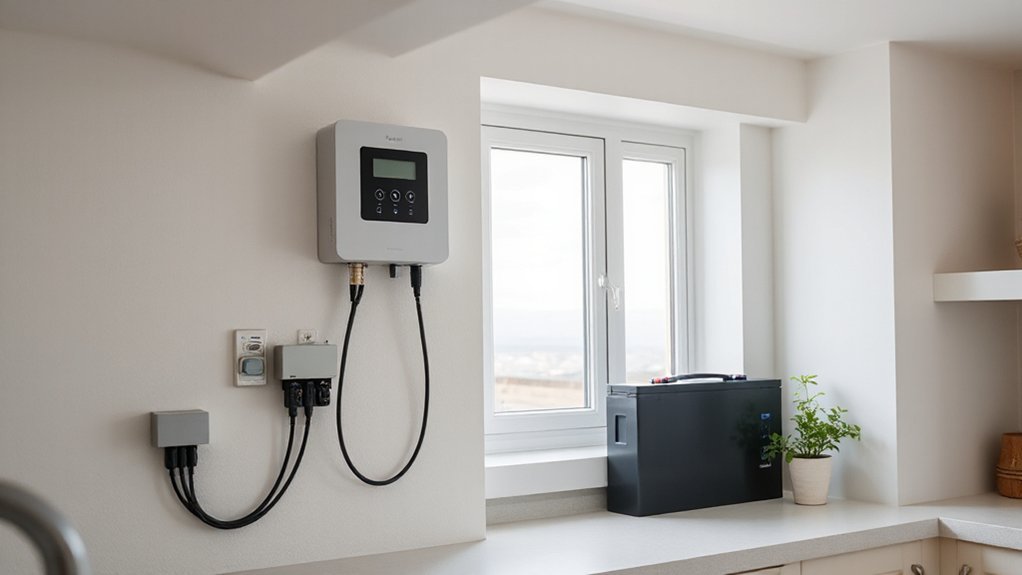
Solar plus storage creates a tight generation–use loop, letting you store daytime solar and draw on it when you need it most. You’ll gain battery optimisation benefits by pairing inverter-capable storage with smart controls that prioritize self-consumption and grid readiness.
This design-forward approach sets the stage for higher efficiency, lower bills, and resilient energy use.
Solar Storage Synergy
Solar plus storage integrates on-site generation with demand, enabling you to store excess daytime output for evening and low-sun periods. This solar storage synergy unlocks tight energy budgeting and rapid demand response, with storage integration feeding your home during peaks.
- You optimise panel output by aligning inverter controls with your consumption patterns for predictable daytime-to-evening balance.
- You implement modular storage, sizing for daily surges and seasonal dips without overpaying for underutilised capacity.
- You monitor performance via intelligent analytics, prioritising self-consumption, system health, and long-term reliability.
This approach emphasizes a design-forward, technical stance: seamless integration, compact form factors, and scalable architecture. You gain resilience, lower bills, and a clearer path to net-zero.
Battery Optimisation Benefits
Battery optimisation maximises value from solar plus storage by aligning charge/discharge cycles with your load and export opportunities. You’ll tune the system to charge during excess generation and discharge during peak demand, maximizing self-consumption and export revenue.
Prioritise short, frequent cycles for dynamic loads; reserve longer cycles for sustained evening use. Use real-time data and forecasts to adjust thresholds, minimizing battery wear while improving grid flexibility.
Implement hierarchical controls: co-ordinate inverter, charger, and EMS to balance rooftop generation, battery state, and grid signals. Focus on renewable synergy: store daytime surplus, offset evening usage, and participate in demand-response if available.
Document performance metrics—internal rate of return, cycle life, and degradation trends—to validate design choices and sustain long-term efficiency.
Smart Heating Controls That Cut Waste

Smart heating controls minimize waste by matching heat delivery to real-time needs. You’ll optimize comfort and energy, wiring systems for seamless response, and leverage data to drive decisions. Focus on three practical implementations:
- Dynamic scheduling and occupancy sensing to reduce stray heat when rooms are empty.
- Weather-adaptive setpoints and radiator or zone control to maintain consistent temperatures with minimal boiler runs.
- Renewable integration and energy monitoring to align generation with demand, trimming peak use and emissions.
With these, you gain precision, faster feedback, and better fault detection. You’ll pursue a design-forward setup, prioritizing lightweight interfaces and clear dashboards.
This approach supports smarter maintenance, tighter control loops, and verifiable savings.
Windows and Drafts: Seal the Gaps
Drafts waste heat fast, so seal first, then insulate. You’ll start with airtight effectiveness: identify exterior gaps around doors and fragile junctions, then apply high-performance seals and compression gaskets. Focus on continuous contact along sash, frame, and wall interfaces to prevent creeping air leakage.
Move to glazing specifics: choose low-resistance weatherstripping for window styles and install in grooves to maintain clean glass lines. Prioritize sash weather seals and cavity insulation to minimize convective heat loss without sacrificing operation.
For aesthetics, select trim-compatible seals that don’t disrupt Home aesthetics, and pair with draught-proofed vents only where needed. Document performance changes, then test with a blower door to validate improvements.
Your design-forward approach guarantees comfort, efficiency, and durable, visually cohesive results.
Incentives and Financing Explained
Financial incentives can substantially reduce upfront costs and shorten payback periods for energy-efficient upgrades. You’ll navigate schemes with clear eligibility, timelines, and required documentation, aligning financing with energy policy and renewable targets. The goal is predictable cash flow and faster project completion, not sticker shock.
1) Access and approval: verify eligible measures, apply early, assemble technical specs and quotes.
2) Financing modes: low-interest loans, grants, and benefits bundled with installation timelines.
3) Compliance and reporting: track performance metrics, submit progress reports, and confirm post-install credits.
Key outcomes: extended depreciation for qualifying assets, improved home value, and stronger alignment with national energy policy. You gain certainty, reduce risk, and push toward renewables targets while upgrading comfort and efficiency.
Costing It Out: Upfront Costs vs Long-Term Savings
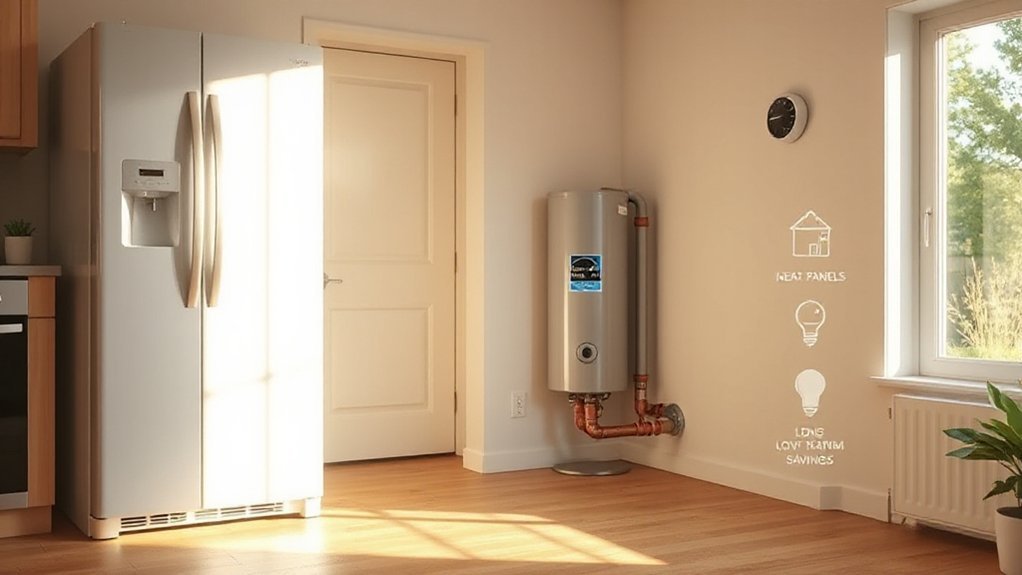
Costing upfront investments against long-term savings matters most when you compare total cost of ownership, not just the sticker price. You’ll run a precise cost analysis to model and compare options, factoring purchase, installation, maintenance, and potential incentives.
Prioritize transparent return timelines, depreciation, and residual value, so every choice aligns with your investment strategy. Short payback periods matter, but you should also quantify non-financial gains like comfort, health, and resilience.
Use a consistent discount rate to normalize future savings, ensuring apples-to-apples comparisons across products and suppliers. Consider lifecycle cost, not upfront affordability alone, and stress-test scenarios for energy price volatility.
Document assumptions, horizons, and risk buffers so your upgrade path remains intentional, scalable, and aligned with your long-term energy performance goals.
Installation Realities: Disruption, Timelines, and Planning
Installation timelines hinge on precise planning and coordinated execution; start with a realistic schedule that accounts for weather windows, access constraints, and supplier lead times. You’ll map phases, buffer critical path tasks, and confirm permit controls to minimize surprises.
Expect short-term disruptions, but these can be managed with staged work zones and clear communication. Prioritise safety, site security, and workflow continuity during active periods.
- Access choreography: designate entry/egress routes, protect sensitive areas, and coordinate deliveries.
- Task sequencing: align insulation, retrofit, and controls in logical order to shorten downtime.
- Contingency planning: predefine weather windows, alternative suppliers, and emergency contacts.
Result? A smooth installation that preserves home security and even supports gardening enhancements while you maintain daily life and energy gains.
Beyond Savings: Comfort and Resilience Gains
Upgrading for energy efficiency isn’t just about lower bills; it reshapes daily living by making your home more comfortable and resilient. You’ll experience steadier temperatures, reduced drafts, and quieter spaces as system controls synchronize with your routines.
Prioritise design-forward layouts that balance insulation, ventilation, and zoning, ensuring you don’t trade comfort for efficiency. Renewable integration should be planned at the system level, enabling smart load management and predictable performance across seasons.
Focus on indoor air quality as a core metric: expect controlled ventilation, reduced humidity hotspots, and minimized pollutant buildup without compromising energy savings. Decisions should align with predictable maintenance intervals and verifiable performance data, not guesswork.
The payoff: resilient homes that adapt to weather shifts while sustaining comfort and efficiency gains.
Finding Reputable Installers and Verifying Incentives
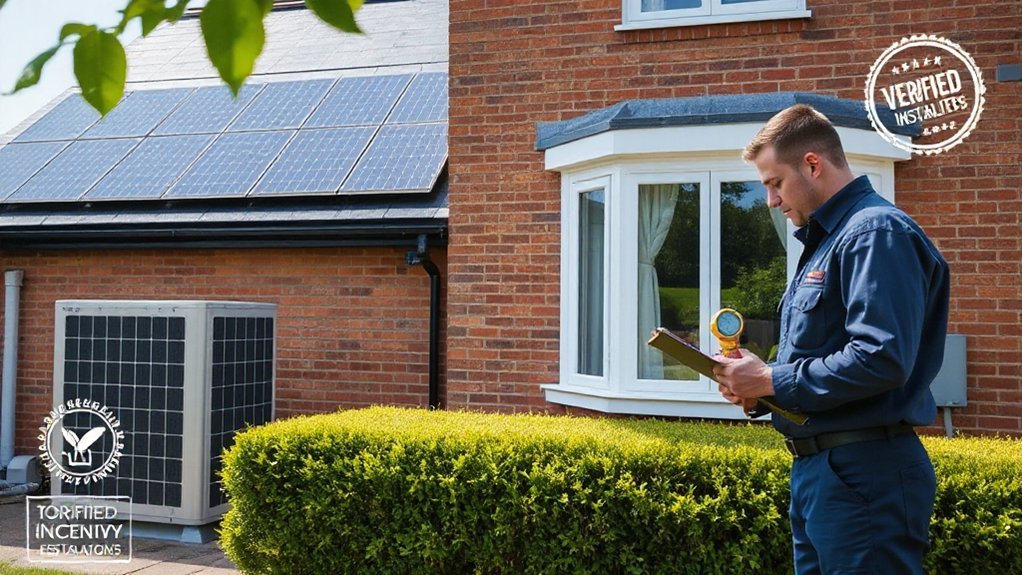
To start, vet installers who combine technical depth with transparent performance data and solid certifications; verify they can align with your design goals, system-level planning, and ongoing maintenance needs. You’ll want clear evidence of Reputable verification and credible incentive pathways, ensuring they understand eligibility criteria for incentives before work begins.
Ask for performance data, commissioning reports, and post-installation support commitments. Then, confirm the installers’ ability to navigate incentive schemes and document required compliance.
1) Proven track record with similar upgrades and verified energy performance.
2) Documentation of incentive eligibility, funding sources, and application timelines.
3) Transparent pricing, clear warranties, and access to system-level design coordination.
Prioritize those who demonstrate rigorous verification processes, alignment with your goals, and proactive incentive guidance.
Frequently Asked Questions
What Grants Cover Hybrid Systems vs. Full Heat Pumps?
Grants favor hybrid systems for certain installations, but full heat pumps can qualify too; subsidies depend on project specifics. You’ll want Renewable incentives to offset Installation costs, with eligibility varying by location, system efficiency, and match to existing infrastructure.
Will Upgrades Affect Home Insurance Premiums or Eligibility?
Upgrades can affect insurance; you may see changes in premiums and coverage. Check your insurer’s eligibility criteria, as some policies require specific system types or installation standards. Confirm documentation aligns with policy conditions to minimize insurer hesitancy. Insurance impact, eligibility criteria.
How to Timeline Projects Around Peak Energy Price Seasons?
You should start with Seasonal planning, then align projects to off-peak windows and energy tariffs. Do an Energy cost analysis to time renovations, budgeting for weather-driven delays, and sequencing trades for maximum efficiency during peak rates.
Do Smaller Properties Qualify for District Heating Pilots?
Smaller properties can qualify for district heating pilots, depending on local schemes and heat network capacity. Check heating eligibility criteria, property size, and connection feasibility; you may need retrofit readiness, metering, and suitability assessments to participate.
What Maintenance Is Required After Insulation Upgrades?
Pilot-era interfaces aside, you must follow a maintenance schedule after insulation upgrades: inspect seals annually, check for damp or bridging, reseal joints as needed, and monitor insulation durability to prevent drafts and heat loss.
Conclusion
You’re ready to act. Prioritise quick wins like loft and cavity insulation to trim bills fast, then weigh air-source heat pumps when it makes sense for your home. A striking stat: homes with optimized insulation see up to 20–40% annual heating savings, creating longer-term resilience. Expect upfront costs to balance with long-term gains, and plan around disruption with a reputable installer. In short, precise upgrades, clear timelines, and verified incentives guide you to durable comfort and value.
About the Author