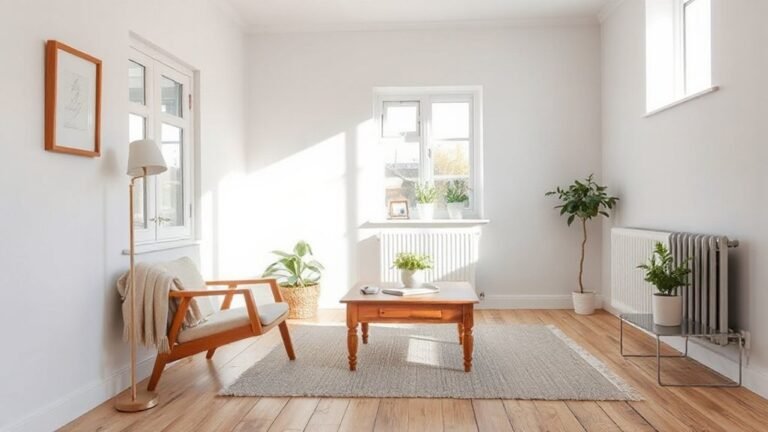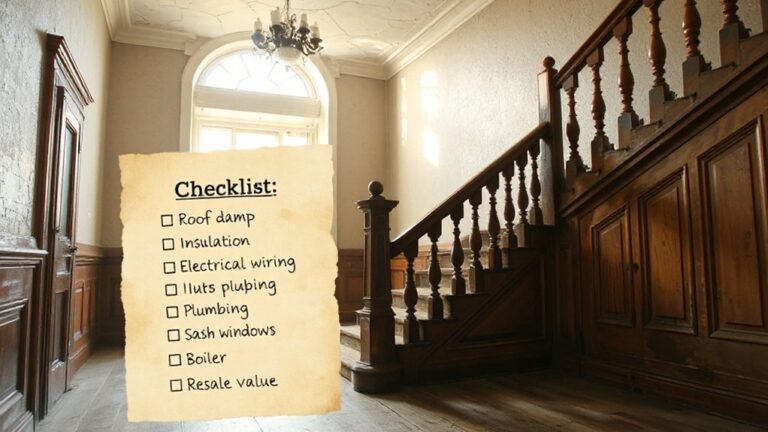
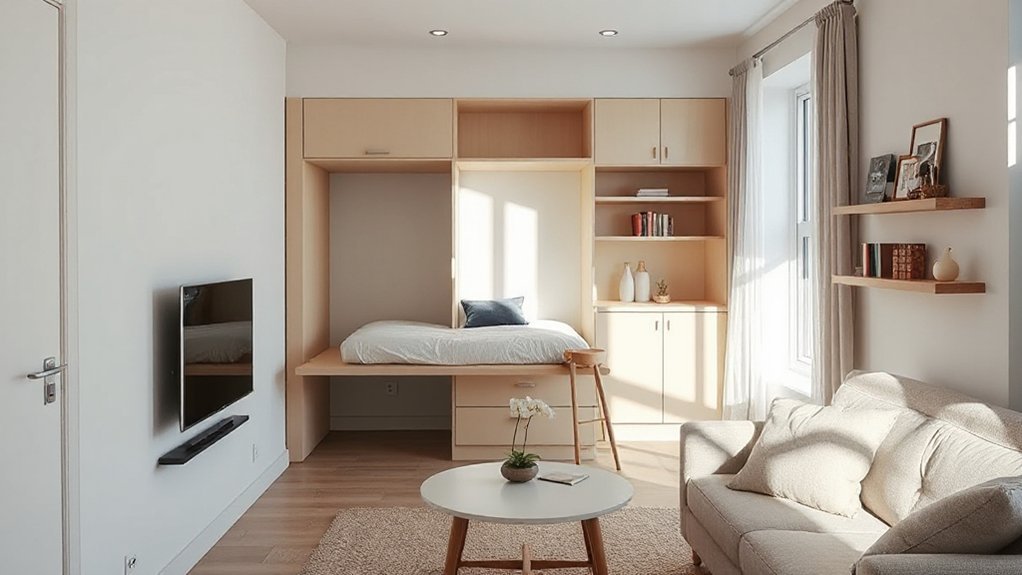
Did you know most of your floor space isn’t actually usable because it’s taken up by doors, drawers, and bed frames? You can reclaim it with multifunctional furniture that does double duty and folds away when not needed. Think vertical storage, hidden compartments, and modular systems you can reconfigure as life changes. Ready to see how compact rooms stay calm and practical without feeling cramped? Let’s explore ideas that keep you moving and organized.
Key Takeaways
- Use multi-functional furniture (sofa beds, foldable tables, hidden storage) to maximize purpose per footprint.
- Opt for modular, reconfigurable systems to adapt layouts as needs change.
- Embrace vertical storage with tall, slim units and wall-mounted solutions to save floor space.
- Choose light tones, mirrors, and minimal hardware to visually expand small areas.
- Prioritize durable, easy-assembly pieces with integrated storage to reduce clutter and future costs.
What Makes Space-Saving Furniture Work in Small Flats
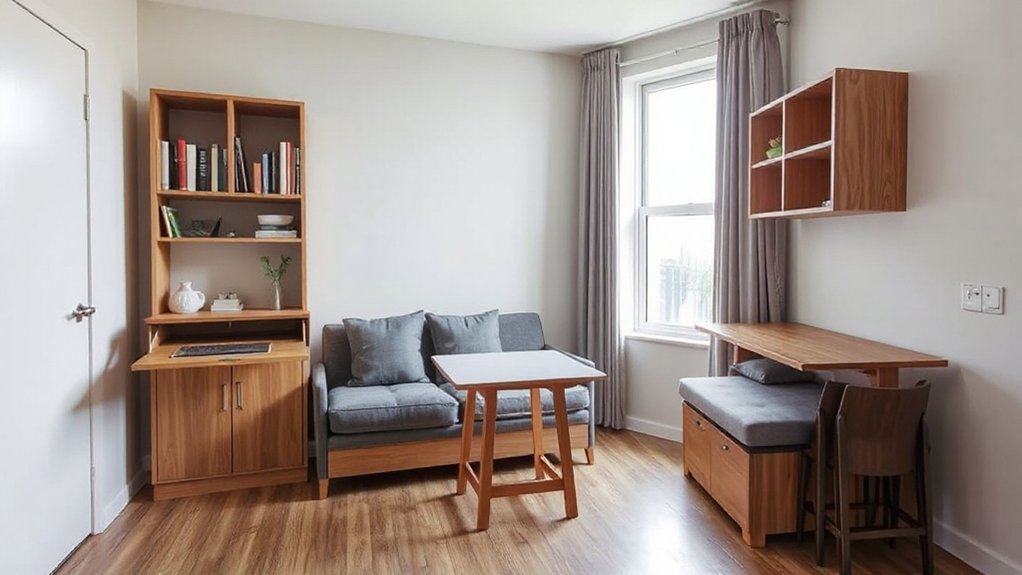
Space-saving furniture works in small flats by combining compact footprints with flexible, dual-purpose design. You optimize every inch by selecting pieces that serve more than one function, then adjust their use to suit daily needs.
Prioritize space efficiency: choose modular modules you can reconfigure, stack, or rotate to create instant work zones, dining areas, or storage.
Furniture ergonomics matter, so sit and measure heights, depths, and reach before buying; comfortable seating and properly positioned desks protect posture as you move through tasks.
Build a perception of openness with slender legs, wall-mounted units, and mirror-backed storage that visually expands rooms.
Look for hidden compartments and integrated charging, keeping surfaces clear for focus.
When each piece earns its keep, small flats feel purposeful, not cramped.
Must-Have Multi-Functional Pieces for Tiny Homes
Think through convertible sofas, because you’ll gain a bed-and-seating solution in one footprint.
Look for hidden storage that tucks away everyday clutter, from ottoman chests to under-seat drawers.
Consider multi-use dining tables that morph for work, meals, and guest space, so every inch earns its keep.
Convertible Sofa Benefits
A convertible sofa isn’t just a seat; it’s a space organizer that earns its keep day and night. You’ll gain instant extra sleeping space without sacrificing seating quality, perfect for guests or spontaneous naps after work.
The glow comes from smart mechanisms: quick-release legs, smooth hinges, and a bed surface that stays level, reducing wakeful adjustments.
Convertible sofa benefits include streamlined frames that resist sag and rapid transformation, so you spend less time prepping and more time living.
Ergonomic design matters here: contoured cushions support your back, seat depth fits your posture, and armrests align with your natural reach, preventing fatigue during long chats or movie nights.
Choose one with breathable fabrics and sturdy supports to maximize daily versatility.
Hidden Storage Solutions
Hidden storage isn’t just a clever add-on; it’s a core building block for tiny homes. You optimize every surface by integrating hidden compartments, concealed drawers, and lift-out panels into furniture you already use daily.
Look for beds with underframe cubbies, ottomans with shallow lidded bays, and coffee tables that conceal bins beneath a hinged top. In halls, benches can hide seasonal gear; in kitchens, step stools double as pantry towers.
Choose pieces with positive-lock closures and soft-close mechanisms to avoid noise and slamming. Use modular modules that slide, stack, or rotate, so you reconfigure as needs shift.
Label interiors to streamline retrieval, then color-code lids for rapid recognition. Precision engineering reduces clutter, elevates flow, and keeps rooms visually calm while expanding usable square footage.
Multi-Use Dining Tables
When space is tight, a dining table should do more than seat people; it should adapt to the moment. Multi-use dining tables excel at transforming a single piece into several roles, keeping your dining area flexible without clutter.
Choose extendable tops, fold-away sections, or drop leaves to shift from everyday meals to quick workstations or game nights. Built-in storage under the tabletop or within the legs reduces visible clutter, boosting space optimization.
Look for materials that resist spills and scratches, with smooth mechanisms for easy adjustments. Compact pedestal bases maximize legroom, while slim profiles avoid crowding hallways.
Pair with stackable chairs that tuck away neatly. With intention, your table becomes a lightweight, versatile hub for meals, work, and social time.
Vertical Solutions to Free Floor Space
Think vertically to free floor space with wall-mixed storage that blends shelves, hooks, and cabinets into seamless units.
Opt for tall, slim furniture that utilizes vertical height without widening your footprint.
This approach keeps pathways clear while maximizing storage through smart, compact design.
Wall-Mixed Storage Solutions
Vertical storage isn’t just tall shelves against the wall—it’s a smart system of mixed-use panels, rails, and hanging units that pulls every inch of height into action. You pair wall-mounted shelving with adjustable rails to create a dynamic spine along any room edge, swapping out components as needs shift.
Use floating cabinets for closed storage without bulk, placing them at different heights to balance visual weight. Integrate hooks, magnetic strips, and peg strips to hold keys, tools, and small accessories, keeping surfaces clear.
Choose durable finishes and aligned hardware to maintain a seamless look. Plan zones for work, dining, and laundry verticality, so each function occupies its own layer. This approach minimizes footprint while maximizing accessibility and flexibility.
Tall, Slim Furniture Options
Maximize wall flow by selecting tall, slim furniture that tucks into narrow gaps without crowding the room. Tall, slim pieces maximize storage without sacrificing floor area, so you can move freely while keeping essentials reachable.
Opt for integrated shelving that runs from floor to ceiling, and choose models with recessed handles and smooth fronts to reduce visual clutter. Consider materials and finishes that blend with existing tones to preserve a cohesive look.
Minimalist design thrives here: avoid extra ornamentation, align edges, and use consistent hardware. Prioritize color coordination across units to create a seamless vertical rhythm.
Narrow-profile desks, tall bookcases, and slim storage towers can serve multiple functions, from work to laundry to display. Implement modular modules that stack and expand as needs shift, maintaining a tidy, airy feel.
Hidden Storage Hacks for Every Room
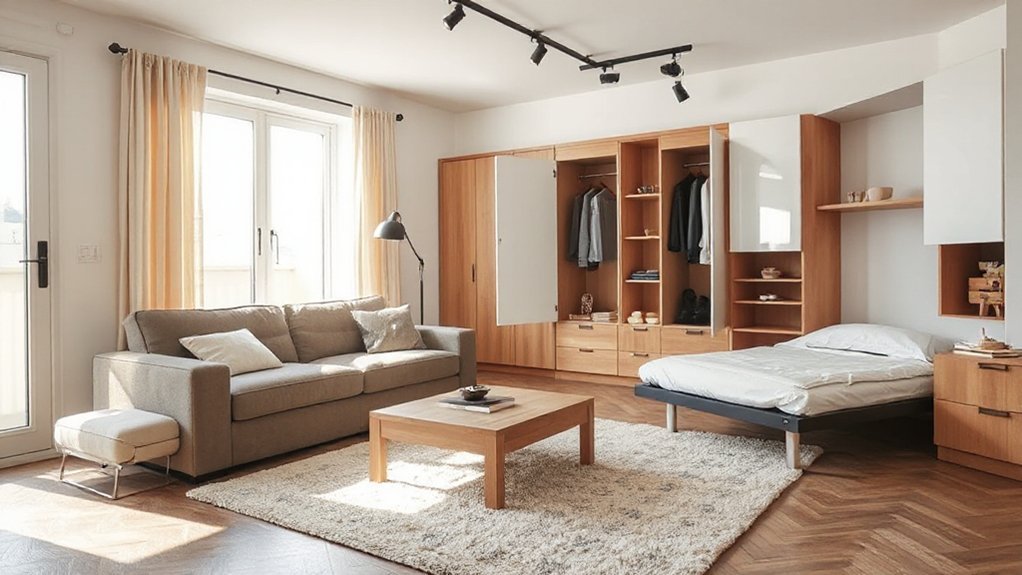
Hidden storage can transform any room, from living areas to bathrooms, by turning underused nooks into functional drawers, shelves, and hidden compartments. You’ll optimize every inch with pull-out trays, bed-frames, and ottomans that esconder items without visual clutter.
Choose furniture that doubles as storage with slim profiles and robust hardware, prioritized for accessibility. In kitchens, install magnetic strips, utensil rails, and shallow bins inside cabinet doors to capture odds and ends.
In living rooms, use nested crates, lift-top coffee tables, and wall-mounted units to keep surfaces clear. In bedrooms, consider under-bed drawers and concealed hanging rods.
Don’t neglect decorative accents and color schemes to cue organization visually, guiding daily habits toward neat, purposeful spaces.
Foldable and Expandable Furniture That Adapts on Demand
Foldable and expandable furniture is built for adaptability, so you can reconfigure a room in minutes without sacrificing style. When you choose pieces with adjustable height, you tailor work surfaces, seating, and storage to your exact needs, instantly changing the room’s function.
Look for modular design that lets you snap components together or separate them without tools, so you can assemble a desk converter, wall bed, or dining nook in seconds. Prioritize durable hinges, smooth guides, and lockable positions to prevent wobble under use.
Lightweight frames with strong joints mean you can move setups between living, sleeping, and work zones without strain. Embrace compact, multi-purpose forms that collapse flat or expand upward, keeping floor space open for daily activities.
Budget-Friendly Picks That Maximize Value
If you’re aiming to stretch your budget without sacrificing function, start with versatile, budget-friendly picks that deliver real value today and long-term reliability. Prioritize space-efficient furniture that serves multiple roles, مثل a sofa bed with built-in storage or an ottoman that folds into a side table.
Look for modular systems you can reconfigure as needs change, reducing future purchases. Choose items with durable frames, low-maintenance finishes, and simple assembly to minimize hidden costs.
Seek compact dining solutions, like wall-mounted drop-leaf tables or fold-away desks, that free floor space without sacrificing usability. Favor clean lines and neutral tones to maximize perceived room.
Finally, compare warranties and energy-efficient features to guarantee ongoing savings, reinforcing a budget-friendly, space-efficient setup that scales with your life.
Style-Forward Ideas to Prevent Clutter
Small, well-chosen style choices can keep clutter at bay without cramping your space or vibe. You’ll design with intention, prioritizing dual-purpose pieces and clean silhouettes that blur boundaries between decor and storage.
Use decorative accents sparingly yet purposefully; a single statement piece can anchor a room without multiplying visual noise. Choose color schemes that feel cohesive across zones, so you don’t need multiple accents vying for attention.
Keep surfaces clear by tucking essentials into stylish baskets or drawers hidden within furniture. Opt for modular components that adapt as needs shift, avoiding bulky, stay-only setups.
Mirror finishes and light tones expand perception, while uniform hardware and leg lines create visual continuity. Practically test layouts, removing what doesn’t serve function or mood.
Your space stays calm, intentional, and clutter-free.
A Practical Compact-Room Furniture Shopping Checklist
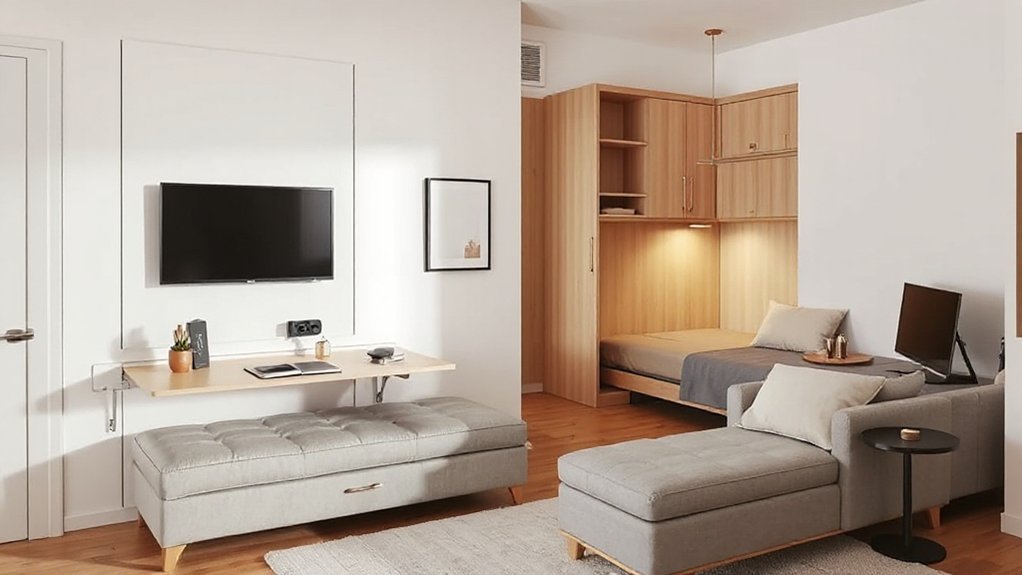
To shop smart for compact rooms, start with a focused checklist that aligns function with flow. Choose modular pieces that can multitask: a sofa bed, nesting tables, and ottomans with hidden storage. Prioritize scale over trend, measuring doorways and ceiling heights before purchasing.
Opt furniture with clean lines, rounded corners for safety, and integrated charging ports. Highlight storage-efficient details: lift-top coffee tables, wall-mounted consoles, and beds with drawers. Consider color schemes that make spaces feel airy—light neutrals with a few bold accents.
For lighting options, combine ceiling, task, and ambient layers to avoid dead zones; use dimmers to adapt mood and function. Finally, create a quick-buy list, double-check warranties, and reserve space for planned layouts.
Frequently Asked Questions
How Do You Measure Room Proportions for Space-Saving Furniture?
To measure room proportions for space-saving furniture, you start with the room shape and check measurement accuracy.
Measure length and width at multiple spots, then note ceiling height and door openings. Use a laser or steel tape for precision, and record wall angles with a protractor.
Mark corners with painter’s tape, sketch a to-scale floor plan, and verify accuracy by rechecking critical dimensions. This helps you choose compact, adaptive pieces confidently.
What’s the Best Material for Durable, Compact Pieces?
The best material for durable, compact pieces is solid hardwood for longevity, then engineered composites as a lighter, affordable alternative. Material durability matters, yet you’ll appreciate how compact furniture can still feel solid and resilient.
You’ll juxtapose rugged oak with sleek laminates, proving durability isn’t bulky. Choose milled edges, reinforced joints, and finish that resists scratches.
You’ll get practical, precise, innovative results, using metal accents for strength and wood for warmth in compact furniture.
Can Multifunctional Items Compromise Comfort for Style?
Yes, multifunctional items can compromise comfort for style at times, but you don’t have to accept it. If you prioritize Ergonomic compromises, you’ll spot designs that balance form and function.
Seek adjustable supports, breathable materials, and proper seating angles to keep posture intact. Expect Aesthetic trade offs to appear, yet you can offset them with modular layouts and tailored cushions.
Choose pieces that adapt, so comfort and chic coexist without sacrificing space efficiency.
How to Budget for Long-Term Space-Saving Upgrades?
To budget for long-term space-saving upgrades, you should start with a clear plan and prioritize essentials.
Example: you upgrade your sofa bed first, then add modular shelving.
Budget planning begins with listing all needed items, estimating costs, and setting a monthly target.
Practice expense prioritization by funding high-impact purchases first and avoiding impulse buys.
Track progress weekly, adjust as needed, and reserve 10% for unforeseen costs.
You’ll maximize space without draining your finances.
Do Renters Have Access to Flexible, Modular Options?
Yes, renters can access flexible, modular options. You’ll navigate renters’ restrictions and still customize living spaces with modular customization that stores, unfolds, and reconfigures easily.
Choose multi-use components, rent-friendly wall mounts, and furniture with reversible, tool-free assembly. Prioritize compact scales, lightweight materials, and clear measurement notes.
You’ll preserve portability for moves while maintaining a cohesive, efficient layout that adapts to changing needs and landlords’ policies. Always verify terms, and document configurations.
Conclusion
In small flats, every inch counts, so choose furniture that earns its keep through multiple uses. A recent study found that modular, space-forcing layouts can boost perceived room size by up to 20%. Prioritize convertible pieces, vertical storage, and hidden compartments to reduce clutter without sacrificing function. Keep lines clean, tones neutral, and textures reflective to maximize light. With a smart mix of foldables and consistent organization, you’ll enjoy a calmer, more adaptable living space.
About the Author