Exploring The Charm of Restored Antique Fireplaces
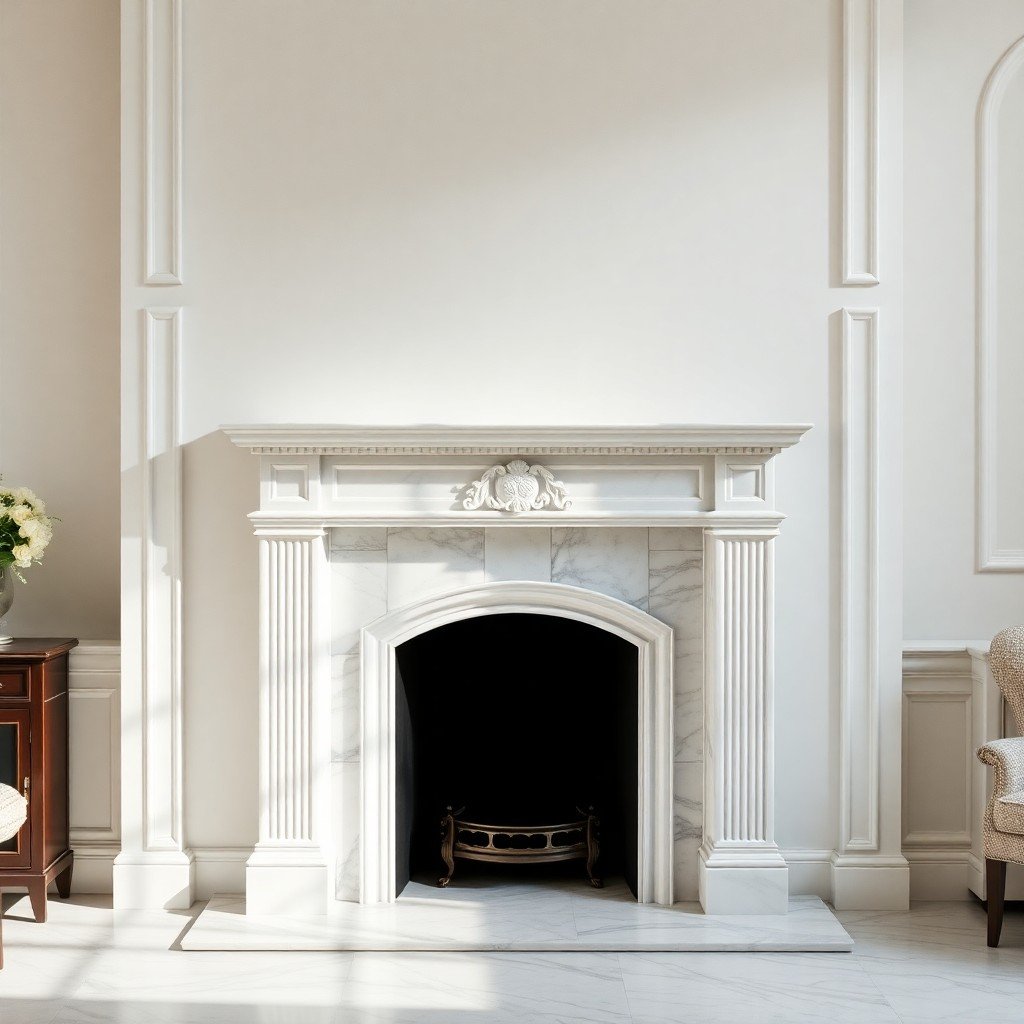
Few elements transform a room more completely than a restored antique fireplace. Whether Victorian cast iron, Edwardian marble, Georgian period or art deco tilework, these pieces bring irreplaceable craftsmanship and architectural character that no modern reproduction can fully replicate.
Key Takeaways
- A restored antique fireplace is the most significant focal point available to a period interior — and one of the few that adds genuine, evidenced value to a property.
- Victorian and Edwardian fireplaces are widely available through salvage dealers at a range of price points, from accessible register grates to significant marble over-mantels.
- Original tiles are irreplaceable and must be cleaned carefully — acidic cleaners, abrasive treatment, or soda blasting near original glazed tiles will cause permanent damage.
- Cast iron restoration is very achievable for confident DIYers — cleaning, rust treatment, and black lead or heat-resistant paint finishing are all within reach with the right products and patience.
- Marble surrounds require professional restoration for polishing and significant repairs — pH-neutral cleaning only at home; specialist stone restorers for repolishing and chip repair.
- If the fireplace is to be used as a working fire, the chimney must be swept and inspected by a HETAS-registered sweep before use, and a carbon monoxide detector is non-negotiable.
- Antique fireplaces work beautifully in contemporary interiors — confidence in the juxtaposition, appropriate scale, and a restrained mantelpiece display are the three keys to making them sing.
Why Antique Fireplaces Have Such Enduring Appeal
The appeal of a restored antique fireplace is not simply nostalgic. It is architectural, tactile, and cultural in ways that are genuinely difficult to replicate with modern alternatives.
A Victorian register grate — the cast iron unit with tiled cheeks, a grate for the fire, and a decorative canopy hood that became the standard domestic fireplace of the late nineteenth century — was produced in a period when skilled foundry workers and craftsmen were abundant and the design standards of even everyday domestic objects were high. The moulded decoration on a Carron or Coalbrookdale casting, the depth and precision of the ironwork, the glaze on original Minton or Maw & Co tiles — these represent a level of craft investment in an everyday household object that the economics of modern production simply do not support.
When a Victorian fireplace has been properly restored — the cast iron cleaned and polished to a deep black, the original tiles cleaned to reveal their glazed colour and pattern, the grate reinstated to its correct configuration — the result has a material richness that new products struggle to approach. And unlike a new fireplace, an antique one is genuinely unique. The slight variations in casting, the particular combination of tiles, the quality of the original design — no two are exactly alike.
The Periods and What They Offer
Victorian (1837–1901). The most varied and abundant category, ranging from the restrained neoclassical marble surrounds of the early Victorian period to the exuberant cast iron register grates of the 1870s–1890s with their majolica tile cheeks, ornate hoods, and decorative ironwork in Gothic, Renaissance, or naturalistic styles. Victorian fireplaces suit properties of the period most naturally but are also striking in contemporary settings where the contrast between the elaborate craftsmanship of the period and the clean lines of modern design is leaned into rather than apologised for.
Edwardian (1901–1910). Lighter and more graceful than their high Victorian predecessors, with art nouveau influences visible in the sinuous lines of cast iron surrounds and the stylised floral tiles. Edwardian fireplaces in white-painted or natural timber surrounds — often with a simpler cast iron insert — have a freshness and elegance that works well in a range of interior contexts.
Art deco (1920s–1930s). The most pronounced departure from Victorian decorative vocabulary: geometric forms, stepped profiles, and a move toward horizontal lines that align naturally with contemporary interior sensibilities. A good art deco fireplace in an interwar property, or placed confidently in a contemporary setting, has a graphic quality that is very much of the moment.
Each period offers different price points, different levels of availability through salvage, and different challenges in restoration. Victorian cast iron register grates with their original tiles are the most commonly available and span the widest price range — from a few hundred pounds for a standard grate in moderate condition to several thousand for exceptional examples with rare tiles or unusual design.
What to Look for When Buying
The salvage market for antique fireplaces is active, varied in quality, and benefits from knowing what to look for.
Original tiles are the most valuable element. A register grate with its original tiles intact — particularly tiles by named manufacturers such as William De Morgan, Minton, Maw & Co, or Campbell Brick and Tile — is worth considerably more than one where the tiles have been replaced with reproductions or removed entirely. If you are buying a grate that has been “restored” by a dealer, ask specifically whether the tiles are original or reproduction. A reputable dealer will tell you clearly.
Assess the cast iron carefully. Look for cracks, particularly across structural sections or through moulded detail areas. Hairline cracks in non-structural areas can often be repaired; structural cracks through load-bearing elements are more significant. Surface rust and paint are cosmetic issues that restoration addresses easily — they are not a reason to avoid a piece. Very heavy pitting from rust that has eaten deeply into the casting is a genuine quality concern.
Check marble surrounds for previous repairs. Marble surrounds that have had chips, cracks, or breaks repaired with tinted epoxy fillers can look excellent — a skilled repair is difficult to spot — but it is worth knowing what condition the piece started in. Look carefully along the nosing edges, at corners, and at any change of plane, as these are the areas most vulnerable to impact damage.
Consider the scale. Bring photographs and dimensions of your fireplace opening and the room to any salvage dealer appointment. An antique fireplace that is wrong in scale — too large for a smaller modern room, or too delicate for a substantial period room — will not work however beautiful it is in isolation.
Restoring Cast Iron: An Overview
Cast iron responds well to restoration and the basic process is achievable with care and the right materials.
Cleaning removes accumulated paint, rust, and sooting. A gel paint stripper, applied and left to work before removal with a wire brush, takes most paint layers back to bare metal without damaging the casting. Wire brushing addresses surface rust. For heavily soiled or extensively rusted pieces, professional grit or soda blasting returns the surface to bare metal across complex moulded details — typically costing £100–£250.
Rust treatment with a phosphoric acid-based rust converter stabilises any remaining rust, converting iron oxide to iron phosphate and providing a stable base for the finishing coat.
Finishing with traditional black lead (grate polish) — a graphite-based compound applied and buffed to a deep, slightly lustrous black — is the historically correct treatment and produces a beautiful result. It requires periodic reapplication as part of ongoing maintenance. For a working fire, only heat-resistant paint rated for the relevant temperature is appropriate — standard paints will discolour and fail under heat.
Caring for Original Tiles
Original Victorian and Edwardian fireplace tiles must be treated with great care. Cleaning should use only warm water, a pH-neutral cleaner, and a soft cloth or brush. No acidic cleaners, no abrasive materials, no blasting of any kind near original glazed tiles. Even gentle abrasion can permanently damage the glaze.
If tiles are missing, the best replacement is a matched original from a specialist salvage tile dealer. If no match can be found, high-quality period reproductions from suppliers including Craven Dunnill Jackfield are increasingly difficult to distinguish from period originals and are the appropriate substitute.
Antique Fireplaces in Contemporary Interiors
The combination of a restored Victorian or Edwardian fireplace with contemporary furnishings and decoration is one of the most successfully executed design juxtapositions in British domestic interiors — and one that has been executed well enough, in enough homes, to be considered an established idiom rather than an experiment.
The key is confidence. A Victorian register grate placed tentatively in a room that is otherwise trying to look thoroughly modern reads as an accident. The same grate, positioned as the unambiguous focal point of the room, with contemporary furniture scaled to complement it and decoration chosen to support rather than compete, reads as a deliberate and successful design statement.
Scale matters. A substantial marble over-mantel that is correct in a high-ceilinged Victorian reception room will overwhelm a modern living room. A delicate Edwardian grate, lost in a large period room, can be exactly the right weight for a smaller contemporary space. Getting scale right is the single most important design decision.
The mantelpiece display. In a contemporary interior, restraint on the mantelpiece almost always serves better than abundance. A few carefully chosen objects — well spaced, considered in their relationship to each other and to the fireplace itself — allow the architectural quality of the piece to be read. Overcrowding the mantelpiece competes with the fireplace rather than celebrating it.
Hearth material. The hearth is an opportunity to bridge antique and contemporary. Black honed slate or natural limestone pairs beautifully with Victorian ironwork. A polished concrete hearth creates a deliberate contemporary contrast with a marble surround. Both approaches work because they are deliberate — it is the absence of considered choice that produces unsatisfying results.
If You Want to Use It as a Working Fire
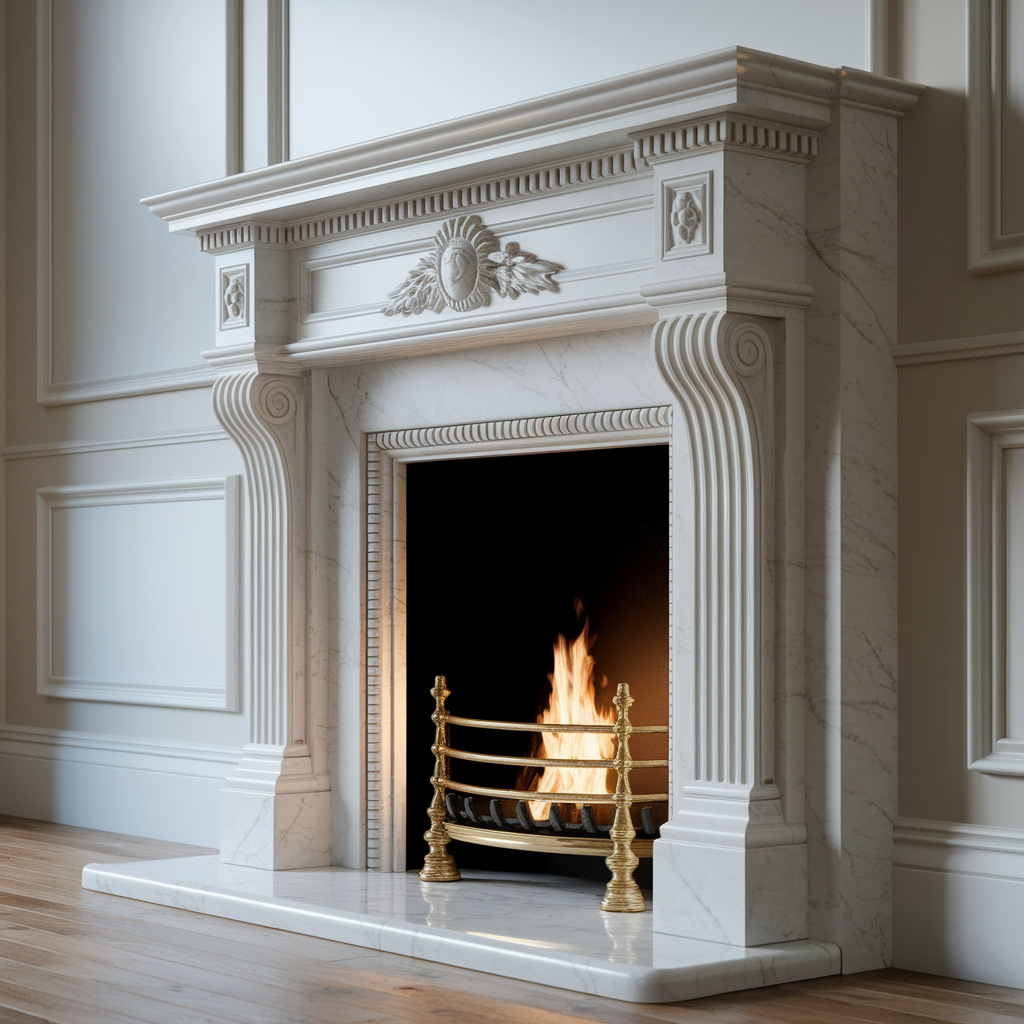
An antique fireplace restored to decorative condition and one restored to working condition are different projects with different requirements.
Before any fire is lit — even in a fireplace that was working when the property was bought — the chimney must be swept and inspected by a HETAS-registered chimney sweep. A flue that has not been used for years may contain debris, blockages, or structural deterioration that is not visible from below and that presents a serious fire risk.
A carbon monoxide detector must be installed in any room with a working combustion appliance. Position it on the same wall as the fireplace, at approximately breathing height.
Any modification or new connection to the chimney or flue — including the installation of a flue liner, which is often necessary when returning a long-disused fireplace to working use — must either be notified to building control or carried out by a HETAS-registered installer who can self-certify the work under the relevant Building Regulations provisions.
The Value Case
Restored antique fireplaces add value to period properties in ways that estate agents recognise and buyers respond to. A Victorian terraced house with its original fireplaces intact — even if not working — presents differently from an equivalent property where they have been removed. Buyers for period properties actively look for retained original features, and a restored fireplace is among the most visible and most valued of these.
For properties where original fireplaces were removed in the twentieth century and replaced with nothing, or with inferior modern substitutes, installing a period-appropriate antique is one of the few renovation investments that can increase a property’s perceived quality and desirability without the buyer premium that visible newness sometimes attracts. An antique fireplace reads as something that belongs — as something recovered rather than added — in a way that a new reproduction cannot replicate.
The charm of a restored antique fireplace is ultimately about authenticity. The craftsmanship is real. The history is real. The material quality, once the layers of paint and the accumulated decades of neglect have been removed, is entirely apparent. There is something in a well-restored Victorian grate, with its original tiles glowing and its cast iron polished to black, that a new product simply does not have — and that no amount of modern manufacturing ingenuity has yet found a way to replicate.
About the Author