Turn your long, narrow UK plot into a cohesive, usable garden by clarifying boundaries, sun exposure, and drainage, then design a British-style, meandering flow that invites movement toward focal points. Zone the space with clear pathways, seating at sightline crossroads, and compact, durable furniture. Build an evergreen backbone with seasonal color, and use verticals to create height without crowding. Prioritize water-wise choices and a realistic budget, plus quick wins and slow refinements to stay flexible as you grow. You’ll discover more practical steps ahead.
Pinpoint Your Narrow UK Plot’s Potential and Boundaries
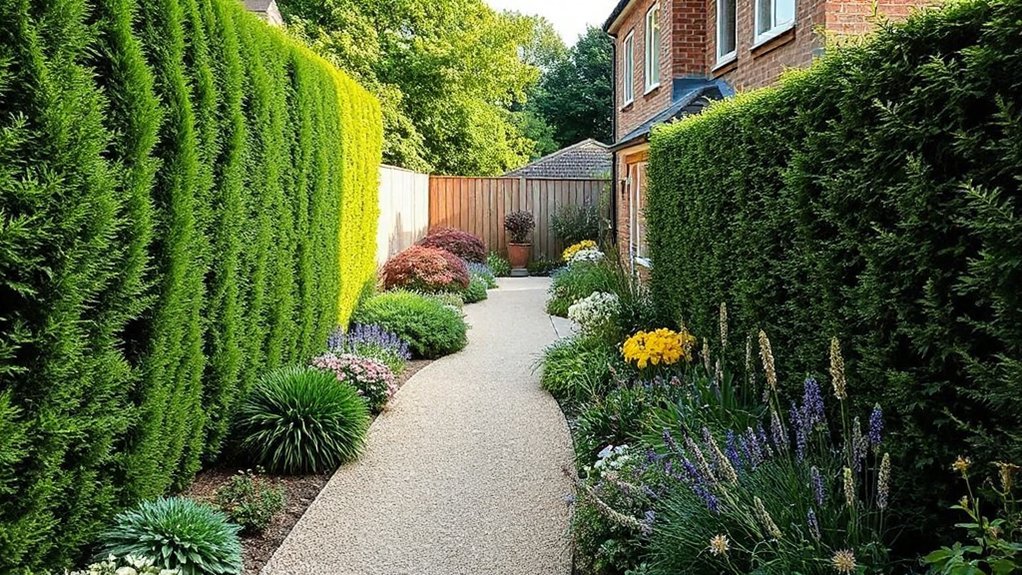
To open your narrow UK plot’s potential, start by defining its usable width, sun exposure, and drainage patterns. You’ll map sightlines to entrances, gates, and focal points, then mark boundaries with durable markers that won’t fade.
Assess soil quality, moisture, and slope to determine drainage classes and available raised-bed options. Identify microclimates—south-facing warmth, shaded pockets, and wind-sheltered zones—to plan plant layering and garden art placements that won’t collide with access routes.
Consider wildlife corridors and planting schemes that invite pollinators and create wildlife habitat, while still maintaining clear, functional paths.
Translate measurements into a scalable layout, tallying square meters for planting areas, seating, and storage. Prioritize flexibility, so you can adjust boundaries as you refine your design direction.
Define a British-Style Layout and Natural Flow
A British-style layout hinges on a clear, meandering flow that guides you from入口 to focal points without feeling rigid. You sketch sightlines that invite natural movement, using garden accessories to punctuate passages and emphasize seasonality.
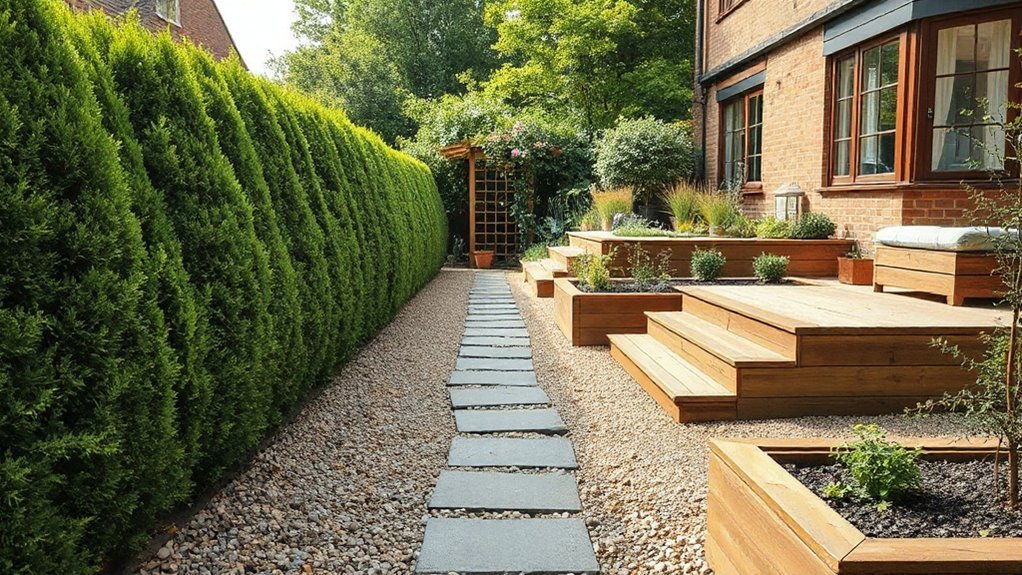
Place a narrow path as a spine, then branch a secondary route toward seating or a small meditation nook, avoiding dead ends that trap movement. Maintain proportional planting to modulate pace: tall screens for privacy, low borders for openness, and curved edges to soften angles.
Materials should read cohesive—soft brick, timber, and gravel—so your eye travels smoothly. Integrate Wildlife habitats at intervals, so wildlife glides through rather than clashing with design.
Keep vistas deliberate, ensuring each area earns its purpose while preserving a tranquil, breathable rhythm.
Measure Your Footprint and Set a Realistic Budget
Measuring your footprint and setting a realistic budget should come next after outlining a British-style layout, so you can map the space you’ll actually work with and decide what’s feasible. Begin by sketching the overall dimensions, noting narrow sections and any constraints—doors, fences, and utilities.
Prioritize zones: paths, planting beds, and a small seating area, then assign costs per area. Track essential expenditures first: materials, delivery, and labor, then add a contingency of 10–15% for surprises. Be precise about quantities to avoid waste.
When planning, consider garden art as a value-add that won’t inflate maintenance needs. Also budget for wildlife habitats—native plants, bird baths, and nesting spots—without overextending the budget.
Revisit estimates as you refine your layout to keep the project realistic and actionable.
Create a Visual Focal Point With Height and Structure
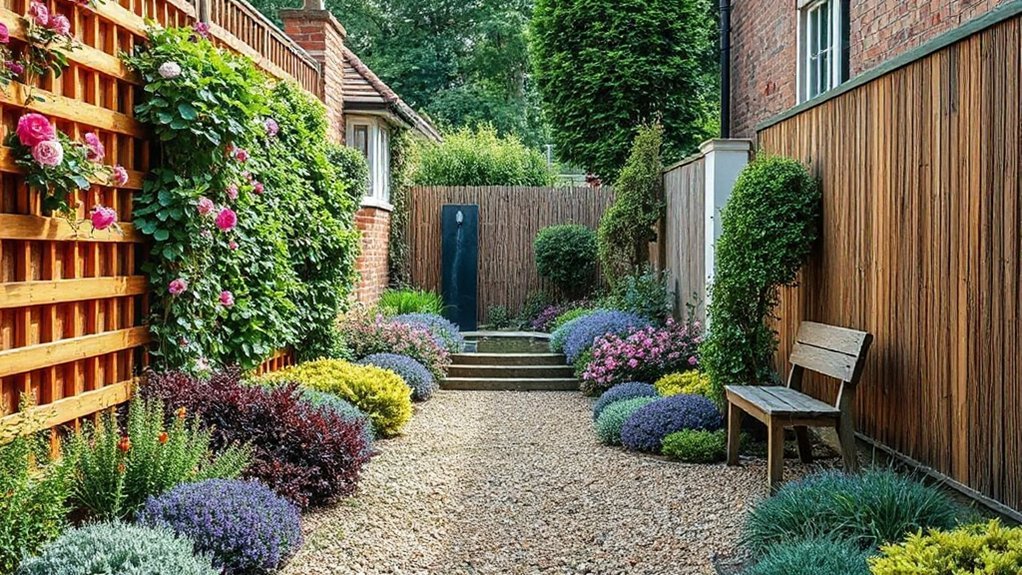
Height and structure should guide the eye along the narrow plot, so start with a strong vertical element—like a slender tree, a trellis, or a statement screen—that anchors the space and draws attention away from its limits.
You use height to create rhythm, then punctuate with deliberate structure to invite flow. Garden sculptures and water features become deliberate focal points, not afterthoughts, so place them to enhance scale and movement while keeping sightlines clear.
- Emphasize a single sculptural element at the far end to extend perceived depth.
- Pair a tall sculpture with a low, glassy water feature for contrast.
- Integrate vertical screens to frame views and soften edges.
- Use a slim trellis to support climbers, guiding the eye onward.
- Choose weathered finishes to complement British light and shelter boundaries.
Zone the Space: Pathways, Seating, and Access
To guide flow in a long, narrow plot, lay out clear routes that connect the entrance, focal points, and the far end. You define pathways with durable materials, narrow profiles, and gentle curves that invite movement without bottlenecks.
Place seating at crossroads of sightlines, ensuring comfort and accessibility while maintaining scale with surrounding plantings.
Zone access to service areas separately from leisure zones, reducing foot traffic near dining or quiet corners.
Choose Garden furniture with weather resilience and compact forms to maximize usable area.
Integrate practical pest control measures along edges and under benches, using discreet treatments and beneficial plants to minimize disruption.
Keep sightlines open by trimming tall growth and using vertical accents to preserve perception of space.
Screen Light-Considerate Privacy Without Blocking View
Screen light-considerate privacy is about creating a barrier that preserves sightlines while you’re able to enjoy evenings outdoors. You’ll balance screening with openness, so the garden remains legible from seating zones to views beyond. Choose materials and heights that shade without shrinking the line of sight, and optimize for low glare from path lighting.
Plan for dusk-dominant color, texture, and subtle silhouettes to reduce intrusive glow. Prioritize maintenance access, so privacy screens stay neat and durable around core garden furniture areas. Consider wildlife habitats nearby, ensuring small gaps or gaps near ground level for creatures to pass.
- Use screens that taper or open in sections to maintain sightlines
- Select light-blocking yet permeable materials
- Align screens with seating for natural privacy
- Integrate garden furniture with vertical plant accents
- Leave microhabitats to support wildlife habitats
Planting for Year-Round Interest in a Narrow Plot
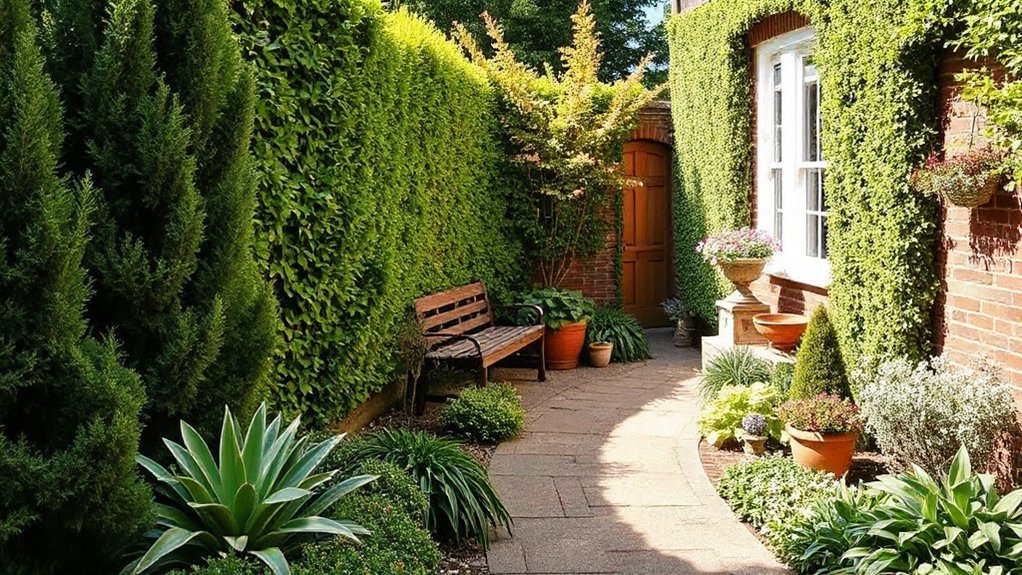
A narrow plot demands a careful year-round planting strategy that delivers interest in every season without crowding limited space. You design succession, not fashion.
In spring, choose compact shrubs and bulbs to provide early structure, then layer perennials for continuous bloom. Use vertical versatility: tall, narrow specimens at the back, ground-hugging varieties at the front, ensuring sightlines remain open.
For summer, integrate drought-tolerant core plants to reduce maintenance, and scatter Wildflower meadows in patches to create texture without overwhelming pathways.
In autumn, select showy foliage and late blossoms to extend colour.
Plant Edible herbs along a kitchen-edge border for practicality and fragrance, reusing space as you harvest.
Aim for a coherent palette, revisiting layout annually to preserve balance, continuity, and year-round interest.
Soft Edges and Recurrent Borders for a Gentle Look
You can soften the long, narrow feel by using soft-edge plantings and curved borders that read as gentle movements rather than sharp separations.
Recurrent borders frame sightlines repeatedly, guiding the eye while keeping paths inviting and practical.
Consider a restrained palette and repeated textures to unify the space without overwhelming its length.
Soft Edge Concepts
- Use curved, staggered borders to soften lines
- Layer foliage for continuous texture
- Position planters as transitional accents
- Incorporate native species for biodiversity
- Hide utilities with thoughtful screening
Recurrent Border Ideas
Soft edges and recurrent borders create a calm rhythm along long, narrow plots by repeating gentle curves and consistent plant heights. You implement recurrent borders by pairing a repeating plant palette with staggered intervals, ensuring visual flow from entrance to rear.
Choose low-maintenance evergreen backbone plants to maintain structure, then layer seasonal accents for continuous interest. Limit color clashes; instead, repeat two to three complementary hues across the length to reinforce cohesion.
Introduce discreet garden sculptures at focal points to punctuate the line without breaking the cadence. Integrate practical planting zones that permit easy access for maintenance, edging, and pruning.
Position patio furniture to reinforce the border rhythm, aligning seating with the border’s stride. Maintain sightlines, minimize clutter, and let the soft edges guide movement.
Evergreen Framework: Backdrops That Hold the Scene
Think of an evergreen backdrop as the frame that makes every garden element stand out. You’ll balance planting rhythm and scale so the scene reads clearly year-round.
With seasonal color sustainers to fill gaps. This approach hinges on evergreen backdrop principles that hold the view while supporting focal plants and pathways.
Evergreen Backdrop Principles
Evergreen backdrops are the backbone of a long, narrow garden, creating a stable, year-round frame that makes the space feel wider and more cohesive. You leverage structure, texture, and height to stage the scene without crowding the view.
Use evergreen layering to build depth from front to rear, ensuring each level reads clearly. Aim for backdrop contrast so darker greens push forward while lighter tones recede, sharpening perception of length.
Maintain clean lines, avoid variegation that muddles form, and select species with reliable growth habits. Keep foliage scale consistent to prevent visual chaos.
Plan for seasonal interest via needle-like, broadleaf, and conifer textures. Evergreen backdrops serve as a calm, unifying canvas for subsequent planting choices and rhythm.
- Evergreen layering
- Backdrop contrast
- Clean lines
- Consistent scale
- Seasonal texture progression
Planting Rhythm And Scale
Length and rhythm shape how a long, narrow plot feels, so you want planting that slips into the scene smoothly while guiding the eye along the length. You’ll shape rhythm with a consistent repeat of foliage mass and height, using tall background evergreens as quiet backdrops.
Alternate strong verticals with low groundcovers to create a layered cadence that still reads as one coherent corridor. Scale matters: keep sightlines open, preventing crowding near entrances, while drawing attention toward focal points at intervals.
Use evergreen backdrops to hold the scene, letting seasonal beds punctuate the rhythm without breaking it. Integrate garden furniture as resting pauses that don’t interrupt flow, and plan pest control strategies to protect unity of texture and form.
Maintain restraint; every element reinforces coherence.
Seasonal Color Sustainers
Seasonal color sustains a long, narrow plot by using evergreen backdrops as a steady framework, while seasonally colored accents punctuate the scene without breaking its rhythm. You craft balance by selecting backbone evergreens and then layering with timely hues that rise and fade with the year.
The result is coherence, not clutter, as focal points pop against muted greens. Keep textures varied—soft grasses, sleek shrubs, and bold foliage—to preserve movement through the space.
Consider how a Wildflower meadow or container plantings can echo seasonal shifts without dominating the backbone. Urban container gardening extends the scheme, allowing portable color that reinforces structure while remaining flexible for small plots.
- Choose evergreen anchors for year-round order
- Introduce seasonal accents that don’t overwhelm
- Integrate a Wildflower meadow for texture
- Use urban container gardening to extend the palette
- Maintain rhythm with consistent scale and spacing
Space-Saving Planting Techniques: Vertical and Narrow Beds
Vertical and narrow beds release growing space in tight plots by stacking usable area and guiding plant flow. You design a layered palette: tall, slender perennials or climbers at the back, mid-height shrubs, and ground-hugging greens at the front.
Choose sturdy frameworks—trellises, living walls, or vertical planters—to maximize air and light, minimizing shading conflicts. Use consistent spacing to reduce maintenance and improve yields, and rotate crops seasonally to preserve soil health.
In tight corners, deploy container gardening strategies: move pots to intercept sun, group them for microclimates, and elevate some with stable stands to free floor space.
This approach sustains wildlife habitats by including native edges and nectar-rich selections while keeping pathways clear and access practical.
Hardscape Ideas That Maximise Small Footprints
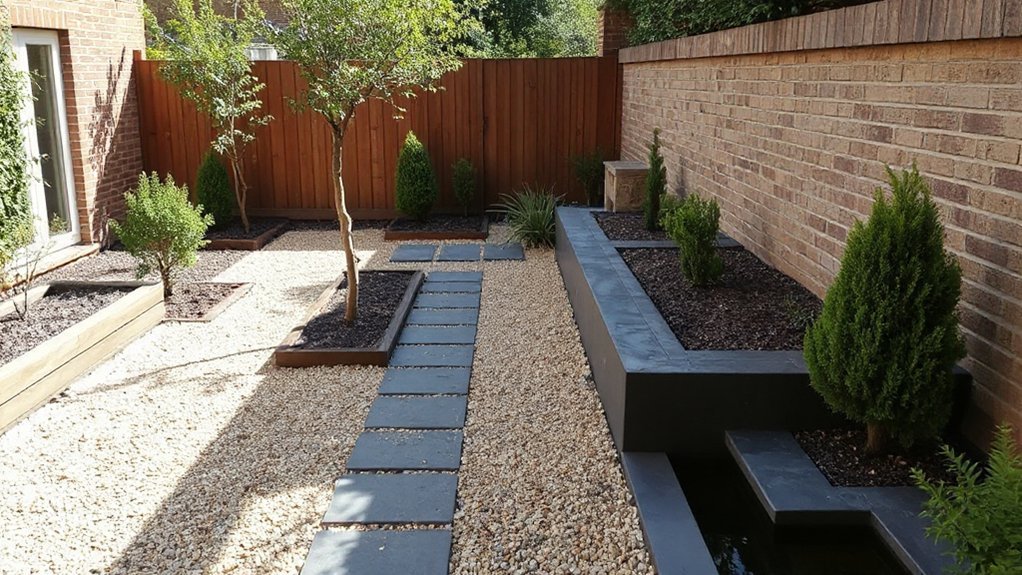
Compact paving patterns and linear seating solutions redefine how you use every inch. By laying tight, clean lines and choosing modular pieces, you create usable space without visual clutter.
This approach keeps traffic smooth and seating flexible, so small plots feel purposeful rather than cramped.
Compact Paving Patterns
Smart paving patterns can redefine a narrow UK plot by making every inch count. You’ll choose tight grids, small-format slabs, and alternating textures to visually shorten runways and widen perceived space. Focus on clean lines, consistent joint widths, and purposeful shading to guide movement and spotlight focal points.
Combine practical hardscape with subtle contrast to support garden furniture without crowding. Include recessed strips for drainage and low-maintenance weed control, ensuring longevity. Integrate garden lighting at edges and crossings to extend usability after dusk without overpowering the space.
Precision, not excess, defines success here.
- Use narrow-width slabs for continuous paths
- Alternate textures to create depth
- Align joints to accentuate length control
- Add low-profile lighting along borders
- Pair with compact garden furniture for balance
Linear Seating Solutions
Linear seating packs maximum function into limited space by anchoring edges and inviting use. You position long, narrow benches along fences or walls, creating defined edges that guide flow and prevent crowding. Choose compact materials—slate, concrete, or treated timber—that resist weather and still feel refined.
Integrate planters with built-in seating to add green rhythm without widening footprints; this supports container gardening and keeps sightlines clear. In tight zones, staggered seating angles induce conversation without crowding the path.
Use removable cushions for seasonal flexibility, and store them out of season to maintain a tidy spine. Pair seating with wildlife-friendly borders, such as native grasses or pollinator patches, nurturing wildlife habitats while you entertain.
Finish with subtle lighting to extend usability after dusk.
Groundcover and Paving Patterns to Extend the Space
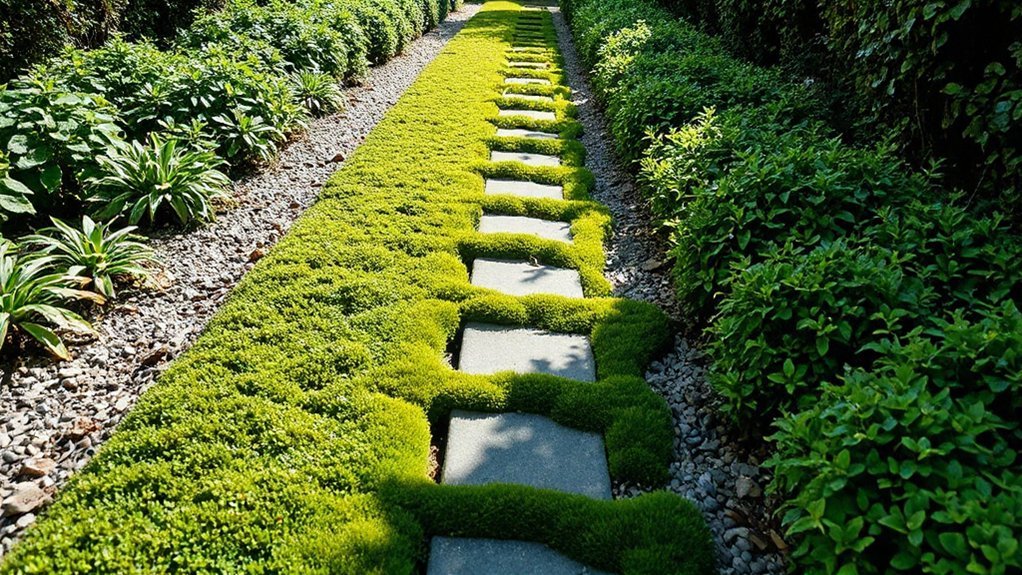
Transform your narrow plot with groundcover and paving patterns that trick the eye into seeing more space. You’ll guide the layout with light, continuous surfaces and deliberate contrasts, creating an elongated perception. Choose low-growing groundcovers that soften edges without crowding paths, and use stepping-stone paving to imply wider steps than actual width.
Opt for pale, uniform surfaces to reflect light, with darker accents to define zones. Incorporate purposeful gaps for movement flow, and schedule frequent maintenance to preserve seamless lines. Integrate Garden furniture and wildlife habitats to encourage year-round use and biodiversity without breaking the illusion of space.
- Pale, continuous paving with subtle joints
- Low-growing groundcovers along borders
- Narrow, parallel paths that read as longer
- Dark edging to define zones
- Integrated seating and habitat pockets
Water-Wise Strategies for a UK Climate
Water-wise strategies fit neatly with a long, narrow UK plot because thoughtful irrigation and plant choices protect space while reducing runoff. You’ll optimize water use by grouping plants with similar needs and scheduling irrigation to avoid waste.
Install a compact, hidden drip system or smart controller that targets beds rather than the whole yard, minimizing evaporation. Rainwater harvesting provides a clean, local reservoir for thirsty zones and can be sized to suit your plot’s length.
Choose drought resistant plants for dry edges and reflective surfaces to lower heat gain, ensuring resilience without extra irrigation. Mulching reduces soil moisture loss and suppresses weeds, while permeable paving maintains drainage.
Plan paths and borders to channel runoff toward planting zones, enhancing sustainability.
Seasonal Transitions: What to Do in Spring, Summer, Autumn, Winter
As the seasons shift, plan your plant changes to match each period: spring and summer for dynamic, seasonal plant progressions.
Autumn and winter are for essential maintenance that protects and prepares you for the next cycle.
Prioritise streamlined maintenance tasks, from pruning windows to soil feeding, so you stay on track across the year.
Use this framework to guide visuals and timing, balancing seasonal color with long-term garden health.
Seasonal Plant Transitions
Seasonal shifts guide you through a year of steady garden performance. You’ll shift plantings to match each season, keeping structure tight and maintenance minimal. Plan for complementary color, year-round texture, and reliable vigor, while supporting wildlife in narrow spaces. Focus on structural plants that anchor changes and ease crowding, then fill with seasonal focal points.
- Bird friendly planting: stagger bloom times and include nectar sources across seasons
- Create wildlife habitats with layered planting and sheltered nooks
- Choose compact varieties that suit long, narrow plots
- Prioritize drought-lite strategies and smart irrigation during peaks
- Rotate themes seasonally to maintain visual cohesion and ease of care
Seasonal Maintenance Tips
Spring, summer, autumn, and winter each demand targeted actions to keep a long, narrow UK plot tidy and thriving: start with a quick seasonal audit, prune and refresh key structural plants, and schedule feeding and mulch to suit the forecast.
In this maintenance window, you act with purpose: inspect borders for drift, tighten supports, and remove deadwood before it becomes a liability. Align tasks with growth cycles, applying slow-release feeds when plant vigor peaks and post-harvest mulch to protect roots.
Stay ahead of garden pests by early monitoring and decisive removal, not reactive spraying. Practice disciplined composting techniques to recycle seasonal debris, enriching beds for the next cycle.
Your plan stays lean, actionable, and consistently evidence-based for steady progression.
Seasonal Visual Changes
Spring brings a fresh palette to your long, narrow plot, and visual cues guide decisive actions: monitor for new growth, reveal structure as borders shed winter cuffs, and plan color accents that align with the season’s light.
- Observe budding lines and prune decisively to maintain airflow and rhythm.
- Swap dull borders for contrasting edge colors that echo seasonal light.
- Introduce Wildflower meadows to extend visual interest across the width.
- Position Butterfly attractors at sightlines to maximize pollinator visits.
- Rotate focal points monthly to maintain momentum and cohesion.
Seasonal shifts demand disciplined timing: spring, summer, autumn, and winter should map to a compact calendar, preserving structure while evolving mood.
You curate texture, keep paths clear, and balance evergreen stability with ephemeral blooms.
Maintenance Makeover: Manageable Long-Plot Care
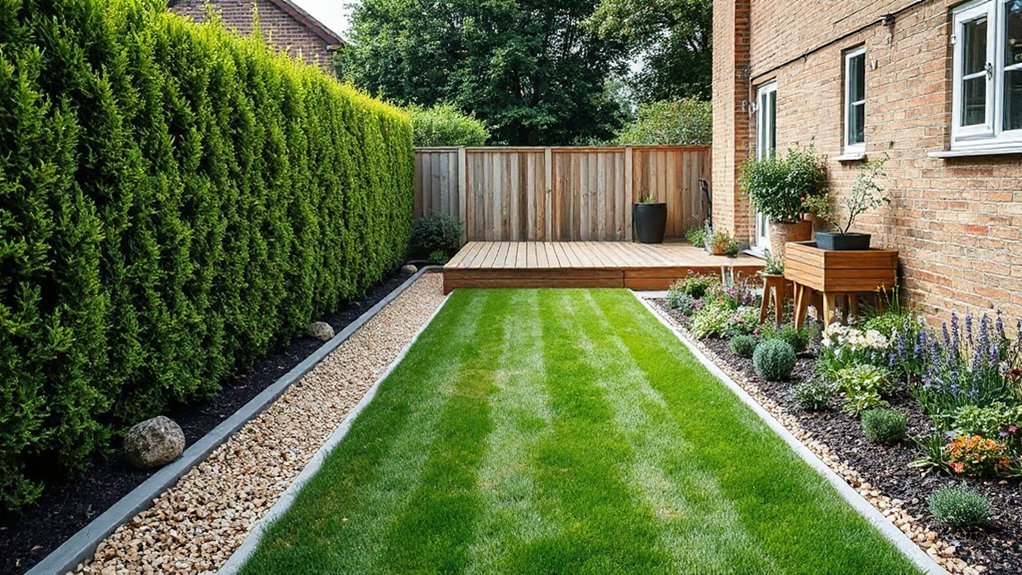
Keeping long, narrow plots easy to maintain means breaking tasks into steady, manageable steps. You start with a simple zoning plan: allocate a slim seating strip, a narrow growing bed, and a compact path.
Choose low-maintenance perennials and evergreen shrubs to reduce seasonal care, and group plants by water needs to streamline irrigation. Install a drip system with a timer, targeting each zone to minimize waste.
Use Garden art as focal points for every second bed, avoiding clutter while adding personality.
Create Wildlife habitats by leaving small, undisturbed margins and a shallow water feature that’s easy to clean.
Schedule monthly quick checks: prune, weed, mulch, and tidy edges. Reassess annually to preserve flow, accessibility, and visual coherence.
Real-World Makeovers: Quick-Sculpt, Slow-Shape Transformations
Real-world makeovers fuse speed with restraint: quick-sculpt changes reshape the layout while slow-shape tweaks refine texture and function over time. You’ll implement rapid, disruptive adjustments that establish flow, then layer it with deliberate, long-game refinements.
Focus on practical moves that stay flexible for future needs, minimizing disruption to existing plants and soil life. Prioritize structure, accessibility, and light, while watching for edge effects on soil enrichment and pest pressure.
Address Garden pests proactively with tidy borders and resilient plant choices. Pair fast wins with slow-tuning to maintain momentum without overhauling roots and soil health.
Track results, adjust, and repeat. Your approach blends efficiency with durability, delivering a coherent long-term upgrade.
- Quick layout tweaks that don’t compromise existing plant health
- Strategic layering: fast impacts, slow refinements
- Pest-aware planning integrated with borders and plant choices
- Soil enrichment as a continuous, adaptive process
- Measured checkpoints to guide future updates
Frequently Asked Questions
How Do I Define Usable Width on a Narrow UK Plot?
To define usable width on a narrow UK plot, measure from boundary to boundary, subtract access paths, and reserve a clear circulation zone. Then plan garden layout with space optimization, prioritizing functional zones and sightlines throughout.
What Budget Safeguards Suit Long, UK Plots?
You should set a budget cap with contingency, prioritizing essentials and phased projects. Plan for Garden lighting and Pest control within 60–70% of funds, then reserve for unexpected costs. Track expenses weekly to stay strategically precise and flexible.
Which Plants Thrive Year-Round in UK Narrow Spaces?
You’ll discover year-round success with evergreen perennials and compact evergreens, plus hardy herbs in containers. Aim for container gardening and vertical planting; you’ll maximize light, reduce space, and keep color schemes cohesive throughout the year.
How Can I Create Privacy Without Blocking View Lines?
You can create privacy while preserving sightlines by using layered screens and tall, slender evergreen plants. Place garden furniture along edges to guide views, and integrate outdoor lighting to highlight focal points—ensuring privacy without blocking the overall line of sight.
What Quick-Sculpt Vs Slow-Shape Ideas Fit Small Footprints?
Like a tight sculpture, quick-sculpt ideas fit small footprints; slow-shape ideas outlast trends. You’ll mix Contemporary sculptures with strategic garden ornaments, choosing durable pieces, modular layouts, and layered planting to evolve your space efficiently. You adapt, you refine, you prevail.
Conclusion
In a long, narrow UK plot, your plan turns measurement into momentum. Start with boundaries, then shape a British rhythm of paths, seating, and height. A single focal point can visually widen the space and guide flow. For climate resilience, plant drought-smart mixes and mulches; for maintenance, choose low-uptake materials. Fun fact: even small yards can boost property value by up to 5–10% with thoughtful landscaping. Stay disciplined, and your makeover travels from good to great.
About the Author