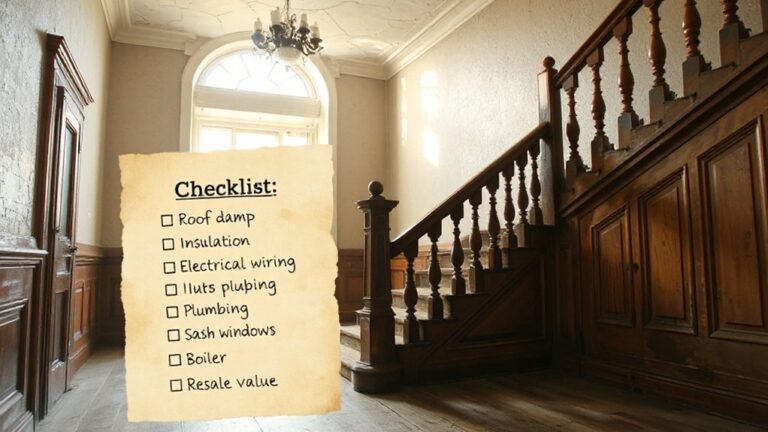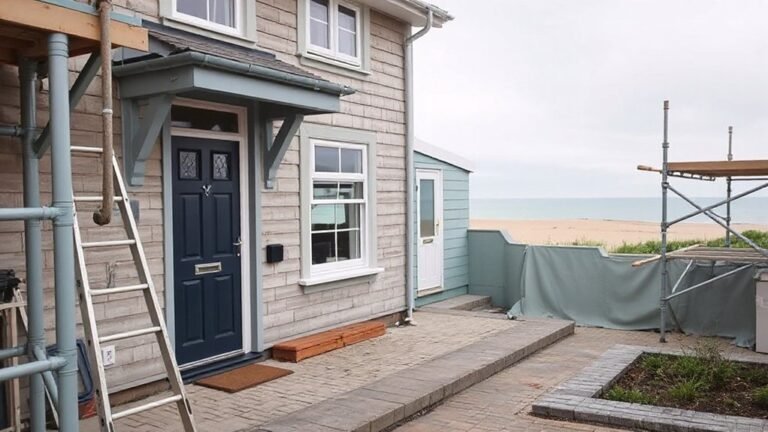
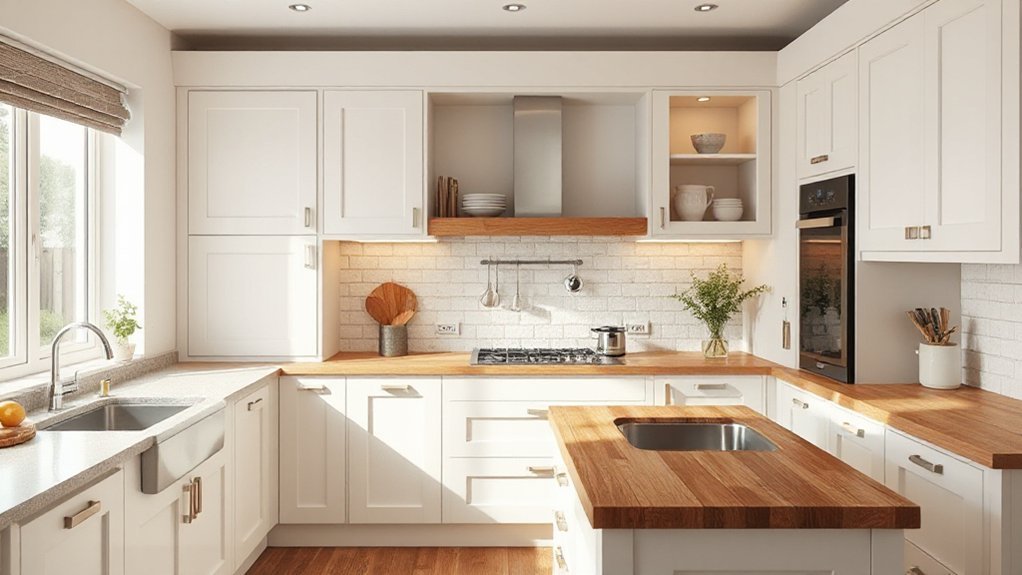
A recent survey shows kitchens influence 75% of buyers’ first impressions. You can sharpen that edge without blowing the budget by prioritizing smart surfaces, energy‑savvy appliances, and clean layouts that whisper value. Think quartz composites, satin laminates, and efficient lighting to elevate the look, coupled with practical storage tweaks and clear pricing bundles. Get ready to align your plan with real costs and quick wins—the kind that make buyers nod, not shrug, and you’ll see why the next step matters.
Key Takeaways
- Prioritize solid worktops, cohesive cabinets, and simple hardware to create a premium look on a budget.
- Choose A-rated, smart appliances with programmable modes to boost efficiency and appeal.
- Use quartz or satin laminates, consistent grain, and strategic edge profiling for an expensive feel.
- Optimize layout with a strong work triangle, vertical storage, and under-cabinet task lighting to improve flow.
- Provide clear, itemized quotes with bundles, payback timelines, and warranty details to build buyer confidence.
Create a Premium Kitchen on a Budget
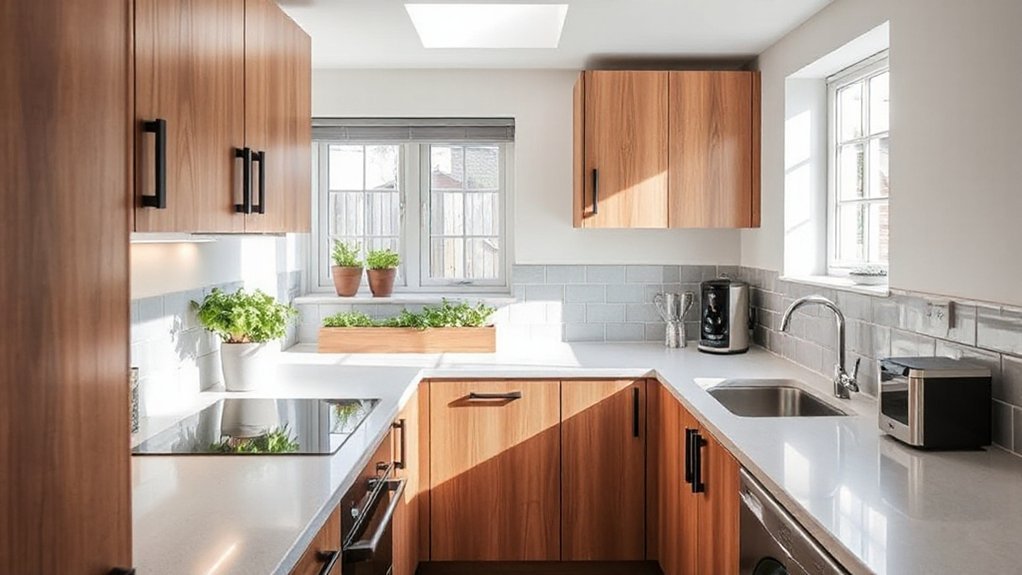
If you’re aiming for a premium look without blowing the budget, start with a clear plan and smart choices that maximize impact per pound. You’ll stretch impact by prioritizing form and function over flashy excess.
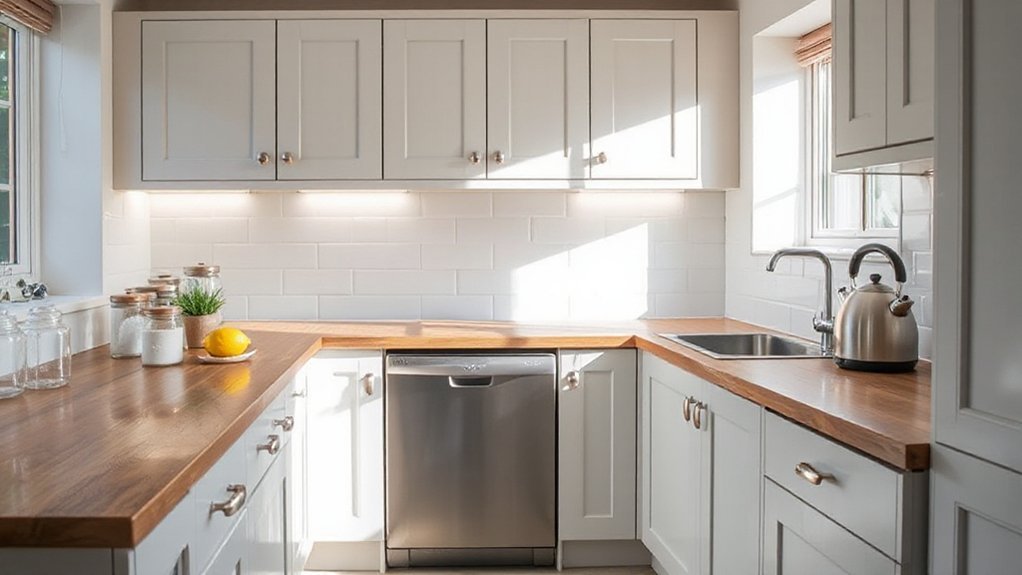
Begin with timeless materials: a solid worktop, coordinated cabinets, and clean, door-mandle hardware. Choose luxury appliances and designer fixtures that deliver reliability and elevated aesthetics without overdoing the cost.
Opt for a cohesive color story and simple silhouettes to maintain perceived luxury. Use strategic lighting to highlight texture and craftsmanship, not clutter.
Reuse existing zones where possible, and invest in hinges, drawer boxes, and tidy cable management for polished details.
Balance budget and ambition with a phased upgrade plan, prioritizing high-visibility elements that buyers notice first.
Energy-Saving Essentials for UK Buyers
As you tighten up a premium kitchen, energy savings should be baked into your plan from the start. You’ll gain efficiency by choosing smart appliances that learn usage patterns, adjust power modes, and report faults before they become wasteful.
Pair these with eco-friendly fixtures—low-flow taps, LED task lighting, and properly insulated cabinets—to slash bills without sacrificing performance. Prioritize A-rated or better appliances, and confirm compatibility with smart meters or energy monitoring dashboards.
Plan layouts that reduce heat loss, like well-sealed doors and thoughtful ventilation, so you don’t waste cooling or heating. Use programmable timers for ovens and dishwashers to run off-peak, while keeping daily routines simple.
Precision choices today translate into measurable, ongoing savings tomorrow.
Surface Upgrades That Look Expensive
To make surfaces look expensive without breaking the bank, pick materials and finishes that mimic high-end looks while keeping real-world durability in mind. You can achieve this with quartz composites, ultra-thin veneers, and matt or satin laminates that read as refined without the cost.
Pair these with strategic edge profiling and consistent grain direction to convey depth and craftsmanship. Consider color palettes that echo luxury finishes—soft whites, charcoal, and warm greys—so your surfaces feel cohesive, not busy.
Install high-quality under-mount sinks and touch-activated faucets to imply luxury without overdoing it. Use durable, wipe-clean coatings on countertops and backsplashes for practicality.
Align every element with a few high-end appliances to anchor the design and boost perceived value.
Layout Tweaks for Better Storage and Flow
Tighten up the layout now to enable seamless storage and smoother flow between zones. You’ll maximize space by concentrating on a logical work triangle, placing prep, cooking, and cleaning within reach.
Clear sightlines matter: shift bulky cabinets to the perimeter and open up key sightlines to the breakfast bar or dining area.
Implement cabinet organization that groups like tools together, uses pull-outs, and avoids deep corners where items get stranded.
Prioritize vertical storage with tall units and adjustable shelves to adapt with your needs.
Lighting enhancements draw attention to work zones and reduce clutter perception, so add task lighting under cabinets and dimmable ceiling fixtures.
Each tweak minimizes movement, boosts efficiency, and adds a decisive, value-driven feel to your kitchen.
Quick Wins With Clear, Trusted Pricing
Clear, trusted pricing isn’t optional—it’s foundational. You’ll win buyers by demystifying costs up front, mapping each upgrade to tangible value. Start with clear, itemized quotes for smart lighting and modern appliances, avoiding hidden fees and jargon.
Show comparisons: energy savings, durability, and impact on daily routines. Favor bundle options that streamline decisions without locking you in; present realistic payback timelines to shape smarter choices.
Use concise, non-flashy language that conveys confidence and precision. Highlight maintenance needs and warranty coverage so buyers feel protected.
Pair pricing with performance notes: smart lighting for ambiance and efficiency; modern appliances for reliability and speed.
Provide a simple, stepwise plan: quick wins first, then higher-impact upgrades as confidence and budget permit.
Frequently Asked Questions
How Long Does a Budget Kitchen Upgrade Typically Last?
A budget kitchen upgrade typically lasts 5 to 15 years, depending on wear and upkeep. You’ll extend that by choosing Budget materials that balance durability and cost, and by protecting surfaces with sealants and proper finishes.
DIY tips include tightening fixtures, repainting cabinets, and resealing countertops.
To maximize longevity, you’re wise to schedule midterm maintenance and avoid high-impact loads on cheap countertops.
With careful care, you’ll keep the look fresh and the workflow efficient long after you install it.
Are Credit Options or Financing Available for Renovations?
Yes, financing options are available for renovations. You can explore renovation loans, home equity lines of credit, or personal loans, depending on your equity, credit, and timeline.
Compare interest rates, fees, and repayment terms to choose the best fit.
Budget strategically, allocate for contingencies, and verify how lenders treat kitchen upgrades like fixtures and appliances.
You’ll want clear plans for scope and milestones to keep financing efficient and your project on track.
Which Brands Offer Best-Value Kitchen Appliances in the UK?
You’ll find best-value brands in the UK by weighing price against reliability, energy efficiency, and warranty coverage.
Look for solid brand reputation, especially in service networks, and compare appliance warranties so you’re not surprised by repairs.
Prioritize mid-range makers with proven longevity rather than flash-in-the-pan labels.
Aim for configurations that maximize energy savings, use space wisely, and maintain resale appeal.
With careful selection, you’ll balance upfront cost with long-term performance.
Do Local Tradespeople Require Deposits Before Work Starts?
Evergreen caution guides you: yes, most local tradespeople require deposits before work starts. Trade deposits secure materials and prioritise your project.
Check your local contractor policies, ask for a written estimate, and clarify milestones. You’ll protect both parties, avoid delays, and keep your plan on track.
If anything feels off, renegotiate terms or walk away. You’re building trust, not just a kitchen, so insist on transparent, binding agreements with clear payment schedules.
How Much Can I Realistically Save Compared to a Full Refit?
You can realistically save a meaningful chunk—often 25–50%—compared with a full refit, depending on scope and choices.
Focus on a kitchen layout that streamlines work zones, swap doors and hardware, and refresh surfaces.
Material costs vary, so compare durable laminates vs. stone on key surfaces.
You’ll keep costs down without sacrificing function by planning smart, dialing in design details, and avoiding overhauls that don’t move the needle on usability.
Conclusion
So, you’ve got a plan that blends smart upgrades with real value. You’ll transform your kitchen without blowing the budget, from premium surfaces to energy-saving appliances and clever storage tweaks. Keep the layout fluid, pricing transparent, and bundles clear, so buyers feel confident in every choice. Ready to elevate your space with practical flair and a strategic mindset? Can you see how these thoughtfully chosen details deliver premium appeal at a budget-friendly price?
About the Author