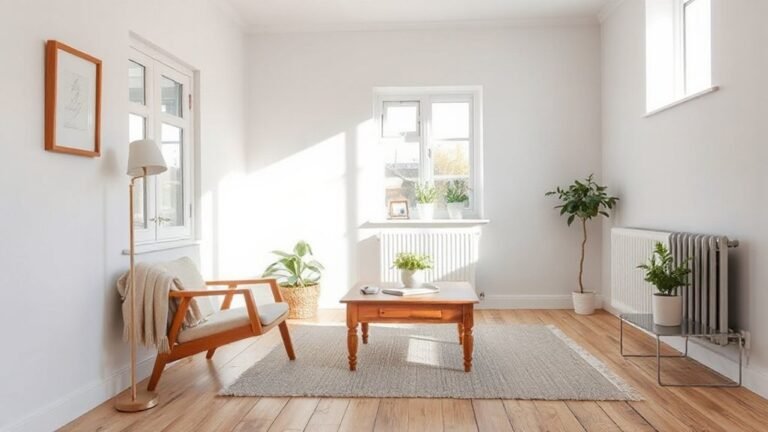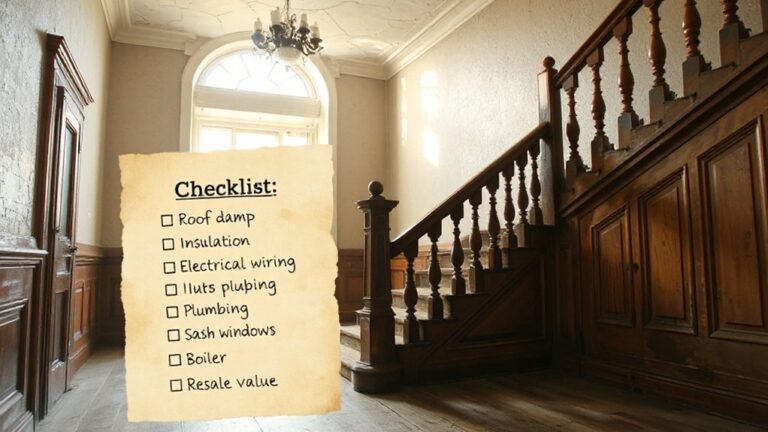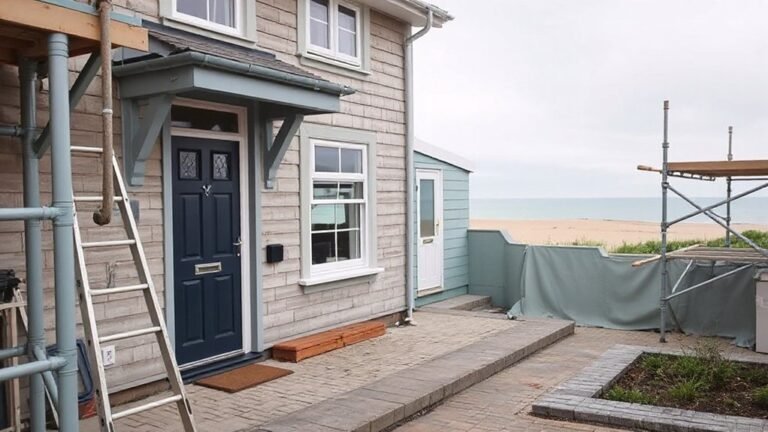
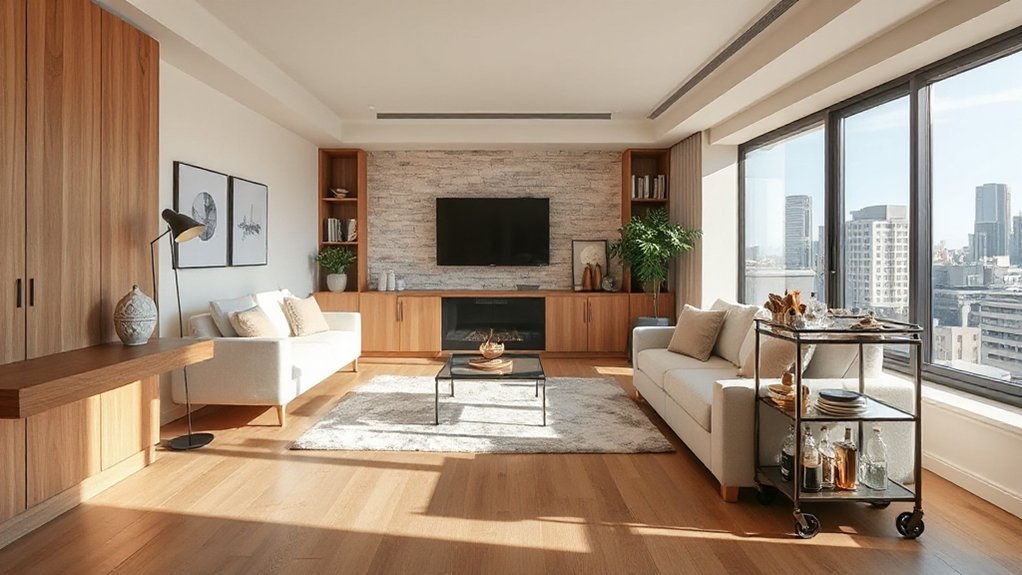
You’ll notice a coincidence: the same upgrades that boost resale value also improve daily comfort, so you’ll get practical gains and a more cohesive aesthetic. You’re targeting function, light, and durable finishes—kitchens, baths, and clever storage—without overhauling character or heritage. Precision matters: layouts, daylighting, energy systems, and material quality should align with market expectations in London boroughs. Keep the plan tight, then consider where a subtle, high-impact change could tip the balance as you move closer to your goal.
Key Takeaways
- Prioritize durable, timeless finishes (quartz surfaces, porcelain tiles) and two-tone cabinetry to boost perceived quality in London flats.
- Improve natural light with layout tweaks, mirrors, light fabrics, and glare-controlled window treatments for brighter spaces.
- Enhance storage with wall-to-ceiling cabinets, pull-out shelves, and concealed storage to maximize small flat efficiency.
- Invest in energy efficiency (smart thermostats, insulation, efficient glazing) to reduce bills and attract tenants or buyers.
- Align upgrades with heritage and local planning constraints, ensuring changes respect preservation rules and minimize regulatory friction.
Top Value-Drive Upgrades for London Flats
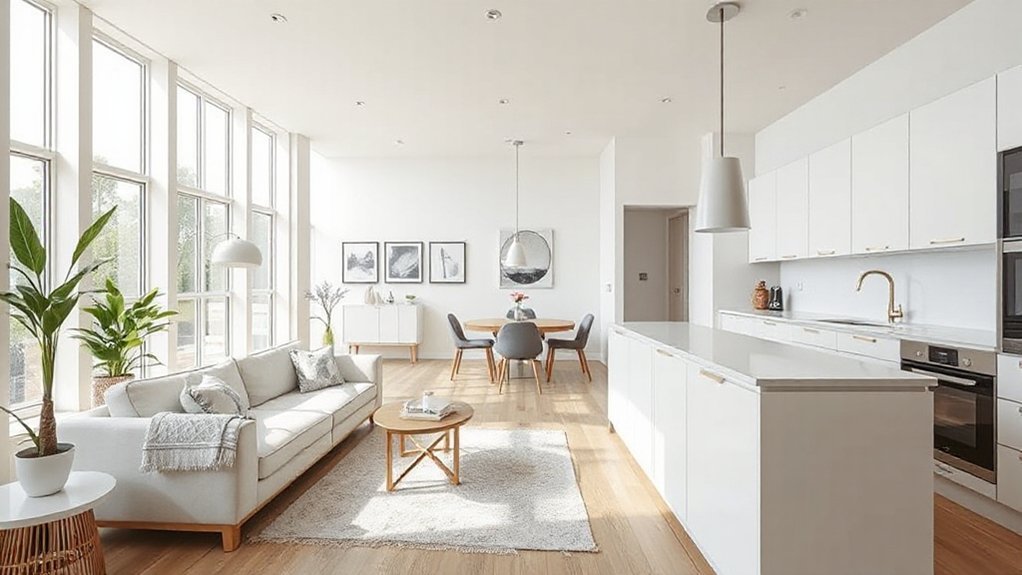
Upgrading a London flat with high impact, low hassle starts with layout tweaks that optimize space and light. You assess floor plans, identify bottlenecks, and implement targeted changes that enhance flow, natural brightness, and perceived size.
Focus on smart technology integrations that automate lighting scenes, climate control, and security, reducing energy waste while preserving aesthetic cohesion. Prioritize durable, eco-friendly materials in key areas to support longevity and appeal, such as low-VOC paints, recycled timber, and responsibly sourced laminates.
For bathrooms and kitchens, opt for slim-profile fixtures and concealed storage to maximize usable area without visual clutter. Document measurements, manufacturer specs, and installation steps to ensure repeatable results.
You’ll achieve a modern, cohesive look that resonates with buyers, blending precision engineering with refined finishes.
Refresh the Kitchen on a Budget That Delights Buyers
To refresh a London kitchen on a budget yet delight buyers, start with smart, targeted updates that maximize impact without wrecking style. You’ll prioritize durable, easy-clean surfaces, like quartz or porcelain, paired with a slimline splashback that echoes your cabinetry.
Opt for two-tone cabinets to convey depth without costly remake, and select hardware with a high-contrast finish for tactile, visual lift. Improve lighting with under-cabinet LEDs and a central, energy-efficient fixture to enhance task precision and ambience.
Choose open floorplans’ feel by removing bulky upper displays or integrating open shelving for display-worthy, clutter-minimal storage that suits compact layouts. Introduce vintage charm through a refined collage of brass accents, glass-front doors, and period-leaning pulls, while preserving modern efficiency and resale appeal.
Transform Bathrooms for High Impact on a Sensible Budget
Prioritize a cohesive palette, using porcelain or ceramic tiles in subway or plank patterns for a timeless, easy-care surface. Vanity upgrades should focus on under-mount sinks, soft-close drawers, and integrated backsplashes to reduce grout lines and simplify maintenance.
Choose concealed cisterns or wall-hung toilets to maximize floor longevity and perceived space. Efficient lighting, moisture-rated fixtures, and a compact storage strategy reduce clutter.
These measures deliver a refined, durable feel without overcapitalizing.
Boost Natural Light and Layout Without Structural Work
Maximizing natural light and optimizing layout can be achieved without structural changes by exploiting existing openings and smart space planning. You’ll map each room’s line of sight to daylight sources, then reposition furnishings to reduce shade and improve flow.
Prioritize creating a coherent sightline from entry to primary living zones, using furniture with slim profiles and transparent accents to preserve openness. Consider mirror placement and light-reflective finishes to amplify daylight without added fixtures.
For layout optimization, zone multi-function areas with modular pieces that can reconfigure for entertaining or work, keeping traffic patterns clear. Enhance window treatments with lightweight fabrics and solar shading to regulate glare while preserving view.
Use color contrast sparingly and consistently to delineate spaces, maintaining a calm, cohesive aesthetic that feels larger. Natural light remains your structural ally.
Elevate Flooring and Finishes Without Breaking the Bank
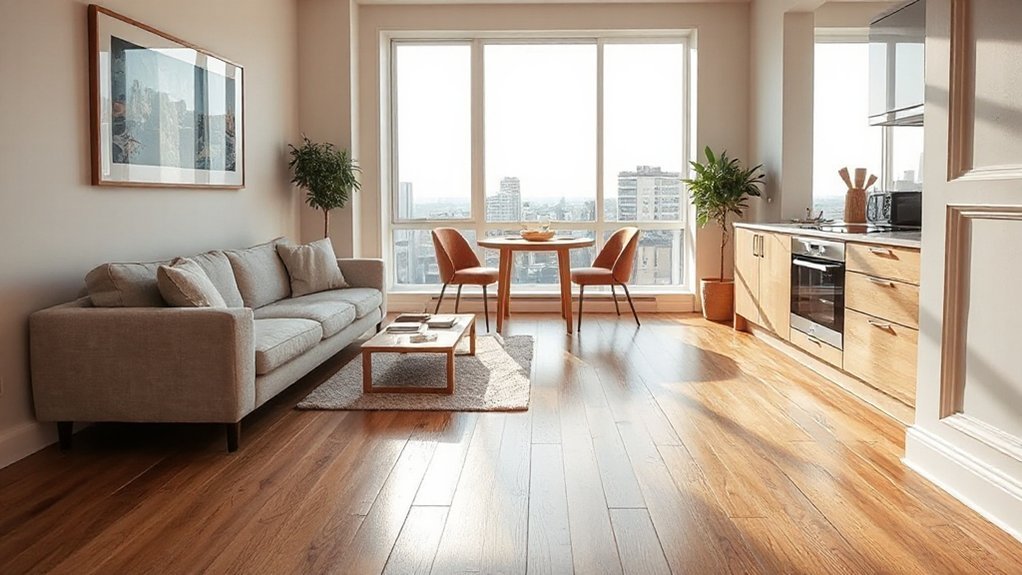
If you’re aiming to elevate flooring and finishes without a steep budget, start by selecting durable, low-maintenance materials that mimic higher-end looks. Focus on flooring with strong wear resistance, like wide-plank laminates or luxury vinyl tile, paired with water-based finishes for easy upkeep.
Use engineered wood in neutral tones to achieve a timeless aesthetic while minimizing cost and installation time. For finishes, opt for satin or matte sheens that reduce glare and reveal texture, rather than high-gloss extremes.
Integrate focal details such as skirting, graduated borders, and subtle grout lines to suggest bespoke craftsmanship. Choose luxury materials and bespoke finishes strategically—accent walls, a feature tile band, or a single statement foyer reveal—while maintaining cohesiveness across the flat.
Prioritize consistency, installation precision, and long-term durability.
Smart Storage Solutions to Unlock Usable Space
Smart storage isn’t an afterthought—it’s a design lever that reallocates square footage without altering footprint. You approach storage as an integrated system: vertical vacuums of wall cabinets, recessed alcoves, and drawer stacks that align with floor-to-ceiling measurements.
Prioritize modular components that adapt to changing needs, preserving clean sightlines and tactile accuracy. Out-of-sight mechanisms—soft-close runners, pull-out shelves, and fingertip-close doors—reduce perceived clutter while improving accessibility.
In kitchens and bedrooms, convert unused corners into pull-out pantries or hamper stations. In living areas, employ multi-use benches with hidden bins.
Material choices matter: matte finishes resist fingerprinting, and UV-resistant laminates maintain color integrity. Plan routes with glare-free lighting to reveal form and function, ensuring space optimization without sacrificing aesthetics.
Smart storage elevates value through disciplined, precise organization.
Energy-Efficient Upgrades That Cut Bills and Attract Tenants
Energy-efficient upgrades aren’t just cost savers; they’re marketable features that tenants expect in modern London flats. You’ll optimize thermal performance with high-efficiency insulation and airtight detailing, reducing heat loss and smoothing load profiles for every season.
Implement smart zoning to target rooms individually, lowering daily energy consumption without sacrificing comfort. Smart thermostats integrate with occupancy sensing and weather data, delivering precise setpoints and transparent usage reporting for tenants and owners alike.
Consider advanced glazing or reflective treatments to curb solar gain in summer while preserving natural daylight. Solar panels, where feasible, provide on-site generation and visible sustainability credentials, boosting Net Zero narratives and tenant appeal.
Align component choices with build quality, warranties, and maintenance access to sustain long-term energy savings and measurable rent-value impact.
Curb Appeal and Entry Upgrades That Make a Strong First Impression
First impressions hinge on a cohesive, well-maintained entrance and street-facing frontage that signals quality and care. You optimize curb appeal with precise alignment, durable materials, and contemporary proportions that read as deliberate design rather than ad hoc upgrades.
Focus on entrance landscaping that guides the eye toward a defined entry, using textures and low-maintenance greenery to frame the doorway without overpowering it.
Select door hardware that blends security with tactility—sleek hinges, a clean strike, and a weatherproof finish that resists tarnish.
Guarantee lighting is focused and functional: wall-mounted fixtures at human height, with a color temperature that flatters brick or stone façades.
Finish with a crisp doorstep, consistent paint or masonry joints, and a clearly legible number for instant recognition.
London Borough Priorities: Where Upgrades Add the Most Value
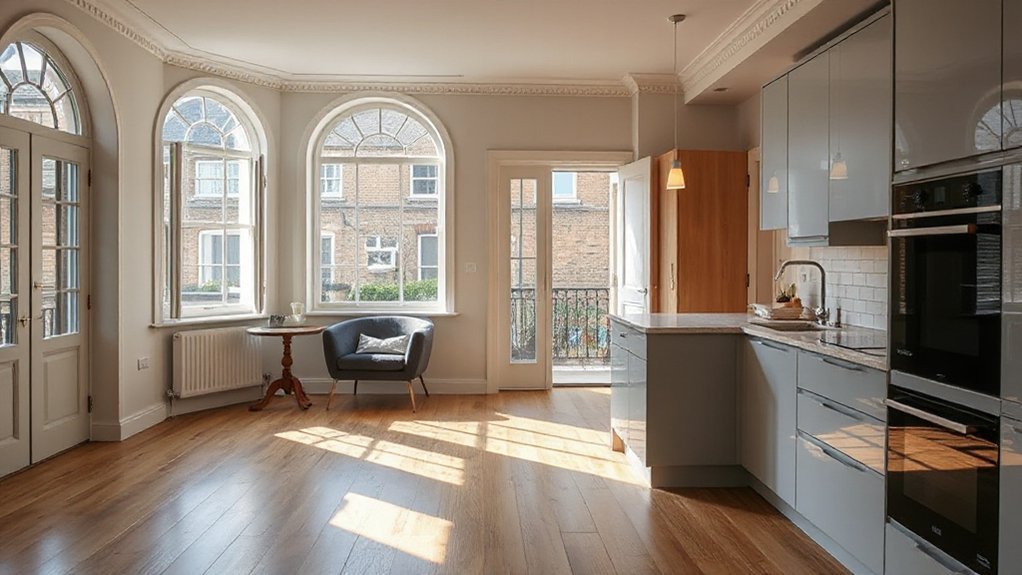
London boroughs consistently reward targeted upgrades that enhance both longevity and appeal, with value concentrated where street presence, transport access, and amenity proximity intersect. You’ll prioritize schemes aligned with borough goals, evaluating value through statutory constraints and practical deliverability.
Historical preservation informs scope, guiding adaptations that respect heritage fabric while enabling modern utility, thermal efficiency, and resilience. Local zoning dictates permissible use, density, and alterations, so you map compliance steps before design refinement.
You’ll quantify impact on street-facing frontage, access routes, and proximate services, ensuring changes remain proportionate to existing rhythm and infrastructure capacity. Pair preservation-aware decisions with active optimization of daylight, acoustics, and material durability.
In practice, prioritize upgrades that demonstrate long-term maintenance cost benefits, minimal regulatory friction, and clearly measurable enhancement to amenity and transport-connected walkability.
Plan Your Budget to Avoid Overcapitalising
To plan your budget effectively, start by identifying budgeting pitfalls and setting clear caps that prevent overcapitalising.
Assess renovation ROI early, so every pound aligns with likely market uplift and resale value, not personal preference.
Make sure upgrades match market demands and pace your investments to sustain appeal while protecting value.
Budgeting Pitfalls To Avoid
Careful budgeting is essential to prevent overcapitalising on London flats: set a clear cap on total spend that aligns with projected rental yields, resale value, and financing costs, then verify every line item against those limits.
You’ll map costs to tangible outcomes, prioritising cost effective choices that preserve aesthetic integrity without inflating price. Track hard costs, soft costs, and contingencies separately, and enforce a strict contingency cap rather than letting it drift into overruns.
Beware renovation pitfalls: incompatible specifications, scope creep, and supplier overruns erode value faster than you expect. Align finishes, systems, and layout changes with the target market to avoid underutilised investments.
Document decisions with objective, verifiable data, and periodically re-score the budget against evolving market signals to stay disciplined.
Assessing Renovation ROI Early
Evaluating renovation ROI early means anchoring your budget to measurable performance from the outset. You establish explicit metrics for each upgrade, linking costs to projected value drivers like floor area efficiency, daylighting quality, and finish durability.
Use a phased budget that reserves contingency for unseen variables without inflating initial estimates. Prioritize high-visibility, durable improvements that appeal to buyers while honoring historical preservation principles—preserving character without compromising modern utility.
Model scenarios against baseline resale assumptions, updating ROI calculations as design decisions mature. Incorporate community engagement by surveying potential stakeholders for preferred features and mitigating neighborhood concerns, which can reduce post-construction friction.
Document unit-by-unit cost-per-miniature improvement and track performance against targets to prevent overcapitalising while sustaining aesthetic integrity. Maintain rigorous change control and transparent reporting for informed, timely decisions.
Aligning Upgrades With Market
Focus on improvements that signal durable value: robust finishes, efficient layouts, and enduring design accuracy that resonates with property market norms. Don’t chase novelty at the expense of practicality; each project should demonstrate a clear, measurable impact on appeal to buyer preferences.
Prioritize high-impact areas like kitchens and bathrooms, while preserving building compatibility, structural integrity, and local heritage considerations.
Establish a cost-per-square-meter target and two-stage ROI guardrails, so you can stop before overcapitalising if sterling returns falter.
Document assumptions, sources, and contingency plans to maintain disciplined budgeting.
Frequently Asked Questions
Which Upgrades Add Value for Buy-To-Let vs. Owner-Occupied Buyers?
In buy-to-let, you’ll prioritize durable, rental-ready features, while owner-occupiers crave long-term comfort.
You’ll see the strongest value from well-lit, energy-efficient spaces, robust bathrooms, and practical storage.
Luxury kitchens attract both groups, especially when high-end finishes reduce maintenance calls.
Smart home technology adds appeal for owner-occupiers with convenience, yet rental tenants appreciate reliability and ease of use.
You’ll balance upfront costs with projected rent returns, emphasizing quality fittings, soundproofing, and timeless aesthetics.
How Do You Calculate a Realistic ROI for London Refurbishments?
You’ll calculate ROI by estimating costs, projected rents, and sale uplift, then annualize gains.
Start with hard costs, soft costs, and contingency, then apply best-case rent and sale multiples for London refurbishments.
Factor luxury appliances and smart home features into demand-driven price boosts, trimming downtime.
Use sensitivity scenarios to test occupancy risk, vacancy rates, and interest.
Compare net proceeds to total investment, and adjust for tax, stamp duty, and financing costs to reveal a realistic ROI.
What Permits or Permissions Are Typically Required for Flat Renovations?
For flat renovations, you typically need Building regulations compliance and Planning permissions where required. You’ll assess structural work, electrical, and plumbing changes for building regs approval.
You also need to obtain Planning permissions for alterations affecting appearance or use, especially in controlled or listed buildings. You often notify your local planning authority and submit drawings, elevations, and impact details.
You may also need Permitted Development checks and possibly a Party Wall Agreement if neighbors’ walls or boundaries are involved.
Which Finishes Offer Best Resale Value for Small London Flats?
Make modern lighting and luxury fixtures your priority, because they deliver the strongest resale impact in small London flats. You’ll notice brighter rooms and perceived higher ceilings, plus a tactile sense of quality.
Opt for energy-efficient LEDs, dimmers, and chrome or matte-black fittings. Use coordinated finishes to reduce visual clutter.
You’ll want neutral palettes with restrained accents, and guarantee your luxury fixtures pair with durable surfaces to keep maintenance minimal and appeal lasting.
How Long Should a Typical Upgrade Project Take in London Flats?
A typical upgrade in London flats takes around 4–8 weeks, depending on scope and access. You should plan for design finalization, permitting where needed, and trades coordination.
You’ll benefit from phased work and clear milestones. Prioritize interior lighting that’s energy-efficient and accentuates spaces, and select sustainable materials to minimize disruption.
Expect minor overruns for inspections or snagging. You’ll stay on track by clarifying fixtures, finishes, and timelines up front, with weekly progress reviews.
Conclusion
You’ve scoped high-impact, cost-smart upgrades that blend function with form, from kitchen efficiency to light-maximizing layouts and durable finishes. By prioritizing energy performance, smart storage, and tasteful finishes, you lift appeal without overcapitalising. Keep heritage sensitivity in mind and align projects with market demand for London flats. Will you balance bold improvements with enduring quality to deliver lasting value and smoother resale? The details—finishes, fit, and fit-for-purpose spaces—make the difference.
About the Author