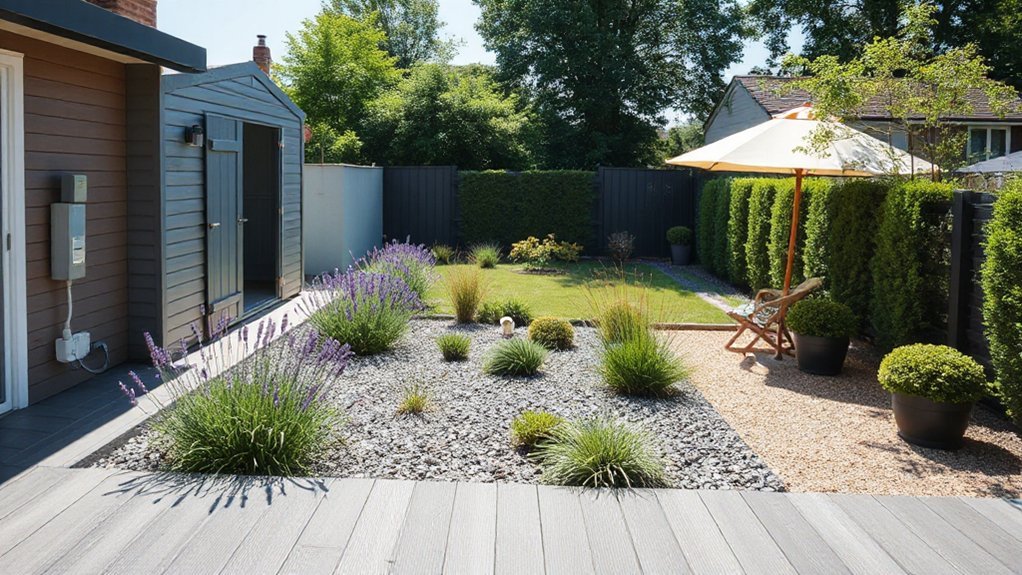
You want a garden that looks good with minimal fuss, even after a busy day. Start with durable, drought-tolerant plants, evergreen groundcovers, and smart drainage to survive UK weather. Add a weather-ready seating area and low-maintenance paths, plus compact, modular furniture you can wipe down quickly. Use rainwater harvesting and native perennials for year-round interest. Keep it simple with clean edges and smart lighting. It’s practical, efficient, and ready for the next step—but you’ll want a plan before you act.
Key Takeaways
- Prioritize drought-tolerant, evergreen planting and native species to reduce watering and pruning while maintaining year-round structure.
- Design simple, multi-use outdoor spaces with durable, weatherproof seating and modular furniture for easy storage.
- Use low-maintenance groundcovers and mulched borders to keep borders neat with minimal upkeep.
- Incorporate smart water management: rainwater harvesting, drip irrigation, soil moisture monitoring, and regular hose/leak checks.
- Create low-effort visual impact with vertical gardens, wildflower pockets, and bold focal features that require little ongoing maintenance.
Solve the UK Low-Maintenance Garden Problem With a Simple Plan
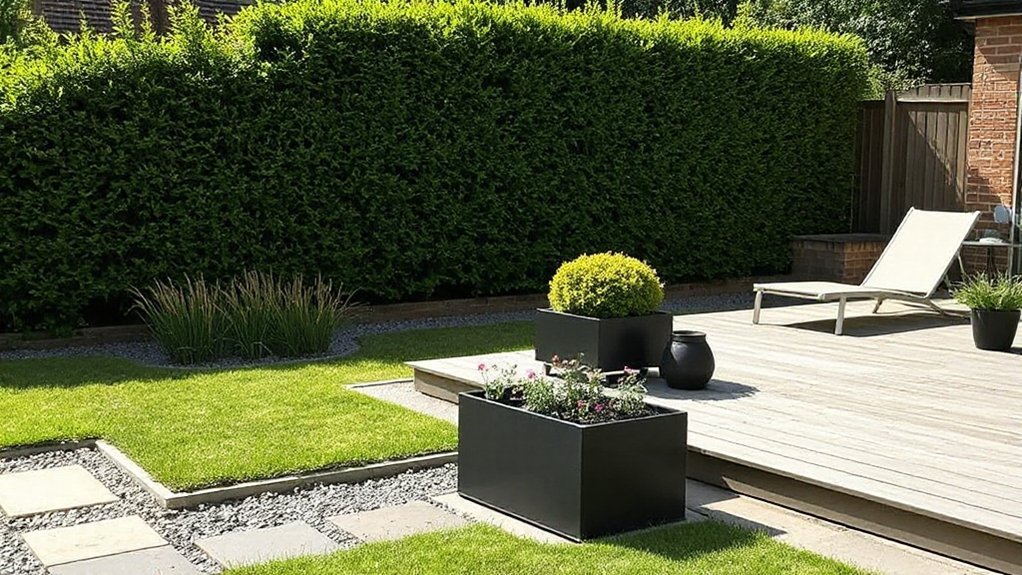
A simple plan can solve the UK’s low-maintenance garden problem by focusing on three practical choices: hardscape, plant selection, and a straightforward maintenance routine.
You’ll reduce effort by outlining durable paths, borders, and seating that withstand UK weather with minimal upkeep. Choose hardscape materials that resist staining and weeds, then install planting containers with integrated drainage to prevent waterlogging.
For plant selection, opt for resilient, low-susceptibility varieties suited to your site’s sun, shade, and wind exposure, prioritizing native options where possible.
Draft a simple maintenance schedule: weekly quick checks, monthly weeding in beds, and seasonal pruning only where necessary.
Consider garden pests early—use physical barriers and proper spacing to minimize infestations.
This approach keeps routines short, predictable, and effective.
Choose a Drought-Tolerant, Evergreen Planting Palette
When you pick a drought-tolerant, evergreen palette, you’ll reduce watering and maintenance while keeping year-round structure.
Consider low-water options like yucca, sedum, and certain grasses, plus evergreen shrubs for scale and foliage all year.
Plan for sun exposure, soil, and spacing so the bed stays cohesive even as plants mature.
Drought-Tolerant Choices
If you’re choosing a drought-tolerant, evergreen planting palette, start with low-water, high-structure shrubs and grasses that thrive on Britain’s climate and require minimal maintenance. Prioritize drought resistant shrubs that stay attractive with little care, and pair them with deep-rooted grasses to stabilize soil and reduce watering.
Plan using native or well-adapted varieties to boost resilience and longevity, then layer mulch to conserve moisture. Consider a compact evergreen backbone and mix with seasonal foliage for year-round interest.
Rainwater harvesting can supplement irrigation and lower consumption. Choose plants that tolerate heat, cold, and wind, minimizing pruning needs and fertiliser.
Create zones for sun and shade to maximise coverage and ease of care.
- Sedum reflexum
- Lavandula angustifolia
- Helictotrichon sempervirens
- Buxus sempervirens
Evergreen Planting Palette
Choosing a drought-tolerant evergreen planting palette starts with a compact backbone of low-water shrubs and hardy grasses that survive Britain’s climate with minimal fuss. You’ll layer evergreens for year-round structure, selecting varieties with varying heights to create visual interest without extra maintenance.
Pair low-growing, drought-tolerant groundcovers to suppress weeds and reduce irrigation needs. Integrate a few architectural evergreens for winter texture and year-round color.
Use a simple color palette of greens, silvers, and bronze to minimize upkeep from pests and diseases. Add Wildflower meadows in sunny pockets to invite pollinators and soften rigid lines without rewiring your schedule.
For space-limited spots, embrace Vertical gardening to maximize growing area with minimal soil, keeping beds tidy and accessible. This palette stays practical, efficient, and reliable.
Build a Year-Round Border That Stays Green
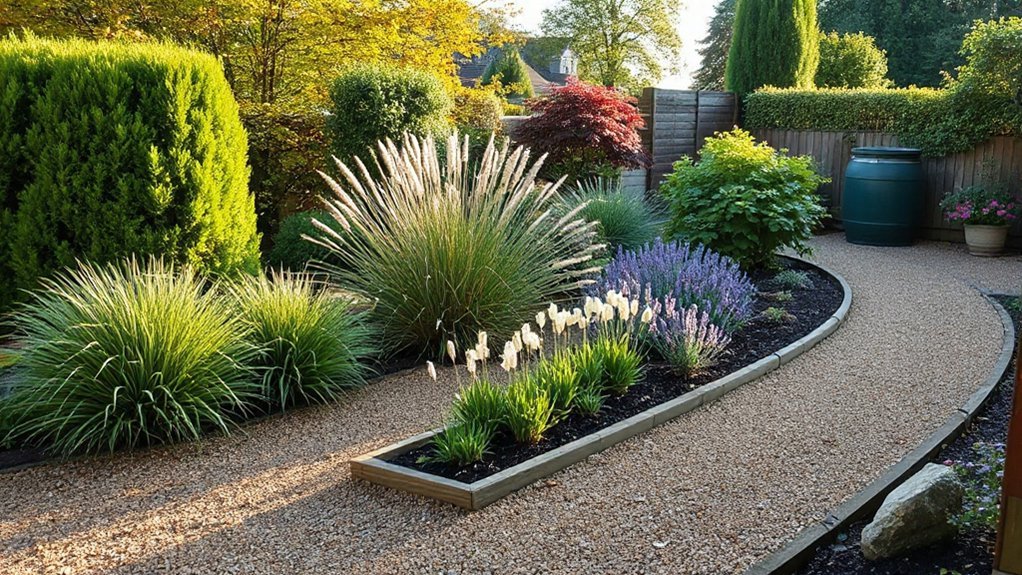
You’ll start by selecting evergreen groundcovers that spread smoothly across borders without crowding herbaceous perennials.
Keep seasonal color simple and focused with a few shade-tolerant blooms and strategic pruning for steady display.
Plan a low-water planting strategy that reduces irrigation while maintaining year-round greenery.
Evergreen Groundcover Choices
Evergreen groundcovers keep a border looking green year-round with minimal effort, so pick low-maintenance species that suit UK conditions and your soil type. By choosing adaptable plants, you reduce mowing, improve soil, and simplify pest control in a way that fits busy schedules.
Use these options to form a dense, continuous edge around your flower bed, preventing weeds and erosion while staying tidy.
- Pachysandra terminalis — sturdy, shade-tolerant, brightens borders year-round.
- Ajuga reptans — low-growing, attractive foliage, quick spread, handles sun to partial shade.
- Vinca minor — evergreen mats, good ground cover, tolerates light foot traffic.
- Thymus praecox — drought-tolerant, aromatic, flowers add subtle color.
Focus on drainage, mulch, and occasional pruning to maintain a neat, low-maintenance border.
Seasonal Color Maintenance
Seasonal color isn’t about flashy bursts—it’s about steady interest through the year with minimal effort. You build a year-round border by selecting plants with staggered bloom times and strong foliage. Choose a core evergreen backbone, then layer seasonal performers for color without frequent upkeep.
In a flower bed, mix low-maintenance perennials with smart height contrasts to avoid repeated pruning. Pair bulbs for spring pop with drought-tolerant, repeat-bloom varieties for summer and autumn.
Use mulching and smart irrigation to minimize watering while keeping soil consistently healthy. Place garden sculptures at focal points to create visual anchors during dull months.
Keep paths clear for quick maintenance, and adjacent evergreens provide continuous green backdrop, ensuring a vibrant, green border that remains tidy year-round.
Low-Water Planting Strategy
To keep a year-round border green with minimal water, start with drought-tolerant, well-adapted species and group them by sun exposure and soil type. You’ll create resilience by selecting natives suited to UK conditions, reducing irrigation needs, and supporting wildlife.
Use mulch to retain moisture and suppress weeds, and water deeply but infrequently to encourage deep roots. Focus on evergreen structure, with seasonal interest from flowers and foliage.
Native wildlife benefits from diverse textures, while pest control improves when plants resist damage naturally. Plan for ongoing maintenance with a simple rotate of plants and a small irrigation check.
- Group plants by sun exposure and soil type to maximize efficiency
- Choose drought-tolerant, native species for stability
- Layer with evergreen backbone, seasonal filler, and mulch
- Monitor for pests, natural controls, and water needs regularly
Create a Weather-Ready Seating Area and Patio
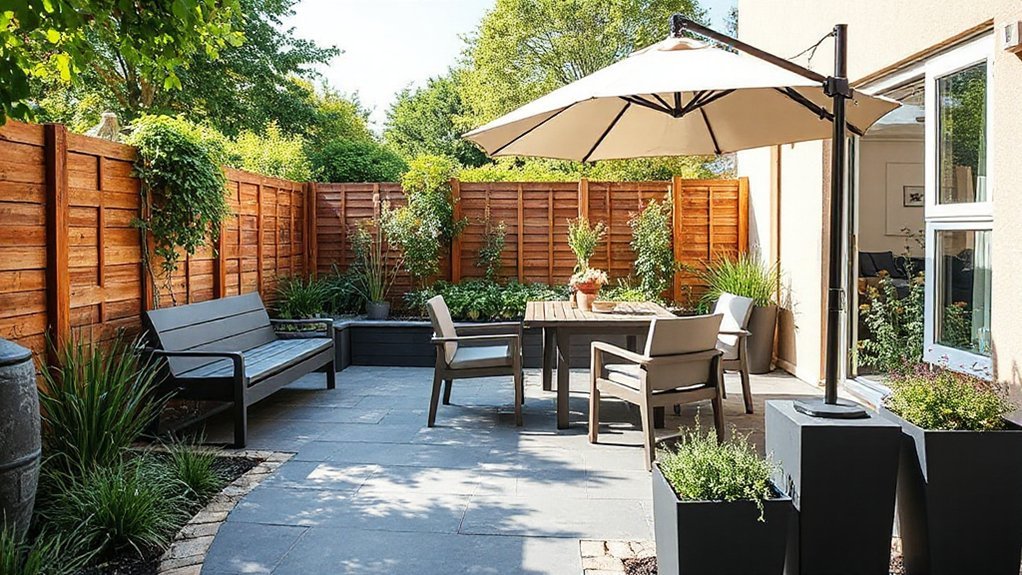
A weather-ready seating area and patio means choosing durable, low-maintenance materials and smart layouts that work in all UK conditions. You’ll select slip-resistant surfaces, like composite decking or textured paving, that tolerate rain and temperature shifts without warping.
Plan a compact, multi-use footprint: a dining zone, a small lounging corner, and storage tucked out of sight. Choose neutral-toned furniture with weatherproof cushions, stored or protected to extend life.
Install a simple, efficient drainage slope away from doors and into a gravel strip or planter bed.
Add shade options—a retractable canopy or pergola with a rain-friendly cover.
Integrate greenery strategically: Wildflower meadows for natural appeal and vertical gardens on fence sides to maximize soil-smart visual impact and privacy.
Keep maintenance minimal and overflow tidy.
Design Clean-Edged Gravel Paths for Low Upkeep
Clean-edged gravel paths keep upkeep low while guiding foot traffic neatly through your garden. You’ll design routes that feel crisp, quiet, and practical, so maintenance stays minimal without sacrificing style. Use compacted base, sharp edging, and evenly spread gravel for clean lines that resist weed growth.
Consider zones for wildflower meadows along the edges to soften paths without extra work, and integrate vertical gardens for height and visual interest without clutter. Regular raking keeps edges neat; top up gravel only when needed. Choose natural tones to suit UK seasons and guarantee drainage is clear.
The result is durable, versatile, and family-friendly.
- Plan bold, straight edges for efficient mowing and sweeping.
- Layer weed barrier beneath gravel to reduce creeping growth.
- Position wildflower meadows near edges for seasonal color.
- Install vertical gardens at key focal points for vertical interest.
Select Weather-Smart Furniture That Endures UK Seasons
Choose weather-smart furniture that can withstand UK seasons by prioritising durability, low maintenance, and stackable or easy-to-store designs. You’ll want frames in teak, metal, or durable resin, with UV-resistant finishes to resist fading and corrosion.
Opt for modular sets that fold or stack for winter storage, and choose cushions with mould- and fade-resistant covers that dry quickly after rain. Consider furniture with built-in drainage or quick-dry slats to prevent soggy seats.
Plan for multi-use pieces, like a bench that doubles as a table or storage box for outdoor tools and indoor herbs starter kits. Keep compost bins nearby to recycle plant waste, and use a compact potting area to manage small herb patches.
This approach minimizes upkeep while sustaining outdoor usability.
Maximize Small Spaces With Smart Seating and Lighting
Smart seating and lighting can transform tight UK patios into functional outdoor rooms. You’ll reclaim space with compact, modular furniture that folds or stacks, so evenings stay uncluttered.
Use wall-mounted lanterns or battery LEDs to save floor area, and pick cushions with quick-dry covers for busy family life.
Position seating to create a natural conversation zone and leave a clear path to access doors or garden beds.
Integrate garden art as focal points along walls or vertical panels to add character without crowding the ground.
For pest control, choose lighting that deters insects and keeps debris off seating. Keep wires hidden and weatherproof covers on when not in use.
- Choose modular seating that folds neatly
- Opt wall-mounted lighting for floor space
- Use vertical garden art as accents
- Pair lighting with insect-deterring elements
Establish a Water-Wise Routine for Busy Families
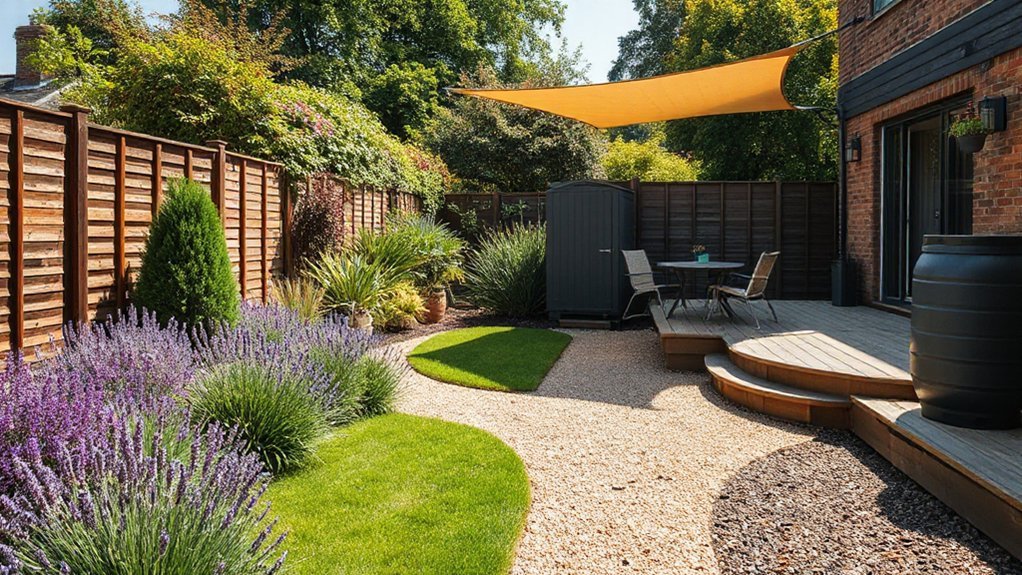
Establishing a water-wise routine helps busy UK families save time and cut bills without sacrificing garden color or health. You’ll streamline watering by planning around rainfall, and you’ll big-picture think: aim for consistency, not perfection.
Begin with rainwater harvesting: position a simple butt or tank to collect roof runoff, then use stored water for paths, pots, and shallow beds.
Keep irrigation lean—drip lines on borders and mulch to minimize evaporation.
Use soil moisture monitoring to guide every session; check at root depth before watering, and adjust for weather changes.
Schedule brief, regular checks: fill hoses, reseal fittings, and inspect hoses for leaks.
Track rainfall and plant needs in a small log; this helps you water only when necessary, reducing waste while maintaining vibrant growth.
Budget-Friendly Tweaks That Deliver Fast, Visible Impact
Want fast, visible impact without breaking the budget? You can achieve it with four practical tweaks that matter on busy schedules. Focus on simple, repeatable changes that scale over time.
- Create wildflower meadows in shaded or sunny pockets—compact seed mixes need minimal maintenance but deliver enduring color and pollinator support.
- Install vertical gardens on fences or walls using modular panels; they add greenery without floor space and suppress soil erosion.
- Swap tired borders for hardy, low-water perennials and mulch heavily; this reduces irrigation and upkeep while preserving structure.
- Add a focal sightline with a bold container or sculpture, paired with a compact evergreen, to deliver instant drama.
These steps deliver quick payoff, keep upkeep low, and align with wildflower meadows and vertical gardens.
Frequently Asked Questions
How Long Does a Low-Maintenance Garden Transformation Typically Take?
A typical low-maintenance garden transformation takes a few days to a couple of weeks, depending on scope. You’ll plan, install, and adjust as you go.
Start with a clear garden design and then handle plant selection, choosing resilient, drought-tolerant varieties.
If you’re reworking hardscape, budget extra time for permits or soil checks.
You’ll see faster results by staging work in practical, efficient steps, ensuring irrigation and mulching are set up for long-term ease.
What Maintenance Tasks Are Essential During UK Winters?
Winter planting and frost protection are essential tasks in UK winters. You’ll keep beds tidy, cover vulnerable plants, and layer mulch to insulate roots.
Check irrigation once a month and drain hoses to prevent bursts.
Protect tender shrubs with breathable wraps and use fleece to guard against frost pockets.
Inspect containers for waterlogging after rain, and move pots indoors during severe cold snaps.
Stay proactive, document freezes, and adjust protection as forecasts shift.
Which Pests Should I Expect in a Drought-Tolerant Garden?
You’ll encounter pests that target dry, water-stressed plants, like aphids, scale insects, spider mites, and slugs on tender foliage.
Practice pest prevention by maintaining sturdy plant health, mulching to conserve moisture, and promoting beneficials.
Use drought resistant insects-friendly habitats, such as native nectar links, and minimal, targeted sprays only when needed.
Regular inspections help you catch issues early, and remove affected growth.
Stay proactive, monitor quickly, and adjust watering to deter pests without harming beneficials.
Can I Install Features Myself or Need a Tradesperson?
Yes, you can start with DIY installation, but some components demand professional assistance. You’ll feel the suspense as you weigh DIY comfort against safety and code requirements.
For simple features like planters or irrigation timers, you’re fine solo, following clear instructions.
For electrical, water, or structural elements, opt for Professional assistance to avoid hazards and guarantee compliance.
If you encounter doubts, pause, reassess, and hire pro help to finish efficiently and confidently.
How Do I Budget for Unexpected Garden Upkeep Costs?
Set aside guesswork and budget 10–15% extra for unforeseen garden upkeep. Track seasonal needs, tools, and plant replacement costs, then build a contingency fund you top up quarterly.
Practice disciplined spending by prioritising essential garden design elements first and only then add, as needed.
When choosing plant selection, pick hardy, low-maintenance varieties to reduce surprises.
Regularly review, adjust, and document expenses so you’re prepared for Derrick-style hiccups without derailing projects.
Conclusion
You want a garden that stays lush without daily effort, and you’ll get it—the paradox is in your hands. Choose drought-tolerant greens and evergreen groundcovers, so every month looks green while you barely water. A low-maintenance border stands firm; a weather-ready seating area invites, even after rain. Practical, not fussy: gravel paths, modular furniture, smart lighting. Busy days slow you down, but your garden speeds you up—quiet, reliable, beautifully simple, and endlessly reliable when you need it most.
About the Author