
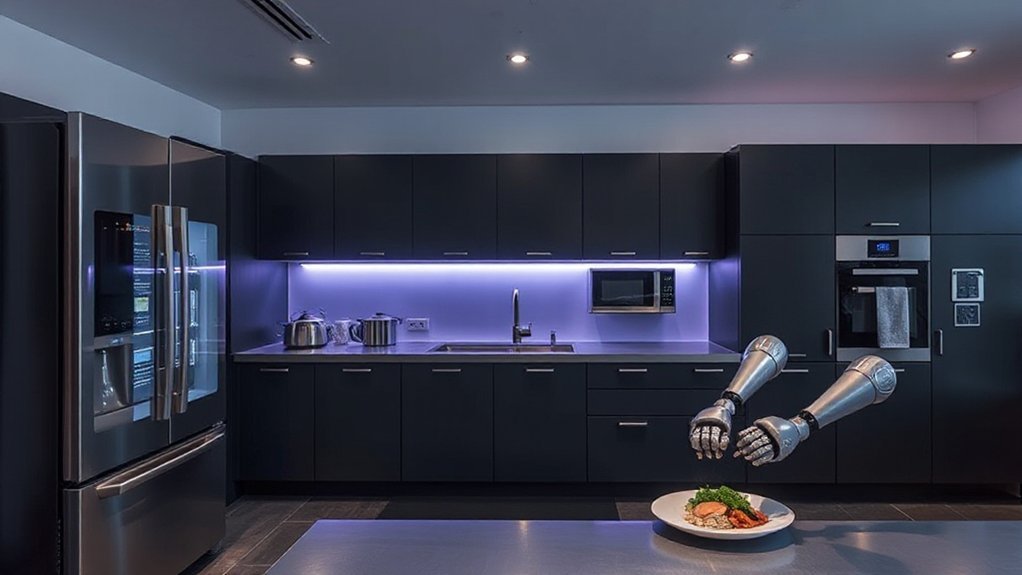
A coincidence in kitchens can spark a smarter future you’re already living in, as today’s sensors and AI tune your space without you asking. You’ll see personalized prompts, connected appliances, and hands-free inventory minimizing waste, all while maintaining precise control over energy use. The design ethic is practical and forward-looking, focusing on reliability and interoperability. If you want your kitchen to think ahead without slowing you down, there’s more to uncover below.
Key Takeaways
- Integrated AI that learns preferences, inventory, and routines to tailor cooking experiences across devices.
- Modular, sensor-embedded appliances with real-time feedback, proactive prompts, and scalable layouts for various family sizes.
- Unified ecosystem where appliances auto-synchronize schedules, temperatures, lighting, and maintenance across all units.
- Smart sensing and inventory management that autonomously track stock, trigger alerts, and automate reorders.
- Energy-optimized designs focusing on durable fixtures, smart lighting, water efficiency, and off-peak operation strategies.
A Glimpse of the Next-Gen Kitchen: Why It Matters
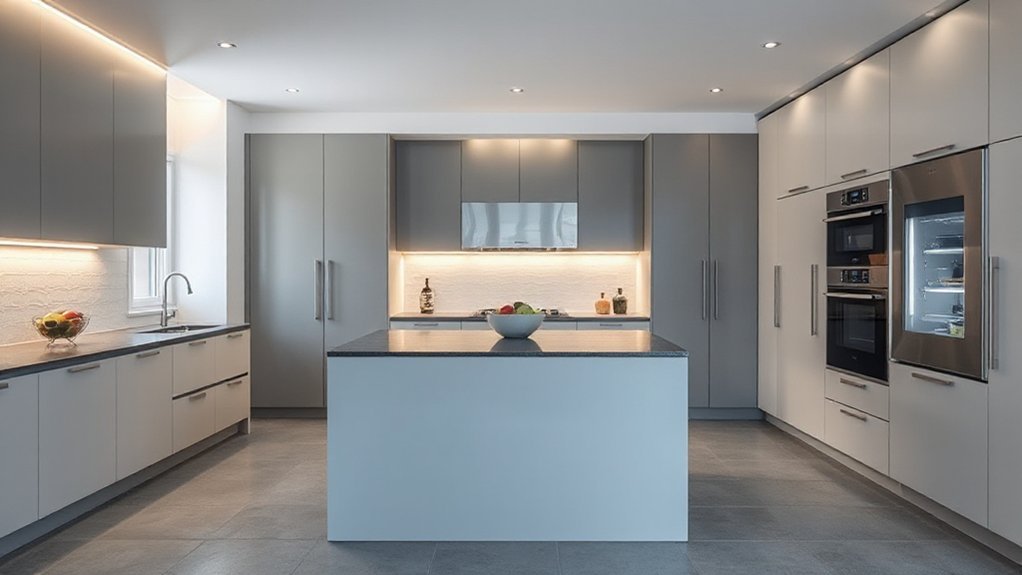
A glimpse of the next-gen kitchen isn’t just about gadgets—it’s about how you live and cook more efficiently. You’ll see streamlined work zones that reduce steps, elevating both speed and precision.
Design-forward layouts emphasize clean lines, durable finishes, and intuitive storage, so every tool has a dedicated home. You’ll pair sensor-embedded appliances with responsive lighting and real-time feedback, ensuring consistent results.
Kitchen aesthetics guide your choices, balancing form and function without clutter. Culinary creativity thrives when motions flow smoothly from prep to plating, supported by smart organization and ergonomic counters.
You’ll appreciate modular units that adapt to family size and menu variety, enabling scalable routines. The result: a coherent system where efficiency, style, and capability reinforce each other.
How AI Assistants Personalize Your Cooking
AI assistants tailor every cook’s experience by learning your preferences, routines, and pantry realities, then adjusting temps, timings, and sequences in real time.
You’ll receive personalized recipe recommendations that align with your current inventory, dietary goals, and past outcomes, ensuring meals fit your day without second-guessing.
The system maps your cooking style, offering adaptive cooking techniques that scale from quick weeknight fixes to nuanced, technique-led projects.
It refines heat profiles, timing anchors, and step sequencing as you progress, learning from successes and missteps.
With proactive prompts, it guides you toward ideal ingredient choices and alternative methods when substitutions arise.
This practical precision keeps you in control, while the design-forward interface presents clear feedback, actionable insights, and consistent results across devices and kitchen contexts.
Streamlining Your Kitchen With Connected Appliances
Start by syncing your appliance ecosystem so devices communicate as a single, responsive unit. You’ll enjoy remote control convenience.
See how automated routines keep schedules, temperatures, and lighting in sync across the kitchen.
Stay alert to predictive maintenance alerts, which flag potential issues before they disrupt your workflow.
Syncing Appliance Ecosystems
Ever felt the friction of juggling multiple appliances from different ecosystems? You can cut friction by prioritizing true appliance interoperability. Focus on devices that share common standards, open APIs, and predictable data formats, so your toaster, fridge, and oven can exchange status, recipes, and schedules without manual work.
A solid strategy is to design for ecosystem integration from the outset: pick hubs and platforms that support robust third-party integrations and clear device lifecycle paths. You’ll reduce setup time, improve fault diagnosis, and enable smarter automation rules that span devices rather than living in silos.
Maintain consistent naming, firmware update cadences, and privacy controls to preserve trust. When equilibrium is achieved, your kitchen becomes a cohesive, responsive system rather than a collection of gadgets.
Remote Control Convenience
When you issue voice commands, appliances interpret intent, execute routines, and report status without distraction, enhancing focus on tasks at hand. This design-forward approach emphasizes tactile, intuitive controls alongside smart displays that show real-time feedback.
Remote diagnostics keep systems healthy; you’ll see alerts, usage patterns, and suggested optimizations before problems escalate. Connectivity is engineered for reliability, with secure pairing and offline fallbacks that preserve workflows.
Predictive Maintenance Alerts
- Seamless fault detection: sensors flag anomalies early, guiding you to preemptive servicing rather than reactive repairs.
- Scheduled maintenance optimization: automated timelines align part replacements with usage patterns, reducing downtime.
- Actionable insights: dashboards translate complex telemetry into clear maintenance steps, lowering operational risk and extending appliance lifespans.
Smart Sensing for Hands-Free Inventory and Maintenance
Smart sensing enables hands-free inventory and maintenance by continuously tracking stock levels, usage patterns, and appliance health without manual input. You’ll experience a streamlined workflow where sensors whisper stock data to a central hub, triggering alerts before you notice depletion or wear.
Sensor integration across fridges, pantries, and devices creates a unified view, reducing miscounts and downtime. You’ll see automated reorders, usage dashboards, and proactive maintenance scheduling that fits your routines.
Design-forward implementations emphasize unobtrusive form factors, robust connectivity, and fast on-device processing to minimize latency. Data privacy remains paramount: edge processing, encrypted transmissions, and role-based access protect sensitive information while preserving actionable insights.
The result is precise control, less friction, and a kitchen that anticipates needs without intruding on your day.
Practical Energy-Saving Tactics for Modern Kitchens
Curious how much energy you can save with a few targeted changes in a modern kitchen? You’ll cut waste by marrying efficiency with design. Focused setups reduce standby draw and streamline use, while durable fixtures maintain performance over time. Implement practical energy-saving tactics that don’t compromise aesthetics or function, and you’ll see measurable gains in utility bills and comfort.
- Energy efficient lighting: switch to high-CRI LEDs, dimmable layers, and motion-activated zones to minimize excess illumination.
- Water conservation techniques: install aerated faucets, efficient dishwashers, and low-flow recycling filters that preserve performance.
- Appliance timing and isolation: program smart vents and fridges to minimize peak loads, coordinating cycles with off-peak hours for peak efficiency.
Starter Steps: Upgrading Your Kitchen Today
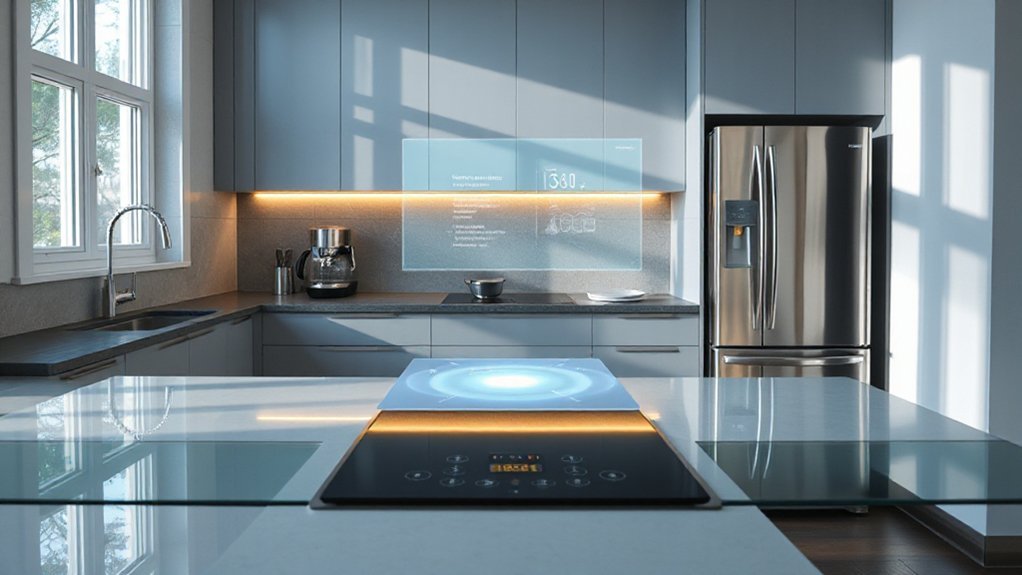
Upgrading your kitchen today starts with a clear, practical plan that matches your routines to smarter hardware. Start with a baseline: inventory current appliances, identify friction points, and set measurable goals.
Prioritize a cohesive platform—think hub, sensors, and voice control that integrate with your favorite app. For Kitchen design, pick modular components you can upgrade in stages, avoiding disruptive overhauls.
Choose energy-efficient models, and map power, connectivity, and ventilation to handle future culinary innovation without crowding counters. Implement smart lighting and climate zones to boost usability and safety.
Then test workflows: prep, cook, and cleanup. Finally, adopt a data-led approach—track usage, refine routines, and scale gradually as needs evolve.
This disciplined, design-forward method keeps your kitchen relevant and resilient.
Frequently Asked Questions
What Are the Privacy Implications of Smart Kitchen Data?
Smart kitchen data raises privacy concerns, especially around who can access your patterns and how long data sits on devices. You should demand strong data management: local processing when possible, clear consent, and transparent retention policies.
Encrypt transmissions, minimize collected data, and audit third-party access. Regular software updates help close gaps.
Stay vigilant about voice and camera features, disable unused sensors, and review app permissions. With disciplined data management, you keep control while enjoying smarter, safer cooking.
How Secure Are Connected Appliances From Hacking?
They’re reasonably secure, but not foolproof—you should treat connected appliances as potential targets for hackers.
Appliance vulnerabilities exist when firmware isn’t updated, defaults aren’t changed, or weak credentials persist.
Prioritize devices with robust data encryption and frequent security patches.
Enable automatic updates, use strong unique passwords, and segment your network.
Regularly audit connected devices for unfamiliar activity.
Will AI Replacements Remove Human Cooking Skills?
AI replacements won’t erase your cooking skills. You’ll adapt, blending cooking creativity with precise technique, using smart tools to enhance—not replace—your decisions.
You stay hands-on, leaning into culinary tradition while embracing design-forward devices that optimize timing, temps, and textures.
The result preserves human intuition and craft, just amplified. You’ll coach tech to support expression, not suppress it, ensuring authentic dishes and personal touch remain central to every kitchen moment.
Can Smart Kitchens Integrate With Non-Smart Home Systems?
Yes, smart kitchens can integrate with non-smart home systems, smoothly bridging legacy devices with modern hubs. You’ll rely on voice control to manage ovens, HVAC, and lighting, even when some systems aren’t internet-connected.
This pairing boosts energy efficiency, reduces redundant devices, and unifies controls. You’ll appreciate practical precision, design-forward interfaces, and technically adept signals that make disparate ecosystems speak fluently.
The result: cohesive, efficient automation without replacing your entire setup.
What Is the Cost Range for a Full Smart Kitchen Upgrade?
A full smart kitchen upgrade typically costs $20,000 to $60,000, depending on scope and brands. You’ll balance hardware, installation, and integrations.
Expect premium appliances, smart hubs, and voice-enabled controls to push price upward, while energy-efficient models and DIY options trim costs.
Gourmet customization and energy efficiency drive value, so you’ll optimize layouts and sensor-driven performance.
You’ll choose modular upgrades to spread costs, prioritizing robust connectivity, thermal zoning, and seamless app control for practical precision.
Conclusion
You’ll embrace a kitchen that learns with you, adapting tasks, timing, and favorites as if it reads your rhythm. With connected appliances and smart sensing, you’ll minimize waste and run on energy-smart modes by default. Think of it as a well-organized workshop, where every tool snaps neatly into place—precise, reliable, and ready. As you upgrade, you’ll gain effortless control, real-time feedback, and sustainable efficiency, like a finely tuned engine propelling your daily cooking forward.
About the Author