Did you know a well-planned weekend refresh can boost your home’s mood and perceived space by up to 20%? You’ll define clear goals, choose quick wins, and map a realistic timeline so you aren’t rushed or overwhelmed. You’ll start with a fast declutter, then reconfigure for flow, add layered lighting and texture, and swap budget-friendly updates that actually stay put. Stay focused—your best weekend is within reach, if you keep moving with intention.
Key Takeaways
- Plan a focused Saturday: define goals, 2–3 quick wins, and a realistic schedule for planning, execution, and tweaks.
- Declutter first in 60 minutes to reveal clear zones and improve pathways, then reconfigure layout for flow.
- Refresh lighting with layered sources, warm/cool tones by area, dimmers, and a few small swaps for mood.
- Swap finishes and textures on a budget: update lampshades, textiles, hardware, and add greenery for instant cohesion.
- Maintain cohesion with a step-by-step, room-by-room routine and a scalable, reusable plan for future weekends.
Define Your Weekend Refresh: Goals, Scope, and Quick Wins
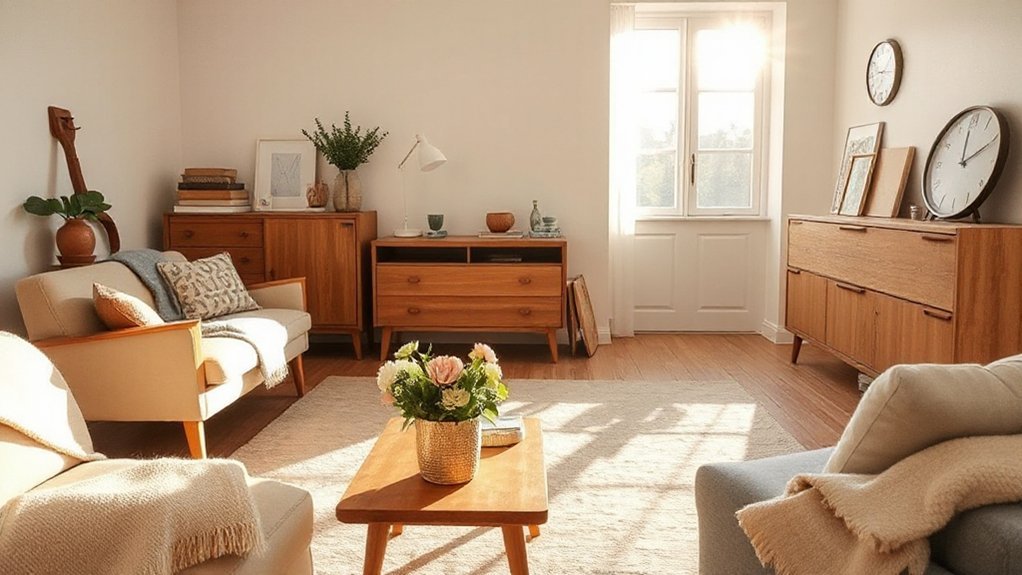
To define your weekend refresh, start by clarifying your goals, scope, and quick wins: what you want to achieve, how much time you’ll invest, and the small, high-impact tasks that’ll open the biggest payoff.
You’ll prioritize seasonal decor touches that lift mood without overhauling rooms. Set a realistic window—Saturday morning for planning, Saturday afternoon for execution, Sunday for tweaks.
Map the scope to rooms that matter most, like the living area or entry, and identify 2–3 quick wins that refresh perception immediately.
Plan furniture arrangement tweaks that maximize flow and light, avoiding heavy reconfigurations.
Decide success metrics: a refreshed vignette, improved seating comfort, and a cleaner baseline.
Keep a tight checklist, stay decisive, and ship your goals with measurable outcomes.
Quick Declutter: Reclaim Floor Space in 60 Minutes
If you want faster impact from your weekend refresh, start with a 60-minute declutter to reclaim floor space. Set a timer, move only what blocks pathways, and avoid perfecting hidden corners. Prioritize items you never use, then relocate surplus belongings to storage solutions like labeled bins or a discreet closet.
Toss obvious trash first, then decide in seconds: keep, donate, or discard. Group items by function to reveal clear zones—shoe mats by the door, papers stacked elsewhere, toys in a bin, cables corralled.
As you clear surfaces, replace clutter with intention: a single focal piece of wall art to anchor the room, a plant, or essential furniture. Maintain momentum by finishing each zone before you reset.
Reassess daily, and reclaim fresh floor space again.
Focused Furniture Reset: Reconfigure for Flow and Function
Start by evaluating each room’s core pathways and function, then move only the furniture pieces that block or obstruct those routes. This focused furniture reset centers on flow and function, not aesthetics. You’ll maximize space optimization by realigning seating, tables, and storage to create open paths and intuitive use.
Keep traffic patterns clear, group related activities, and guarantee sightlines are uninterrupted. Maintain balance so spaces feel cohesive, not cramped. Lower clutter through purposeful placement, and test every move with a quick walk-through before finalizing.
- Prioritize clear pathways over decorative bloat
- Align seating to natural focal points
- Create zones for work, dining, and lounging
- Reassess storage to minimize surface clutter
This approach delivers efficient furniture placement and smarter space optimization in one weekend.
Color and Lighting: Small Shifts With Big Impact
Color and lighting can shift the feel of a room without a full redo. You’ll notice how small tweaks—changing a bulb to a warmer tone or swapping lamps—alter mood and perception of space.
Start with a simple test: compare two nearby lights at full and dimmed brightness to guide your next steps.
Colorful Light Adjustments
Colorful light tweaks can restore mood and vibe with small shifts. You’ll adjust hue, brightness, and layering to craft ambient glow without overhauling fixtures. Use warm whites for living areas and cooler accents for task zones to guide focus and comfort.
Leverage color psychology by pairing subdued tones with brighter accents to influence perception and energy. Create depth with layered lighting: ceiling, task, and decorative sources that blend at eye level. Dim first, then calibrated boosts for evening scenes to reduce glare and fatigue.
- Choose two complementary color accents to unify spaces
- Dim overheads, then add lamps with warm bulbs for coziness
- Swap shades to test mood without changing fixtures
- Use dimmers and smart controls for dynamic scenes
Brightness and Mood Shifts
Use cooler whites (around 3500K) for focus in work zones, then warm hues (2700K) for relaxation in living areas.
Layer light sources: a ceiling light for general tasks, a couple of lamps for ambiance, and a directional accent for art or architectural features.
Dimmer switches empower color shifts, guiding mood enhancement without changing furnishings.
Consider color psychology when selecting bulbs and fixtures; soft blues calm, warmer ambers invite coziness, and balanced neutrals promote clarity.
Position lamps at eye level and away from glare, creating depth and inviting spaces to breathe.
Small changes yield noticeable, lasting impact.
Budget-Friendly Swaps You Can Do in a Day
Want a refreshed look without breaking the bank? You can swap in quick, high-impact fixes that lift your space in a day. Start with small decor changes that read as “new”: swap seasonal decor for a cleaner, cohesive palette, then swap out bulky accessories for lighter, coordinated pieces.
Refresh surfaces with simple upkeep: furniture polishing brings old wood to life and brightens rooms without buying new. Reconsider lighting: swap lampshades or add a dimmer to create mood without a full overhaul.
Use removable accents to test styles before committing.
- seasonal decor swaps for a cohesive vibe
- furniture polishing to revive wood surfaces
- swap in lighter, coordinated accents
- adjust lighting with new shades or dimmers
From One Room to Whole Home: Scalable Steps and Checklists
A scalable refresh starts with a Room-to-Whole-House plan you can repeat, tweak, and track.
Use a Weekend Execution Checklist to move from one room to the next while keeping priorities and timing in view.
This approach builds a cohesive strategy with a clear, actionable path across the entire home.
Scalable Refresh Plan
To scale your refresh from a single room to a whole home, start with a flexible plan that branches from a central vision: identify your priorities, set a realistic timeline, and build modular steps you can reuse room by room.
- Define core goals: aesthetic direction, durability, budget caps, and timeline checkpoints.
- Create reusable modules: palette, hardware, textiles, and fixtures you can transfer.
- Schedule in waves: begin with high-impact rooms, then layer in decorative accents and wall treatments.
- Track progress: list tasks, assign owners, and adjust scope as you scale.
This approach keeps you proactive, not reactive, and ensures consistency across spaces while prioritizing decorative accents and wall treatments.
Room-to-Whole-House Strategy
Seamlessly scale from a single room to a full home by translating a proven room plan into modular, repeatable steps you can apply everywhere. You’ll map core elements—layout, color, texture, lighting—into a framework you can reuse across spaces.
Begin with a room baseline, then translate it into a scalable checklist: define zones, establish proportional accents, and lock in a utility spine (storage, outlets, seating). This approach leverages Historical context, showing how past layouts inform current efficiency and flow, while acknowledging Cultural influences that shape comfort preferences and style cues.
Keep iterations concise: test one module, refine, and replicate. Prioritize consistency in materials and hardware to reduce decision fatigue.
With a disciplined, repeatable process, you transform a single room into a cohesive, whole-home refresh.
Weekend Execution Checklist
Weekend execution is where your scalable plan becomes reality: you’ll translate one-room steps into a repeatable, whole-home workflow that fits a tight schedule. You’ll map tasks to weekly slots, limit scope per room, and keep momentum with clear checkpoints. Use a master checklist to confirm completion, and bundle related tasks to save time. Seasonal decor and cleaning routines should be integrated so changes feel cohesive, not chaotic.
- Prioritize rooms by impact and time
- Assign specific time blocks and stick to them
- Group related tasks (declutter, surface cleaning, touch-up decor)
- Review and adjust for future weekends
This approach keeps you focused, efficient, and ready to scale from one room to a complete home without backsliding.
Finishing Touches: Texture, Greenery, and Personal Style
Texture, greenery, and your personal style are the finishing touches that tie a room together; with intentional choices, they elevate a space from polished to passport-worthy.
You’ll lean into textural layering to add depth without crowding. Start with a base of natural fibers—jute, cotton, linen—and mix finishes: matte ceramics, subtle metals, and a soft wood tone.
Bring life with greenery in scalable ways: a tall plant, a trailing vine, and a few clipped stems in varied vessels.
Introduce personal expression through curated accents: art you love, a meaningful rug, or heirloom throws.
Keep contrast purposeful: light against dark, smooth against textured.
Edit ruthlessly, then step back and view as a whole.
The result: a warm, cohesive space that feels uniquely you.
Troubleshooting and Time-Saving Tricks: What to Skip and What to Double Down On
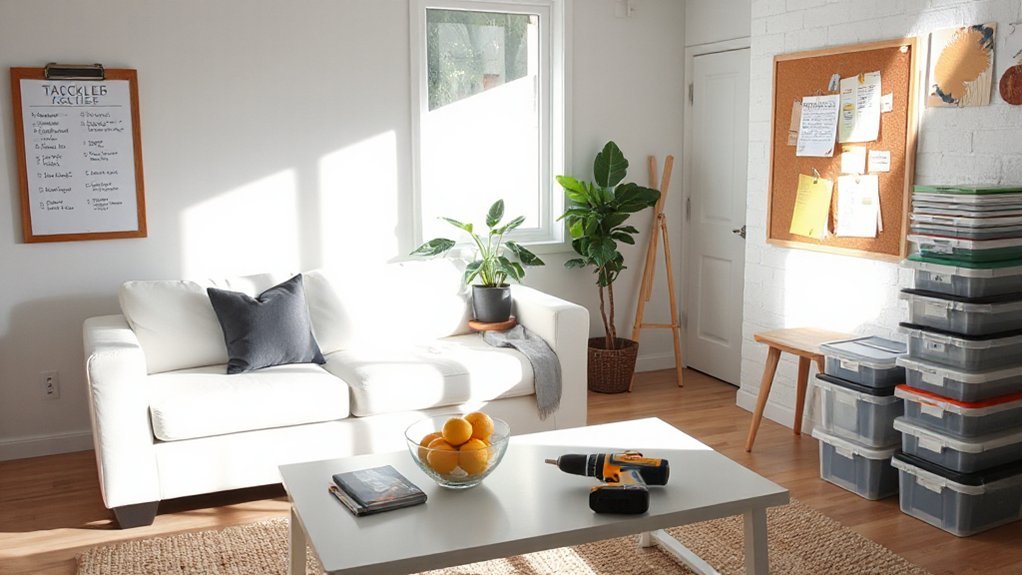
You don’t have to overhaul every detail to refresh a room; smart shortcuts save time and money while keeping the look intentional. In this section, you’ll skim less and act smarter, focusing on high-impact moves.
Use DIY painting to refresh walls rather than full redesign, and lean into furniture rearrangement to transform flow without buying new pieces. Prioritize tasks that yield instant cohesion: lighting, focal point, and texture.
Skip over perfection in small decor tweaks; save energy for major shifts. Keep a tight checklist, allocate a single weekend, and verify results before moving on.
- DIY painting on one accent wall
- Furniture rearrangement to open traffic paths
- Replacing or updating hardware for quick lifts
- Layering textures with budget-friendly textiles
Frequently Asked Questions
How Long Will a Weekend Refresh Typically Take per Room?
A weekend refresh typically takes 2–4 hours per room, depending on size and prep. You’ll spend about 30–60 minutes on DIY cleaning, 60–90 on decluttering, and 60–90 on paint touch ups if needed.
You can speed up by masking, laying drop cloths, and using quick-dry paints. Park extra time for floors and trim if you’re aiming for a noticeably fresh look.
Plan breaks, and tackle high-traffic areas first.
Do I Need Professional Help for Heavy Furniture Moves?
You can handle light moves yourself, but for heavy furniture, you’ll want professional assistance.
For DIY tips, protect floors with blankets, use sliders, and recruit a friend for helps while you plan safe angles.
If items are bulky or pose risks, don’t push it—call pro movers to avoid injuries or damage.
Assess each piece first, then decide.
Prioritize safety, and you’ll save time and stress in your weekend refresh.
Can I Refresh Without Buying New Items?
You can refresh without buying new items. Start with a quick declutter, then rearrange furniture to open space.
Budget friendly upgrades come from paint, hardware swaps, and under-bed storage totes that double as decor.
You can create focal points with DIY decor—gallery walls, reclaimed wood trays, or botanical arrangements.
You’ll feel accomplished and motivated, not overwhelmed, as you see big changes with minimal cost, effort, and mess.
Trust your instincts, and pace your weekend.
Which Tasks Should I Skip to Save Time?
Skip the major remodeling tasks and anything involving new furniture. Focus on quick wins with cost effective alternatives, like repainting walls, swapping hardware, and decluttering.
Tackle high-traffic rooms first, shorten furniture rearrangements, and skip heavy cleaning if you’re pressed for time.
Use DIY decoration tips to add impact without delays.
Prioritize tasks that dramatically improve look and feel, keeping movements efficient and focused.
You’ll refresh fast, with practical, budget-conscious results.
How Do I Maintain the Refresh After the Weekend?
A striking 60% of people say routines keep homes looking refreshed longer, so you’ll maintain momentum.
To sustain your weekend refresh, set daily 10-minute touch-ups and a 2-step declutter at day’s end.
Integrate creative decor updates seasonally and rotate accents, so they feel new.
Use simple Maintenance tips: wipe surfaces, vacuum high-traffic areas, and schedule a monthly mini-audit.
You’ll stay consistent without burnout, keeping the vibe fresh and organized.
Conclusion
You’ll finish faster than you expect, and you’ll notice the change the moment you step in. Think of it as fate nudging you: a cleared shelf aligns your thoughts, a warm light nudges your mood, a fresh layout nudges your feet to linger. Coincidence? Or smart planning that pays off. Stay disciplined with quick wins, and let purposeful choices guide you. By weekend’s end, your home will feel calmer, brighter, and more you—ready for the next week and the next impulse.
About the Author