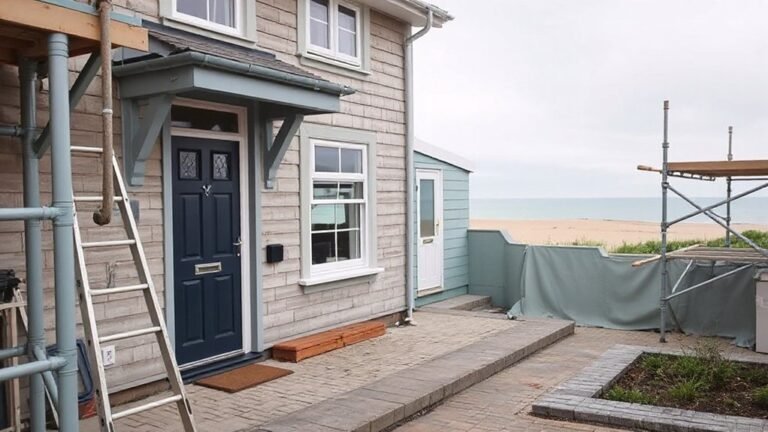
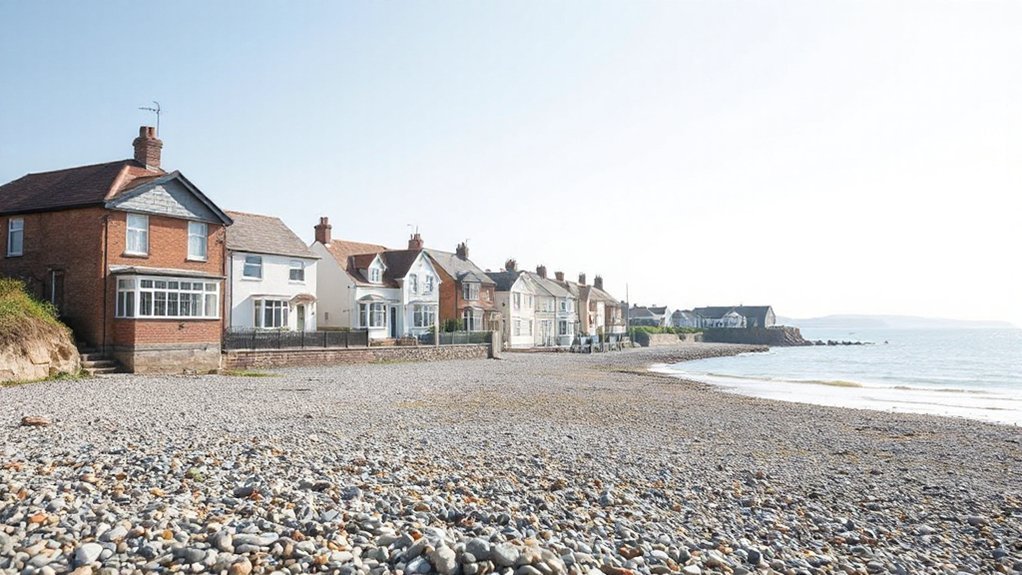
Discover eight affordable coastal UK properties you can still buy in 2026 by targeting towns with strong value, demand, and resilience to seasonal swings. We’ll guide you through price bands, liquidity signals, and local planning and flood-defense factors, then pair each option with standout features—waterside views, period detailing, and potential for extensions—plus financing and grants to boost resilience. Ready to identify pragmatic bargains and assess long-term upside as you move forward, backed by actionable, data-informed insights.
Is 2026 a Good Year for Affordable Coastal UK Homes?

You identify developments offering genuine value, where maintenance costs stay predictable and tenure options remain flexible. You examine property fundamentals: structural integrity, flood resilience, and energy efficiency, ensuring ongoing operating costs stay manageable.
You consider non‑price benefits, such as luxury amenities and accessibility to transport corridors, while evaluating risk factors like coastal erosion and insurance premiums. You also recognize the historical significance of certain towns, appreciating how heritage could influence future value and community identity.
Your conclusion prioritizes data, clarity, and sustainable, verifiable affordability.
How We Define Affordable Coastal in the UK
We define affordable coastal in the UK through clear price benchmarks by region, then test these against local market dynamics to capture both affordability and value signals.
We also specify explicit affordability thresholds to guide eligibility, ensuring our criteria reflect real incomes, housing supply, and coastal living trade-offs.
This framework invites precise discussion on how regional variation, market factors, and defined thresholds shape what counts as affordable coastal homes.
Price Benchmarks by Region
Density-adjusted affordability indices reveal how coastal price premia vary, highlighting where luxury amenities coexist with practical budgets. We weight long-term stability, resale velocity, and mortgage feasibility to produce region-specific thresholds, not universal mandates.
You’ll notice that areas with stronger transport links or higher historical significance often command premium, while pockets with growing infrastructure offer better alignment to affordability goals. This framework supports informed decisions, guiding buyers toward neighborhoods that balance value and lifestyle.
In practice, the benchmarks respect historical significance and the presence of luxury amenities without overextending budgets.
Local Market Dynamics
Across coastal markets, affordability hinges on nuanced, real-time signals rather than static price points. You assess liquidity, time-on-market shifts, and vacancy cycles to gauge true value, not mere listing prices.
Volatility, seasonality, and macro trends shape buyer power week to week, so you track bid-ask spreads and financing accessibility as core indicators.
Local cultural influences inform demand patterns—heritage preservation, vernacular architecture, and event calendars subtly steer appreciation and resale risk.
You weigh infrastructure momentum, such as flood defenses and transport links, against maintenance costs and service quality.
Environmental conservation commitments influence zoning, development caps, and long-term appreciation, guiding risk-adjusted returns.
In practical terms, you fuse data dashboards with qualitative notes, delivering a precise, actionable read on what “affordable” means in today’s coastal UK.
Affordability Thresholds Defined
Affordability thresholds in UK coastal markets hinge on clear, data-driven benchmarks that translate liquidity signals into purchasable realities. You’ll measure affordability by price-to-income ratios, mortgage serviceability, and regional variance, then benchmark against historical price fluctuations to identify durable baselines.
We combine market seasonality, supply constraints, and buyer demographics to define a threshold where investment remains prudent without overstretch. You’ll also factor in housing stock quality, maintenance costs, and expected liquidity to guarantee recovery pathways under stress scenarios.
Coastal conservation efforts influence resale desirability, risk premiums, and grant-assisted purchases, so they’re integrated into our thresholds rather than treated as afterthoughts. The result is a transparent, reproducible standard you can apply across communities while preserving market resilience and buyer confidence.
The Eight Coastal Towns to Watch (Ranked for Value and Demand)
Eight coastal towns stand out for a compelling blend of value and demand, each offering tangible investment potential and rising buyer interest. You’ll evaluate eight contenders where capital efficiency meets growth momentum, prioritizing yield, liquidity, and resilience to seasonal swings.
The list emphasizes well-connected markets with recent price stabilization, transparent conveyancing, and active planning pipelines. You’ll notice how towns leaning into luxury renovations release higher return vectors, while those preserving historic preservation craft sustain long-term desirability.
Market signals show prudent upside in waterfront refurbishments, mixed-use zoning, and investable heritage assets. You’ll balance cap rates against renovation costs, infrastructure upgrades, and coastal flood mitigation plans.
Informed skews favor towns with robust rental demand, strong apprenticeship pipelines, and measurable value leverage for diversified coastal portfolios.
Town-By-Town Property Snapshots: Price Ranges, Features, and Outlook
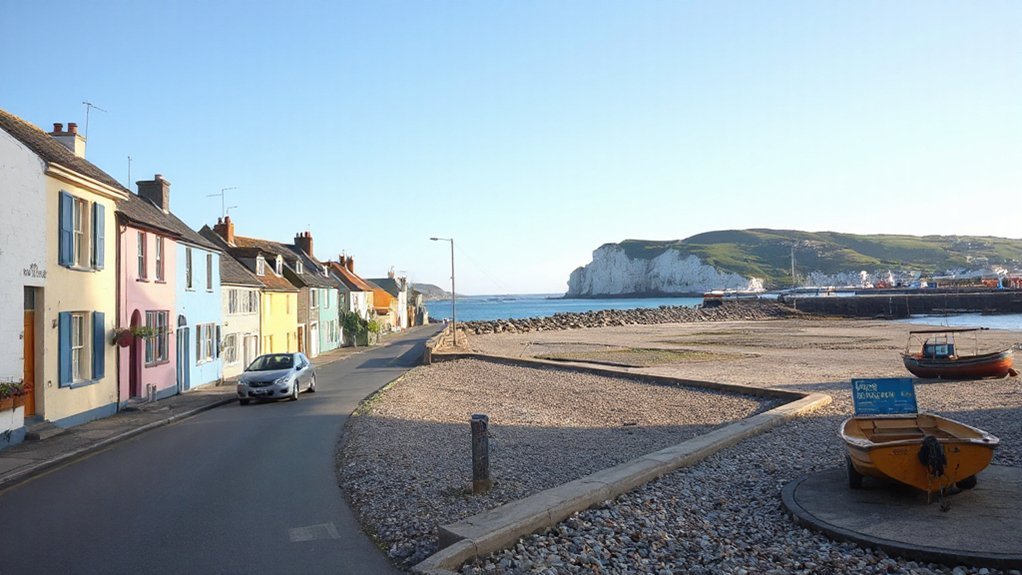
You’ll see concise price range snapshots across towns, highlighting where value meets demand and how margins shift with seasonality.
We’ll outline town-by-town outlooks, linking trends in buyer activity to governance, transport links, and local amenities.
Expect precise feature trends—from coastal access to modernization efforts—mapped against forecasted market momentum.
Price Range Snapshots
Across coastal towns, price ranges cluster around four bands—entry, mid, premium, and luxury—each reflecting local demand, property type, and proximity to the sea. You’ll observe distinct bands by district, with entry homes offering baseline defects-free yields and compact footprints, while mid options balance size, condition, and location.
Premium properties emphasize updated systems, coastal views, and solid resale potential, often with period features intact. Luxury listings command elevated prices, driven by luxury amenities, private amenities, and exceptional access to beaches.
Historical architecture contributes value, especially where preservation guidelines allow tasteful modernization. Market dynamics hinge on rental demand, seasonal flux, and planning constraints.
For investors, track price-per-square-meter shifts and renovation costs to project total returns, ensuring alignment with local policy and infrastructure plans to avoid overpayment.
Town-by-Town Outlook
Town-by-town snapshots reveal how each coastal market differs in price bands, demand drivers, and potential returns. You’ll compare towns via tight price-band ranges, noting where fixer-uppers dominate versus turnkey opportunities.
Expect variances in rental yield, seasonality, and resale velocity, driven by local economies and accessibility to rail, air, and ferry links.
You assess features such as period architecture, waterside views, and proximity to marinas, while factoring ongoing coastal conservation measures that shape planning permissions and development risk.
Maritime history informs investor narratives, with towns emphasizing heritage venues, museums, and shipyard legacies adding value if preserved.
You monitor funding for coastal conservation projects, which can sustain tourism demand and constrain intrusive development.
The outcome: precise, town-specific outlooks aligned with prudent, evidence-based strategies.
Property Feature Trends
While stock with potential for extension or renovation signals upside. You’ll notice that price bands cluster around three tiers: entry-level buys near modest refurb projects, mid-market homes with historical architecture appeal, and premium buys featuring luxury amenities and prime waterside positions.
Typical features include period detailing, panoramic sea views, and robust structural integrity, often paired with private parking or communal berths.
Outlook remains constructive, driven by ongoing demand for low-lying coastal living and ongoing investments in infrastructure.
Opportunities exist for extensions, attic conversions, and seaside-facing redesigns that maximize light, ventilation, and lifestyle appeal.
Financing and Grants for Coastal Buyers in the UK
What financing options and grants are actually available to coastal buyers in the UK, and how can you determine which program best fits your purchase? You’ll evaluate mainstream mortgages, government schemes, and lender-augmented products tailored to high-risk coastal locations.
Options include fixed-rate and tracker mortgages, with regional variations in available products and eligibility. Government grants often target property resilience, flood defenses, and coastal erosion mitigation, while green loans reward energy efficiency improvements.
Seek guidance from mortgage brokers experienced in seaside areas to clarify loan-to-value limits and underwriting criteria. Consider non-repayable grants for renovations that enhance resilience, plus tax relief or subsidies tied to restoration.
Prioritize programs supporting marine conservation and climate-adaptive design, ensuring your investment preserves coastal ecology while reducing long-term risk.
Coastal Investment Potential: Rental Yields and Demand Drivers
Coastal investment profitability hinges on rental yields and the demand dynamics unique to seaside locales. You’ll assess gross-to-net spreads, occupancy stability, and seasonal variation, then translate them into sustainable cash flow projections.
Demand drivers include provenance of visitors, events calendars, and diaspora demand attracted by coast-specific lifestyle appeal. You’ll weigh short-term lets versus long-term tenancies, calibrating pricing against peak periods and off-season lull risks.
Consider luxury amenities as a differentiator, elevating yield potential when paired with high occupancy and repeat visits, while maintaining compliance with licensing and taxation rules.
Environmental impact assessments inform planning and resilience, helping you avoid retrofit costs that erode margins.
Practical Tips for Snagging Seaside Bargains

While bargain hunting along the coast, you can systematically open value by combining market timing with condition-focused due diligence. Start with micro-trend analysis: seasonality, recent price corrections, and local development plans that affect resale value.
Inspect shells and structure for hidden defects, prioritizing structural, damp, and drainage issues to quantify immediate repair budgets.
Cross-check title history, planning constraints, and any marine conservation or coastal protection designations that could affect long-term usability.
Assess access rights, utilities reliability, and insurance feasibility under current coastal risks.
Review fishing regulations affecting property use, such as shoreline access or commercial-declaration limits, to avoid future restrictions.
Negotiate contingencies tied to eco-compliance upgrades, ensuring compliance without overcapitalizing.
Document a due-diligence checklist to minimize price negotiation friction.
Next Steps to Start Your Seaside Property Search
To begin your seaside property search, assemble a focused plan that translates market signals into actionable steps: map your target coastlines by price bands, density of listings, and recent sale velocity.
Set a budget range with reserve for inspections and potential coastal-risk upgrades.
And prepare a due-diligence package—including property records, planning constraints, and insurance considerations—so you can move quickly when a promising opportunity appears.
You’ll tighten filters, prioritize locations with stronger coastal conservation policies, and anticipate Seaside cuisine hotspots that add value to lifestyle appeal.
Maintain disciplined timelines, document decisions, and align financing with risk-adjusted scenarios to avoid delays.
- Define essential inspections and coastal-risk contingencies
- Validate planning constraints and insurance implications
- Benchmark nearby comps for price velocity
- Establish a rapid-offer protocol linked to alerts
Frequently Asked Questions
How to Identify Truly Affordable Coastal Areas in 2026?
Identify truly affordable coastal areas in 2026 by analyzing price-to-rent ratios, future development plans, infrastructure upgrades, and local demand indicators. Compare luxury developments and rental investments, monitoring vacancy rates, yield, and long-term growth potential for informed choices.
What Hidden Costs Affect Coastal Property Affordability?
Hidden costs include maintenance, insurance, and local taxes; you’ll also face environmental regulations and potential flood or coastal erosion risks. You weigh luxury amenities against these factors, ensuring ongoing costs don’t outstrip affordability for ongoing coastal property ownership.
Which Towns Offer the Best Value for Price per Square Meter?
You’ll find the best value per square meter in towns with balanced infrastructure and ongoing waterfront developments, where luxury mansions blend with attainable plots; monitoring price-per-area trends keeps you ahead, even amid luxury mansions and evolving waterfront developments.
Are There Overlooked Property Types Near the Coast?
Coincidence reveals overlooked prices near the coast: you’ll find hidden gems through luxury estates and renovation opportunities, quietly aligning with future value. You identify overlooked property types, plan meticulously, and capitalize while enjoying coastal charm and style.
How Do Seasonal Fluctuations Impact Coastal Property Values?
Seasonal tourism drives short-term demand spikes, causing values to crest in peak months and dip otherwise; coastal weather patterns then modulate maintenance costs and insurance, subtly shaping long-term pricing and investment risk for you, requiring meticulous sensitivity analyses.
Conclusion
Seizing a coastal bargain now can anchor your long‑term portfolio, especially as mortgage costs stabilize and demand remains brisk. One striking stat: coastal properties in the UK have seen steady 4–6% annual price resilience despite macro swings, preserving value where inland markets waver. You’ll want a precise plan—define budget bands, target towns with proven rental demand, and lock in financing early. Start with a focused shortlist, vet planning constraints, and stay disciplined as you begin your seaside search.
About the Author