Like a quiet nudge from a trusted designer, these 15 decor swaps can transform your room fast. You’ll spot bold rugs, new art, and cleaner surfaces guiding the eye, while mirrors bounce light and create space. Tweak textures, lighting, and layout to refresh the mood without a full redo. You’ll start with a practical plan, see how each swap fits your space, and feel the space start to click—if you keep going, the result will speak for itself.
Key Takeaways
- Swap throw pillows and textures to introduce color and depth, layering solid bases with varied fabrics like linen, velvet, or knit.
- Use a bold rug as a focal point, ensuring it fits under front furniture legs and supports natural traffic flow.
- Refresh artwork to match the room’s palette, balance scale with wall space, and add targeted lighting to enhance impact.
- Declutter surfaces, designate function-based spots, and incorporate hidden storage to maintain balance and ease.
- Add a statement mirror opposite natural light to expand space and provide an immediate, impactful focal point.
Refresh With a Bold Rug Accent
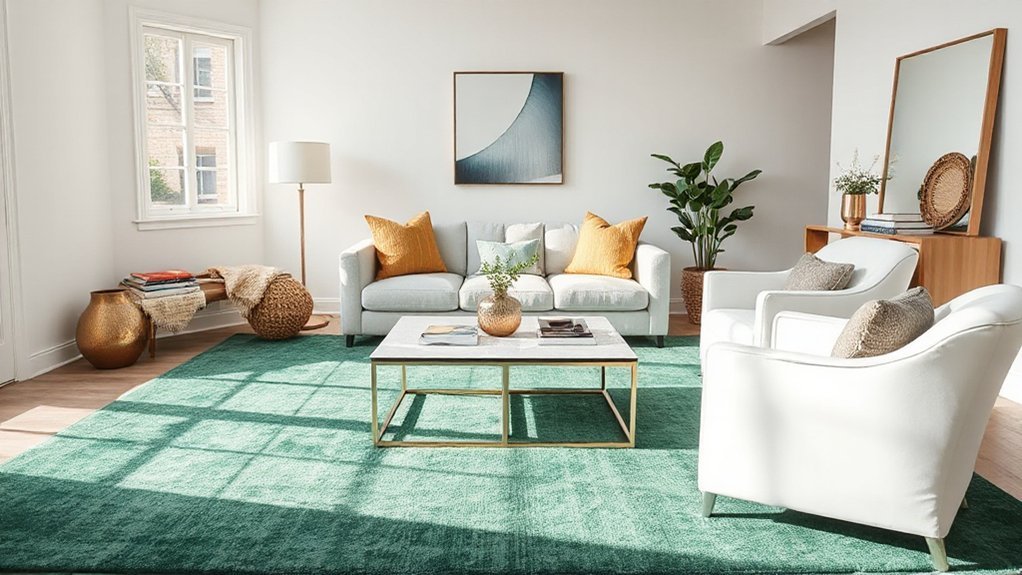
A bold rug can instantly anchor a room and set its mood. You’ll choose a rug with bold patterns that complements your existing furniture, avoiding clashes by picking a dominant color from your sofa or curtains.
Measure your space to guarantee the rug fits under at least the front legs of major pieces, plus a comfortable border. Place the rug so traffic flows naturally, not blocking doorways or pathways.
You’ll mix textures by pairing the rug with matte wood or metal accents, reinforcing the bold motif as a statement piece. Keep surrounding accessories minimal; let the rug lead.
If you’re unsure, opt for a monochrome foundation and let two or three bold patterns coexist as intentional contrasts.
Swap Throw Pillows for Texture and Color
If you’re swapping throw pillows, start by layering texture and color to elevate the room without a full redo. Choose a base pillow in a solid that echoes your decor style, then add two accent pillows with varied textures—linen, velvet, or knitted weave—to create tactile interest.
Balance cool and warm tones, selecting a color that ties in with artwork or upholstery. Mix patterns sparingly: one bold motif, one subtle, and one plain to prevent visual clutter.
Switch seasonal updates by swapping in lighter fabrics for summer or richer textures for winter, keeping scale in mind so pillows don’t overwhelm seating. Coordinate inserts for plush support, and store seasonal options in a labeled bin for quick swaps.
This simple tweak refreshes ambiance without major commitments.
Update Lighting to Transform the Mood
Start by layering ambient lighting to create depth without harsh shadows, using a dimmable main light plus secondary sources like lamps and sconces.
Compare warm and cool glows to see how each changes room feel and task usability, noting where warmth boosts coziness and cool tones sharpen focus.
Keep adjustments small and documented so you can fine-tune mood room by room.
Layered Ambient Lighting
Start with a dimmable main fixture, ensuring even coverage without glare. Add optionals—table lamps for zones, wall sconces to highlight art, and floor lamps to soften corners.
Consider brightness levels that adapt to activities and times of day. Keep fixtures within sightlines to avoid visual clutter; choose warm color temperatures for coziness and clarity for focus.
Use dimming switches to shift ambiance in seconds, avoiding harsh shifts when you move between tasks. Position candles carefully, candle placement contributing warmth without creating risk; place on stable surfaces away from drafts and flammable decor.
The result is inviting, versatile lighting you can tune effortlessly.
Warm vs Cool Glow
Warm and cool glow aren’t just aesthetics—they change how a room feels and how you move through it. When you pick warm glow, you’ll notice a cozy, inviting vibe that makes seating areas linger.
Cool ambiance sharpens focus for tasks and daytime activity, reducing fatigue. To balance both, layer lighting so you can switch modes without rewiring.
- Use warm LED bulbs in living spaces near seating to foster conversation and comfort.
- Place cool ambiance task lights at desks or counters for precision work.
- Mix dimmers to modulate between intimate and alert moods.
- Add accent lighting with cool hues on artwork or architectural features to frame the space.
Swap Art for a New Focal Point
Swapping art can instantly redefine your room’s focal point, especially when you pair a statement piece with the surrounding decor. To start, choose a piece that echoes your color scheme and scale. Measure wall space, then pick artwork proportionate to the area and nearby furniture.
Align the center with eye level and secure with appropriate hardware to prevent sway. Consider contrast: a bold hue against a muted wall or a subdued piece on a vibrant backdrop can sharpen the focal point.
Frame style matters; opt for a finish that complements other metals or woods in the room. After hanging, assess lighting—introduce directional lights to highlight texture and line.
This simple swap dramatically enhances artwork placement and focal point enhancement.
Layer Textiles for Cozy Depth
Textiles add tactile interest and instant coziness to any room. You layer textiles strategically to create depth, texture, and warmth without cluttering the space. Begin with a neutral foundation and build with purposeful contrasts that stay comfortable to the eye and touch.
Focus on scale, weight, and fiber variety to keep things balanced.
- Pair a heavy throw with a lighter accent pillow to introduce cozy textiles without visual overload.
- Mix textures—woven, knit, and velvet—to add tactile contrast while preserving cohesion.
- Vary the textile heights by using a floor rug, bedcover, and window treatments in complementary tones.
- Use color echoes across repeats of two or three hues for textile layering that feels intentional and refined.
Replace Hardware for a Subtle Makeover
Replacing hardware is a quick, reversible way to refresh a room without a full renovation. You’ll notice an immediate lift by swapping cabinet pulls, door handles, and light-plate covers with cohesive metal tones or warm finishes.
Start by measuring levers and knobs to match screw spacing, then gather a small set of durable options—brushed nickel, antique brass, matte black. Consider hardware updates that echo existing fixtures for a unified look, but choose a finish that contrasts subtly to create depth.
Keep installation simple: remove old pieces, clean mounting surfaces, and torquely reseat screws without overtightening. Pay attention to scale—bar pulls suit wider drawers, while knobs fit cabinets.
Afterward, wipe fingerprints, test alignment, and enjoy a concise upgrade that yields subtle accents with minimal disruption.
Introduce Greenery for a Fresh Pulse
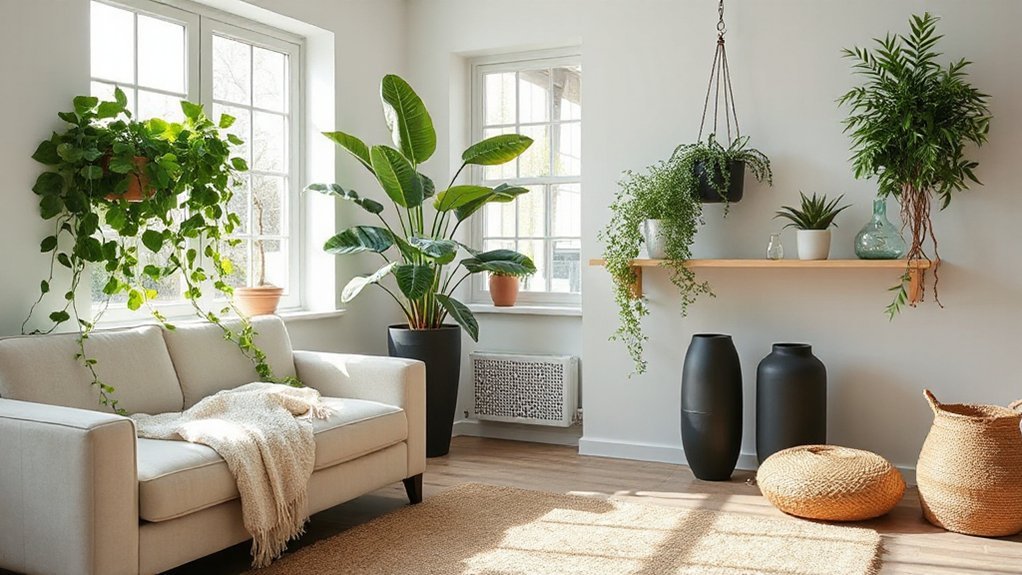
Fresh greenery injects a fresh pulse into any room, so start with a few easy-to-maintain plants that thrive in your light conditions. Choose lush natural accents like pothos, snake plants, or ferns.
Place them where they’ll be seen and watered regularly—think entryway, desk, or coffee table. This verdant elevation enhances texture and color while keeping maintenance minimal and visuals crisp.
Fresh Greenery Pulse
Greenery instantly freshens a room, and adding a few live or faux plants—placed where they can catch natural light or a bright lamp—creates a quick, noticeable lift.
You’ll use practical steps to maximize impact through Botanical layering and Greenery placement, keeping sight lines clear while enjoying texture and color.
1) Place a tall plant in a corner for vertical balance, echoing shelves at eye level to unify space.
2) Layer smaller varieties at varying heights on a console or coffee table for depth.
3) Clip in a trailing plant along a mantle or bookshelf to soften edges.
4) Swap a few low-maintenance options seasonally to refresh tones without clutter.
Lush Natural Accents
To infuse a room with a fresh pulse, introduce lush natural accents that emphasize texture, color, and life. You’ll balance greenery with practical setups, focusing on scale, placement, and maintenance.
Start with botanical arrangements that vary leaf shapes and heights, ensuring visual rhythm on countertops, shelves,, and side tables. Pair these with natural wood accents—think a butcher-block tray, a carved planter, or a nontreated wood frame—to warm cool tones and add tactile contrast.
Choose containers that drain well and match your decor, avoiding overcrowding. Rotate plants seasonally to maintain vibrancy, and group in odd numbers for natural appeal.
Keep lighting indirect but consistent, so foliage thrives without glare. Regularly wipe leaves to prevent dust buildup, preserving color and sheen.
Verdant Room Elevation
You can lift a room’s vibe by weaving greenery into key vertical and focal points, creating a sense of lift without overpowering existing decor. Verdant Room Elevation focuses on strategic placement, care, and scale to keep natural decor feeling intentional, not cluttered.
You’ll choose indoor plants with varied textures and growth speeds to maintain year-round appeal.
- Place a tall specimen beside a sofa for vertical height without crowding sightlines.
- Use a wall-mounted planter to add greenery without taking floor space.
- Layer trailing varieties along shelves for depth and movement.
- Pair leafy tones with neutral backgrounds to maximize contrast and calm.
Rethink Window Treatments for Light, Size, and Privacy
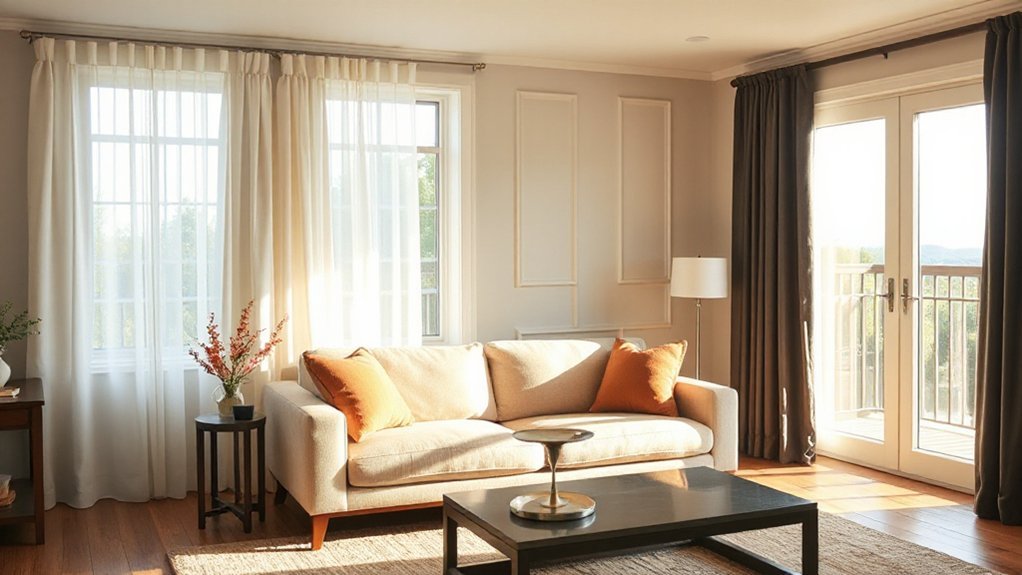
When selecting window treatments, weigh light control, room size, and privacy together to avoid over- or under-dimming a space. Start with tall panels or roller shades that glide smoothly for a clean, adjustable baseline.
Choose a fabric with a tight weave for privacy in bedrooms and a light-filtering option for living rooms. Consider layering: sheer panels under blackout drapes to dial light without sacrificing privacy.
Measure precisely; account for molding, trim, and any functional hardware. For small rooms, opt for lighter colors and minimal hardware to preserve perceived height.
In larger rooms, use wider treatments to balance scale and avoid narrow, busy looks. Favor cordless or motorized options for safety and ease.
Window treatments, privacy solutions, delivered with thoughtful hardware and precise installation.
Declutter and Reorganize Surfaces
Decluttering surfaces begins with a focused pass: clear everything off, then decide what stays based on function, frequency of use, and aesthetics. You’ll reclaim order by prioritizing essential items, then grouping similar objects. Surface organization hinges on intentional placement, not sheer volume, so aim for balance between display and storage.
1) Clear, sort, and assign a dedicated spot for every item
2) Group by category (decor, daily-use items, electronics) to minimize impulse clutter
3) Elevate with storage solutions that hide or corral, not crowd
4) Rotate pieces seasonally to keep surfaces fresh without adding bulk
Keep a steady rhythm: daily wipe, weekly skim, monthly purge. This approach reinforces clutter control and preserves a clean, functional surface baseline.
Add a Statement Mirror to Expand Space
A statement mirror can visually expand a room by reflecting light and space. Choose a large, frameless option or one with a bold frame that complements existing decor.
Position it opposite a window or bright light to maximize the mirror illusion, letting natural brightness bounce across walls.
If you’re tight on wall area, hang it vertically to add height or horizontally to widen a narrow room.
Make certain the top edge aligns with sight lines for a balanced feel, avoiding distortion.
Clean regularly to maintain reflection clarity, and angle slightly if adjacent furniture blocks the view.
Consider recessed mounting or secure hardware for safety and precision.
This simple swap enhances space perception without clutter, delivering a crisp, functional focal point.
Tweak Color Accents With Cushions, Vases, and Artwork
If you want to refresh a room without a full redo, tweak color accents with cushions, vases, and artwork to punch up personality. You’ll practice color coordination by selecting hues that echo wall or furniture tones, then repeat them in smaller doses for balance. Accent pairing matters: pair a bold cushion with a calmer vase to avoid competition, not chaos.
- Choose a dominant accent color and pull two supporting tones
- Mix textures (knitted cushions, glass vases, framed prints) for depth
- Vary scale so one large piece anchors, while smaller items orbit it
- Create a cohesive gallery by aligning matting and frame colors with existing accents
Upgrade Your Coffee Table Staples
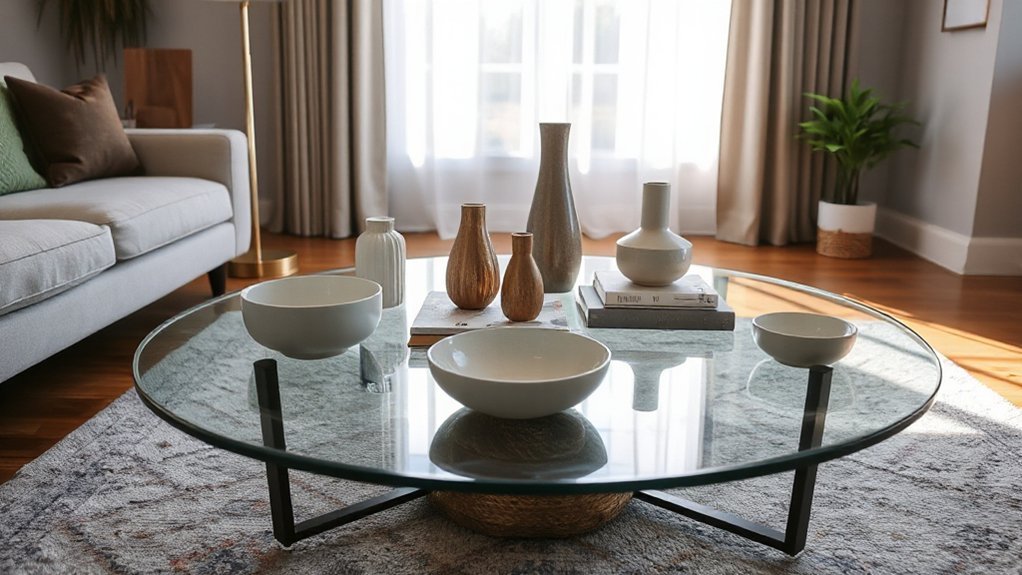
To upgrade your coffee table staples, start with a refreshed tray that suits your daily routine and display needs. Consider layered texture gains by mixing matte ceramic, wood, and a tactile add-on like a knitted coaster or a woven mat.
Keep the setup practical by rotating a few key pieces—one tray item for daily use, one for seasonal swaps, and one small decorative element for texture.
Refresh Your Tray
Revitalizing your tray is about pairing practicality with a dash of personality. You’ll keep the surface functional while adding visual appeal through intentional choices. Focus on balance, texture, and accessibility so everyday use remains effortless.
- Choose a concise tray styling approach: keep colors cohesive with your tabletop decor.
- Layer height strategically by placing a small sculpture or plant to vary focal points.
- Introduce a single functional element, like a scented candle, that doubles as ambiance.
- Tavor quick-access essentials in slim trays or coasters to reduce clutter and protect surfaces.
Layered Texture Gains
Layered texture on your coffee table adds depth without clutter. To achieve Layered texture gains, start with a solid base tray in a matte finish, then layer contrasting heights. Place a low bowl, a stack of coasters, and a textured ceramic orb to create tactile layering that invites touch.
Mix materials—warm wood, cool ceramic, and soft fabric—to add dimension without visual noise. Fold in small metallic accents for reflectivity that catches light from side lamps.
Keep color cohesive; use two to three tones and vary patterns subtly. Rotate pieces seasonally to refresh the scene without wholesale swaps.
Prioritize accessibility: guarantee items aren’t obstructing remote controls or charging pads. Layered textures enhance coziness while preserving a clean, purposeful surface.
Create Zones With Area Rugs and Thoughtful Layouts
Creating zones with area rugs helps define rooms without walls, so start by choosing rugs that anchor each space and complement neighboring textures. You’ll use color psychology to cue mood and guide progressions between areas, and you’ll align furniture arrangement for clear sightlines and flow.
- Pick a dominant rug color that anchors the main seating area and supports adjacent hues.
- Layer smaller rugs for texture and zones without crowding footprints.
- Center key furniture on the rug, maintaining equal distances to walls for open sightlines.
- Test scale by walking the space; adjust the layout until paths feel naturally guided.
Consider traffic patterns, seating reach, and focal points to keep each zone functional and cohesive.
Swap Curtains for a Sleek Flat-Panel Look
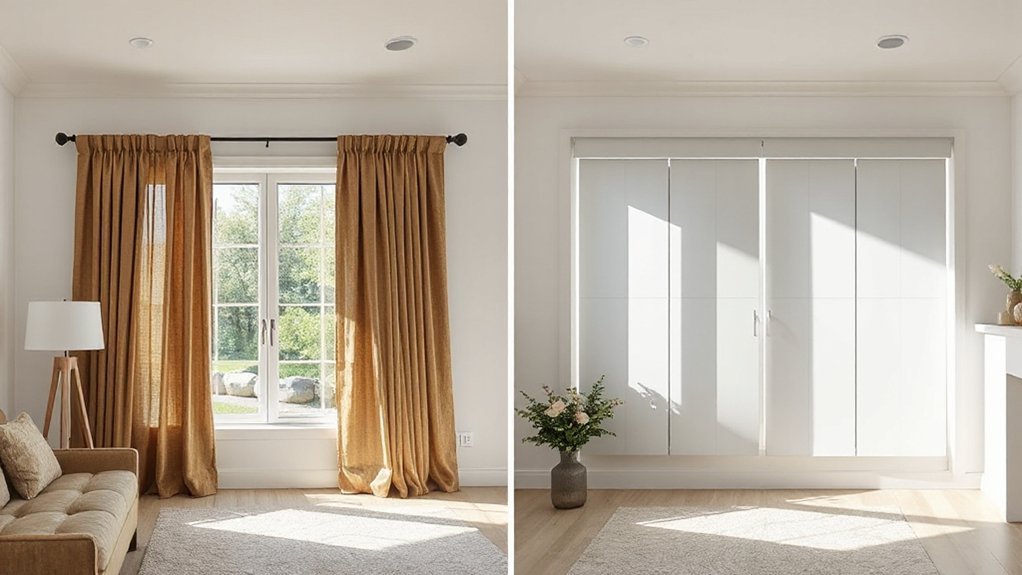
Switch to a sleek flat-panel look by swapping curtains for streamlined panels that hug the wall and minimize visual clutter. These panels reflect more light and create a brighter room with fewer visible seams, thanks to minimal hardware and clean edges.
You’ll notice a sharper silhouette that supports any decor while keeping maintenance simple and understated.
Sleek Flat-Panel Appeal
If you’re aiming for a streamlined, modern look, swap curtains for a sleek flat-panel window treatment that emphasizes clean lines and uninterrupted sightlines.
- Choose a single-color, matte finish for an understated, modern aesthetic.
- Mount panels close to the wall to maximize perceived space and sleek storage beneath.
- Opt for hardware with a low-profile, integrated track to reduce visual clutter.
- Pair with minimal, built-in shelving to reinforce modern minimalism.
This approach prioritizes form and function, reducing shadows and distractions. You’ll notice calmer rooms with enhanced natural light and easier cleaning.
Flat-panel treatments support practical routines and create a cohesive backdrop for furniture. Use muted tones and consistent textures to keep the space visually quiet and harmonious.
Light-Reflective Surfaces
Choose panels with minimal texture and unified edge details to maximize shine. Install using hidden mounting and even spacing to create a seamless plane that reads as one reflective surface. Pair with light neutrals and specular accents to reinforce Mirror Illusions without clutter.
Clean regularly with a microfiber cloth and a non-ammonia cleaner to prevent streaks. This approach reduces visual noise while delivering brighter, more open rooms.
Minimal Hardware Impact
Have you considered a sleek flat-panel look that minimizes hardware impact while maximizing window presence? You can achieve this by swapping heavy drapery for streamlined panels that glide cleanly on concealed tracks, reducing visible hardware and freeing wall space. This approach supports a crisp, modern silhouette and aids light diffusion without bulky rods or finials.
To implement, choose panels with a matte finish, a neutral tone, and a subtle texture that echoes architectural details. Focus on installation precision, using level tracks and minimal mounting points.
Eco-friendly updates and budget-friendly ideas come together when you pick durable fabrics, reuse existing brackets if possible, and opt for in-wall or ceiling-mounted hardware. The result feels effortless and contemporary, with practical, long-lasting appeal.
1) Choose slim, concealed tracks
2) Mount at ceiling for seamless flow
3) Select durable, easy-care fabrics
4) Reuse or repurpose existing hardware
Create Textile Wall Panels for Texture and Interest
Textile wall panels can add instant texture and visual interest without committing to a full wall makeover. You’ll choose fabrics with contrasting textures—linen for subtle sheen, velvet for depth, or cotton duck for a crisp, durable surface.
Measure your wall, then cut panels to fit, leaving a small gap for alignment. Attach backing boards or foam core, then stretch fabric tight and stain- or frame-free edges for a clean finish.
Consider a grid, chevron, or staggered layout to control rhythm and scale. For easy swapping, mount panels with removable adhesive strips or lightweight picture-hanging hardware.
Textile art works as wall coverings, offering tone-on-tone neutrals or bold color. Keep seams hidden behind trim or molding, and label swaps by season to refresh the room.
Frequently Asked Questions
How Often Should I Change Decor to Keep It Fresh?
You should update decor every season, or roughly every 3–4 months. Do seasonal refreshes by swapping in a few fresh accessories and minimizing big furniture moves.
Start with a palette shift, then layer in new textures, cushions, and small art.
Track how you actually feel in the space—if it looks dated or stale, refresh sooner.
Plan accessory updates in batches, so you stay intentional without overhauling the whole room.
What Budget Best Supports Quick Decor Swaps?
A budget of about $200–$300 per season supports quick decor swaps. You’ll buy seasonal trends essentials, mix in DIY decor, and rotate accents without overhauling furniture.
Prioritize versatile pieces: throws, pillows, framed art, and lamps that pair with existing colors.
Look for sales, thrift finds, and DIY projects to stretch the budget.
Track what you reuse, swap, or retire each quarter, and adjust as seasonal trends shift and rooms feel refreshed.
Do Color Choices Affect Room Perceived Size?
Yes. Color choices affect room perceived size: lighter hues make spaces feel larger, while dark tones compress them. Color psychology shows cool colors expand, warm tones cozy, but lighting and contrast matter.
You can use pale walls with bright accents to boost visual perception without major swaps. For practical impact, keep ceilings light, floors mid-tone, and furniture in harmonious contrast.
This approach helps you optimize small rooms efficiently, with achievable, budget-conscious decor swaps.
Can I Mix Bold and Neutral Patterns Safely?
Yes, you can mix bold and neutral patterns safely. Start with a unifying color, then vary scale and texture for pattern mixing and style harmony.
Pair a bold print with a calmer neutral, repeating touches like stripes in upholstery and pillows. Balance weight by distributing large patterns evenly, add solid accents, and avoid competing motifs.
Test lighting and view from different angles. Keep it practical: measure, compare swatches, and adjust until everything feels cohesive.
Which Swaps Yield the Biggest Mood Impact Quickly?
Swaps that yield the biggest mood impact fast include bold color accents, layered lighting, and texture changes like throws and rugs.
In under an hour, you can lift a room by 20% in perceived warmth with a warm lamp and seasonal trends palette.
You’ll feel the shift as you see how seasonal trends and personal style align, creating a cohesive vibe.
Prioritize contrast, add small artworks, and test one swap at a time for clarity.
Conclusion
You’ll feel the room transform before you finish the first swap, as if a dull lullaby suddenly hit a high note. With 15 bold moves, you’ll outshine a showroom in minutes, and the space will practically whisper, “new home, who dis?” The rug becomes a magnet, art a pulse, and lighting the conductor. Declutter, layer textures, and seat your layout with intention, and you’ll enjoy a refreshed, hotel-like vibe that’s both practical and irresistibly sophisticated.
About the Author