The horizon lines your front yard can reveal—if you pause to plan, you’ll see how clean sightlines and low, narrow plantings frame your home with quiet authority. You’ll guide the eye with aligned furnishings, strategic gaps, and soft lighting that highlights pathways and architectural details. Edges stay crisp, containers flex with seasons, and focal points add intent without clutter. Consider reflective surfaces and textures to add depth, then choose low-maintenance accents that feel open, inviting, and expansive. Keep going.
Key Takeaways
- Establish horizontal rhythm with low, narrow plantings and aligned furnishings to extend sightlines toward the façade.
- Use varying pathway widths and sparse garden art to pace movement without cluttering views.
- Frame spaces with crisp edging, containers, and focal plantings that anchor views while maintaining openness.
- Add depth with reflective surfaces and textured finishes that subtly extend perception of space.
- Choose lightweight, drought-tolerant accents and slim planters to keep front yards open and low-maintenance.
How to Create Clean Sightlines for a Spacious Front Yard
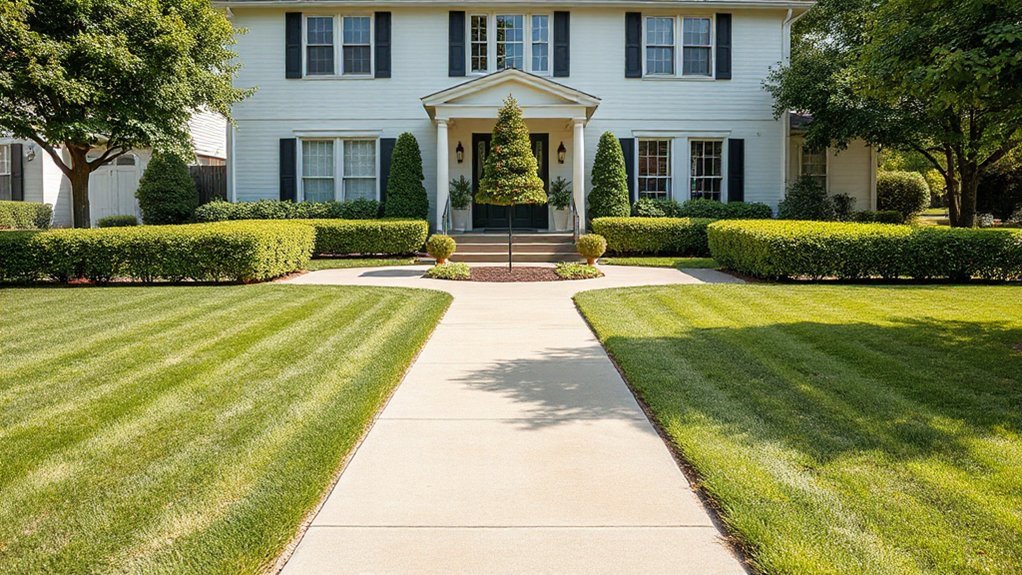
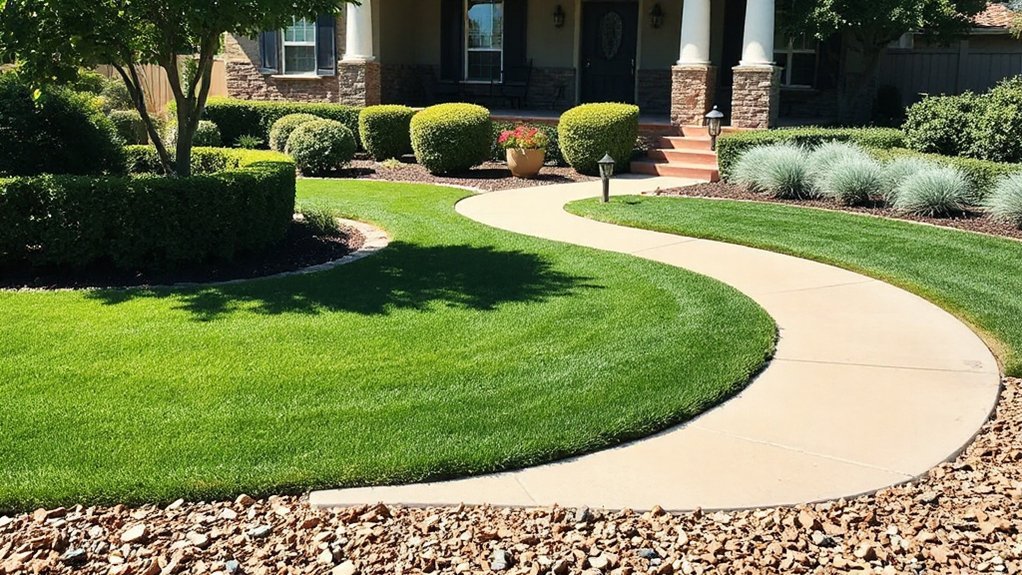
To create clean sightlines in a spacious front yard, start by establishing a clear horizontal rhythm: keep low, narrow plantings and furnishings aligned with the house’s façade and the street.
You’ll fix focal points with strategic gaps, guiding the eye toward architectural details rather than obstructive clutter.
Implement front yard art sparingly, selecting pieces that read as extensions of the façade and don’t interrupt the line of sight.
Choose outdoor lighting that accentuates planes and pathways without overpowering the scene, using soft, even illumination along edges and entry points.
Maintain consistent materials and finishes to reinforce cohesion.
Prune and shape shrubs to preserve openness, ensuring visibility from curb to entry.
The result is a graceful, spacious feel achieved through disciplined alignment and thoughtful restraint.
Design Pathways That Guide the Eye and Pace
Garden art punctuates points of interest, acting as waypoints that anchor perception without shouting. Outdoor lighting plants atmosphere, drawing you forward after dusk and enhancing texture along the route.
Vary path width to invite lingering in specific moments—entry thresholds, courtyard reveals, or panoramic vignettes—while keeping sightlines open enough to preserve spaciousness. The result is a cohesive stroll that expands perception while preserving quiet, ordered efficiency.
Plant to Frame Space: Borders, Containers, and Focal Points
Borders, containers, and focal points are the levers you pull to frame space with living texture. You design the edge line first with garden edging that defines the border without crowding sightlines, creating a crisp perimeter.
Next, you deploy container gardening to introduce flexible scale: a mix of compact shrubs, ornamental grasses, and seasonal flowers can be rotated for rhythm and focal lift. Choose containers that echo your house tones and landscape palette, ensuring visual harmony at eye level and from a distance.
Place a deliberate focal point—a sculptural plant group, a dramatic specimen, or a single evergreen feature—that anchors the view and guides the eye along the yard.
Maintain redundancy sparingly; let contrast, color, and texture do the framing work.
Add Depth With Reflective Surfaces and Textures
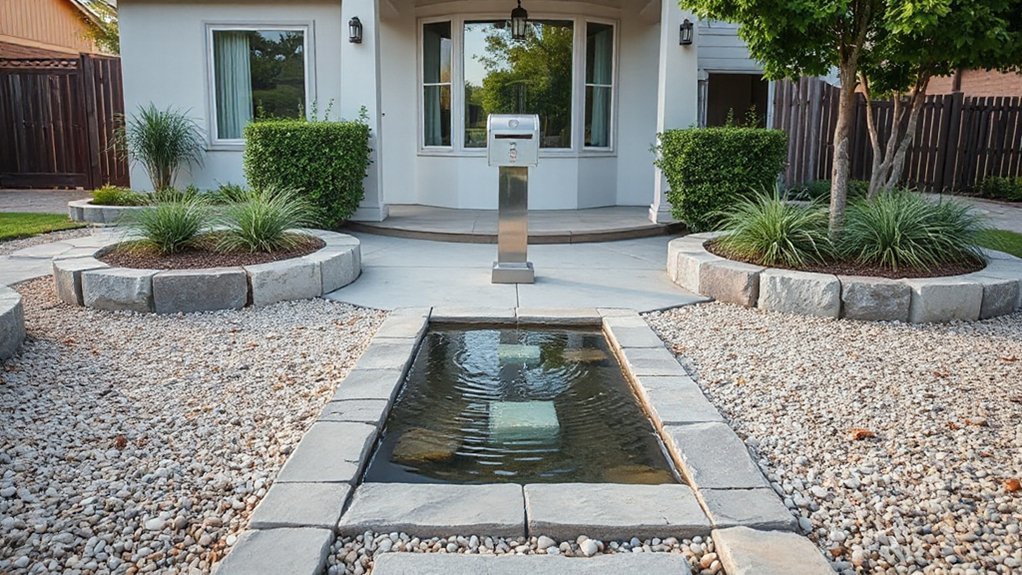
Reflective surfaces and varied textures are your move to add depth, drawing the eye beyond the foreground and into the yard’s layers. You access spatial ambiguity by pairing mirrors with natural elements, creating glimpses of the home’s silhouette from multiple angles.
Use mirrored decor to bounce daylight along paths, subtly extending sightlines without clutter. Introduce textured finishes on planters, screens, or seating; choose weathered wood, brushed metal, or stone to create tactile contrast against smooth surfaces.
Keep scales deliberate: large panels mirror the sky, while smaller textures anchor focal points. Align reflections with pathways to guide movement, not distraction. Balance brightness with shade, ensuring reflections don’t overwhelm.
The result: a refined, cohesive front yard that feels deeper, calmer, and more expansive.
Easy, Low-Maintenance Accents That Feel Open and Airy
To keep your front yard feeling open and airy, choose lightweight, low-maintenance accents that bounce light and invite movement. You’ll cultivate a sense of openness with minimalist decor that trims excess while preserving texture.
Select planters in slim profiles and neutral hues to maintain color coordination across hardscape and greenery. Favor drought-tolerant grasses, compact shrubs, and clean-lined seating that pair comfort with visual clarity.
Opt for materials that reflect, not absorb, solar glow—powder-coated metals, pale weathered wood, and smooth concrete pads. Keep accents modular and movable, so you can shift rhythm as seasons change.
Limit ornamentation to a few signature pieces, ensuring each element serves function and light. With restrained repetition and purposeful placement, your front yard stays expansive and inviting.
Frequently Asked Questions
How Can I Choose Curb Appeal That Doesn’T Overwhelm the Yard?
Curb appeal that doesn’t overwhelm the yard starts with scale and restraint. You choose a focal point, then let garden sculptures and decorative planters harmonize, not shout.
Place one statement piece at a setback, flank with low-height greenery, and keep pathways clear.
Use neutral tones and consistent materials, so details don’t crowd the space. You’ll create calm, guided entry points, inviting curiosity without dominating the garden’s breath and openness.
What Budget-Friendly Upgrades Create Perceived Space Quickly?
You can create perceived space quickly with budget-friendly upgrades like landscape lighting and decorative borders. Install subtle uplights along pathways to draw the eye outward, and place low-voltage LEDs to highlight architectural edges without clutter.
Add decorative borders around beds to cleanly define zones, widening sightlines. Choose light, reflective mulch and resize plantings for vertical rhythm.
These moves feel intentional, affordable, and scalable, helping your front yard read larger while staying cohesive and stylish.
Which Colors Best Enhance a Spacious Front Yard Look?
Color psychology says warm neutrals and bold accents best enhance a spacious front yard look. You’ll gain depth when you use shade contrast—lighter pavements, darker plantings, and pops of crisp color near entrances.
You avoid visual clutter by sticking to two or three hues. You’ll feel more inviting as you create rhythm with repeated tones along the path.
You’ll impress visitors with a precise, visionary balance that reads as thoughtfully curated.
Do Traffic Footpaths Affect House-Wide Perception of Size?
Traffic flow does influence how large your home feels, yes. You’ll notice that smooth pedestrian pathways guide the eye outward, framing the facade and extending perceived space.
When you design for clear circulation, you reduce clutter and create intentional gaps that read as openness. Prioritize well‑defined edges, consistent materials, and gradual progression.
You empower the street presence to feel expansive, while ensuring every step reinforces a cohesive, balanced, and visionary front yard experience.
How Can I Ensure Privacy Without Shrinking the Yard Area?
You can boost privacy without shrinking your yard by using layered strategies with privacy screens and thoughtful planting. Start with vertical elements—trellises, lattices, or screens—placed along the property line to block sightlines while preserving openness.
Pair them with planting strategies: dense evergreens, tall grasses, and strategic shrubs to soften edges. You’ll maintain usable space, and the sightlines stay curated.
Embrace modular seating and defined zones so privacy feels deliberate, not confining.
Conclusion
You’ll discover that a front yard isn’t just space—it’s a pause in time. When sightlines stay clean and paths lure the eye, your home breathes, appearing larger and more welcoming. Low plantings, crisp borders, and reflective textures become a quiet orchestra, guiding pace without shouting. With strategic gaps and soft lighting, you invite guests to move inward, savoring architecture and horizon alike. In short, openness isn’t emptiness—it’s an artful invitation to linger, dream, and belong.
About the Author