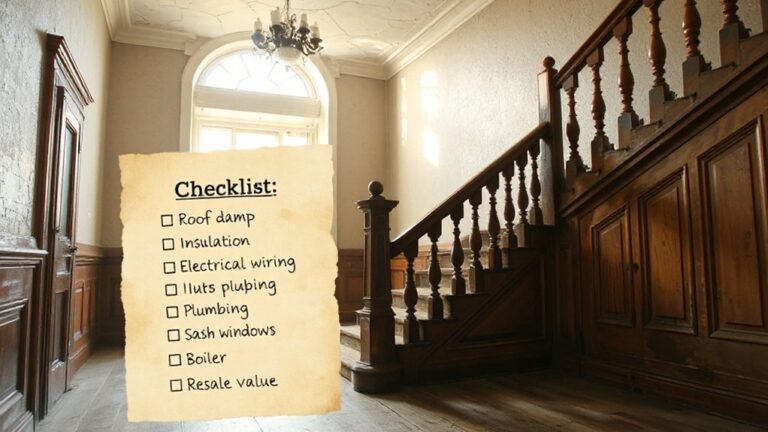
You’ll implement a phased renovation timeline that respects historic significance, starting with discovery and baseline records. Phase 1 inventories provenance, prioritizes non-destructive testing, and sets condition baselines. Phase 2 translates findings into contextual design with codes, adaptive reuse, and sustainability. Phase 3 establishes stage-by-stage budgets with contingencies and transparent change trails. Phase 4 coordinates architects, contractors, and preservation bodies, while Phase 5 tracks progress with dashboards and proactive delay management. Continue to refine timelines and risk controls for deeper insight.
Define Your Historic Renovation Timeline: Key Phases and Dates
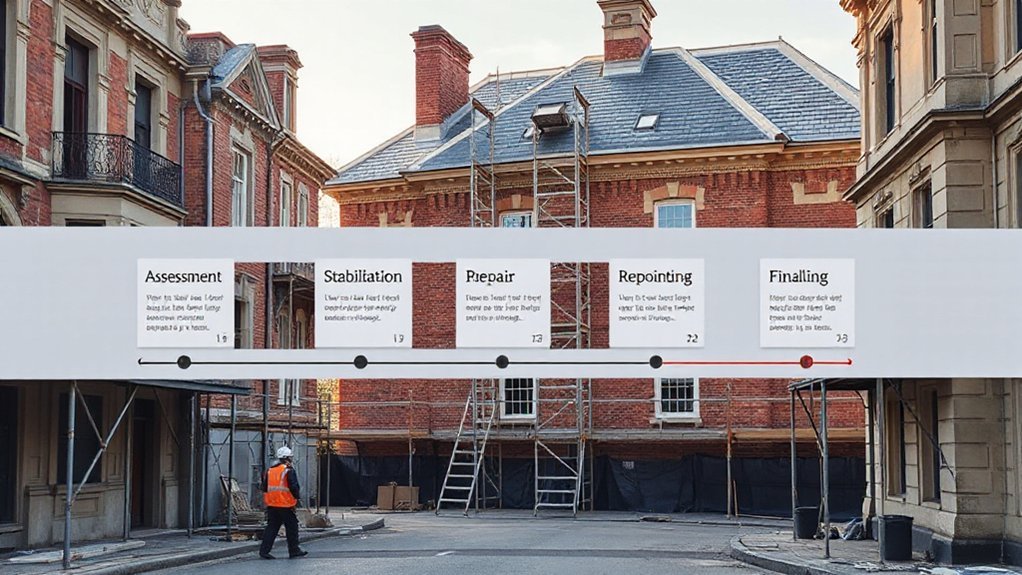
A clear renovation timeline for a historic property centers on defining distinct phases, each with specific outcomes, durations, and decision points. You structure the plan around critical milestones, baselines, and approval gates, ensuring every stage aligns with preservation standards and project objectives.
You map sequential tasks, assign durations, and designate responsible teams, maintaining a tight feedback loop for risk and scope control. You incorporate Modern technology to track progress, document changes, and optimize materials logistics without compromising authenticity or cultural integrity.
You evaluate impacts on Cultural significance, prioritizing interventions that respect architectural provenance, context, and craft traditions. You reserve contingency buffers for regulatory reviews and archival research, and you codify decision points that trigger phase progressions.
You publish the timeline as a living document, accessible to stakeholders and aligned with the property’s historic narrative.
Phase 1: Discovery and Baseline Records for Historic Properties
You begin by establishing a factual inventory and verification framework that anchors the renovation plan in verified history. Phase 1 focuses on discovery, baseline records, and controlled documentation to support decision-making with precision.
You’ll map original fabric, construction methods, and archival sources to inform preservation strategies and risk assessment, preserving Historic significance while planning feasible interventions.
Systematic record gathering enables traceability, reproducibility, and validation of assumptions, reducing conflicts with stakeholders and code constraints.
You’ll prioritize non-destructive assessment, material identification, and condition ratings to guide later design choices.
Baselines will feed future comparisons, ensuring changes remain faithful to intent and context.
Preservation techniques are selected to minimize impact, document provenance, and support adaptive reuse where appropriate.
- Structured inventory and provenance chain
- Non-destructive assessment protocols
- Material identification and condition scoring
- Risk, compliance, and archival cross-reference
Phase 2: Contextual Design, Codes, and Approvals
Following Phase 1’s verified baselines, you translate historic context into design concepts that respect significance while enabling feasible intervention. This phase integrates contextual sensitivity with regulatory feasibility, ensuring proposed changes align with preservation intent, risk profiles, and functional needs.
You translate constraints into compliant schemes, balancing adaptive reuse potential with life-safety, accessibility, and codes. You document constraints, justify amendments, and foreground sustainability strategies within statutory allowances.
You evaluate materials, detailing performance, compatibility, and reversibility while preserving character-defining features. You develop approvals-ready packages, coordinating with authorities, consultants, and stakeholders to minimize approvals cycles.
You articulate design intent through measured decisions, linking context to execution. You prioritize adaptive reuse and sustainability strategies, preserving heritage value while delivering resilient, orderly interventions that satisfy both preservation standards and modern occupancy demands.
Phase 3: Budget Milestones and Contingencies for Each Stage
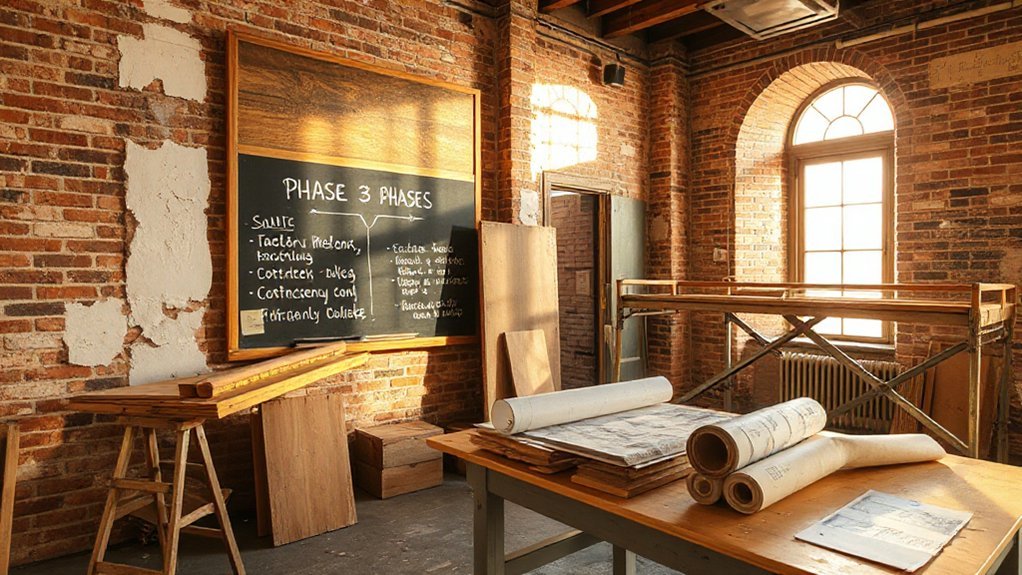
Phase 3 lays out the budget milestones and contingencies tied to each stage, translating the approved design concepts into quantifiable financial checkpoints. You track cost estimation with disciplined granularity, aligning provisional sums to historic fabric, materials, and craft requirements.
Contingencies address unforeseen conditions, weather windows, and preservation constraints, preserving design intent without compromising integrity. You implement risk management by assigning thresholds, triggers, and decision points that minimize scope drift while honoring authenticity.
Each stage defines a financial heartbeat—funding release, approval gates, and revision cycles—so you can forecast cash flow and manage supplier commitments. You maintain traceability between drawings, specifications, and line-item costs, ensuring transparent accountability for stakeholders.
- Define stage-specific cost estimation baselines and adjustment rules
- Establish contingency rates aligned with historic risk profiles
- Set clear funding release and approval gates
- Document change rationale and cost implications rigorously
Phase 4: Coordinating Architects, Contractors, and Preservation Bodies
Coordinating architects, contractors, and preservation bodies requires a disciplined, integrated workflow that aligns design intent with practical constraints and regulatory expectations. You establish clear briefing channels, define decision milestones, and synchronize submittals with review cycles to minimize rework.
You translate adaptive reuse concepts into constructible solutions, balancing historic fabric preservation with functional upgrades. Early coordination sessions surface constraints from codes, fire safety, and accessibility, enabling iterative design refinements before fabrication begins.
You maintain a registry of approved materials, detailing compatibility with preservation standards and long-term durability. Regular stakeholder briefings, including preservation authorities and community representatives, ensure transparency and shared expectations.
Through disciplined change management, you sustain momentum without compromising intent, delivering a refined, compliant scheme that respects context, enables adaptive reuse, and invites informed community engagement.
Phase 5: Tracking Progress and Handling Delays Without Losing Character
You establish a monitoring cadence that pairs schedule confidence with preservation priorities, ensuring progress tracks against a defined baseline without compromising historic integrity.
Phase 5 emphasizes disciplined tracking, rapid issue isolation, and adaptive scheduling to prevent drift from the design intent. You translate delays into actionable contingencies, preserving character while maintaining momentum.
Clear stakeholder communication underpins decision making, aligning expectations with technical constraints and preservation standards. You quantify risk, log deviations, and adjust milestones without sacrificing documentation fidelity or material authenticity.
- Establish daily standups and transparent dashboards to surface variances early
- Define adaptive scheduling responses that preserve critical preservation milestones
- Document impact assessments with measurable preservation outcomes
- Maintain ongoing stakeholder communication to sustain trust and alignment
Frequently Asked Questions
How Long Does Approval Typically Take From Preservation Boards?
Approval timelines vary, but you typically expect 4–12 weeks, depending on complexity. You’ll navigate architectural authenticity and preservation challenges with precise documentation, ensuring design intent remains intact while satisfying boards’ historical sensitivity and review requirements.
What Hidden Costs Often Derail Historic Renovation Budgets?
Did you know 30% of historic projects exceed budgets due to cost overruns and permit delays? You’ll need rigorous budgeting, contingency planning, and design intent that respects history, while managing Cost overruns and Permit delays with precise documentation.
How Should Eco-Friendly Upgrades Clash With Historic Authenticity?
You balance eco-friendly upgrades by preserving historic integrity, ensuring modern materials don’t overpower, and maintain aesthetic harmony; you prioritize design intent, document choices precisely, and verify compatibility with materials, finishes, and detailing while respecting original craftsmanship.
What Documentation Should Be Prepared Before Design Kickoff?
Before kickoff, you assemble Historic preservation and Design documentation, mapping constraints and compliance. You act as a steady compass, guiding decisions; allegory of a careful archive shield protects authenticity. You document scope, standards, sheets, approvals, and change protocols.
How Can Delays Impact Insurance Coverage and Permits?
Delays can jeopardize insurance coverage and permit timelines. You’ll trigger insurance claims adjustments and potential claim denials, while permit delays may extend approvals, requiring updated documents. Stay proactive: coordinate with insurers and authorities to mitigate Insurance claims impacts, Permit delays.
Conclusion
In closing, you’ve mapped a rigorous path where discovery anchors design and approvals guard authenticity. You’ll track milestones with disciplined precision, adjusting budgets and schedules without sacrificing character. Your collaboration with architects, contractors, and preservation bodies becomes the compass that keeps you true to context, codes, and care. Stay vigilant for delays, but treat them as clues, not cul-de-socks. Like a well-tuned instrument, the timeline preserves history while delivering a durable, respectful, meticulously designed result.
About the Author