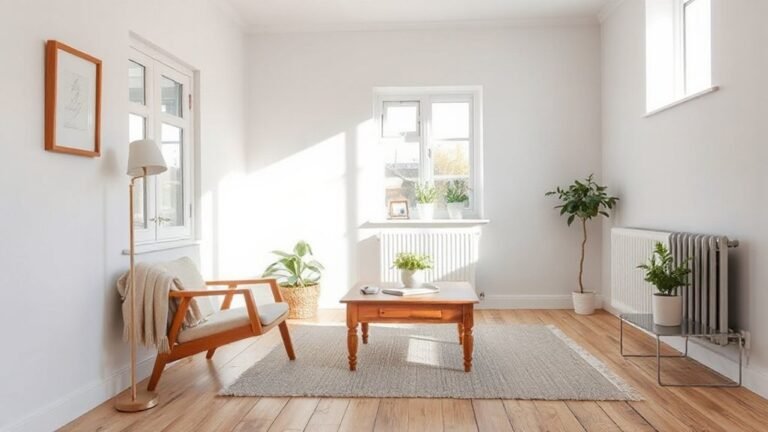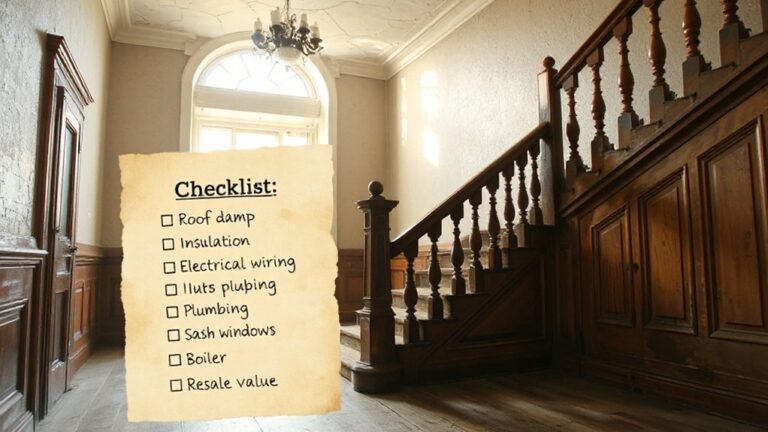
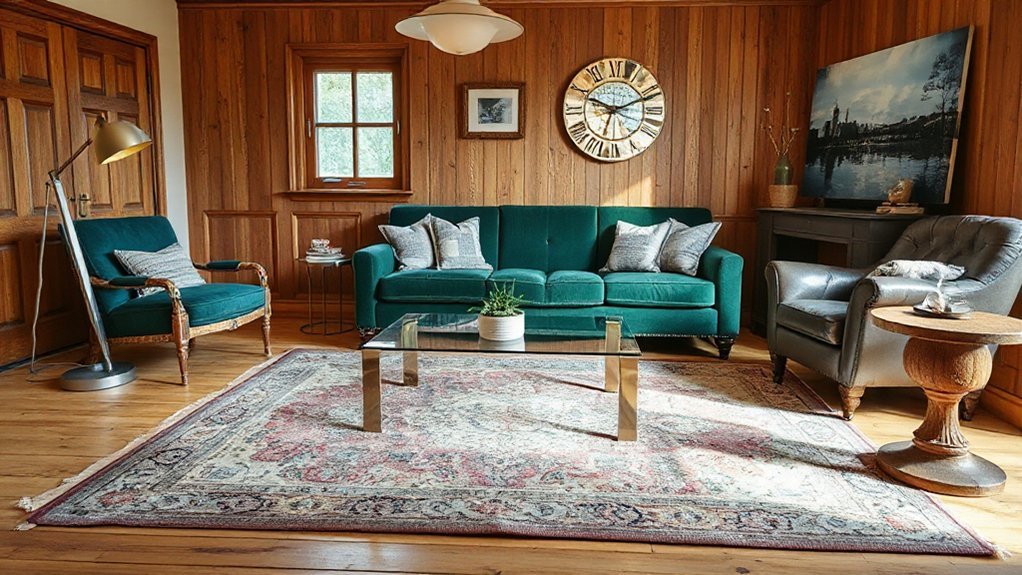
You might pair a mid-century chair with a glass-taceted coffee table in a living room, then notice how a restrained palette keeps the mix from feeling chaotic. You’ll want a unifying thread—color, tone, and silhouette—to bridge eras without shouting. Stay practical: set a dominant hue, balance bold vintage shapes with clean modern forms, and layer textures and finishes thoughtfully. Keep an eye on scale and spacing, and you’ll create a cohesive, timeless space that compels you to push the boundaries further.
Key Takeaways
- Establish a cohesive color palette with one dominant hue, two supporting shades, and consistent finishes throughout the space.
- Pair vintage silhouettes with clean, modern shapes and use negative space to balance proportions.
- Unite textures and patterns by repeating a unifying element (color, scale, or material) and mixing gloss with matte finishes.
- Layer lighting and accessories thoughtfully, favoring tonal cohesion and deliberate placement over matching sets.
- Troubleshoot with quick tweaks: unify color, balance finishes, and anchor vintage pieces with minimalist modern elements for timeless harmony.
Identify Your Unifying Thread: Color, Tone, and Silhouette
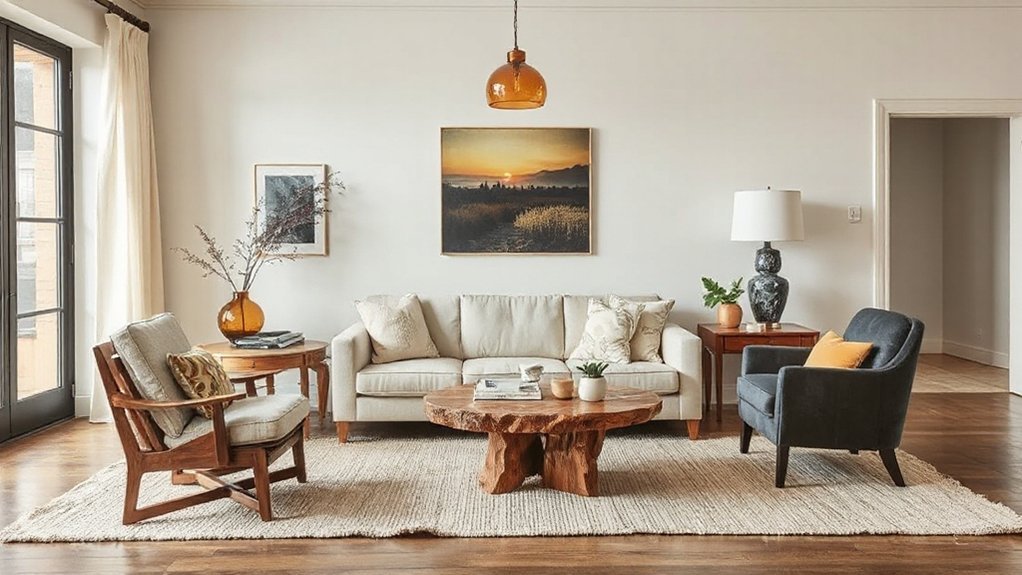
To blend vintage with modern pieces, start by identifying your unifying thread: color, tone, and silhouette. You’ll map how warm woods, aged metals, or faded prints echo across eras, then translate that through your wardrobe and rooms.
Focus on a cohesive palette: select a dominant hue and two supporting shades to keep Vintage charm from veering into clutter. Observe silhouette lines: boxy, soft, or tailored, and choose one signature contour to thread through every piece.
Texture matters, too—contrast matte and gloss, or mix delicate lace with clean, modern fabrics. This approach cultivates Modern minimalism without losing personality, while the result remains purposeful.
Your space and closet feel timeless, calm, and intentionally curated.
Start With a Cohesive Color Palette That Bridges Eras
A cohesive color palette serves as the bridge between eras, so start by choosing a dominant hue and two supporting shades that recur across both vintage and contemporary pieces. You’ll establish color harmony by repeating these anchors in textures, finishes, and patterns, ensuring visual continuity as you mix eras.
Focus on a restrained palette rather than chasing trends, so era blending feels intentional rather than accidental. Test contrast with neutrals to keep the look grounded, and map the palette to your room’s light conditions.
- Choose one dominant color and two supporting shades to guide every piece
- Apply repeats in fabrics, metals, and trims
- Use neutrals to ground bold hues
- Verify color consistency under different lighting
Balance Anchoring Silhouettes With Modern Shapes
You anchor vintage silhouettes by pairing them with modern shapes that balance proportions and line.
Aim for a clean contrast: let a structured modern top offset a voluminous dress, then refine with cohesive details that unify the look.
Start by evaluating how anchoring silhouettes, calibrated proportions, and careful detail harmony work together to keep the mix intentional rather than random.
Anchoring Silhouettes With Modern Shapes
Striking a balance between vintage and modern shapes starts with anchoring silhouettes in a contemporary frame. You’ll ground bold, retro lines with clean, streamlined forms, letting one element lead while the other remains calm. Focus on tailoring, not trends, so that old charm reads as intentional texture rather than clutter. Use negative space to preserve breathing room and highlight the silhouette’s core.
- Pair a vintage bodice with a minimalist skirt to emphasize structure over decoration
- Choose a modern, sculptural accessory to anchor a classic suit
- Balance heavy embellishment with pared-down footwear and lighting
- Mix textures: matte fabric with a subtle gloss to fuse Vintage charm and Modern minimalism
Balance Through Proportions
Balance through proportion hinges on how the relative scale of vintage versus modern elements plays against each other. You calibrate silhouette by weighing the heft of a vintage anchor against a clean modern shape, then adjust until the overall line reads deliberate, not disparate.
Start with a dominant piece—often a vintage item with enduring character—and refine the rest with restrained, Modern minimalism accents to keep the eye moving smoothly. Consider length, width, and shoulder lines; avoid overwhelming the frame with ornate detailing.
Breakpoints—where curves meet angles or texture contrasts occur—should feel intentional, not accidental. Maintain visual rhythm by repeating a subtle motif across items, so Vintage authenticity remains credible within a contemporary context.
When in doubt, pare back and simplify to preserve balance.
Contrast With Cohesive Details
Mix vintage anchors with modern shapes by weaving cohesive details that tie both eras together. You balance silhouette weight with small, purposeful accents to maintain harmony. Let Vintage charm guide fabric choice and texture, while Modern minimalism keeps lines clean and uninterrupted.
Pair a sculpted skirt with a streamlined top, then introduce a single antique button or belt buckle for continuity. Avoid competing patterns; repeat a color or material across pieces to anchor the look. Fine-tune scale so statement pieces don’t overwhelm.
Now, the cohesion shines when each element supports the next, rather than competing. You create a steady rhythm that feels intentional, not contrived. This approach respects history while embracing current simplicity.
- Anchor with repeated color or texture across items
- Use one vintage detail across multiple pieces
- Keep lines streamlined with minimal ornament
- Introduce a single, deliberate vintage focal point
Mix Textures and Patterns: Scale, Rhythm, and Contrast
Textures and patterns should work together rather than clash, so start by identifying a unifying element—color, scale, or material—that ties your pieces. You’ll shape a coherent rhythm by balancing large-scale motifs with fine textures, and you’ll set contrast through intentional spacing, color echoes, and material pairings.
Focus on scale first: mix bold patterns with subtler ones, so nothing fights for attention. Then weave texture into the narrative—gloss with matte, woven with smooth, metallic with rustic—creating tactile contrast that reads as intentional, not random.
Practice Textural variety by varying pile, weave, and finish across surfaces. Use Pattern mixing strategically: repeat a motif in unexpected places to unify, and nod to vintage tones with modern silhouettes.
Keep adjustments precise, and your space will feel intentional and timeless.
Blend Furniture and Décor Across Eras With a Cohesive Anchor
To unify pieces from different eras, start with a cohesive anchor that anchors the room—ideally a common material, color palette, or silhouette that resonates across both vintage and contemporary elements. You create harmony by repeating this anchor through furniture forms, textiles, and accessories, so each piece feels intentional rather than scattered.
Embrace Vintage charm in key focal items, then temper with Modern minimalism in surrounding surfaces and silhouettes to maintain balance. Use restrained color as the connective tissue, not competing patterns. Keep proportions thoughtful, allowing negative space to breathe.
- Choose a single wood tone or metal finish as the room’s backbone
- Repeat a restrained color palette across furniture and decor
- Pair ornate elements with clean, simple lines
- Curate a minimal, purposeful vignette to anchor the space
Lighting and Metal Finishes: Finishes That Feel Intentional
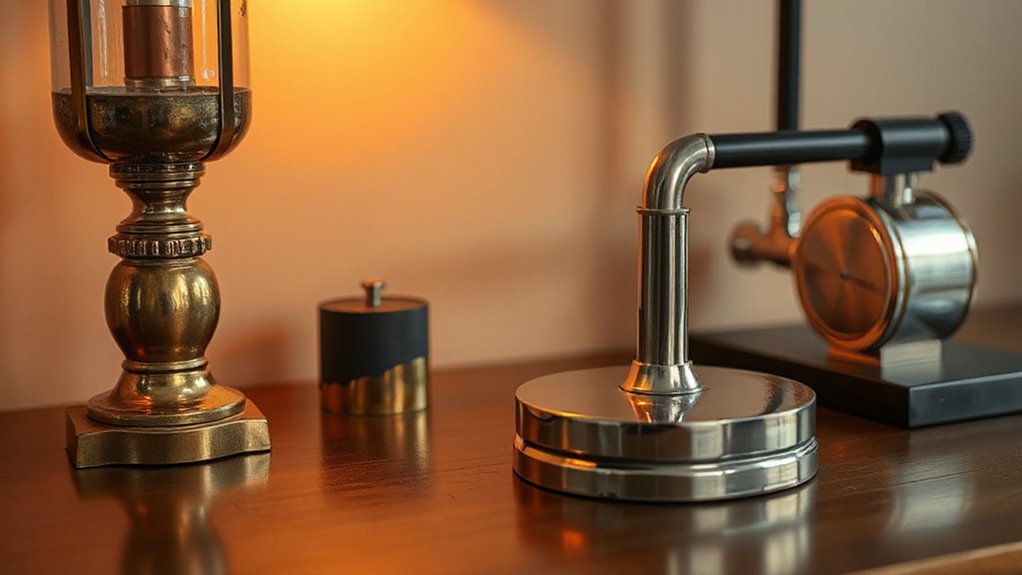
You’ll start by selecting intentional metal finishes that anchor both vintage and modern pieces, creating a cohesive story rather than a mismatch of eras.
Layer lighting accents—pendants, sconces, and task lights—in varied finishes to add depth without clutter.
Keep a deliberate balance between metal tones so they read as purposeful rather than coincidence.
Intentional Metal Finishes
- Decide on a unifying metal family (brass, bronze, nickel) and stick to it.
- Pair patinaed pieces with sleek, matte finishes for balance.
- Prioritize durable coatings for heavily used surfaces.
- Use lighting to emphasize intentional finishes rather than distract.
Layered Lighting Accents
Start with a warm main light that flatters vintage metals without washing them out, then add directional spots to sculpt edges and reveal micro-details. Include a couple of decorative fixtures with metal tones that echo your hardware or furniture hardware to reinforce continuity.
Use dimmers to modulate intensity and create an ambient glow that shifts with the room’s activities. Consider lamps with fabric or perforated shades to soften glare, fostering a layered ambiance.
Keep controls intuitive: one switch, multiple levels, consistent color temperature, and deliberate placement that respects sightlines and focal points.
Accessorizing With Intention: Small Details That Tie the Look Together
Accessories aren’t afterthoughts; they’re the details that finalize your look. When you mix vintage charm with modern minimalism, choose small accents that echo both eras without shouting. Prioritize purposeful pieces: a sculptural lamp, a delicate clock, or a textured throw that aligns with clean lines yet hints at history.
Think tonal cohesion, not matching sets. Each item should serve a visual breath or a practical function. Balance scale so antique and contemporary sit in harmony, not competition. Let hardware, fabrics, and finishes repeat across pieces to knit the room together.
- One statement piece that bridges eras
- Consistent metal tones throughout
- Subtle textures that reflect history and simplicity
- Clean silhouettes with a warm, tactile touch
Troubleshooting: Quick Fixes for Common Mixing Pitfalls
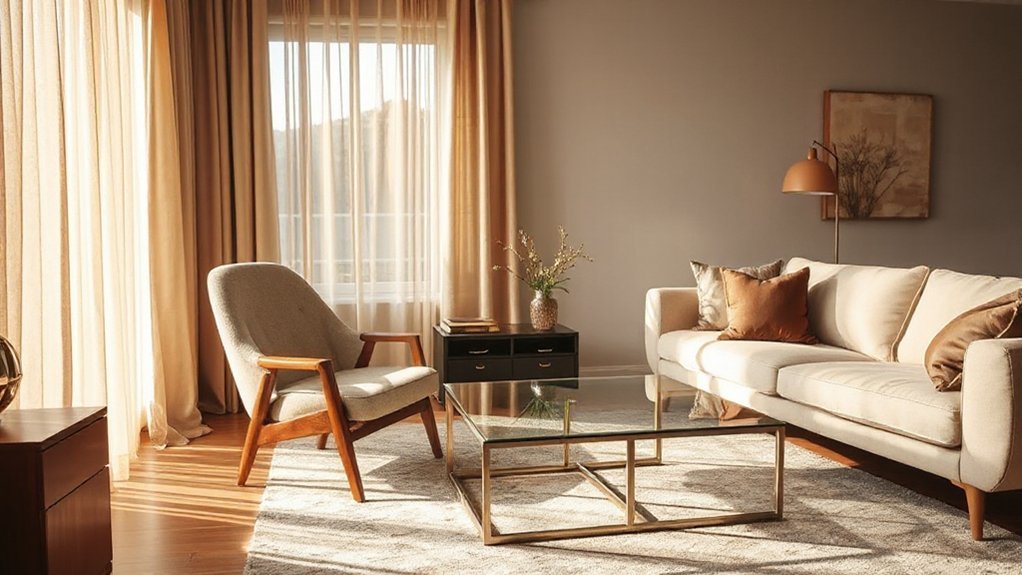
When mixing vintage and modern pieces, missteps are common, but most can be fixed with quick, practical tweaks. You’ll fix scale mismatches by pairing a standout vintage item with cleaner, simpler modern pieces, then anchor with a unified color palette.
If textures clash, mix one bold pattern with solid surfaces to ground the room, avoiding competing motifs. For finishes, alternate patinas sparingly: keep a single room-wide metal or wood tone to preserve cohesion.
If you overemphasize vintage patina, introduce modern minimalism through sleek hardware or glass accents to balance weight. When in doubt, step back and assess function: guarantee storage and traffic flow aren’t sacrificed.
Small adjustments yield Vintage charm without dulling Modern minimalism, delivering a timeless, curated space.
Frequently Asked Questions
How Do You Test for Comfort Across Vintage and Modern Pieces?
You test comfort across vintage and modern pieces by trying them on in real life, noting how they feel through a full range of motion. Check seam stress, fabric softness, and weight distribution.
Compare vintage upholstery or garments with modern equivalents for support, flexibility, and breathability. Focus on vintage comfort and modern fit, adjusting with lightweight layers or insoles as needed.
Prioritize stability over stiffness, and verify comfort lasts from morning to evening.
Can Bold Patterns Work if the Room’s Palette Is Neutral?
Bold patterns can absolutely work with a neutral palette. Picture your room as a ship guided by a calm sea: the neutral palette is the hull, steady and strong, while bold patterns are the sails catching the wind.
You balance scale, repeat, and restraint—one large motif, two smaller echoes—so the space feels intentional, not busy. Test contrast with swatches, place patterns near lighting, and keep furniture simple to preserve harmony.
What Scale Should Furniture Be for Small Spaces?
For small spaces, keep furniture scaled to fit without crowding. Prioritize low, compact pieces with clean lines to maximize sightlines and functionality.
Choose chairs and sofas with slim arms, slender legs, and a shallow overall footprint.
Use multi-functional items and wall-mounted storage to free floor space.
Blend Vintage charm with Modern minimalism by mixing a single vintage accent with streamlined pieces, ensuring balance.
This approach feels practical, meticulous, and insightful for tight rooms.
How Can You Mix Metals Without Visual Chaos?
Anachronisms exist in our homes, like pocket watches in a modern loft, reminding you to balance metals.
You mix metals by choosing one dominant metal and two complementary accents, then repeat textures.
Use Antique accents sparingly, and let Metallic textures finish key pieces to unify the space.
Aim contrast in finishes, not colors, and avoid clashing undertones.
You test lighting, then adjust, ensuring cohesion with consistent hardware, cords tucked, and calibrated reflections.
What Budget-Friendly Swaps Preserve Cohesive Style?
You can swap budget pieces for eco-friendly materials and keep a cohesive style by prioritizing texture, neutral tones, and timeless silhouettes.
Look for affordable fabrics in sustainable fibers, like organic cotton or linen, and choose finishes that echo your main pieces.
Add artistic accents—reclaimed wood trays, ceramic vases, or hand-painted accents—so every room feels curated, not cluttered.
Compare prices, wait for sales, or DIY small upgrades to preserve a seamless, eco-conscious aesthetic.
Conclusion
You can blend vintage charm with modern ease by treating contrasts as teammates, not rivals. If something feels out of place, soften it with a gentler finish or a subtle scale shift, and you’ll sidestep unnecessary drama. Embrace a unifying thread, then let it guide every choice—color, texture, glow, and proportion. When in doubt, tweak rather than overhaul, and trust that deliberate restraint quietly elevates the whole room, like a well-tinished note in a timeless melody.
About the Author