You’re shaping a yard that feels larger, not crowded. Too many plants and furniture narrow sightlines, while tight or winding paths trap flow. If you don’t test mature sizes or scale your beds, clutter creeps in and openness shrinks. Start by measuring sightlines, simplifying plantings, and anchoring views with a few strategic focal points. Get practical about spacing now, so the yard breathes. There’s more to harmonizing scale than you might think—let’s refine it.
Key Takeaways
- Overly complex pathways and cluttered edges shrink perceived space; simplify with straight or gently curved paths and clear sightlines.
- Inconsistent plant sizes and crowded beds create visual chaos; space plants by mature size and avoid bottlenecks.
- Too many contrasting textures and colors dominate; use a restrained palette and repeat bed shapes for rhythm.
- Ignoring sightlines from key viewpoints; place focal points and structures along strong lines to frame the yard.
- Poor scale in furnishings and features; choose lightweight, movable elements and maintain airy lines to reveal more sky.
Measure Scale and Test Sightlines
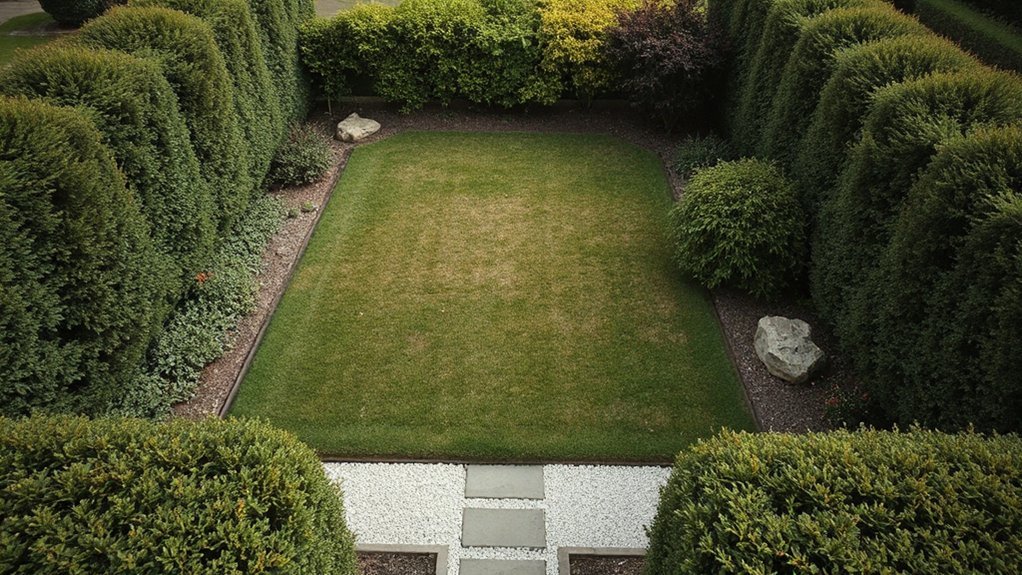
To measure scale and test sightlines effectively, start by confirming your scale is correct and consistent across plans. You’ll verify that every drawing uses the same unit, and you’ll check that furniture, pathways, and plantings align with real-world dimensions.
Measure with a ruler or scale tool, then cross-check against actual site markers. Perform sightline testing by standing at key vantage points and tracing lines toward focal points, noting any visual interruptions or crowding.
Prioritize proportional relationships between objects, ensuring tall elements won’t overwhelm shorter ones. Document discrepancies and adjust drawings before you place features.
Maintain a concise log of scale measurements and sightline observations, updating plans as needed. Precise scale measurement and sightline testing prevent awkward gaps and improve overall yard readability.
Clear Pathways and Simplify Plantings
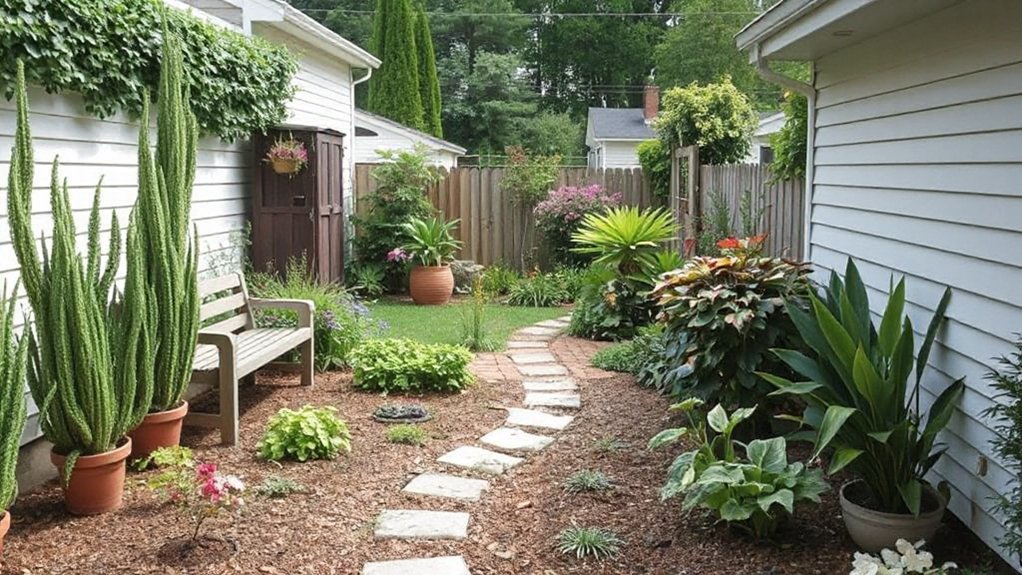
Clear, easy-to-follow pathways and streamlined plantings reduce confusion and keep your garden legible. You design clear routes with edging and compact materials, guiding foot traffic without tangling views. Keep paths straight or gently curved, but avoid abrupt turns that disrupt flow.
Use consistent container sizes and repeating bed shapes to reinforce a simple rhythm. When planting, pick a restrained palette and group like species for quick visual reading. Prioritize low-contrast progression and moderate scale so borders don’t dominate sightlines.
Color coordination matters: select 2–3 hues at most, and repeat them to unify areas. Texture variation should come from foliage form and leaf surfaces, not clutter; combine smooth, matte, and lightly woven textures within limited masses.
This focused approach maintains legibility while still offering subtle interest.
Frame the View With Strategic Focal Points
Strategically place focal points to frame views and guide the eye through the garden. You’ll use deliberate focal point placement to create visual anchors that pull attention to key vistas while masking less attractive angles.
Choose objects with scale, texture, and color that contrast with surrounding plantings, so they read clearly from a distance and at ground level. Position structures, statues, or specimen plants at strong sightlines, aligning them with pathways or edging to reinforce the intended perspective.
Keep maintenance in mind; select durable materials and low-margin lovelies that don’t require constant trimming. Use repetition to establish rhythm, but avoid crowding.
This visual anchoring directs attention, reduces perceived clutter, and makes boundaries feel purposeful rather than arbitrary.
Size It Up: Plant Spacing and Mature Size
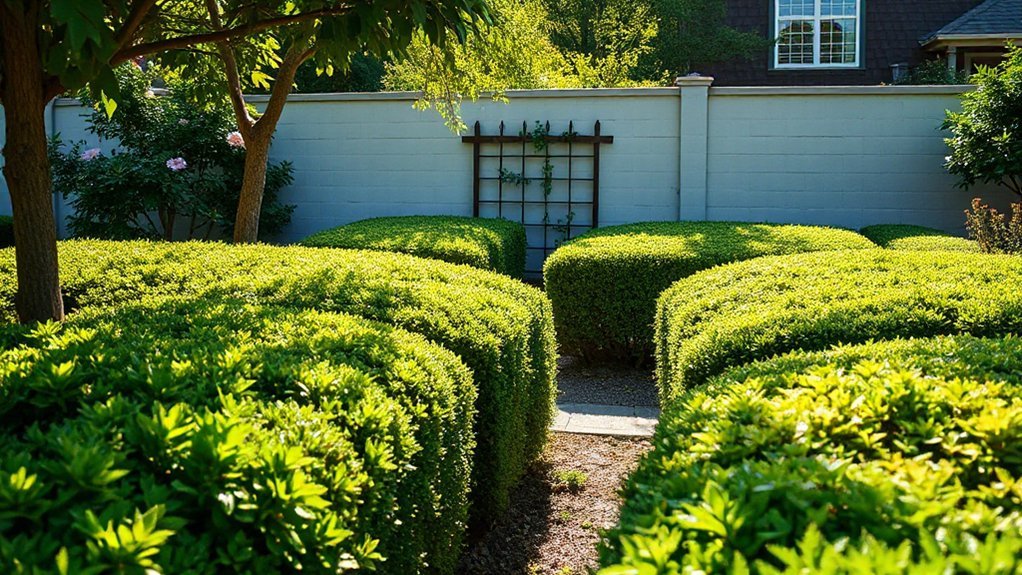
Spacing your plants correctly starts with knowing their mature size and growth habits. When you plan, look up each species’ mature dimensions and habitual spread, not just its height. That knowledge guides you to space for air, light, and future growth, preventing crowding that forces pruning instead of polish.
Consider plant density—how closely you group varieties with similar spacing needs—so you avoid bottlenecks and root competition. Map your beds with a simple diagram, marking mature footprints and canopy reach, then set actual distances accordingly.
Remember that faster-growing varieties often need more room to breathe, while slower growers tolerate tighter spacing. Reassess seasonal color plans against mature size to sustain balance.
Quick, Budget-Friendly Tweaks for All-Season Openness
If you want all-season openness on a budget, start with quick, practical tweaks that don’t require major renovations. Begin by improving color coordination across plants, containers, and hardscape so your yard reads as a unified space year-round. Choose a cohesive palette and repeat it in edging, cushions, and decorative accents to create visual rhythm.
Prioritize plants with extended bloom or seasonal interest, but don’t overplant; negative space enhances perceived openness. Use lightweight, movable furniture and clear sightlines to enlarge the sense of area.
Implement seasonal accents—bright throws or lanterns in winter, refreshed pots in spring—to refresh without bulk. Finally, prune selectively to maintain airy lines and expose more sky, encouraging openness without costly changes.
Frequently Asked Questions
How Do I Assess Sun Exposure Across the Yard All Day?
To assess sun exposure across your yard all day, start with sunlight mapping and track shade patterns from dawn to dusk. Photograph and note sun spots every couple hours, marking obstacle changes.
Use a simple grid to log intensity, direction, and duration. Incorporate seasonal shifts and imperfect reflections.
Shade patterns become clearer with a sun path diagram. Adjust stakes, trees, and structures accordingly, planning dense plantings where light is scarce and sun lovers where it’s abundant.
What Tools Help Measure Actual Plant Growth Over Time?
You want plant growth tracking, and garden measurement tools will help you quantify progress precisely. Use a durable notebook or digital app to log dates, heights, and leaf counts, then compare monthly changes.
Tools like a laser measure, ruler, or garden stake markers keep data consistent. Take photos from fixed angles for visual records, and back up data weekly.
This approach gives you actionable trends you can act on to optimize growth.
Can Scent Cues Affect Perceived Space in a Garden?
Yes, scent cues can alter how you perceive space in a garden. You’ll notice that Aromatherapy influences your sense of openness when fragrances waft from borders or seating areas.
Create Fragrance zones to guide movement and frame focal points, using plant selections and wind factors. Keep paths clear and vary scent intensity by season.
This practical approach helps you feel larger, calmer spaces without structural changes.
Which Colors Visually Expand or Shrink a Space?
Colors can dramatically alter perceived space: light, cool tones expand; dark, warm tones shrink. You’ll use color psychology to cue openness with pale blues and airy whites, and you’ll avoid heavy reds or charcoal near boundaries.
Visual illusions help too—paint ceilings and fences lighter than adjacent walls, and place cool-toned plants toward far zones.
You’ll create depth by layering greens from light to dark, and you’ll test contrasts to maximize perceived room.
How Often Should I Prune to Maintain Openness Year-Round?
Pruning frequency depends on plant type, but for year-round openness, aim for light maintenance every 4–6 weeks in growing seasons and 2–3 times in winter.
Inspect branches monthly, removing inward, crossing, or dead wood promptly.
For shrubs and perennials, deadhead and trim to maintain shape without bottling growth.
Don’t over-prune; it defeats openness.
Track growth spurts and adjust.
This approach preserves year-round openness while keeping the landscape looking tidy and breathable.
Conclusion
You can reclaim a sense of openness by measuring, testing sightlines, and trimming clutter. Keep pathways clear and plantings simple, letting mature sizes guide spacing. Frame views with well-placed focal points and avoid conflicting scales that crowd the space. Quick tweaks—frame a distant horizon, prune dense clusters, and group similar textures. With thoughtful planning, your yard feels larger, brighter, and more inviting—just remember: less is more, and every inch should earn its keep. Your garden will thank you.
About the Author