

You should target towns with fast, predictable rail links to London, prioritizing direct lines, high-frequency services, and minimal transfers. Balance affordable housing with solid local amenities, schools, healthcare, and vibrant neighborhoods. Consider leafy suburbs for space and charm, direct-line towns for reliability, and budget-friendly options that cut commute friction without sacrificing access. Assess total costs, travel time, and reliability using a four-week scouting plan to observe peak-hour conditions. If you keep exploring, you’ll uncover deeper, actionable specifics.
Core Criteria for Evaluating London Commuter Towns

Key criteria for evaluating London commuter towns balance accessibility with quality of life. You appraise transport links first: travel time, frequency, and reliability shape your daily rhythm, not just distance.
Then you weigh housing costs against long‑term value, ensuring affordability without compromising future equity.
Local services matter: healthcare access, schools, and everyday conveniences streamline your routines and reduce friction.
You also consider neighborhood cohesion, safety, and ongoing urban development plans, appraising how changes will affect habitability over years.
Cultural vibrancy feeds daily inspiration, so you value historical architecture and cultural attractions as indicators of timeless character and place attachment.
Finally, you measure environmental factors, walkability, and green spaces, recognizing how they preserve well‑being amid rapid urban demand.
Leafy Suburbs With Easy Rail Access Near London
Rail proximity corresponds to reliable timetables, enabling you to plan around peak or off-peak windows with minimal friction. In these areas, local amenities—cafés, shops, primary schools, and medical practices—support daily routines without necessitating long trips, preserving precious time for family, hobbies, or remote work days.
The aesthetic is deliberate: generous space between homes, mature trees, and comfortable walking routes that encourage gradual progression from suburb to station. Strategically minded buyers weigh property quality, access reliability, and the cadence of neighborhood life.
Direct-Line Towns to the City: Fast, Consistent Services
Direct-line towns to the city prioritize speed and reliability, delivering fast, consistent services that keep your commute predictable and productive. You’ll notice streamlined timetables, minimal transfer needs, and high-frequency trains that reinforce a reliable rhythm for daily planning.
The infrastructure blends efficiency with aesthetic intent, reflecting strategic investments in track geometry, signaling, and station design. As you assess options, consider how historical architecture threads into the station precincts, preserving character while upgrading performance.
Local dining corridors nearby offer practical, quick meals that don’t derail your schedule. These towns reward punctuality with predictable peak flows, reducing lateness risk and optimizing work-home balance.
- Efficient timetables and transfer-minimization
- High-frequency, pulse-like services near historic stations
- Niche local dining that sustains fast, non-disruptive breaks
Budget-Friendly London Commuter Towns That Don’t Sacrifice Convenience

Budget-friendly London commuter towns offer a pragmatic balance of affordability and reliability, delivering solid value without compromising convenience. You’ll find straightforward commutes, consistent rail patterns, and predictable pricing that keeps total costs in check.
Choose locations where pace aligns with work hours, not merely proximity, so peak-time stress stays manageable. Architecturally, these towns exhibit understated charm—historic details integrated into modern planning, preserving character without inflating maintenance.
Local amenities are calibrated for efficiency: quick grocery trips, dependable healthcare access, and practical shopping corridors that cut planning overhead. For cultural texture, look for districts with historical architecture accents and a thriving local cuisine scene that enriches off-peak evenings.
This approach yields steady equity, predictable lifestyle benefits, and resilient long-term value for commuting families.
Town-by-Town Travel Time, Cost, and Rail Reliability
You’ll compare town-by-town travel times and costs to pinpoint efficiency gaps, using rail reliability as the deciding metric.
We’ll quantify time variances and reliability scores to reveal how schedule consistency affects total commuting expenditure.
This approach prioritizes precision, so you can make data-driven choices about where to live for predictable London access.
Travel Time Variances
Travel time varies considerably by town, rail route, and service pattern, so we’ll quantify how long it takes to reach London from each candidate commuter town, the typical costs involved, and the reliability of rail services.
- Travel time ranges reflect direct versus indirect routing, peak versus off-peak frequencies, and transfer requirements.
- Costs incorporate fares, potential seasonality, and total door-to-door expenditure alongside access times.
- Rail reliability shows schedule adherence, typical deviations, and how buffers influence punctuality for onward connections.
You’ll compare commuter car options and alternative transport modes as part of a holistic plan, weighing convenience, cost, and time efficiency to optimize your overall commute strategy.
Rail Reliability Metrics
How reliable are the rails when you’re planning a London commute, and how do town-by-town differences shape your schedule? Rail reliability metrics quantify variability in travel time, cost, and service consistency across line segments. You evaluate town-by-town travel time to map dependable windows, not just averages, because downtime and congestion shift peak costs.
Rail infrastructure quality—track conditions, signaling, and station throughput—directly influences punctuality, maintenance windows, and boarding efficiency. Compare service frequency—how often trains run and how evenly they spread across the day—to estimate risk of delays and missed slots.
Focus on predictable segments for planning and reserve buffers where reliability dips. The result: a strategic timetable that minimizes variability, maximizes transfer options, and aligns with cost targets while preserving comfort during your commute.
Quality-of-Life Factors: Amenities, Schools, and Green Space
Amenities, schools, and green space shape the quality of life when choosing a commute-focused home near London. You evaluate proximity to top schools, reliable local services, and accessible parks that support daily well-being, while balancing property value, safety, and future upgrades.
The aim is a location that sustains productivity without sacrificing culture or fitness, with strategic access to transit, amenities, and community identity. Local cuisine and cultural events become signals of a district’s vibrancy, not afterthoughts.
You trade uncertainty for data-driven comfort, aligning lifestyle with commute efficiency and long-term resilience.
- Proximity to diverse local cuisine scenes and thoughtfully curated cultural events
- Walkable access to parks, trails, and playgrounds embedded in daily routines
- Schools with consistent performance metrics and transparent, forward-looking plans
Compare and Decide: Total Commute Time, Cost, and Stress
To compare options effectively, you’ll quantify total commute time, cost, and stress across candidate areas near London. You’ll map each locale’s door-to-desk duration, transfer dwell times, and peak congestion windows to produce a total time metric.
Then, you’ll attach direct costs: rail and bus fares, monthly passes, parking, and opportunity costs of time. Finally, you’ll assess stress by variability and reliability, recording incident rates, delays, and crowding scores.
Historical architecture informs route neutrality and district appeal, while cultural events influence perceived friction and schedule tolerance.
Synthesize results into a decision matrix emphasizing predictable outcomes and aesthetic fit. Prioritize areas offering balanced totals, high accessibility, and enduring character without sacrificing efficiency.
Hidden Gems: Affordable London-Commuter Towns Worth Exploring

You’ll discover hidden gems where affordability meets practical commuting, balancing price, time, and quality of life. These towns offer reliable rail links, predictable housing costs, and local amenities that ease daily routines.
Consider how each locale aligns with your schedule, budget, and long‑term growth as you evaluate potential London‑area bases.
Hidden Gems Locales
- Practical housing markets near fast lines
- Transit-connected towns with evolving amenities
- Rural retreats and coastal villages within reach
Affordable Commuter Towns
These towns typically offer efficient peak-hour services, enabling predictable commutes and generous time buffers for personal pursuits. Strategically, they host diversified local job markets, reducing dependence on a single sector and fostering resilience amid market cycles.
In practice, you’ll notice well-planned amenities, green corridors, and approachable town centers that maintain neighborhood character while supporting daily needs. For buyers, the appeal lies in balanced cost, accessible transit, and long-term stability in affordable housing coupled with evolving local job markets.
Choosing Your Balance of Home and City Life
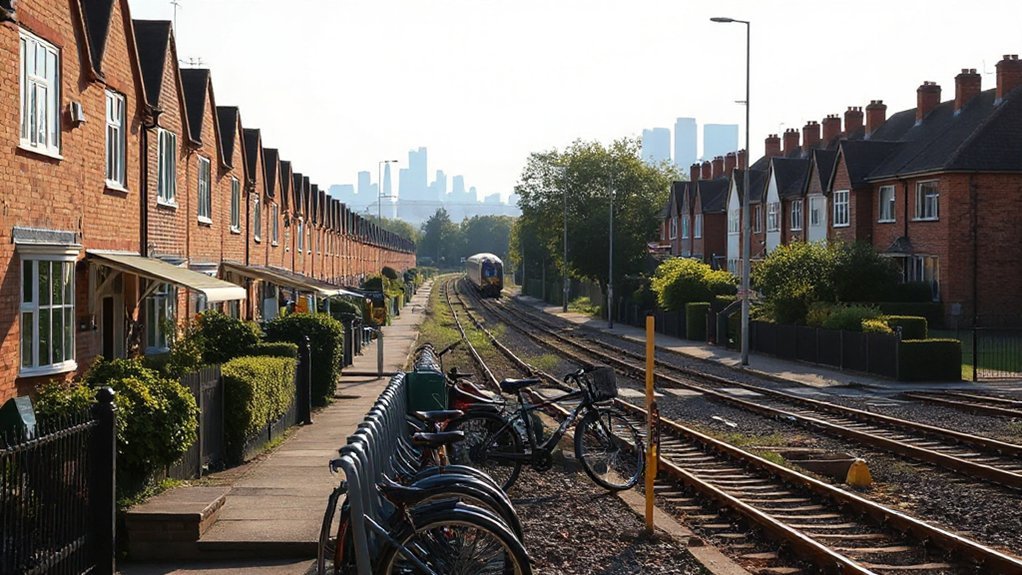
- local community
- cultural events
- transit reliability
Four-Week Scouting Plan Before You Decide
Preparing to choose a place near London means more than spotting a good price or a quick commute; it requires a disciplined four-week scouting plan to verify conditions in real life. You’ll map your needs into tangible tests: transport reliability, housing transparency, and daily rhythm.
Week one, track commute windows and crowding, noting alternative routes.
Week two, observe nearby amenities during peak hours and test safety, lighting, and sidewalks.
Week three, evaluate community engagement and local events to gauge belonging and long-term satisfaction.
Week four, document pricing trends, landlord responsiveness, and noise levels across seasons.
Synthesize findings into a decision matrix, weighting consistent experiences over impressions.
This rigorous approach guarantees you align your ideal neighborhood with actual lived conditions, minimizing regrets and maximizing long-term value.
Frequently Asked Questions
How Do Rail Strikes Affect Commuting Reliability to London?
Rail strikes disrupt reliability, reducing punctuality and planning certainty for you. Frequent interruptions reveal the impact of strike frequency; you should evaluate alternative transportation options, timetable flexibility, and contingency routes to maintain consistent commutes to London.
Which Towns Offer the Best Value for Long-Distance Commuters?
You’ll find towns with affordable housing and strong local amenities, offering the best value for long-distance commuters. You’ll gain savings, reliability, and quality—offsetting strike disruptions—as you prioritize transit efficiency, price stability, and practical, aesthetic work-life balance.
Do Schools and Parks Vary Significantly Between These Towns?
Yes, school quality and park accessibility vary; you’ll notice meaningful gaps in outcomes and recreation. You’ll assess districts by measurable ratings, amenities, and maintenance, then strategize moves that balance academic strength with green space, accessibility, and long-term value.
What Is the Typical Maintenance and Crowding Level on Trains?
Picturing a steady heartbeat, trains run with moderate punctuality, and crowd density stays manageable during off-peak, tightening at peak. You’ll notice maintenance remains adequate; occasional delays occur, but you can plan around predictable schedules and steadier car occupancy.
Are Weekend Services Sufficient for City Weekend Plans?
Weekend service frequency generally suffices for city weekend activities, though you’ll want to plan around peak times and occasional gaps. You assess reliability, schedule gaps, and adjust routes to maximize efficient, aesthetic, strategic city weekend experiences.
Conclusion
You want the dream, not the drift. So here’s the blunt irony: London’s suburbs promise serenity, yet every timetable insists on drama. Train times, fares, and friction—ah, the budget-friendly gems dissolve into commuter tax when you factor stress. Choose your balance: glossy proximity or a quieter pocket with a decent island of time. Map your metrics, mock the chaos, and still sleep. The city calls; your calculated escape answers with a sigh, and a seat by the window.
About the Author