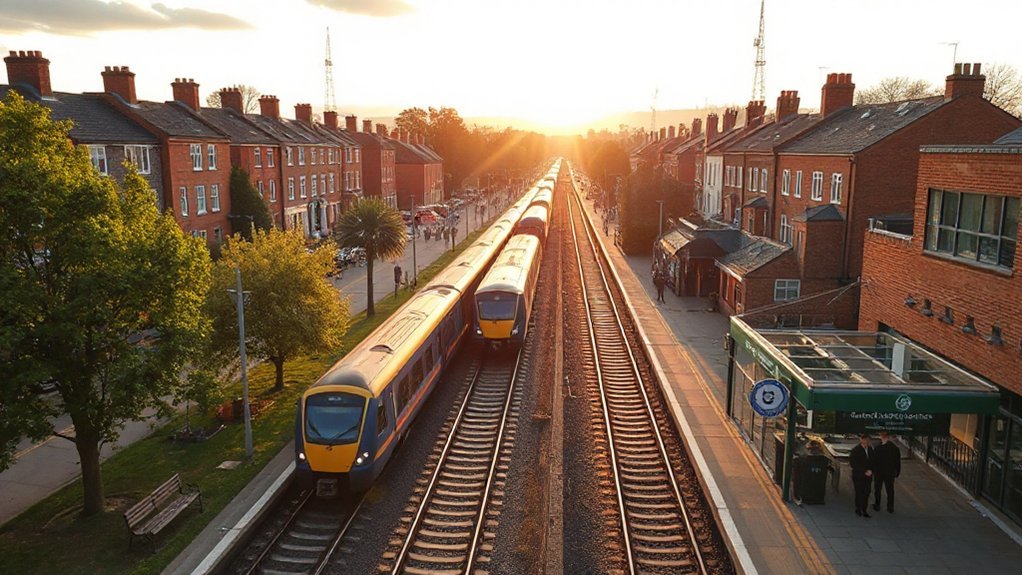
Here are 12 affordable commuter towns near London to contemplate in 2026, chosen for practical rail or road links, solid housing options, and strong everyday amenities. Think Sevenoaks, Loughton, Epsom, Guildford, Bromley, St Albans, Dartford, Bexleyheath, plus other well-connected options with growing services and community life. You’ll weigh total costs, transport fares, and quality of life, then use a quick-filter and checklists to rank favorites. If you keep exploring, you’ll uncover ways to test routes and refine your shortlist.
Why These Towns Fit the 2026 Commuter Brief
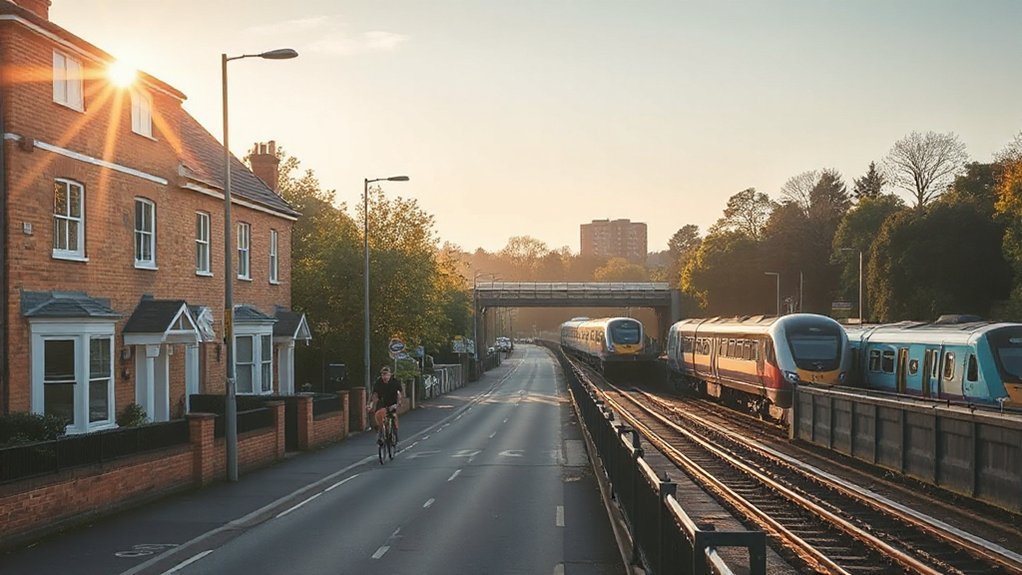
These towns fit the 2026 commuter brief because they strike a practical balance between cost, travel time, and quality of life. You’ll find affordable housing without sacrificing accessibility, with rail or road links that keep you out of lengthy queues.
Rural charm and a tight-knit feel define many neighborhoods, offering steadier prices and less strain than the capital’s outskirts. Local festivals punctuate the calendar, giving you social routines that boost daily motivation and community ties without overpriced venues or packed events.
You gain predictable commutes, reliable services, and a sense of belonging that supports steady budgeting. In short, these towns combine sensible living costs with sensible transport, practical amenities, and authentic regional character you can experience year-round.
How to Judge Affordability Near London
Affordability near London isn’t just about the sticker price of housing. You judge it by total costs and practical value, not headline numbers alone. Start with a clear cost comparison: mortgage or rent, council tax, utilities, commuting, and maintenance.
Factor long‑term housing wealth, resale dynamics, and potential rental yield if you’re thinking of investment. Consider transport costs tied to rail passes, peak fares, and discretionary trips.
Assess neighborhood safety as a baseline for reliability and insurance impacts, since safer areas often lower risk premiums. Look beyond initial affordability to time, convenience, and quality of life.
Compare schools, healthcare access, and local services. Weigh job markets and commuting options, then decide which balance of price, access, and safety fits you best.
Town A: Sevenoaks-Affordable Homes and Fast Rail to London
Sevenoaks offers comparatively affordable housing relative to central London, with options that suit first-time buyers and downsizers alike.
You’ll find fast rail links to London that cut travel times and boost daily convenience.
Look ahead to 2026, where market trends point to steady demand and further value through improved commuter services.
Sevenoaks Housing Affordability
How affordable is housing in Sevenoaks, and what does fast rail to London mean for you? You’ll find Sevenoaks affordability sits above national averages, yet pockets of value exist for first-time buyers and downsizers. The housing market here blends traditional homes with modern builds, often yielding solid resale potential as demand remains steady among commuters.
If you’re budgeting, factor in stamp duty relief windows and shared ownership options that can ease entry into the market. Expect relatively higher upfront costs, but with good rental yields and strong capital growth over time.
Consider long-term affordability through household plans, council schemes, and the locality’s job-hub draw. In short, Sevenoaks offers stable prospects within a commuter-friendly package.
Fast Rail Access to London
Once you’re citybound, fast rail to London from Sevenoaks makes mornings smoother and evenings shorter. You’ll benefit from reliable services that cut journey times and increase predictability for daily plans.
The town’s rail infrastructure is designed for steady performance, with frequent departures and limited delays during peak hours. Trains run to multiple central routes, giving you flexible options to reach key districts quickly.
commuter comfort is prioritized, with clean carriages, ample seating, and accessible facilities that reduce stress on the daily transfer. Regular maintenance and coordinated timetables help you trust your schedule, especially if you’re juggling work, childcare, or appointments.
In practice, fast rail access helps you reclaim time, supporting a balanced, affordable commute without sacrificing connection to the capital.
2026 Market Outlook
Market conditions for Sevenoaks-focused affordable homes and fast rail to London show a steady trajectory: demand remains resilient, inventories are tightening, and price growth is modest but persistent. You’ll find consistent buyer interest driven by reliable commute times and affordable entry points relative to central London.
Supply adjustments are incremental, with new developments prioritizing affordability and transit access. Investment opportunities center on mixed-use schemes and rent-to-buy models that align with peak commuting patterns.
Demographic trends show young professionals and downsizers favoring long-term value and proximity to services, influencing unit mix and pricing. While macro uncertainty persists, the local market benefits from improving infrastructure and targeted planning.
Stay disciplined: analyze yield, vacancy, and resale resilience before committing capital.
Town B: Loughton-Good Value With Reliable Rail Links
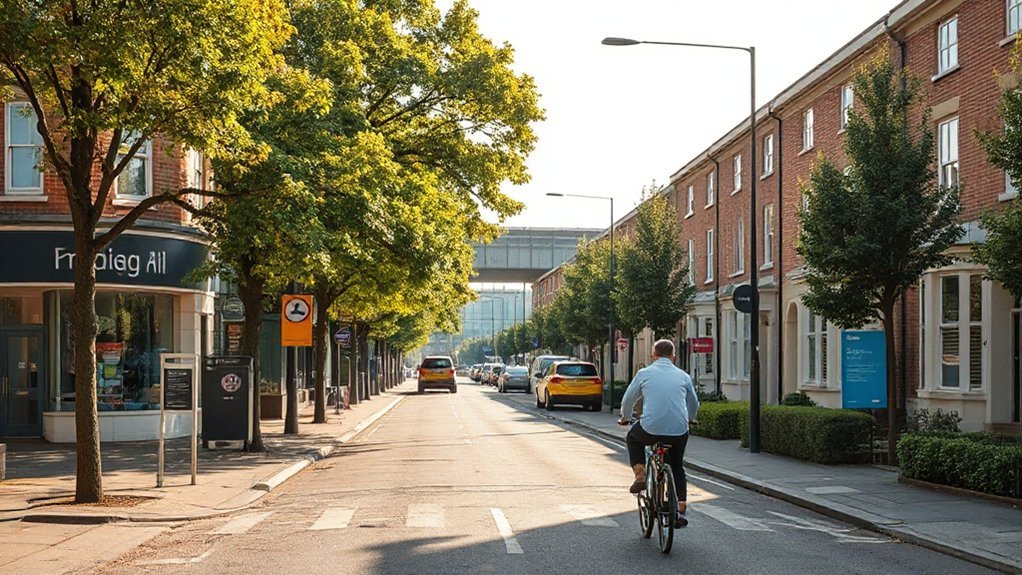
Loughton stands out for solid value and dependable rail links, making it a practical choice for commuters near London. You’ll enjoy a straightforward commute, reliable service, and affordable housing relative to central zones. The town supports a steady commuter lifestyle with convenient shops, green spaces, and everyday flexibility.
If you’re considering property investment, Loughton offers sensible entry points and potential for modest gains as rail demand stays stable.
- Reliable trains keep your schedule predictable and stress low
- Budget-friendly homes with growth potential over time
- Local amenities that boost daily convenience and resale appeal
This mix keeps you focused on practical goals: steady transit, sensible costs, and predictable value growth.
Choose Loughton for steady, uncomplicated commuting and solid ROI.
Town C: Epsom-Green Neighborhoods and Growing Amenities
Epsom is gaining traction for its green neighborhoods and expanding amenities, making it an appealing choice for commuters who value quality of life alongside practical transport links. You’ll notice a concentration of green spaces that invite daily jogs, weekend strolls, and easy access to nature without leaving town.
Neighborhood amenities have grown beyond basics, featuring better supermarkets, casual dining, and coffee spots that suit a working rhythm. The town center remains compact, so you won’t waste time wandering for essentials.
Rail and bus options align with typical London commutes, while local roads avoid bottlenecks during peak hours. With ongoing investment in parks, tree-lined streets, and community spaces, you’ll find a balanced mix of affordability and convenience that supports a predictable routine.
Town D: Guildford-Strong Schools and Family-Friendly Charm
Guildford stands out for strong schools and a family-friendly vibe that makes everyday life smoother. You’ll notice solid school quality around the town, with reliable Ofsted results and consistent progress.
Beyond academics, family activities abound, from parks to clubs that fit different ages and interests. Commuting is practical, with straightforward access to London and nearby amenities that reduce daily frictions.
You’ll value safe streets, walkable centers, and responsive local services that keep routines predictable.
- Access to top-rated schools and tutoring options
- Active community programs, parks, and kid-friendly events
- Efficient rail links and bus routes that save time
This combination supports everyday reliability, practical planning, and a welcoming, stable environment for growing families.
Town E: Bromley-Quick Rail Journeys Into London
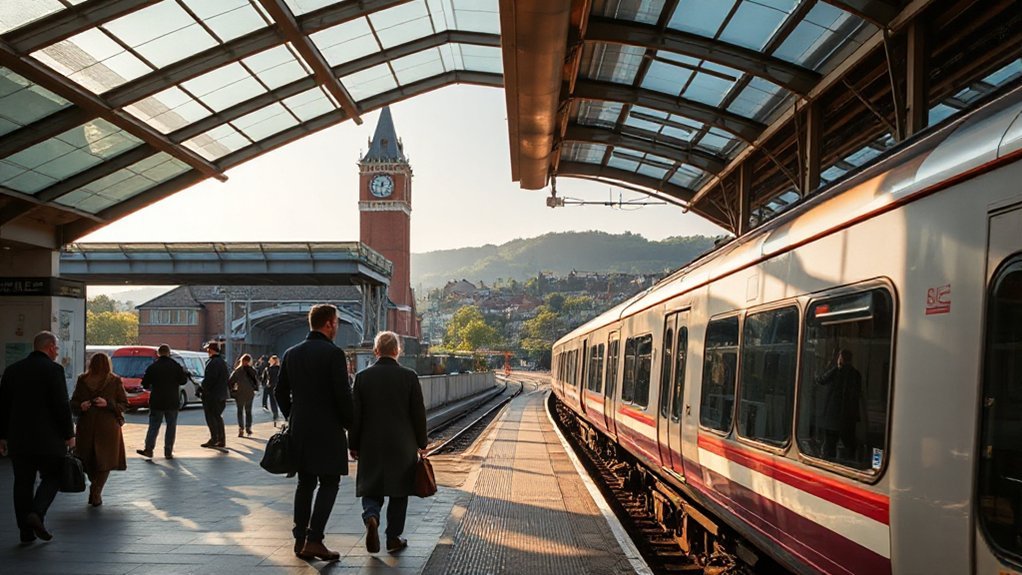
Bromley offers quick, reliable rail journeys into London, making weekday commutes straightforward and predictable. You’ll find frequent services from Bromley South, with direct links to Victoria and London Bridge that fit typical working hours. The commute supports a practical commuter lifestyle, balancing early starts with predictable arrival times.
Weekend options remain limited but dependable, helping you plan family time without sacrificing weekday consistency. Transportation infrastructure in Bromley has been reinforced by upgrades to signaling and track maintenance, ensuring fewer delays during peak periods.
Proximity to major roads and bus connections adds redundancy for non-rail legs of your trip. Overall, Bromley delivers a concise, cost-effective route for daily needs, emphasizing reliability, speed, and clear, repeatable travel patterns.
Town F: St Albans-Town Centers With Value-for-Money Dining and Retail
St Albans Centers offer solid value for money on dining and retail, with a tight mix of affordable cafes, casual eateries, and queue-free shops that keep budgets in check. You’ll find local cuisine options that satisfy quick lunches and relaxed meals alike, paired with practical retail choices that stretch your pound.
The city center delivers retail diversity without the crowds you fear in bigger towns, so you won’t miss out on style or substance.
- Satisfying bites at wallet-friendly prices
- Calm shopping with diverse, practical picks
- Fast, friendly service that respects your time
This balance makes St Albans a sensible add-on for 2026, where you get reliable dining value and steady retail variety without sacrificing quality.
Town G: Dartford-Practical Commute Options by Road and Rail
Dartford makes practical commuting straightforward, with solid road and rail options that fit busy schedules. You’ll find reliable rail links via Dartford Station, frequent Southeastern services, and straightforward road access via the M25 and A2, reducing overall travel time.
For alternatives, consider alternative transportation like bus routes and cycling corridors that connect town centers to stations and business districts.
On a typical day, you can reach central London within an hour, depending on timing, with park-and-ride options available near major junctions to ease parking pressure.
Local amenities cluster near the town center, supporting quick runs for groceries, cafés, and services without long detours.
Town H: Bexleyheath-Safeguarding Investment With Future Growth
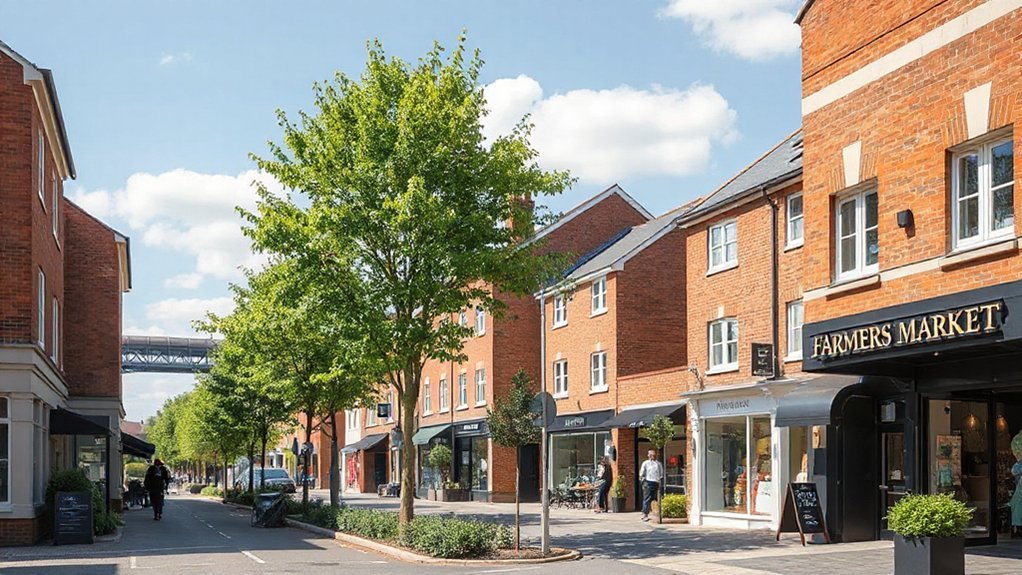
Bexleyheath is safeguarding investment for future growth by aligning development with demand, upgrading transport links, and prioritizing infrastructure that supports business and residential expansion. You’ll notice smarter planning that stabilizes property taxes and boosts local amenities, making daily life simpler and more predictable.
Growth focuses on sustainable density, mixed-use sites, and accessible services, so commuting stays convenient while homes stay affordable.
- You gain dependable access to trains and buses that shorten your door-to-door time.
- You benefit from upgraded shops, schools, and healthcare that improve day-to-day quality of life.
- You enjoy clearer long-term value as smart regulation shields you from volatile market swings.
How to Compare Shortlisted Towns Quickly (Quick-Filter + Checklist)
To compare shortlisted towns quickly, use a simple quick-filter and a practical checklist to narrow options in minutes. Start with core criteria: commute time, rail links, and price range.
Next, build a minimal checklist: property costs, council tax, schools or amenities if relevant, safety, and future growth signals.
Use a quick-filter to rank each town on these factors, then single out top 3 for deeper review.
Do a cost comparison by comparing typical monthly housing costs, transport fares, and utility bills side by side.
Consider lifestyle factors too: green spaces, local cafes, community vibe, and access to major routes.
Aim for a balance between affordability, convenience, and quality of life to identify the most sensible long-term choice.
Next Steps: Plan a Sample 1-Day Rail Test Visit
Plan a sample rail visit by outlining a tight route and timebox, so you can observe morning peak vs. off-peak performance.
Identify key metrics for the test—travel time, on-time reliability, crowding, transfers, and ticket costs—and track them for each leg.
Use these findings to compare towns quickly and decide which to probe further.
Plan A Sample Rail Visit
A practical plan for a sample 1-day rail test visit starts with a focused route and a tight timetable, so you can gauge both line quality and station efficiency without overcommitting. You’ll map a short loop that tests peak and off-peak variability, noting availability, frequencies, and transfer ease. This test shows urban expansion effects on service and how commuting efficiency holds up across a typical day.
- Clear timing windows save you time and stress
- Real-world station checks reveal hidden delays
- Quick adjustments optimize future trips
Keep notes concise: log times, crowd levels, and any accessibility gaps. Your findings guide whether the chosen town remains viable for regular commuting and how well it supports your planned lifestyle and work needs.
Key Metrics For Route Test
Key metrics for a route test focus on reliability, clarity, and cost. You’ll measure punctuality, frequency, and fault rates during peak and off-peak windows to gauge route reliability.
Clarity means you track schedule visibility, wayfinding, and transfer ease, noting any ambiguous signs or confusing platforms.
For cost, you compare transportation costs, fare structures, and seasonal discounts to determine overall affordability.
You should also record route efficiency by calculating total travel time versus planned time, including transfers and wait periods.
Collect data on crowding, boarding times, and step-free access to assess practicality for typical commuters.
Use concise logs, timestamps, and sentiment notes to support decisions.
The goal: a predictable, transparent, and cost-conscious test that informs real-world choices.
Frequently Asked Questions
How Do Property Taxes Vary by Town Near London?
Property taxes vary by town, but you’ll typically see higher rates where property values rise, impacting property appreciation. Local amenities, schools, and services keep values buoyant, while discounts may apply for certain bands; compare council tax bands carefully.
Which Towns Have the Best School Catchment Data?
School rankings show where you’ll find strong catchment zones; these towns consistently outperform peers. You’ll want to compare data sources, notice patterns, and act quickly when numbers align with your priorities and your child’s education goals.
Are There Hidden Transport Costs Commuters Should Budget?
Yes—hidden transit fees and commuting time expenses can surprise you. Budget for peak fares, parking, rail supplements, and possible monthly caps, plus time costs from delays. Track seasonal changes, transfer charges, and weekend/late-night price differences.
What Are Typical Rental Yields in These Towns?
Rental yields vary, often 4–7% in steady markets, but you’ll see higher if rents rise with demand; rental income meets your cash flow needs, revealing investment potential when you diversify, price, and manage vacancies effectively.
How Seasonal Is Buyer Demand Around Commuter Towns?
Demand peaks seasonally, then cools between school terms and holidays. You’ll notice seasonal migration patterns shape demand, with sharper moves in spring and autumn. Local amenities fluctuations influence buyer timing, so monitor price and stock swings closely.
Conclusion
You’ve got a solid shortlist to explore, so plan a 1-day rail test visit to gauge real-world costs and commute feel. Note: the average house price in these towns often sits around 8–12x typical yearly salaries, depending on area and rail zone. Observe peak vs off-peak travel times, parking costs, and local amenities. Quick tip: Dartford and Loughton show especially reliable rail links, which can shave minutes off your daily grind and stabilize overall transport costs.
About the Author