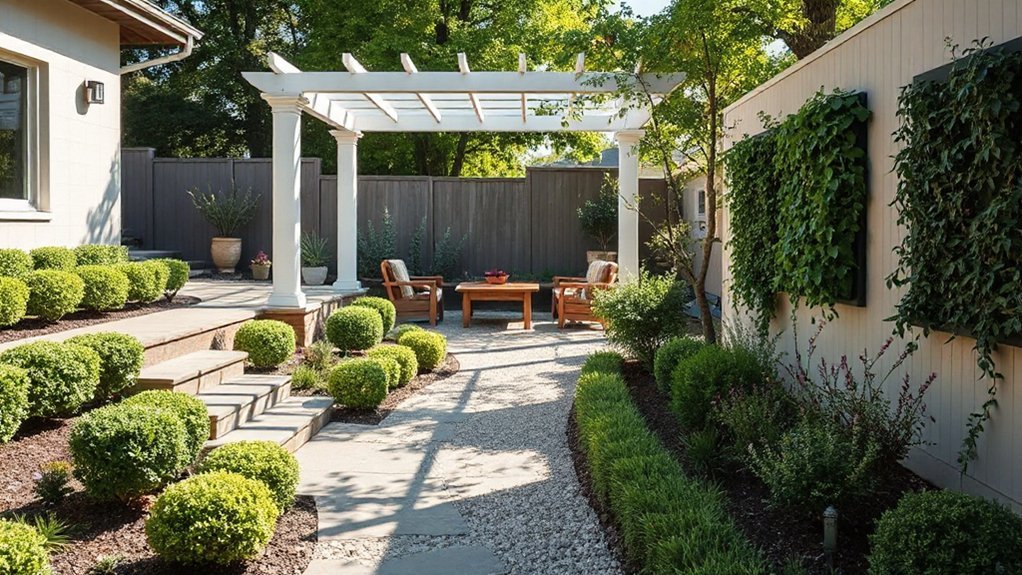
Group your yard into clear zones for entertaining, relaxing, and growing. Plan simple, scalable paths that guide traffic and link entrances to seating, dining areas, and beds. Create depth with height and texture—tall back plantings, mid layers, and low foregrounds—paired with well-chosen focal points. Add shade structures for year-round comfort, versatile seating, and weatherproof lighting. Choose durable, modular materials and low-maintenance features to keep the space inviting long-term. You’ll uncover more ideas as you continue.
Assess Your Yard: Space, Sun, and How You’ll Use It
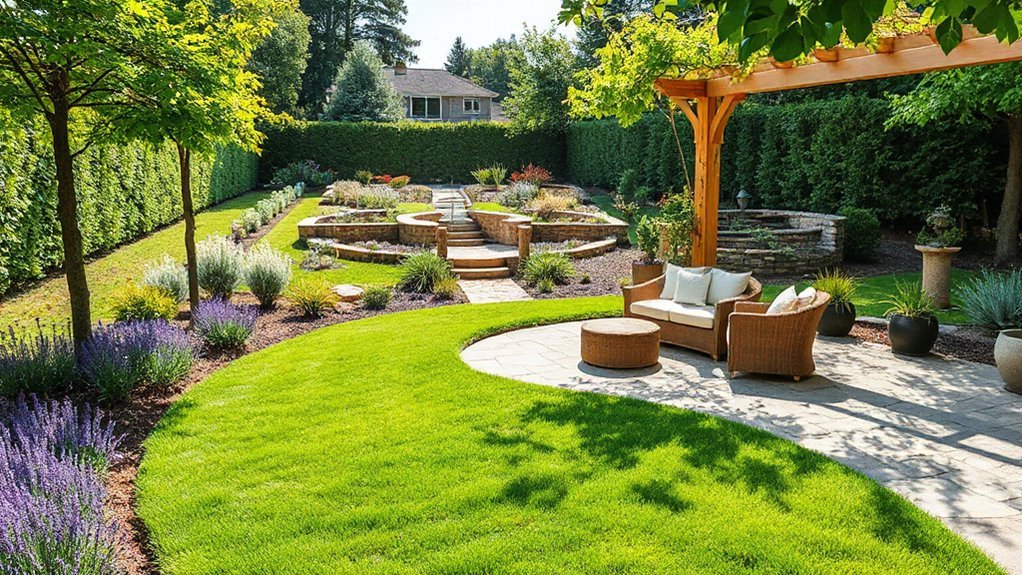
Before you plan any beds or pathways, map your space and note how sunlight moves across it from dawn to dusk. You’ll gauge usable area, traffic flow, and function, then align zones with daily rhythms.
Measure setbacks, slopes, and drainage to avoid erosion or waterlogging. Assess current soil health—test color, compaction, and organic matter, and plan amendments accordingly.
Identify existing features worth preserving, like mature trees or focal points, and decide where you’ll place garden art to anchor views.
Determine how you’ll use the yard: dining, lounging, play, or contemplation. Consider irrigation needs and accessibility for all users.
Acknowledge sun patterns for crops and shade demand for seating. This clarity guides layout, optimizes soil health, and coordinates formal and informal spaces.
Define Entertaining, Relaxing, and Growing Zones
Now that you’ve mapped your yard, set clear zones for how you’ll use each area. Define entertaining zones near outdoor dining and paths for flow, so entertaining activities stay organized without encroaching on quiet spaces.
Design relaxing zones as relaxing retreats with soft lighting, comfortable seating, and shade. Keep noise and foot traffic minimal to preserve serenity.
Reserve growing zones for vegetables close to utilities and sun, with accessible beds and neat edging to simplify maintenance.
Use sightlines from common gathering spots to assess visibility and safety, ensuring guests can move smoothly between zones.
Label boundaries with subtle markers or aesthetic changes in materials to reinforce purpose without clutter.
Balance scale, accessibility, and shelter to maximize year-round enjoyment.
Plan a Simple, Scalable Path System for Easy Navigation
Plan a simple, scalable path system that guides movement without clutter. You design routes that repeat logical units: main aisles, secondary spurs, and occasional detours for tasks.
Choose durable, low-maintenance materials that hold up across seasons, with clear edges to define boundaries. Prioritize straight segments for quick orientation, then introduce gentle curves to reduce abrupt stops and improve navigation flow.
Guarantee curves align with sightlines to entrances, seating areas, and essential garden zones, so you can anticipate where you’re headed next.
Keep widths wide enough for two-way traffic, and install obvious wayfinding cues at intersections.
Limit material variety to two complementary tones to avoid visual noise.
In practice, test a rough layout, adjust spacing, and confirm accessibility and safety, reinforcing garden pathways that invite exploration without confusion.
Build Depth With Height and Texture
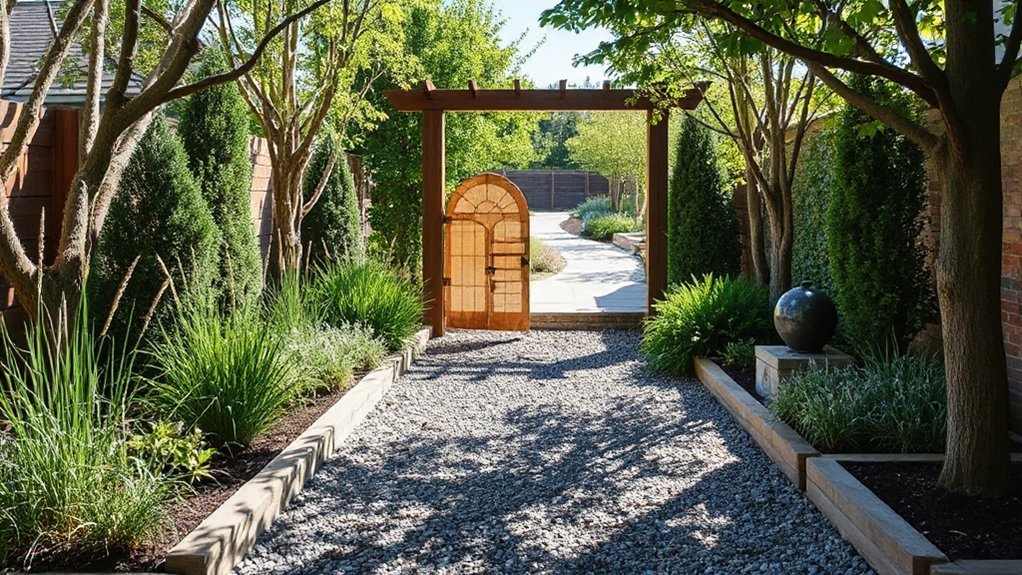
Height and texture add perceptual depth to your garden without expanding the footprint. To build depth, structure your plan with vertical layering: place tall plants at the back, medium heights mid-scene, and low forms near the foreground. This arrangement creates a tiered skyline that draws the eye inward.
Use color, foliage, and branching to add textural contrast—think glossy, matte, rigid, and soft surfaces—so each layer stands out. Avoid crowding; negative space defines depth as effectively as plants do. Repeat motifs across layers to unify the composition while preserving contrast.
Choose plants with varying growth rates to maintain the illusion over seasons. Pair plant textures with structural elements—trellises, screens, or sculpture—to anchor the scene without overpowering it.
Choose a Focal Point and Anchors That Ground the Space
Identify a visual focal point first, then anchor the space with built-in elements that feel intentional.
Use furniture, paths, or plantings as anchors to ground views and create clear spatial hierarchy.
Keep the focal point and anchors aligned with your overall rhythm and scale for a cohesive garden feel.
Identify a Visual Focal Point
A strong focal point anchors the garden and guides the eye, creating a natural flow from one area to the next. You should select a single, intentional centerpiece that reads clearly from multiple angles. Treat height, texture, and color to make it unambiguous at a distance, then support it with smaller anchors that echo its qualities.
Place the focal at an accessible sightline—entry paths, seating nodes, or passages—so you naturally orient your space. Use garden art or a standout specimen plant to establish instant recognition, then reinforce the theme with decorative accents along surrounding vistas.
Avoid clutter that competes with the centerpiece; instead, curate contrasts in form and scale. Keep attention on the focal while allowing peripheral elements to complement rather than compete.
Anchor With Built-In Elements
Choose a built-in centerpiece—like a striking tree, a sculptural feature, or a persistent, low-maintenance structure—and let it ground the space. You’ll create a clear, enduring focal point that anchors routes, seating, and rhythm, while reducing visual clutter.
Use built-in elements to reinforce flow, not overpower it, by selecting materials and colors that echo the surrounding landscape. Incorporate practical anchors that invite lingering and movement.
1) Built-in seating that follows sightlines and subtly segments zones without interrupting views.
2) Integrated planters that frame pathways and add seasonal texture with minimal maintenance.
3) A cohesive edge or boundary feature—stone, brick, or timber—that ties the focal point to the rest of the layout.
Create Spatial Hierarchy Anchors
To ground the space, start with a clear focal point and strategic anchors that define hierarchy, guide movement, and cue rhythm. Your focal point should be visually strong yet complementary, drawing attention without competing with other elements.
Establish anchors at varying heights and scales—a sculptural plant, a freestanding bench, or a water feature—that frame paths and create reading lines through the garden. Use garden aesthetics to balance texture, color, and form, ensuring each anchor reinforces the overall theme.
Align plant selection with sun, soil, and maintenance realities; repeat a few species for cohesion while varying foliage and bloom times to sustain interest.
Maintain clear sightlines, then layer soft lighting or reflective surfaces to extend the focal moment into evening.
Result: a coherent, navigable space with disciplined rhythm.
Select a Cohesive Plant Palette for the Garden Layout
Start by picking a cohesive plant palette that reflects your site’s conditions and your design intent. You’ll align color, texture, and scale to create a unified outdoor room. Choose plants with compatible growth rates and seasonal interest to maintain order over time. Focus on three core elements: color coordination, plant selection, and maintenance cadence. This guarantees your garden reads as a single, intentional composition rather than a random assortment.
- Select a dominant color family and use contrasting accents sparingly to highlight focal points.
- Pair textures (fine, medium, bold) to add depth while preserving readability across seasons.
- Match mature size with available space, choosing repeatings for cohesion and ease of care.
Add Shade and Shelter for All-Season Comfort
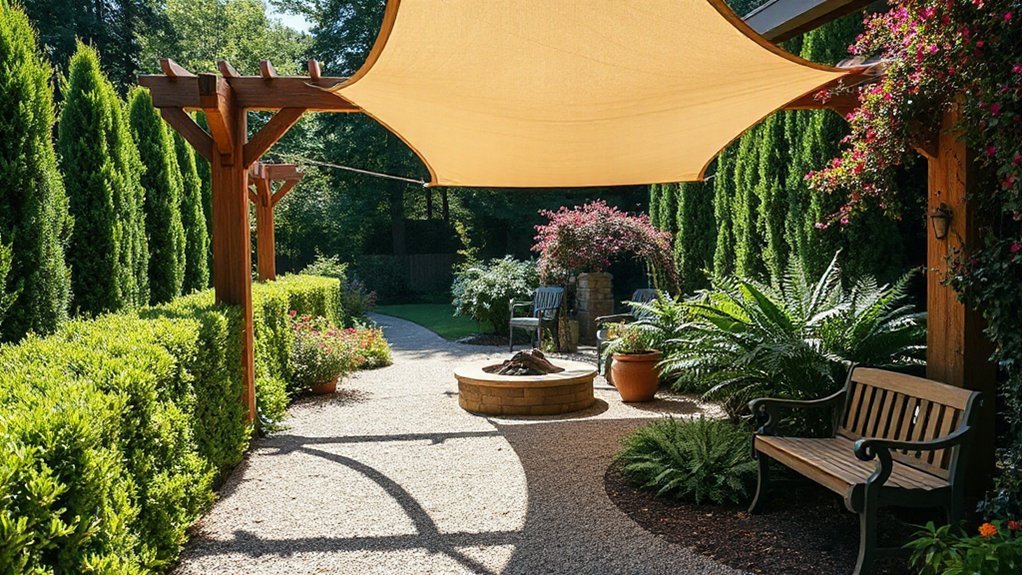
Shade and shelter anchor comfort across seasons, so design now for protection from sun, wind, and rain while preserving openness and light. You balance shade and shelter by selecting adaptable structures that complement your layout without overpowering sightlines.
Shade structures should be strategically placed to protect primary seating and pathways while allowing airflow. Consider pergolas with retractable fabric, latticed canopies, and adjustable sails for sun control.
Shelter options include fully roofed pavilions, arbors, and covered patios that extend usability into cooler mornings and light drizzle.
Prioritize materials with durability, low maintenance, and weather resistance. Install appropriate drainage and wind anchors to prevent damage.
You’ll achieve year-round comfort by harmonizing shade structures with coverings options that enhance usability, preserve aesthetics, and enable seamless passages between outdoor zones.
Seating and Flexible Outdoor Rooms
- Choose modular lounges that reconfigure into different seating arrangements.
- Pair weather-resistant chairs with movable coffee tables for flexible use.
- Layer textiles and rugs to cue distinct zones while remaining cohesive.
Lighting and Weatherproof Materials for Year-Round Use
Lighting and weatherproof materials determine year‑round usability; choose sources and finishes that resist moisture, temperature swings, and UV exposure while delivering consistent ambiance. You’ll prioritize sealed housings, corrosion‑resistant hardware, and powder‑coated metals that tolerate humidity and sun.
Opt for UV‑stable finishes and gaskets that prevent moisture ingress without compromising aesthetics. For lighting, solar powered fixtures offer easy placement and low maintenance, provided housings are rated for outdoor use and have rainproof seals.
Pair these with weather resistant fabrics for cushions and shade structures, ensuring fade resistance and mold deterrence. Select cables and connectors with UV and moisture protection, and conceal them behind weatherproof enclosures.
Maintain performance by cleaning fixtures seasonally and inspecting seals, wiring, and plugs before seasonal shifts.
Budget-Smart, Modular, Low-Maintenance Solutions
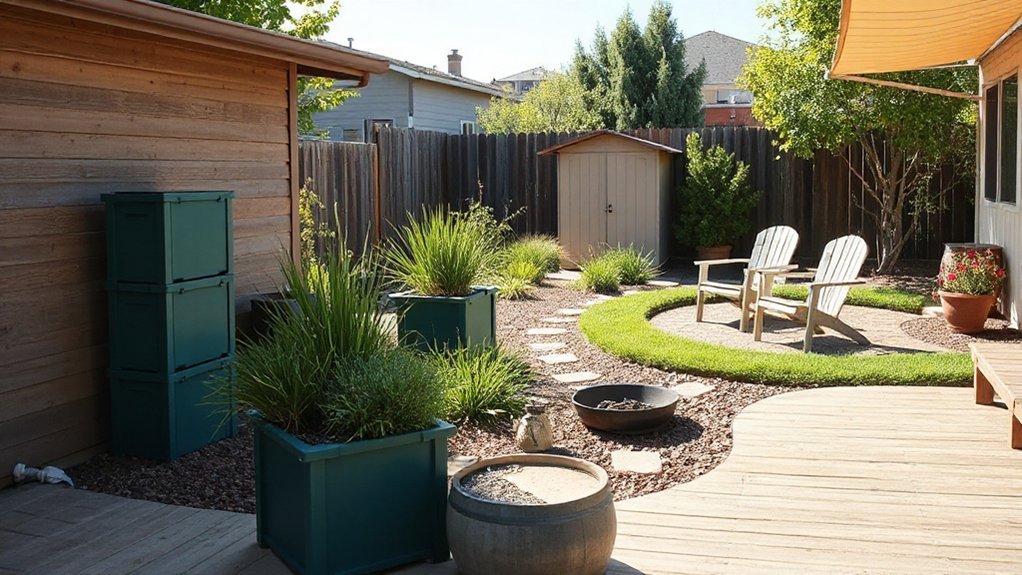
You’ll start with budget-smart materials that deliver durability without breaking the bank.
Modular components let you expand or reconfigure as needs change, keeping upfront costs and waste low.
Choose low-maintenance options to simplify upkeep while preserving garden flexibility.
Budget-Smart Materials
Are you aiming for a budget-smart garden without sacrificing durability or effect? Budget-smart materials let you strengthen outdoor spaces without overspending. Choose affordable, readily available options that resist weather and wear, while keeping maintenance low.
Prioritize materials that support modular layouts and quick assembly, reducing overall project time and cost.
- Recycled composite decking for patios: durable, low-maintenance, and available in several colors.
- Concrete pavers with simple patterns: affordable, long-lasting, and easy to replace in sections.
- Plastic lumber and metal edging: lightweight, weather-resistant, and DIY-friendly for clean borders.
With these affordable alternatives, you’ll execute DIY project ideas efficiently. Maintain focus on durability and aesthetics, and plan for reuse, not repurchase, to maximize value.
Modular, Low-Maintenance Solutions
Modular, low-maintenance garden solutions deliver flexibility and value without sacrificing style. You’ll implement modular planters, seating, and zones that adapt as needs change, minimizing ongoing upkeep. Choose durable components that snap together, reducing installation time and expert costs.
For ground cover, artificial turf offers a uniformly tidy look with minimal maintenance, freeing you from regular mowing and edging. Pair it with a robotic lawnmower for precise, autonomous upkeep, maximizing time for other outdoor activities.
Use modular irrigation and storage systems to streamline chores, and keep wiring and hoses concealed for a clean aesthetic. Color and texture remain deliberate: select low-contrast palettes and compact specimens that thrive in your climate.
Prioritize weatherproof finishes and simple, scalable layouts to preserve long-term value and appeal.
Frequently Asked Questions
How Do I Maximize Small Yard Space Without Crowding It?
Yes—maximize small yard space by using vertical planting and container gardening, so you keep sightlines open. Install railing planters and narrow shelving, choose compact perennials, and group by sun; you’ll create easy-access zones without crowding.
What Planting Schemes Work Best for Year-Round Color?
Ironically, you’ll conquer year-round color with perennial planting and smart color coordination. You’ll mix bold, cool, and warm tones, keep foliage seasonal, and structure beds precisely so every season delivers vivid, dependable color for you.
Which Materials Withstand Coastal or Harsh Climates Best?
Drought tolerant plants endure coastal conditions best, while corrosion resistant materials withstand salt spray and wind. You’ll choose tough, low-maintenance varieties and use treated metal or composite options to guarantee longevity in harsh climates.
How Can I Hide Utilities and Unsightly Views Effectively?
Hide utilities with strategic screens and smart plantings, you’ll achieve seamless view screening. Start by oversized screens or trellises, then layer textures, and finally add foliage to soften edges while keeping access and airflow intact. Utility concealment, view screening.
What Budget-Friendly Upgrades Create Instant Curb Appeal?
Install planting techniques like low-cost perennials for instant color, then create decorative pathways with crushed gravel and edging. You’ll curb costs while boosting appeal, adding structure and texture that guides visitors and highlights your landscape’s best features.
Conclusion
You can transform your yard into a living, breathing extension of your home by stacking zones, paths, and shade into a cohesive whole. Plan flexibly, choosing scalable elements that grow with you. Ground the space with a strong focal point and anchors, then layer height, texture, and lighting for year‑round charm. Budget smartly, favor modular, low‑maintenance pieces, and keep accessibility in mind. Think of your garden as a stage—you’re the director, and every feature is a line of dialogue.
About the Author