To boost curb appeal, choose durable exterior paints that resist fading, peeling, and chalking, and finish surfaces with textures and sheens suited to each material. Pick a cohesive palette that treats body, door, and trim as a system, testing base colors and nearby hues in natural light. Use a door color that pops or harmonizes, and frame windows with shutters for rhythm. Maintain with regular cleaning and touch-ups, and you’ll uncover more practical steps as you explore further.
Key Exterior Paint Qualities That Boost Curb Appeal
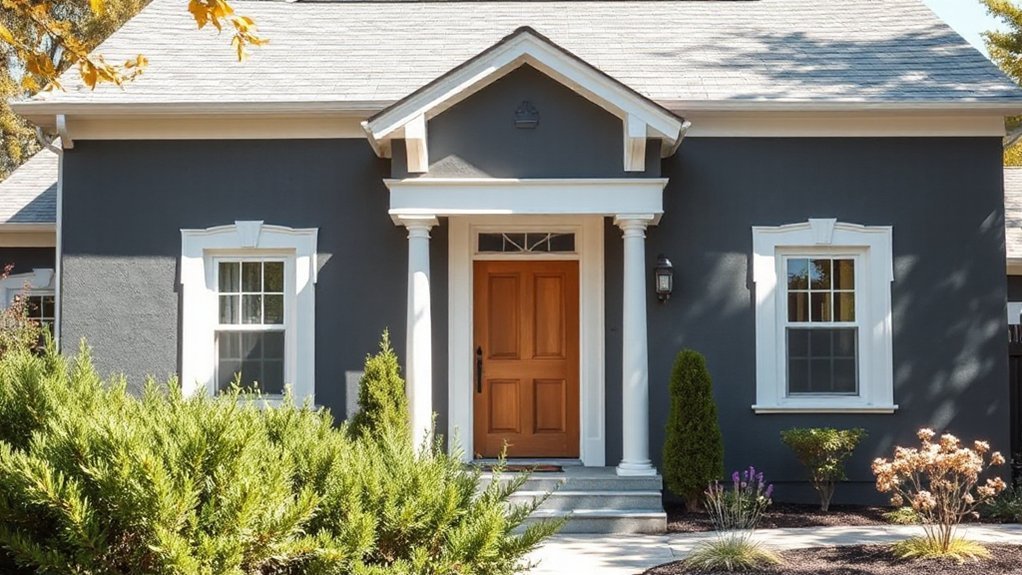
Curb appeal starts with color choices that read well from the street and hold up over time. You’ll look for exterior paints that resist fading, peeling, and chalking, so your investment stays fresh for years. Choose durable finishes matched to each surface, and learn how sheen affects perception and maintenance.
Color psychology helps you select hues that feel inviting from curbside—cool tones for calm, warm tones for approachability, with contrast used sparingly on accents to guide the eye. Consider historical color schemes to anchor your home in its era or neighborhood, then adjust for modern lighting.
Test large swatches at different times of day, observe under sun and shade, and prioritize accessibility and readability for doors, trim, and siding.
How to Pick a Harmonious Exterior Palette (Body, Door, Trim)
Creating a harmonious exterior palette starts with a clear plan that treats body, door, and trim as a single, cohesive system. You select a base body color, then test nearby hues on the color wheel to reveal complementary relationships that feel intentional, not random.
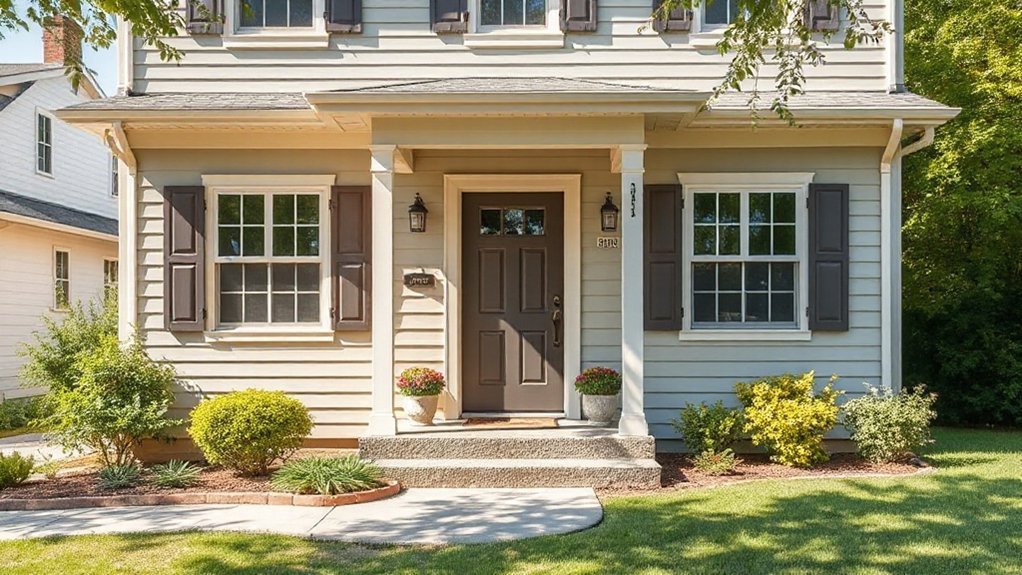
Let the door anchor your scheme with a shade that pops or harmonizes, then pull the trim into a neutral or accent role that supports rather than competes. Consider color psychology: lighter doors can invite, darker bodies read solid, and white or pale trims brighten features without stealing focus.
Maintain balance by limiting variations to two or three core tones, plus a neutral grounding. Finally, test samples in natural light at different times to confirm the palette reads consistently across exposures.
Durable Finishes, Textures, and Sheens for Weathering Well
Choosing durable finishes, textures, and sheens is about pairing materials that weather gracefully with your exterior palette. You’ll favor textured finishes that disguise minor flaws and add tactile interest, while selecting weather resistant sheens that repel moisture and resist fading.
For siding, opt for semi-gloss or satin to balance cleanability with subtle reflectivity; these sheens handle grime and washing without showing every streak. In trim and accents, use low-luster coatings to minimize glare while keeping protection high.
Consider pigment depth and UV stabilizers to prevent chalking and color shift over time. Test color under varied light, then commit to a finish system designed for your climate.
Regular maintenance—spot cleaning and timely resealing—extends durability and preserves curb appeal.
Strategic Accents: Positioning Doors and Shutters for Visual Focus
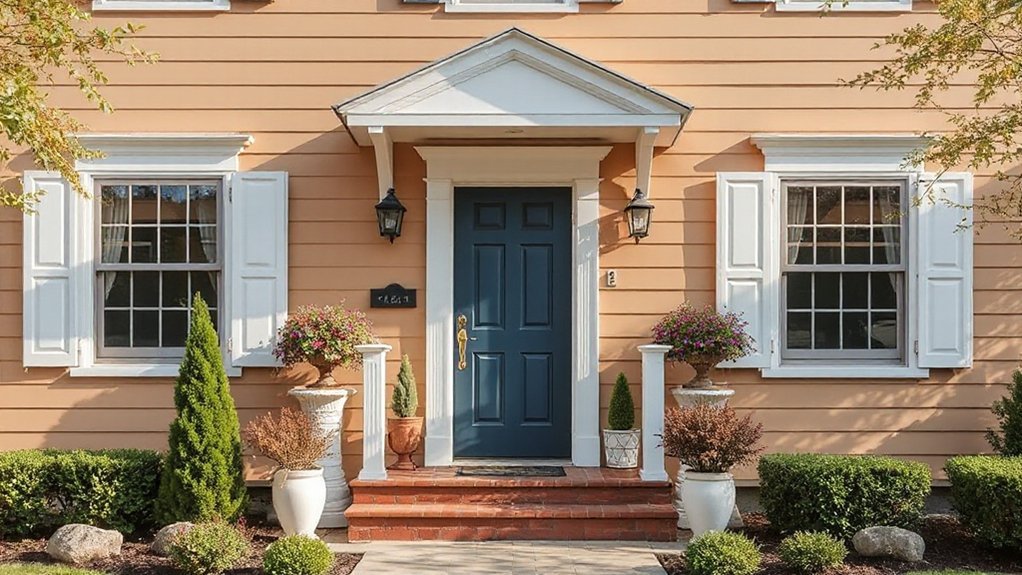
Strategic accents start with where you place doors and shutters to anchor your facade. When you position doors and frames thoughtfully, you create a clear focal point and guide the eye across the exterior.
Use color contrast to make architectural features pop, ensuring the entrance doesn’t disappear into siding. Shutters can frame windows and reinforce rhythm, while doors set the tempo of curb appeal.
- Align doors with major architectural cues (corners, porch posts) for cohesion
- Choose a door color that contrasts with the wall for a strong focal point
- Use shutters to balance window groups and emphasize symmetry
- Consider scale and proportion to maintain harmony with the home’s silhouette
Test, Apply, and Maintain Your Exterior Look
Now that you’ve positioned and colored key elements, you’ll test how your exterior looks in real life and then refine it as needed. Start with daylight checks, noting color psychology cues—how hues read from curb to doorstep, and how contrasts affect perceived size.
Test on multiple surfaces: siding, trim, doors, and shutters, recording any shifts in warmth or brightness. Use paint application techniques that keep edges crisp and finishes uniform, applying in dry, mild conditions to prevent sheen inconsistencies.
Step back frequently, evaluating proportion, coherence, and curb appeal from several angles. Mark adjustments to color balance, then recoat as necessary.
Finally, maintain your look with light cleaning, periodic touch-ups, and a sensible maintenance calendar to sustain the intended mood and durability.
Frequently Asked Questions
How Do Color Trends Influence Curb Appeal Over Time?
Color trends influence curb appeal by shaping perceptions of warmth, cleanliness, and style over time. You’ll align with evolving color psychology and revisit Historical color palettes to keep facades inviting, fresh, and coherent with surrounding architecture.
What Are the Best Low-Maintenance Exterior Paints?
Sure, you’ll love low-maintenance exterior paints: choose primers and durable satin or eggshell finishes; avoid frequent gloss. You’ll enjoy texture options and matte or semi-gloss finish types, keeping upkeep minimal, with gentle, practical, polished results.
Do Color Choices Affect Home Resale Value?
Yes, color choices affect resale value. You should consider color psychology and Historical color palettes, aligning hues with buyer preferences. Opt for timeless, complementary schemes that appeal broadly, while preserving authenticity and curb appeal for maximum market impact.
How Often Should Exterior Paint Be Inspected for Touch-Ups?
You won’t need constant repainting; inspect every 2–5 years depending on climate. Look for peeling, cracking, or fading. Paint durability hinges on proper surface preparation, so address flaws before touching up to extend protection and curb appeal.
Can Exterior Color Impact Energy Efficiency or Cooling Costs?
Yes, exterior color can affect cooling costs by improving thermal insulation and UV protection, especially with reflective finishes; choose lighter tones and proper coatings to minimize heat gain, keep interiors cooler, and reduce energy use.
Conclusion
You’ve got a solid plan for curb appeal, and with the right palette, your home speaks before you even step inside. Choose durable finishes, balanced contrasts, and textures that weather gracefully, then place doors and shutters to draw the eye. Test colors in natural light, apply consistently, and maintain finishes over time. When in doubt, stick to a cohesive family—body, door, trim—so every detail supports the whole. Now go forth, and reveal your interior’s vintage 1980s charm on the exterior.
About the Author