To improve natural light in your older UK terraced home, start with a quick daylight gap scan: note window positions, obstructions, and exterior shading that block sun. Use sheer or light blinds, place tall mirrors opposite windows, and keep treatments open during the day to maximize entry. Remove non-structural partitions where possible and angle seating to face windows. Opt for light-reflective neutrals, then layer smart LED lighting and energy checks for lasting brightness—you’ll uncover even more practical tweaks as you continue.
Identify Daylight Gaps in Terraced Homes: Fast Assessment
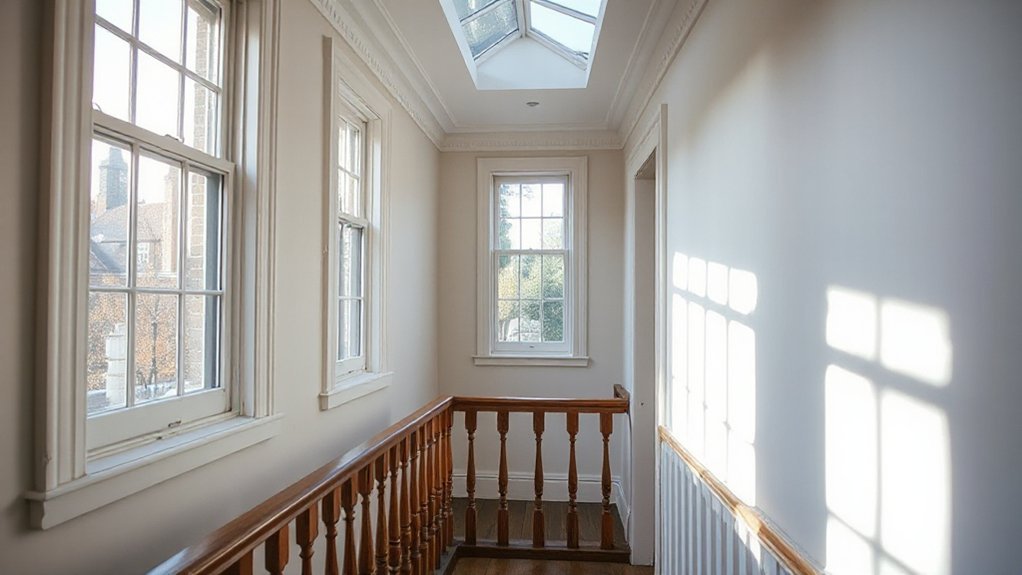
Start with a quick, armed-for-action scan of each room: where the daylight actually reaches and where it doesn’t. You’ll quickly map gaps by noting wall height, furniture blocking lines of sight, and the position of windows relative to the sun’s arc.
Mark low-hanging curtains, dated glazing, and any internal obstructions that dampen light. Focus on corridors, stairs, and kitchens, where daylight often hides.
Check exterior shading that could trap or deflect light; a heavy screen can cast unwanted shadows inside. Note daylight sensors, if present, and whether they respond to actual brightness or are miscalibrated.
Record findings with simple sketches or a photo log. Use these gaps to prioritize treatments that preserve brightness without compromising privacy or energy use.
Exterior shading considerations and daylight sensors guide efficient updates.
Quick Wins: Window Treatments and Mirrors for Brightness
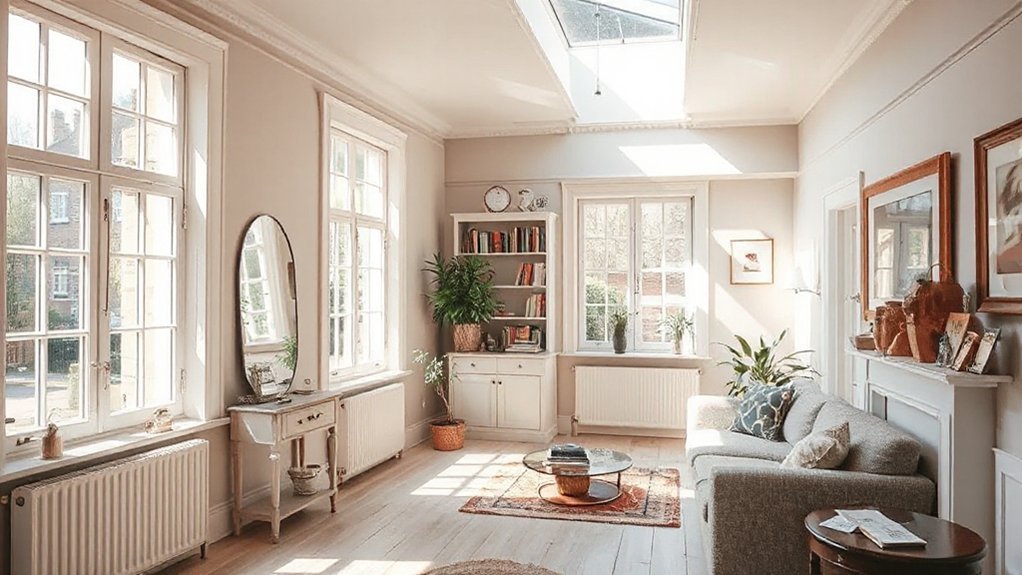
Lighten up rooms with practical, low-effort window treatments and well-placed mirrors that maximize daylight without sacrificing privacy. You’ll gain brighter spaces by choosing sheer or light blinds, fingertip-operated roller shades, and vinyl-coated fabrics that reflect light rather than absorb it.
Prioritize Window placement to capture sun paths, and use Mirror placement to bounce daylight from central aisles or dull corners.
- Select light, reflective materials for curtains and blinds
- Place tall mirrors opposite windows to double the glare-free glow
- Align mirror edges with window frames for cohesive lines
- Keep treatments open during the day for maximum brightness
- Use uncluttered, light-colored frames to prevent visual heaviness
Layout Tweaks That Maximize Daylight Without Sacrificing Charm
Even small layout shifts can boost daylight without dulling the home’s charm. Start by prioritizing open sightlines: remove non-structural partitions to connect living spaces with the rear or kitchen, letting bright areas flow through.
Use furniture sparingly against walls to keep pathways clear and bounce light deeper into rooms. Consider positioning seating to face windows, and place mirrors opposite natural sources to multiply sun glare without feeling cluttered.
Choose compact, glass-front storage to reduce bulk while keeping rhythm and airiness. For garden integration, align patios or dining zones with living spaces so outdoor light enters at more angles.
Tie rooms together with coordinated interior color schemes that reflect light—soft neutrals, pale blues, or warm creams—to preserve charm while brightening every corner.
Budget-Friendly Ceilings and Walls That Preserve Period Style
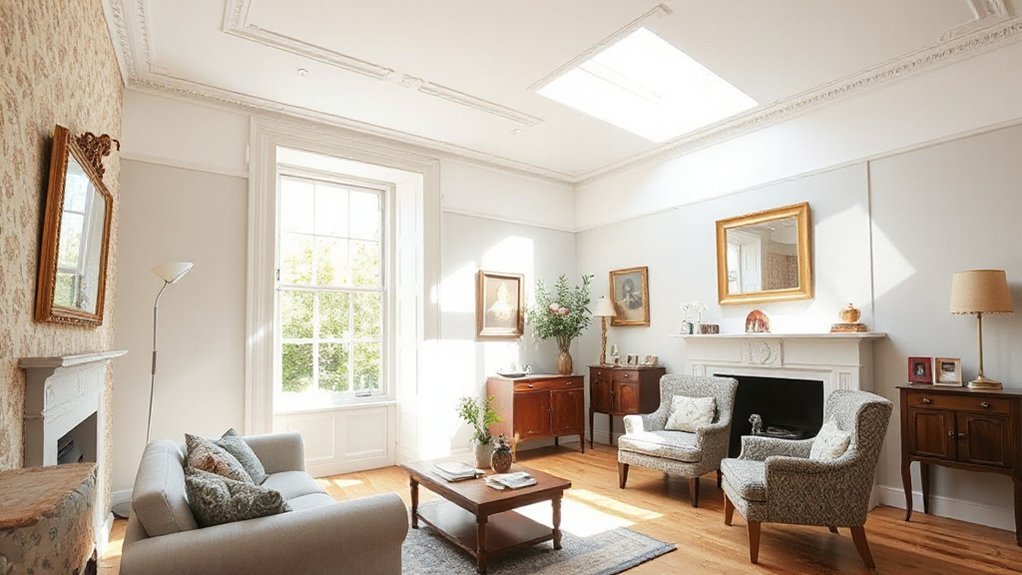
Ceiling and wall updates don’t have to break the period character when you’re on a budget. With careful choices, you protect Historic preservation while boosting Interior aesthetics and light diffusion.
Pick classic, lightweight finishes that echo your home’s era without heavy ornament. Paint and plaster can mimic period textures while staying affordable, durable, and washable.
Use subtle color palettes that reflect natural light and maintain contrast with trim to emphasize architectural details. Consider low-profile mouldings or aligned dado rails painted in soft whites or warm neutrals to suggest era without overdoing ornament.
Prioritize wall and ceiling repairs over replacements to preserve authenticity. The goal is practical updates that read as intentional, not contrived, keeping charm intact.
- Choose budget-friendly, authentic finishes that echo period textures
- Opt for light, washable paints in soft neutrals
- Preserve original trims or reimagine with subtle, coordinating paint
- Repair, not replace, damaged plaster for authenticity
- Use restrained mouldings to hint at era without heaviness
Smart Lighting and Energy Efficiency for Lasting Brightness
Smart lighting and energy efficiency are about making every watt count in a tight space. In practice, you’ll use smart sensors to dim or brighten rooms based on occupancy and daylight levels, preventing waste without sacrificing comfort. Place sensors where foot traffic is highest and near windows to capture real-time light changes.
Choose LED fixtures with high color rendering and a long lifespan to keep your brightness steady without frequent replacements. Pair these with task lighting for work zones and ambient lighting for evenings, creating flexibility without clutter.
Conduct energy audits to identify phantom loads and where insulation gaps let heat in or out. Implement smart plugs for older devices, and monitor monthly usage to confirm lasting brightness at lower costs.
Frequently Asked Questions
How Can Listed Status Affect Daylight Improvements in Terraces?
Listed status restricts some daylight improvements, you must balance Historic preservation with Building regulations, consult planners early, and opt for non-invasive changes like light shelves or conservation-friendly windows to minimize impact while enhancing light.
Are There Planning Restrictions for Structural Changes to Increase Light?
Yes, there are planning restrictions you’ll face. Picture a lighthouse guiding you: you’ll likely need building permits and owner consent, otherwise authorities curb daylight; comply, or your plans stall rather than shine.
Which Colors Maximize Brightness Without Altering Period Charm?
You’ll maximize interior brightness by choosing light, neutral color palettes with warm undertones, like soft creams or pale yellows, and keep contrast minimal to preserve period charm. This color approach enhances Interior brightness while feeling timeless and practical.
Do Daylight Strategies Impact Home Resale Value or Insurance?
Daylight strategies can boost resale appeal and sometimes lower insurance claims by improving safety and energy efficiency. Natural light enhances mood and perceived space, while energy efficiency features may attract buyers, potentially increasing value and reducing ongoing costs.
How Do You Compare Skylights vs. Roof Lights in Terraced Homes?
Skylight installation typically offers quicker, sleeker light with minimal disruption, while roof window advantages include better ventilation and operation. You compare costs, lintel restrictions, and daylight spread; choose based on structural fit, opening type, and privacy concerns.
Conclusion
You’ll probably crave a miracle: more light, less cost, zero upheaval. Spoiler: that miracle won’t fall from the ceiling. But with a quick rap of window tweaks, strategic mirrors, and clever layout nudges, you’ll squeeze daylight into every inch without wrecking the period vibe. Add budget-friendly finishes and smart LEDs, and you’ll pretend you didn’t trade a thing for brightness. Practical, precise, and a little bit cheeky—the light’s not loud, but it’s definitely there.
About the Author