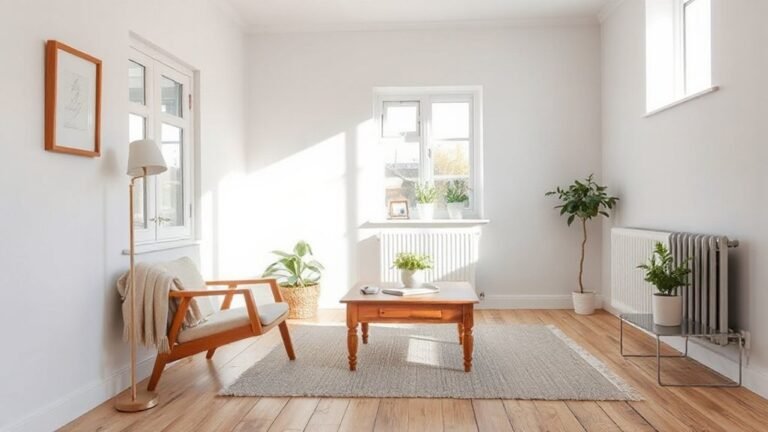
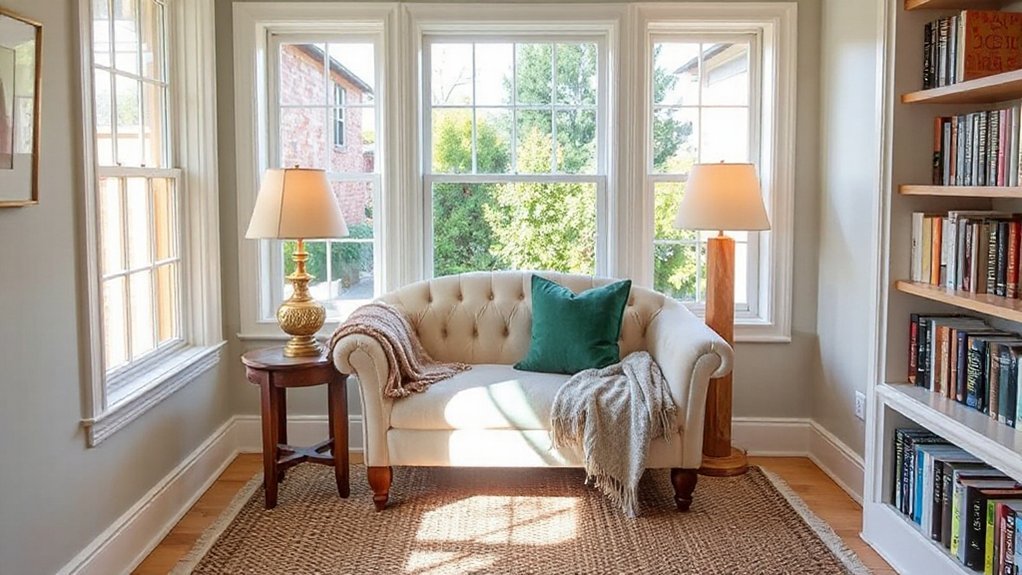
A bay window nook combines natural light, comfort, and personal style into a calm retreat. You’ll want built-in, cushioned seating with supportive cushions, plus smart storage out of sight. Layer in lighting for day and night, soften glare with window treatments, and choose natural fibers in neutral tones with subtle accents. Arrange furniture for cozy angles and easy access to light, then add textures and a few accessories to refine the space—and decide if you’ll push the idea a bit further.
Key Takeaways
- Create a built-in bay window bench with deep, cushioned seating and a continuous surface to avoid gaps and shifting cushions.
- Layer lighting: daylight task light, wall ambient, and warm dimmable accents, pairing 2700–3500K bulbs for comfort.
- Use natural-fiber textiles, neutral tones with accent colors, and layered throws/cushions to balance light and coziness.
- Optimize storage with shallow shelves, hidden under-seat compartments, baskets, and slim ledges to reduce clutter.
- Arrange seating and shelves to maximize light access, clear sightlines, and cohesive color coordination across textiles and decor.
Why a Bay Window Reading Nook Works: Benefits and Design Goals
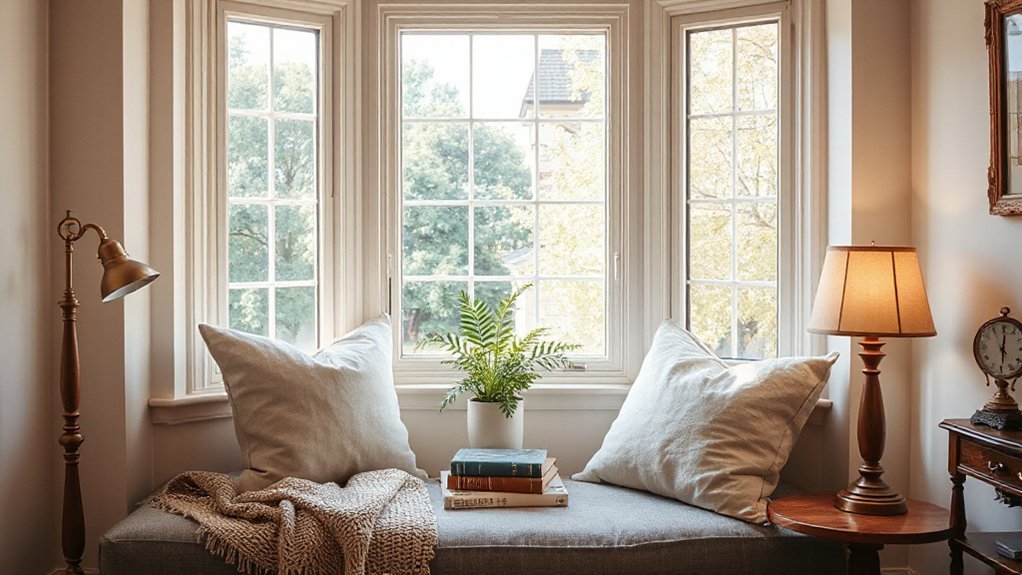
A bay window instantly establishes a cozy, focused reading nook by combining natural light, soft seating, and an inviting view. You gain a dedicated corner that minimizes travel to find a quiet moment, boosting consistency in daily reading habits.
The setup supports posture-friendly lounging and a stable surface for books, drinks, or devices, reinforcing sustained concentration. Design goals include maximizing light without glare, ensuring comfortable ergonomics, and creating a visually calm environment.
Practical benefits extend to property appeal and versatile use, from solitary study to intimate conversation spots. Implement window treatments that control brightness and temperature, while privacy solutions maintain distraction-free focus.
Choose durable, easy-care materials and a cohesive color palette to keep the space inviting, organized, and aligned with your reading routine.
Lighting the Bay Window for Day and Night Reading
You’ll shape a lighting plan with layered window lighting, balancing skylight, wall, and task accents for comfort and focus.
Use daylight task illumination for reading by day, then switch to a nighttime ambient glow that preserves clarity without glare.
This approach sets the stage for practical, adaptable lighting that supports both daytime metrics and evening mood.
Layered Window Lighting
Position layers to prevent glare on screens and to preserve color accuracy for book and fabric tones. Use dimmers to shift from bright morning reading to cozy evening vibes, and select fixtures with warm temperatures to reduce eye strain.
Integrate window treatments that soften incoming light without blocking the view, and guarantee acoustic considerations don’t mute the room’s hush. Keep cables hidden and mounts slim; choose finishes that echo the nook’s material palette for a polished, practical setup.
Daylight Task Illumination
By daylight, you’ll prioritize unobtrusive task illumination that follows the window’s natural rhythms: bright, glare-free light for late-morning reading and a soft, dimmer glow as evening settles.
Position a compact, adjustable desk lamp near the sill to supplement natural light without creating harsh reflections on the glass. Use a color temperature in the 2700–3500K range to maintain comfort and reduce eye strain.
Select lamps with glare control features—shades, diffusers, and recessed heads—to minimize hotspots. Favor daylight-facing furnishings and task surfaces that resist glare when sun angles shift.
Keep window treatments simple to modulate glare without sacrificing natural light. This approach sustains focus, preserves image clarity, and supports consistent reading velocity across the day.
Nighttime Ambient Glow
As daylight fades, the bay window gains its second role: a warm, ambient glow that invites evening reading without overpowering the scene outside. You curate nighttime lighting with purpose, balancing function and mood.
Choose ambient lighting that softly fills the space without glare, avoiding harsh contrasts on the page. A dimmable lamp at eye level creates steady task light while preserving the view beyond the glass.
Add indirect sources, like warm LED strips along the sill or crown molding, to cultivate a cozy ambiance without hotspots. Keep color temperature in the warm range, around 2700–3000K, to reduce eye strain and sustain comfort.
Position controls near reach, and assure switches are intuitive for quick adjustments during late reads. Your setup remains practical, serene, and inviting.
Seating Options for Your Bay Window Nook
A built-in bench offers a clean, space-saving option that you can tailor to your window’s width and your daily rhythm.
Pair a cushioned seat with a slim back or edge padding to boost comfort without bulk.
Consider removable cushions or a hinged bench lid for hidden storage that stays practical and tidy.
Built-In Bench Comfort
Ever wonder how a bay window bench can be both comfortable and practical? You design built-in seating with purpose: a bench that supports long reads without sacrificing space. Choose a fixed depth that leaves room for legs and circulation, yet feels cozy when you settle in.
Prioritize a firm, supportive frame and a single, continuous surface to avoid gaps and shifting cushions. The seat height should align with standard tables and eye level, reducing strain during chapters or emails.
For comfort, add a classic built-in bench with Cozy cushions that resist flattening and maintain shape. Opt for a removable cover for easy cleaning, and consider a slim-profile backrest that follows the window line.
Finished edges stay neat, durable, and inviting.
Cushioned Seat Options
To cushion a bay window nook effectively, choose seat padding that balances support with shape retention. You’ll want cushioned seat options that endure daily use without sagging, so opt for high-density foam cores paired with breathable toppers.
Consider a layer of memory foam for contouring comfort, but guarantee a firm base remains visible to prevent slump. For upholstery choices, pick fabrics that tolerate sun exposure and frequent handling; performance fabrics, canvas blends, or tight-weave linens are practical.
Add a removable cover for easy cleaning, and select seat height that aligns with your existing table or armchair. Finally, weigh moisture resistance in coastal or high-humidity environments.
Proper padding and durable upholstery converge for lasting comfort and clean, crisp lines.
Storage Solutions to Keep the Nook Calm
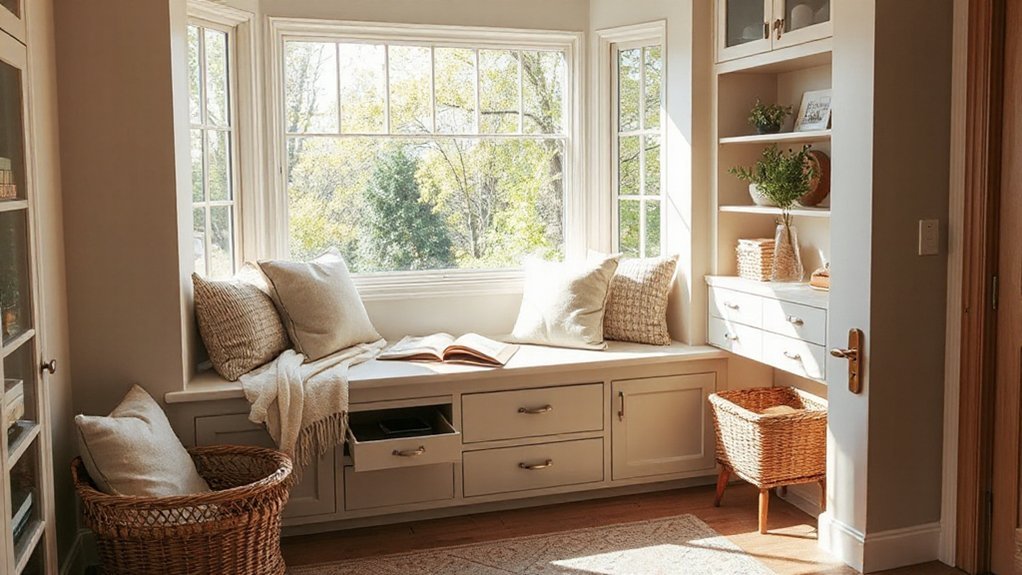
When you design a bay window nook, smart storage keeps the space calm and usable. Choose built-in shelves with shallow depths to store books, controls, and chargers without crowding sightlines.
Use hidden compartments under seating to conceal seasonal décor, blankets, or spare cords, maintaining a tidy aesthetic.
Integrate decorative baskets for quick access to smaller items like notebook pads, charging cables, and reading glasses; label or color-code baskets to expedite retrieval.
Letter- or photo-frames can rest on a narrow ledge above the seating, serving as props rather than clutter magnets.
Select a compact ottoman with a lid for dual function: extra seating and a concealed bin.
Maintain visual calm by limiting items on the sill and rotating sets of essentials seasonally.
Textiles and Colors for Mood and Comfort
Layering textiles and color thoughtfully can transform a bay window nook into a cozy retreat without sacrificing function. You select Fabrics and hues that balance softness with durability, prioritizing natural fibers for breathability and easy care.
Opt for a core palette of neutral ground tones anchored by deliberate accent colors to guide the eye and support reading comfort. Mood enhancing palettes should emphasize contrast between light and shade—soft whites or warm beiges paired with deeper greens or blues—to reduce glare and fatigue.
Layered throws, a cushioned seat, and a compact rug create depth without crowding. Keep patterns subtle and scale-consistent to preserve legibility of the view.
Test lighting in the evening, ensuring temperature and brightness align with long reading sessions.
Personalize With Accessories and Layout Tweaks
Personalize the bay window nook with thoughtful accessories and layout tweaks that support reading flow. You’ll pair practical pieces with calm accents to maintain focus and comfort. Begin with a few Personalized accessories that reinforce your mood: a slim lamp, a memory-foam cushion, and a compact side tray for a book, tea, and glasses.
Then adjust layout tweaks to streamline use and reduce distractions.
- Place the chair at a precise angle for ideal light and sightlines.
- Elevate the lower shelf to keep essentials within reach without clutter.
- Choose a single color cue for textiles and decor to unify the space.
These Personalized accessories and layout tweaks create a coherent, inviting reading space while maintaining clean, functional lines.
Frequently Asked Questions
How Do I Measure My Bay Window for a Reading Nook?
To measure your bay window for a reading nook, start by noting the length, width, and depth of the alcove along the sill. Measure at multiple points to account for any irregularities, and record the smallest width for seat depth.
Don’t forget the window height and any trim protrusions.
Use those dimensions to choose Window seat cushions that fit snugly, plus Storage solutions beneath the seat for tidy, accessible storage.
Can a Bay Window Nook Work in a Small Room?
Yes, a bay window nook can work in a small room. Use compact seating and built-in storage to maximize space.
Choose decorative cushions for comfort without crowding, and pick lighting options that suit the area—a wall sconce and a slim floor lamp keep it bright without bulk.
Keep the color palette light and cohesive, and configure the nook to face the window for natural charm and efficient use of every inch.
What Safety Considerations Exist for Built-In Benches?
A key statistic: built-in benches reduce clutter by up to 40% in compact spaces.
For safety, guarantee stable framing and secure mounting to studs, not just drywall.
You should avoid sharp corners and install rounded edges or edge guards.
Child safety is essential, with restricted access to cords, outlets, and cushions that aren’t fire-retardant.
Include proper ventilation considerations: passively through vents or small fans, and avoid blocking airflow to radiators or returns.
How Do I Choose Cordless Window Coverings for Safety?
Cordless blinds are safer for kids, so prioritize those to minimize cords and strangulation risks. Choose models with certified child safety standards, stable mounting, and smooth operation.
Look for cordless lift systems, retractable cords, or wand controls that stay out of reach. Confirm anchors are secure and that blinds don’t protrude into the window.
Regularly inspect for frayed components and replace worn parts. Child safety matters; verify manufacturer guidance and warranty coverage before installing.
Are There Energy-Efficiency Benefits to Bay Window Nooks?
Yes, there are energy-efficiency benefits to bay window nooks. You’ll see energy savings from added insulation and reduced drafts, especially if you pair the space with well-sealed, insulating treatments.
The bay nook can trap warm air in winter and block heat in summer, boosting overall comfort. Use insulating window coverings and tight sealants to maximize insulation benefits.
Consider layering draperies with cellular shades for consistent performance.
Conclusion
A bay window nook isn’t just pretty—it proves the theory that small, well-planned spaces can feel expansive. You’ll cultivate a daily habit of quiet focus, proving sunlight plus cushioning equals calmer thoughts and steadier reads. When you balance built-in seating, smart storage, layered lighting, and natural textiles, the room confirms that intention shapes atmosphere. So, you’ll trust that thoughtful geometry and tactile comfort make reading not a pastime, but a protected habit you can rely on.
About the Author