Is Underfloor Heating Worth The Installation Cost In A New Bathroom?
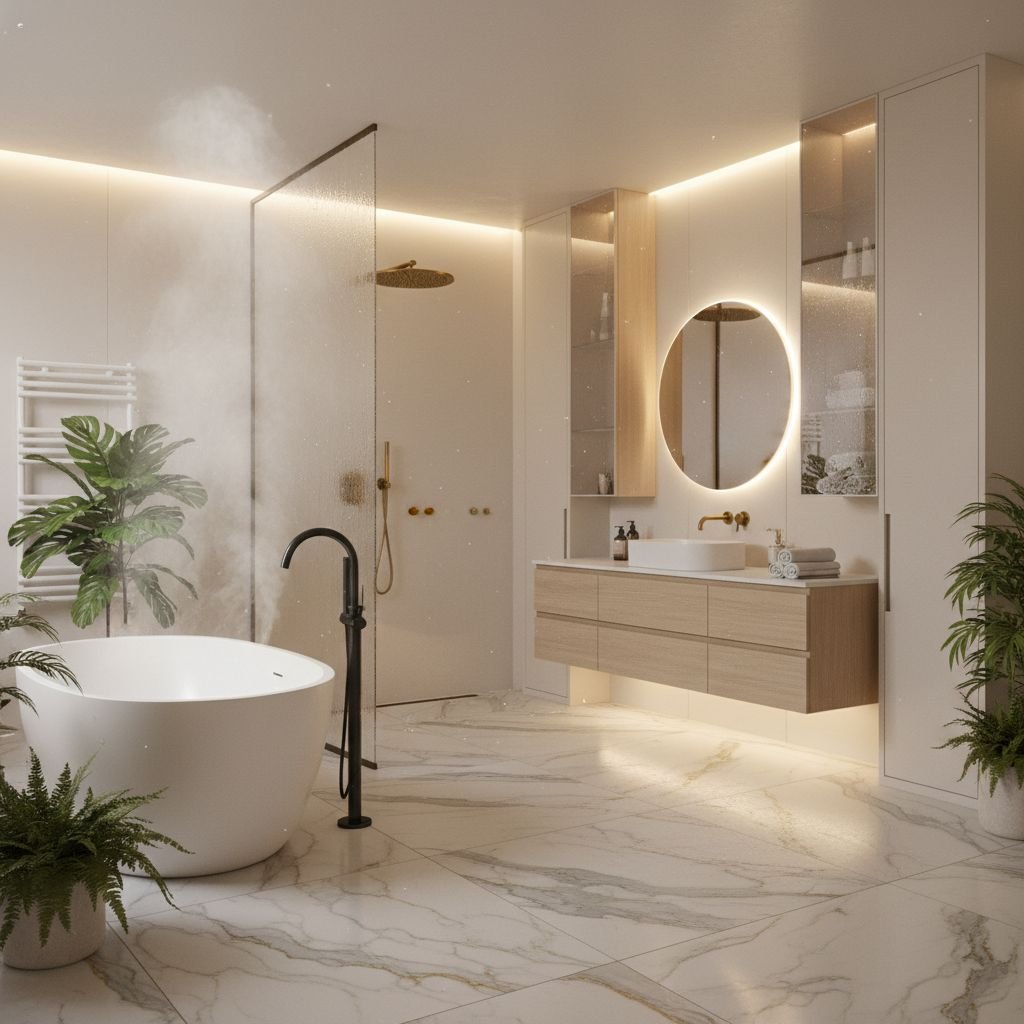
Of all the rooms in a house where underfloor heating makes an immediately obvious quality-of-life difference, the bathroom is probably first. The experience of stepping out of a shower or bath onto a warm floor — particularly on a cold morning — is one of those small daily comforts that is difficult to quantify and easy to remember every time you experience a cold bathroom floor instead.
But the question of whether it is worth the installation cost requires more than a simple endorsement of the comfort benefit. The type of underfloor heating suited to a bathroom, its running cost, the floor covering that works best with it, how it integrates with existing heating, and whether the investment is recovered in property value all need examination.
The short answer, for most bathroom renovation projects, is yes — and particularly yes when the renovation is already underway and the incremental cost of adding underfloor heating during the floor build-up phase is compared to the disruption and expense of adding it later.
The Bathroom Case for Underfloor Heating
The bathroom is the room where underfloor heating’s specific characteristics align most naturally with the room’s use.
The comfort argument is strongest here. Bathrooms are used twice a day — morning and evening — and the floor is encountered in a semi-dressed state in which foot temperature comfort matters more than in any other room. A warm bathroom floor in winter is not a luxury in the same category as a heated driveway or a towel warming rail — it is a genuinely meaningful daily quality-of-life improvement.
Radiators serve bathrooms poorly. The standard heated towel rail that heats most UK bathrooms is primarily a towel-drying appliance that distributes heat inadequately across a small room. The combination of a well-positioned heated towel rail for towel drying and underfloor heating for floor and room warming addresses both functions properly rather than compromising both with a single appliance.
Bathrooms are small. The floor area of a typical UK bathroom is 4–8m². At the installation cost of electric underfloor heating — the appropriate type for most bathroom projects — this is one of the lowest-cost underfloor heating applications possible. The modest cost, compared to the consistent daily benefit, makes the cost-benefit case more straightforward than for larger rooms.
The floor covering is almost always tile. Ceramic, porcelain, and natural stone tiles are the preferred floor covering for bathrooms in virtually every property type, and they are also the optimal floor covering for underfloor heating — excellent thermal conductivity, durable, moisture-resistant, and completely unaffected by the temperature cycling of the heating system. There is no floor covering compatibility concern in a bathroom that specifies tile.
Electric Underfloor Heating: The Right Type for Most Bathrooms
For bathrooms being renovated in an existing property, electric underfloor heating is almost always the appropriate type — not wet (hydronic) underfloor heating, which is the preferred type for whole-house systems in new builds.
The reasons for this are straightforward:
Wet UFH in a single bathroom is disproportionate. Wet underfloor heating requires a manifold, pipework, a zone control, and integration with the central heating system. For a single bathroom, this level of infrastructure adds significant cost and complexity relative to the floor area being heated. Unless a full house retrofit of wet UFH is being undertaken simultaneously, installing wet UFH in a single bathroom is not the most cost-effective approach.
Electric UFH installs quickly without floor build-up disruption. Electric heating mats are thin — typically 3–4mm — and can be installed directly beneath the tile adhesive layer without raising the floor level significantly. The installation adds minimal height, does not require a screed, and integrates directly with a dedicated thermostat rather than requiring connection to the central heating system.
Electric UFH in a bathroom has low running cost impact. The concern about electric UFH’s running cost — that electricity costs 3–5 times more per unit of heat than gas — is real for whole-house systems but largely irrelevant for a bathroom application. A 5m² bathroom used for 30–60 minutes per day consumes a trivial amount of electricity. At an installed power density of approximately 150 watts per square metre, a 5m² bathroom mat draws 750W when running. At 60 minutes per day of use at a peak electricity rate of 24p per unit, daily running cost is approximately 18 pence. Annual running cost: approximately £66. The running cost impact of electric bathroom UFH is genuinely negligible.
Self-contained control. Electric bathroom UFH has its own dedicated thermostat — typically with a programmable timer and a floor temperature sensor — and operates entirely independently of the central heating system. No plumbing, no manifold, no zone controller integration. This makes it appropriate for properties with any central heating type (gas, oil, heat pump, electric) and does not require any modification to the existing heating infrastructure.
What Electric Bathroom Underfloor Heating Actually Costs
The cost of electric underfloor heating for a bathroom consists of:
The heating mat: Electric UFH mats are sold by square metre and by wattage output (typically 100–200W per m²). For a 5m² bathroom at 150W/m², a 750W mat at current UK retail prices costs approximately £50–£150, depending on brand and specification. Premium brands with better build quality and warranty terms (Warmup, Nuheat, ThermoGroup, DEVI) cost more than budget alternatives but provide better reliability and longer warranties — important for a product that will be buried under tiles for 20–30 years.
The thermostat: A programmable thermostat with floor temperature sensor is required for proper control. Budget thermostats cost £30–£80; smart thermostats with remote control and scheduling apps (compatible with Google Home and Amazon Alexa) cost £80–£200. A smart thermostat allows programming based on when the bathroom is typically used, preventing energy waste from heating the floor continuously.
Labour — installation during a full bathroom renovation: When underfloor heating is being installed as part of a full bathroom renovation that includes floor tile replacement, the incremental labour cost is modest — the mat is laid before the tile adhesive, the thermostat cable is chased into the wall, and the tiler works over the mat as they would work over any subfloor. Expect a skilled tiler to charge £150–£300 for installing the mat and connecting the thermostat during a full bathroom retile, in addition to the standard tiling cost.
Total cost for electric bathroom UFH during a full renovation:
- Heating mat (5m²): £75–£200
- Smart thermostat: £100–£200
- Installation: £150–£300
- Total: approximately £325–£700
This is the critical figure: for a bathroom renovation that already involves tiling, adding underfloor heating costs approximately £325–£700. The incremental cost of a warm floor for the next 20–30 years is under £700 in most cases.
Labour — installation as a standalone project (existing tiles in place): Adding underfloor heating to an existing tiled bathroom requires removing the tiles, installing the mat, relaying the tiles, and grouting. The labour cost increases substantially — typically £500–£1,000 for this process alone, plus the cost of replacement tiles (the existing tiles will be damaged during removal), plus the mat and thermostat. A standalone retrofit adds the full floor retile cost to the project, making the effective cost £1,000–£2,500 depending on the size of the bathroom and the tile specification.
The timing implication: The cost of adding underfloor heating during an existing bathroom renovation is £325–£700. The cost of adding it later as a standalone project is £1,000–£2,500. If you are renovating your bathroom in the near future, the question of whether to include UFH is partly a question of timing — the cost penalty of not deciding during the renovation is significant.
The Thermostat: The Most Important Decision After the Mat
Many bathroom UFH installations underperform not because of the mat but because of an inadequate thermostat. The thermostat determines how the system is controlled, how energy-efficiently it runs, and how conveniently it can be used. Given that the thermostat cost is a modest portion of the total project cost, this is not the place to economise.
Floor temperature sensor: All dedicated UFH thermostats include a floor temperature sensor — a probe that sits beneath the tiles and reports the actual floor temperature to the thermostat controller. This is essential for two reasons: it prevents the floor from overheating (tiles can crack if maintained at excessively high temperatures), and it allows the thermostat to accurately manage energy use based on actual floor temperature rather than air temperature alone.
The correct floor temperature setting: Electric UFH in a tiled bathroom should typically be set to maintain the floor at 25–28°C during occupancy — warm to the touch without being uncomfortable to stand on for extended periods. Higher settings waste energy; lower settings fail to deliver the expected comfort. The thermostat should be programmed to reach this temperature 30–45 minutes before typical morning use, then switch off or reduce to a frost protection mode during the day.
Smart thermostat features worth having: Programmable weekly schedule (separately for weekdays and weekends); remote control via smartphone app; geofencing (turns on when your phone is approaching home); open window detection (reduces heating if a sudden temperature drop suggests a window has opened). These features are available in mid-range thermostats at £100–£150 and meaningfully improve both convenience and energy efficiency.
Does Bathroom Underfloor Heating Add Property Value?
Underfloor heating in a bathroom is consistently described by estate agents as a premium feature in the mid-to-upper residential market. In property listings, it is cited alongside other bathroom upgrades (heated towel rail, freestanding bath, walk-in shower) as evidence of a well-specified bathroom.
Quantifying the precise value addition is difficult because bathroom underfloor heating is rarely the isolated variable in a sale — it typically forms part of a broader bathroom renovation package. The consensus from estate agents and property professionals is that a well-fitted bathroom with UFH contributes to the overall perception of the property’s specification quality, supporting asking price achievement rather than generating a specific percentage uplift.
The more practically relevant value consideration is negative: the absence of underfloor heating in a bathroom that has recently been renovated — where a buyer can see that the renovation was recent but the floor is cold — is sometimes perceived as a missed opportunity or a compromise in specification. In the premium residential market, where buyers expect UFH in new or recently renovated bathrooms, its absence can be a mild negative rather than a neutral factor.
For most homeowners, the value argument for bathroom UFH is best thought of as: it contributes to the overall quality impression of a renovated bathroom; it does not by itself generate a discrete, quantifiable uplift; but a bathroom renovation without it at the budget and quality level where buyers expect it may be perceived as slightly under-specified.
What About En-Suites and Shower Rooms?
Everything stated above about full bathrooms applies equally to en-suites and shower rooms. In fact, the comfort argument may be even stronger for an en-suite that is used first thing in the morning before the occupant’s temperature tolerance is at its highest.
En-suites are often smaller than full bathrooms (2–4m²), which reduces the mat and installation cost further. A 3m² en-suite with electric UFH installed during tiling typically costs £250–£500 including a smart thermostat. At this cost level, there is almost no financial justification for not including it during an en-suite renovation.
Practical Installation Considerations
Waterproofing first: In a bathroom, the subfloor and walls are waterproofed (tanked) before tiling. The electric heating mat should be installed after tanking, on top of the waterproofing membrane, before the tile adhesive. The thermostat sensor cable exits the mat area through a conduit chased into the wall, above the waterproofing layer.
Under the shower tray: The heating mat should not extend under the shower tray or below fixed bath frames. The mat heats the open floor area only.
Circuit protection: Electric bathroom UFH must be protected by an RCD (Residual Current Device) and should be connected to a dedicated circuit or to the bathroom’s existing RCD-protected circuit. The thermostat itself must comply with the bathroom zones defined in Part P and BS 7671 — the controller is typically positioned outside Zone 2 (beyond 600mm of the bath or shower). A registered electrician should connect the thermostat to the mains circuit.
Manufacturer warranty: Quality UFH mat manufacturers (Warmup, ThermoGroup, DEVI) offer warranties of 20–25 years. Register the product after installation and retain the installation documentation. The warranty is the consumer’s protection against a failure in a product that, once tiled over, is expensive to replace.
The Decision
The question “is it worth it?” for electric underfloor heating in a bathroom renovation has a clear answer in the vast majority of cases: yes.
The cost during a renovation (£325–£700) is modest relative to the total cost of a bathroom renovation (typically £4,000–£15,000+). The daily comfort benefit is experienced twice a day for the life of the bathroom. The running cost is negligible. The floor covering is always tile, which is optimal. The installation adds no complexity to an existing renovation programme.
The only scenario in which it is less clearly worth it is the bathroom renovation on the tightest possible budget where every pound of the budget must go toward the basics. Even then, the incremental cost is low enough that most budget trade-offs can accommodate it.
If you are renovating a bathroom and not including underfloor heating because you haven’t decided whether to include it — decide now, before the tiler starts. The cost of adding it during tiling is £325–£700. The cost of adding it after the tiles are down is £1,000–£2,500, plus the disruption of pulling up a newly laid floor. The decision is almost always easier than it first appears.
About the Author