Has The Social Kitchen Made The Living Room Redundant?
Walk through almost any recently renovated or newly built home above a certain price point in the UK and you will encounter the same spatial arrangement: a large, open-plan kitchen-dining-living space at the rear — the social kitchen — and a second reception room at the front of the house that estate agents call the sitting room, the snug, or, with slightly diminishing conviction, the “formal living room.” The rear space is where the family actually lives. The front room is where, in many households, the best furniture goes to wait for guests who rarely arrive.
The question this raises is not entirely new — architects and property developers have been observing it for at least twenty years — but it has sharpened as the social kitchen has matured from a fashionable trend into an architectural assumption. Has the room that was once the unambiguous centre of domestic life — the living room, the sitting room, the front parlour — been genuinely displaced? And if so, what does that mean for how we design, buy, and use our homes?
What the Social Kitchen Actually Is
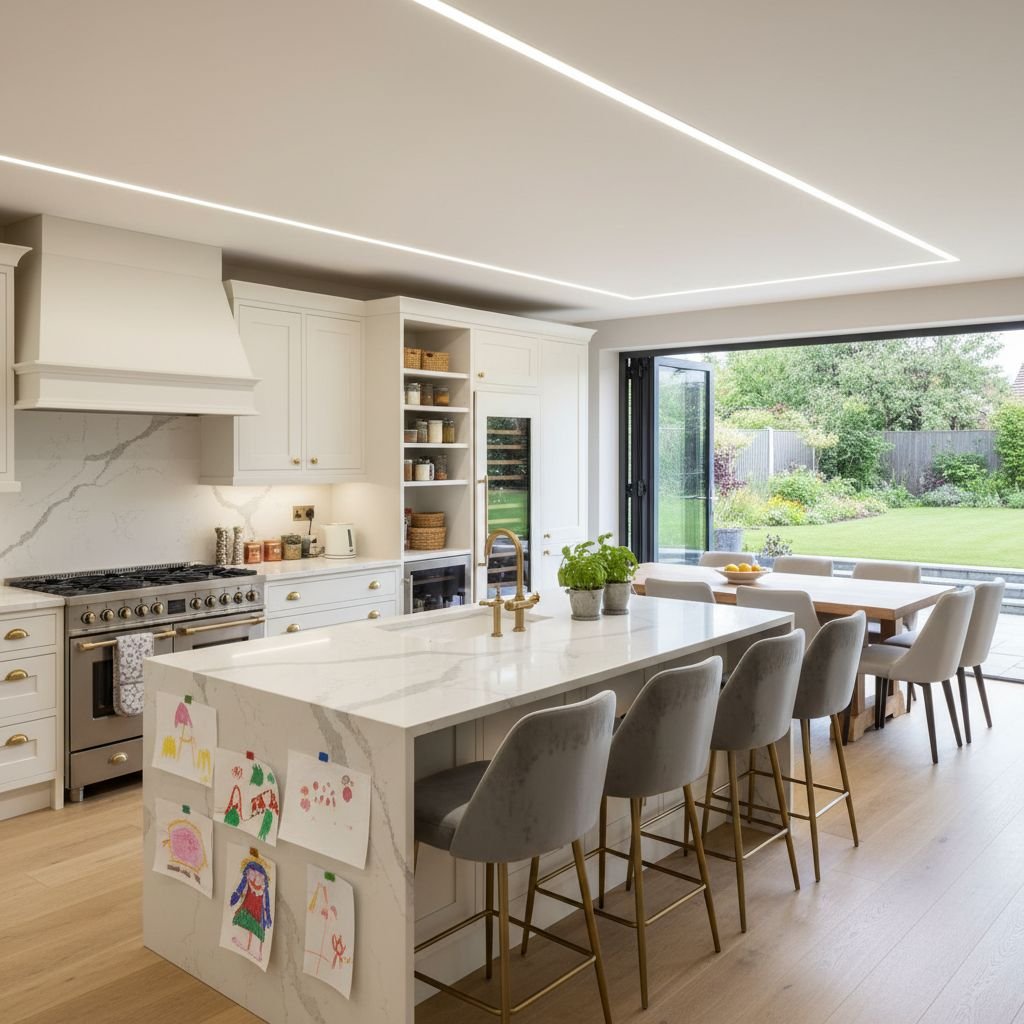
The social kitchen is worth defining precisely, because it is not simply a kitchen where family members congregate. It is an architectural configuration — the open-plan combination of cooking, dining, and living functions in a single continuous space — that changes the relationship between the person preparing food and the people they are with.
In a conventional floor plan, the kitchen is a room with a door. When someone is cooking, they are functionally separate from the people in the adjacent dining room and the people in the room beyond that. The kitchen door is the membrane between these activities, and crossing it means leaving the social environment rather than remaining within it.
The social kitchen removes this membrane. The cook stands at the island or the hob, facing the dining table and the sitting area beyond it, participating in conversation with everyone in the space simultaneously. The children do homework at the kitchen table while a parent prepares dinner. The guests drink wine at the island while the host works around them. The television in the living area at the rear can be seen from the cooking position, and commentary can be made without anyone raising their voice.
This is a fundamentally different domestic experience from the separated kitchen — and it is the reason why, once experienced, it is so difficult to return to the separated alternative.
The Rise and Rise of the Social Kitchen
The open-plan kitchen-living space as an aspirational domestic ideal has been building in the UK for approximately thirty years, accelerating in the 2000s as reality television home improvement programmes placed it at the centre of the property value narrative, and reaching something close to orthodoxy by the 2020s.
The drivers are well understood. Women’s participation in paid employment transformed domestic cooking from a full-time background activity to a part-time shared task — and the architecture of the traditional separated kitchen no longer reflected how households actually functioned. The growth of informal entertaining — dinner parties where guests come into the kitchen rather than being separated from it — further consolidated the social kitchen’s social function. And the emergence of the kitchen as the room in which technological aspiration (the range cooker, the American fridge-freezer, the wine cooler, the quartz island) is expressed changed the economics: if you are spending £20,000 on a kitchen, you want it to be seen.
The property market reinforced all of this. Estate agents throughout the 2000s and 2010s consistently identified the open-plan kitchen-dining-living space as the single renovation most likely to add value to a UK property, and homeowners acted accordingly. Walls were knocked through, rear extensions built, and the social kitchen went from the distinctive feature of architect-designed houses to the standard expectation of the middle-market buyer.
By 2026, searching for a new or recently renovated three or four-bedroom family home in most UK cities without an open-plan rear ground floor is genuinely difficult. The social kitchen is not a feature any more. It is the default.
What Happened to the Living Room?
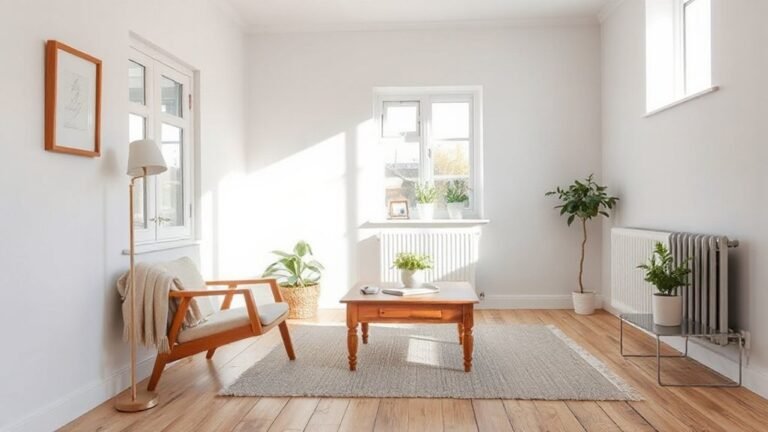
The living room — the room at the front of the house, the first reception, the formal sitting room — has not disappeared in all households. In some it remains the active social space it was always intended to be. But the research, the estate agent commentary, and the lived experience of millions of households with social kitchens suggest that the front room has undergone a quiet functional demotion.
The evidence from how rooms are used:
For households with children, the television migrated to the social kitchen when the television migrated to everywhere — when screens became the background to domestic life rather than a specific activity requiring its own dedicated room. For younger adults and couples without children, the social kitchen is equally the centre of gravity. The front room retains formal and occasional functions — watching a film in the evening, receiving visitors who are not yet close enough friends to be in the kitchen, the space where a different kind of quiet happens.
The evidence from how homes are marketed:
Estate agents have developed a vocabulary for the front room that reveals its changed status. It is no longer unambiguously the living room. It is the “second reception,” the “sitting room,” the “snug.” In some property listings, the front room’s functional description has become frankly aspirational rather than descriptive: “a perfect home office or additional reception room” is the language of a room that is trying to find its contemporary purpose.
The evidence from renovation decisions:
Homeowners who are deciding how to allocate renovation budget consistently prioritise the social kitchen — the rear extension, the open plan, the island, the bifold doors — over the front room. The front room is often left with the previous owners’ taste in paint colours or with furniture that reflects an earlier phase of the family’s life. The social kitchen is where the money goes.
The Case for the Living Room’s Continued Relevance
The question is whether this amounts to the living room’s redundancy, or to a change in its function that it can accommodate. The case for continued relevance is genuine and worth making honestly.
Acoustic refuge. The social kitchen is genuinely noisy. A large open-plan space containing a kitchen extractor, a dishwasher on a cycle, children’s homework conversations, a television, and adult conversation is an acoustic environment that is stimulating but not restful. The enclosed living room — with a door that closes, a different acoustic character, and a specific function of relaxed occupation — provides something the social kitchen cannot: quiet. For households where one member needs to work at home, where one member goes to sleep earlier than others, or where anyone simply values the capacity to opt out of the collective environment, the enclosed room with a door is not redundant. It is valuable precisely because the social kitchen made it necessary.
The film room and the evening ritual. The social kitchen is social. It is designed for activity, for multiple simultaneous uses, for the energetic overlap of cooking and eating and conversation and children. It is less obviously suited to the sedentary, passive, low-stimulus activity of watching a film in the evening. Some households have discovered that the social kitchen — with its hard surfaces, overhead lighting, and ambient associations with food preparation and family logistics — is not actually the best place to watch a film. The front room, with softer lighting, softer surfaces, a large comfortable sofa, and a door, may serve this function better than the space that replaced it in the domestic hierarchy.
The guest paradox. The social kitchen’s intimacy — the feature that makes it so pleasant for established families and close friends — can be its limitation with newer acquaintances, more formal relationships, or guests who do not naturally feel at home in the kitchen. A front sitting room that allows visitors to be received without immediately entering the domestic intimacy of the kitchen serves a social function that not all households have abandoned. For certain cultural backgrounds, certain generations, and certain social contexts, the separation of the formal receiving room from the family kitchen retains genuine meaning.
The property market reality. Despite the social kitchen’s dominance, properties with two reception rooms consistently command a premium over those with one — all else being equal. The “fourth bedroom” that an estate agent can alternatively describe as a fourth bedroom or a reception room offers buyers optionality that a single open-plan space does not. This premium reflects a market that has not entirely concluded that one large space is better than two medium ones, regardless of architectural fashion.
The “Broken Plan” as a Partial Resolution
Architecture rarely achieves clean resolutions of competing social needs — it tends instead toward compromises that partially serve multiple purposes. The contemporary architectural response to the tension between social kitchen and living room is the “broken plan” — an approach that retains the openness and connectivity of the social kitchen while reintroducing some of the acoustic and visual separation that made the enclosed rooms valuable.
Broken plan spaces use half-height walls, glazed screens, sliding panels, kitchen islands, changes of floor level, ceiling height variations, or different floor finishes to define zones within a continuous space rather than separating them with full walls. A kitchen and a sitting area connected by an open doorway with a glazed screen that can be closed. A dining zone separated from a television area by a structural column that is expressed rather than hidden. A sitting area at a lower floor level than the kitchen, creating a natural acoustic step down.
These approaches attempt to give households the social connectivity of the open plan and the functional separation of enclosed rooms simultaneously — a both/and rather than an either/or. Whether they fully succeed depends on the specific design. A glazed screen between kitchen and sitting area provides visual connection but limited acoustic separation. A different floor level creates psychological separation but not acoustic. The broken plan is a gesture toward the living room’s traditional functions rather than their full reinstatement.
What This Means for Buying and Designing Homes
For homeowners buying a property:
The social kitchen is now a near-universal expectation in the family home market, and its absence is a genuine disadvantage at sale in most price brackets. A property without open-plan ground floor living will attract a smaller buyer pool than a comparable property with it, and this is reflected in value.
The front room’s value depends entirely on the household. For families with young children who need a playroom that can be closed off, or for households that value acoustic separation, or for those who work from home, the second reception room is a genuine asset. However for young professional couples and empty-nesters whose daily life is fully accommodated by the social kitchen, the front room’s contribution to daily life may be lower — though its contribution to resale value remains.
For homeowners designing or renovating:
The social kitchen is the right priority for almost all family home projects. The rear extension, the wall removal, the open-plan kitchen — these remain the highest-ROI interventions available on the ground floor of a UK house.
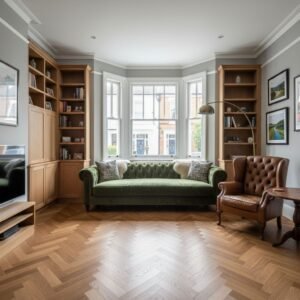
But the front room does not need to be sacrificed, converted to a bedroom, or left as a monument to a previous era’s domestic habits. It needs to be given a contemporary function that serves the specific household. A clearly designated home office. A dedicated media room with considered acoustic treatment. A playroom for young children with a door that closes. A reading room where the absence of screens is a stated and maintained principle. Or simply a beautifully furnished sitting room where guests are received — not because the formal receiving room is a universal social requirement, but because this household, specifically, values the option.
The living room is not redundant. It has changed function. The two things are not the same.
The Longer View
Architecture reflects the societies that produce it, and the social kitchen reflects a society in which domestic cooking has become a social performance, in which family life is lived openly rather than in separated compartments, and in which the kitchen has become the room in which aspiration and craft and identity are expressed. These are genuine social changes, not marketing fictions, and the architecture that responds to them is appropriate to its moment.
The front room reflects a different set of values — a desire for acoustic retreat, for formal social separation, for the capacity to opt out of the collective domestic environment, for the particular quality of quiet that only an enclosed room with a door can provide. These values have not disappeared from British domestic life. They have been overshadowed by the social kitchen’s ascendancy, but they persist.
The most honest answer to the question in this article’s title is: for many households in many moments of their daily life, yes — the social kitchen has made the living room feel redundant. And for the same households, in other moments, no — the living room provides something the social kitchen cannot, and its value becomes clear precisely at those moments.
The house that accommodates both — social kitchen and a front room with a clear contemporary function — is a more complete domestic proposition than one that has resolved the tension by eliminating one of its terms.
About the Author