Did you know a well-restored Georgian fireplace can boost a home’s value by up to 10% in some markets? You’ll want to approach it pragmatically: identify period details that matter, choose durable, era-appropriate materials, and add modern safety and efficiency tweaks without erasing charm. The goal isn’t a demolition but a convincing blend of authenticity and function—enough to justify attention from buyers who prize craftsmanship. There’s a practical path to follow, but you’ll need to prioritize milestones.
Key Takeaways
- Prioritize true Georgian proportions and cornice profiles to preserve period accuracy while boosting perceived value through authentic detailing.
- Plan a staged renovation with safety, energy efficiency, and durability at the core to minimize waste and cost overruns.
- Use period-appropriate materials for surrounds (cast stone, fired-clay tiles) and reinforced backing for long-lasting performance.
- Update aesthetics subtly (trim, niches, muted hues) and coordinate mantel placement with room cues for cohesive modern functionality.
- Document improvements with before/after visuals and energy gains to clearly demonstrate increased property value.
How a Georgian Fireplace Makeover Adds Value: a Practical Decision Framework
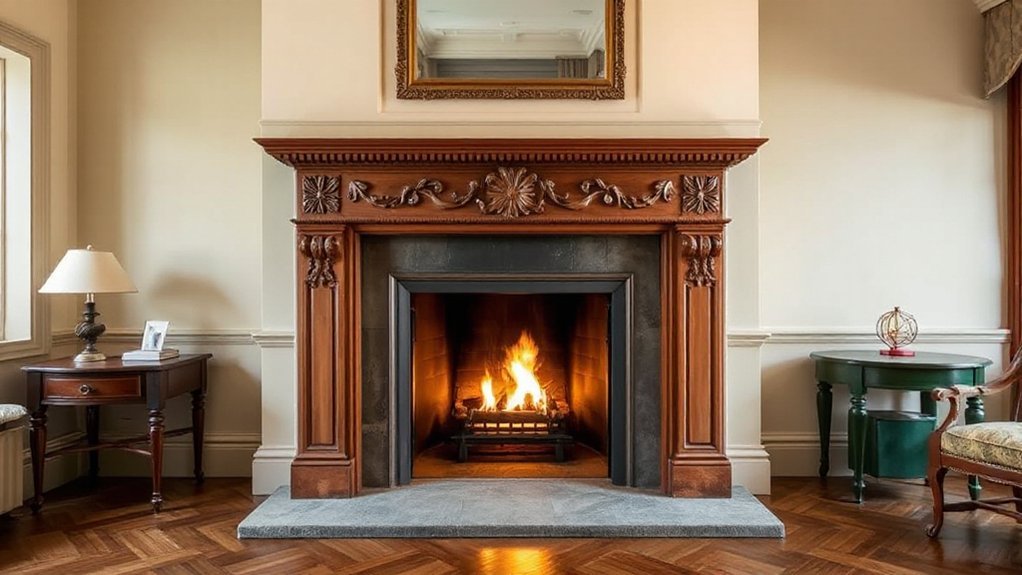
A Georgian fireplace makeover isn’t just about cosmetics; it’s a calculated upgrade that can boost your home’s value when you approach it with a clear plan. You begin by defining goals: which improvements yield durable value and which preserve character. Ground decisions in historical accuracy, ensuring components, finishes, and proportions align with period expectations rather than fad trends.
Next, map a budget that prioritizes functional upgrades—safety, operation, and energy efficiency—without compromising authenticity. For material sourcing, seek reputable suppliers who offer authentic-looking reproductions or carefully vetted vintage elements, balancing cost with durability.
Establish a decision framework: evaluate projects by resale impact, maintenance needs, and install complexity. Document choices with specifications and warranties, so future buyers grasp the rationale.
Finally, track progress against milestones, adjusting only when authenticity or safety demands dictate.
Mantle Assessment: Identifying Period-Accurate Details That Count
You’ll start by identifying period-accurate mantle styles that align with your fireplace’s era, whether it’s Georgian, Victorian, or Arts and Crafts.
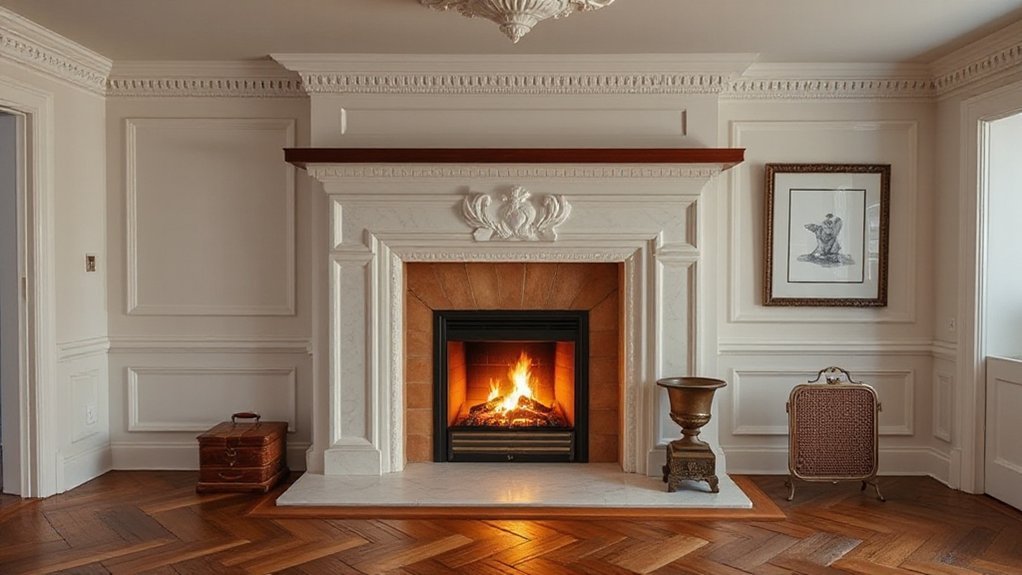
Pay attention to detailing that elevates value, like proportion, cornice profiles, and fluting, and verify authenticity against period references.
This assessment sets the foundation for targeted restoration decisions that preserve character while maximizing appeal and worth.
Period-Accurate Mantle Styles
Period-accurate mantles hinge on recognizing era-specific shapes, profiles, and detailing, then matching them to your fireplace’s architectural context. You’ll verify whether a niche, mantel shelf, or corbels echo a period’s construction methods and proportioning before selecting replacement elements.
For Georgian rooms, favor strong verticals, symmetrical mantels, and restrained ornament; for Art deco, lean into geometric silhouettes, stepped profiles, and bold contrasts; for modern minimalist interiors, prioritize clean lines, minimal detailing, and integrated surround materials.
Assess mantle-to-firebox ratios, crown treatments, and flanking pilasters to guarantee cohesive scale. Document a clear plan, then source components that reproduce authentic profiles rather than just superficial finishes.
This approach preserves historic character while allowing contemporary durability and style, without sacrificing performance or value.
Detailing That Elevates Value
- Symmetry-driven moldings and cornices with period-proportioned trim
- Authentic hardware and finish choices that age gracefully
- Clear, reversible detailing that preserves original material
- Visible maintenance records tied to historical accuracy
Georgian Fireplace Surrounds: Durable, Heat-Efficient Options
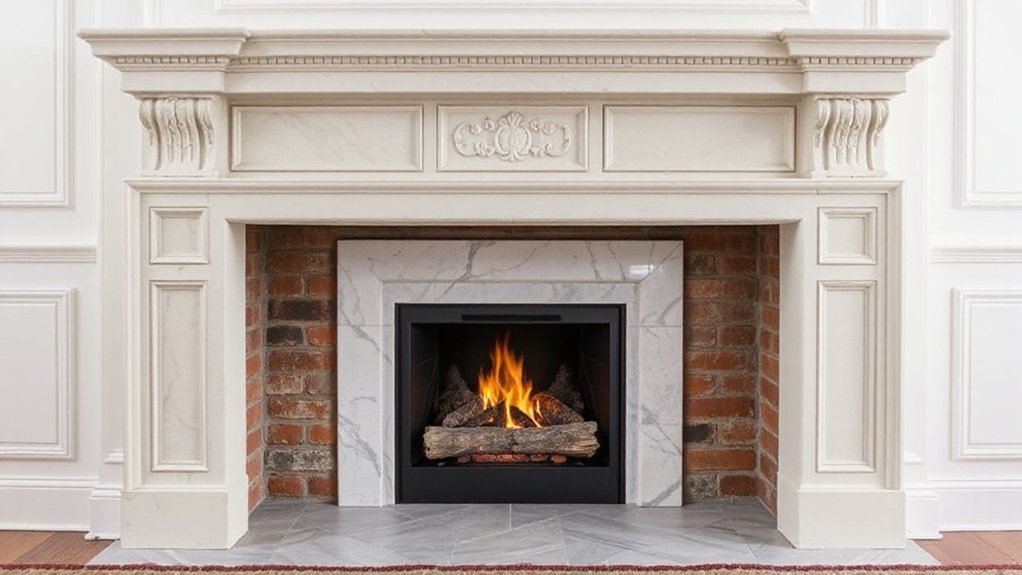
Georgian fireplace surrounds blend classic elegance with practical, modern performance, delivering durable heat resistance without sacrificing style. You’ll prioritize historical accuracy in detailing the surround’s lines, proportions, and decorative motifs, ensuring it reads as authentic even when updated for safety and efficiency.
Material selection matters most: choose heat-tolerant options like cast stone, solid-surface composites, or fired-clay tiles that resist fading and cracking under sustained use. For masonry, reinforced backing or heat-appropriate mortar improves longevity.
Consider high-heat paint or glaze for metal mantels, paired with non-combustible hearths to reduce risk.
When detailing scale, preserve symmetry and proportion to Georgian norms, avoiding oversized deviations.
Practical maintenance—sealed surfaces, periodic re-sealing, and prompt crack repairs—preserves both performance and visual integrity over decades.
Subtle Line Updates That Modernize Without Losing Charm
You’ll explore subtle trim techniques that refresh the lines without shouting for attention, pairing clean profiles with period-accurate details.
Aligning the mantel to nearby architectural cues keeps the room cohesive while easing the eye toward modern accents. Start by noting where small shifts—like a thinner surround or a tighter gap—preserve charm while signaling contemporary taste.
Subtle Trim Techniques
- Softwhite or stone-gray surround with crisp, square corners
- Narrow, recessed ledges for art or pilasters that don’t overwhelm
- Low-profile mantels that echo existing woodwork
- Repaired or repainted grout to unify old and new seamlessly
Timeless Mantel Alignments
Could a subtle mantel alignment refresh the room without sacrificing its character? Yes, and it starts with precise placement. You coordinate the mantel to the room’s proportions, balancing eye level with architectural cues around the fireplace.
Pick a profile that respects historical accuracy while tolerating modern thresholds: a slim molding for a Georgian backdrop, or a slightly more assertive cornice if your space bears grander lines.
Material selection matters: choose wood with consistent grain, or stone that echoes surrounding masonry. Keep joints clean and gaps minimal to preserve a crisp silhouette.
Avoid fussy ornament; instead, emphasize clean, linear edges that read timelessly. Test scales on a wall mock-up, then finalize dimensions to ensure the mantel anchors the room without overpowering it.
Color and Tile Strategies to Boost Appeal
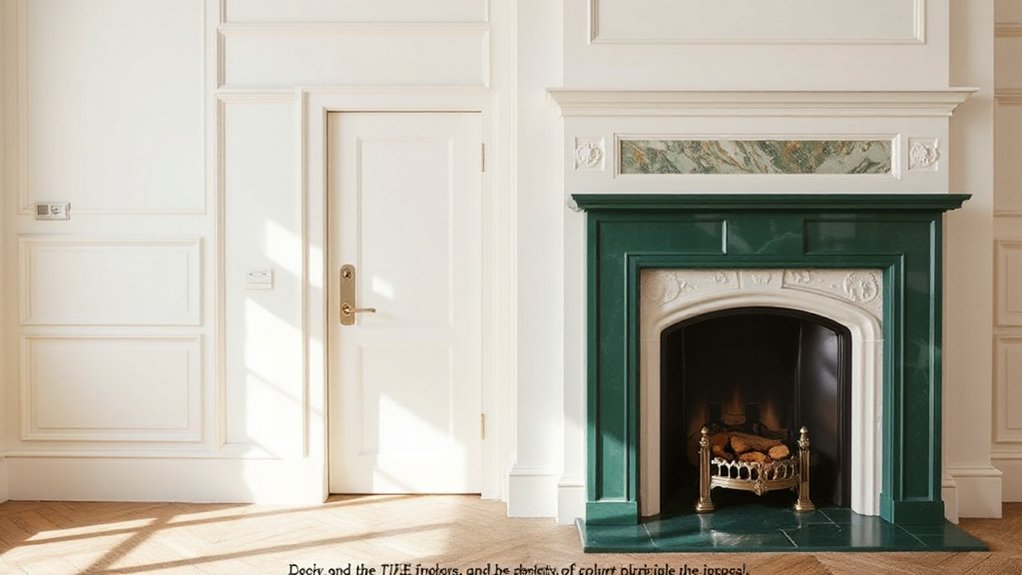
When updating a fireplace, start with color and tile choices that set the tone for the room and reinforce its architectural style. You’ll use color psychology to select hues that calm, energize, or anchor the space, aligning with the Georgian vibe.
Choose tile installation patterns that emphasize symmetry and proportion, avoiding busy distractions. Keep finishes matte or soft satin to prevent glare that competes with architectural details.
Balance contrast between surround, hearth, and walls to guide the eye upward and frame the mantle.
- Calming neutrals with a restrained accent glaze that hints at heritage
- Large, pale subway tiles arranged in a clean, linear pattern
- Subdued stone or ceramic textures that echo historic palettes
- A narrow marl or brick inset to deepen warmth without overcrowding
Color and tile strategies translate into perceived value and timeless appeal.
Smart Tech and Safety Upgrades for Georgian Fireplaces
Smart tech upgrades and safety updates should start with a clear assessment of how a Georgian fireplace is used daily. Then layer in controls that respect the room’s proportion and avoid visual clutter.
You’ll want modern monitoring and shutoff features that blend with the mantle’s symmetry, preserving historical aesthetics while enhancing reliability. Choose smart sensors for flame, smoke, and carbon monoxide that mount discreetly or integrate into existing hardware without overpowering period details.
Prioritize passive safety: hearth screens, tempered glass doors, and properly rated mats reduce trips and embers.
When adding automation, keep tactile control within reach to honor cultural significance and user familiarity.
Emphasize historical accuracy in finishes and device faces, so technology strengthens, not supersedes, the room’s authentic character.
Budgeting for Value: Costs, ROI, and Planning
Budgeting for value starts with a clear plan: define what you want to achieve, assign a realistic cost ceiling, and map out how savings or added enjoyment will justify the expense.
- Visualize the end result: a timeless, authentic look that honors the home’s era without overspending.
- Compare bids with historical accuracy in mind, weighing labor vs. material quality and longevity.
- Allocate a contingency for surprises, aligning Budget considerations with risk tolerance.
- Measure ROI by improved curb appeal, energy efficiency, and potential property value gains.
You’ll document all costs, expected benefits, and timing to avoid drift.
This disciplined approach ensures practical decisions, minimizes waste, and keeps you grounded in value rather than impulse.
Project Sequencing: From Teardown to Finish (Timeline and Milestones)
Project sequencing maps the entire renovation flow from teardown to finish, so you know what happens first, what comes next, and how long each step should take. You’ll define a realistic timeline, aligning milestones with contractor availability and permit windows.
Begin with teardown and debris removal, then stabilize existing structure to prevent damage. Move into historical restoration logic: assess material preservation options, document textures, and determine which elements must stay intact.
Proceed with careful, trades-specific sequencing for masonry, carpentry, and finishing, avoiding conflicts between demolition and conservation tasks. Schedule inspections at critical junctures to validate safety and compliance.
Build in contingency buffers for unexpected findings, weather delays, or supply hiccups. Track progress against milestones daily, updating sequencing as decisions shift.
This disciplined approach protects value while delivering a cohesive, high-quality finish.
Real-World Before-And-After: Georgian Fireplace Makeovers That Sold Rooms
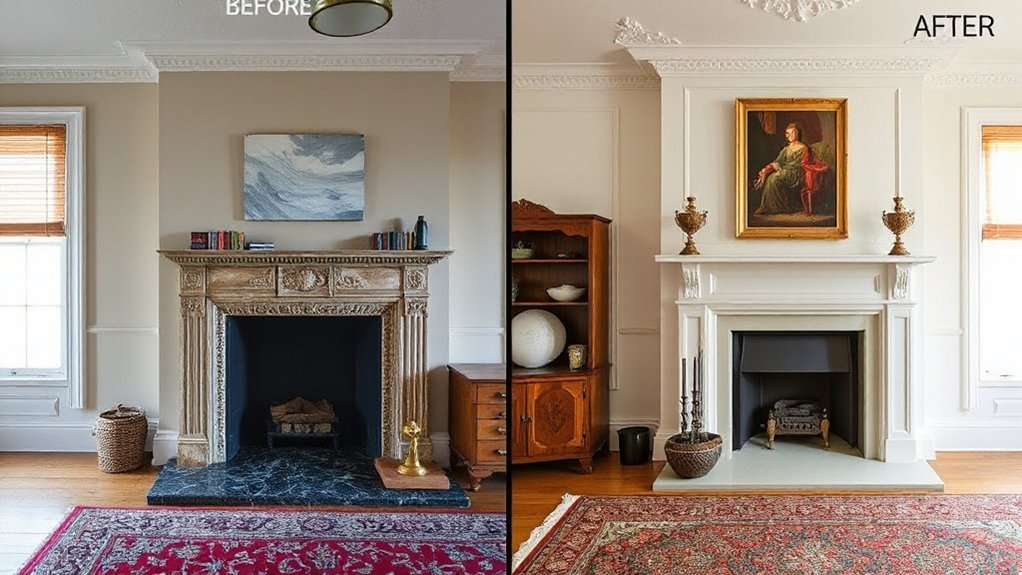
When it comes to Georgian fireplace makeovers that sold rooms, the real impact lies in how a thoughtful before-and-after can reveal unseen value. You’ll see spaces transform as you highlight period-accurate details and practical improvements that matter to buyers, not just aesthetics.
The proof is in the sequence: original grime gives way to crisp lines, subtle color shifts, and purposeful storage that preserves history while modernizing use. You’ll pair fireplace accessories with durable finishes, ensuring the feature remains a focal point without overpowering the room.
The result is a tangible upgrade in perceived value, supported by solid restoration choices and documented outcomes.
- Before-and-after photographs capturing grime, detailing, and restored lines
- Clear material and finish choices that respect the era
- Functional updates that don’t degrade historical restoration
- Buyer-oriented narratives tied to real room usability
Frequently Asked Questions
How Long Does a Georgian Fireplace Makeover Typically Take?
You’ll typically need 1 to 2 weeks for a Georgian fireplace makeover, depending on scope. You start with a clear plan, then choose fireplace materials and adjust finishes.
Restoration techniques matter: masonry prep, repointing, brick or stone work, and sealing all surfaces.
Allow extra time for ventilation, curing, and any plaster or mantel repairs.
You’ll schedule phased work, inspect daily, and approve progress before moving forward to guarantee durable, period-accurate results.
What Are Hidden Costs Not Covered in Budgets?
Hidden expenses pop up like surprise guests, doubling your risk of budget overruns if you don’t plan for them. You’ll face unexpected mastic, permits, or wiring tweaks you hadn’t counted on.
You might stretch timelines, inflating labor costs and delivery fees. You’ll want a contingency cushion of 10–20%.
Track every line item, compare quotes, and confirm scope in writing. You’ll minimize risk, stay pragmatic, and keep budget overruns from wrecking your project.
Which Finishes Best Preserve Authenticity and Value?
You should choose finishes that maximize authenticity preservation and support long-term value. Opt for period-accurate materials and traditional techniques, like lime plaster, hand-applied plaster moldings, and natural stone or timber detailing.
Material selection matters most for texture and patina, so favor breathable, low-embodied-energy options. Avoid modern veneers that erode charm.
You’ll preserve character and appeal by documenting provenance and using non-intrusive methods that respect original joinery and fireplace layout.
Can a Retrofit Improve Energy Efficiency Significantly?
Yes, a retrofit can considerably boost energy efficiency. You’ll tighten gaps, add modern insulation improvements, and upgrade the hearth with efficient inserts or glass doors.
You’ll preserve historical accuracy while lowering heat loss, like wrapping a warm secret in a velvet coat. Actively pursue airtight seals, high-performance insulation, and a code-compliant insert.
You’ll notice steadier indoor temperatures and lower heating bills, keeping the fireplace both practical and authentic without sacrificing charm.
How to Avoid Over-Modernizing Without Losing Charm?
To avoid over-modernizing while keeping charm, you blend Victorian accents with Rustic elements carefully.
Start by preserving the fireplace mantel’s original profile, then add muted, period-appropriate tiles or a soft, neutral surround.
Introduce Rustic elements like timber mantels, ironwork, or stone accents, but limit them to accent zones.
Choose a restrained color palette, and use energy-efficient, discreet inserts that respect the proportions, ensuring the room feels cohesive, not museum-like.
Conclusion
You’ll see value when you blend authentic Georgian details with modern reliability. Prioritize a period-accurate mantle, durable surrounds, and subtle updates that preserve charm while improving efficiency. Lean on smart safety upgrades without overhauling character. Budget carefully, plan milestones, and sequence work to minimize disruption. The result is a timeless centerpiece that headlines rooms and sells—like a well-tuned instrument that resonates with buyers, hitting all the right notes without breaking the bank. It’s a win-win, smooth sailing.
About the Author