Start by identifying a strong focal point to anchor the space, then plan functional zones so traffic stays clear and the room feels open. Choose proportionate furniture that preserves perspective, layer lighting for depth, and keep a cohesive color and texture palette to calm the eye. Add smart storage and well-placed mirrors to reflect light. As you align sightlines and prune clutter, you’ll see how small choices compound—and why the next step matters for a long, narrow living room.
Key Takeaways
- Establish a clear focal point (fireplace, window, or art) and orient seating to face it for visual impact.
- Create functional zones and maintain clear pathways with modular, space-saving furniture and slim consoles.
- Use scale wisely: place larger pieces toward the back and keep sightlines open with low-profile furniture.
- Layer lighting (ambient, task, accent) and apply a cohesive two- to three-hue palette with varied textures.
- Use mirrors and strategic color contrast to expand the room and maintain calm, cohesive decor.
Find the Focal Point to Anchor a Long, Narrow Living Room
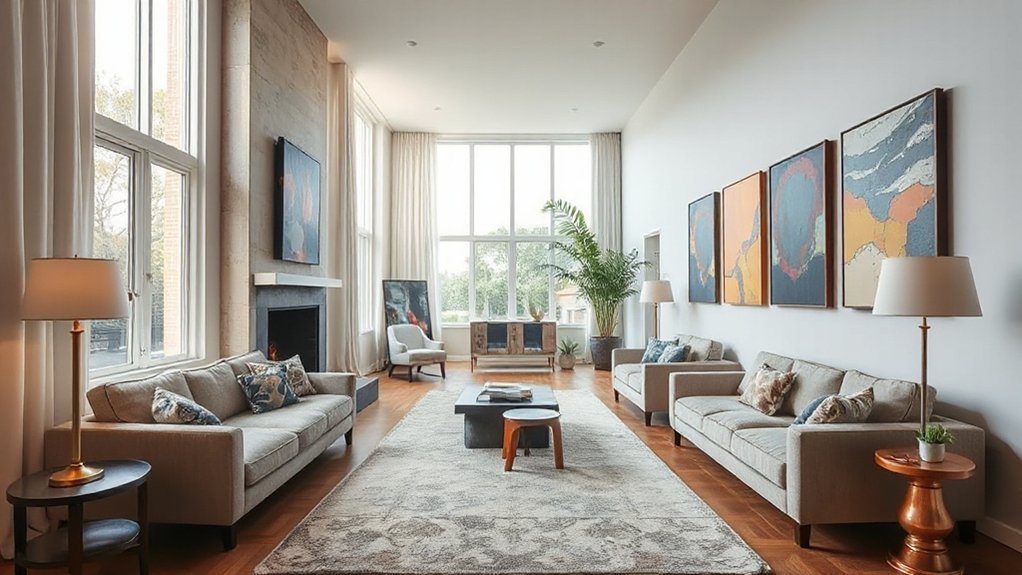
To anchor a long, narrow living room, choose a clear focal point that draws the eye and anchors furniture placement. You’ll create a natural visual anchor by highlighting one element—an fireplace, a large window, or a bold piece of art.
Position seating to orient toward that point, avoiding scattered lines that misalign traffic flow. Keep the focal point prominent with proportionate scale and minimal competing decor nearby.
Use lighting to reinforce it: a ceiling fixture or wall sconces should illuminate the focal element without creating glare. Limit patterns in the surrounding area to prevent visual clutter; solid, cohesive tones support the focal point’s impact.
This approach establishes a single visual anchor, guiding arrangement and enhancing perceived space. focal point, visual anchor.
Create Functional Zones for a Clear, Flowing Space
Create distinct zones that guide traffic and function without clutter. In a long, narrow living room, separate activities with deliberate zones: a conversation alcove, a reading nook, and a slim media strip. Use placement, not walls, to delineate areas—rug color, sofa orientation, and strategically angled seating create flow.
Keep sightlines clear by aligning furniture with doorways and windows, reducing visual clutter. Choose low-profile pieces to maintain openness, and let vertical elements define boundaries without crowding. Add artistic accents at eye level within each zone to reinforce purpose without overpowering the space.
Integrate indoor greenery to soften edges and improve air quality, while preserving balance among zones. Maintain consistent lighting, scale, and proportion to ensure each area functions cohesively.
Scale and Arrange Furniture to Preserve Perspective
To preserve depth and avoid a cramped feel, place larger pieces toward the back and scale them to the room’s sightline.
Balance the proportions so each zone reads clearly without crowding, using mid- to low-height furniture to keep the corridor feel open.
Start by testing sightlines from entry and seating points, adjusting distances so depth perception remains intact.
Preserve Depth Perception
A narrow living room feels longer when you scale and place furniture to maintain perspective. You should anchor the layout with a central axis, using thinner, leggy pieces toward the far wall to reduce visual bulk.
Keep pathways clear and avoid oversized items that crowd sightlines; this preserves depth. Use color and placement to create a receding field: choose furnishings in lighter tones near the back and darker, grounded pieces up front to emphasize depth.
Employ color contrast deliberately, but limit it to two or three high-contrast accents to avoid busy walls. Integrate wall patterns cautiously—subtle textures or a single linear motif along the far wall draws the eye inward without flattening space.
Finally, align rug edges with furniture to reinforce a continuous perspective.
Balance Scale Proportions
Balance scale and proportions by pairing furniture that fits the room’s width with pieces that read lighter in the back and heavier up front. You’ll preserve perspective by organizing items so weight and visual mass progress toward the foreground.
Choose slim, low-profile pieces for the rear zones to create scale harmony, then place larger, grounded pieces closer to the main seating area to anchor the space.
Guarantee correct sightlines: avoid blocking windows or doorways, and keep traffic clear through the center.
Use color, texture, and feet height to reinforce balance without clutter.
Group seating to form a cohesive rhythm, not a maze.
Maintain proportion balance by matching surface areas to floor space, and stagger accessory sizes to complement furniture without overwhelming either plane.
Layer Lighting to Make the Room Feel Longer
Layering layered lighting is essential to visually elongate a long, narrow living room. You should plan a three-tier approach: ambient glow for broad coverage, task lighting for specific activities, and accent lighting to sculpt walls and focal points.
Place a dimmable ceiling fixture or recessed cans to deliver even ambient illumination without harsh shadows. Add floor or table lamps along the length to create a continuous line of light, avoiding gaps that trap darkness.
Use task lighting at seating areas for reading and gaming, ensuring light direction won’t glare off screens.
Integrate accent lighting to highlight artwork or architectural features, enhancing depth.
Maintain consistent color temperature around 2700–3000K to preserve ambient glow and layered illumination.
Use Color and Texture to Add Depth and Interest
Color and texture are your fastest routes to depth in a long, narrow living room. Start with color schemes that contrast light walls with darker accents along focal points, creating visual depth without shrinking space. Use a restrained palette—two to three hues—then introduce texture to keep interest.
Texture patterns on fabrics, rugs, and upholstery add dimension without clutter. Mix matte walls with subtle sheen on trim, and pair woven, nubby textiles with smooth leather or velvet for balance. Vary scale: a large rug anchors the seating, while smaller textiles on cushions provide micro-docal textures.
Resist overmatching; instead, repeat a keyed texture pattern across cushions and drapery to unify the room. Finally, keep surfaces clean to preserve depth and clarity.
Maximize Storage With Multi-Functional Pieces
Think through multifunctional storage that fits your long, narrow layout: choose slim, versatile furniture that hides essentials without crowding.
Prioritize pieces with built-in storage or reversible use.
Explore hidden storage ideas like upholstered benches, coffee tables with drawers, and wall-mounted units to keep floor space clear.
Start by selecting a few compact, adaptable pieces that can flex from daily use to seasonal decluttering.
Multifunctional Storage Solutions
Maximize storage without sacrificing floor space by choosing multifunctional pieces that serve more than one purpose. In a long, narrow living room, pick furniture that hides clutter while adding seating or display value.
A coffee table with a lift-top or built-in drawers keeps remotes, magazines, and chargers nearby without extra racks. Use a slim console with hidden compartments behind decorative panels to store keys, cables, and documents out of sight.
Floating shelves provide vertical storage without crowding floor area, while decorative baskets tucked beneath benches or atop chests corral small items neatly.
Opt for modular shelving that reconfigures as your room evolves, preserving flow and balance. Prioritize sturdy construction, easy access, and a cohesive finish to maintain a streamlined, functional space.
Hidden Storage Ideas
Secretaries and clutter don’t mix—hidden storage should be invisible yet effective. You can maximize square footage by choosing multi-functional pieces with built-in concealed compartments and hidden cabinets. Start with an ottoman that opens for blankets, toys, or chargers, keeping surfaces clear.
Look for coffee tables and consoles that integrate slides, drawers, or lift-top lids, so everyday items stay tucked away. Use beds or banquettes with hollow seating to store linens, seasonal decor, or off-season clothing.
Choose wall desks or slim credenzas that hide cables and office supplies yet remain accessible. Confirm hardware is minimal and color matches surrounding surfaces to maintain a seamless profile.
Prioritize quality hinges and durable finishes; hidden storage loses value if it wobbles or wears quickly. Optimize pathways, not bulk, for a calmer flow.
Slim, Versatile Furniture
Choose compact seating that folds or stows when not in use, and pair it with slim consoles that tuck against walls without crowding walkways. Opt for coffee tables with hidden storage or lift-top lids to conceal essentials.
Consider wall-mounted options to keep the footprint small while maintaining function. Use modular pieces that can reconfigure for entertaining or daily routines.
Prioritize clean lines, neutral finishes, and durable fabrics to prevent visual clutter. This approach delivers practicality, efficiency, and a cohesive, breathable floor plan.
Install Mirrors to Reflect Light and Expand Space
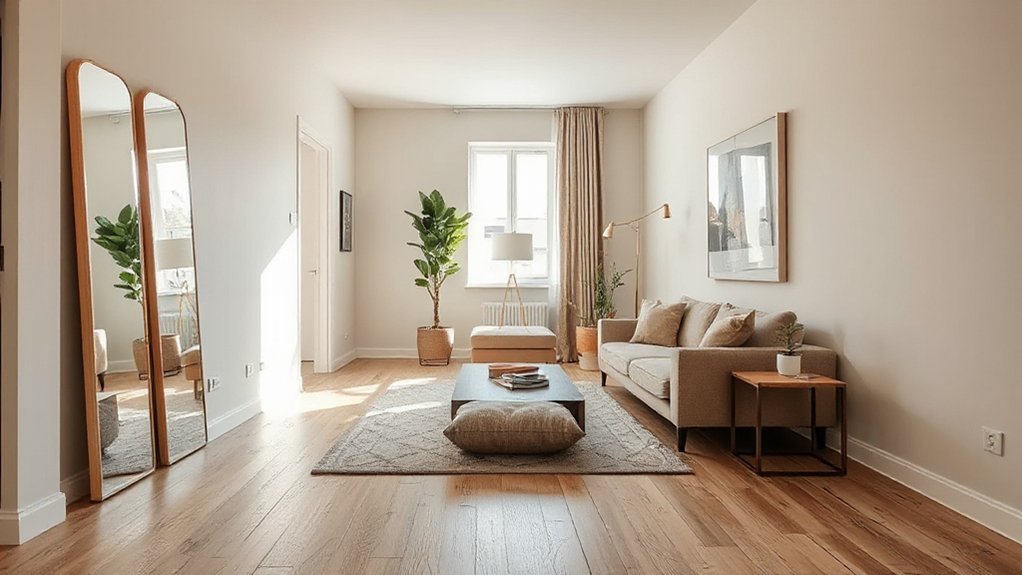
Mirrors bounce light and visually widen a narrow living room, so place them strategically to create bigger, brighter spaces. Start with mirror placement that aligns with primary light sources or windows to maximize daytime glow and minimize glare at night.
Position full-length mirrors along the longest wall to mirror depth, or flank a seating area with two adjacent panels to multiply reflections. Use a single, large mirror opposite a window for a dramatic sense of openness, but avoid curbing natural sightlines with cluttered frames.
Light reflection should feel deliberate, not chaotic, so choose frameless or slim-bordered options to reduce visual weight. Consider mounted options over furniture for height balance, and guarantee stability, safety, and clean maintenance for long-term impact.
Accessorize With Cohesion and Visual Rhythm Down the Room
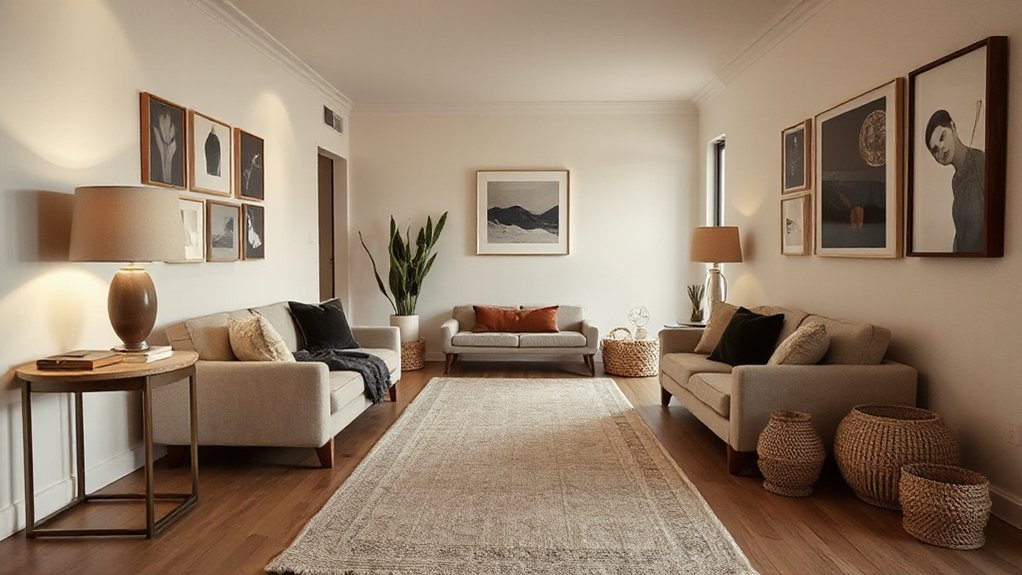
To keep a long, narrow living room cohesive, choose a unifying color palette and repeat key materials or textures at intervals along the room. You’ll create visual rhythm by alternating furniture shapes, lamps, and textiles that share color cues.
Use decorative accents strategically; limit them to a favored set of motifs or finishes to avoid clutter. Prioritize color coordination across cushions, rugs, and curtains so edges feel connected rather than disjointed.
Plan sightlines so walls, floors, and ceiling reflect the same tonal range, then punctuate pauses with single statement pieces that echo the palette. Avoid overloading surfaces; instead, place a few bold accents at deliberate intervals to guide the eye.
This disciplined approach yields a cohesive, dynamic flow with calm, intentional character.
Frequently Asked Questions
How Can I Minimize Clutter in a Long Narrow Living Room?
Yes, to minimize clutter in a long, narrow living room, start with smart storage and clear zones. Use built-in cabinets, wall-hung units, and dual-purpose furniture to keep surfaces clean.
Implement color schemes that create depth and cohesion, and choose lighting solutions that brighten without adding bulk.
Prioritize a few essentials, rotate decor seasonally, and flatten cords with cable management.
Keep a daily tidy routine to maintain a sleek, spacious feel.
What Are Budget-Friendly Ways to Widen Perceived Space?
Budget-friendly ways to widen perceived space come down to consistency, clarity, and contrast. You’ll maximize rooms by using light color schemes, strategic lighting techniques, and simple furniture footprints.
You’ll paint walls and ceilings in pale neutrals, choose layered lighting, and keep surfaces uncluttered.
You’ll group seating to carve zones, mirror subtle reflections, and maintain visual lines.
You’ll curb bulky pieces, keep paths open, and emphasize verticals to stretch the eye.
Can Furniture Placement Affect Room Acoustics?
Yes, furniture placement can affect room acoustics. Position sofas and chairs to create barriers that break direct sound paths, and avoid lining walls with hard surfaces.
Use acoustic panels strategically on dominant reflection points, like the wall behind a seating area.
Implement soundproofing techniques such as thick curtains and rugs to dampen bass and midrange.
Place a coffee table with a soft surface to diffuse, not just absorb, sound, for clearer dialogue and balanced acoustics.
Which Window Treatments Work Best for Narrow Rooms?
Window treatments that work best for narrow rooms are light, flat profiles that don’t crowd the view. Think sheer or translucent panels, narrow Roman shades, or vertical blinds that glide quietly.
You’ll preserve sightlines, boost brightness, and create the illusion of width.
Use color schemes with pale neutrals or cool tones, paired with warm lighting ideas like task lamps and uplights.
Install higher, wider curtains to elongate the walls while maintaining clean, practical control.
How Do I Choose Art Without Overpowering the Space?
Choose art that complements wall color and won’t overwhelm the room. Start with proportion: pick pieces that fit the wall area without crowding.
Consider a cohesive color palette and one unifying frame style.
Use art placement at eye level, grouping smaller works to form a single focal point.
Avoid busy patterns and loud contrasts.
If in doubt, scale back and let negative space breathe.
You’ll maintain balance while showcasing personality.
Conclusion
You can conquer a long, narrow living room like a conqueror storming a hallway-turned-hall of fame. Nail the focal point, carve clear zones, and scale furniture so the space breathes, not breathes at you. Layer lighting, textures, and color to fake width, then store with multi-functional feats that vanish clutter. Mirror boldly, rhythmically, and with restraint. Follow the plan, stay cohesive, and your room will feel twice as long, twice as calm, and infinitely more livable.
About the Author