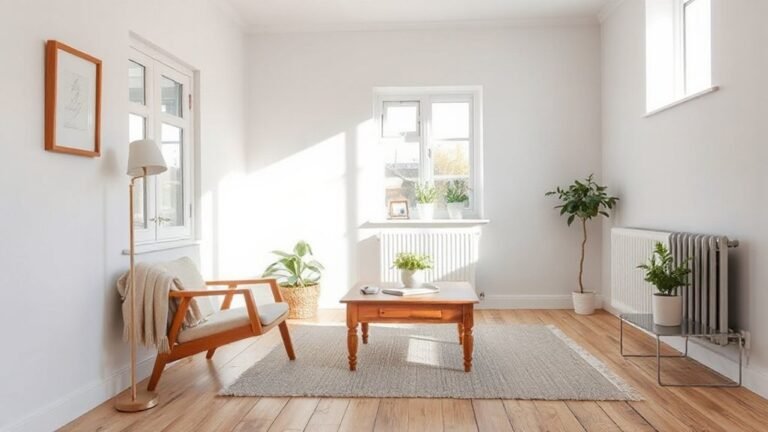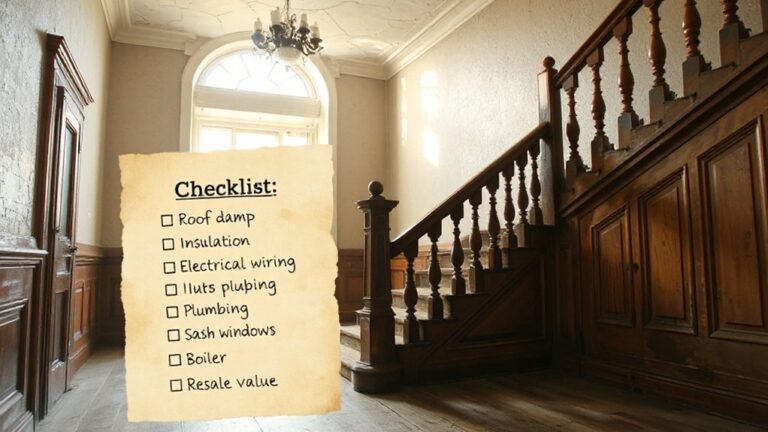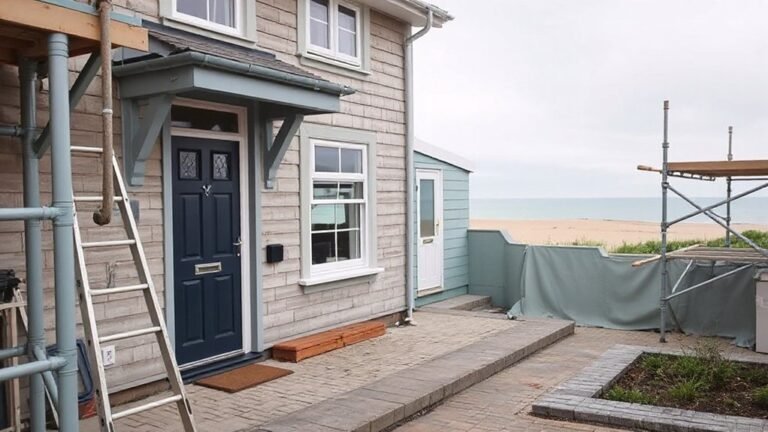
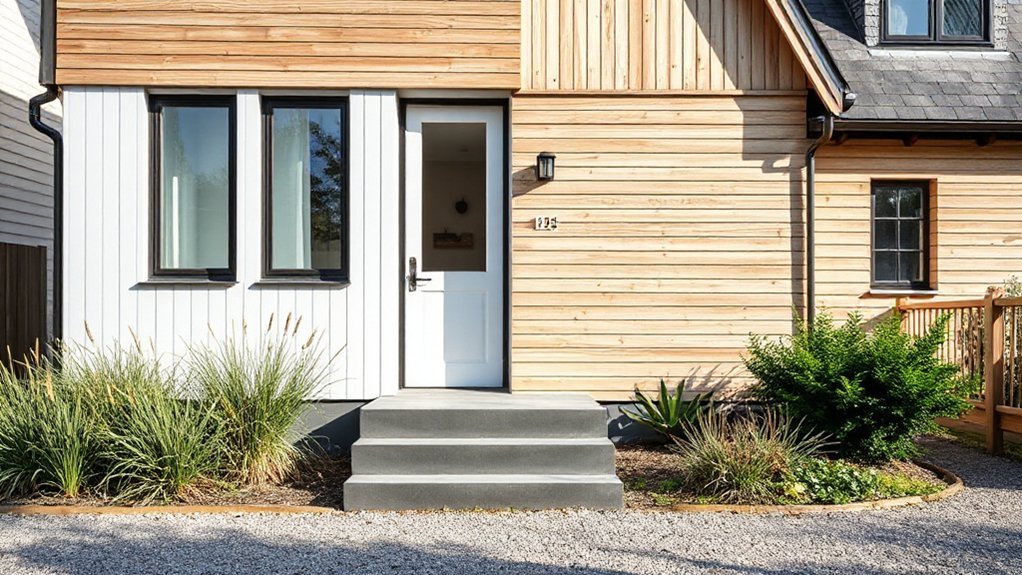
You’ll find that Scandinavian style for semi-detached homes hinges on light, warm textures, and uncluttered spaces. By prioritizing natural light, discreet storage, and durable wood finishes, you create a calm, adaptable backdrop for modern living. Strategic layouts and minimal decor invite tactility without noise, while subtle contrasts sharpen edges without crowding. If you tune the balance just right, a quiet, inviting edge emerges—one that compels you to explore how small decisions shape the whole.
Key Takeaways
- Use Nordic color palettes with soft neutrals, timber accents, and layered contrasts for cohesive exteriors and interiors.
- Maximize natural light through sun-path aligned layouts, large living-zone glazing, and minimal partitions to preserve sightlines.
- Integrate calm Nordic storage that sits flush with walls, using discreet panels and retractable dividers for clean interiors.
- Apply warm wood textures with light finishes and UV-stable surfaces to create cozy, airy edges in semi-detached homes.
- Implement open-plan zoning in narrow spaces using furniture silhouettes, rugs, and low shelving to maintain sightlines and flow.
Nordic Color Palettes for Semi-Detached Homes: Light, Warm, and Timeless
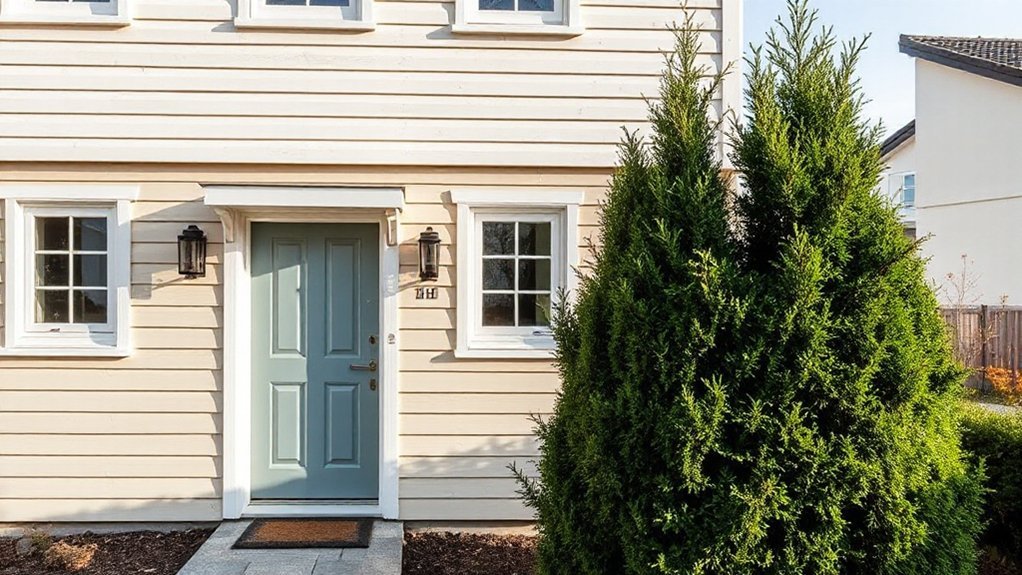
Nordic color palettes for semi-detached homes balance light, warmth, and timelessness to create a cohesive, inviting exterior and interior. You’ll select base neutrals—soft whites, ash grays, and pale plaster—to reflect daylight and reduce visual clutter.
Pair these with accent hues drawn from timber, stone, and ceramic textures to add depth without overpowering the scheme. In interiors, implement layered contrasts: matte walls, satin trim, and natural-finish floors that read as one cohesive plane.
Consider Scandinavian textiles to introduce subtle pattern and tactility, while minimalist decor keeps surfaces uncluttered and purposeful. For exteriors, maintain a restrained palette with brick or timber accents to preserve harmony with surroundings.
The result is precise, serene, and resilient—ideal for semi-detached living.
Maximize Natural Light: Window Placement and Layout Tactics
Maximizing natural light starts with strategic window placement and confident layout decisions. You optimize daylight by aligning rooms to the sun path, prioritizing largest glazing on primary living zones, and preserving sightlines through minimal partitioning.
Fine-tune with proportional glazing ratios and careful floor-to-ceiling heights to reduce glare without sacrificing warmth. Choose window treatments that modulate brightness without blocking ambiance; curtains and blinds should complement, not compete with, finishes.
Save energy by balancing insulation and solar gain through strategic placement of openings.
- Map sun angles to main living areas and orient oversized panes toward southern exposure.
- Use partial partitions or mullions to preserve openness while defining zones.
- Install operable windows for cross-ventilation and dynamic light control.
- Integrate curtains and blinds as functional accents within the architectural line.
Nordic Storage That Feels Calm: Built-Ins, Hidden Solutions, and Slim Profiles
You’ll feel the calm when storage blends into the architecture with built-ins that read as part of the structure. In Nordic storage, precision matters: plan interfaces that align with wall planes, no protrusions interrupting sightlines.
Hidden storage emerges through discreet panels, pull-out shelves, and retractable dividers, preserving a clean, uncluttered profile. Design decisions prioritize function without sacrificing form, pairing soft edges with matte finishes that resist fingerprints and wear.
Choose slim, high-density cabinets that maximize interior volume while maintaining a low visual footprint, ensuring seamless progressions between rooms. Hidden storage supports calm interiors by reducing visual noise and enabling consistent material language.
Prioritize a sleek design ethos that complements existing fixtures, lighting, and architectural details.
Warm Wood Textures for Cozy Edges: Finishes, Grain, and Maintenance
Warm wood textures introduce tactile warmth without compromising Nordic clarity. You pursue finishes that reveal grain while preserving light, airy atmospherics. Select rustic finishes that resist patina yet stay controlled, ensuring longevity in semi-detached settings.
Maintain a precise balance between texture and brightness by focusing on texture depth, sheen level, and UV stability.
- Choose finishes with visible grain contrast and a matte to satin sheen for everyday resilience.
- Favor hard woods or engineered planks that accept light sanding without performance loss.
- Apply maintenance tips that prioritize dust-free surfaces and controlled humidity to prevent warping.
- Test stain samples in a hidden area to confirm color stability under natural light.
In short, finish, grain, and upkeep define warm edges with durability.
Open-Plan Zoning in Narrow Spaces: Visual Cues, Furniture, and Acoustics
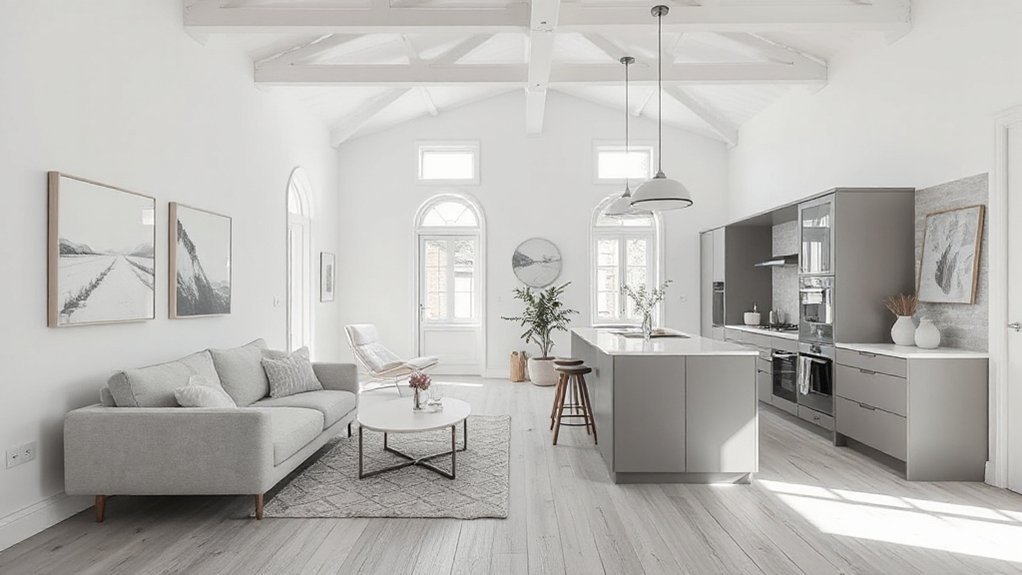
In narrow open-plan layouts, clever zoning relies on visual cues, furniture placement, and sound management to create distinct yet cohesive zones without walls. You achieve area division by leveraging furniture silhouettes, rug boundaries, and ceiling-height hints that read as deliberate separations without breaking the flow.
Visual separation should be subtle yet axial, guiding movement and attention through line, color, and texture rather than bulk. Opt for low, airy shelving or cabinetry to delineate zones while preserving sightlines and light.
Acoustic control matters: introduce soft panels, woven textiles, and ceiling diffusers to prevent echoes without muffling clarity. Choose material palettes that repeat across zones, preserving unity, while finishes, grain, and contrast define purpose—dining, lounging, and work corners—within a singular, cohesive whole.
Frequently Asked Questions
How Can Scandinavian Design Boost Curb Appeal for Semi-Detached Homes?
You boost curb appeal by embracing clean lines, natural textures, and efficient detailing that harmonizes with neighboring homes. Focus on urban integration: streamline entry, unify color palettes, and reflect surrounding architecture with modest ornamentation.
Use warmth from wood accents and high-contrast trims for visual interest. Apply traditional adaptations—timber screens, pitched profiles, and durable cladding—while preserving light, air, and symmetry.
Your thoughtful, precise execution enhances perception of value and street presence.
Which Sustainable Materials Suit Small Scandinavian Interiors?
One compelling stat: 60% of homeowners say sustainability factors into material choices. You’ll want eco friendly flooring and recycled wall panels for a small Scandinavian interior.
You choose light, durable materials with low emissions, like cork or bamboo, paired with thin, high‑quality recycled panels to preserve space.
You keep finishes matte and neutral, preserving natural warmth.
You’ll prioritize airtight joints, visible grain, and clean lines to achieve a precise, aesthetic, and eco-conscious result.
How to Balance Privacy and Openness in Shared Walls?
You balance privacy and openness on a shared wall by prioritizing acoustic and visual controls. Implement shared wall insulation to reduce sound transfer, then install privacy window solutions like frosted or laminated panes with elevated sill height and strategic spacing.
Use staggered glazing, recessed frames, and wall corten or timber accents to maintain openness without glare. Align ventilation paths, and apply perforated screens or slim niches to retain light while preserving intimate zones.
What Are Cost-Effective Ways to Retrofit Nordic Lighting?
You want cost-effective ways to retrofit Nordic lighting, so start with energy efficient fixtures and LED retrofit options. You’ll swap old bulbs for dimmable LEDs, install under-cabinet strips, and add daylight-matching ceiling fixtures.
This approach reduces energy use while preserving clean, minimal lines. You’ll choose high-CRI LEDs for true colors, use smart controls for zoning, and document lumen output with precise calculations.
The result is a technically precise, aesthetically cohesive glow that’s still affordable.
How to Maintain Scandinavian Style With Seasonal Exterior Changes?
You maintain Scandinavian style with seasonal exterior changes by embracing frost-resistant palette shifts and subtle textures.
Keep Frosted windows for diffused light and privacy, then accent buildings with Wooden accents that weather gracefully.
Use breathable, low-maintenance finishes and consistent profiling to preserve clean lines.
Rotate planters, textiles, and lighting to reflect the season, while preserving core neutrals.
Prioritize durable materials, add thermal breaks, and seal gaps to sustain quiet, airy aesthetics year-round.
Conclusion
In closing, your semi-detached space can embody calm, functional Nordic clarity with thoughtful color, light, and texture. Picture a narrow living room: a single skylight, pale walls, and warm oak accents harmonize, while hidden storage keeps the line clean. A quick data note: homes with optimized natural light report 40% higher perceived spaciousness. Like a well-tuned instrument, every element—storage, grain, layout—renders the home more breathable and enduring. Embrace restraint; the space will breathe.
About the Author