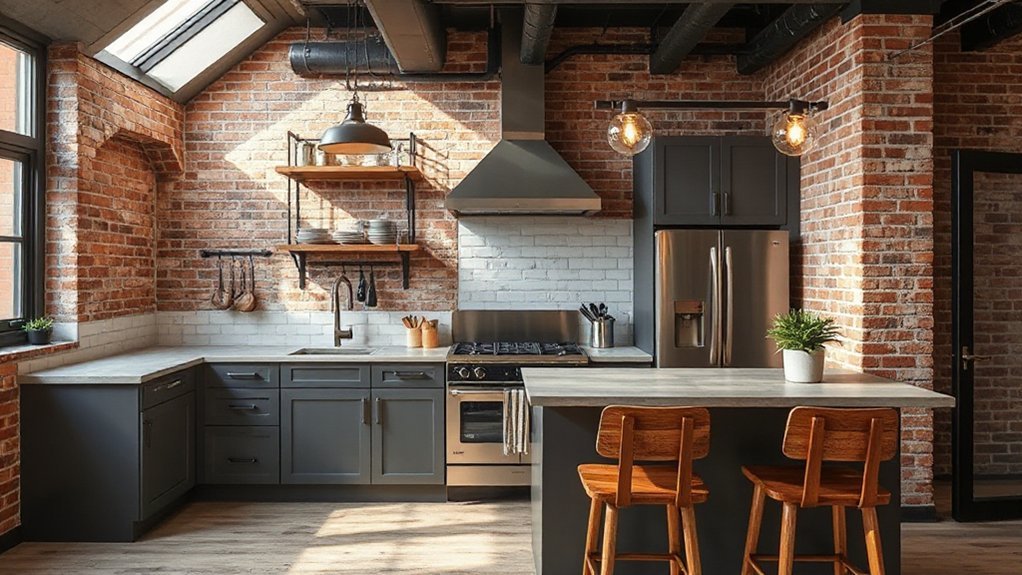
You’re crafting an urban kitchen with industrial chic at its core, balancing brick, steel, and wood for texture while prioritizing durable finishes and workflow efficiency. Think modular islands, vertical storage, and open shelving that keep sightlines clear. Layer lighting to reveal material honesty and accented warmth, then select appliances and finishes that read as design workflow, not decor. There’s a method here, and it’s about precision—and a few decisions that hint at what comes next.
Key Takeaways
- Emphasize honest materials (steel, concrete, brick) with warm 2700–3000K lighting for industrial warmth in small urban spaces.
- Use modular islands and open shelving to define work zones while maintaining flexibility in tight layouts.
- Expose pipes, conduit, and vintage fixtures as design accents to enhance industrial character without crowding the space.
- Plan efficient work flow with a compact work triangle, vertical storage, and wall-mounted controls for streamlined routines.
- Balance rugged textures with cohesive finishes and low-profile hardware for durable, easy-to-clean surfaces.
Define Industrial Chic for City Kitchens: Core Concepts
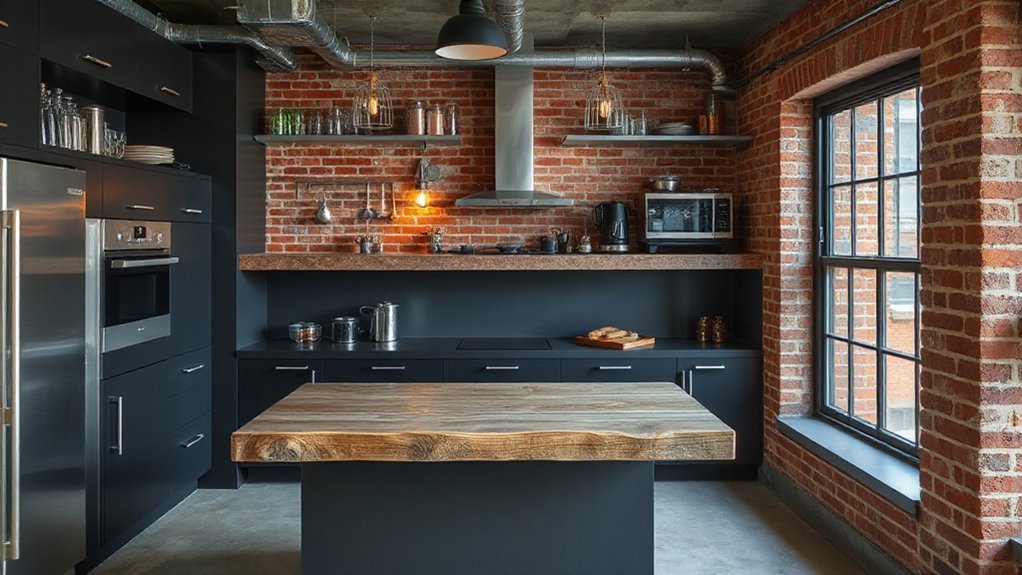
Industrial chic in city kitchens blends rugged materials with streamlined form to create a durable, visually honest workspace. You set the baseline by defining core concepts: honest materials, purposeful detailing, and a restrained color palette that favors neutral tones with expressive patinas.
You align finish and function, ensuring metals read as structural: steel frames, concrete counters, and tilework with industrial rhythm. You pace lighting as a technical system, prioritizing glare control and task zones.
You identify urban loft workflows, where compact layouts maximize throughput without compromising resilience. You acknowledge vintage accents as strategic punctuation, integrated to enhance texture without overpowering lines.
You document decisions, evaluate material compatibility, and anticipate maintenance cycles to sustain long-term performance.
Balance Brick, Steel, and Wood for Texture
You balance brick, steel, and wood to create tactile texture through deliberate material mix.
Consider layered contrasts—rough brick against cool steel, warm wood against concrete—for a cohesive, read-as-built texture.
This approach guides quick decisions on finishes, joints, and shifts to keep the project precise and visually intentional.
Texture Through Material Mix
- Establish tactile hierarchy by pairing rough brick with smooth steel and warm wood accents.
- Use exposed pipes as a deliberate industrial accent, ensuring finishes and alignment are precise.
- Introduce vintage fixtures to punctuate the palette without overpowering the composition.
- Apply consistent grain direction and seam tolerance to maintain visual flow across cabinetry, backsplashes, and flooring.
Result: a restrained, studio-ready environment where material honesty drives perception.
You measure daylight, scale, and ergonomics to preserve clarity.
Plan for maintenance access and future refinements without disrupting the core texture strategy.
Layered Material Contrasts
Start with brick on alcoves or a backsplash to establish mass without overpowering. Introduce steel via appliances, frames, or shelving to introduce cool contrast and line economy. Timber elements should be reclaimed wood where feasible, offering warmth and sustainability while aging gracefully under wear patterns.
Vintage lighting becomes the unifying accent, tying texture shifts with its metallic glow and warm shadows. Maintain precise tolerances, align joints, and preserve grain continuity where possible to optimize perceptual rhythm across surfaces.
This approach yields a cohesive, industrial-chic kitchen with refined material ownership.
Layout Principles for Small City Kitchens
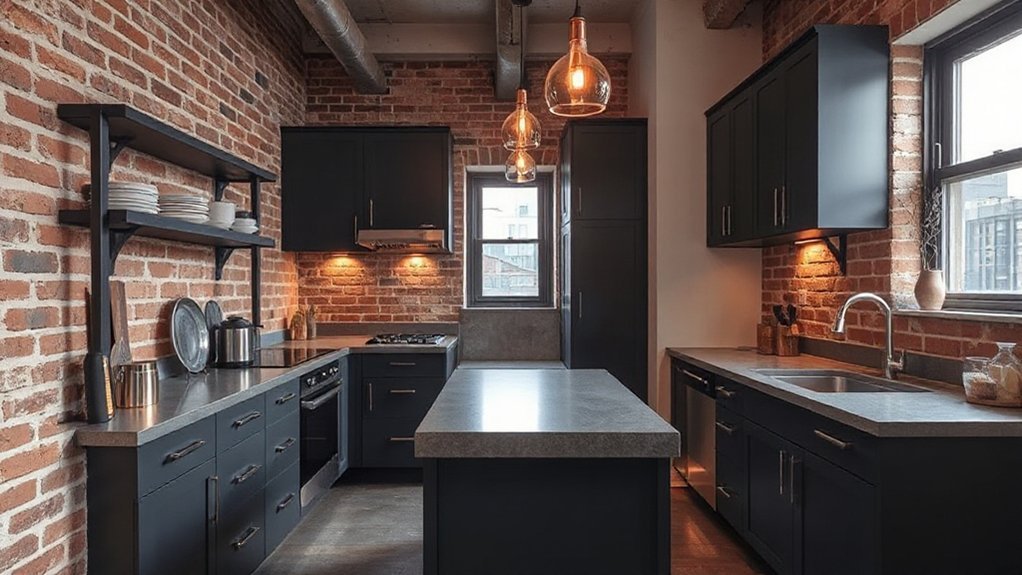
You design for efficient traffic flow, charting routes from entry to prep to cook zones to cleanup, minimizing detours and pinch points.
Vertical storage solutions maximize usable footprint, stacking shelves, tall cabinetry, and overhead racks to free floor space while keeping essentials reachable.
Approach treats the kitchen as a defined work triangle plus dynamic edge zones, ensuring each move supports speed, safety, and ergonomic consistency.
Efficient Traffic Flow
- Define primary corridor width and clearances
- Align fridge, sink, and range within a single run
- Position prep zones adjacent to cooking stations
- Reserve a dedicated unloading zone for groceries
This disciplined kitchen pathway design minimizes steps and enhances throughput.
Vertical Storage Solutions
Vertical storage in small city kitchens hinges on maximizing wall reach without sacrificing accessibility. Vertical planes should accommodate a continuous, organized hierarchy from floor to ceiling. You implement this with deliberate zoning: upper cabinets for infrequently used items, mid-height pull shelves for daily essentials, and floor-level bases for bulk storage.
Prioritize alignment to structural modules to minimize dead space and simplify fabrication. Integrate vertical racks where wall studs permit, linking them to adjustable rails for scalable capacity. Use hanging baskets to render open-access pathways above counters, easing retrieval while preserving cabinet depth for appliances.
Plan for service access and ventilation behind any mounted units. Specify hardware with corrosion resistance, soft-close mechanisms, and standardized fasteners to reduce on-site variance. This approach sustains clean lines, repeatable logistics, and resilient urban kitchen performance.
Modular Islands and Open Shelving for Airiness
Modular islands and open shelving fuse flexibility with visual lightness, enabling adaptable kitchen zones in compact urban layouts. You leverage modular islands to define work zones without rigid partitions, while open shelving reduces perceived bulk and invites air through the footprint.
This combination supports fast reconfiguration for social gatherings, meal prep, or cultural rituals around cooking. You prioritize proportion, material continuity, and performance metadata, ensuring modules align with plumbing, electrical, and access constraints.
Emphasize durable surfaces, matte finishes, and laser-cut edge details to minimize visual noise while maximizing usability.
- Define clear zones: prep, cleanup, and display, with modular island placement calibrated to traffic flow.
- Select open shelving with reinforced brackets, minimizing depth for sightlines.
- Match finishes across island and shelving for cohesion.
- Specify hardware-free edges to preserve a clean industrial aesthetic.
Lighting Strategies That Elevate the Industrial Look
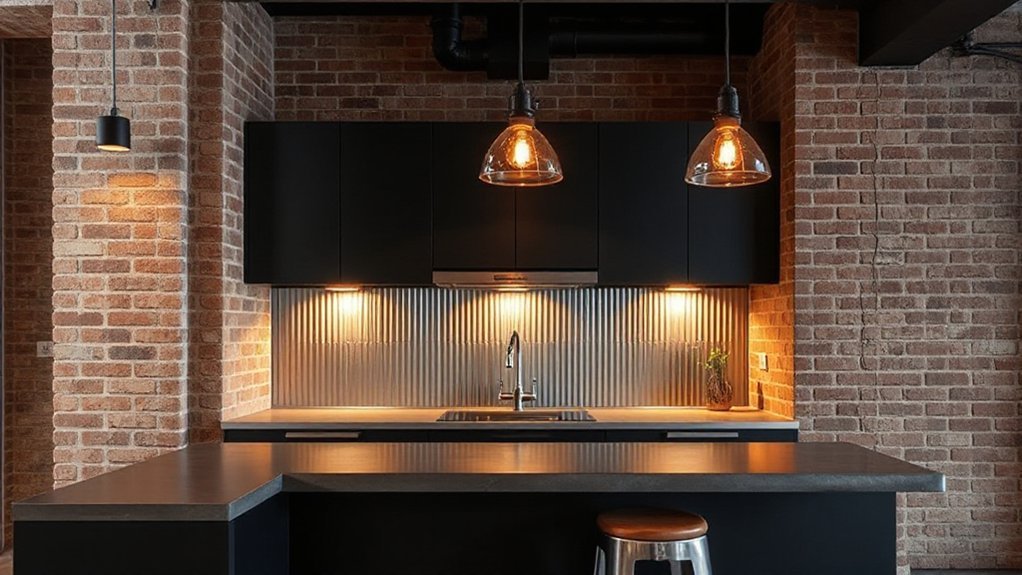
When aiming for an industrial look, lighting should reinforce structure and materiality while guiding traffic and work zones. You’ll deploy a layered approach that combines ambient, task, and accent layers to read as a cohesive system.
Use exposed wiring, conduit, and metal housings to emphasize constructional honesty without dulling atmosphere. Position pendant lighting over primary work zones to articulate scale and focal points, and select fixtures with non-glare diffusers to maintain visual comfort.
Integrate vintage fixtures where sympathetic to your material palette, ensuring they complement steel, concrete, and plywood textures rather than competing with them.
Aim for color temperature around 2700–3000K for warmth without erasing industrial edge.
Ensure controls are intuitive, with zoning that supports cooking tasks and social moments alike.
High-Contrast Color With Warmth and Depth
High-contrast color palettes reveal visual drama without sacrificing warmth or depth in compact kitchens. You balance bold pairings with subdued textures to preserve legibility and tactility in a tight footprint.
Color pairing is deliberate: you select a dominant neutral, then introduce a saturated hue to define zones, appliances, or cabinetry without overwhelming sightlines. Accent walls anchor the composition, offering a focal point that anchors urban chic while reflecting personality.
Light fixtures and cabinetry finishes must harmonize to avoid gloss-clutter or cold reflections. Execute with precise material specifications, sample boards, and finish schedules to guarantee consistency across surfaces.
4-line approach below guides execution:
- Define the dominant neutral base
- Introduce a single saturated accent hue
- Apply color on accessorized surfaces
- Finish with an accent wall to ground the space
Storage Hacks to Maximize Square Footage
Storage hacks for maximizing square footage in compact urban kitchens hinge on intelligent vertical utilization, integrated systems, and precise material planning. You design with a workflow mindset, allocating zones that streamline tasks and reduce footprint.
Prioritize wall-spine storage: tall cabinets, open shelves, and magnetic rails to reclaim counter space. Implement pull-out pantry modules and corner drawers fed by a measured hardware cadence to minimize wasted volume. Integrate under-cabinet lighting and vertical hooks to keep surfaces clear.
Opt for modular fittings with interchangeable panels to adapt as needs evolve. Material planning emphasizes low-profile hardware, slim countertops, and durable, easy-to-clean finishes.
Subtle design cues like vintage lighting and exposed pipes reinforce the industrial aesthetic while remaining functional. Precision execution guarantees serviceability, longevity, and measurable space gains.
Appliances That Tie Into the Industrial Aesthetic
Industrial-inspired appliances anchor the kitchen’s look by marrying rugged form with reliable function, aligning with the vertical and modular strategies from the storage-focused approach. You’ll select components that emphasize steel, matte black, and exposed fittings, ensuring each piece contributes to the industrial narrative.
Efficiency targets, cooling performance, and service access drive decisions, not just aesthetics. Embrace a cohesive material language across cabinetry, ventilation, and hardware to maintain strict design fidelity.
Vintage lighting and Retro appliances aren’t afterthoughts; they anchor contrast and historical resonance within the modern workflow.
Plan around space, cord management, and ventilation clearance to support long-term usability.
- Modular range with proximate prep zone
- Integrated refrigeration with steel fascia
- Open shelving paired with task lighting
- Wall-mounted controls and back-of-house accessibility
Maintenance Habits for Lasting Industrial Chic
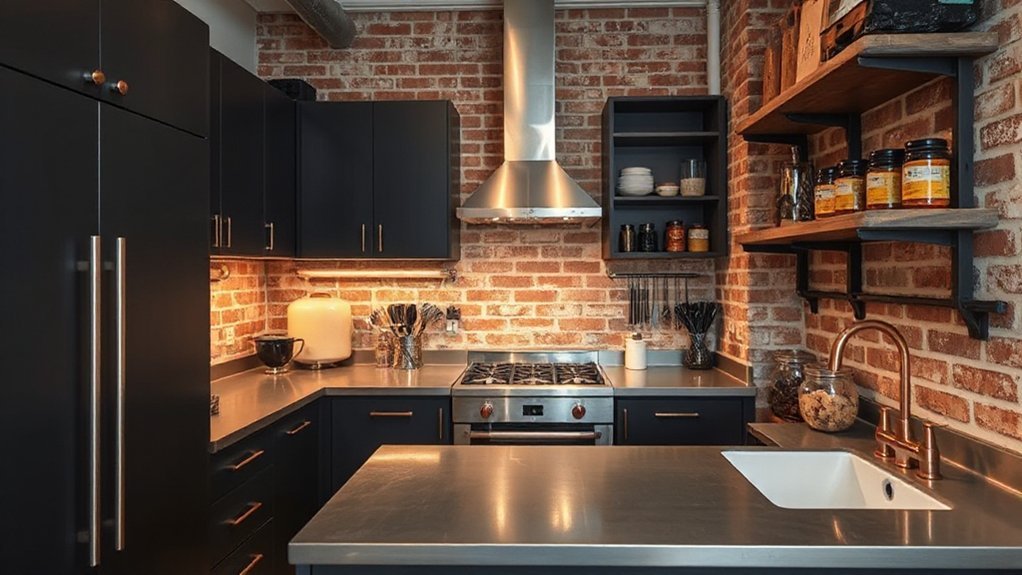
Maintenance habits keep industrial chic functional and durable, ensuring steel finishes, matte coatings, and exposed fittings retain their edge over time. You establish clear maintenance schedules aligned with material performance, room use, and exposure to traffic.
Implement weekly wipe-downs with a non-abrasive cleaner to prevent grime buildup on rivets, seams, and castings. Schedule monthly checks on joints, fasteners, and seals to detect corrosion or loosening before it escalates.
Use appropriate industrial cleaning methods for metal finishes, avoiding ammonia on certain coatings. Document results, failures, and remedies to refine protocols.
Integrate predictive timelines from finish warranties into your plan, updating fixtures and coatings as wear dictates. Maintain a log, assign responsibilities, and train occupants to minimize unintended damage while preserving the design intent and tactile honesty of the space.
Frequently Asked Questions
How to Choose Durable Materials Without Sacrificing Warmth?
Durability comes from selecting sustainable materials with proven performance and warmth. You prioritize solid, low-maintenance options like engineered stone, quarried terrazzo, and responsibly sourced wood with reliable sealants.
Choose finishes that tolerate moisture, scratches, and heat, then apply thorough maintenance tips: wipe spills promptly, re-seal periodically, and use proper cleaning agents.
Balance texture with soft fabrics and warm lighting.
Inspect joints, edges, and fasteners regularly, and document life-cycle costs to optimize long-term resilience.
Can Industrial Chic Work in Rental Apartments?
Yes, industrial chic can work in rental apartments. You’ll emphasize reversible, technically sound choices: choose vintage lighting to set the vibe and rustic accessories to add warmth without permanent changes.
Focus on modular, removable elements, like adhesive-backed film and freestanding shelves, and use surface-safe fasteners for grills, racks, or pipe-inspired accents.
Maintain a clean line, precise proportions, and a cohesive material palette to achieve a studio-ready, design-driven aesthetic with minimal landlord impact.
What Budget-Friendly Upgrades Yield the Most Impact?
You don’t need a fortune to upgrade—you’ll maximize impact with budget-friendly moves. Start with vintage lighting to instantly refine mood, then add open shelving for organization and display, boosting storage without a full remodel.
You’ll measure success by practical function and polished lines, not noise. Install matte trims, seal concrete, and program lighting scenes for efficiency.
You’ll achieve a chic, durable feel through deliberate hardware choices, balanced proportions, and a disciplined project mindset.
How to Blend Modern Tech With Rugged Finishes?
You blend modern tech with rugged finishes by pairing smart appliances with exposed materials, ensuring seamless integration and tactile contrast.
Optimize wiring, venting, and containment to support reliable performance.
Use industrial lighting to emphasize textures while maintaining task efficiency.
Select smart devices with aluminum bezels and durable finishes, coordinating software dashboards for centralized control.
Detail-proof the hood, panel gaps, and sockets, and document measurements for future upgrades, always prioritizing precision, durability, and a coherent design language.
Are There Safety Concerns With Exposed Utilities?
Yes, there are safety concerns with exposed utilities. You must prioritize utility safety and assess electrical hazards before advancing any design.
You’ll plan clearances, use proper enclosures, and install grounded fixtures to minimize shock risk.
I you’ll label circuits, implement ARC fault protection, and verify with a professional.
Treat every exposed run as a potential risk, documenting incident mitigations and routine checks.
Your design thrives on precision, measured integration, and disciplined, ongoing electrical safety awareness.
Conclusion
You’ve mapped the industrial chic path—brick, steel, wood, and smart storage—like a seasoned project lead. Irony: you’ll actually finish on time, with every detail tightening the workflow and every surface aging gracefully without drama. The design stays honest, durable, and adaptable, even as your urban kitchen grows more character than square footage. So keep the modular islands aligned, open shelving precise, and lighting calibrated—function first, ambiance always, and style will follow flawlessly.
About the Author