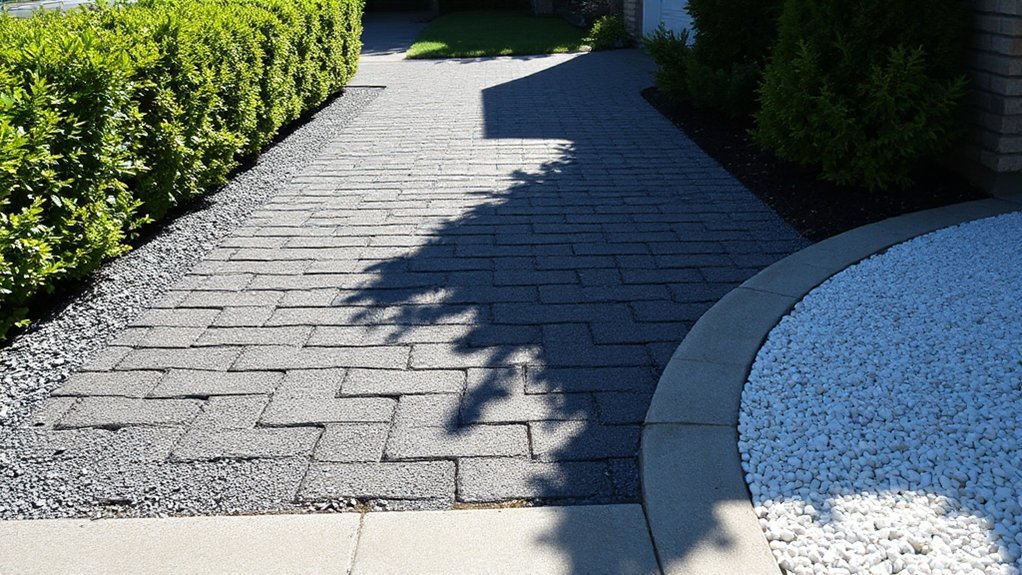
A gravel path is cheap to start, yet a resin or block option can feel instantly premium. You weigh upfront cost against long‑term maintenance, and you’ll notice how each choice shapes curb appeal, drainage, and longevity. If you want a quick install with minimal upkeep, resin might appeal; if you value durability and classic looks, block paving could win out. The question becomes: which fits your climate, budget, and day‑to‑day use best?
Key Takeaways
- Gravel driveways are cost-effective with strong layering for durability, easy maintenance, and erosion control when properly installed.
- Block paving offers durable, even surfaces with neat aesthetics, easy repairs, and reliable load performance on a solid sub-base.
- Resin driveways provide a seamless, modern look with quick install, good load tolerance, and weed resistance when well installed.
- Consider climate and drainage: freeze-thaw resilience and proper edging/drainage are critical for all options.
- Compare long-term upkeep: resin requires resurfacing over time, block paving needs joint upkeep, and gravel needs grading and weed control.
Define Your Driveway Goals: Cost, Maintenance, and Aesthetics
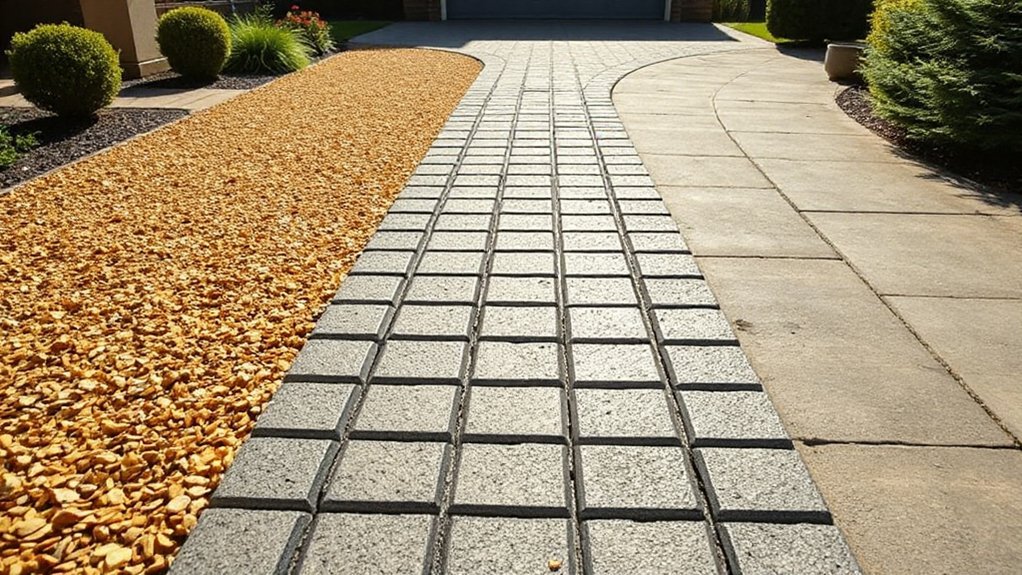
Defining your driveway goals upfront saves time and money. You’ll map cost, maintenance, and aesthetics before you pick materials.
Start with a budget that includes installation, future repairs, and lighting, then set expectations for longevity and appearance.
Consider how Driveway lighting will affect safety and curb appeal, and plan for easy access for cars, pedestrians, and deliveries.
Assess maintenance tolerance: sealants, weed control, and winter care influence ongoing costs and effort.
For aesthetics, decide whether you want a low-profile blend with landscaping integration or a bold statement that stands out.
Landscaping integration is about how the drive sits with borders, plantings, and frontage, while lighting highlights textures and edges.
Clarify these priorities to avoid scope creep and guarantee durable, cohesive results.
Gravel Driveways: Goals, Costs, and Care
Gravel driveways set clear goals for durability, look, and upkeep, so you know what success means from the start. Consider costs upfront—material, base, installation—and plan for ongoing care to keep the surface level and stable.
We’ll walk through practical maintenance steps and cost factors to help you budget and maintain performance over time.
Gravel Driveway Goals
A gravel driveway should be durable, easy to maintain, and cost-effective, with a clear plan for material choice, drainage, and ongoing upkeep. Your goals center on long-term performance and simple maintenance, so you pick robust aggregates, proper base, and reliable edging.
You’ll define success by stable surface, minimal dust, and clear water flow away from structures. Focus on layering: sub-base, base, and topcourse that resist rutting and washout.
Consider landscaping options that blend with surroundings and reduce erosion, while preserving accessibility for vehicles and pedestrians. Drainage solutions matter as much as aesthetics; design swales and compacted subgrades to handle rainfall without pooling.
Set milestones for periodic grading, weed control, and replenishment of fines. With defined goals, your gravel driveway stays functional, attractive, and economical.
Cost Considerations
What’s the real price tag on a gravel driveway, and how should you balance upfront costs with long-term value? You weigh initial materials, labor, and site prep against durability and upkeep.
Gravel itself is affordable, but costs rise with base preparation, edging, and dust suppression. Plan for landscaping options that fit your site and climate, not just the lowest number.
A sound gravel solution lasts longer when you compact properly and install a stabilizing base, reducing ongoing shingle replacement and weed control.
Consider drainage solutions to prevent puddling and erosion, which can inflate long-term expenses if ignored.
Get clear quotes that separate material, delivery, and installation.
Finally, budget for periodic refreshes to maintain slope, compaction, and appearance without overhauling the system.
Maintenance Essentials
Regular maintenance keeps gravel driveways functional and affordable over time, so you should schedule routine checks for grade, edge integrity, and surface compaction.
You’ll regularly rake high spots, fill ruts with compacted material, and reseed bare patches to prevent erosion. Keep a close eye on weed growth and use a permeable weed fabric or a selective herbicide as needed.
Establish a simple maintenance routine tied to seasonal changes, so you don’t miss critical tasks. When planning landscaping options, choose gravel types and edging that minimize movement and reduce maintenance.
For larger projects, review installation techniques to guarantee proper base thickness and drainage, avoiding washouts after heavy rain.
This approach keeps costs predictable and extends your drive’s lifespan.
Block Paving: Curb Appeal, Durability, and Practicality
Block paving upgrades instantly boost curb appeal with clean lines and defined drive zones.
It also adds durability and practicality, resisting weather and heavy use when properly laid and sealed.
In short, you’ll get a stylish, low-maintenance surface that supports practical parking and traffic needs.
Curb Appeal Impact
Curb appeal makes a strong first impression, and block paving directly influences that impact by delivering neat, defined lines and a polished finish. You’ll notice how the pattern, color, and texture frame your property, guiding the eye toward entry points and landscaping features.
Block paving creates a crisp backdrop that elevates landscaping options, from shrubs to planters, without competing for attention. It also supports a cohesive exterior look, which boosts perceived value.
When you pair your driveway with thoughtful lighting, you enhance nighttime curb appeal and safety, drawing attention to craftsmanship. This approach emphasizes a balanced look: orderly surfaces, subtle contrast, and welcoming entryways.
Choose durable edge treatments and clean joint lines to maintain the refined impression over time.
Durability And Practicality
If you’re weighing block paving for durability, you’ll appreciate how materials, installation, and maintenance come together to keep your driveway resilient. Strength starts with dense concrete or clay blocks, properly installed on a solid sub-base, with edging that prevents movement.
Routine maintenance matters: weed control, periodic sealing, and facing repairs before cracks spread. In practical terms, block paving handles load better than loose gravel and is more stable under tires, especially when joints are filled and compacted correctly.
Landscaping integration matters; the edging and joint materials should complement gardens without creating trip hazards. Snow removal is manageable with clear paths and appropriate snow plow settings, reducing freeze-thaw damage.
Choose proven installers, specify proper base depth, and plan for future access needs to sustain long-term performance.
Resin Driveways: Pros, Cons, and Longevity
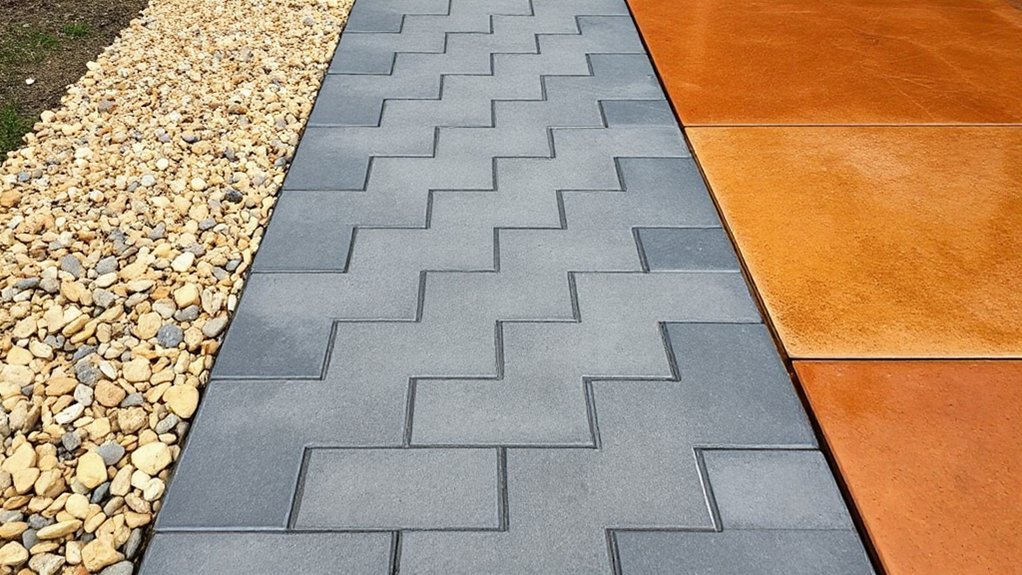
Resin driveways offer a smooth, modern look with quick installation and strong durability, but they come with costs and maintenance considerations you should weigh carefully.
You’ll gain a seamless, monolithic surface that resists weed growth and offers excellent load tolerance with proper installation. Pros include fast curing times, tight joints, and minimal cracking under typical loads.
Cons center on surface wear, UV fading, and potential for tyre marks or staining if resin isn’t resin-bound correctly.
Longevity hinges on base stability, drainage, and routine upkeep, like periodic resurfacing when colour or gloss wanes.
Plan for surface sealing at intervals to preserve colour and integrity, and explore aesthetic options that align with your property’s style.
Be sure to choose reputable installers to maximize longevity and performance.
Resin vs Block Paving: Side-By-Side Comparison
When weighing resin and block paving for your driveway, you’ll want to compare how they stand up to daily use, maintenance needs, and initial cost.
Resin offers seamless surfaces, faster installation, and fewer joints, which reduces weed growth and trip hazards.
Block paving delivers proven durability, easy local repairs, and a classic look that can be refreshed with different patterns.
Resin shines in design flexibility with seamless finishes and color options, while block paving excels in long-term resilience and patch repair.
Environmental impact favors resin when recycled materials and heat resistance reduce lifecycle emissions, but brick-and-block sourcing can be net-positive if locally produced.
Weigh maintenance cycles, potential cracking, and up-front investment to decide which aligns with your goals.
Choose Your Material: Climate, Use, and Aesthetic Fit
Choosing the right driveway material depends on climate, how you’ll use it, and the look you want. When you weigh options, consider Material versatility and Environmental impact alongside cost and maintenance. You’ll want a surface that handles weather, weight from vehicles, and foot traffic without frequent repairs.
Below are key points to guide your pick:
- Climate resilience: freeze-thaw cycles, heat tolerance, and drainage
- Use profile: load capacity, traffic patterns, and turning radii
- Aesthetic fit: color, texture, and harmony with home styling
- Environmental impact: materials’ production footprint and end-of-life options
Frequently Asked Questions
How Long Does Each Driveway Type Last in Typical Use?
A typical driveway lasts about 15–20 years with gravel, 20–30 years with block paving, and 15–25 years for resin, depending on use and maintenance.
You’ll boost longevity by proper edging, drainage, and regular sealing where applicable.
Consider Landscaping options that reduce weed growth and keep edges intact.
When it comes to aesthetic considerations, choose textures and colors that complement your home while prioritizing durability and drainage.
Stay proactive with repairs to maximize lifespan and curb appeal.
What Maintenance Tasks Are Unique to Gravel Driveways?
Gravel driveways require ongoing weed control and seasonal cleaning. You’ll need to pull or spot-treat weeds as they emerge between stones, and apply a weed-suppressing membrane or herbicide if you notice growth.
Rake regularly to redistribute gravel, fill low spots, and prevent ruts. Seasonal cleaning involves sweeping debris, jet-washing if needed, and topping up gravel to maintain depth.
Keep edging stable to stop migration and seal after major weed flushes if appropriate.
Can Resin Driveways Handle Heavy Vehicles or Loads?
Yes, resin driveways can handle heavy vehicles, but it depends on the system and installation.
Heavy vehicle durability hinges on proper substrate, resin choice, and timely curing. Make sure you meet the manufacturer’s load bearing capacity ratings and use reinforced assemblies where needed.
You’ll want to check a certified installer’s specs and consider thicker resin systems for >3000 kg loads.
Don’t rush repairs—a solid base keeps load distribution even and resale value higher.
Are There Drainage Considerations Specific to Block Paving?
Yes, there are drainage considerations specific to block paving. You should plan drainage from the start, guaranteeing surface permeability and avoiding water pooling.
Use a well-graded sub-base, proper fall directions, and edge drains where needed.
Consider permeable jointing options or pre-approved pavers with drainage channels.
Keep drainage planning central to your design, and make certain you maintain adequate slope to gutters or drainage outlets for effective water management.
What Are Hidden Costs Beyond Installation for Each Option?
Hidden costs vary, but you’ll face maintenance, repairs, and potential drainage tweaks after installation.
For gravel, expect topping up and weed control.
Block paving may need joint re-pointing and lift repairs.
Resin can crack and require resurfacing.
Installation challenges include substrate preparation, drainage alignment, and seasonal delays.
Budget for long-term upkeep, seasonal resealing, and unexpected pothole fixes.
Plan a contingency fund to cover these ongoing costs and keep your driveway resilient and visually consistent.
Conclusion
Ultimately, pick the option that lines up with your climate, use, and budget. If you prize ease and a modern look, resin fits and dries fast, but may need sealing. For budget-conscious, gravel is straightforward and affordable, with a natural drain. If curb appeal and durability matter most, block paving shines. Envision this: your driveway as a well-tended garden path—visible, balanced, and purpose-built. Start with goals, then choose the material that best supports them.
About the Author