Preserve the essence of your period property by prioritizing original features—mouldings, hardware, timber—and pairing them with restrained, authentic finishes. Assess which elements truly define the space, then plan reversibly modern updates that respect scale and proportion. Choose period-appropriate palettes and textures, keep lighting discreet, and source vintage textiles and antique hardware. Stay practical with budgeting and permits, because small, thoughtful choices often determine how faithfully character survives—and that depends on what you decide next.
Key Takeaways
- Preserve original features and fabric: focus on authentic audits, minimal repairs, and documentation to maintain memory and joinery details.
- Use restrained, period-appropriate finishes: choose authentic colors, textures, and breathable materials that reveal original grain and patina.
- Restore, don’t replace, major joinery: match profiles and plaster quality, keep sash balances accessible, and respect scale and proportion.
- Harmonize lighting and textiles: blend vintage and modern with period palettes, lightweight curtains, and antique textiles to preserve atmosphere.
- Plan cohesive updates: prioritize quiet, reversible improvements and furniture that fits original rhythm and circulation paths.
Defining Original Character in Period Homes
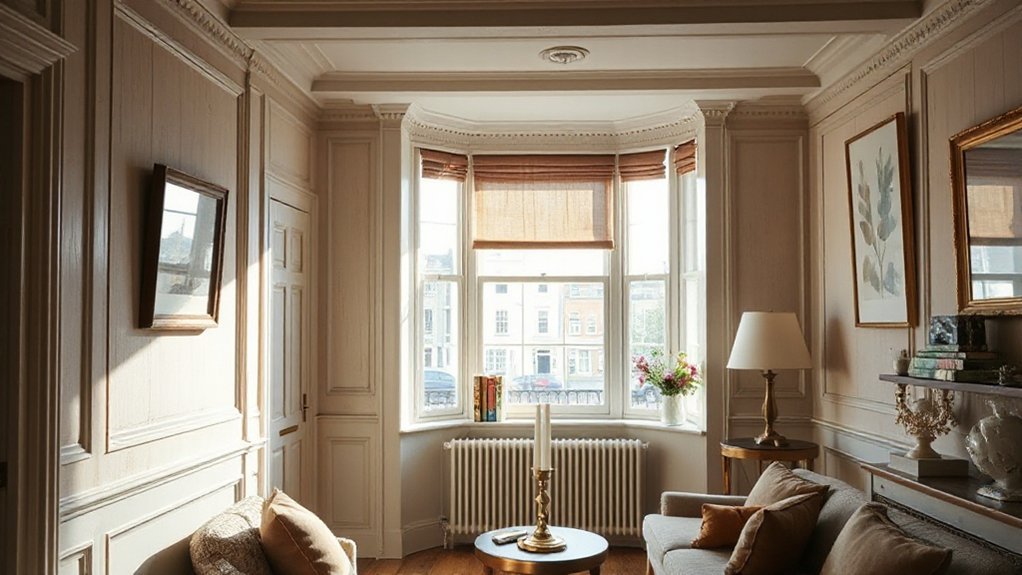
You identify hallmark details—handsome mouldings, staircase geometry, original hardware—and weigh which elements define the home’s identity rather than merely decorating around them. You prioritize architectural restoration when necessary to preserve integrity, ensuring repairs respect materials and construction methods.
You document why each feature matters to the structure’s memory, guiding decisions about replacements. You pursue historical accuracy in finish choices, colors, and spacing, but you stay practical: protect essential character while enabling modern comfort.
The result is a coherent, honest expression of the period without simulation.
Assess Your Property’s Authentic Features
Start with an Authentic Feature Audit: identify the real details that give your home its character, not just what looks old. Note which elements—mouldings, fireplaces, plasterwork, or original fixtures—still thrive and which have lost their integrity.
Use that inventory to guide decisions, preserving key details while shaping a practical, cohesive decorating plan.
Authentic Feature Audit
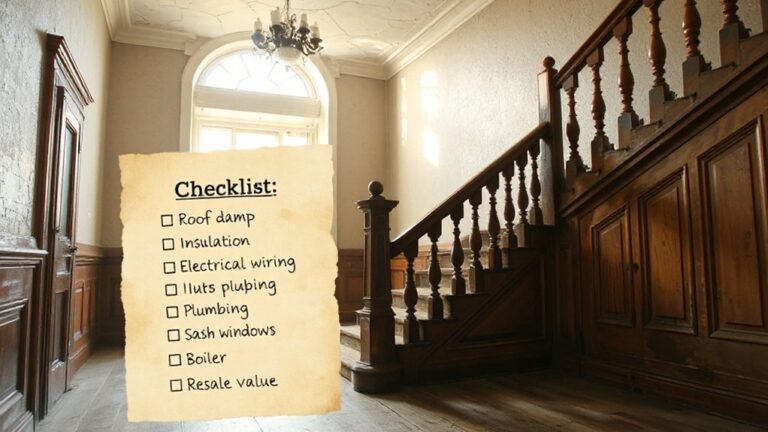
To begin an Authentic Feature Audit, walk through your period property room by room and list every element that signals its era—materials, finishes, hardware, and layout. Then note whether each item is original, replaced, or altered. You’ll quantify integrity across rooms, spotting subtle shifts that erode Historical accuracy.
Record sources, dates, and construction methods, then compare to period references and builder plans. Focus on how each feature aligns with the era’s craftsmanship, avoid casual substitutions, and flag items that can be restored rather than replaced.
Embrace precise documentation as you evaluate Restoration techniques, prioritizing reversible changes and minimal intervention. Your audit should yield a clear map of authentic opportunities, risk zones, and a practical plan to preserve core character while enabling thoughtful modernization.
Preserve Key Details
Preserving key details means you actively protect the authentic features you documented, focusing on what gives the property its character. You’ll translate this insight into practical steps that respect history while guiding today’s living.
- Identify non-negotiables: preserve moldings, fireplaces, windows, and original hardware, then document any changes for reference.
- Integrate modern technology thoughtfully: conceal wiring and controls to maintain sight lines, so tech supports comfort without overt visibility.
- Curate a subtle art plan: favor Contemporary art that complements period textures, rather than overpowering them, so the space remains cohesive.
Focus on consistency and restraint, so renovations honor the past while accommodating everyday use. This approach preserves the essence of the home, ensuring it ages gracefully with Modern technology and tasteful embellishments.
Color and Material Palettes That Honor History
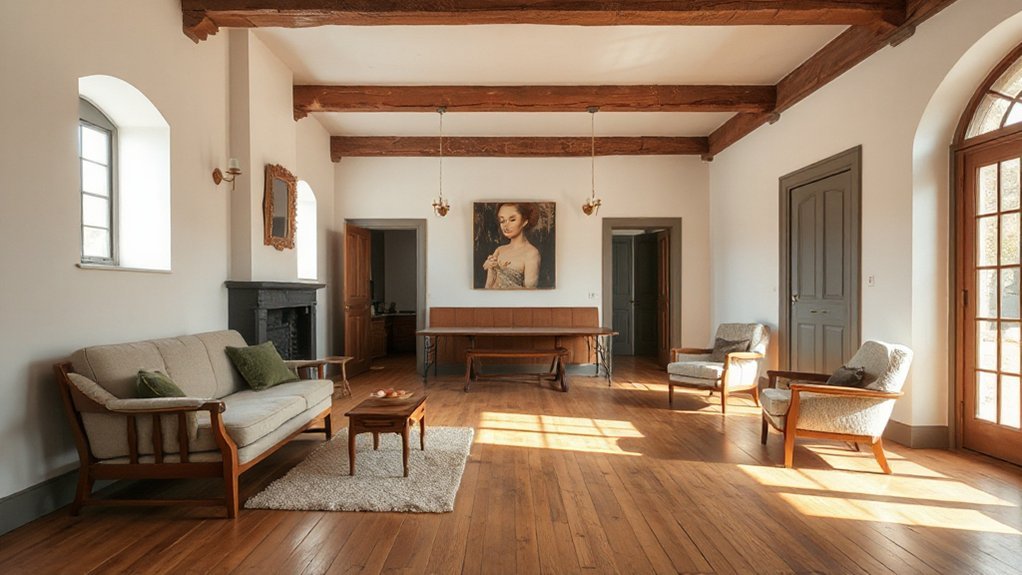
You can start by choosing Colorful Heritage Palettes that reflect the era’s true tones without overdoing it. Balancing historic authenticity with your own light is key.
Ground those choices in Material Truths Honored—use finishes and textures that age gracefully and reveal how spaces were used.
This practical mix sets a clear, respectful frame for the rest of your decorating plan.
Colorful Heritage Palettes
- Choose restrained color schemes for walls, then reserve richer accents for architectural ornamentation.
- Test finishes on representative surfaces to preview aging, reflectivity, and depth before committing.
- Document your choices with swatches and paint codes to preserve provenance for future restorations.
Practical pacing helps you balance authenticity with contemporary readability, maintaining legibility of spaces while honoring original material sensibilities.
This approach supports clarity, precision, and lasting appeal in every room.
Material Truths Honored
When you plan color and material palettes that honor history, you start by identifying the authentic textures and tones present in the historic fabric and then choose finishes that reveal those truths rather than mask them. You’ll lean on true masonry, wood grain, and quarry tile as your baseline, selecting paints and stains that echo those nuances.
Pair exterior paint with sealants that respect the surface’s character, avoiding slick modern sheens that erase patina. In garden landscaping, let plant forms and materials mirror the property’s era, alternating soft greens with muted earthy tones.
Use period-appropriate metals and glazing for doors and windows, and finish with simple, honest textures. This disciplined approach preserves character while delivering durable, coherent harmony throughout the home.
Flooring Choices That Respect Age and Use
Choosing flooring for a period property means balancing authenticity with durability, so start by identifying the era’s typical materials and construction while considering modern wear. You’ll pair practical choices with period cues, ensuring longevity without sacrificing charm.
Focus on these core options:
- Reclaimed boards with appropriate finishes to preserve grain and patina
- Limecrete or sandstone underfoot with tactile, non-slip surface details
- Large-format tiles that mimic historic clay or quarry patterns, laid with period-accurate joints
Consider accents like Vintage textiles and Antique hardware to tie floors to the era.
Maintain airflow, avoid over-sealing wood, and use breathable finishes.
Plan repairs around original joins, not replacements.
This keeps the space honest, functional, and visually cohesive for years.
Windows and Light Without Compromising Era
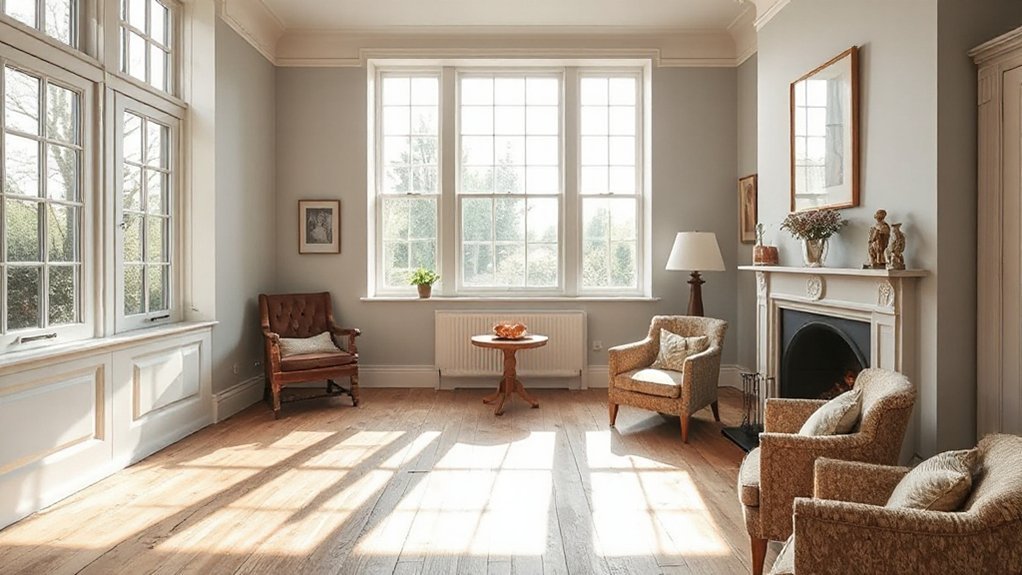
Balancing natural light with era-faithful detailing means you choose glazing, sill heights, and frame profiles that read as period-appropriate while still delivering modern efficiency. You assess window orientation and draft risk, then select double or low-E glazing that preserves sightlines and framing details.
Keep sash weights or mechanical balances accessible for future maintenance, avoiding hollow substitutes that feel temporary. When restoring frames, match joinery and profiles to original carpentry, but allow discreet retrofits for insulation.
Consider lightweight, sheer curtains or vintage textiles to filter glare without obscuring profiles, and position shades to respect proportion and scale. Integrate antique hardware for operability and tactile character, ensuring hardware functions reliably without compromising daylight.
Use careful glazing choices to balance energy needs with authentic visual language.
Plasterwork, Mouldings, and Timber Detailing Enhancements
Plasterwork, mouldings, and timber detailing are your tools for authentic texture and tactile rhythm in a period property. You’ll enhance character by selecting ornamental plasterwork and timber detailing that respect era proportions, grain, and finish. Focus on restraint, avoiding over-embellishment while highlighting craftsmanship.
- Assess plaster surface quality first, then plan minimal, targeted repairs to preserve original texture.
- Choose period-appropriate mouldings and subtle profiles that read as authentic, not revivalist.
- Treat timber detailing with breathable finishes to protect joins without obscuring grain.
Apply finishings sparingly and consistently, ensuring gaps and joints remain true to the room’s cadence. Your goal is tactile warmth and visual honesty, not showy contrast.
Adding Modern Comforts Without Distorting Period Character
You can add modern comforts without compromising the building’s essence by prioritizing seamless interventions that respect existing lines and textures.
Focus on preserving built-form details while introducing upgrades that are quiet, efficient, and reversible.
This balance—modern ease without visual disruption—sets a practical, thoughtful path for ongoing care of your period home.
Seamless Modern Interventions
- Integrate contemporary art and modern furniture with restrained profiles that echo existing lines.
- Choose concealed wiring, low-profile lighting, and floor-level controls to preserve sightlines.
- Use material echoes—brick, timber, plaster—in new constructs to maintain continuity rather than contrast.
Preserving Built-Form Details
When you introduce updates, you align with the original scale and proportion, selecting units and finishes that respect the property’s rhythm. Contemporary furniture can be integrated through thoughtful placement, ensuring it doesn’t overwhelm narrow corridors or delicate alcoves.
Opt for streamlined silhouettes that mirror period lines, avoiding starkly contemporary accents that clash with era cues. Eco-friendly materials support sustainability without sacrificing authenticity, such as reclaimed wood for surfaces or low-VOC paints in restrained tones.
Document alterations, preserving fabric and joinery details for future maintenance and appreciation.
Balanced Comfort Upgrades
To add modern comforts without distorting period character, start by prioritizing systems and finishes that respect the building’s rhythm. You’ll blend discreet updates with careful detailing, ensuring texture and proportion stay intact. Focus on calibrating heat, acoustics, and insulation before furnishings, then weave period-appropriate cues into comfort upgrades. A measured approach keeps the character intact while raising daily living standards.
- Integrate vintage textiles in curtains, cushions, and upholstery to soften modern tech and add depth.
- Choose antique lighting with authentic finishes and scale that harmonizes with plasterwork and wood trim.
- Select compact, quiet appliances and concealed controls that preserve sightlines and room proportions.
This balanced method sharpens usability without shouting its presence, preserving authenticity while improving everyday ease.
Achieving Proper Scale and Room Flow in Historic Spaces
Prioritize spatial harmony by preserving intrinsic relationships—gallery halls, stair rhythms, and fireplace axes—so each room reads as part of a coherent whole. When selecting pieces, favor proportional silhouettes that mirror original details rather than overpower them.
Consider circulation paths; guarantee doors, walks, and seating zones support natural movement without congestion. Maintain historical accuracy by documenting sensitive features, like moldings or cornices, and choosing finishes that echo era materials.
This disciplined approach yields rooms that feel intentional, comfortable, and true to the property’s character.
Lighting Schemes That Support Character and Function
Lighting can make or break a period property’s character and function, so start by identifying each room’s core activities and how light should support them. You’ll blend vintage lighting with modern fixtures to honor history while meeting daily needs. Think zones: tasks, ambiance, safety.
- Assess perceptible contrasts between natural daylight and artificial layers, then layer lighting to emphasize architecture without overpowering it.
- Choose vintage lighting for character accents and use modern fixtures for task efficiency, dimming, and control.
- Prioritize core activities in each space, using color-accurate bulbs and appropriate warm or cool temperatures to sustain atmosphere and readability.
Furnishing Styles That Pair With Original Elements
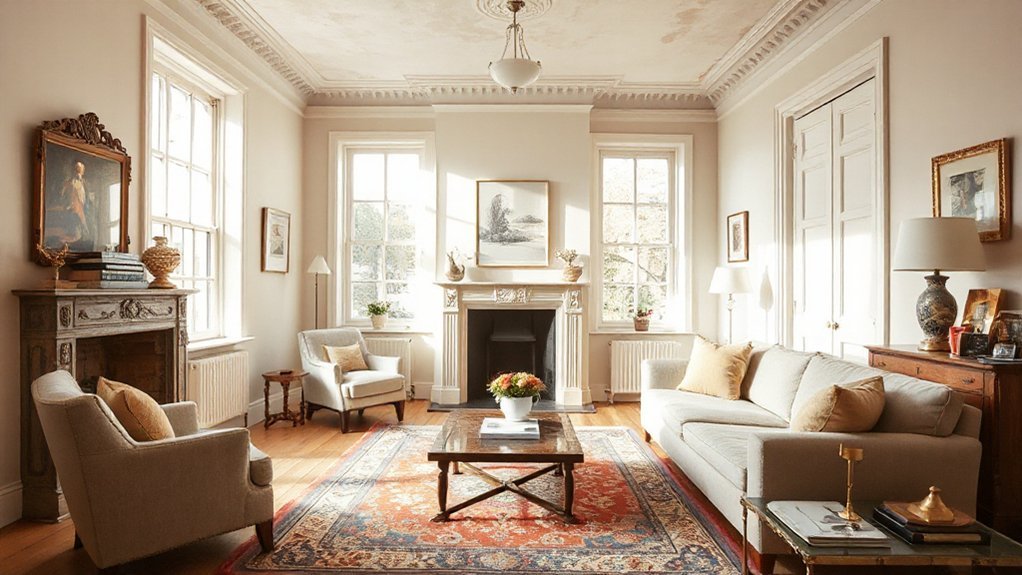
When pairing furnishings with original elements, you should respect the space’s historic cues while ensuring daily usability. Choose pieces that complement, not imitate, the period’s scale and detailing.
Prioritize proportion: avoid oversized modern furniture that overwhelms delicate moldings; instead, opt for streamlined forms with traditional legs, soft curves, or gentle profiles that echo the era.
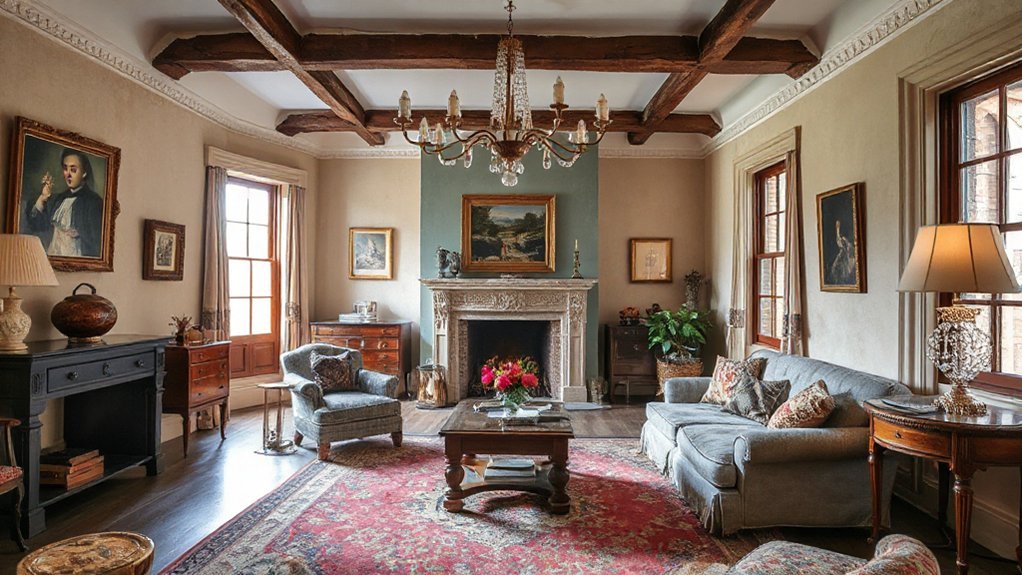
Introduce Vintage textiles in period-appropriate palettes to soften rooms without competing with architectural features.
Use Antique furniture as accents—surviving chests, chairs, or a small sideboard—to anchor the narrative without crowding wall space.
Balance finishes to harmonize wood tones with original surfaces; preserve patina where possible.
Limit metal and glass to accessories, ensuring functionality remains clear and accessible.
Test each piece’s footprint before committing to layout.
Practical Renovation Principles: Budget, Permits, and Planning
Renovating a period property requires clear budgeting, proper permitting, and a disciplined planning process from day one. You’ll map costs, allowances, and contingencies to safeguard historical accuracy while avoiding overreach.
Permits help you stay compliant and prevent costly backtracks; plan for reviews, inspections, and documentation as a routine part of the project.
Expect restoration challenges—hidden materials, sourcing vintage-compatible fixtures, and reverence for the existing structure—but approach them with method and restraint.
- Budget carefully with line items for discovery, permits, and contractor coordination.
- Schedule permitting milestones and practical buffers around inspections.
- Plan for staged work that preserves character while enabling progress.
This disciplined approach yields steadier results, clearer milestones, and fewer surprises.
Frequently Asked Questions
How to Identify Hidden Original Features Before Renovating?
Hidden features can be found by careful, systematic inspection: look behind plaster, near cornices, and along chimney breasts. Check floorboards for patterns; sample paint layers with a conservative test. Note plaster repairs that reveal original laths.
Use restoration techniques like gentle scraping, archival photos, and timber assessment to confirm authenticity. Document discoveries, label features, and plan preservation.
You’ll uncover hidden features, then tailor restoration techniques to preserve character while upgrading structure and utilities.
What Permits Are Typically Needed for Period Renovations?
You’ll typically need a planning or building permit for major changes, plus any listed-building permissions if applicable. Local authorities require approvals for structural work, alterations to historic fabric, and things like enlarging openings or changing façades.
You’ll also submit plans and a permit application, often with a structural assessment and material details. Keep Historic paint notes handy, and expect inspections.
If you pursue conservation guidelines, you’ll streamline approvals and protect integrity through careful, documented steps.
Can I Replace Windows Without Losing Historic Value?
You can replace windows without losing historic value if you choose authentic period fixtures and respect the building’s rhythm. Start with historical paint analysis to guide finishes, and guarantee profiles, weights, and glazing patterns match the era.
Prioritize sash style, muntins, and seasonal hardware that align with the original look. Document choices, and seek approval where needed.
This practical approach keeps character intact while you improve energy efficiency and durability.
How to Budget for Period-Accurate Upgrades?
You should budget by breaking costs into line items for Restoration techniques and Material sourcing, then pad for unexpected needs.
Start with a realistic scope, estimate labor and period-accurate materials, and reserve 15–20% for contingencies.
Compare quotes from specialists, track progress weekly, and adjust as you verify feasibility.
Prioritize essential renewals first, document changes, and keep records.
Maintain a productive relationship with suppliers, audit invoices, and stay aligned with your historic goals throughout the project.
Are Modern Kitchens Appropriate in Period Homes?
Yes, modern kitchens can suit a period home if you prioritize Historic authenticity and interior preservation. You’ll balance sleek functionality with period details, choosing appliances, cabinetry, and finishes that echo era materials while meeting today’s needs.
Think concealed cables, period-style hardware, and color schemes that respect the palette. You’ll document changes, preserve original features, and integrate a timeless layout.
The result reads as cohesive, practical, and respectful of history, not a gimmick. Remember: restraint is your strongest feature.
Conclusion
Preserve the past, but don’t worship it. You’ll balance weathered plaster with fresh textiles, like a quiet chorus where every note counts. Juxtapose the old oak mouldings against a subtle, modern backbone—discreet, reversible updates that don’t shout. Let daylight reveal grain and patina, yet invite comfortable living with considered finishes and sensible storage. In this dialogue between eras, your period home remains legible, authentic, and lived-in—a refined whisper of history, renewed for today.
About the Author