Awkward lofts crave practical, adaptable solutions you can implement this weekend: think modular pieces you can reconfigure, built-ins that use vertical space, and multi-purpose furniture like storage ottomans or foldaway beds. Layer lighting to slice through shadows, define zones with rugs, and mirror reflections to widen corners. Start by mapping natural traffic patterns, then tune color with neutral palettes and bold textures. Curious how small changes can release big space—let’s map your loft’s hidden potential.
Key Takeaways
- Assess headroom, angles, and uneven floors early to plan purposeful decoration and maximize usable space.
- Use vertical solutions like ceiling-height shelving and mezzanines to boost storage without crowding floors.
- Zone with natural light and airflow, guiding movement with rug placements and anchored sightlines.
- Highlight architecture with lighting, textures, and finishes on beams and ceilings for cohesive interest.
- Incorporate modular, multi-functional furniture and integrated built-ins to adapt layouts and maintain openness.
What Loft Troubles Are You Solving?
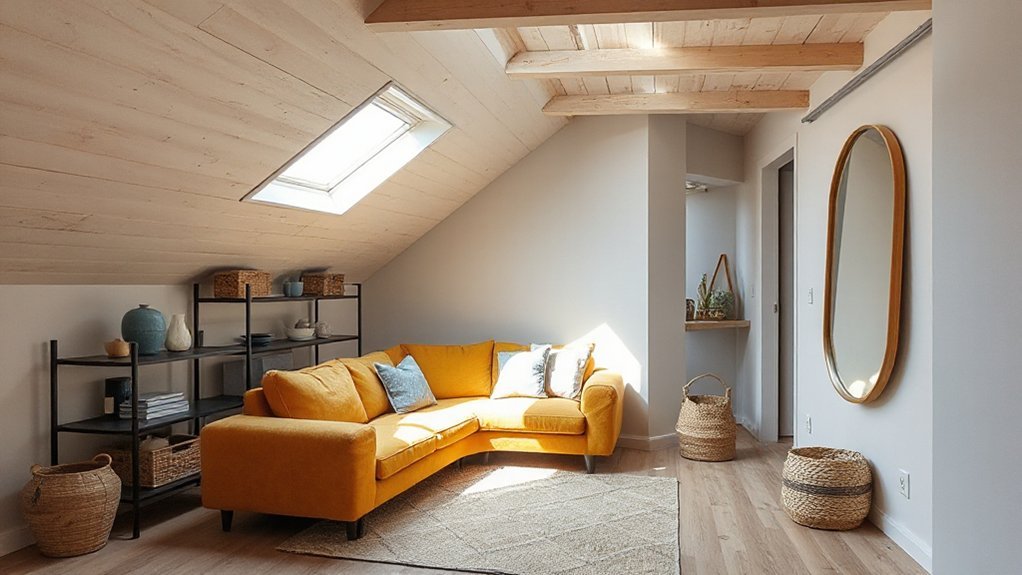
Lofts come with unique challenges, and identifying them early helps you decorate with purpose. You assess headroom, awkward angles, and uneven floors, then prioritize solutions that *free up* usable space.
Start with loft insulation to stabilize temperature; drafty spots waste energy and complicate furniture choices, so seal gaps, add rigid foam, and consider a radiant barrier where heat piles up.
Ventilation strategies matter too: pair soffit vents with a compact turbine or a small fan to move air without stealing floor space.
Plan access that minimizes disruption to existing architecture, like fold-out ladders or slim stairs.
Map out zones for sleeping, work, and storage, ensuring every inch serves a real function.
Your approach remains practical, precise, and ready to adapt.
Identify Your Loft’s Natural Zoning Opportunities
Now that you’ve tackled insulation and airflow, the next smart step is spotting where your loft naturally wants to function. Start by mapping zones around sources of Natural lighting and prevailing airflow corridors.
Place flexible work nooks near windows to maximize daylight without glare, and tuck storage against longer walls to keep traffic clear. Identify how you move through the space: draft-proof open cores, soft partitions, or low-profile screens can segment areas without crowding sightlines.
Use ceiling height, beams, and alcoves to define zones—craft a cozy reading nook under a mezzanine, a compact kitchen arc away from living zones, and a quiet retreat by a shaded window.
Prioritize Airflow optimization by aligning openings with prevailing currents and avoiding dead zones.
Plan for Height: Layouts That Maximize Vertical Space
Maximize vertical space by outlining your loft in elevated zones: floating shelves, wall-mounted desks, and lofted beds create usable layers without crowding the floor.
Use staggered storage and tall, slim cabinets to draw the eye upward and keep every inch purposeful.
Think in vertical rhythms—plan zones that shift with light and activity to keep the space feeling open yet highly functional.
Vertical Space Maximization
How can you reclaim height without sacrificing floor space? You optimize vertical real estate with smart layouts that draw the eye upward and reuse every inch.
Begin by installing shelving and cabinetry that run to the ceiling, using slim profiles and consistent finishes to avoid visual clutter.
In areas with low ceilings, mount a compact loft bed or sleeping nook to free floor area for a work zone or seating.
Use mezzanines where structurally feasible, paired with open-riser stairs to maintain flow.
Integrate mirror panels and light colors to give the sense of extended height.
Prioritize loft insulation and safety measures in any elevated structure, securing railings, non-slip steps, and proper ventilation for durable, comfortable, and safe vertical living.
Elevated Layout Strategies
Elevated layouts demand a careful grid of sightlines and flows that keep every square inch usable. You’ll design zones that travel upward, not outward, so stair placement and ceiling lines guide traffic toward storage, seating, and work nooks. Use high shelves, mezzanines, and wall-mounted desks to reclaim floor area without crowding.
Choose furniture with slim profiles and modular components you can reconfigure as needs shift. Integrate industrial accents and vintage furnishings to add texture without visual clutter, balancing metal, wood, and fabric. Color blocks should reflect vertical planes, not horizontal chaos, drawing the eye upward.
Prioritize hidden storage, leggy seating, and elevated lighting to maintain openness while enhancing function.
- Zone with suspended shelves and lofted work areas
- Pair industrial accents with vintage furnishings for contrast
- Use tall, slim profiles and modular pieces to maximize height efficiency
Lighting Layering for Sloped Ceilings
Layering light in a sloped ceiling creates a balanced, adaptable glow that makes awkward loft angles feel intentional. You’ll start with a dimmable ambient glow from recessed or track fixtures set along the slope, guiding movement without glare.
Pair it with layered illumination: task lighting at desks or reading nooks, and accent lighting to emphasize architectural cues like beams or skylight edges. Use adjustable fixtures to tilt light toward high or low planes, preventing harsh shadows in deep wells.
Install wall sconces at consistent eye level to flatten vertical clutter and echo architectural rhythm. Integrate under-cabinet or shelf LEDs to illuminate surfaces without crowding the ceiling line.
Key is maintain even distribution, so the space breathes with controlled brightness and refined depth.
Color Schemes That Brighten Narrow Nooks
Light reflects off light-reflecting palettes to make narrow nooks feel roomier, so start with high‑value whites and soft metallics as the base.
Add strategic pops of color in small, matte finishes to brighten corners without overwhelming the space.
Use texture and contrast—gloss, linen, and wood—so the light dances across every inch while keeping the room cohesive.
Light-Reflecting Palettes
Bright spaces can feel wider and airier when you choose light-reflecting palettes that bounce natural and artificial light around a room. You’ll select colors and finishes that maximize brightness without glare, pairing pale tones with subtle cool undertones to keep depth.
Use natural light by placing mirrors or glass behind lamps to multiply illumination. Choose reflective surfaces like satin paints, lacquered furniture, or chrome hardware to push glow into corners.
Balance is key, so limit high-contrast elements and test swatches at different times of day. Keep textures soft to prevent harshness, and consider semi-gloss for trims to catch stray beams without overpowering the space.
- Soft white walls with a satin or eggshell finish
- Mirrored surfaces across from windows or lamps
- Glass or metallic accents to multiply light
Brighten Narrow Corners
Narrow corners soak up light and can feel cramped, but the right color choices and finishes can make them feel open and lively. You’ll want high-contrast trims and light, airy wall tones that reflect daylight without washing out texture.
Opt for semi-gloss whites or pale blues on walls, paired with matte neutrals for furniture to reduce glare. Use reflective surfaces—glass, lacquer, or resin—to bounce light toward deeper pockets.
Layered lighting matters: a slim floor lamp, a corner sconce, and a small ceiling fixture create depth without clutter. Consider fabric swatches in cool hues to temper warmth from artificial sources.
Plan for loft ventilation and insulation solutions early, so heat doesn’t pool in tight corners and color stays true in every season.
Smart Storage That Doesn’t Crowd Slopes
Smart storage is key in slope-friendly lofts where space feels skimpy. You’ll optimize every inch with clean lines, integrated desks, and concealed compartments that tuck under eaves without crowding the view. Prioritize vertical solutions: tall, shallow cabinets and wall-mounted cubbies keep floors clear while expanding your footprint for daily use.
Choose multi-use furnishings that conceal clutter and host essentials, so clutter management stays effortless rather than habitual. Use label-friendly bins to streamline decisions during quick tidy-ups. Opt for modular systems you can reconfigure as you evolve, preserving flexibility. Maintain sharp edge aesthetics to avoid the illusion of crowding.
Creative storage becomes a practical habit when every piece serves purpose and ease.
- Ceiling-height shelves with open-front bins
- Hidden-storage ottomans and under-seat drawers
- Foldaway desks paired with wall-mounted media nooks
Defining Areas With Floor Plans and Rugs
Think of your loft as a blueprint you can walk through: use rugs to mark each zone and guide traffic from sleeping nook to work area. Let your floor plan create natural flow, aligning furniture to form clear, distinct paths without crowding walls.
Start with a neutral anchor rug and layer smaller, task-focused runners to define each space while keeping the overall rhythm cohesive.
Define Zones With Rugs
Creating distinct zones in an awkward loft starts with a clear floor plan and deliberate rug placement. You’ll use rugs to map behavior: living, dining, and work areas become visually separate, yet cohesive.
Align rug sizes with traffic patterns so edges stay planted, not collisions waiting to happen. Choose textures and colors that echo the overall palette while defining each zone’s vibe.
Area segmentation hinges on purposeful overlaps and negative space, avoiding clutter. You’ll test sightlines from main entry and seating—if a rug blocks, resize or shift.
Aim for deliberate zone definition that feels intentional, not random.
- Map living, dining, and work with distinct rug footprints
- Use color and texture to differentiate zones while unifying space
- Check traffic flows; adjust placements for clear boundaries
Floor Plan Flowing Spaces
Floor plan flow is all about guiding movement and sightlines through your loft with intentional rug placements. You’ll define zones without walls by combining scale, rhythm, and durable textures.
Start with a layout map: note major pathways, door swings, and seating arcs, then translate every line to a rug footprint. Use larger, low-pile carpets to visually anchor living and dining areas, and place narrower runners to smooth corridors.
Consider vertical storage or built-ins as visual anchors to reinforce the flow. Address practical needs: Loft insulation and structural support determine rug thickness and padding choices, so pick materials that won’t compress under furniture.
Test sightlines from key viewpoints; adjust edges to avoid blocking windows or entryways, ensuring airy, cohesive movement through the space.
Beam-Friendly Design: Integrating Structural Details
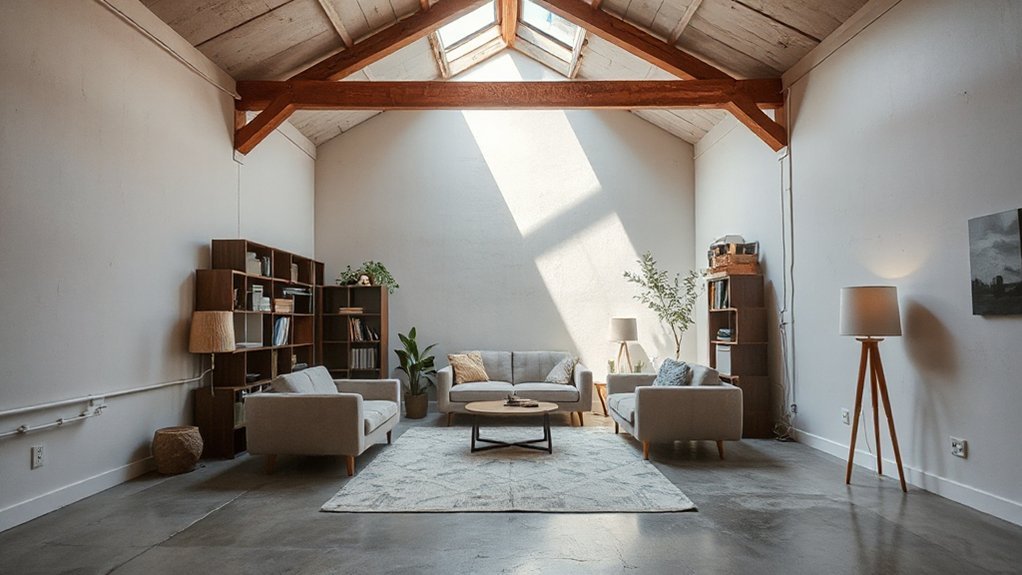
Beam lines aren’t just structural; they’re design cues you can lean into. When you plan, treat beams as part of the décor, not afterthoughts. You’ll use beam integration to guide sightlines, anchor zones, and create intentional contrasts with finishes. Highlight exposed timber or metal with matte paint, then balance with soft textures to keep rooms from feeling rigid.
Consider scale: align shelving, lighting, and rugs to the beam’s rhythm. Structural accents can inspire color blocks, recessed lighting, or framed art niches that respect load paths while adding personality. Maintain cohesion by repeating finishes across adjacent beams and ceilings, so the space reads as curated rather than piecemeal.
- Emphasize material consistency across beams and surroundings
- Use lighting to highlight architectural texture without glare
- Integrate built-ins that respect structural lines and proportions
Flexible Furniture for Changing Loft Uses
Flexible furniture isn’t one-size-fits-all in a loft; it’s about choosing pieces you can reconfigure quickly as your needs shift. You’ll prioritize modular units that stack, slide, or fold without drama, preserving floor space for variable activities.
Aim for multifunctional furnishings that serve two or more tasks—think coffee tables doubling as work desks, ottomans with hidden storage, and wall beds that reveal a desk or seating area.
Favor neutral frames with bold textiles to shift moods without buying new items. Adaptable seating should invite guests or pair with a compact dining setup, so you can redefine zones in minutes.
Choose durable mechanisms, simple hardware, and toolless rearrangement. Finally, document layouts you actually use, then rotate components to keep spaces fresh and efficient.
Acoustic Tactics for Quiet, Focused Spaces
Acoustic tactics start with the room’s baseline: identify and control where sound leaks or echoes most. You’ll map hard surfaces, vertical gaps, and doorways, then prioritize targets for treatment without overloading the space. Focus on measurable improvements you can implement quickly, like sealing gaps and selecting targeted materials that fit the loft’s aesthetics. Use a pragmatic approach: combine functional choices with subtle design.
- soundproofing techniques that address common leak points while preserving openness
- acoustic panel options that blend with decor and offer variable absorption in key zones
- placement strategy to maximize efficiency, balancing rhythm, material choices, and cost
Apply tests after each change, re-evaluate, and iterate until you achieve quiet, focused work zones without sacrificing light or layout.
Personal Touches: Art and Decor Scaled to Space
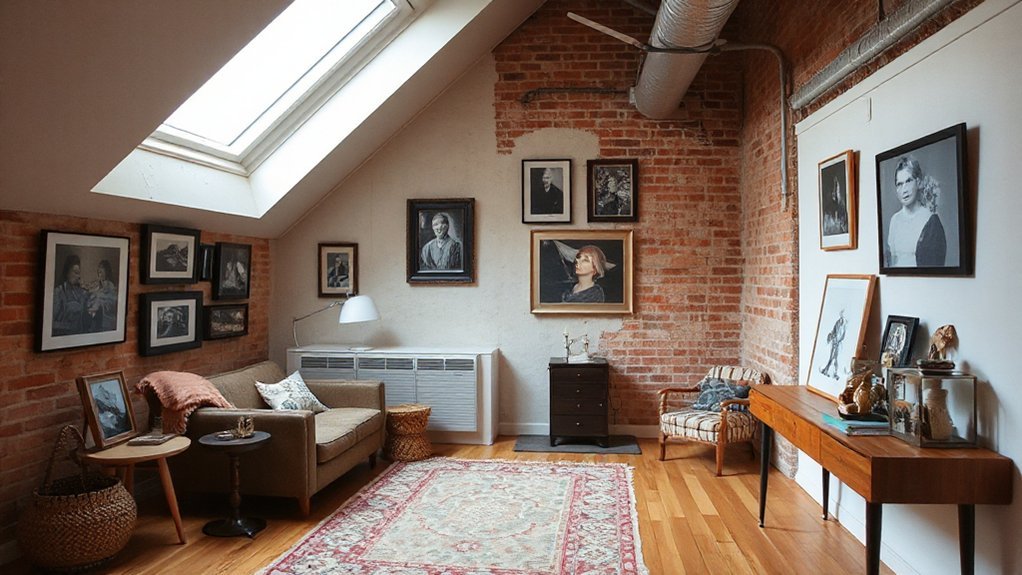
Personal touches matter, but they must be scaled to your loft’s footprint and rhythm. You’ll start with a focused curation: choose personal art that speaks to you and fits your wall proportions without crowding.
For larger walls, consider a single statement piece in a strong frame; for tight nooks, opt for a slim, vertically oriented artwork or a small triptych.
Decor scaling matters at every layer—shelving, textiles, and metallic accents should echo the scale of nearby furniture. Use a consistent hardware finish to unify disparate pieces and avoid visual clutter.
Prioritize restraint: two or three standout items can carry personality far more than a crowded display.
Finally, test sightlines from key seating zones, adjusting placement until balance feels intentional.
Seasonal Lighting and Color Rituals for Mood
Seasonal lighting and color rituals can transform a loft’s rhythm without a full remodel. You’ll set moods quickly by aligning fixtures, hues, and textures to the season, then reuse ideas year after year.
Focus on practical combos: warm whites for cozy winters, cool LEDs for airy summers, and amber accents for autumn evenings. Map color rituals to daily tasks—bright task light for mornings, softer glow for pauses, vibrant accents for evenings.
Keep controls simple with dimmers and presets, so changes feel intentional, not accidental. Use textiles and wall color as seasonal amplifiers, swapping covers or swatches to refresh the space without invasive updates.
Your loft stays flexible, expressive, and efficient, adapting to mood, function, and light.
- Curated lighting presets by season
- Textural color swatches as ritual anchors
- Quick swap textile accents for mood shifts
Frequently Asked Questions
How Can I Maximize Storage Without Crowding Slopes?
You can maximize storage without crowding slopes by using Creative wall solutions and Multifunctional furniture that fit your angles.
Install low-profile shelving along vertical walls and under eaves, and choose modular units that can be reconfigured.
Opt for built-ins with concealed drawers, pull-outs, and lift-top desks.
Use wall-mounted hooks and magnetic strips for tools, and tuck bins into alcoves.
Prioritize slim profiles, light colors, and intentful clutter-free zones to maintain openness.
What Are Budget-Friendly Decorating Ideas for Quirky Angles?
Bright ideas save the day: “A stitch in time saves nine.” You can tackle quirky angles on a budget by flexible furniture, mirrors to bounce light, and modular panels that chase dead corners.
Use creative lighting to sculpt depth and accent walls with simple color schemes—soft neutrals with one bold accent.
Choose multi-use pieces, store under raised platforms, and hang vertical organizers to maximize space while keeping flow open.
You’ll decorate practically, innovatively, and affordably.
How Do I Choose Furniture That Fits Varied Ceiling Heights?
Choose furniture by ceiling height: start with scale rules, then mix in flexibility. For varied ceiling heights, pick low-profile sofas and chairs that don’t crowd tall walls, and add modular pieces you can rearrange as you measure ceiling height changes.
Use furniture scale to balance proportions—pair oversized accents with compact seating. Elevate with multi-functional pieces, like ottomans that quadruple as steps or extra storage.
Align rug sizes to anchor zones and maintain clear sightlines across shifts.
Which Accessories Avoid Overwhelming Narrow Spaces?
To keep narrow spaces feeling open, avoid bulky decor and opt for artistic lighting that draws the eye upward.
Choose wall mounted shelves to free floor space while adding storage and display without crowding walls.
Use slim, vertical accessories, mirrors, and compact planters to reflect light.
Layer lighting: a dimmer, task lamps, and accent spots.
Keep colors light and cohesive, then sprinkle textured textiles for warmth without clutter.
How Can I Balance Function and Coziness in Tight Lofts?
You’re a tightrope walker in a cozy loft, balancing function and warmth like a lantern in a storm. Think vertical storage, hidden cores, and furniture that doubles as room dividers.
You’ll use creative lighting to carve nooks without clutter, and color schemes that expand rather than shrink. Keep surfaces simple, textures rich, and accessible zones clear.
You’ll tailor multipurpose pieces, then test and tweak until every corner feels practical, inviting, and quietly magical.
Conclusion
You’ve mapped the quirks, mapped the space, and stacked the ideas—now watch the room transform before your eyes. Each modular piece locks into place, each light cue carves a mood, and every mirror or rug nudges the eye toward a bigger, brighter rhythm. It’s not just decorating; it’s crafting a living plan you can rework when life shifts. So, stay curious, tweak boldly, and wait—because the next clever tilt might just reveal the loft you didn’t know you had.
About the Author