The room feels cramped, yet your wardrobe could feel expansive with the right setup. In a small bedroom, you’ll want a chic dressing area that stays practical, not precious, so you can move freely and keep clutter out of sight. Start with smart storage, reflectors, and layered lighting to expand the space without bulky furniture. You’ll see how the pieces begin to align when you’ve mapped traffic and chosen slim, versatile solutions. Now consider what comes next.
Key Takeaways
- Plan zones for dressing, storage, and accessories with vertical, compact solutions to maximize a small footprint.
- Choose slim, in-wall, or open-front wardrobes and multifunctional furniture to boost storage without crowding.
- Use light color palettes, mirrors, and reflective surfaces to create an airy, expansive feel.
- Optimize lighting with daylight-balanced LEDs, dimmable controls, and backlit mirrors for clear visibility.
- Add affordable finishing touches like low-pile rugs, baskets, and cohesive metal finishes to unify the space.
Set Clear Dressing-Zone Goals for a Small Bedroom
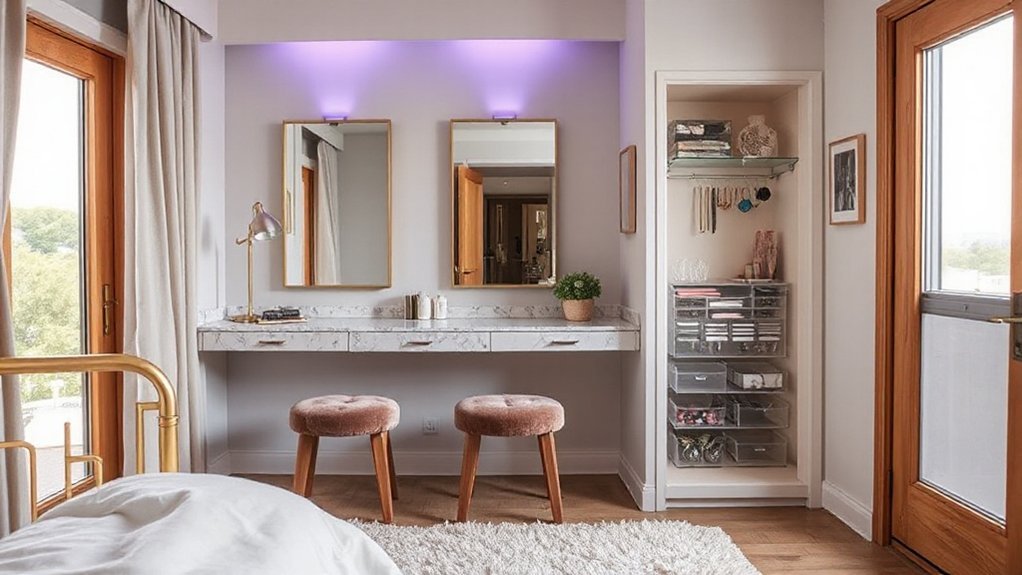
To set clear dressing-zone goals for a small bedroom, start by defining the exact tasks your dressing area must support—getting dressed, storing outfits, and quick access to accessories.
You’ll align these tasks with current Fashion trends so your space remains relevant, yet timeless enough to avoid frequent overhauls.
Prioritize streamlined clothing storage that minimizes clutter: vertical racks, compact drawers, and labeled bins.
Decide the essentials you must reach without hindrance, then map zones for tops, bottoms, and outerwear within easy arm’s reach.
Establish cadence for outfits, like a daily plan or capsule approach, to reduce decision fatigue.
Finally, set measurable targets, such as height-adjusted hanging space or a dedicated jewelry tray, so you can track progress and refine your arrangement as your wardrobe evolves.
Measure, Clear, and Plan Traffic for a Small Bedroom
Start by measuring every dimension that affects your dressing zone: door swing, closet depth, bed footprint, and any built-ins or protrusions.
With those numbers, map clear traffic paths that let you move smoothly between dressing, mirror, and storage. Prioritize a direct route to the closet and a comfortable standing zone for choosing outfits without shifting furniture.
Trim excess clutter and designate a dedicated surface for daily garments to reinforce clothing organization.
Consider door clearance and rug placement so you don’t trip or snag clothing.
Plan wardrobe maintenance tasks—seasonal rotation, lint-free surfaces, and quick-dunk fabric care—at logical intervals.
Finally, document the flow; if it feels cramped, reassign a piece or reroute a path to preserve ease of access and calm.
Create a Corner Setup That Feels Taller
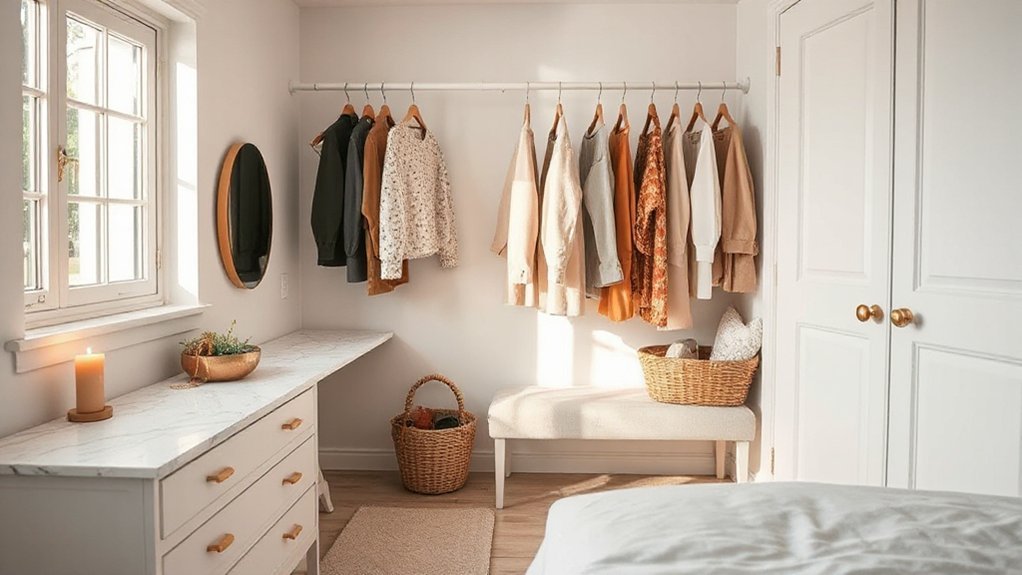
If you want a corner setup that feels taller, lean into vertical cues that draw the eye upward and create the illusion of height. Position a narrow mirror along the corner wall to reflect light and expand the space without crowding.
Choose a slim, tall dresser or open shelving that occupies minimal floor area while delivering ample storage. Use vertical garment racks or peg panels to keep clothing organized in a way that emphasizes height rather than bulk.
Clothing organization benefits from consistent labeling and grouped zones, so items you reach most often stay reachable and visible. For fabrics, select fabrics with a light sheen or matte finish in solid tones to avoid visual heaviness.
Fabric selection should prioritize durability, easy care, and clean lines.
Choose Space-Saving Wardrobe Solutions (Slim Units, In-Wall, and Open-Front)
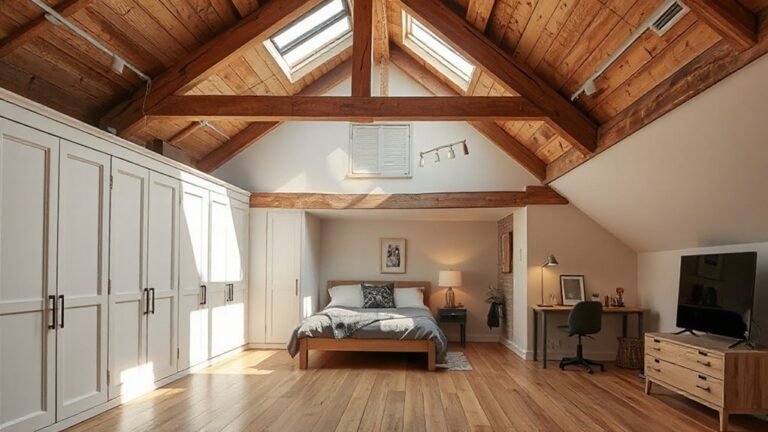
You’ll explore slim wardrobe options that fit tight spaces without crowding the room. In-wall storage packs function behind walls to reclaim floor space.
Open-front designs keep access quick and visuals light. Start by weighing how much you need to store against how visible you want your pieces to be.
Slim Wardrobe Options
When space is tight, slim wardrobe options can make a big difference in a small bedroom. You’ll maximize storage without crowding the area, keeping your dressing zone open and functional. Focus on three core approaches: slim units, in-wall designs, and open-front displays. Each choice supports easy access while preserving floor space.
Consider the following:
- Slim units with mirrored doors for quick outfit checks and expanded perceived space.
- In-wall installations to reclaim surface area without protrusion.
- Open-front systems for visible organization and daily selection ease.
- Finishes that mirror fashion trends while staying timeless for wardrobe maintenance.
This setup stays practical, precise, and polished, ensuring you refine, not clutter, your dressing area.
In-Wall Storage Solutions
Think modular, with rails or pull-out shelves that stay level and stable. For true efficiency, map out your wardrobe by category—tops, bottoms, and accessories—and assign dedicated, shallow compartments.
In wall storage helps keep clutter out of sight while maintaining quick access to daily items. When planning, consider hidden compartments behind cabinet doors or mirrored panels to double as a dressing area.
Guarantee proper framing and ventilation to prevent moisture buildup. This approach delivers a polished, functional closet that feels larger and roomier.
Place Mirrors to Expand the Space Without Clutter
Place mirrors strategically to double the perceived space without adding clutter. You’ll gain brighter rooms through reflective surface benefits while keeping a clean, uncluttered look.
Start with practical mirror placements that visually extend the area and support a tidy dressing zone.
Mirror Placement Tactics
Mirrors can instantly expand a small bedroom, so place them strategically to boost light and perceived space without creating clutter. You want reflections that brighten corners and double as practical cues for daily routines.
- Position a tall mirror opposite a window to maximize natural light and airy vibes.
- Mount a slim, wall-hung mirror along the dressing area for a streamlined look.
- Use mirrors above furniture to reflect ceiling height and widen the room.
- Lean a full-length mirror near the entry to visually extend the corridor feel.
This approach supports lighting strategies and serves smart furniture arrangement, avoiding bulk. Keep frames minimal and aligned with existing finishes to preserve a cohesive, uncluttered aesthetic.
Reflective Surface Benefits
Reflective surfaces do more than look sleek—they multiply light and space without adding bulk. When you place mirrors thoughtfully, you create the illusion of a larger dressing area while keeping the footprint minimal.
Position tall mirrors opposite windows to bounce natural light through the room, or frame a large mirror to reflect your favorite focal point, such as a stylish rug or artwork. Avoid crowding the wall with too many panels; a single, well-placed piece often delivers the strongest impact.
Consider mirrored doors on a compact wardrobe to double the perception of depth without consuming extra floor space. These reflective surfaces amplify brightness, enhance clarity, and contribute a polished, cohesive vibe through simple mirror illusions.
Clutter-Free Visual Expansion
When you position mirrors thoughtfully, you expand a small dressing area without adding clutter. Strategic placements reflect light, create depth, and keep surfaces clean. Use these techniques to achieve clutter-free visual expansion:
- Choose slim, frameless or vintage-leaning mirrors to echo vintage accents without heaviness.
- Place a tall mirror beside the wardrobe to multiply perceived height and open floor space.
- Install a wall-to-wall mirror as a backdrop for the dressing table, then pair with a single statement lighting fixture.
- Tilt mirrors upward for ceil-to-wall coverage, minimizing visible clutter while amplifying brightness.
Keep accessories minimal and purposeful, letting mirrors do the space-making. Pair with statement lighting to heighten ambiance and maintain a polished, practical vibe.
Plan Lighting That Makes Dressing Easy and Luxe
A well-planned lighting setup makes dressing faster and feels more luxurious. You’ll want layered lighting that’s controllable and glare-free.
Begin with a bright, shadow-minimizing ambient base, then add task lights directly where you dress.
For dressing area lighting, choose vertical fixtures at eye level to reduce harsh reflections on mirrors and to evenly illuminate your torso and outfit details.
Use a combination of cool and neutral white tones to enhance color accuracy, avoiding yellow cast.
Include a dimmable option for evenings, and guarantee switches are within easy reach.
Position a mirror with backlighting or a dedicated LED strip to eliminate silhouette shadows.
Favor compact, energy-efficient LEDs and a consistent wattage that reinforces luxe illumination without overpowering the space.
Use Multi-Functional Furniture to Save Square Footage
To maximize square footage without sacrificing function, choose multi-functional furniture that serves more than one purpose in your dressing area. Start with a bench that doubles as a storage chest, a wall-mounted mirror with a slim shelf, and a compact dresser that folds into a vanity.
Pair these with a narrow, tall bookcase that holds folded textiles and accessories. Color schemes and textile choices matter; keep finishes cohesive to maintain visual flow. The right pieces reduce clutter while enhancing flow.
- Select a bench with under-seat storage for footwear or scarves.
- Use a wall-mounted mirror that includes a small shelf for daily cosmetics.
- Choose a dresser that can double as a makeup vanity.
- Opt for vertical units to maximize wall space.
Implement Smart Storage: Hidden Drawers and Floating Shelves
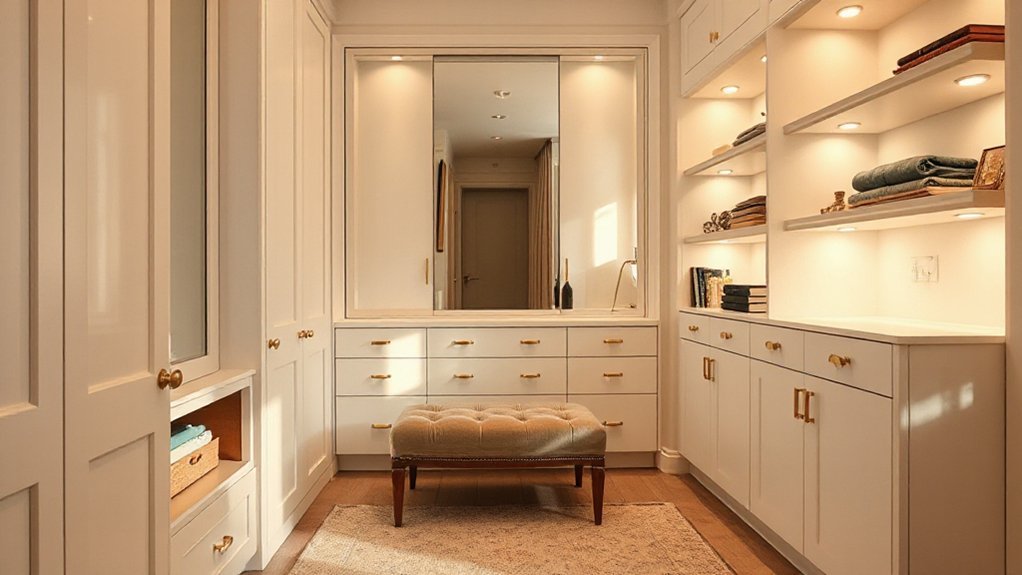
Hidden drawers keep small clothes and accessories tidy without adding bulk, so you can maximize floor space.
Pair them with floating shelves placed at eye level to keep essentials accessible and visually light.
Focus on smart organization by grouping items by use and keeping a minimal, clear surface to enhance the dressing area.
Hidden Drawer Innovation
If you want smart storage without sacrificing floor space, hidden drawers and floating shelves pull double duty by tucking essentials away while keeping them within easy reach. Hidden drawer innovation lets you hide everyday items behind or beneath surfaces, preserving clean lines and a calm visual.
Concealed storage becomes a natural extension of your dressing area, ready for accessories, jewelry, and small garments without crowding. Implement these ideas:
- Integrate shallow, push-to-open drawers under a vanity or bench.
- Use side-millwork pockets for slim items like belts and scarves.
- Install recessed compartments in a mirror frame for cosmetics.
- Add magnetized organizers inside cabinet doors for earrings and pins.
This approach remains practical, precise, and polished while maintaining a streamlined look.
Floating Shelf Placement
Align shelves with your dresser or mirror edge to achieve aesthetic balance, so each piece feels intentional rather than added. Use the deepest shelf for folded stacks or bulky accessories, and reserve narrow shelves for jewelry, bags, or perfumes.
Maintain a consistent finish to reduce visual noise, and color-match brackets to wall tones. Leave a small gap above shelves to avoid contact with hangers.
This approach blends function with style, supporting streamlined dressing routines.
Small-Space Organization
Smart storage in a small bedroom relies on compact, multifunctional solutions like hidden drawers and floating shelves. You’ll optimize every inch, keeping surfaces clear while elevating style with smart organization choices.
Implementing hidden drawers under benches or beds protects garments and accessories from dust, while floating shelves above your dressing area add accessible display and soft storage without bulk.
Use vertical space for seasonally swapped items, keeping daily outfits within reach. For durability, choose high-quality hardware and consistent finishing tones to maintain a cohesive look.
- Plan a slim drawer system beneath the vanity to tuck away underwear and socks
- Install shallow floating shelves for perfumes, jewelry, and small essentials
- Label bins or dividers for quick closet maintenance and outfit planning
- Rotate items with fashion trends to preserve order and access
Color, Texture, and Reflective Surfaces to Expand Perceived Space
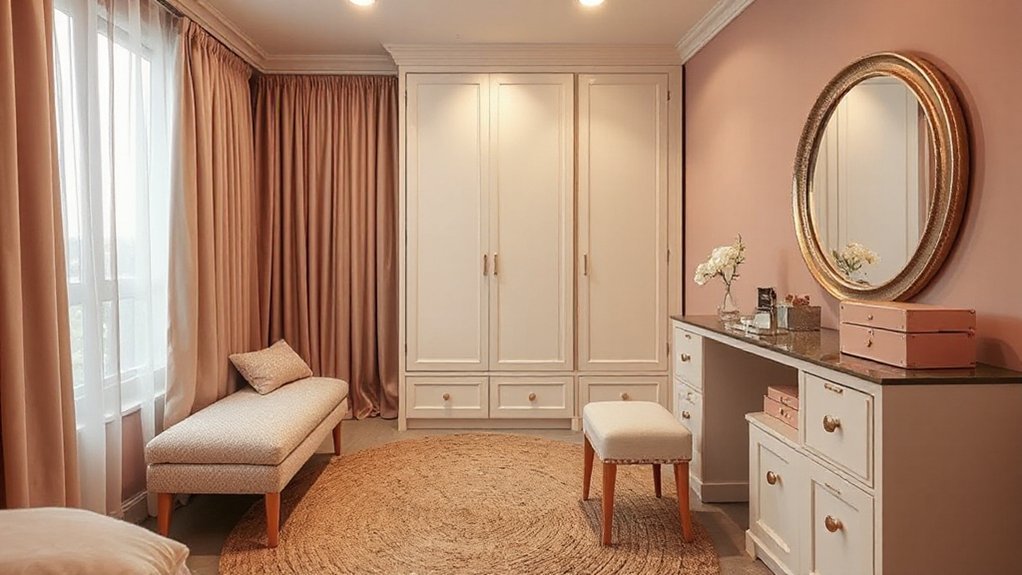
Color, texture, and reflective surfaces are your tools for making a small bedroom feel larger. To boost space perception, choose a cohesive color palette that leans light and cool for walls and furniture, applying color psychology to influence mood and perceived size.
Use color contrast sparingly: keep larger surfaces in the same family, then introduce accent pieces or textiles in a slightly deeper shade to define zones without breaking flow.
Texture contrast matters too—pair smooth cabinetry with a matte finish on doors and a subtle woven fabric for seating to add depth without visual clutter.
Reflective surfaces, like a glossy dresser or mirrored panel, amplify light and bounce it around the room.
Prioritize clean lines and minimize ornament to maintain airiness.
Accessorize With Purpose: Rugs, Ottomans, and Baskets
A well-chosen rug, ottoman, and baskets can define zones, soften shifts, and add tactile interest without crowding the space. You’ll use these pieces to anchor your dressing area while keeping flow intact. Consider scale, texture, and color to harmonize with decorative lighting and personal accessories you already own.
- Define zones with a low-pile rug under your dresser and seating, ensuring edges stay visible.
- Choose an ottoman that doubles as seating and a surface for folded items or a tray for accessories.
- Select baskets with lids for hidden storage and open-weave designs for breathability.
- Pair textures and neutrals to enhance cohesion, so personal accents remain focal points.
Budget-Friendly Upgrades That Look Designer
Even on a tight budget, you can achieve a polished, designer-inspired dressing area by focusing on thoughtful choices that elevate impact without overspending. Start with vintage lighting to add character without a hefty price tag; a single well-chosen fixture or shaded floor lamp can transform mood and perception of space.
Pair it with botanical decor to introduce texture and calm, choosing pressed plants, a small potted arrangement, or a framed botanical print for cohesion.
Prioritize multifunctional pieces: a mirror with built-in storage, a slim valet, or a console that doubles as a vanity.
Opt for cohesive finishes—matte gold, brass, or black metal—to unify hardware and furniture.
Keep textiles minimal but layered; a clean rug, coordinated towels, and a structured linen throw finish the look succinctly.
Troubleshooting Common Small-Bedroom Dressing Areas
When a small dressing area starts feeling cramped, start by rethinking layout and daily use to maximize every inch. You’ll fix flow by prioritizing essential actions, not excess decor, and by staging tasks in zones.
To address dressing area lighting and wardrobe ventilation, optimize light placement and airflow for comfort and efficiency.
- Reposition mirrors to reflect light without crowding the space.
- Install under-shelf or pendant lighting for targeted visibility.
- Use vented doors or a lightweight curtain for wardrobe ventilation while keeping noise minimal.
- Choose compact storage with vertical racks and modular drawers to reduce clutter.
Frequently Asked Questions
How Can I Define a Clear Dressing-Zone Goal in a Tiny Room?
Define your dressing-zone goal by choosing a clear function: outfit prep, storage, and mirror time.
You’ll measure a compact footprint, map workflow from closet to mirror, and fix a minimal color palette.
Prioritize accessible storage at waist height and a responsive mirror with lighting.
Use color coordination across hangers and bins to reduce decision fatigue.
Add lighting enhancements—layer ambient, task, and accent.
Keep surfaces clean, and revisit goals monthly to stay precise and practical.
What’s the Best Way to Separate Dressing Space From Sleep Space?
Split the space with a visual divider, then treat the bed and dresser as distinct zones, keeping sleep calm and dressing bright.
Use a screen or curtain to separate dressing space from sleep space, and place lighting where you need it most.
You’ll benefit from personalized lighting and uncluttered clothing organization, so you see clearly when you reach for outfits and feel calmer when you wind down.
This practical setup stays polished and efficient.
Which Wardrobe Shapes Maximize Storage Without Crowding Corners?
A wardrobe shape that maximizes storage without crowding corners is a corner-friendly L- or U-shaped system plus a slim wardrobe with doors that swing outward.
Prioritize vertical racks, built-in drawers, and pull-out hanging rods for wardrobe organization.
Use corner storage by placing tall units in the alcoves and a shallow sofa-front vanity along a wall.
Keep doors sliding or bi-fold to save floor space and maintain open circulation.
Can Mirrors Cause Glare in a Small Bedroom, and How to Avoid It?
Yes, mirrors can glare in a small bedroom, especially with bright, direct light.
Start with careful coincidence: place a mirror where it reflects soft, ambient lighting rather than a harsh lamp.
Use lighting techniques like diffused overheads and wall sconces to minimize hotspots.
Mirror placement matters—top or side walls, not opposite a window.
Keep curtains or blinds to modulate daylight.
This practical setup keeps the room feeling larger and glare-free.
How Do I Budget for Chic Upgrades on a Tight Limit?
You can budget for chic upgrades on a tight limit by prioritizing essentials and using smart, value-friendly choices. Set a clear cap, track every purchase, and time buys around sales.
Start with vintage accessories that elevate character without breaking the bank. Choose one cohesive color palette to guide choices, keeping larger items neutral while accenting with inexpensive upgrades.
You’ll stretch dollars by upcycling, shopping thrift finds, and rotating pieces seasonally for a polished, practical finish.
Conclusion
In a small bedroom, a chic dressing area comes together with intention, smart storage, and light-reflective touches. Start by defining your goal, then use slim wardrobes, mirrors, and a hidden-storage bench to keep clutter at bay. For example, a compact corner setup with a full-length mirror, open-front system, and under-seat drawers doubles as a wardrobe and seating, instantly expanding the feel and functionality. Keep colors cohesive, add dimmable LEDs, and you’ll enjoy a polished, practical zone.
About the Author