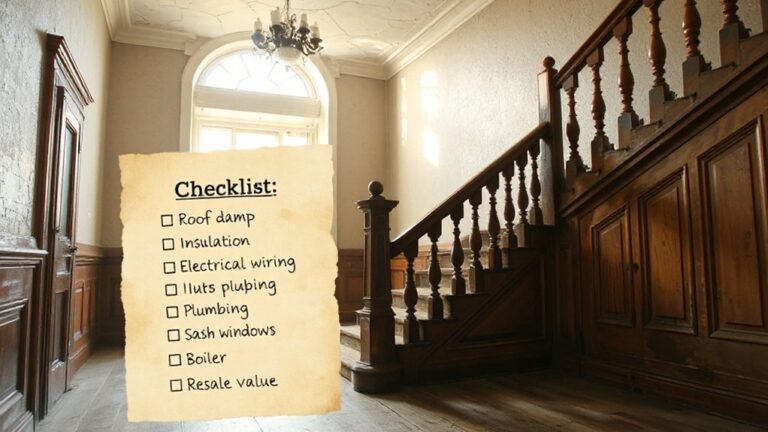
When you’re evaluating a renovation project, start with a clear plan for essential surveys: test structural integrity, inspect the roof and foundations, and verify drainage and damp risks early. You’ll also confirm boundaries, services, and access, and review planning permissions and restrictions to avoid costly surprises. Budget for hidden costs like asbestos or rot, and assess energy efficiency for future upgrades. Get these checks right now, and you’ll set a safer, more accurate path forward—before you commit.
Key Takeaways
- Obtain structural and roof assessments to identify active vs passive deterioration and document remediation recommendations.
- Evaluate drainage, damp risk, and soil/permeability to predict subgrade moisture and foundation impact.
- Verify boundaries, access, and utility connections; record surveys, markers, and encroachments for future planning.
- Check planning permissions, restrictions, and HOA or conservation requirements to ensure renovation compliance.
- Assess hidden costs including asbestos, rot, insulation gaps, and retrofit feasibility for budgeting and scheduling.
Assess Structural Integrity Before You Buy
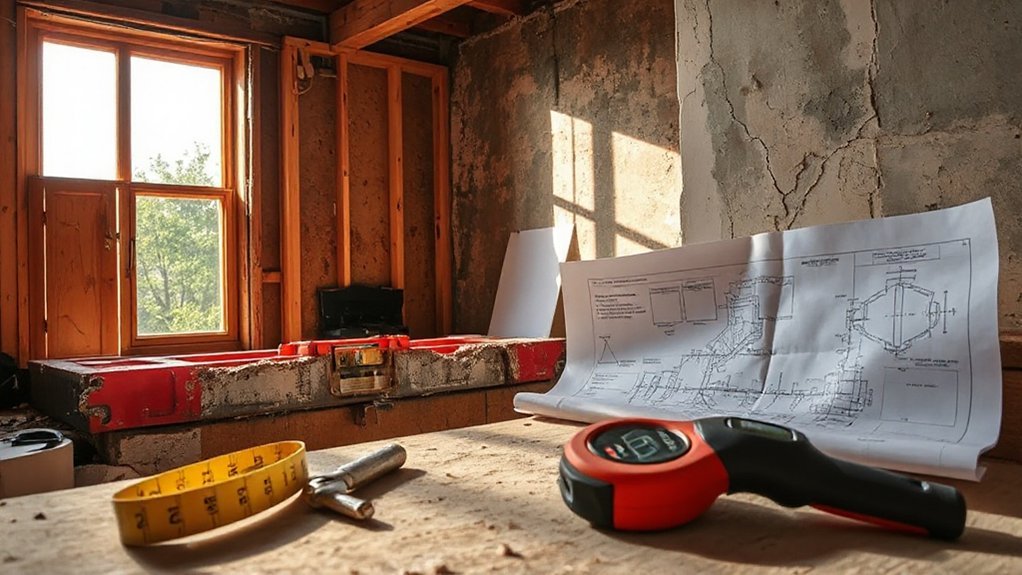
Before you commit to a renovation, have the structure professionally assessed for stability and safety. You’ll verify foundation stability by inspecting footing cracks, settlement indicators, and header support. Then review bearing walls for excessive deflection or moisture damage.
A licensed inspector confirms structural framing condition, including column alignment, joist integrity, and load transfers, so you won’t miss hidden weaknesses. Documented findings should distinguish passive deterioration from active failure, guiding decision making and cost estimates.
Pay special attention to Roof condition, noting sagging seams, missing shingles, flashing gaps, and attic ventilation, as these affect overall stability and energy efficiency. Ask for a written report with labeled photos, grading, and recommended remediation steps.
Use this evidence to negotiate scope, budget, and timing before committing to purchase.
Check Drainage and Damp Risk Early
Start by establishing your drainage baseline now, so you spot issues before they escalate.
Consider damp risk factors early—look for water pooling, history of leaks, and visible signs of moisture around foundations and walls.
This sets a precise frame for further checks and helps you prioritize inspections and remedies with confidence.
Drainage Baseline Checks
Look for signs of surface water ponding, slope direction, and potential obstruction risks that could amplify damp issues after heavy rainfall. Document existing drainage features, noting materials, condition, and accessibility for maintenance.
You evaluate soil permeability to predict infiltration rates and the potential for subgrade water accumulation. Consider the interaction between rainwater management strategies and the site’s natural drainage tendencies.
This baseline informs renovation feasibility, informs budgeting for drainage improvements, and guides early design decisions to minimize future damp-related risks and costly remediation.
Damp Risk Factors Early
Since drainage and damp issues can unfold quickly after heavy rain, assess site conditions now to flag risks early. You’ll want to identify water entry paths, grading, and drainage efficiency before renovating. Early attention reduces moisture intrusion and protects structural integrity, while supporting mold prevention strategies.
- Inspect exterior slopes, downspouts, and perimeter drainage to confirm water moves away from foundations.
- Check for prior damp spots, efflorescence, or staining on walls; note any discrepancies between levels and thresholds.
- Verify ventilation and moisture controls in crawl spaces or basements, and plan for continuous monitoring after heavy rain events.
Verify Boundaries, Services, and Access
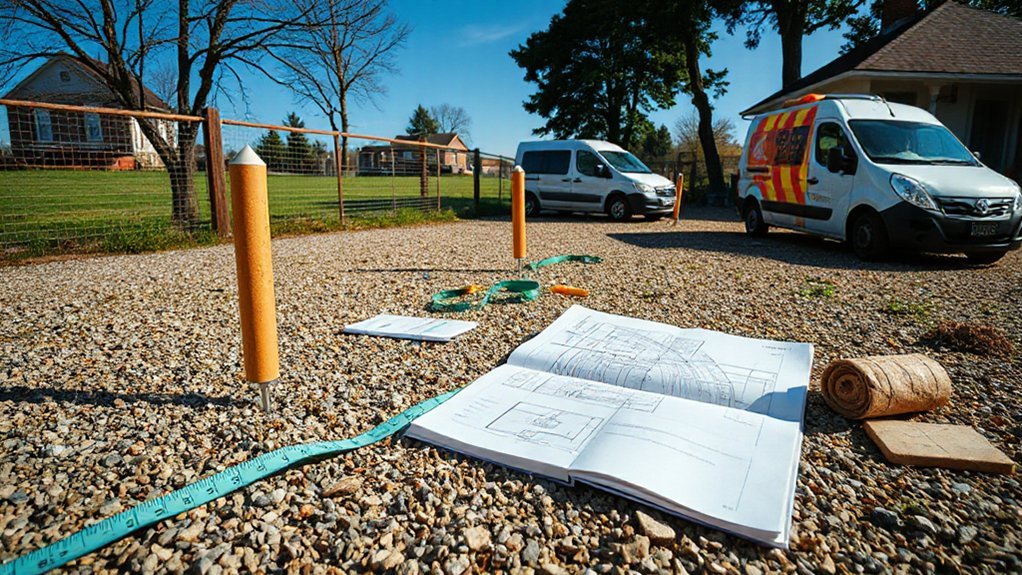
Before you finalize an offer, verify the property’s boundaries, available services, and access routes to avoid later disputes or costly surprises. Start with Boundary confirmation to establish exact parcel limits, encroachments, and potential easements that could affect renovations or extensions.
Then perform an Access assessment to map ingress and egress points, driveways, and nearby street traffic patterns, ensuring compliant vehicle and waste access for deliveries and construction.
Confirm service connections—water, sewer, gas, electricity, and broadband—are available at the correct voltages and capacities, and note any temporary service restrictions.
Document fencing, hedges, and line-of-sight considerations that might impact use or tenancy. Keep records of surveys, markers, and professional certifications for future reference and dispute resolution.
Review Planning Permissions and Restrictions
Start by confirming what permissions are in place for the property and what approvals you’ll need for the renovation. You’ll assess planning constraints, building permits, and any listed status or conservation requirements early, so you don’t derail timelines. Understand how changes affect property valuation and how market trends could shift expectations.
- Verify current planning permissions, restrictions, and potential conditions tied to the site.
- Check whether the renovation requires approvals from local planning authorities, conservation officers, or homeowners’ associations.
- Align your plans with projected property valuation changes and evolving Market trends to avoid over-design or non-compliance.
This approach keeps you compliant, minimizes risk, and clarifies whether a project matches the property’s value trajectory and neighborhood dynamics.
Estimate Hidden Costs: Asbestos and Rot
Hidden costs lurking in renovations often trip up budgets, with asbestos and rot topping the list. You’ll want a clear, documented plan for potential remediation.
Start with asbestos awareness: know where materials, past renovations, or older plumbing may introduce risk, and confirm tests were conducted by licensed professionals. If any doubt remains, halt work and obtain a formal report before disturbing suspect materials.
Rot inspection is equally critical: timber decay signals moisture issues that can undermine structural integrity and extend timelines. Commission a qualified surveyor to assess framing, joists, and hidden cavities, and request written remediation steps with cost estimates.
Integrate these findings into your budget early, including permitting implications and scheduling buffers. This approach protects safety, compliance, and value during the purchase and early renovation phases.
Evaluate Energy Efficiency and Future Retrofit Needs
Evaluating energy efficiency and planning for future retrofit needs starts with a clear, data-driven assessment of current performance and likely improvements. You’ll evaluate existing insulation levels, air leakage, heating efficiency, and lighting loads to identify gaps against current insulation standards and best-practice windows.
Examine retrofit feasibility, return on investment, and local incentives, tracing how each choice affects long-term operating costs and comfort. Solar potential should be mapped to shading, roof orientation, and grid constraints, clarifying when solar adds value versus relying on other upgrades.
Prioritize measures by impact, cost, and disruption, and document required permits and supplier warranties. Align retrofit goals with climate targets and resale value, ensuring a coherent, executable plan.
- Assess baseline performance and trackable targets
- Prioritize high-impact, low-disruption measures with cost analysis
- Verify warranties, incentives, and permitting requirements
Frequently Asked Questions
What Are Typical Hidden Costs Not Covered in Surveys?
Hidden expenses often pop up beyond surveys, especially from survey limitations. You’ll encounter costs like outdated wiring, plumbing leaks, or asbestos that surveys can miss or understate.
You may also face remediation, after-work permits, and access delays, plus soil contamination or ground gas issues not fully explored.
Budget for professional fees, design changes, and temporary accommodation if needed.
Stay proactive, validate assumptions, and reserve a contingency. Hidden expenses can derail a project if you don’t plan.
How Long Will Renovations Realistically Take in This Area?
Opening with a landscape of bricks and blueprints, you’ll typically see a 3–6 month timeline, though local durations vary. You’ll want a realistic Timeline estimation that accounts for permit delays, weather, and contractor availability.
In this area, expect 4–8 months for mid-size renovations, with 6–12 months for complex projects. Stay proactive, secure permits early, and track milestones weekly to avoid surprises.
Local renovation durations depend on scope, trades, and inspections—plan buffers accordingly.
Which Tradespeople Are Legally Required for This Work?
You need licensed professionals for this work, because certain trades are governed by law. The legal requirements vary by project, but typically include licensed electricians, plumbers, and gas fitters where applicable, plus building control or a certified contractor for structural changes.
You must verify licenses, registrations, and insurance before hiring, and guarantee each tradesperson carries current credentials. Failing to comply risks safety, insurance invalidation, and potential penalties.
Always request proof of licensing and confirm adherence to local regulations.
How Will Renovations Affect Property Insurance Premiums?
Renovations can raise your insurance premiums, but the impact varies. You’ll usually see a premium adjustment when you add risk, increase square footage, or modify structural elements.
Notify your insurer before work starts so they can adjust coverage and pricing. Expect possible increases for higher replacement costs, construction delays, and liability exposure.
You may secure discounts by improving security, updating codes, or using licensed contractors. Compare quotes and review policy limits to balance coverage with the insurance impact.
Are There Any Local Grants or Incentives for Renovations?
Yes, there are local grant opportunities and renovation incentives you can explore. You’ll want to check municipal, county, and state programs, plus historic preservation or energy-efficiency grants that may apply.
Start with your city’s housing or planning department and browse official portals for application deadlines. Remember to gather income, property, and project details.
We’ll help you compare offers, track requirements, and maximize your benefits—satire aside, your renovation could genuinely be subsidized.
Conclusion
As you walk into a potential project, what you don’t see can bite later. Imagine the home as a chart waiting to be read: foundations whispering, walls breathing, drains safely steering water away. Trust the surveys to map every risk—boundaries clear, permissions tidy, hidden costs weighed. With precision as your compass, you’ll budget wisely, plan for retrofit needs, and safeguard future comfort. Buy with informed confidence, then renovate with steady hands and a clear, sustainable vision.
About the Author