You might think a garden redesign is just a backdrop, but it should extend your renovation’s rhythm and finishes rather than compete with them. Start by aligning colors, textures, and sightlines so outdoor and indoor spaces feel like one flow. Consider site conditions, define zones, and plan hardscape that mirrors interior materials. If you draft a phased approach and prioritize low-maintenance plants, you’ll create a cohesive, resilient space that invites closer attention—and holds the promise of what comes next.
Key Takeaways
- Align garden design with renovation by mapping sightlines, materials, and colors from interior to exterior for a cohesive look.
- Define an indoor–outdoor cohesion through a unified palette, consistent textures, and seamless visual rhythm across spaces.
- Analyze site conditions (sun, drainage, microclimates) to inform plant choices and hardscape placement that support the renovation goals.
- Plan hardscaping as an extension of interior finishes, using continuous materials, zones, and outdoor furniture that mirror indoor design.
- Establish year-round visual rhythm and focal points with evergreens, seasonal blooms, and well-framed sightlines to maintain balance.
Align Garden Design With Your Renovation
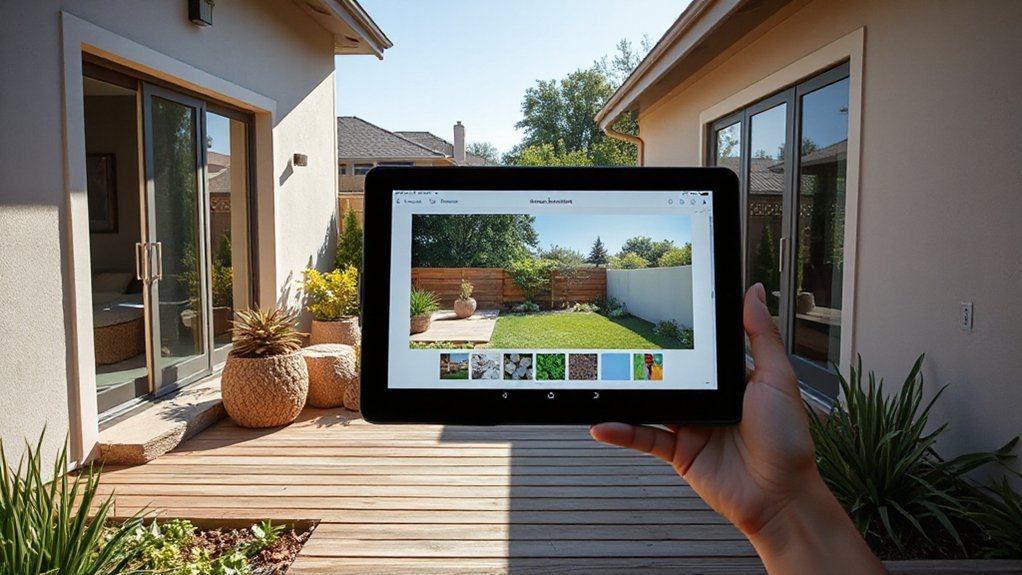
To align garden design with your renovation, start by mapping sightlines from the house to the yard and selecting materials, colors, and textures that echo the interior palette.
Pinpoint focal points and progressions, ensuring scale and rhythm align with interior rooms. Choose durable, cohesive surfaces that reflect architectural lines, then translate textures into outdoor finishes.
Integrate garden art as deliberate accents that mirror art or hardware indoors, creating a visual dialogue between spaces.
Craft planting beds that frame views without obstructing lines, and layer plant heights to maintain structure.
Prioritize wildlife habitats by including native species, pollinator corridors, and shelter options.
Maintain clarity in measurements and budgets, revising plans as renovations progress to sustain a unified, purposeful exterior that feels like an extension of your home.
Define Goals for a Cohesive Indoor-Outdoor Look
You can begin by clarifying what a cohesive indoor–outdoor look means for your home and your daily life. Define specific goals that connect rooms with exterior spaces, aligning color, texture, and form across both zones. Prioritize a unified palette, consistent materials, and a rhythm of sightlines from indoors to the garden.
Translate renovation outcomes into landscape milestones, such as a seamless flow between living areas and patios, or a yard that feels like an extension of your interior. Identify functional goals—privacy, entertaining capacity, and low-maintenance upkeep—and then map them to design moves.
Consider garden lighting to shape mood and time, and select outdoor furniture to reinforce scale and comfort. Document metrics to measure success and guide future tweaks.
Conduct a Site Audit: Sun, Soil, Drainage, and Microclimates
A site audit starts with mapping the sun path, soil conditions, drainage patterns, and local microclimates to reveal how each factor will shape plant choices and placement. You’ll perform a soil assessment to gauge texture, fertility, pH, and moisture holding capacity, then translate findings into bed layouts and irrigation needs.
Observe how drainage behaves after rain—clear slopes, low spots, and runoff channels indicate where to avoid waterlogged roots. For microclimate analysis, note temperature swings, wind exposure, and sun angles at different times of day and seasons. Record existing vegetation and structures that cast shade or reflect heat.
Use the data to prioritize hardy, locale-appropriate species and structural supports. Clear documentation guides ongoing adjustments and future planting decisions.
Echo Interior Finishes With Color and Material Palette
You’ll mirror interior finishes in your garden by aligning color and material choices with your home’s palette.
Maintain palette continuity across zones so progression feels seamless, not jarring.
Balance texture and architectural form to echo the house while still reading as outdoor space.
Color and Material Coordination
Start with a restrained palette that echoes exterior materials, then choose finishes that balance warmth and durability. Seasonal color should drive accent choices, allowing you to refresh surfaces without altering core elements.
Test pairings under varying light to reveal subtle shifts, ensuring consistency across rooms and exterior connections. Prioritize material durability for high-touch areas, selecting resistant surfaces that resist wear yet convey tactility.
Document a core set of materials and a forecasted resale appeal, so updates remain intentional and enduring.
Palette Continuity Across Areas
Palette continuity ties interior finishes to the overall design narrative by ensuring the same color and material language threads through connected spaces. You’ll achieve cohesion by aligning finishes across indoor and outdoor zones, preserving a shared palette while respecting function.
1) Establish a core color family and repeat it in textures, stones, and paints to reinforce unity.
2) Select complementary materials—wood, stone, metal—so progression feels intentional, not incidental.
3) Balance contrast with nuance, using subtle shifts in tone rather than bold jumps.
4) Measure light-influenced changes, ensuring color harmony remains steady from day to night.
Texture Integration With Architecture
Texture integrates architecture by translating interior finishes into tactile, three-dimensional cues that echo the color and material palette. You translate wall and ceiling textures into exterior cues, guiding plantings, pathways, and edging to mirror that tactile logic.
Use textural contrast to differentiate zones, aligning rough, smooth, and glazed surfaces with architectural features like cornices, keystones, or pergola beams. This approach creates a cohesive dialog between indoors and outdoors, so the garden feels like an extension of the home.
Prioritize tactile diversity in materials—stone, timber, gravel, metal—to reflect indoor choices without duplicating them. Balance scale and repetition, ensuring textures recur at strategic intervals.
Result: a unified, legible landscape where texture reinforces architectural intent and outdoor experiences align with interior finishes.
Plan Hardscaping That Extends Your Interior
You can frame hardscape as an extension of your interior by aligning materials, colors, and textures with your living spaces.
Plan shifts that connect outdoor rooms to indoor ones, so you move through seamlessly.
Prioritize practical paths and seating that invite lingering, blurring the line between indoors and out.
Extend Indoors Outdoors
One effective way to extend your interior flow outdoors is by designing hardscaping that mirrors interior materials, scales, and functional zones, so shifts feel seamless rather than abrupt. You’ll align textures, colors, and proportions to create a cohesive transition, while prioritizing usable spaces.
- Use a continuous surface palette that echoes indoor finishes, guiding movement from room to yard without jarring changes.
- Establish defined zones for dining, lounging, and circulation, ensuring each area feels intentionally connected to inside spaces.
- Select garden furniture that mirrors indoor seating in form and comfort, reinforcing visual harmony.
- Plan outdoor lighting that complements ambient indoor light, extending the day’s activities with subtle, layered illumination.
Connect Spaces Seamlessly
A seamless connection between indoors and outdoors starts with deliberate alignment of pathways, zones, and materials. You’ll define a core circulation spine from the door to the most-used outdoor rooms, then mirror the interior’s proportions outdoors.
Choose hardscaping that blends smoothly: consistent setback distances, same or complementary textures, and a restrained color palette.
Plan zones for cooking, dining, and lounging that read as extensions of kitchen and living areas, with shelter and shade where needed.
Integrate garden art as focal anchors, ensuring sightlines from interior perspectives.
Treat the yard as a wildlife habitat by selecting native plants, layered planting, and shelter options that encourage birds and pollinators.
Test access, drainage, and maintenance pathways to keep every connection practical and durable.
Choose Durable Plants With Year-Round Interest
To guarantee your garden remains attractive in every season, choose durable plants that offer year-round interest and low maintenance. You’ll build structure and color with selections that perform across seasons, while minimizing upkeep through hardy varieties and sensible spacing. Focus on evergreen backbone, seasonal bloom, textured foliage, and subtle winter silhouettes to maintain visual rhythm.
- Evergreens provide year-round form and color.
- Flowering shrubs deliver seasonal focal points with minimal effort.
- Perennials with long-lasting crowns resist heat and drought.
- Groundcovers and grasses fill gaps, reduce weed pressure, and add movement.
Incorporate seasonal pruning to preserve shape without stressing plants, and prioritize pest management with resistant cultivars.
Choose combinations that suit your sun, soil, and microclimates for enduring appeal.
Frame Focal Points and Sightlines From Inside the Home
Prioritize focal point placement so the strongest visual anchor sits in view without crowding the scene. Use color, texture, and vertical elements to extend interest beyond the glass, guiding the eye toward purposeful passages rather than random borders.
Sightline optimization means checking lines from sofas, desks, and entry doors, adjusting plant height and screening to preserve views while adding depth.
Maintain consistency with your interior palette, avoiding abrupt shifts. Clear sightlines improve perceived space, reinforce design intent, and create cohesive flow between indoors and out.
Master Scale, Proportion, and Layout to Avoid Crowding
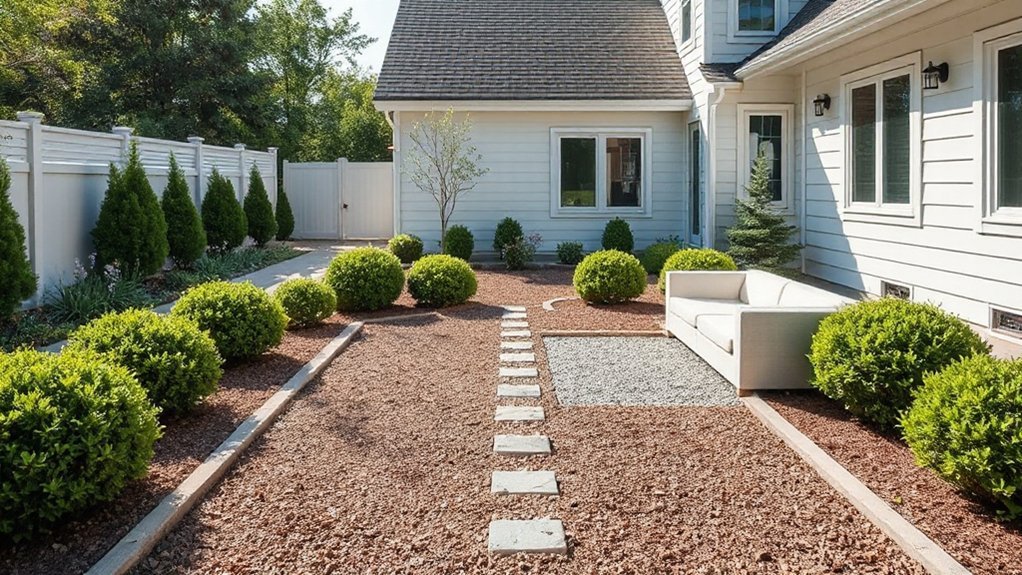
After shaping sightlines from inside, you now set the garden’s scale, proportion, and layout to prevent crowding and keep the space legible. You balance elements so pathways breathe, furniture sits with ease, and focal points read clearly. Use proportional relationships between house, planting beds, and open spaces to avoid visual clutter.
- Establish a clear axis that guides movement and frames views of garden furniture and water features.
- Size elements to human scale, reducing oversized furniture and oversized planting in close quarters.
- Separate zones with deliberate spacing, ensuring seating, dining, and relaxing areas don’t collide.
- Place water features and focal plants to punctuate pauses, not overwhelm progressions.
This discipline preserves legibility, depth, and calm throughout the redesigned space.
Maintenance-Smart Elements for Practicality
Choose low-maintenance planting that thrives in your site’s conditions to reduce ongoing care.
Pair it with smart irrigation and mulching to conserve water, suppress weeds, and minimize manual tasks.
This approach keeps practicality at the forefront while your garden supports your renovated home.
Low-Maintenance Planting Choices
Even with a tight maintenance window, you can design a yard that stays vibrant with minimal effort by selecting resilient, low-demand plantings that thrive in your local conditions. Focus on structural, maintenance-smart choices that endure seasonal stress and require little intervention.
- Choose xeriscaping options that group drought tolerant plants for cohesive color and texture.
- Favor native and regionally adapted species to reduce supplemental watering and fertilization.
- Use compact, low-growing shrubs and perennials to maintain form with minimal cutting back.
- Install groundcovers and mulched beds that suppress weeds and conserve soil moisture.
These selections create a reliable palette, simplify upkeep, and keep your spaces lively year-round.
Smart Irrigation and Mulching
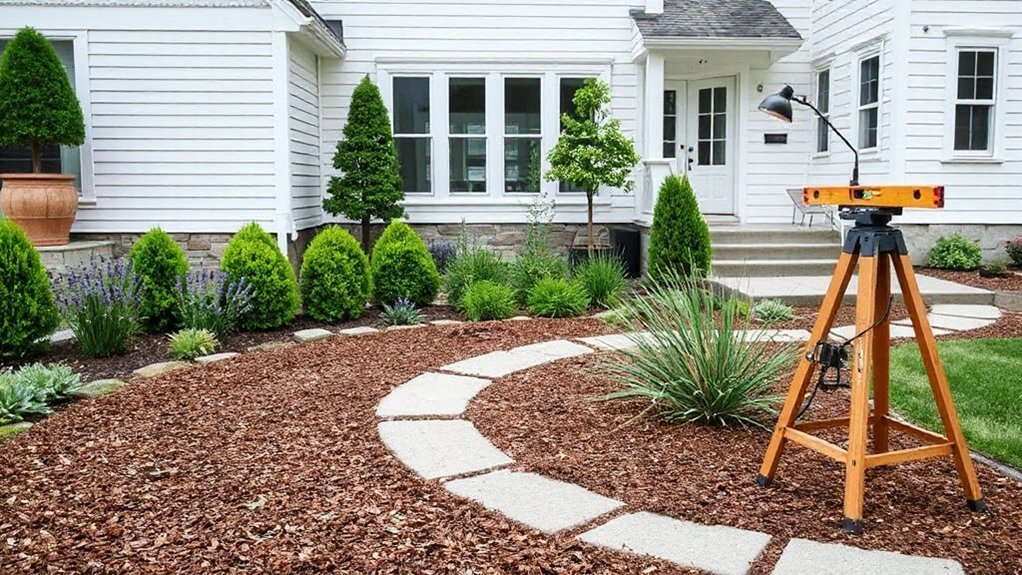
Mulching techniques protect soil, conserve moisture, and stabilize temps, so you spend less time watering and weeding. Use organic mulch to improve fertility and suppress weed growth, layering 2 to 4 inches, and replenish as it decomposes.
Combine mulch with precision irrigation to minimize evaporation and runoff. Map zones by sun exposure and plant type, then document seasonal adjustments for predictable maintenance. This approach supports a cohesive, resilient landscape that aligns with your renovation goals.
Budgeting and Phasing for a Renovation-Driven Garden
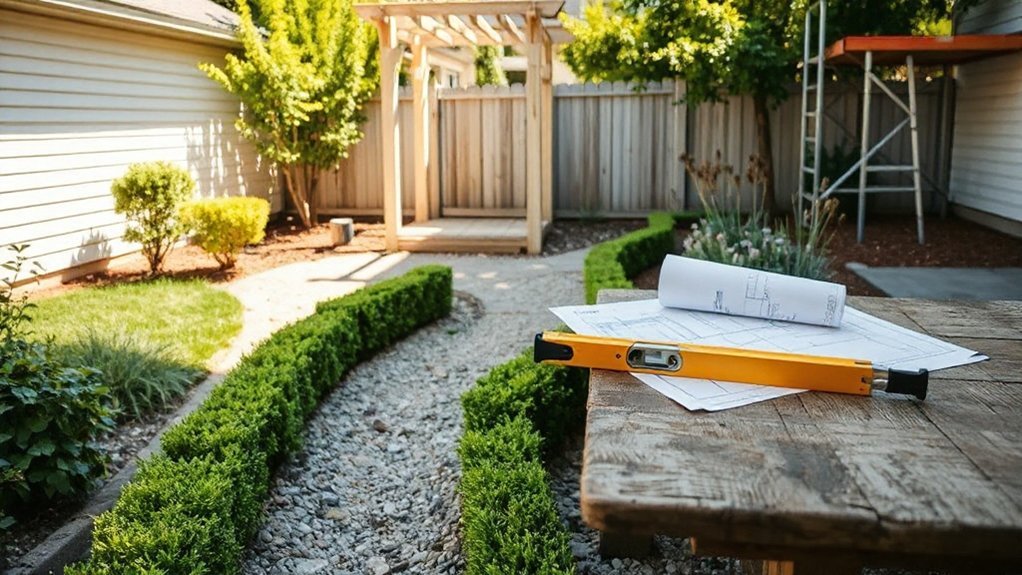
Budgeting for a renovation-driven garden means aligning project scope with available funds and planning phased steps that minimize disruption.
You’ll map costs to priorities, then sequence work to preserve beauty while you upgrade. This approach hinges on disciplined Budget management and a clear timeline for each phase.
- Define essential elements first, then schedule cosmetic updates for later phases.
- Allocate contingency funds to cover unexpected site issues or price shifts.
- Schedule trades and permits to minimize downtime and permit overlaps.
- Measure success by milestone completion, not calendar dates.
Phased implementation lets you enjoy progress now, while preserving budget flexibility for setbacks. Reassess after each phase, adjusting scope or timing to keep the garden aligned with your home renovation goals.
Frequently Asked Questions
How Soon Should Outdoor Work Start Relative to Interior Renovations?
You should start outdoor work after drywall, flooring, and major systems are in progress, but you can lay groundwork sooner.
Plan the garden layout to align with sightlines from finished interiors, then integrate outdoor lighting for staged reveals.
Coordinate outdoor tasks with interior milestones to avoid weather risks and material delays.
Keep utilities in mind, and schedule planting for ideal seasons.
This approach minimizes disruption while ensuring a cohesive, seamless shift between indoors and garden spaces.
What Permits Are Needed for Exterior Changes During a Remodel?
You’ll need permits for exterior changes; start with your local permit office to confirm requirements.
Landscape regulations vary by jurisdiction, but most projects like structural shifts, added decks, fences, or grading require a permit application.
Prepare drawings, property lines, and impact details to speed approval.
You’ll often file a permit application, pay fees, and await review before construction.
If in doubt, contact planning staff early to avoid delays.
How Can I Reduce Ongoing Garden Maintenance Costs?
To reduce ongoing garden maintenance costs, choose cost effective planting and focus on low maintenance landscaping. You’ll save time and money by installing drought-tolerant, native species, and mulching to curb weeds.
Group plants by water needs, automate irrigation, and select perennials over annuals.
Use hardscaping to minimize turf, and mulch paths to reduce upkeep.
Schedule routine pruning, and opt for low-fuss containers.
With these steps, maintenance becomes predictable and affordable.
Can I Reuse Existing Plants After a Redesign?
Yes, you can reuse existing plants after a redesign. Inspect plant health first, removing any with pests or disease. Save healthy specimens, and plan placements you’ll nurture rather than battle with stress.
Prioritize proper soil preparation: amend as needed, improve drainage, and mulch to conserve moisture.
Transplant during the right season, water deeply, and monitor growth. This approach keeps your landscape cohesive, reduces waste, and supports long‑term garden health.
What Are Hidden Costs in a Garden Redesign Project?
Hidden costs in a garden redesign often surface as you go: soil amendments, irrigation tweaks, drainage fixes, and permit fees. You’ll want precise budgeting for these extras.
Budget planning should include contingencies, supplier price spikes, and equipment rental.
When choosing a contractor, prioritize transparent quotes and a documented scope to avoid change orders.
Consider timing and weather delays as well.
Budget planning and contractor selection together help you foresee, control, and absorb unexpected garden costs.
Conclusion
You’ve planned a garden that’s as thoughtful as your renovation, creating seamless indoor-outdoor flow and a cohesive palette. By aligning goals, auditing sun and soil, echoing interior finishes, and shaping durable, low-maintenance zones, you’ll enjoy lasting harmony. One striking stat to hook: landscapes that align with home renovations can boost perceived value by up to 10–15% and shorten market time. Stay disciplined with scale, sightlines, and phased budgeting, and your outdoor space will feel like a natural extension of your home.
About the Author