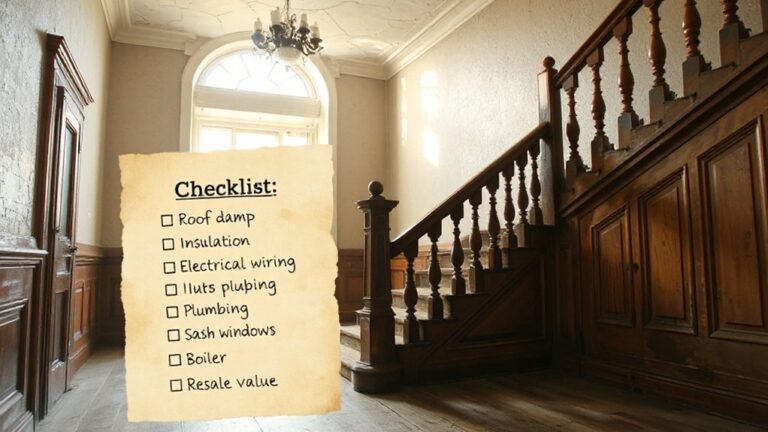
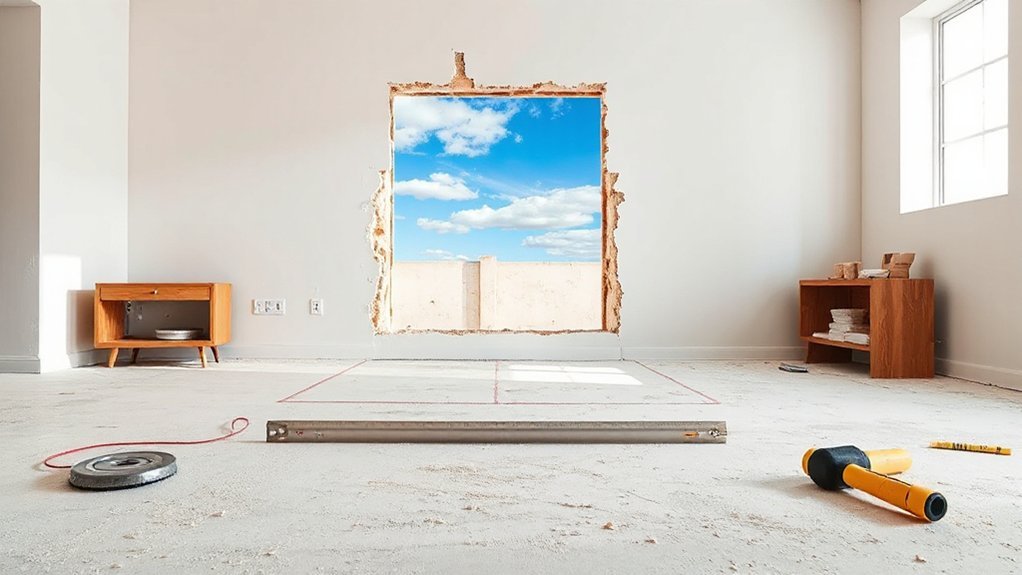
A locked door opens a corridor of questions, and your next move hinges on party wall rules. You’ll need clarity on what a Party Wall Agreement covers, whether you truly require one for internal removals, and how notices, surveys, and costs shape the project. If conflict looms, the process steadies you with steps, safeguards, and professional guidance. Keep a steady course as we outline practical, no-nonsense steps to navigate approvals and protect neighborly relations.
Key Takeaways
- Party wall agreements define scope, notice, and dispute resolution for work affecting shared internal walls during removal or alterations.
- Allocation of costs and responsibilities covers surveyors, temporary works, and loss-of-use, regardless of ownership labels.
- Notices and a Party Wall Award establish duties, timelines, and procedures, with signs of shared duty guiding maintenance and access.
- Early involvement of a surveyor helps identify concealed services, document conditions, and ensure legal compliance.
- Planning should address structural integrity, fire safety, acoustic upgrades, and budgeting for surveys, licenses, and possible delays.
What a Party Wall Agreement Covers and Why It Matters
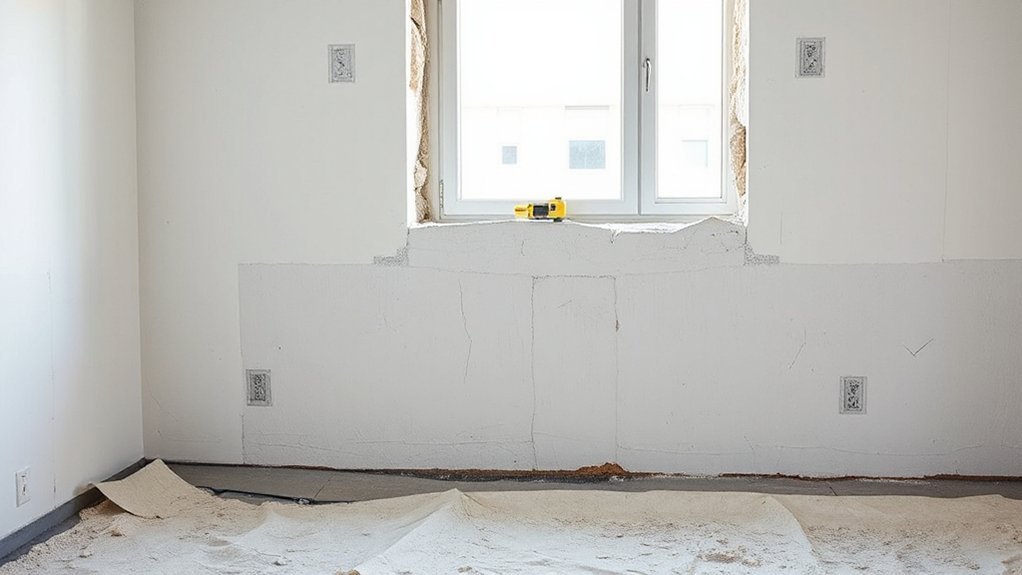
A party wall agreement defines the scope and terms of work that affect shared walls, boundaries, or structures between adjacent properties. You’ll learn what it covers and why it matters before any removal or alteration begins.
It details the types of works allowed, limits on excavation, and schedules for access, so you understand responsibilities and timing.
You’ll also see how it protects your interests by specifying notice periods, dispute resolution methods, and compensation for damage.
Decorative finishes and insulation considerations are addressed where they influence sound transmission, fire safety, and moisture control, ensuring compatible installations with a neighbor’s property.
Do You Need an Internal-Wall Party Wall Agreement? Key Signs
If you share an internal wall, you’ll want to spot signs of a shared duty early. Look for indications that both sides influence use, access, or maintenance.
Note any joint responsibilities that affect repairs or alterations. Recognizing these shared-use cues upfront helps you decide if an internal-wall party wall agreement is needed.
Internal-Wall Shared Duty
When you share a wall with a neighbor, you often share responsibility for its maintenance and protection. You’ll want to know where duties end and who handles what, especially for interior design and decorative finishes.
An internal-wall party wall agreement isn’t always required, but it signals coordinated care, mitigates disputes, and clarifies access for inspections or repairs.
- Shared load expectations for structure and finishes
- Common zones for insulation, damp-proofing, and moisture control
- Rights to access for testing, repairs, and updates
- Treatment plans for decorative finishes and interior design alignment
- Procedures for notifying the other party before work
In short, a clear understanding keeps costs predictable and preserves aesthetics without unnecessary conflict.
Signs Of Shared Use
Shared-use situations often reveal themselves through how the wall is treated in daily activity and maintenance. You’ll notice shared use when markings, access, or repairs cross boundaries, not just a single-owner task. Look for concurrent renovations that affect both sides, or need to coordinate timing and access—these are clear indicators.
If contractors routinely enter through a neighbor’s space or you share pipe runs, you’re dealing with joint responsibility. Check for wall insulation that served both units or rooms; if gaps or damp spots appear on both sides, that signals shared impact.
Aesthetic improvements that affect the wall’s surface, finish, or soundproofing often require agreement. When in doubt, document concerns and assess whether a formal internal-wall party wall agreement is warranted for clarity and protection.
From Notice to Completion: A Step-by-Step Guide
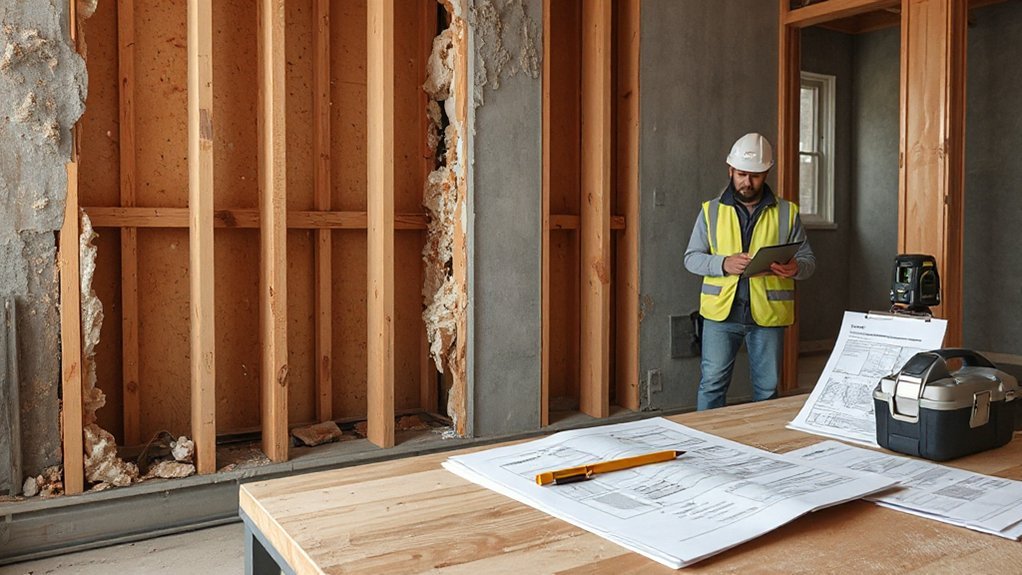
You’ll walk through the Notice to Serve steps, then move to securing a Party Wall Award that clearly sets duties, timelines, and dispute resolution.
Next, understand the Completion process and the Fees Guide so you can anticipate costs and finalize agreements without delays.
This discussion lays the groundwork for a practical, authoritative roadmap from notice issuance to project finish.
Notice to Serve Steps
Notice to serve is the critical trigger for a party wall process, so you’ll want to act promptly and with precision. You initiate the timeline by preparing compliant notices, detailing scope, schedules, and your contact details. You’ll deliver to the affected owner or party in writing, then await a response or a deemed consent period.
If responses vary, you proceed to serve a copy to all relevant parties and record dates for deadlines. You track responses, objections, and any required amendments methodically. Your focus stays practical: anticipate how Decorative finishes and Wall insulation considerations influence the notice and your project timeline.
Communicate clearly, document receipts, and plan for potential counter-notices or consent without delay.
- Prepare compliant notices with scope and schedule
- Deliver to affected parties in writing
- Record receipt dates and deadlines
- Note decorative finishes and wall insulation implications
- Track responses and next steps
Party Wall Award Essentials
After you’ve served the notices, the next phase centers on the Party Wall Award. You’ll gather the specifics of the project, including the scope, boundaries, and timing, so the award reflects reality and protects both parties.
The award formalizes rights to work on shared walls, guarantees structural safety, and sets responsibilities for access, storage, and vibration control. You’ll specify wall insulation needs and any decorative cladding plans, clarifying maintenance and future alterations.
Details about temporary works, safeguard measures, and dispute resolution are included to prevent delays. The document must comply with statutory timelines, be served to all affected owners, and be registered where required.
Review for clarity, accuracy, and enforceability, then proceed to the next stage with confidence.
Completion and Fees Guide
Once the notices are served, you’ll move to track the project’s finish and costs, ensuring the work aligns with the Party Wall Award and any agreed timelines. A Completion and Fees Guide keeps you organized from notice to completion, detailing cost categories, payment triggers, and documentation you’ll need for transparency.
You’ll monitor variation orders, lien risks, and contingency allocations to protect your budget during interior design and home renovation work. With clear milestones, you’ll verify subcontractor invoices against the Award, maintain receipts, and prepare final cost statements for party agreement.
- Track progress against milestones and payment triggers
- Document all variations and approved changes
- Reconcile invoices with the Award and scope
- Manage contingency funds and cost overruns
- Compile a final financial statement for sign-off
When to Consult a Surveyor and What They Do
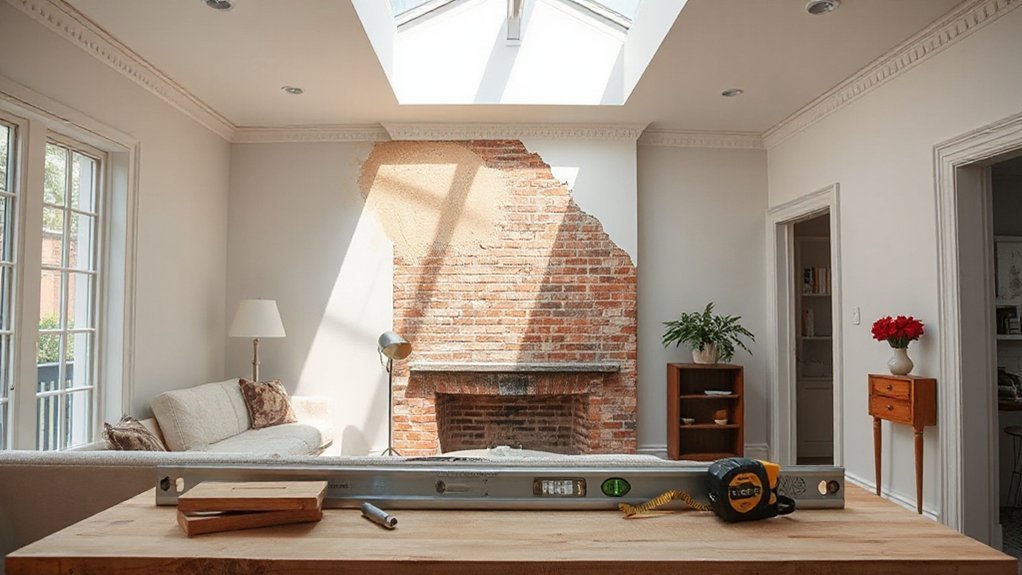
A surveyor should be consulted as soon as you anticipate structural work that affects party walls or boundary structures. You’ll rely on their assessment to define scope, risks, and the right process.
Their primary duties include surveying the property line, identifying concealed services, and documenting existing conditions to prevent later disputes.
They translate technical plans into enforceable actions, ensuring compliance with party wall legislation and the specifics of your notice.
Surveyor responsibilities also cover advising on necessary notices, schedules of condition, and timelines, so you don’t stall projects or incur costs from unnecessary delays.
You’ll need them for legal consultation purposes, clarifying responsibilities, liabilities, and potential amendments to your plan before you proceed.
Their objective input reduces conflict and protects your interests.
Who Owns and Who Pays Under a Party Wall Notice
Owners and costs are defined by the party wall notice itself: the building owner pays for work that affects party walls, while adjacent owners cover their own property’s share of any shared costs or loss of use. You’ll see allocation tied to the proposed alterations, not generic ownership labels, so clarity matters before signing.
The notice may specify who bears surveyor fees, temporary works, and any loss-of-use costs during construction. You should consider how interior aesthetics are preserved or improved and how energy efficiency measures might be funded as part of the project.
The framework helps prevent disputes by listing responsibilities upfront and tying them to the intended works and timelines. Thorough review avoids surprises and supports smooth execution.
- Clarifies who funds what, down to temporaries
- Sets expectations for loss of use during works
- Addresses surveyor and professional fees upfront
- Links costs to interior aesthetics goals
- Aligns with energy efficiency improvements and timing
Common Scenarios: Removing Internal Walls in Flats vs. Houses
If you’re removing internal walls, flats and houses pose different party wall implications you must assess.
Consider how wall type, structural role, and soundness affect notice requirements, support needs, and potential remedies.
This discussion centers on flats vs houses, the structural soundness considerations, and how these drive practical steps in a party wall process.
Flats vs Houses Walls
When planning to remove an internal wall, you’ll face different rules and practical realities depending on whether you’re in a flat or a house. You can’t ignore how usable space and structural roles shift between 유형; in flats, load-bearing walls are rarer, but party-related restrictions loom.
In houses, you’ll often confront more robust frameworks and wider tolerance for alteration, yet with stricter consent routes. Think about decorative finishes that must align with shared building aesthetics, and acoustic insulation concerns that influence noise transmission. Plan for access, approvals, and potential renewal of services.
- Shared corridors and neighbour considerations shape the project’s scope
- Wall finishes may require matching for a seamless look
- Acoustic insulation upgrades impact budget and timing
- Structural assessment informs feasibility and safety
- Access to services affects sequencing and disruptions
Party Wall Implications
Removing internal walls triggers distinct party wall implications that vary between flats and houses.
In flats, you’ll typically interact with a party wall agreement tied to neighboring dwellings, since walls may be shared or impact common areas. You’ll assess party wall notices, obtain consent where required, and plan work to minimize disturbances to adjoining owners.
In houses, expectation shifts toward establishing rights and responsibilities for boundary-adjacent work, especially if the wall serves as a structural or acoustic divider. You’ll consider wall insulation implications for both scenarios, ensuring all upgrades meet applicable standards and avoid compromising fire safety.
You’ll document decorative finishes, preserve value, and align schedules with any building-management requirements to prevent disputes. Clear communication reduces risk and expedites approvals.
Structural Soundness Considerations
Structural soundness must guide any internal-wall removal, with distinct implications for flats and houses. You’ll evaluate structural integrity early, because what you remove or alter can affect both vertical and lateral stability.
In flats, load bearing walls often support floors above and may involve party-wall duties; you’ll typically consult a structural engineer and the building’s insurer before any work.
Houses give you more flexibility, but you still must verify whether a wall is load bearing, supporting joists, or part of a stairwell or chimney line.
Rushing can compromise fire stops, sound insulation, and safe egress. Always document findings, plan temporary supports, and secure approvals to protect inhabitants and property.
- Structural integrity assessment upfront
- Identify load bearing walls vs partitions
- Engineer consultation mandatory
- Verify fire stops and egress continuity
- Documented approvals and temporary supports
Party Wall Costs: Budgeting Tips for Homeowners
To budget for party wall costs, start by identifying all potential expenses—fees for surveys, notices, and building control, plus any specialist reports or legal advice you might need.
You’ll then estimate contingencies for unexpected holds or delays, and add a margin for price fluctuations in surveys or planning applications.
Track costs by category: surveys, administration, legal work, and consent fees.
Consider decorative finishes and aesthetic upgrades early; these can push totals if you underestimate trades and material scopes.
Request itemized quotes from surveyors and builders, comparing inclusions and exclusions.
Keep a clear schedule of payment milestones tied to approvals.
Build a documented budget, revisiting quarterly to adjust for changes.
Finally, record all receipts and retain documents for future reference, ensuring you stay within your planned financial path.
Disputes, Protections, and How to Avoid Them
Disputes over party wall matters arise when expectations, timelines, or costs diverge, but you can prevent most conflicts by clarifying roles, duties, and thresholds upfront.
When disagreements occur, you’ll find protections in clear notices, documented agreements, and a defined process for handling changes to scope, timing, and impacts on shared elements like decorative finishes and insulation upgrades.
You should maintain written records of decisions, costs, and inspections, and use independent expert input where needed to avoid bias.
Early risk assessment and a formal dispute mechanism reduce escalation.
Adhere to agreed tolerances for finishes, and specify who bears risk for accidental damage.
- Clear roles and responsibilities
- Documentation of costs and changes
- Defined dispute resolution
- Roles for inspections and approvals
- Specified tolerances for finishes and upgrades
Building Control and What to Expect at the End
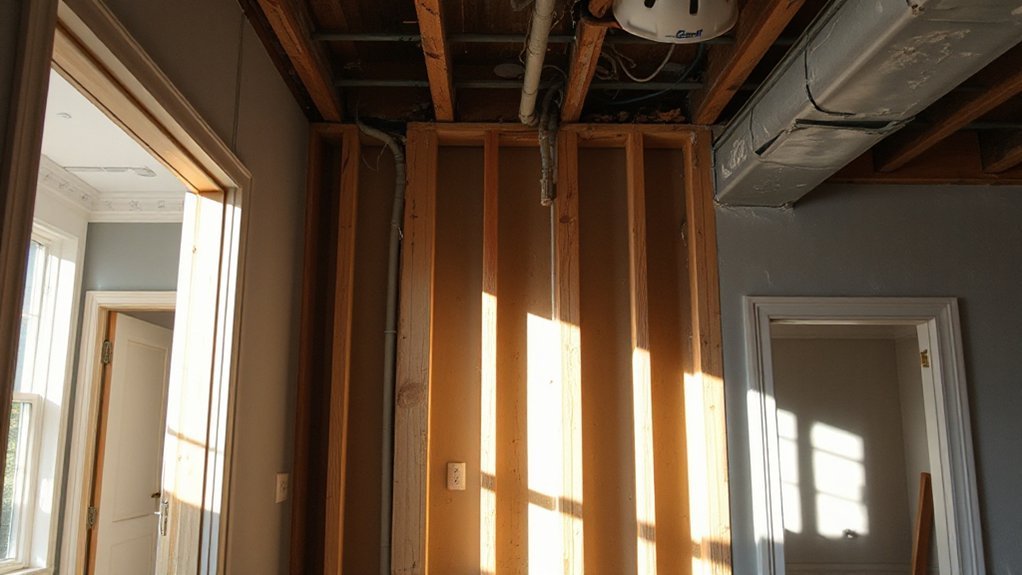
Building Control marks the final checks and sign-off milestones before your project reaches practical completion, ensuring all work complies with approved plans, regulations, and safety standards. You’ll see inspectors verify structural integrity, fire safety, accessibility, and airtightness, then review commissioned systems for compatibility with your design intent.
Expect a clear record of approvals, deviations, and any required amendments before sign-off. You’ll need detailed as-built drawings, test results, and certificates for electrical, mechanical, and ventilation work.
Decorative finishes are assessed for finish quality, durability, and compliance with moisture and heat exposure limits, while interior lighting must meet energy efficiency and illumination standards. Plan ahead for potential fixture re-selections or placement tweaks if constraints arise, and confirm practical completion once all criteria meet the approved scope.
Alternatives to Wall Removal and Risk Considerations
If you’re weighing wall removal, several alternatives can preserve structure and function while cutting risk, including partial demolition, non-structural openings with framing adjustments, and strategic rerouting of services.
You’ll evaluate load paths, fire compartment integrity, and access needs to guarantee compliance and minimize disruption.
Decorative alternatives and aesthetic improvements can achieve visual goals without compromising stability.
Prioritize precise detailing, vibration control, and weather sealing to prevent future issues.
Consider phased work to limit nuisance and cost.
Document risk transfer, contractor qualifications, and contingency plans to manage unforeseen conditions.
- Partial demolition with reinforced framing
- Non-structural openings with clean architectural detailing
- Service rerouting and sleeve coordination
- Aesthetic improvements that preserve wall line
- Detailed risk assessment and phased implementation
Frequently Asked Questions
Can a Party Wall Agreement Cover Only Part of a Wall?
Yes, a party wall agreement can cover only part of a wall. You typically define the scope, including the shared boundary and any segment subject to works, preserving other sections as unaffected.
You’ll set management terms, access, and repair duties for the relevant portion, while the rest remains under existing conditions. This approach protects property boundaries and clarifies liability, ensuring both neighbors’ rights are respected during the project.
Always document the partial scope precisely in the agreement.
How Long Does an Internal-Wall Notice Last Before Action?
An internal-wall notice lasts 14 days to start action, after which you typically must serve a fresh notice or risk invalidating the process.
If you’re considering Wall removal, verify the Notice validity is intact: it must clearly state scope, timing, and party details.
You’re responsible for compliance, so check deadlines, consent windows, and dispute resolution provisions.
If doubts arise, seek swift professional guidance to avoid delays or enforcement issues.
Can Neighbors Veto Internal-Wall Removal or Access?
Yes, neighbors can veto or block internal-wall removal or access if it affects the shared boundary or your property rights, especially without proper notice or consent.
You must respect party wall procedures, secure consent where required, and follow formal notices.
If disputes arise, you’ll likely need an independent surveyor or party wall award to define rights, access, and timing, preventing unilateral actions and protecting both sides’ property rights along the shared boundary.
Do Councils Require Building Regulations Approval for Internal Walls?
Yes, councils typically require building regulations approval for internal walls that affect structural integrity. You must show that removing or altering the wall won’t compromise load paths or fire safety.
Expect plans, calculations, and compliance with Building Regulations, not just party wall notices. You’ll often need Building permits, inspections, and a final certificate.
If you ignore this, you risk enforcement action. Prioritize structural integrity and follow official processes to avoid delays.
What Happens if No Party Wall Notice Is Served Properly?
If you don’t properly serve a party wall notice, you risk party wall disputes and potential legal consequences. You may face order requirements to stop work, delays, or compulsory cessation by the party wall surveyor.
You’ll also expose yourself to costly claims for damages or breach of statutory duties. To avoid trouble, make certain notices are correctly served, timelines met, and disputes escalated to a surveyor or court only when necessary.
Conclusion
If you’re removing an internal wall, you’ll navigate notices, surveys, and potentially a Party Wall Award with clarity and care. You’ll avoid costly delays by engaging the right surveyor early and keeping neighbors informed. You might worry about delays or costs, but with a solid plan and transparent communication, you’ll minimize disputes and stay compliant. In short, precise planning now saves headaches—and money—later, so you can complete the project confidently and smoothly.
About the Author