You don’t need every gadget to start—focus on a core set that saves time, money, and hassle. Smart lighting, a learned thermostat, solid security cameras and locks, plus a voice assistant can cover daily control, safety, and efficiency. Add a robot vacuum and smart plugs as you’re ready. With a practical plan and clear budget, you’ll see how these basics blend into real, measurable benefits, and you’ll want to keep optimizing as you go.
Key Takeaways
- A smart lighting system with dimmable, color-tunable bulbs and a hub for scenes and schedules.
- A reliable Wi‑Fi router or mesh system to ensure strong, seamless coverage throughout the home.
- A smart thermostat with energy reports and remote control to optimize climate and costs.
- A security package (doorbell camera, entry cameras, and smart locks) with alerts and encryption.
- A centralized automation hub that supports open standards to integrate devices and automate daily routines.
Define Your Home Tech Starter Pack: Criteria and Budget
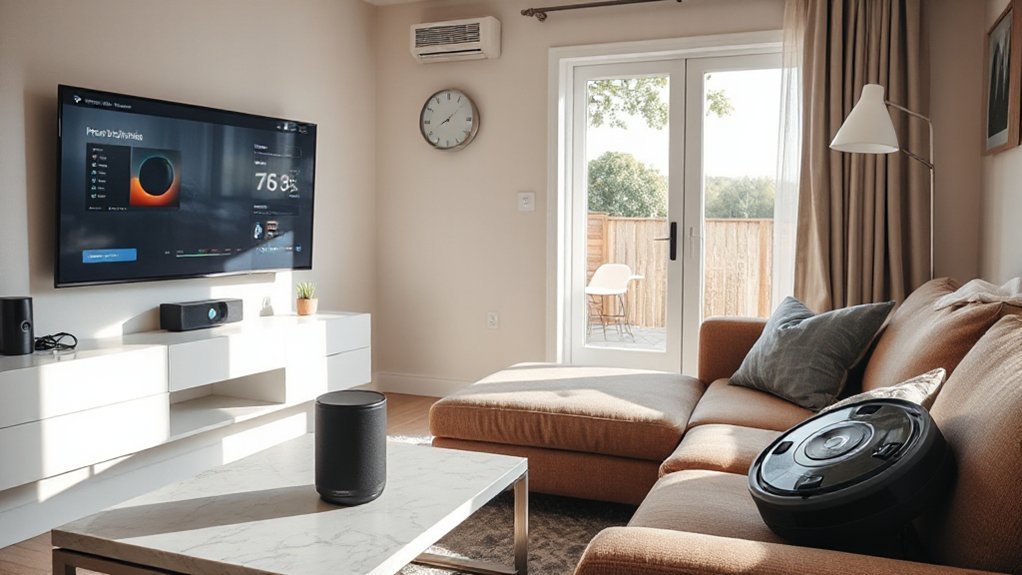
A solid home tech starter pack balances usefulness with budget, so start by identifying what matters most in your daily routine—smart lighting, a reliable speaker or hub, and dependable Wi‑Fi coverage.
Define clear criteria: core functions you’ll actually use, expandability, and compatibility with existing devices.
For Home automation, pick two or three routines you want quickest wins, like voice control, scheduling, or scene lighting.
Prioritize smart lighting that’s dimmable, color‑tunable, and easy to automate with your hub.
Set a budget cap for the first wave, reserving room for a single versatile speaker or hub and a dependable router or mesh system.
Keep future upgrades realistic, ensuring you’ll gain value without overcommitting.
This approach keeps your setup practical, scalable, and cost‑efficient.
Choosing Smart Thermostats and Energy-Saving Devices
Smart thermostats and energy-saving devices let you lock in comfort while trimming costs, especially after you’ve set up a reliable hub and solid Wi‑Fi. You’ll pick models that suit your home’s layout, climate, and schedule, prioritizing compatibility with your existing ecosystem.
Look for learning features, remote control, and clear energy usage reports to guide decisions. Smart thermostat benefits often include precise temperature regulation, adaptive scheduling, and automatic updating for efficiency.
Pair devices with smart outlets and power strips to curb phantom loads and simplify scene creation. Implement energy saving tips like lowering cooling setpoints during absences and using wake/sleep modes to align with occupancy.
Choose devices with easy firmware updates, reputable support, and transparent data policies.
Security Systems for Real Homes: Cameras, Locks, and Sensors
Cameras, locks, and sensors form a practical security backbone for real homes. You’ll want a cohesive setup that integrates video, access, and monitoring into one system you can trust.
Start with a high-quality camera pair for entry points, plus a smart doorbell to verify visitors before you answer.
Choose locks that support auto-lock, remote control, and audit trails so you know who enters and when.
Motion sensors should cover key corridors and exterior approaches, triggering alerts without overload.
Prioritize end-to-end encryption and local storage options alongside cloud backups for resilience.
Regularly test alerts, battery life, and firmware across devices.
Keep software updates automatic, so you’re protected against new threats while you focus on daily life, not constant security tweaks.
Cleaning and Convenience Tech: Robots, Voice Assistants, and Automation
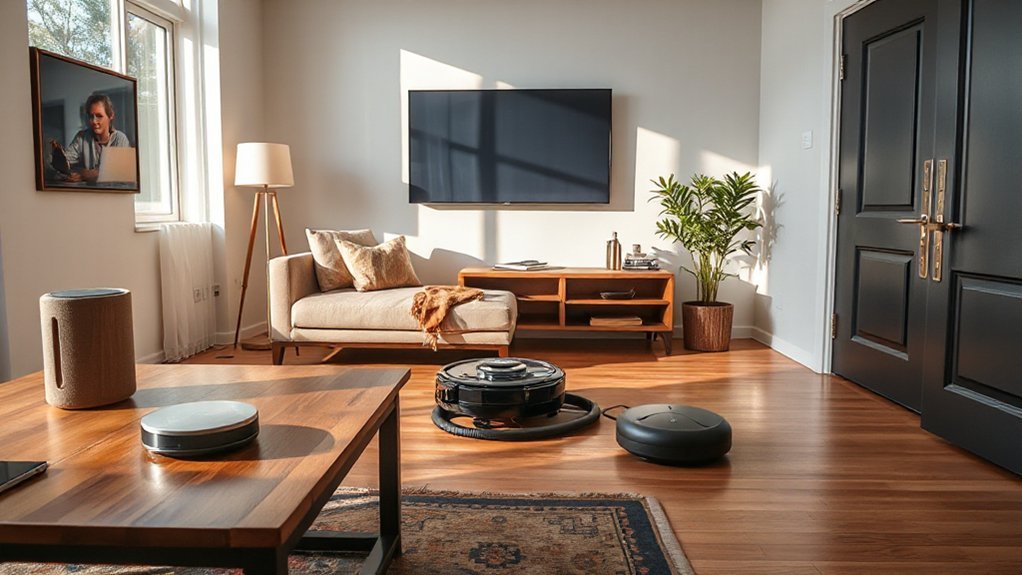
Cleaning and convenience tech blends autonomous helpers with intuitive controls to streamline daily chores. You’ll gain efficiency by pairing robots with voice assistants that remember routines, respond quickly, and keep clutter at bay. Stay mindful of maintenance needs and privacy implications as you deploy these tools.
1) Robot maintenance: schedule cleanings, monitor battery health, and firmware updates to extend lifespan and prevent malfunctions.
2) Voice assistant privacy: review permissions, mute microphones when not in use, and limit smart home data sharing.
3) Automation workflows: create simple routines that trigger vacuuming, lighting, and charging at designated times to maximize energy savings.
Choose devices with clear compatibility, straightforward setup, and reliable support to guarantee consistent, practical benefits.
Build Your Plan: Budget-Friendly Setup and Next Steps
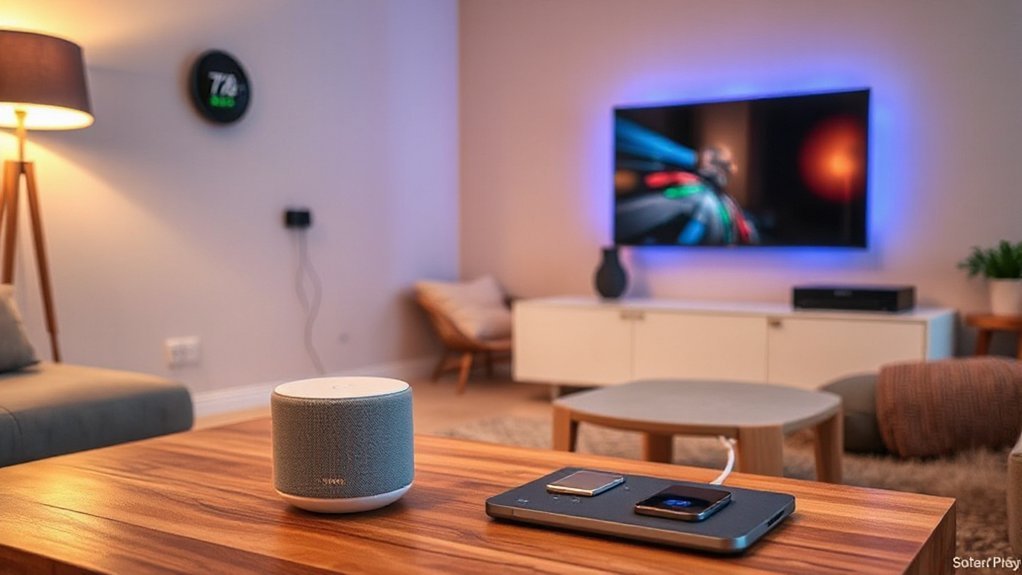
If you want a budget-friendly setup that still delivers real value, start with a clear plan and scalable steps. First, define your goals and prioritize devices that directly improve daily routines.
Next, map out a budget in tiers: essentials, upgrades, and future expansions. Choose interoperable hardware to enable smart home integration without overpaying for often-unused features.
Favor widely supported platforms and open standards to avoid vendor lock-in. Create a simple rollout timeline, beginning with core functions like lighting, climate, and security, then layer in automation and optimization.
Schedule regular tech maintenance, such as firmware updates and backup checks, to preserve performance. Track progress, adjust as needed, and avoid impulse buys.
Stay disciplined, scalable, and pragmatic for sustainable value.
Frequently Asked Questions
How Do I Prioritize Devices for a Small Apartment?
Prioritize essentials first: pick space-saving solutions that deliver real value, like compact multipurpose devices and smart plugs you’ll actually use daily.
Start with a strong Wi‑Fi hub and a compact lighting system, then add a small, energy-efficient thermostat.
Favor budget friendly options and scalable setups you can expand later.
Avoid clutter by measuring surfaces, choosing wall-mounted or under-cabinet gear, and prioritizing reliability over novelty to maximize comfort in a tight apartment.
What About Data Privacy With Smart Home Devices?
How secure is your setup? Data security matters, and privacy concerns should guide every smart choice you make.
You’re in control: enable strong protections, use trusted brands, and update firmware promptly.
Disable unnecessary data sharing, review app permissions, and opt for local processing when possible.
Use two-factor authentication, unique passwords, and a separate network for smart devices.
Regularly audit activity logs and reset devices if you notice odd behavior.
Can I Mix Brands and Still Maintain Compatibility?
Yes, you can mix brands and still maintain compatibility, but you must prioritize brand compatibility and device interoperability.
Look for ecosystems that support standards like Matter, Zigbee, or Wi‑Fi 6/6E, and check each device’s voice assistant and hub support.
Prefer a common hub or bridge to unify controls, and verify update longevity.
Plan for potential feature limits, firmware gaps, and latency differences between products.
Test compatibility before full deployment to avoid surprises.
Do These Gadgets Require Professional Installation?
Installing most of these gadgets doesn’t require a pro, but you may want one for complex setups. If you’re comfortable, you can DIY with care.
For smart home security and energy efficient lighting, follow product guidelines, use compatible hubs, and test thoroughly. You’ll save time and avoid voided warranties.
Don’t skip updates, mount cameras correctly, and secure networks. When in doubt, call a pro to prevent gaps in automation and guarantee reliable performance.
Which Devices Are Best for Battery Durability and Maintenance?
For battery durability, choose devices with solid battery life and easy maintenance. Prioritize smart speakers, security cameras, and sensors that report low power and support sleep modes.
For maintenance tips, run firmware updates, keep firmware current, and clean connectors. Use devices with rechargeable packs and energy-saving settings, and rotate batteries when needed.
Monitor usage patterns, disable unnecessary features, and store in moderate temperatures. Regularly verify charge levels and replace aging batteries to preserve longevity and reliability.
Conclusion
You’ve got this, you’ll grab great gear and go from gadget to grid of comfort. Craft a cohesive, cost-conscious core: controllable lighting, a learning thermostat, sturdy security, and smart assistants that automate daily routines. Prioritize practical setups, simple scalability, and solid compatibility. Start small, save smart, upgrade steadily. Secure settings, smooth schedules, serene spaces—style meets substance. Build balance, bolster safety, and boost efficiency. You’ll master modular magic, maximize momentum, and revel in a truly smarter home.
About the Author