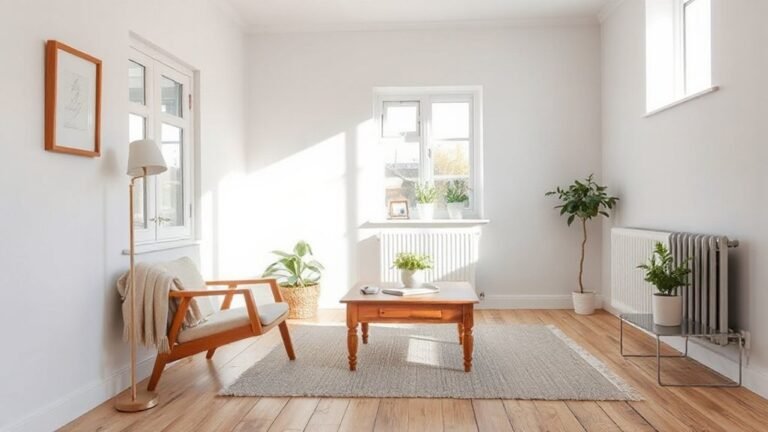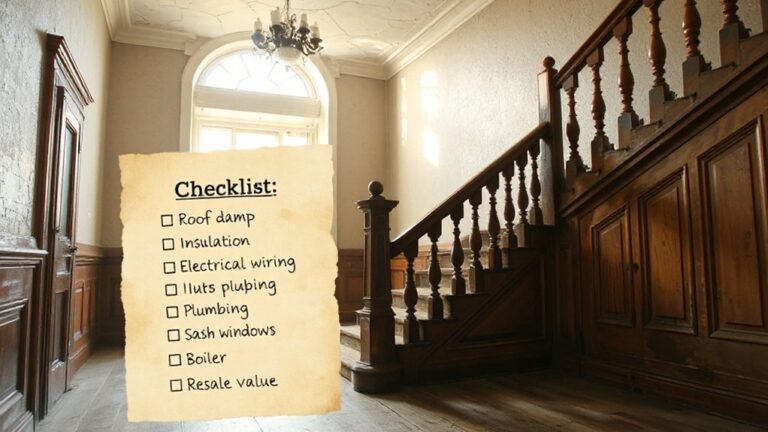
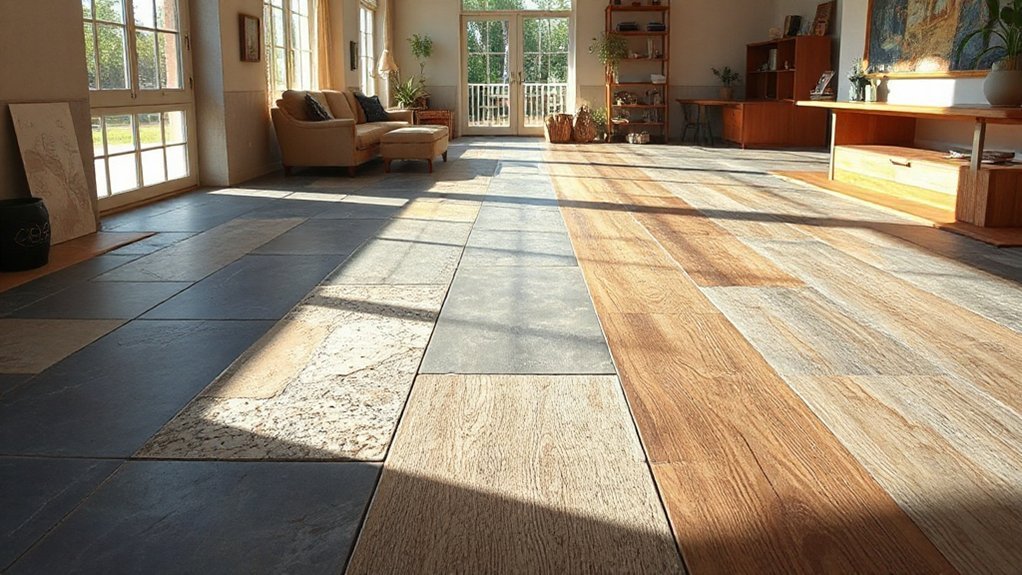
Last summer, a coastal home swapped carpet for ceramic tiles and cut indoor temps by several degrees. You’ll want flooring that stays cool, resists humidity, and lasts in heat, from ceramic and porcelain to polished concrete and UV-stable vinyl or laminate. It’s practical to weigh heat reflection, maintenance, and long-term costs, then balance installation tricks and design cues that minimize heat gain. Curious about which mix fits your climate and budget best? Let’s unpack the options.
Key Takeaways
- Choose cool-to-the-touch, moisture-resistant materials like porcelain tile, light-colored concrete, or heat-stable vinyl for hot climates.
- Prioritize high-reflectivity finishes and light tones to minimize heat absorption and glare.
- Ensure proper underlayment and insulation to reduce thermal gain and prevent edge warping.
- Favor easy-clean, low-sealing options with strong wear and UV resistance to withstand sun exposure.
- Plan maintenance that controls humidity, uses pH-balanced cleaners, and employs entrance mats and airflow to prevent warping.
Guiding Principles for Flooring in Hot Climates
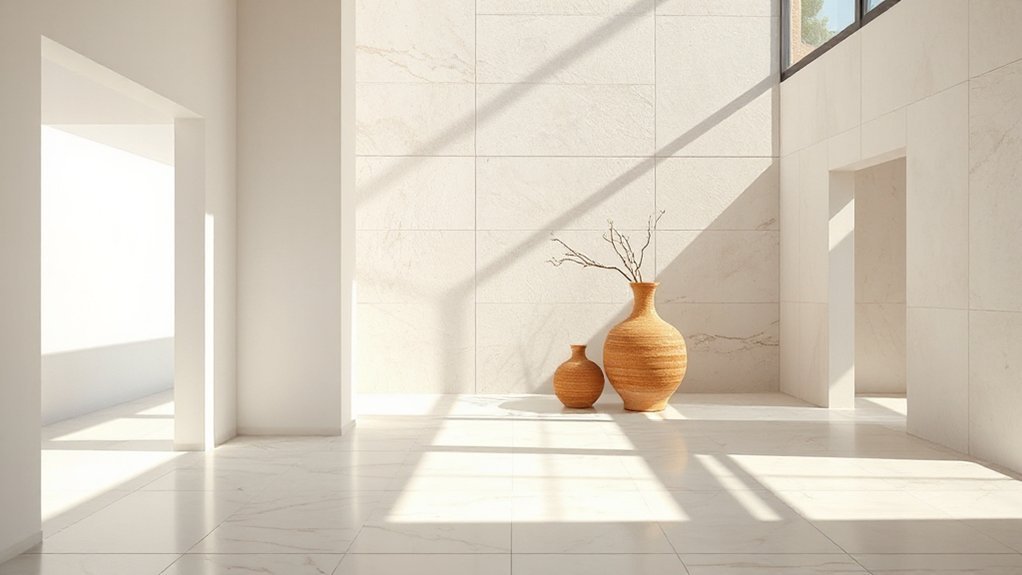
When choosing flooring for hot climates, start with materials that stay cool to the touch, resist heat buildup, and handle high humidity. You’ll prioritize surfaces that don’t trap heat or odors, supporting steady indoor air quality. Think about color, texture, and reflectivity to reduce heat gain while keeping spaces visually calm.
Prioritize moisture management and slip resistance, since humidity rises with temperature. Plan for a precise flooring installation that minimizes gaps and seams where heat can warp or curl edges. Consider underlayment choices that enhance insulation without breeding mold.
Factor ventilation into the layout, so air moves freely beneath materials. Select finishes that resist scorch marks and stay cool underfoot. For durability, document a clear installation timeline and maintenance routine to sustain performance and comfort.
Evaluate Based on Temperature, Durability, and Maintenance
To choose flooring that performs well in hot climates, start by weighing how each option handles temperature, durability, and maintenance. You’ll compare heat resistance, expansion, and fading under peak sun, then judge long‑term wear from foot traffic and furniture.
Durability matters, so consider surface hardness, scratch resistance, and how a material ages in high humidity. Maintenance should be easy and predictable: cleaning frequency, stain resistance, and how often it requires sealing or refinishing.
Flooring aesthetics come into play, shaping whether you prefer a cool tone or warm, inviting look that won’t show wear quickly. Also assess installation challenges, since some options demand acclimation, subfloor prep, or specialized tools.
A balanced pick delivers comfort, longevity, and minimal upkeep for hot climates.
Tile by Performance: Ceramic, Porcelain, and Alternatives
Ceramics and their cousins tutor you in heat: ceramic, porcelain, and alternatives perform distinctly under sun and termites of daily life, so you’ll want to match them to your climate and usage.
You’ll compare performance by density, water absorption, and glaze durability, then translate that into real rooms. Porcelain’s dense body resists moisture and wear, ideal for kitchens and entryways, while ceramic tiles offer pattern flexibility and lower cost for bathrooms with lighter traffic.
Alternatives like glass or stone-look vinyl provide quicker installation and reduced maintenance, though you’ll trade heat inertia and resale nuance. Consider indoor air impacts from grout and sealers, plus long-term aesthetic appeal, especially in sunlit spaces.
Finish and grout choice matter for glare control and cleaning, keeping floors comfortable and stylish.
Concrete Floors: Cool, Durable, and Warping-Resistant
Concrete floors stay cooler to the touch, helping you cut cooling costs without sacrificing style. They handle heat with less expansion, so you keep a stable surface under daily traffic and high sun exposure.
With a warp-resistant design, you’ll enjoy long-term durability and fewer maintenance worries.
Cooler Surface Temperatures
Ever wondered how concrete floors stay cooler under sun and heat? You’ll notice two practical tactics you can implement today.
First, floor heating isn’t just for warmth; when paired with cooling strategies, it helps regulate surface temperatures by balanced conduction, avoiding hot spots.
Second, insulation techniques beneath and within slabs slow heat ingress, keeping surfaces closer to room temperature.
Choose light-colored finishes to reflect radiant energy, and consider exposed aggregate or textured toppings that dissipate heat without trapping it.
Use radiant barriers under the slab or in the subfloor to further reduce heat transfer.
Pair these methods with a controlled micro-ventilation plan to prevent stale air buildup around cool surfaces, preserving comfort while maintaining a modern, durable aesthetic.
Durability Under Heat
To handle heat without warping, choose mix designs and finishes that prioritize stiffness and dimensional stability. Concrete floors excel here when you select a high-performance mix with low shrinkage and a dense, sealed surface.
Look for a cementitious topping or overlay that minimizes moisture movement and uses admixtures that improve thermal stability. Sealed, cool-toned finishes reduce heat absorption while maintaining a clean, modern aesthetic.
Guarantee proper curing and slab preparation to prevent micro-cracking, which can compromise long-term durability in hot environments. The result is a durable, low-maintenance surface that stays cooler under foot and resists warping.
Prioritize indoor air quality with low-emission sealers, and celebrate aesthetic appeal through crisp edges and consistent texture.
Warping-Resistant Design
Because heat drives expansion and moisture movement, you can curb warping by locking in stiffness from the slab with a high-performance mix, tight joints, and a sealed surface.
Concrete floors designed for hot climates prioritize dimensional stability, using slump-controlled pours and shrinkage-reducing additives to minimize movement.
Installers should plan for controlled curing and edge insulation to prevent rapid temperature shifts that trigger warping.
Choose a dense, low-porosity finish to deter moisture ingress and reduce surface glare, boosting flooring aesthetics without sacrificing performance.
During installation, address challenges like joint spacing, substrate prep, and accurate leveling to maintain a uniform plane.
Regular sealing and proper care help sustain stability, energy efficiency, and long-term durability in rising temperatures.
Stone Choices: Breathability, Maintenance, and Sealing
Stone options matter when you’re designing for heat: breathable options, low-maintenance surfaces, and reliable sealing all influence comfort and longevity. You’ll prioritize stone with good thermal mass and porosity balance, so interiors stay cooler without sweating maintenance.
Natural stone like travertine or limestone can offer breathability if you seal properly and avoid dense, nonporous finishes that trap heat. For upkeep, choose surfaces with uniform density and slip resistance, reducing wear from foot traffic and humidity swings.
Sealing techniques matter: reseal on schedule, using high-quality impregnating seals that minimize staining while preserving breathability.
Consider stone aesthetics when pairing with fixtures and cabinetry to maintain a cohesive look. With the right sealing, routine care, and a tasteful palette, your stone stays durable and stylish.
Vinyl and Laminate: Heat-Resistant Options and Care
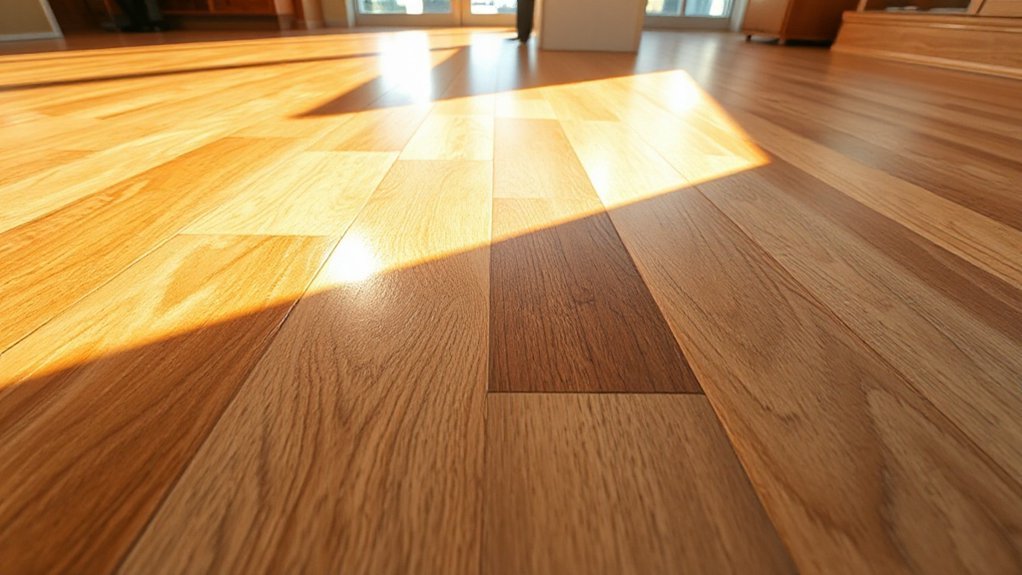
You’ll want to start with heat-resistant vinyl basics and how the core composition handles sun‑driven temps, including wear layer thickness and UV stability.
Next, consider laminate heat tolerance tips that guide underlayment choices, expansion gaps, and color stability in sunny rooms.
Finally, map out care for hot climates, from cleaning routines to humidity controls, so these floors stay smooth and stylish without warping.
Heat-Resistant Vinyl Basics
Vinyl and laminate labeled as heat-resistant can be a smart choice for hot climates, but you still need to read the label carefully and choose products with a high PT (physical test) rating and a heat-compatibility warranty.
In this subtopic, you’ll focus on heat-resistant vinyl basics, not full-system tradeoffs. You’ll assess wear layers, core stability, and embossed textures that hide scuffs without expanding in heat.
Practical care matters: use approved cleaners, avoid standing puddles, and maintain consistent climate control to curb expansion.
Consider heat absorption in color selection; lighter tones reflect more heat, while darker tones can show wear sooner.
Track warranties, test planks for consistency, and choose a product with predictable performance under high daytime temperatures.
Laminate Heat Tolerance Tips
Ever wonder how laminate stacks up in hot environments? You’ll want practical tips that boost performance without sacrificing looks. Start with selecting high-density fiberboard underlayment and a quality wear layer, which support Laminate durability in heat and foot traffic.
Keep ambient humidity in check and avoid direct sun on exposed edges—use window films or furniture placement to protect.
Subtopic aesthetics: When installing, follow tight expansion gaps and okay ranges from the manufacturer; improper gaps invite warping. Choose laminates rated for higher heat exposure, and avoid excessively glossy finishes that glare in sunlight.
Regular cleaning with a damp microfiber cloth preserves the surface, while avoiding wax builds that dull texture.
Finally, use edge-sealants where planks meet walls to reduce moisture ingress and maintain long-term stability.
Care For Hot Climates
When you’re optimizing vinyl and laminate for hot climates, start with heat-aware options and simple care routines that keep both beauty and performance intact.
In practice, choose products with high heat resistance and a stable underfoot feel, then align with your room’s color contrast to enhance aesthetic appeal.
Regular cleaning should be light and infrequent to avoid residue buildup that dulls the finish; use a damp microfiber cloth and a non-abrasive cleaner.
Place heat sources away from edges and employ mats in high-traffic zones to reduce wear.
Temperature fluctuations demand acclimation; allow new planks to rest before installation.
Avoid direct sun on glossy surfaces; use UV-blocking blinds or window films.
Routine inspections catch micro-scratches early, preserving color integrity and lasting appeal.
Wood Flooring in Heat: What Works and What to Avoid
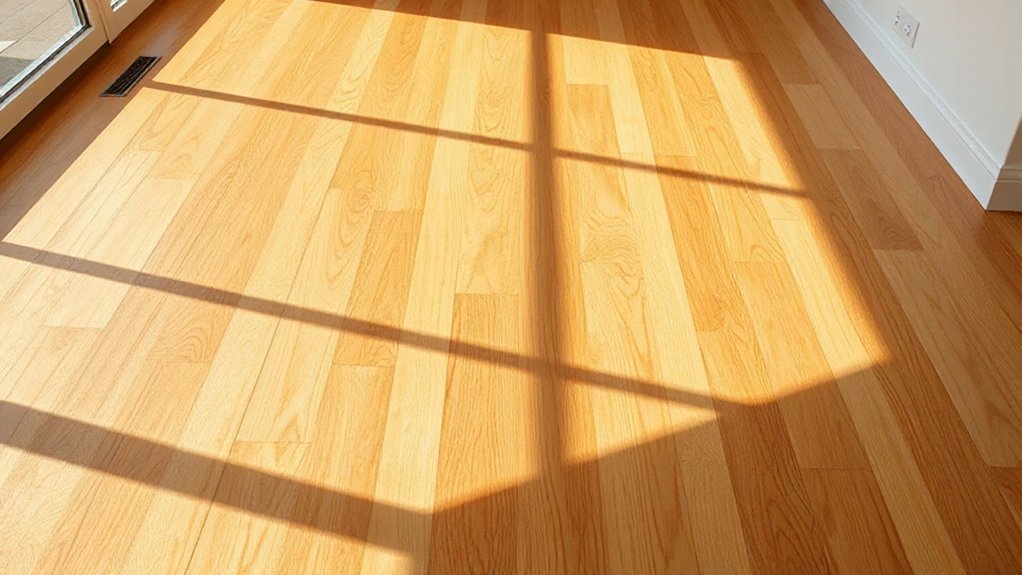
Wood flooring in hot climates has to handle expansion, fading, and moisture swings, so you’ll want species and finishes that stay stable under heat and sun. You’ll prefer tight-grain hardwoods or engineered planks with good acclimation and consistent core layers, plus UV-resistant finishes that slow color change.
In regard to wood treatment, choose products that resist moisture ingress and minimize movement-driven gaps. Finishing options matter: a multi-coat UV-curing or hard-wax finish can reduce glare while enhancing durability, and a low-sheen look helps hide daily wear.
Avoid unfinished or heavily waxed surfaces in direct sun, which can dry unevenly and promote scratches. Plan for periodic maintenance cycles and re-coats to preserve tone and stability without sacrificing comfort or style.
Installing for Heat: Prevent Warping in Hot Climates
To prevent warping in hot climates, you’ll start with solid Thermal Expansion Guardrails and guarantee consistent gaps at the edges.
Check that your subfloor is clean, level, and properly prepared to support stable boards.
With the right prep and expansion controls, you’ll ride out heat spikes without compromising look or function.
Thermal Expansion Guardrails
Use metal or plastic profiles that resist heat and stay secure under sun exposure, with fasteners spaced per manufacturer specs. Check that joints remain continuous, and choose gaps large enough to absorb expansion but small enough to prevent tripping.
Align guardrails with the floor’s grain pattern and color for a cohesive look, reinforcing with non-slip edging at entryways. This isn’t cosmetic—it’s guardrail safety, reducing stress on fasteners and joints while maintaining a clean, contemporary aesthetic.
Regular inspection keeps performance reliable in fluctuating temperatures.
Proper Subfloor Preparation
With heat driving expansion, your subfloor must be flat, dry, and well-fastened to prevent warping once the flooring goes in. Start by testing for flatness with a long straightedge, filling low spots and sanding high ones. Address any squeaks or loose boards now, since movement compounds heat stress later.
Control subfloor moisture by repairing leaks, drying thoroughly, and using a moisture barrier where needed. Measure moisture content with a calibrated meter and compare to manufacturer specs; don’t proceed if readings exceed recommendations.
Plan insulation techniques beneath the subfloor to diminish seasonal shifts and improve comfort. Seal edges to minimize drafts, and guarantee proper ventilation in crawl spaces.
After prepping, install a clean, stable base—your heat-resistant foundation for durable flooring.
Maintenance Tips to Keep Floors Cool and Durable
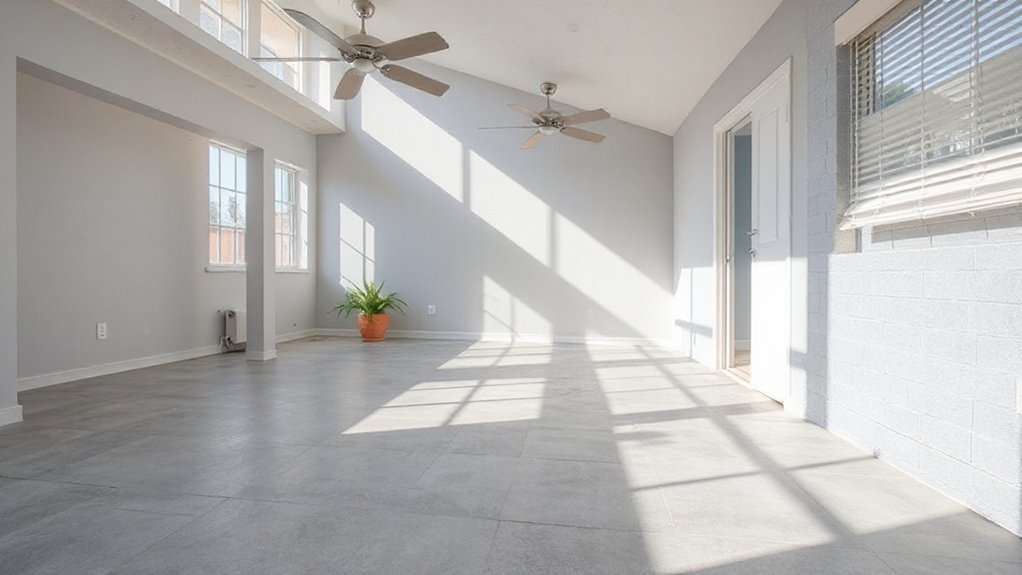
If you want floors that stay cool and last longer in hot climates, start with smart material choices and steady upkeep. You’ll maximize comfort by selecting ceramics, polished concrete, or composite decking that resist heat gain and fading.
Establish a routine to prevent warping: wipe spills promptly, maintain consistent humidity, and use mats at entrances to reduce grit. Schedule seasonal sealants or grout refreshes to defend against cracking.
Keep airflow steady with ceiling fans or vents to prevent surface temperature spikes. When cleaning, choose pH-balanced cleaners and avoid harsh solvents that strip finishes.
Color coordination matters: lighter tones reflect sun, darker floors hide wear but can heat unevenly, so mix textures carefully for aesthetic appeal. This practical approach blends durability with current design trends.
Design to Maximize Coolness and Energy Savings
To keep interiors cool and cut energy use, design floors with materials and layouts that reflect heat rather than absorb it. You’ll choose cool-toned surfaces, light-reflective finishes, and shaded patterns that reduce heat build-up.
Pair color psychology with practical layout—light colors in high-traffic zones lighten perception and curb glare, while strategic darker accents hide dirt without absorbing heat. Incorporate large-format planks or tiles to minimize joints and improve airflow, and install breathable underlayment to keep cooling cycles efficient.
Use interior lighting to complement reflected daylight, not overpower it. Consider radiant barriers beneath for seasonal moderation and ceiling-to-floor contrast to guide airflow.
- Reflective, cool finishes with low emissivity
- Light-led, dimmable accents for mood and energy balance
- Zoned patterns that maximize shade and airflow while visually expanding spaces
Cost, Longevity, and Performance Across Options
Flooring choices for hot climates are as much about value and durability as they’re about staying cool. You’ll compare cost, longevity, and performance across options, focusing on long-term spend and maintenance needs.
Ceramic and porcelain tiles offer low upkeep and strong resale value, but installation costs and grout care matter.
Luxury vinyl planks deliver resilience at a lower price with quick installs, yet may show wear in high-traffic areas.
Solid and engineered woods look premium but can warp with humidity spikes and heat exposure, making underlayment choices critical.
Concrete slabs, when sealed properly, excel for longevity and cooling, though color palettes and finishes drive comfort and style.
Track flooring trends to balance initial investment with durability, and align with practical color palettes for cohesive spaces.
Frequently Asked Questions
How Does Humidity Affect Flooring Choice in Hot Climates?
Humidity levels heavily influence your flooring choice in hot climates. High humidity increases moisture impact, so you’ll want moisture-resistant materials and solid installation methods.
Opt for classic options like porcelain tile or stone, which tolerate humidity better, and choose engineered woods with proper sealing.
Use breathable underlays and dehumidifiers during peak seasons.
Track humidity trends, seal gaps, and maintain consistent HVAC to minimize expansion or contraction.
This practical approach reduces warping, staining, and maintenance costs.
Which Floor Type Has the Best Long-Term Resale Value Here?
Hardwood durability tends to boost long-term resale value, but luxury vinyl can outperform in price-per-performance over time. You’ll want a durable, timeless look: choose high-quality luxury vinyl or engineered hardwood with wear layers and solid cores.
For resale, prioritize neutral tones, precise installation, and reliable warranties. Keep maintenance low with easy cleaning and resistance to humidity.
In hot climates, luxury vinyl often holds value-by-cost advantage, while hardwood durability sustains appeal with buyers seeking premium aesthetics.
Can Underfloor Cooling Systems Improve Comfort With These Floors?
Underfloor cooling can boost comfort with these floors, yes. Think of it as a quiet breeze underfoot. You’ll improve floor insulation and air circulation by circulating cooler air beneath the surface, reducing surface heat.
Maintain air paths, seal gaps, and choose compatible flooring. This system helps even temperatures without blasting the room.
Monitor humidity and energy use, adjust vents, and pair with reflective finishes for best results.
What Maintenance Reduces Heat-Related Wear the Most?
Regular cleaning is your best defense against heat-induced wear. You reduce damage by performing floor cleaning routinely, focusing on dust, grit, and moisture that can abrasively wear finishes.
Wipe spills promptly to prevent staining and protect stain resistance. Use non-abrasive cleaners and mats at entrances to minimize grit.
Schedule periodic resealing or recoating as recommended, since a refreshed seal boosts durability. Stay consistent, and your floors stay cooler, cleaner, and more stylish.
Are There Eco-Friendly, Heat-Resistant Flooring Options?
Yes. You can choose eco friendly materials like bamboo, cork, recycled hardwood, and linoleum. Paired with heat resistant surfaces such as ceramic or porcelain tile, stone, and high-grade concrete coatings.
Look for low-VOC finishes and reflectivity to curb heat absorption.
Prioritize durability, easy maintenance, and radiant-floor compatibility.
Consider color and texture that hide wear, while staying trend-conscious.
These eco-friendly options deliver heat resistance, longevity, and a smaller environmental footprint for hot-climate homes.
Conclusion
You’ve got solid options for hot, humid spaces, and the right pick hinges on how you balance coolness, durability, and maintenance. Ceramic and porcelain tile shine for heat resistance, while polished concrete adds thermal mass without sacrificing reflectivity. One striking stat: tiles can stay up to 15–20 degrees cooler than darker flooring under strong sun. Prioritize light tones, UV-stable finishes, and proper installation to curb warping and maximize energy savings. Ready to choose the best match for your climate?
About the Author