You aim for spaces that read as crafted, not bought. Start with precise millwork—tight miters, clean profiles, handcrafted touches—that signals intent. Layer lighting to sculpt mood and reveal texture. Pair materials with depth, balancing contrast and finish so every surface earns its place. Guarantee proportional layouts that feel inevitable, not staged. Finishes should age gracefully while retaining character. Get these elements aligned, and the result may feel uniquely tailored—a sign you’ve moved beyond generic to something distinctly yours.
Key Takeaways
- Assess space thoroughly: measure dimensions, ceiling heights, and window placements to establish precise proportions and functional layouts.
- Use premium millwork: solid-wood doors, tight miters, chamfered edges, and accurate reveals for handcrafted authenticity.
- Layer lighting strategically: combine ambient, task, and accent lighting with dimmable controls to shape mood and zones.
- Pair materials thoughtfully: mix textures and finishes (wood, stone, velvet) with balanced contrast and cohesive color hierarchy.
- Prioritize proportional layouts: vary element sizes and sightlines, applying golden ratio guidelines for calm, sophisticated harmony.
Assessing Your Space: Foundations for a Custom-Built Look
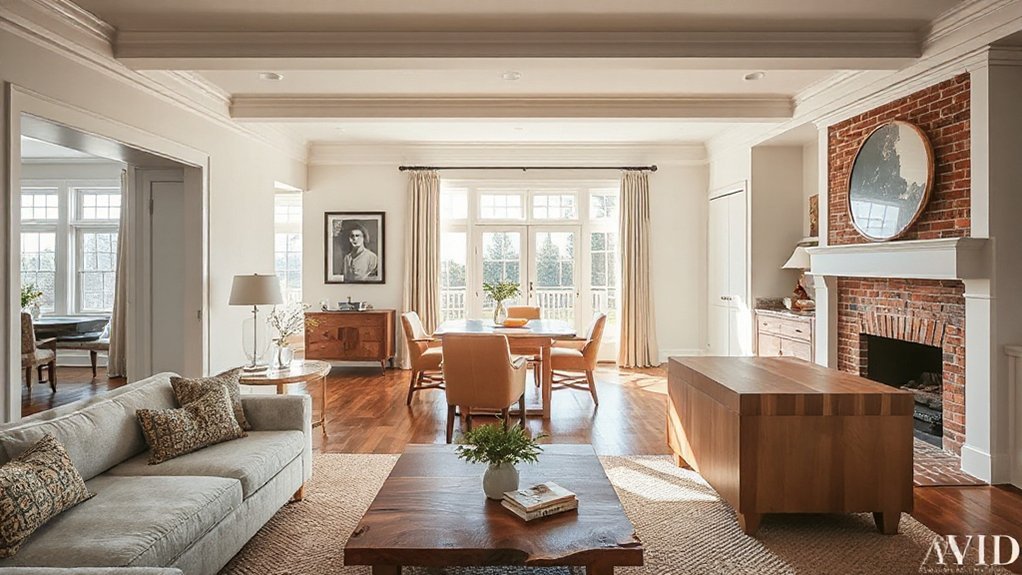
Evaluating your space begins with a clear map of its fundamentals: measurements, load-bearing constraints, and existing service layouts. You’ll chart dimensions, ceiling heights, and window placements to establish proportional relationships that support a custom look.
Space planning becomes your compass, guiding where walls, doors, and built-ins should land for flow and function. You’ll assess structural integrity by reviewing beams, joists, and connections, noting any deviations or enhancements needed to support future finishes.
This groundwork prevents clash between aesthetics and practicality, ensuring that every detail aligns with long-term performance. As you document findings, prioritize critical paths for movement, utilities access, and lighting routes.
With precise data in hand, you enable confident decisions, reducing rework while elevating the sense of a truly well-considered, built-to-last space.
Elevate With Custom Millwork That Feels Handcrafted
When you add custom millwork, the space reads as crafted rather than assembled, so start with precise profiles, material selections, and joinery that whisper rather than shout. You’ll prioritize clean rails, tight miters, and chamfered edges that read as intentional craft, not filler.
Opt for solid-wood doors, tapered legs, and subtle, enduring hardware to establish a tactile rhythm across rooms. Custom woodwork should harmonize with existing architectural lines while introducing handcrafted details that feel timeless, not trendy.
Draft with a designer’s eye for scale, proportion, and grain direction, ensuring consistency from baseboard to crown. Precision-minded execution matters: real timber, accurate reveals, and flawless finishes.
The result reads as handcrafted details embedded in architecture, elevating the home’s authentic, custom aesthetic.
Lighting as a Design Tool for Mood and Function
Lighting isn’t just illumination—it’s a design tool that shapes mood, defines zones, and enhances function. You’ll approach lighting with a clear plan: layer ambient, task, and accent layers to support daily routines and focal points.
Start with ambient glow from ceiling or hidden coves to create even, soft coverage without glare. Then add task lighting at desks, counters,, and work surfaces where precision matters.
Accent lighting highlights art, architectural features,, and textures, sharpening perception of space. Fixture selection matters: choose scale, finish, and beam spread to match room proportions and ceiling height.
Dimmable controls empower mood shifts from bright, productive mornings to intimate evenings. Document your choices to guarantee consistent feel across rooms, avoiding mismatched styles that disrupt the custom-built impression.
Material Pairings That Add Depth and Texture
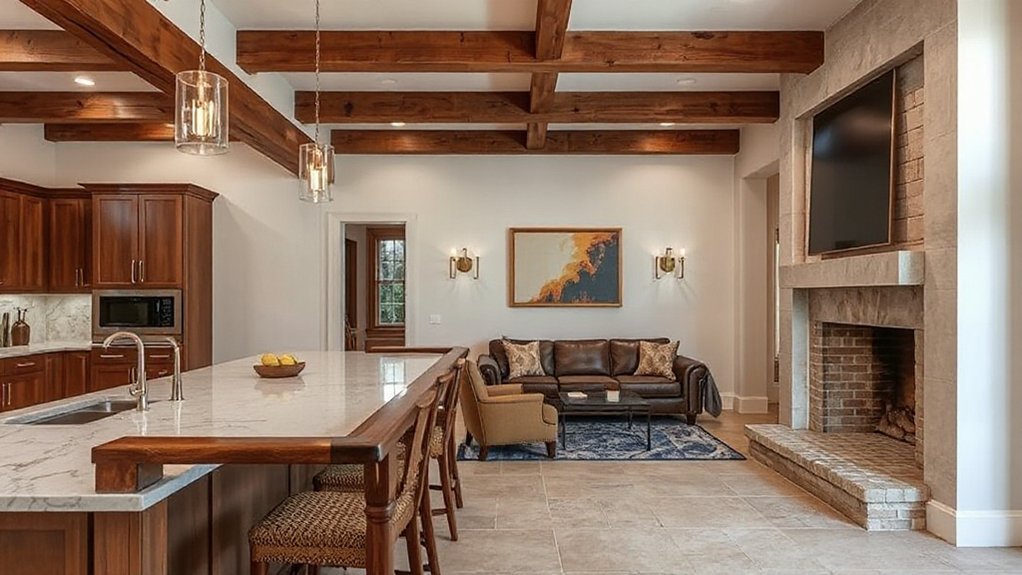
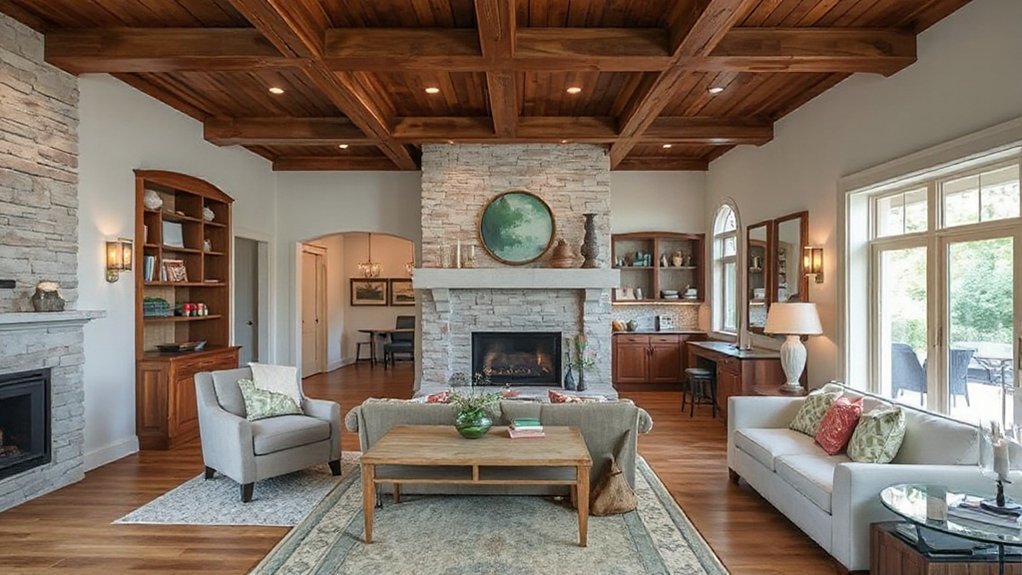
You’ll texture your spaces with layered pairs that play off each other—think a velvet tactile with a crisp stone or wood grain for contrast, creating depth you can feel.
Warm tone contrasts keep the palette grounded while letting each material stand out, so metals glow against matte surfaces without shouting.
Aim for a cadence of material rhythm harmony, where each element reinforces the next and the room reads as intentionally curated.
Layered Texture Pairs
- Subtle contrast between finish sheens keeps rooms calm yet defined.
- Mixed scales—from large panels to fine textiles—for visual rhythm.
- Repetition of a quiet material family to unify disparate spaces.
These layered finishes sharpen perception of space, enhancing light and shadow.
You achieve a curated depth that reads as intentional craftsmanship rather than random assortments.
Warm Tone Contrasts
Use color psychology to guide intensity: deepen walls in grounding hues to foreground sculpture and furniture placement, while cool neutrals push highlights forward without competing for attention.
Limit textiles to complement rather than compete with the hard surfaces, allowing the skin of the room to breathe.
Pay attention to edge conditions—where matte finishes meet satin or gloss—to avoid broom-clean reflections that erase depth.
Precision in spacing matters: align furniture groups to emphasize focal planes, and let contrasts articulate hierarchy rather than overwhelm.
Material Rhythm Harmony
- Cohesive contrasts that feel intentional
- Repeated textures across zones
- Thoughtful furniture placement and color consistency
Mastering Proportional Layouts for Everyday Luxury
Proportional layouts aren’t about rigid grids; they’re about deliberate relationships that guide the eye and elevate everyday spaces. You’ll tune chair placement, rug scale, and artwork margins to create a cohesive rhythm rather than random clustering.
Begin with spatial balance: weigh heavier furniture against lighter accents to avoid visual overload and to anchor focal points without crowding. Then establish visual hierarchy by varying element sizes, distances, and alignment so the eye travels naturally from entry to key features.
Precision matters: measure sightlines, guarantee consistent margins, and align edges to a common axis. Use proportion rules—golden ratios, rule of thirds—as guidelines, not constraints.
The result is a calm, sophisticated environment where each element supports the next, delivering understated luxury through deliberate, accurate composition.
Finishes That Age Gracefully and Retain Character
You seek finishes that age with intention, gaining character without feeling dated. Consider materials and patinas that evolve naturally, like burnished wood and soft stone, so their beauty increases with every season.
Prioritize durable surfaces and subtle detailing that stay relevant as trends shift, letting your home retain a timeless, built-in feel.
Aging Gracefully Finishes
- Vintage fixtures feel intentional, not nostalgic
- Patina finishes add depth without masking form
- Subtle wear signals quality and care
Timeless Character Retention
A timeless interior earns its character by aging with intention: finishes should deepen in interest, not fade into sameness. You pursue materials that patina gracefully, choosing surfaces that reveal rather than erase time. Opt for solid wood cabinets with hand-applied patina, and keep metal accents lightly burnished to read as vintage accents, not novelty.
Retain architectural character by preserving original moldings and plaster textures, then pair them with restrained paint or clear finishes that don’t compete. Historic architecture thrives when modern detailing respects its scale, proportion, and rhythm; introduce lighting and hardware that echo era cues without overpowering the room.
This approach yields honest texture, subtle contrast, and a cohesive narrative that ages with you. Your space feels deliberate, refined, and quintessentially timeless.
Frequently Asked Questions
How Can I Budget for a Custom-Built Look Without Overdoing It?
You can budget for a custom-built look by prioritizing luxury finishes and statement hardware in key rooms, then scaling back elsewhere. Start with a realistic cap, allocate 40% to cabinets and surfaces, 30% to lighting and hardware, 20% to architectural details, and 10% for minor accents.
Choose durable, timeless materials, plan specs that avoid over-customization, and layer finishes gradually.
Track purchases, compare, and renegotiate as you refine your design.
What Scalable Details Create Character on a Tight Timeline?
One quick stat to spur you: homes with well-chosen details feel 20% more cohesive.
You can achieve scalable character on a tight timeline by selecting unique fixtures in key rooms and pairing statement lighting with clean lines.
You’ll focus on precision—note proportions, finishes, and alignment as you install, swap, or upgrade.
Choose one bold fixture per space, guarantee it ties to a neutral base, and let purposeful contrast elevate texture, shadow, and depth.
Which Small Touches Have the Biggest Perceived Impact?
Small touches with the biggest impact include strategic decorative accents and precise color accents. You’ll spot instant sophistication when you balance metallics, textures, and curves in your decor, avoiding clutter.
Place a sculptural lamp, a textured throw, or a bold frame at eye level. Then tie rooms together with targeted color accents—one wall, a pair of pillows, or a rug edge. This disciplined curation reads polished, intentional, and undeniably custom.
How Do I Balance Trend With Timeless Custom Elements?
You balance trend with timeless custom elements by prioritizing durable, refined layers. Choose Unique finishes and Artistic accents that echo your architecture without shouting trends.
Mix classic materials—wood, stone, metal—with contemporary silhouettes, then let color be restrained and purposeful.
Layer texture through textiles, lighting, and hardware, updating small details gradually. You’ll keep a cohesive, lived-in feel while remaining flexible for future updates, ensuring your spaces read as designed, not dictated.
Can Existing Architecture Be Enhanced to Feel Bespoke?
Yes, existing architecture can feel bespoke by adding architectural accents and unique finishes that emphasize craft. You’ll layer subtle moldings, purposeful millwork, and statement hardware to sculpt character without overhauling structures.
Highlight lines with contrasting materials, install custom lighting, and curate textures that read as tailored. Focus on proportion, rhythm, and detail to elevate space.
This precision-minded approach helps your home read as bespoke, while honoring its original form.
Conclusion
You’ve laid the groundwork—walls breathe with precise lines, millwork whispers handcrafted intent, and lighting nudges mood from ordinary to arresting. As you refine textures, contrast, and proportion, each choice threads toward a single truth: bespoke isn’t a look, it’s a quiet promise you’ll notice more with every visit. But the true magic lingers in the moments you don’t expect—where finishes soften with time, and a room’s character quietly, insistently, reveals itself. The reveal is coming. Keep watching.
About the Author