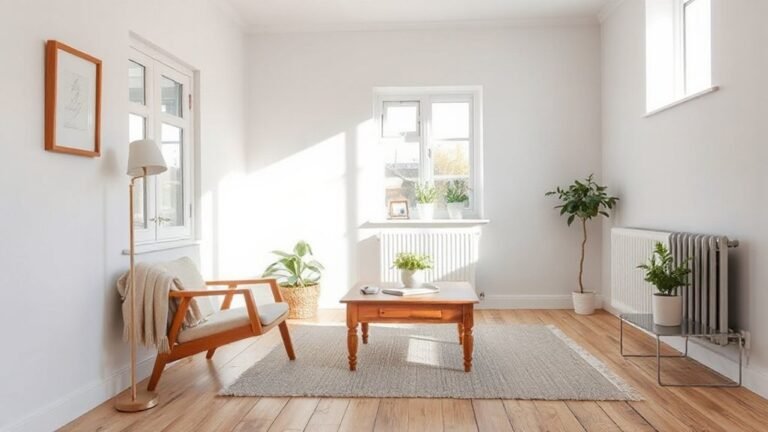
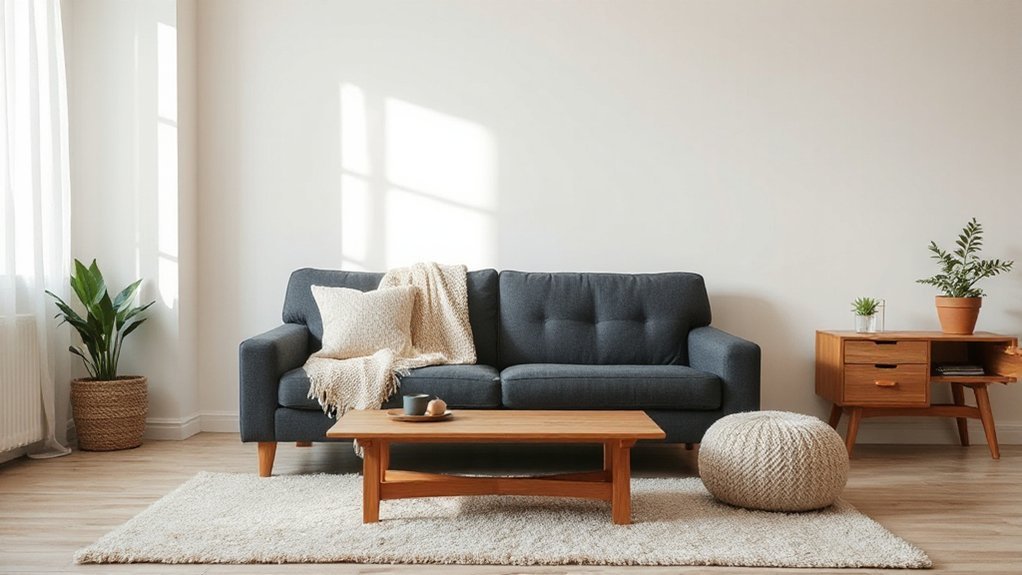
Did you know homes labeled as “cozy minimalist” often report higher daily calm scores by 18%? You’ll start by trimming clutter, choosing warm neutrals, and inviting textures like linen and wool. The goal is space that breathes, with clean lines and soft edges that still feel human. If you tune lighting, scale, and tactility just right, you’ll discover a calm that invites you to linger—and you’ll want to see what comes next.
Key Takeaways
- Use warm neutrals with tactile textures (linen, wool, wood) to create cozy depth within a minimalist palette.
- Layer textiles thoughtfully (rugs, throws, cushions) and vary weaves to add warmth without clutter.
- Choose simple, rounded furniture with natural finishes to maintain approachability and comfort.
- Prioritize lighting: soft ambient glow, adjustable task lighting, and dimmers to shape mood.
- Maximize smart storage and clean surfaces to reduce visual noise while preserving warmth and function.
Define Cozy Minimalism: Calm Spaces With Warmth
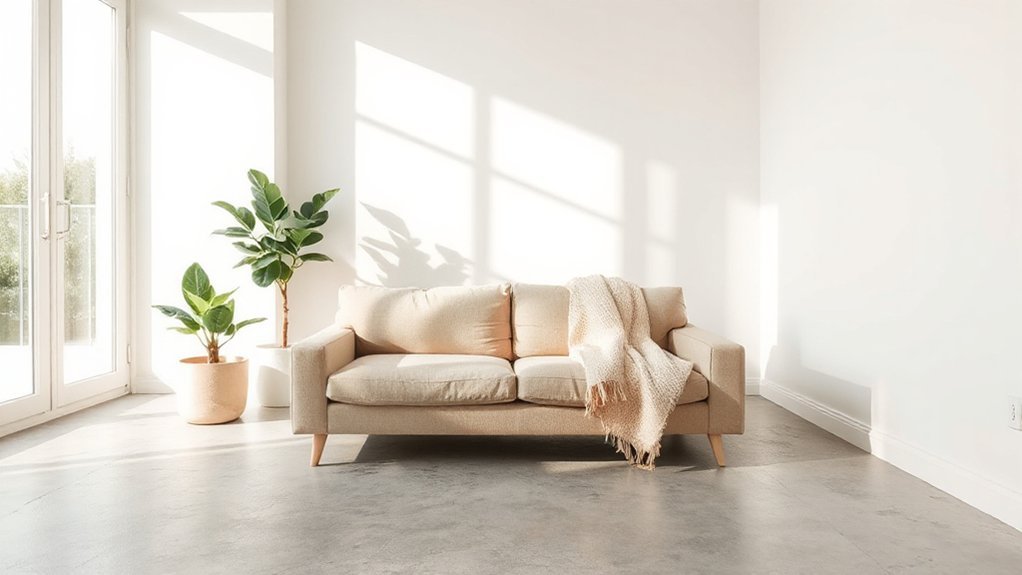
Cozy minimalism blends clean, uncluttered spaces with inviting warmth. You’ll define it by combining restraint with tactility, so every element earns its place.
Start with a calm palette and natural materials—birch, wool, linen—that feel honest, not ornamental.
Prioritize a single, thoughtful focal point and let negative space guide the eye.
Seasonal decor remains restrained: rotate textures or textiles rather than filling with volume, preserving calm across the year.
Use color psychology to set mood: warm neutrals invite comfort; muted accent tones provide subtle contrast without shouting.
Choose lighting that complements form—simple fixtures, warm LEDs, gentle dimming.
Keep surfaces uncluttered, edges clean, and storage accessible.
This approach yields rooms that look purposeful, feel breathable, and sustain warmth without sacrificing clarity or function.
Assess Your Space: Light, Scale, and Layout First
Before you start styling, take stock of the room’s light, scale, and layout. You’ll spot opportunities for space optimization by prioritizing clear sightlines, avoiding clutter, and aligning furniture with architectural cues.
Assess natural lighting: note where sun enters, how it shifts through the day, and where glare appears. Place dominant pieces to anchor zones without crowding, reserving pathways for flow.
Measure ceiling height, wall angles, and doorways to guarantee proportionate furniture and open circulation.
Choose a focal point that doesn’t overpower the space—perhaps a framed view or a single sculptural object—then arrange seating to encourage conversation and easy movement.
Use light, neutral surfaces to reflect daylight, reinforcing a sense of calm, coherent order.
Start With Warm Neutrals and Soft Textures
Start with warm neutrals as your foundation to set calm, cohesive spaces. Build in soft texture layers—think woven rugs, velvet cushions, and brushed throws—that invite touch without cluttering sight lines.
Add cozy fabric accents for tactile warmth that stays true to minimalist design and keeps your room feeling grounded.
Warm Neutral Foundations
Warm neutrals form a calm, receptive base for any room, inviting soft textures that you can practically live in. You establish tone with color psychology, selecting hues that soothe and energize without shouting.
Keep furniture ergonomics front and center: chairs that align with your spine, desks at the right height, and tables proportioned to space.
Ground the palette with warm beige, oat, and stone, then layer in texture for tactile warmth.
- Choose a dominant warm neutral that anchors the space.
- Introduce a secondary neutral with subtle contrast for depth.
- Add texture through textiles, hides, and natural fibers to invite touch and comfort.
Soft Texture Layering
Soft textures layer into warm neutrals to create tactile warmth and inviting depth. You start with a calm base, then add tactile elements that read as intentional detail. Choose textured wall accents to introduce subtle variation without visual noise, keeping lines clean and cohesive.
A plush rug layering approach anchors zones, balancing footfall with acoustic comfort while preserving openness. Favor low-pile or medium-pile options in earth tones to maintain a cohesive palette.
Introduce textiles in a restrained rhythm: a knit throw, a woven cushion, and a suede or faux leather accessory, each contributing texture without overcrowding space. Maintain scale consistency, avoiding abrupt contrasts.
This approach delivers practical warmth and design integrity, ensuring the room feels curated but effortless, cozy yet restrained.
Cozy Fabric Accents
- Start with a solid foundation—taupe, ivory, or warm gray—then introduce contrast through texture.
- Mix fabrics with distinct patterns kept at a similar scale to preserve calm, not chaos.
- Rotate textiles seasonally, swapping just enough to maintain warmth while preserving design integrity.
This approach delivers practical precision: cohesive warmth, intentional contrasts, and enduring comfort without oversaturation.
Layer Light and Texture to Create Depth
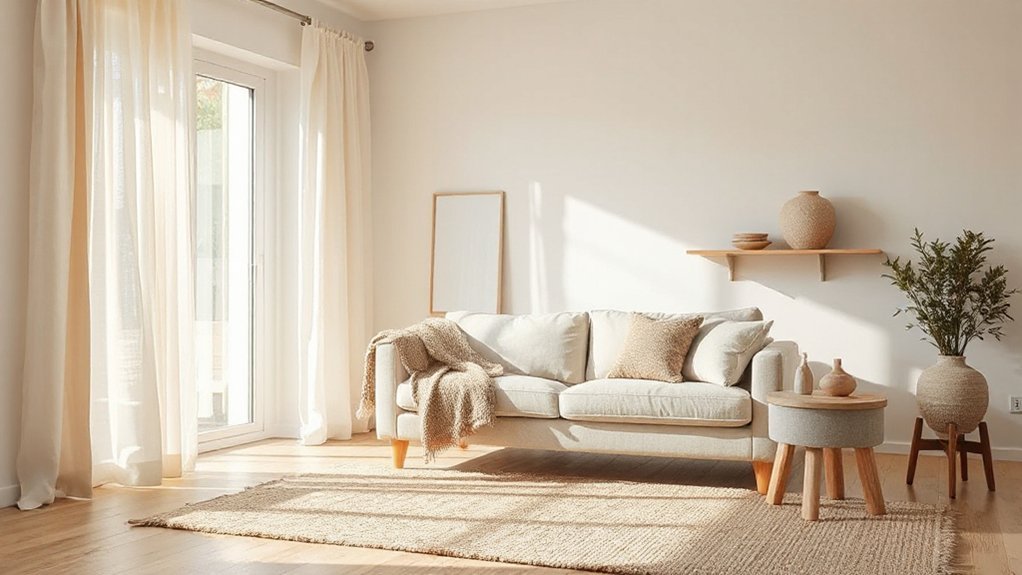
Then introduce varied textures that read as depth rather than volume. Keep contrast deliberate: swap cool whites for warm tones, allow shadows to sculpt edges, and use a single, soft-reflective surface to balance glare.
Choose textiles with different weaves and finishes—cotton, wool, linen, or boucle—to build tactile warmth without heaviness. The aim is layer contrast and textural harmony, so each element supports the next.
Avoid fighting scale; textiles near furniture edges should echo the room’s silhouette. End with a cohesive, calm glow that invites closer, lingering observation.
Pick Simple Furniture With Friendly Details
Choose simple furniture with friendly details that feel honest and easy to live with.
Prioritize clean lines, warm touches, and pieces that invite touch without shouting their presence.
This combination keeps the room calm, functional, and inviting.
Simple Pieces, Warm Details
When you pick simple furniture with friendly details, the result is calm, inviting spaces you can live in daily. You’ll notice how understated pieces support mood through tactile warmth and practical design. Favor clean silhouettes, rounded edges, and natural textures that invite touch.
1) Choose chairs and tables with approachable forms that pair well with seasonal accents, so your room evolves without shouting.
2) Select pieces in minimalist color schemes—soft neutrals, warm woods, a touch of charcoal—to anchor a cohesive mood.
3) Add texture with throws, rugs, and ceramics that deepen comfort without clutter.
Lean into restraint: essential furniture earns its place, steadying the room while details add personality. The space breathes, feels tangible, and remains ready for daily life.
Clean Lines, Cozy Touches
Clean lines don’t mean stark. You pick simple furniture with friendly details that invite touch and use.
A slim sofa in a soft, textured fabric, low-profile and solidly built, anchors the room without shouting. Choose chairs with rounded edges or warm wood tones to counteract clinical silhouettes, adding tactile warmth to the composition.
Add a coffee table with clean lines but a tactile surface—grain, weave, or a gentle bevel—that invites fingers to explore. Introduce industrial charm through hardware, metal accents, or a sturdy frame that ages gracefully.
Balance with minimalist art: a single, thoughtfully placed piece that mirrors the palette and preserves negative space. The result feels calm, precise, and inviting, with cozy details that enhance everyday usability.
Add Personality With Thoughtful Accessories
Small touches make a room feel lived-in without clutter: think a single, meaningful accessory that tells your story. You curate with intention, selecting pieces that retain simplicity while adding warmth. Personalized wall art and decorative accent pieces anchor your space, then sit quietly to invite touch and attention.
- Choose a striking focal piece that balancefully contrasts textures, not colors.
- Layer small items with purpose: a velvet throw, a ceramic vase, a single book that resonates.
- Place with rhythm: align shelves to eye level, leave negative space to honor every detail.
Each choice should feel useful, durable, and honest. You’ll notice how thoughtful accents tighten cohesion, emphasize lines, and honor memory without shouting.
The room breathes, feels grounded, and remains adaptable for future updates.
Craft Quiet Color Palettes With Surprising Pops
Quiet color palettes emerge from simple, honest choices that support the space you’ve built with thoughtful accessories. You craft a calm base using muted neutrals, then introduce life with deliberate pops that don’t shout.
To keep this minimalist core intact, choose one or two color stories and carry them through textiles, art, and lighting. Color contrast should be subtle yet intentional, creating depth without visual noise.
Use tactile materials—linen, felt, or raw wood—to reinforce warmth against cool surfaces. Accent walls can anchor a room when treated as a stage for a single hue, not a loud statement.
Keep edges clean and seams precise, so each element earns its place. The result feels curated, breathable, and quietly inviting.
Smart Storage Solutions to Keep Clutter Away
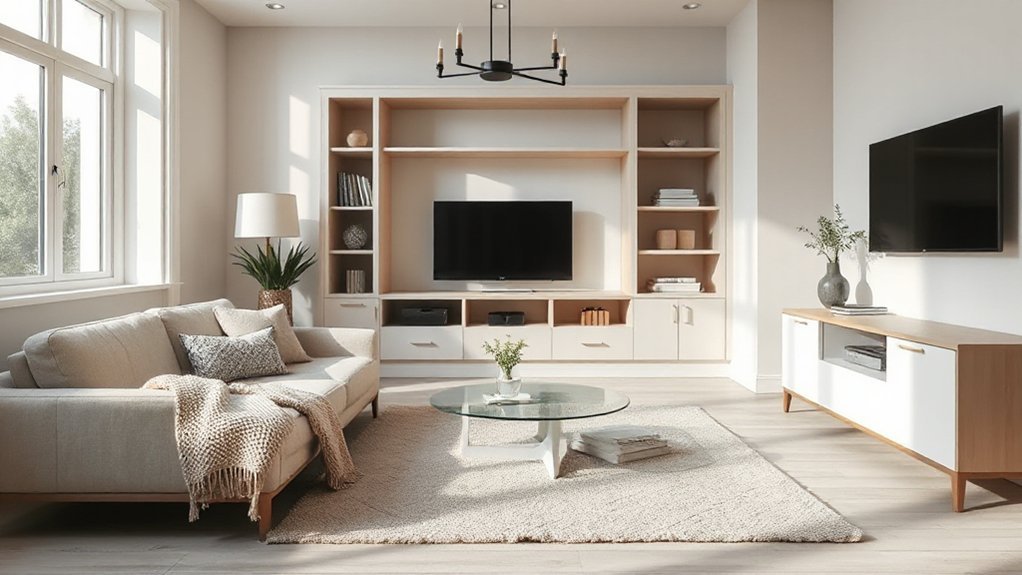
Smart storage isn’t about cramping space—it’s about revealing it. You’ll reclaim calm with clever systems that feel inevitable, not cluttered. Hidden compartments and multi purpose furniture become your quiet allies, tucking away what you don’t need while staying usable.
- Choose pieces with built‑in dividers and lift‑top lids to conceal everyday essentials without sacrificing access.
- Opt for multipurpose furniture that doubles as storage, like ottomans with hidden cavities or beds with drawers, keeping surfaces clear and purposeful.
- Align compartments to your routine, labeling or color‑coding categories for effortless tidiness.
You notice the difference: less surface conflict, more honest function. Materials touch warm, sturdy, and refined, reinforcing that minimalism is an active choice—intentional, resilient, and inviting.
Gentle, Functional Lighting and Daily Routines to Maintain It
Gentle, functional lighting shapes a space that feels awake without shouting. You’ll set routines that sustain this tone, not disrupt it. Begin with ambient glow to soften edges at dusk, then switch to task illumination for focused chores without glare.
Choose fixtures that blend with materials—wood, stone, linen—to maintain tactile warmth. Place lamps where your hands land: reading nook, kitchen counter, desk.
Let dimmers guide mood shifts and energy use, preserving calm as you move through daily tasks. Keep surfaces clear so light can breathe and reflect.
Establish a simple cadence: warm, low-intensity lighting at wind-down, brighter, precise light for work, and an occasional mid-day brighten to combat fatigue.
Regularly clean shades and bulbs; maintenance preserves consistency and minimizes disruption.
Frequently Asked Questions
How Can I Measure a Space for Minimal Decor?
To measure a space for minimal decor, you start with precise dimensions: walls, doorways, windows, and ceiling height. Mark corners, note obstructions, and photograph the layout.
Plan Furniture placement by sketching scaled outlines, then test flow with tape on the floor.
Consider Lighting techniques early—place fixtures to avoid glare and maximize warmth without clutter.
Measure doorway clears for movement, then trim plans to essentials.
Adjust as needed, keeping tactile warmth and functional balance in every choice.
What Ambient Sounds Enhance Cozy Minimalism?
Ambient soundscapes heighten cozy minimalism. You’ll choose gentle loops—soft rain, fireplace crackle, distant traffic—layered to feel immersive, not busy.
Aim for acoustic textures that add warmth without distraction, keeping balance with clean lines. You’ll notice texture in the air, subtle rhythm, and a tactile hush that supports focus.
Use volume to create intimacy, never overwhelm. This practical precision preserves design integrity while inviting comfort, and you’ll hear a calmer, more intentional space.
Which Plants Suit Low-Maintenance Minimalist Rooms?
You’ll want low-maintenance options like succulents maintenance and other hardy greens, perfect for a clean minimalist look.
Choose air purifying plants that resist neglect, like snake plant, pothos, and ZZ plant, which thrive with sparse watering and good light.
Keep a simple routine: water every 2–3 weeks, wipe leaves, rotate for even growth.
Their tactile warmth and crisp structure reinforce design integrity while silently purifying air and staying beautifully unobtrusive.
How Do I Edit Decor Without Losing Warmth?
To edit decor without losing warmth, you update strategically, not overhaul. Start with lighting accents at eye level to cast cozy pools and avoid harsh glare.
Add texture layering through textiles, wood grains, and tactile surfaces to preserve tactile warmth. Keep lines clean, but introduce soft, inviting fabrics and muted tones for balance.
Use functional pieces with character, so edits feel intentional. Swap out decor seasonally, preserving core materials to maintain design integrity and comfort.
Can Color Pops Affect Perceived Space Size?
Color pops can affect perceived space; bright accents can expand a room, while dark pops pull in walls. You’ll notice color contrast shifts, guiding the eye and altering perception of space.
Use lighter base tones with vivid, strategic dashes of color to maintain practical precision and tactile warmth. A single, well-placed hue acts like a pulse, grounding the design.
Keep textures rich, edges clean, and balance bolds with softer neutrals for cohesive, spacious coziness.
Conclusion
You’ve built a calm, inviting space where restraint meets warmth. With warm neutrals, soft textures, and friendly silhouettes, your room breathes—every lamp, throw, and pillow earns its place. Keep lighting gentle, storage smart, and routines simple to preserve the calm. When a touch of softness lands, trust your instincts and tweak with purpose, not noise. This is not minimalism stripped bare; it’s minimalism with a heartbeat—quiet, practical, and alive with texture and meaning. You’ve achieved cozy, measured luxury.
About the Author